
No project phase reveals how prepared a contractor is faster than what happens to the client’s driveway. Professional crews arrive with a protection plan. Less prepared crews arrive with plywood—or nothing.
The difference in outcomes is predictable.
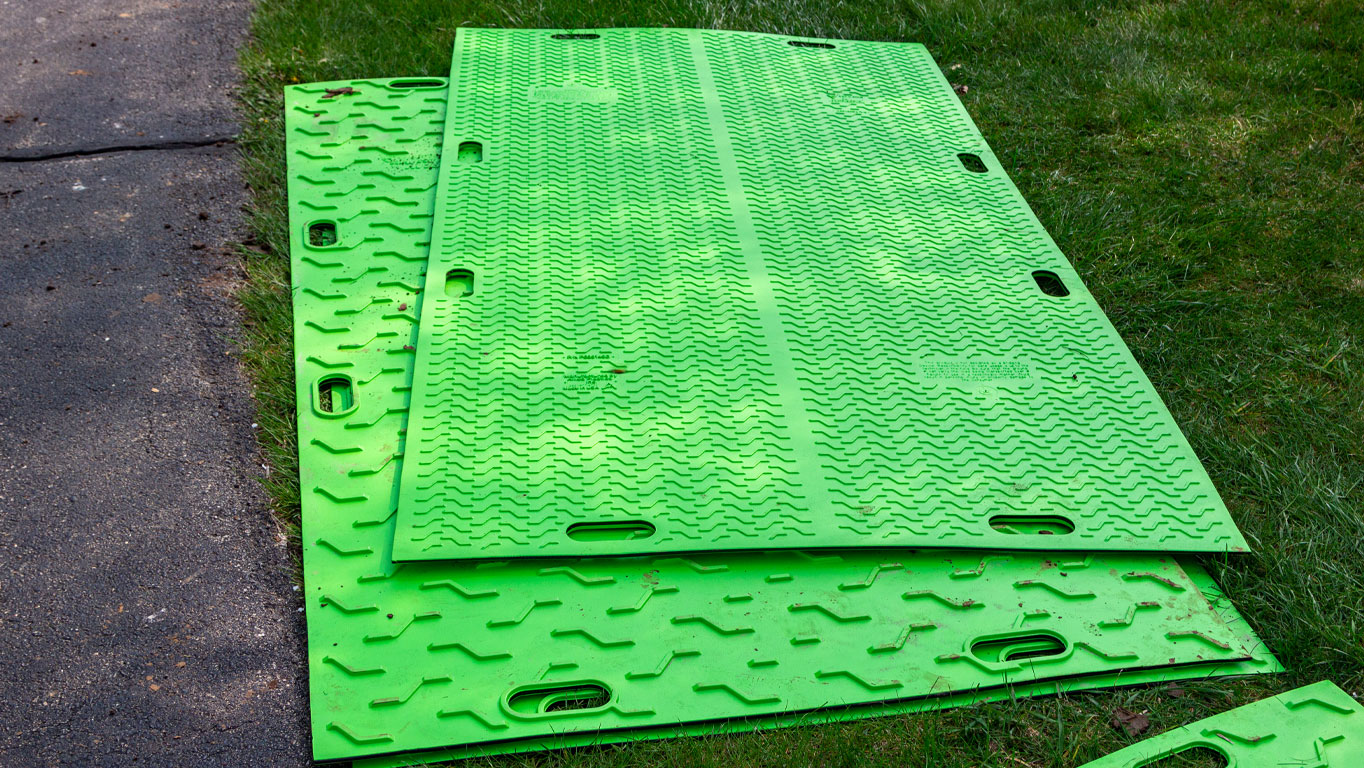
Temporary driveway mats are how professional contractors ensure driveways look the same at the end of the job as they did at the beginning. This post covers every surface type, every damage scenario, and the right mat setup for each.
Surface-by-Surface Guide to Driveway Protection
Concrete driveways
Residential concrete driveways are typically 4 to 6 inches thick and designed for vehicles up to 8,000 to 10,000 pounds. Delivery trucks, loaded dumpsters, and heavy equipment exceed this routinely. Cracks propagate from edges and expansion joints under repetitive overloading. Point loads from equipment legs and dumpster corners are especially dangerous at these vulnerable points.
Asphalt driveways
Asphalt softens in summer heat and is permanently deformed by heavy sustained loads. A dumpster sitting on the same asphalt section for 4 days in July creates visible depressions that don’t recover. Equipment turning on hot asphalt leaves scuffed patterns that stain and abrade the surface.
Paver driveways
Pavers are installed on a sand-set or aggregate base. That base is stable under normal vehicle loads but shifts under heavy or concentrated loads. Individual pavers crack from point loads. Settlement occurs when the base material displaces. Repairs require removing and resetting sections—expensive and never invisible.
Stamped and decorative concrete
The decorative surface on stamped concrete is a relatively thin layer applied over standard concrete. Equipment scuffing, oil drips, and chemical contact from construction materials permanently marks this surface. Mats provide both load protection and a physical barrier between construction activity and the decorative finish.
Exposed aggregate driveways
Exposed aggregate is vulnerable to cracking at the surface aggregate layer. Equipment loads and turning can chip and crack individual aggregate pieces. Mats protect this surface from both load and abrasion.
Damage Scenarios and Mat Responses
Delivery truck access
Cover the driveway apron (where the truck first contacts the driveway) and the full path to the delivery position. Add panels under the delivery truck’s stationary position during offloading.
Dumpster placement
Cover the full dumpster footprint plus 12 to 18 inches on all sides. Cover the truck approach zone. Add panels where the truck frame contacts the surface during container deployment.
Skid steer driveway crossing
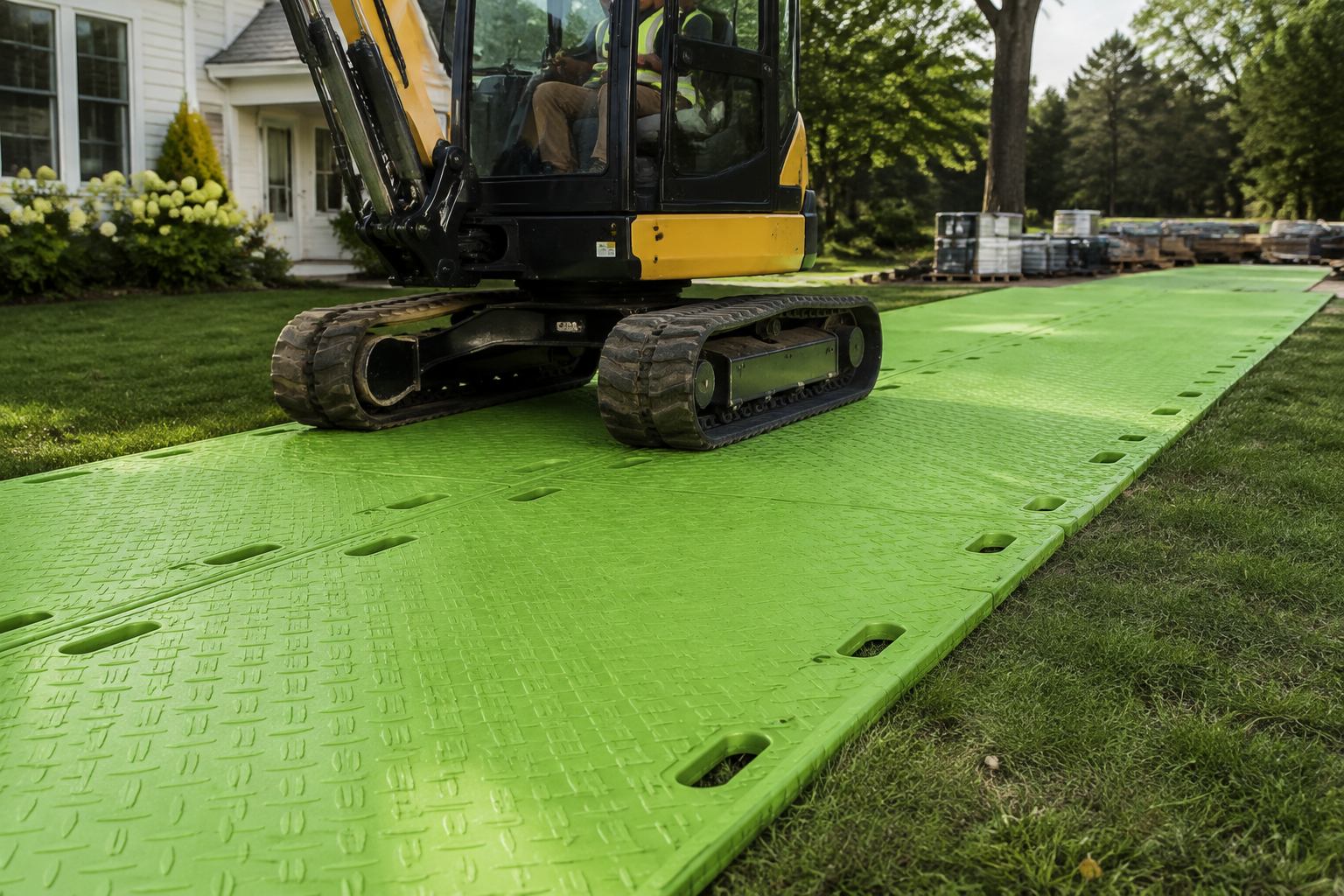
A double-column mat path across the driveway plus a protected turning zone at each end. Most driveway crossings require 6 to 10 panels.
Boom lift positioning
Mat the travel path plus the full outrigger spread at the work position. Outrigger loads are the highest concentrated loads on any lift job.
Seasonal Considerations for Driveway Protection
Spring
Ground heave from frost-thaw cycles weakens the base under concrete and asphalt. Spring driveways are more vulnerable to cracking from heavy loads than they are in summer or fall. Standard protection setups should use more coverage—not less—in spring conditions.
Summer
Asphalt is at maximum vulnerability to deformation in summer heat. Any sustained heavy load on asphalt in warm temperatures requires mat protection.
Fall
Conditions are generally stable in fall, but rain-softened ground increases the dynamic load on driveway edges as equipment transitions from grass to pavement.
Winter
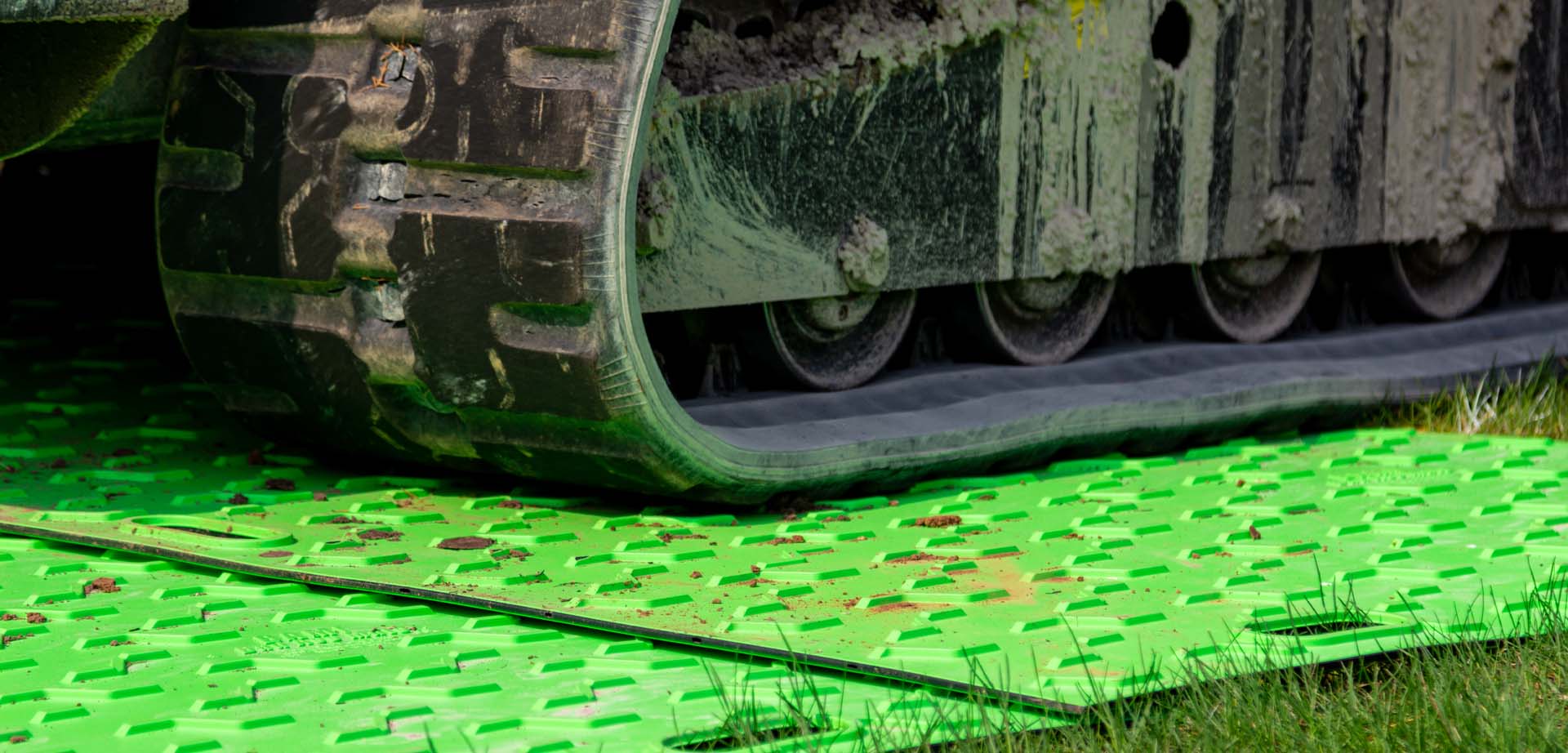
BAM! HDPE mats perform normally in cold temperatures. For winter work, the pedestrian-side traction becomes especially valuable—ice and snow on construction sites create serious slip hazards, and a matted surface provides crew with safe footing.
How Many Mats Do You Need?
Standard dumpster protection: 6 to 8 BAM! 4×8 panels covering the container footprint plus approach zone.
Delivery truck protection: 4 to 6 panels covering the apron and approach area.
Full driveway path for skid steer: 8 to 12 panels for a double-column path across a standard residential driveway.
Boom lift positioning: 6 to 10 panels for travel plus outrigger coverage.
Multi-phase project full setup: 16 to 24 panels for comprehensive coverage across all traffic and equipment zones.
Frequently Asked Questions
Q: Are temporary driveway mats safe to drive personal vehicles over?
A: Yes. Passenger vehicles can drive over BAM! mats safely. The slip-resistant tread provides traction for vehicle tires, and the 80-ton rating far exceeds any passenger vehicle weight.
Q: Will temporary driveway mats leave marks on my client’s driveway?
A: BAM! HDPE mats don’t leave stains or marks on concrete, asphalt, or pavers. Clean mats (free of mud and debris) leave no residue on the protected surface.
Q: How long can I leave temporary driveway mats in place?
A: As long as the job requires. HDPE doesn’t degrade in sun or weather. Mats can remain in place for the full duration of a project, weeks or months, without performance change.
Q: Do I need different mats for different driveway surfaces?
A: No. BAM! mats work on all standard driveway surfaces—concrete, asphalt, pavers, stamped concrete, and exposed aggregate. The same panel protects all surface types effectively.
Driveway Protection Is a Professional Standard—Not an Option
The contractors clients recommend to their neighbors are the ones who left the property in perfect condition. Driveway protection is one of the most visible and impactful ways to demonstrate that professional standard.
Explore BAM! temporary driveway mats at bamgroundpro.com/products. Find a distributor at bamgroundpro.com/where-to-purchase. Contact us at bamgroundpro.com/contact-us, call 888-870-8158, or email msheridan@alliedplastics.com. Protect every surface. Pro’s choose BAM!