Every job has an access problem. The equipment needs to get from the street to the work zone—and the path usually crosses something vulnerable: a lawn, a soft utility easement, a residential driveway, a sensitive drainage area, or commercial landscaping that the client expects to stay intact.
Temporary road mats solve this. They turn an inaccessible, vulnerable route into a stable, load-rated access road in minutes—without gravel, without fill, without permanently altering the ground underneath.
What Temporary Road Mats Are—and What They Are Not
Temporary road mats are load-rated panels—typically HDPE—deployed in sequence to create a drivable surface over soft, sensitive, or otherwise inaccessible terrain. They are not the same as:
- Flexible rubber or plastic rolls that carry low load ratings and shift under equipment
- Timber mats that require machinery to move and cost significantly more per panel
- Gravel or fill that requires equipment to install and restore afterward
- Plywood that warps, cracks, and fails under real equipment loads after 2 to 3 uses
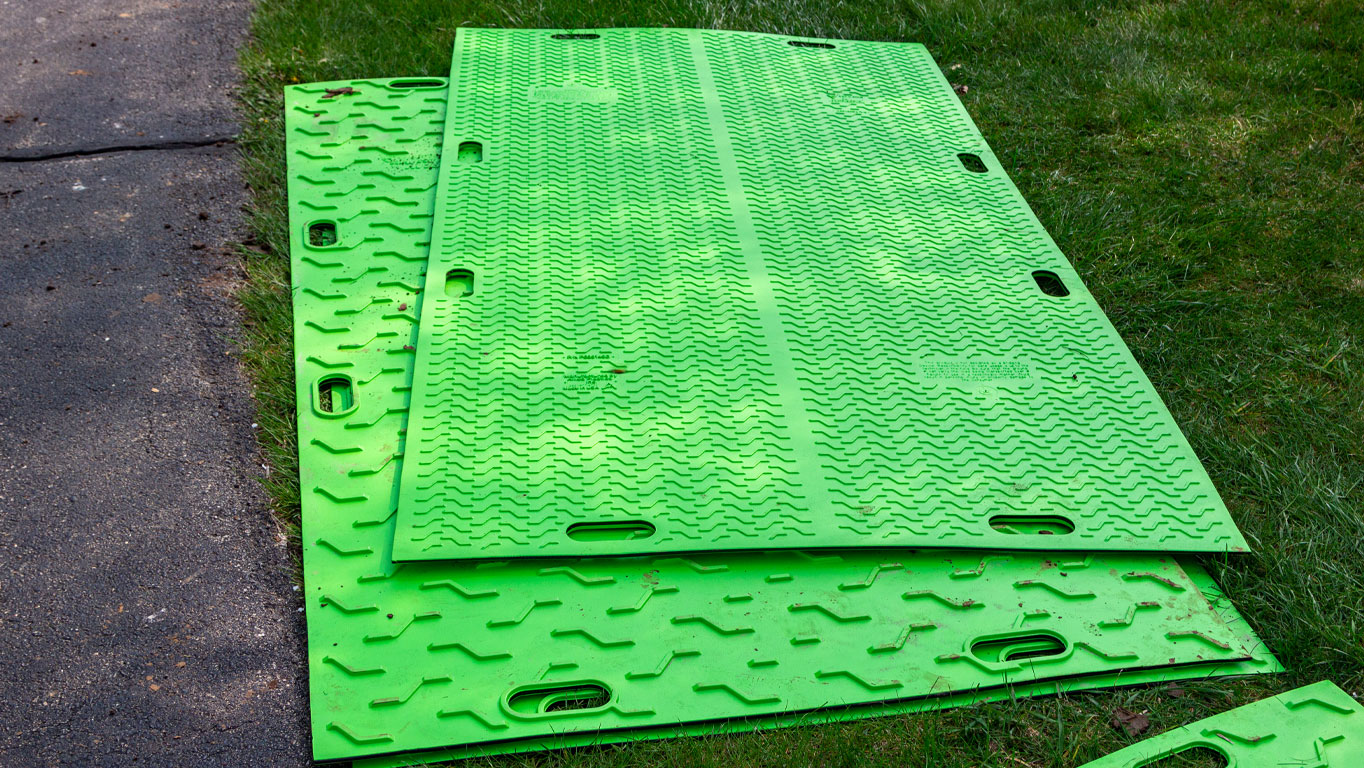
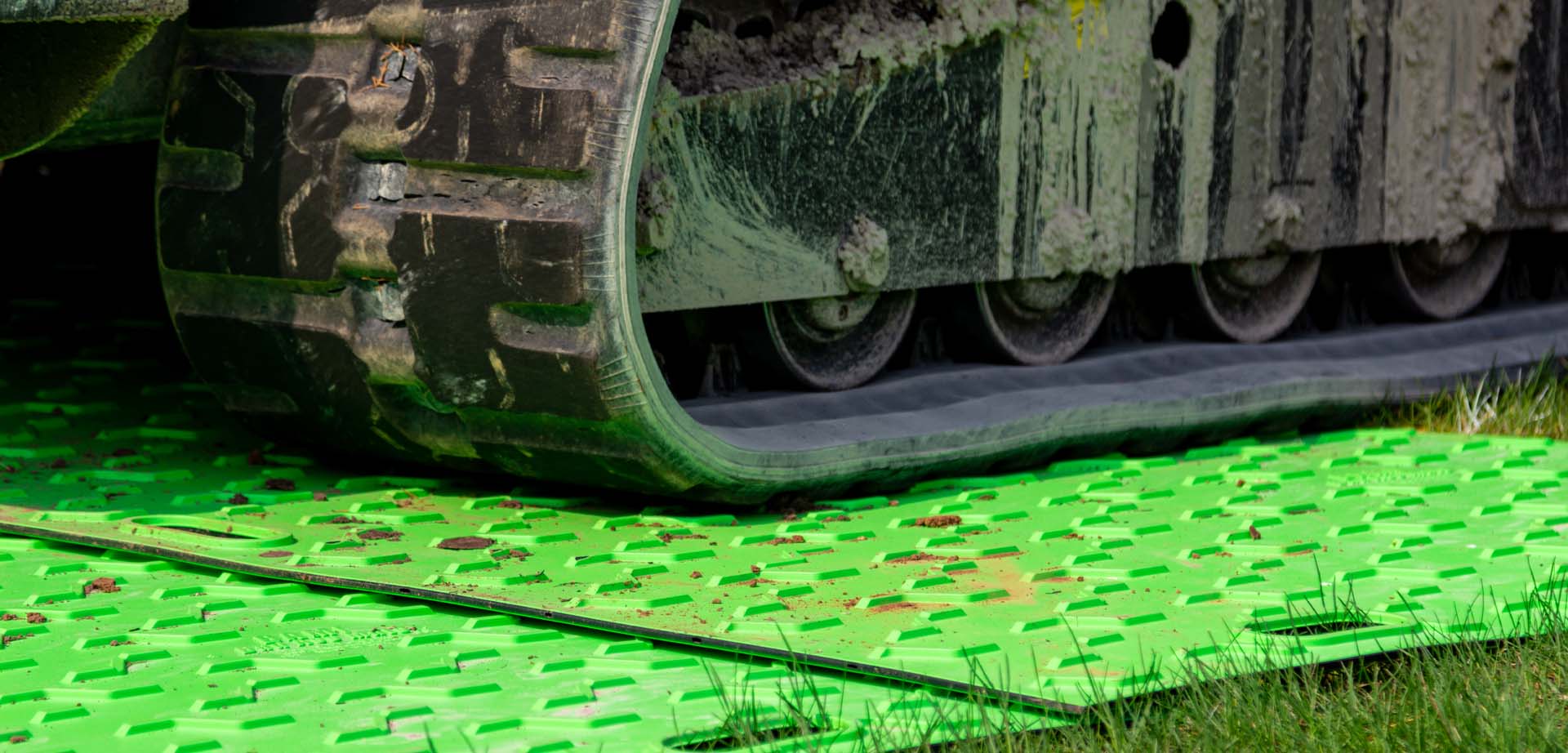
BAM! Bad Ass Mats are rigid 3/8-inch thermoformed HDPE panels rated to 80 tons. Each 4×8 panel covers 32 square feet and weighs 56 pounds—deployable by a single crew member with no equipment required.
When You Need Temporary Road Mats
Crossing residential lawns and turf
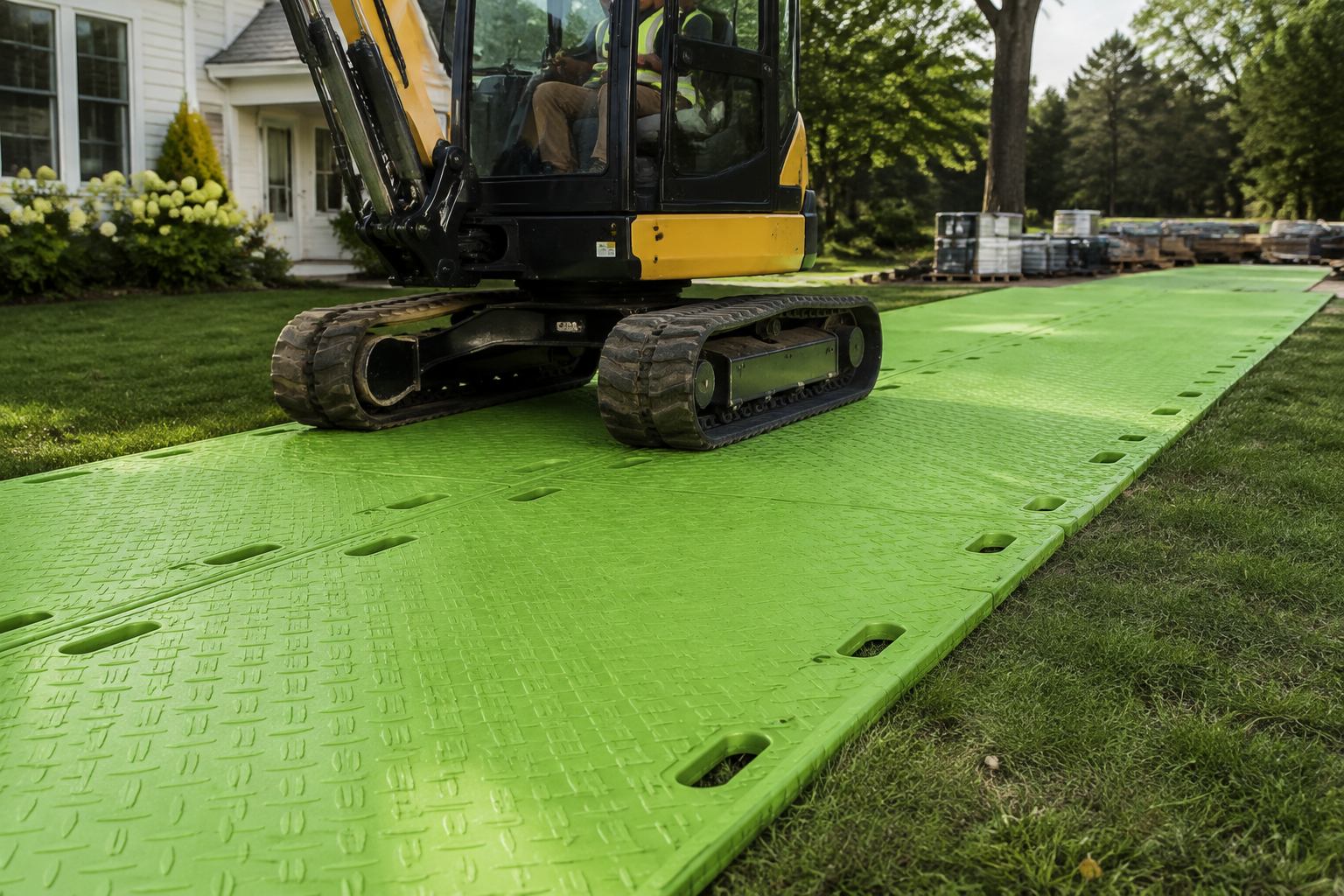
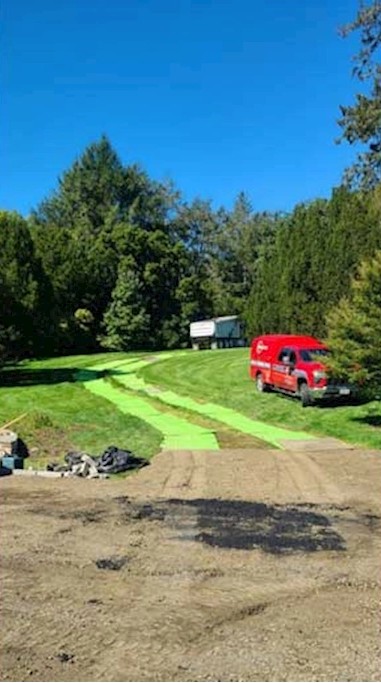
The most common application. Equipment needs to reach a backyard, side yard, or landscaped area, and the route crosses turf that cannot tolerate machine traffic without protection. A mat access road eliminates rutting, compaction, and root damage across the entire route.
Navigating soft or saturated soil
After rain, in spring thaw conditions, on high-water-table sites, or in areas with naturally poor drainage, soil bearing capacity can be near zero. Equipment that would have no problem on dry ground gets stuck or churns through saturated soil without mats. Temporary road mats span the soft sections and keep machines moving.
Protecting driveways and hardscape routes
Delivery trucks, dumpsters, and heavy equipment crossing residential driveways need a protected route from the street to the work zone. Temporary road mats over driveways prevent cracking, scuffing, and deformation on concrete, asphalt, and paver surfaces.
Utility and easement access
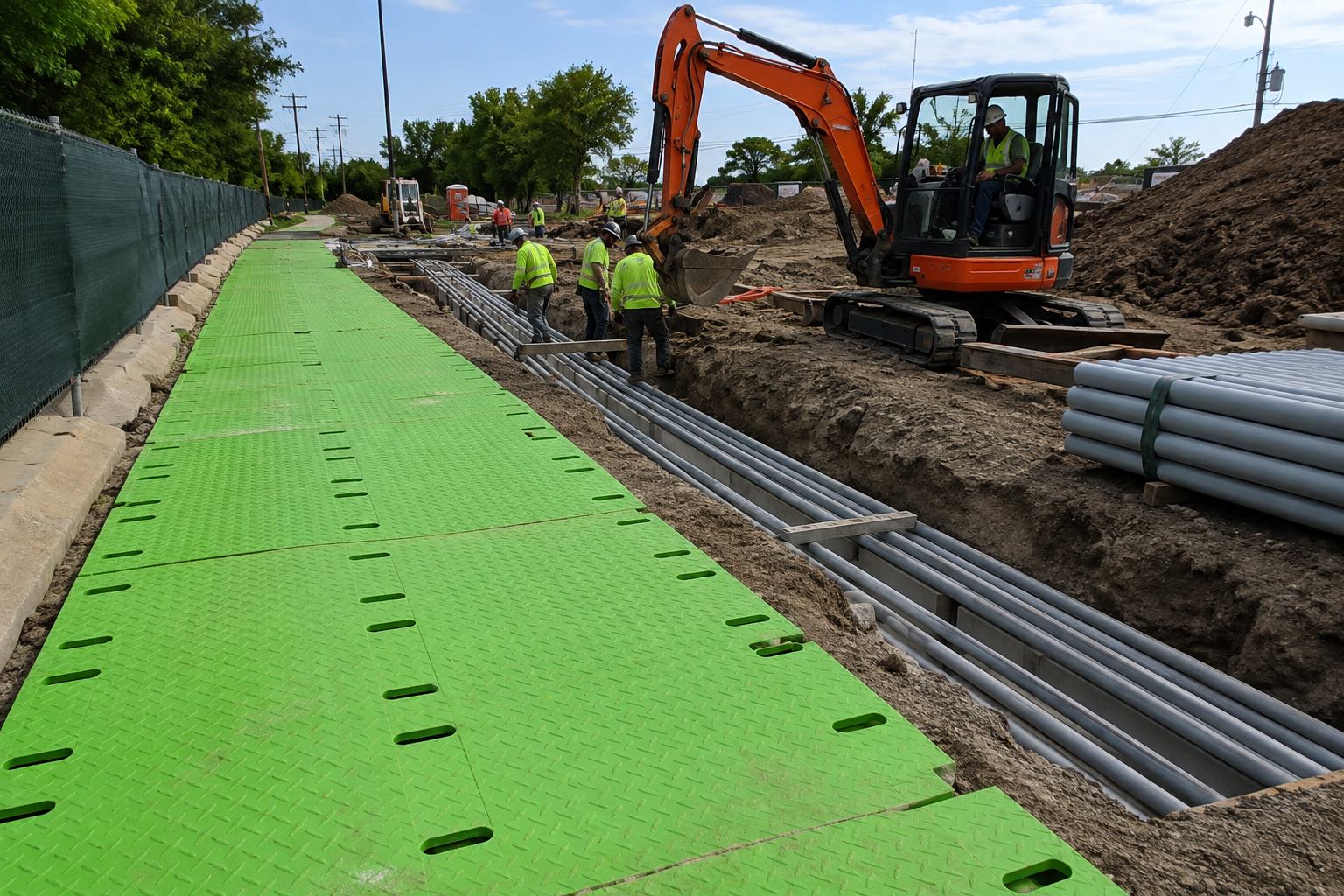
Utility crews working in residential easements, pipeline corridors, and drainage right-of-ways often cannot access the work area without crossing maintained lawns, planted areas, or paved surfaces. Temporary road mats provide the required access without violating property restoration requirements.
Municipal and public works projects
City and county crews working in public rights-of-way, parks, and civic spaces are often required to minimize surface disruption. Temporary road mats enable equipment access that meets public works property protection standards.
How to Build a Temporary Road Mat Access Route
Step 1: Plan the route before deployment
Walk the full access route from equipment staging to the work zone. Identify the surface type (turf, soil, driveway, easement), note the worst soft or sensitive sections, measure the total distance, and identify any tight turns or narrow passages that require 2×8 panels instead of 4×8.
Step 2: Set up from firm ground inward
Begin mat deployment from the firmest available ground and work toward the work zone. This gives you a stable starting point and allows you to assess conditions as you advance the route.
Step 3: Deploy in the flip-and-lay sequence
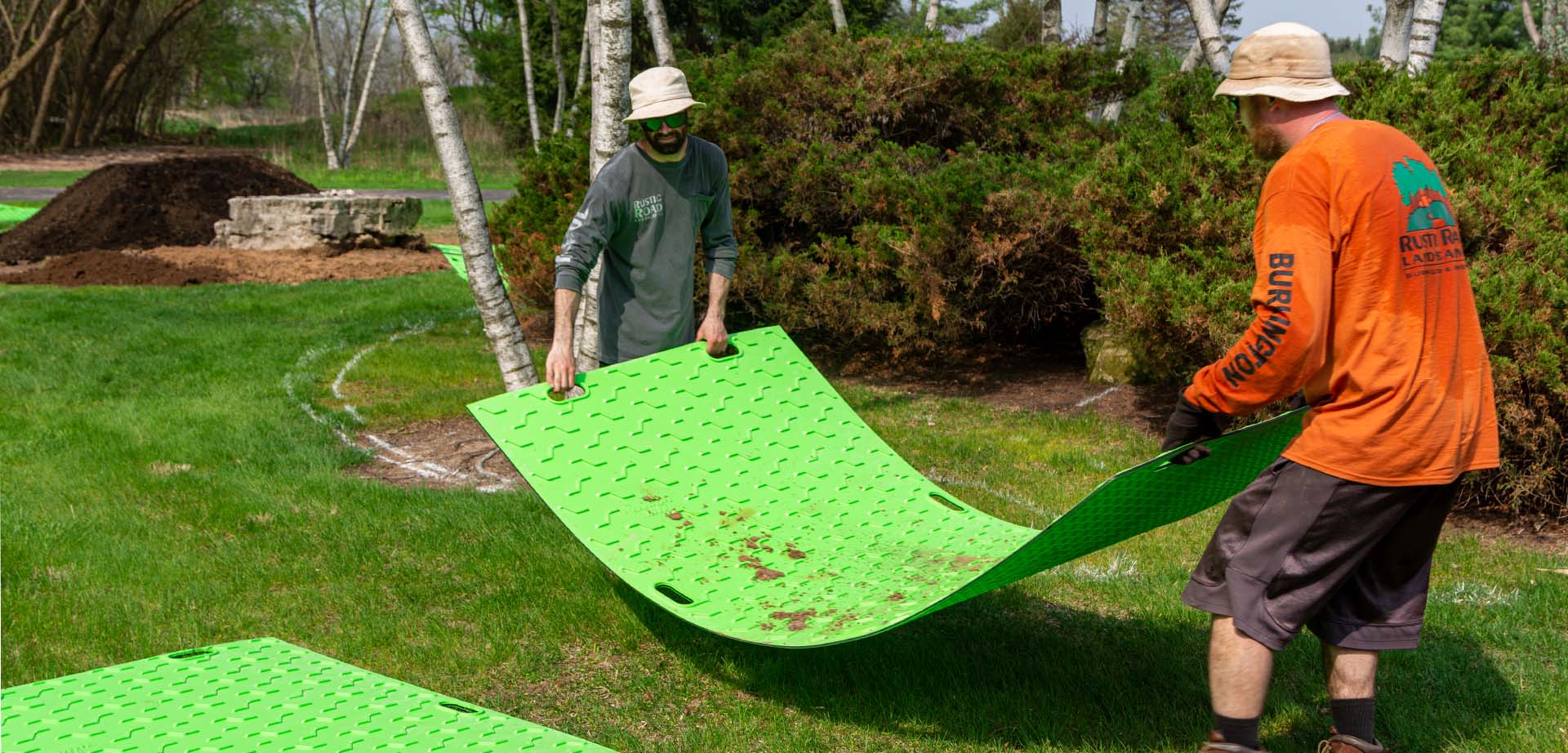
Place the first panel. Carry the second panel to the leading edge of the first and flip it into position. Advance to the leading edge again and repeat. Two crew members using this method can lay a 100-foot single-column route in 10 to 15 minutes.
Step 4: Double-column for equipment wider than 4 feet
Most construction equipment is wider than a single 4-foot panel. Deploy two panels side by side for full equipment coverage. A double-column route (8 feet wide) accommodates skid steers, compact loaders, mini excavators, and most residential construction equipment with margin on both sides.
Step 5: Extra coverage at turns and staging zones
Turns create lateral forces that push mats sideways. Add extra panels at any directional change to provide a buffer zone. At the work zone end of the access route, build a staging pad—a wider, fully covered area where equipment can position, turn, and idle.
Temporary Road Mat Sizing Reference
50-foot single-column route: 7 panels (50 ft / 8 ft per panel = 6.25, round up)
50-foot double-column route: 14 panels
100-foot double-column route: 26 panels
Staging zone 8×16 feet: 4 panels (two columns of two)
Gate passage (36-48 inch): 2×8 panels, 2 per 8 feet of length
How BAM! Mat Features Translate to Temporary Road Performance
80-ton rating: handles any residential or light commercial equipment with significant safety margin—the rating doesn’t require careful load calculation for standard applications
56-pound weight per 4×8 panel: single-person deployment without assistance, significantly faster route setup compared to 100+ pound panels
8 large hand holds: consistent grip in all conditions, including with gloves during winter operations
Hi-Vis Safety Green: easy to track panel positions across the route, fast visual confirmation of complete retrieval at job end
Interlocking tread: organized stacking during transport, mats arrive ready to deploy without sorting
Temporary Road Mats vs. Alternatives
vs. gravel access roads
Gravel access roads require a grader or skid steer to install, a dump truck to deliver material, and excavation or regrading to restore after the project. They are permanent changes to the ground surface. Temporary road mats deploy in minutes and leave no trace on removal.
vs. timber mats
Timber mats handle enormous loads but weigh 300 to 500 pounds each—requiring a forklift or crane to install. They are impractical for most residential and light commercial applications. BAM! HDPE panels at 56 pounds are single-person portable.
vs. plywood
Plywood costs less per sheet but has no load rating, absorbs moisture and warps, becomes slippery when wet, and lasts 2 to 4 uses before disposal. For any application where equipment will cross the road surface, plywood is a false economy.
Frequently Asked Questions
Q: How long can temporary road mats remain in place on a jobsite?
A: As long as the project requires. BAM! HDPE is not degraded by UV exposure, moisture, or temperature extremes. Mats can remain deployed for days, weeks, or months without performance change.
Q: Can temporary road mats be used on slopes?
A: Yes, on slopes up to approximately 15 degrees for most equipment types. The dual-sided tread provides grip on both sides, and panel mass resists shifting. For steeper slopes, contact BAM! at 888-870-8158 to discuss application-specific guidance.
Q: Do temporary road mats require any anchoring?
A: In most applications, panel mass and tread grip hold mats in place without anchoring. In high-wind conditions or on significant slopes, staking options are available. Contact BAM! at 888-870-8158 for details.
Q: How do I clean temporary road mats after a muddy deployment?
A: HDPE does not bond to mud. Panels lift cleanly from the surface. Remove large debris, then pressure wash. Mats are clean and ready for the next deployment in minutes.
Q: Where can I buy or rent temporary road mats near me?
A: BAM! mats are available for purchase or rental through a national distributor network. Visit bamgroundpro.com/where-to-purchase or call 888-870-8158 to find the nearest distributor.
Build the Road Before the Equipment Moves
The contractors who never deal with stuck machines, torn-up lawns, and cracked driveways didn’t get lucky. They built the access route first—before the first machine left the trailer. Temporary road mats make that best practice fast, affordable, and reusable across hundreds of jobs.
Explore BAM! temporary road mats at bamgroundpro.com/products. Find your nearest distributor at bamgroundpro.com/where-to-purchase. Contact us at bamgroundpro.com/contact-us, call 888-870-8158, or email msheridan@alliedplastics.com. Work cleaner. Work safer. Pro’s choose BAM!