Contractors searching for ‘primamat vs plywood’ are at a specific moment in their buying decision: they know plywood has limitations, they have heard about alternatives, and they want an honest answer before spending money.
This post provides that answer. Primamat, plywood, and HDPE ground protection mats all compete for the same jobsite application. Here is how they actually compare.
What Is Primamat?
Primamat is a brand name for composite ground protection mats made from a combination of materials—typically a polymer matrix reinforced with fibers. Primamat and similar composite brand products are positioned as alternatives to both plywood and standard HDPE, often marketed for their flexibility (they can be rolled or coiled) and adaptability to uneven terrain.
Primamat products have a place in the market. Understanding where they excel and where they fall short against HDPE requires looking at the specifications that matter on working jobsites.
The Three-Way Comparison: What Actually Matters
Load rating
Plywood: no load rating. Plywood is a building material adapted for ground protection use, not engineered for it. It has no verified load rating for ground protection applications. Actual performance under equipment loads varies by moisture content, age, and lamination quality.
Primamat and composites: load ratings vary by product and manufacturer. Some composite mats carry verified ratings in the 30 to 50-ton range. Check the specific product’s documented rating and test methodology before assuming adequacy for your equipment.
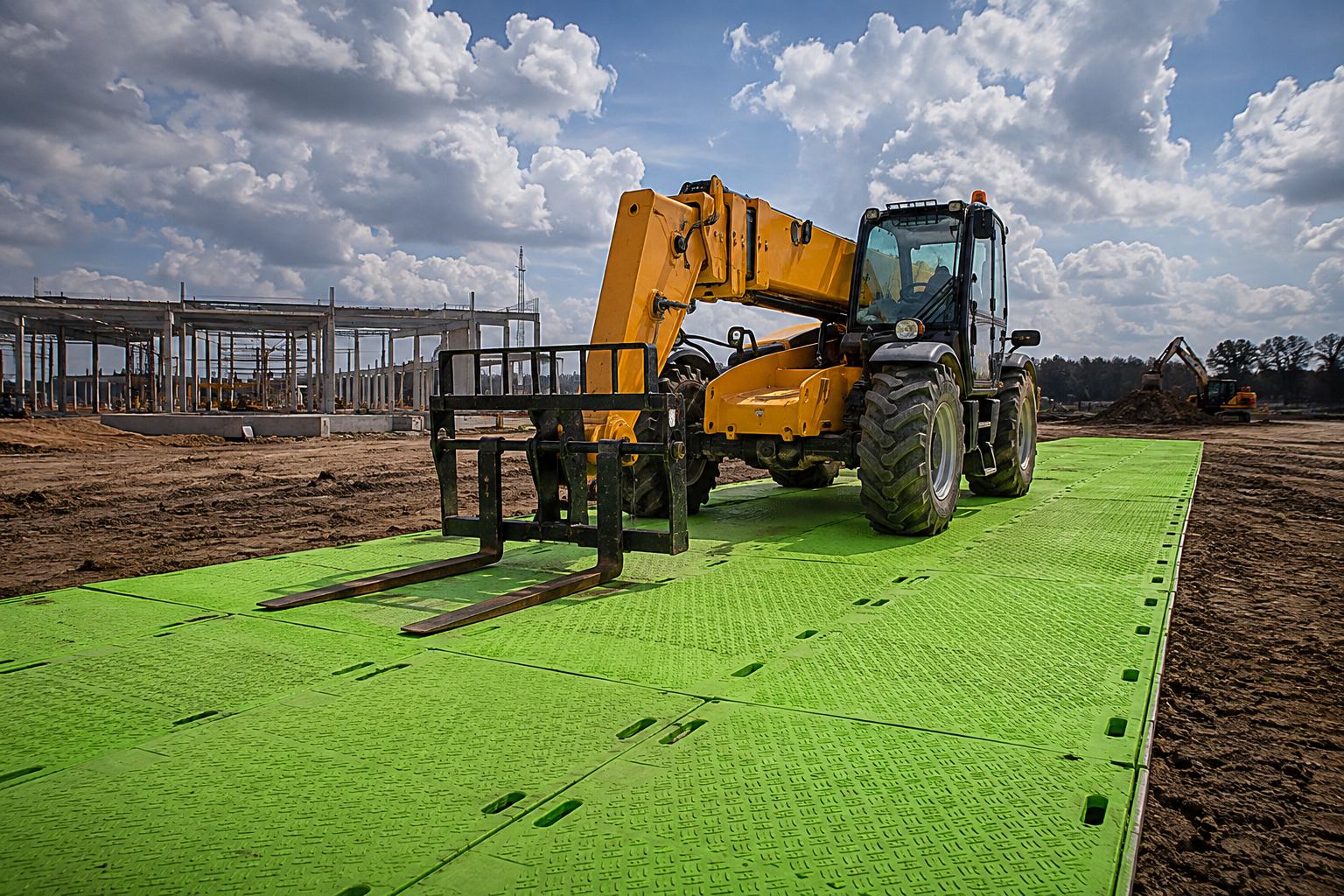
BAM! HDPE: 80-ton rating from ISO 9001:2015 certified manufacturing. Covers the full range of residential and light commercial equipment—skid steers, excavators, concrete trucks, loaded dumpsters—with substantial safety margin.
Weather and moisture performance
Plywood: absorbs moisture aggressively. Gets saturated after rain, loses structural integrity, warps and delaminates. Wet plywood is slippery and weaker than dry plywood. Performance degrades with each wet-dry cycle.
Primamat and composites: moisture performance varies by formulation. Composites with wood fiber content absorb moisture and degrade over time. Pure polymer composites perform better. Check the specific product’s moisture absorption specification.
BAM! HDPE: less than 0.01% moisture absorption. Performs identically wet or dry. No warping, swelling, or delamination. Same load rating after weeks of rain deployment as on day one.
Panel weight and handling
Plywood (4×8, 3/4 inch): approximately 60 to 70 pounds. No hand holds. Awkward to carry. Splinters in gloves.
Primamat and composites: weight varies significantly by product. Rolled composites can be lighter than rigid alternatives but require different handling (rolling and unrolling rather than panel placement). Rigid composites at 4×8 size can range from 60 to 90 pounds.
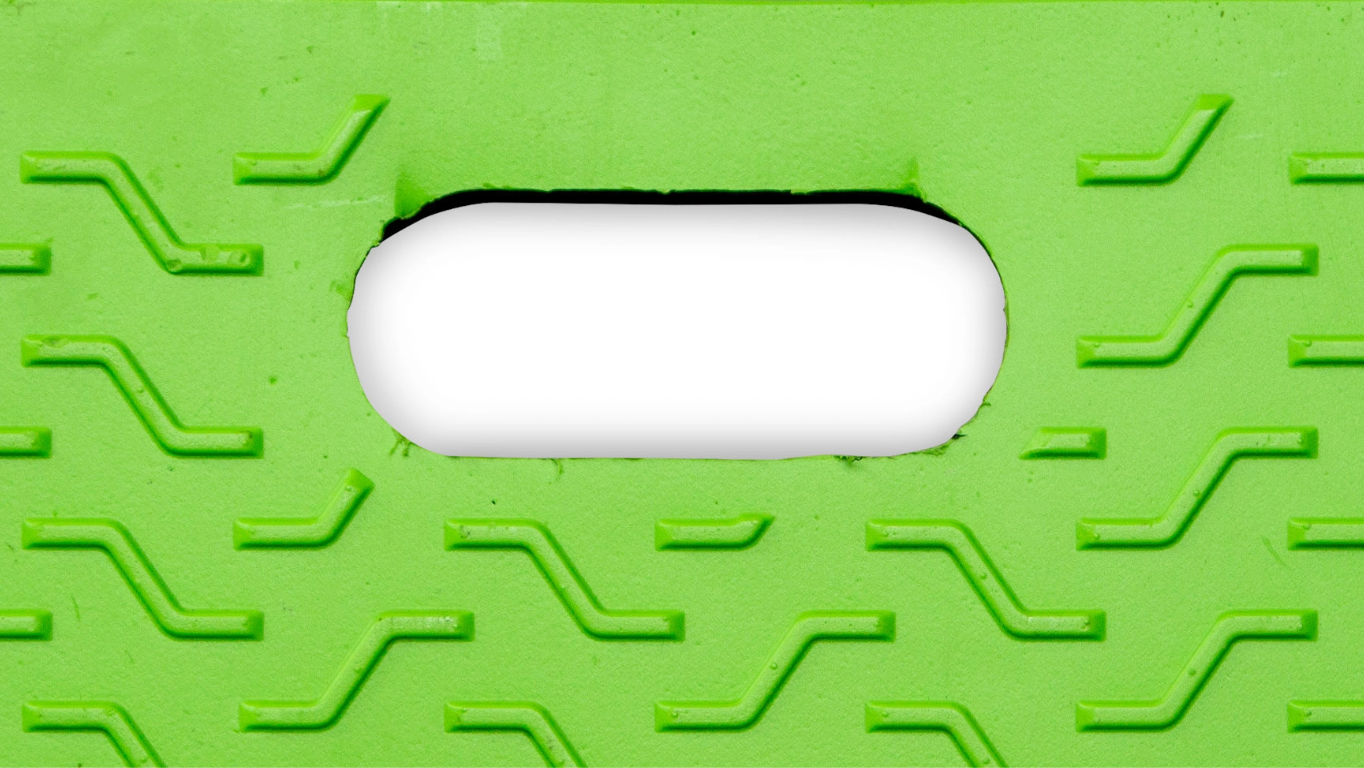
BAM! HDPE: 56 pounds per 4×8 panel with 8 large hand holds designed for gloved hands. Single-person deployable. Lighter than most comparable rigid alternatives.
Traction
Plywood: smooth surface is slippery when wet. Wet plywood on a job site is a slip hazard for crew and traction risk for equipment.
Primamat and composites: traction varies by surface treatment and design. Some composite products have engineered tread patterns. Others have smooth or minimally textured surfaces.
BAM! HDPE: exclusive dual-sided tread: equipment grip on one face, pedestrian traction on the other. Both surfaces maintain function in wet conditions. Designed specifically for the traction demands of working jobsites.
Durability and cost per use
Plywood: 2 to 4 uses per sheet before disposal. $50 to $70 per sheet replacement cost. Ongoing waste and disposal cost.
Primamat and composites: durability varies significantly. Some premium composites approach HDPE lifespans. Budget composites may degrade faster than HDPE under sustained heavy use. Without extensive use history, lifespan is harder to predict than for established HDPE products.
BAM! HDPE: 5 to 10+ years of active use. 3-year manufacturer’s warranty. Cost per use approaches zero as the panel count exceeds a few hundred deployments.
Flexibility vs. rigidity
This is the primary performance difference between flexible composite products (like rolled Primamat systems) and rigid HDPE panels.
Flexible mats conform to uneven terrain—an advantage on very rough, irregular surfaces. But flexibility becomes a liability under equipment loads: flexible mats can fold at the edges under heavy equipment, creating rollover hazards and inconsistent load support.
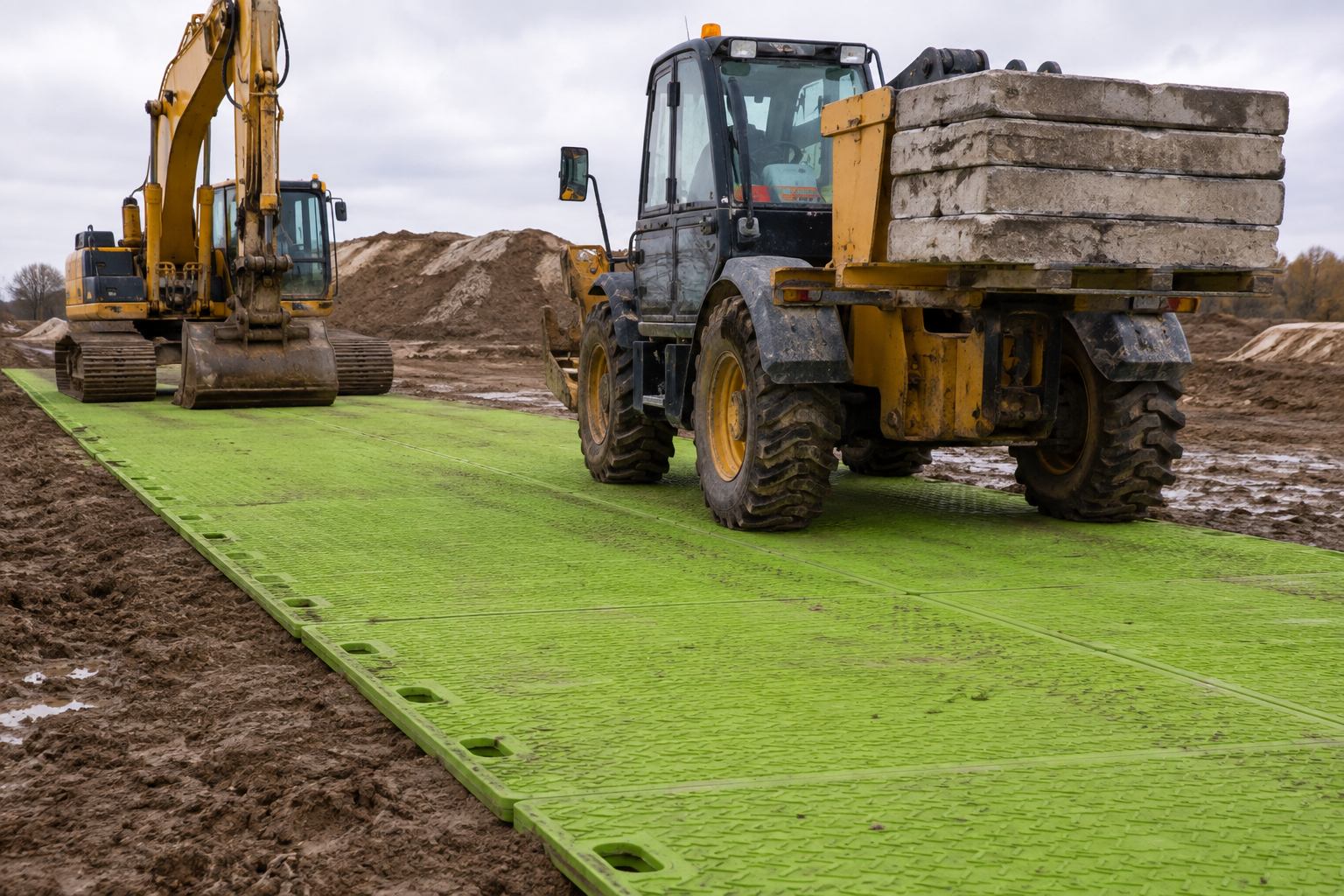
Rigid HDPE panels remain flat under load, providing consistent, predictable support that equipment operators can rely on. For any application where equipment is driving over the mat—which is most jobsite applications—rigidity is an advantage, not a limitation.
Manufacturer support and warranty
Plywood: no warranty. Manufacturer (lumber mill) has no relationship with the end use.
Primamat and composites: warranty terms vary by brand and distributor. Verify warranty length and who backs it before purchasing.
BAM! HDPE: 3-year warranty backed by Allied Plastics—the manufacturer. Direct domestic support through 888-870-8158 and msheridan@alliedplastics.com.
When Composite / Primamat-Type Products Might Be the Better Choice
There are applications where flexible composite mats have a genuine advantage:
- Very irregular terrain where the mat needs to conform to the surface profile rather than bridge across it
- Applications where the mat must be transported rolled (fitting through narrow passages or in confined storage)
- Light-duty pedestrian applications where load rating is not a primary concern
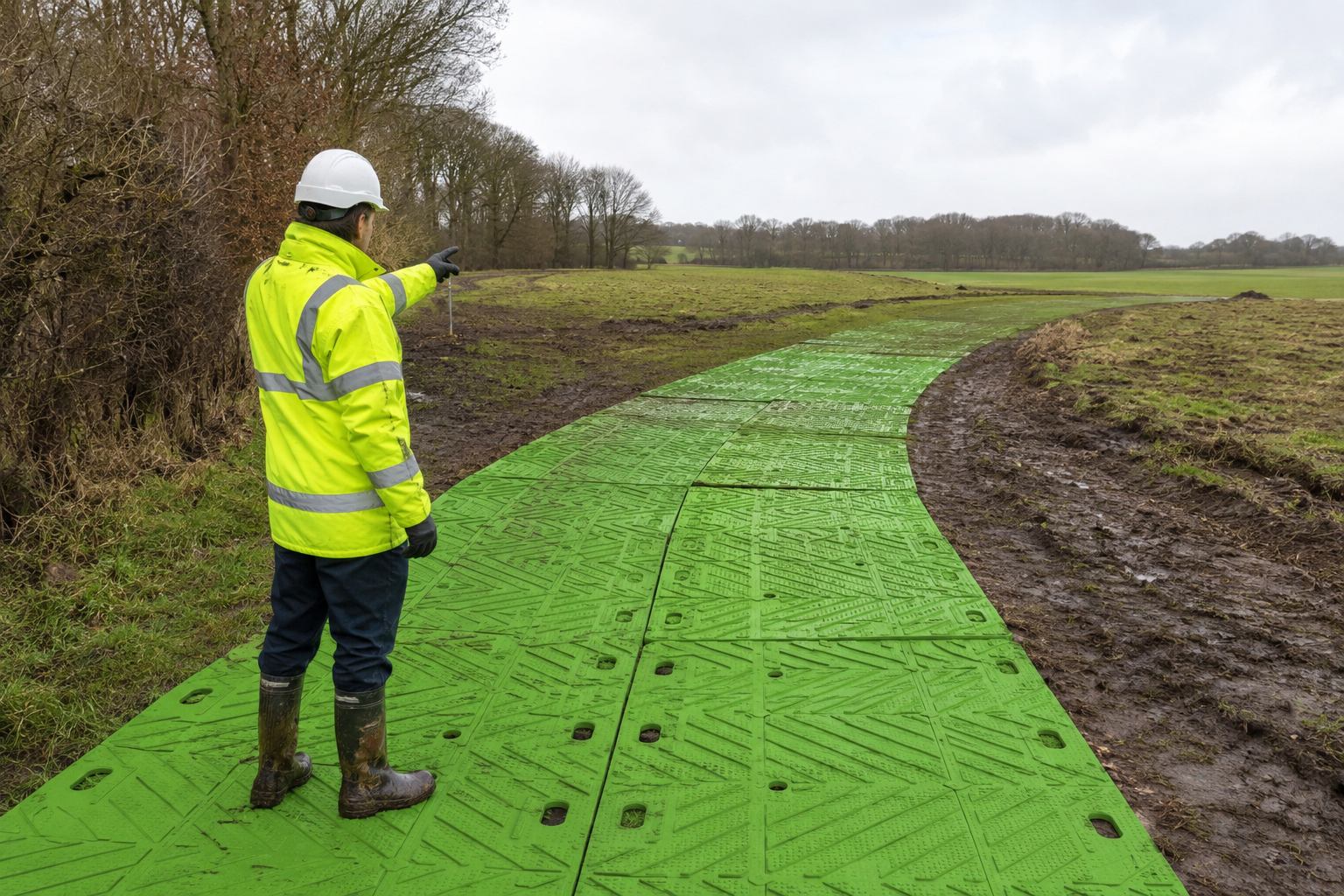
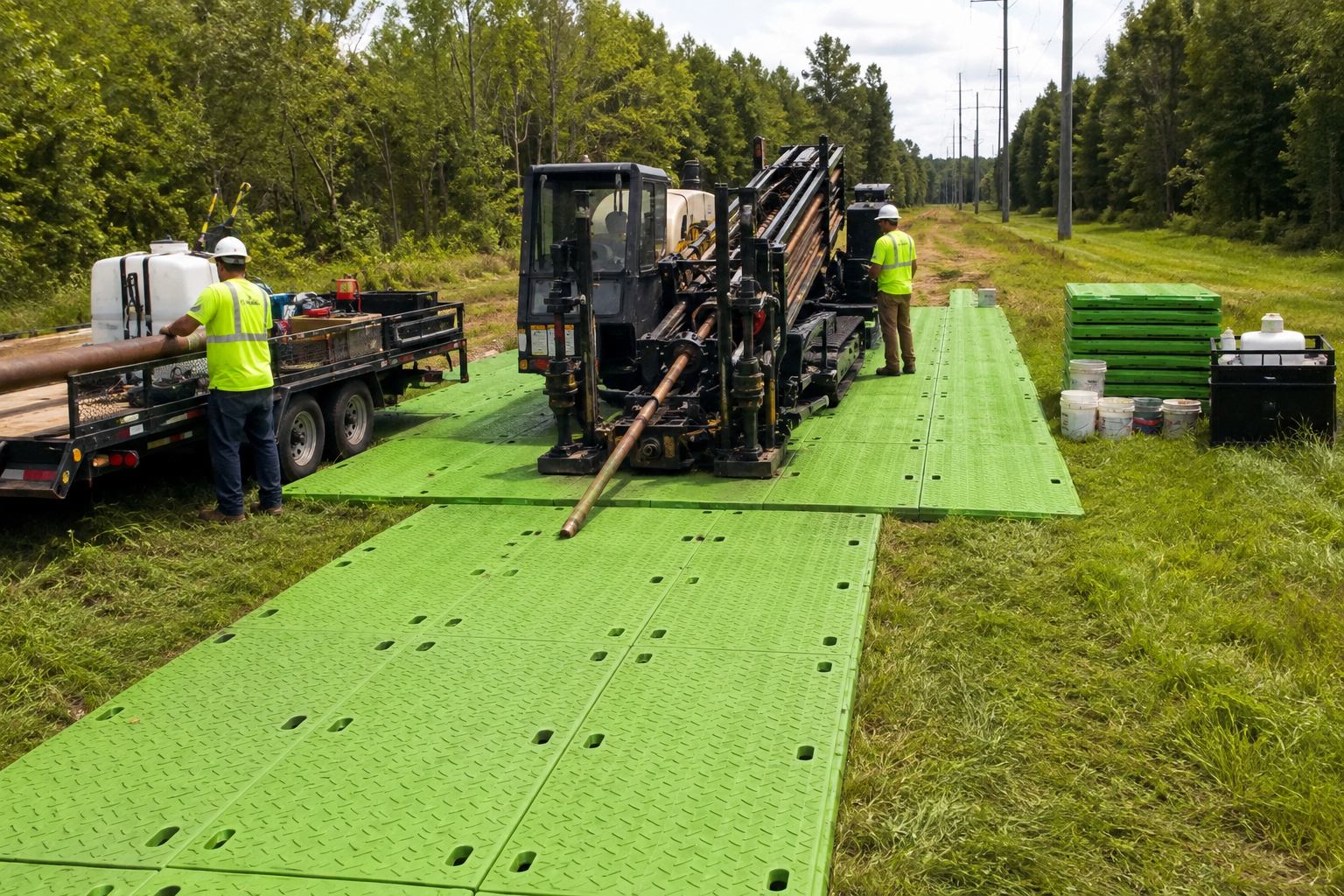
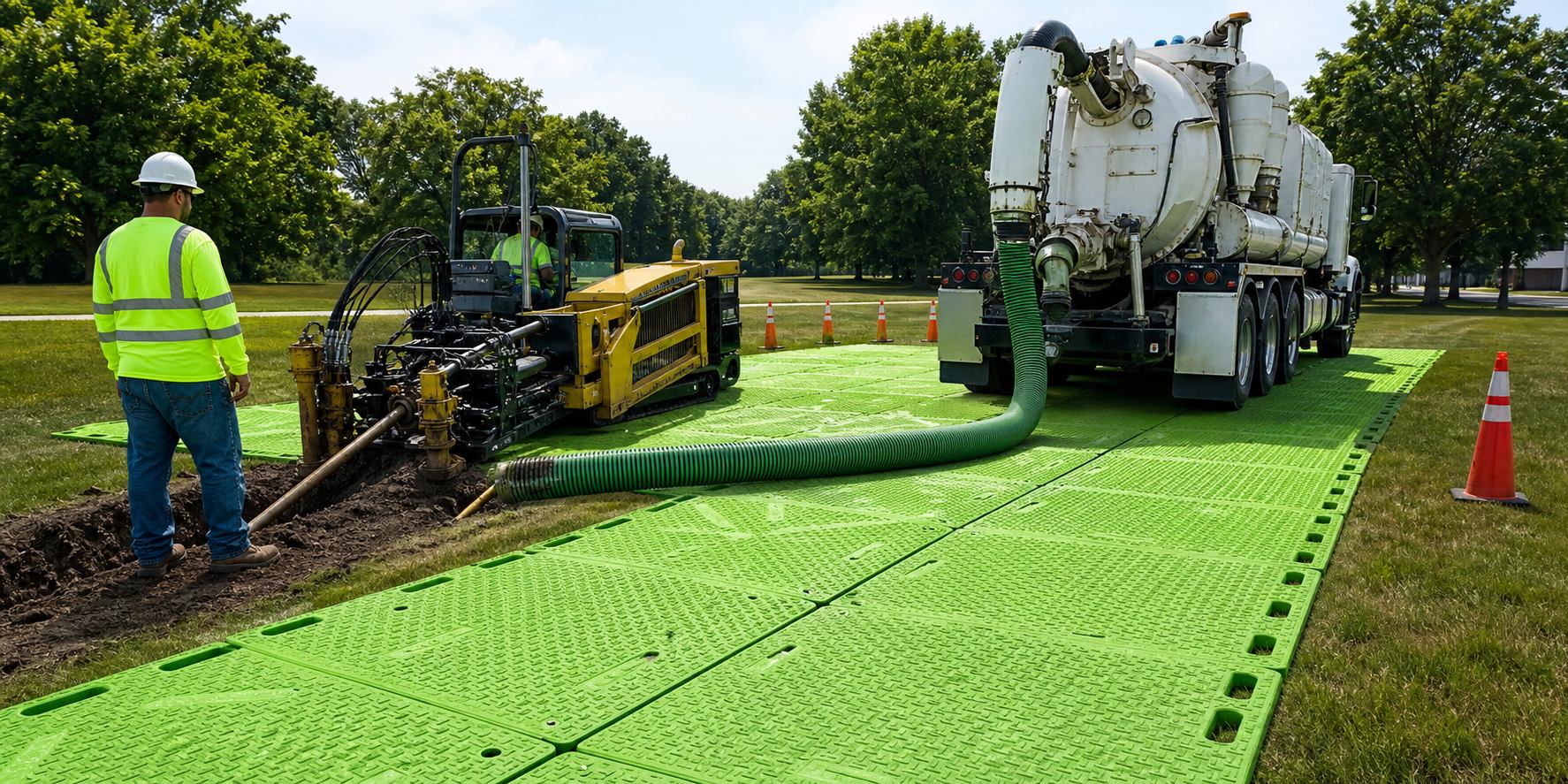
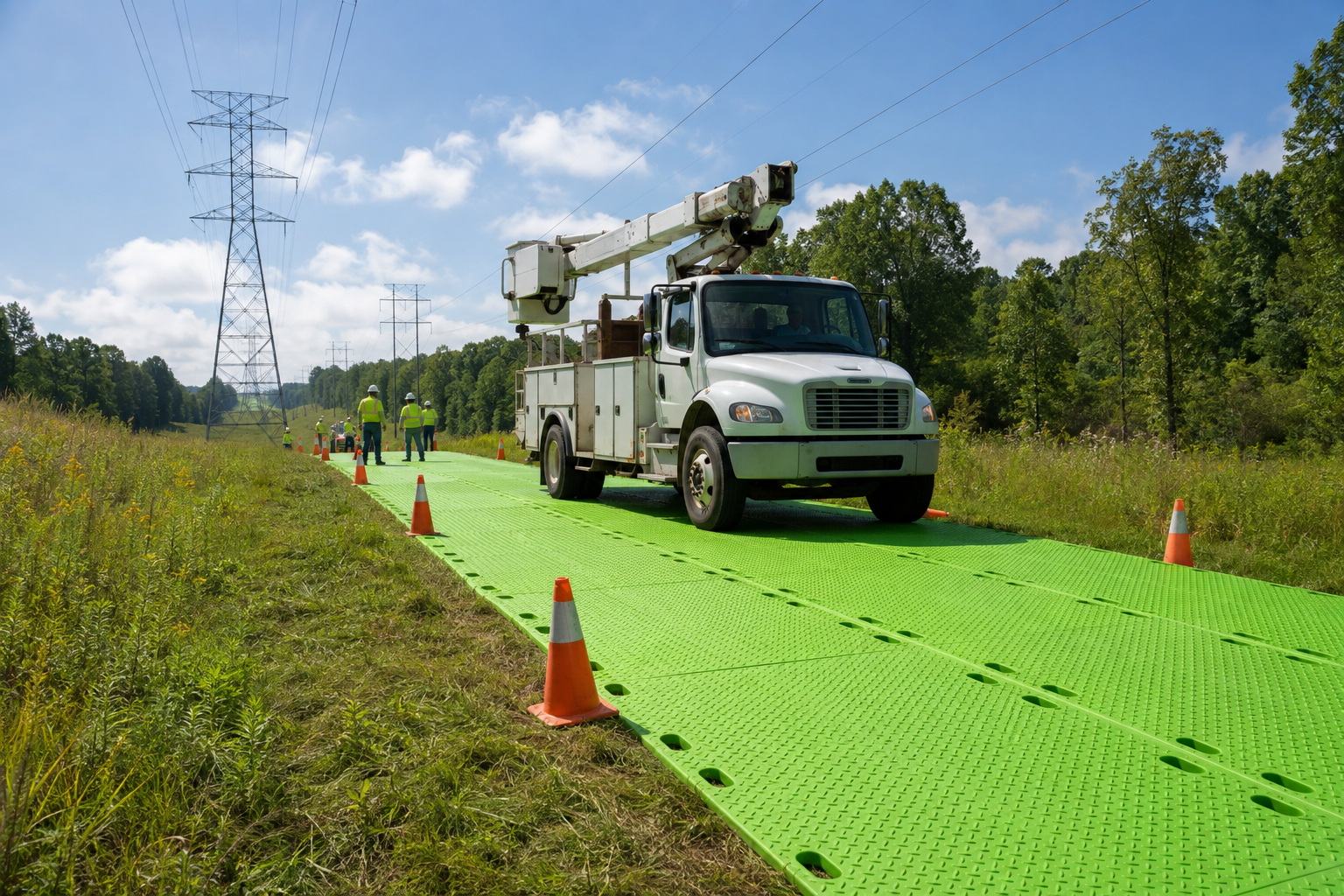
For most contractor applications—equipment access, dumpster protection, driveway coverage, temporary access roads—rigid HDPE panels deliver better performance on every key metric.
The Verdict
Plywood: eliminated. No load rating, poor weather performance, high replacement cost, slip hazard. Not a professional ground protection solution for equipment applications.
Primamat and premium composites: competitive in specific applications (irregular terrain, rolled transport). Verify the specific product’s load rating, moisture performance, and warranty before purchasing. For standard jobsite applications, the performance case over HDPE is not clear.
BAM! HDPE: leads on load rating (80 tons verified), weather performance (near-zero moisture absorption), handling (56 lbs with 8 hand holds), traction (dual-sided tread), durability (5 to 10+ years), and warranty (3 years, manufacturer-backed). For contractors who need consistent, reliable ground protection on equipment-intensive jobs, HDPE is the material that consistently wins the full-lifecycle comparison.
Frequently Asked Questions
Q: Is Primamat better than HDPE for all applications?
A: No. Primamat-type composite products have specific advantages on very irregular terrain and in applications where rolled transport is required. For standard equipment access, driveway protection, and dumpster staging—the most common contractor applications—HDPE rigid panels outperform on load rating, moisture resistance, and durability.
Q: Why do some contractors still use plywood for ground protection?
A: Familiarity and low upfront cost. Plywood is available everywhere and contractors have used it for decades. The limitations become apparent when tracking actual cost per use, damage claim frequency, and crew safety incidents over a season. Most contractors who switch to HDPE mats do not return to plywood.
Q: Where can I try BAM! HDPE mats before committing to a full purchase?
A: Some BAM! distributors offer trial and rental programs. Contact BAM! at 888-870-8158 or msheridan@alliedplastics.com to ask about options available through distributors in your area.
Q: How does BAM!’s load rating compare to Primamat’s?
A: BAM! carries an 80-ton verified load rating. Primamat product ratings vary by specific model—check the manufacturer’s documentation for the specific product you are evaluating. For applications involving equipment over 10 tons, verify that the specific product you are comparing carries an adequate rating.
Make the Decision Based on Data, Not Habit
The ground protection market in 2026 has better options than plywood. The comparison between those options is real. BAM! HDPE mats win the comparison on the specifications that matter most for contractors running equipment on residential and commercial properties.
See the full BAM! spec sheet at bamgroundpro.com/products. Find a distributor at bamgroundpro.com/where-to-purchase. Contact us at bamgroundpro.com/contact-us, call 888-870-8158, or email msheridan@alliedplastics.com. Pro’s choose BAM!