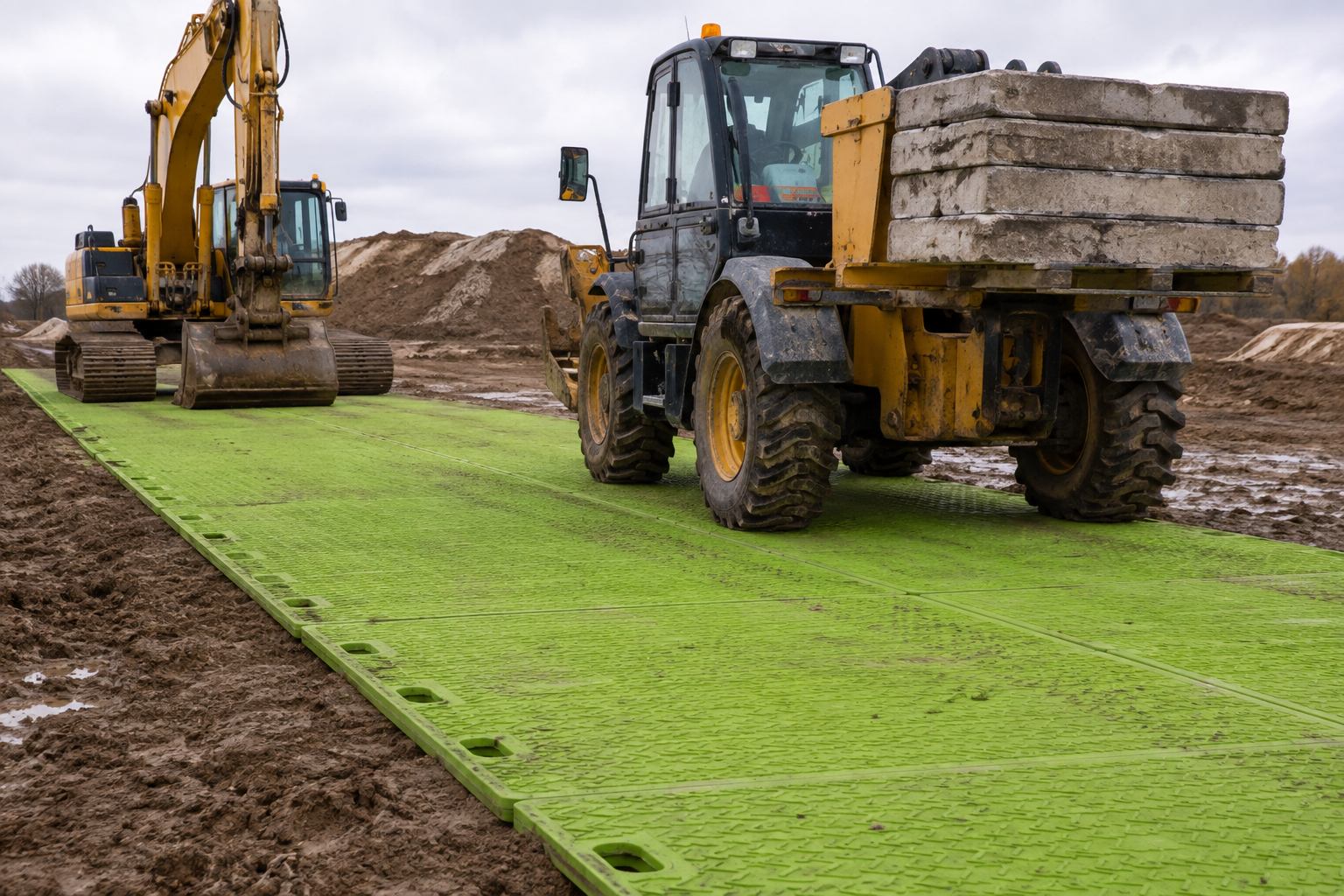
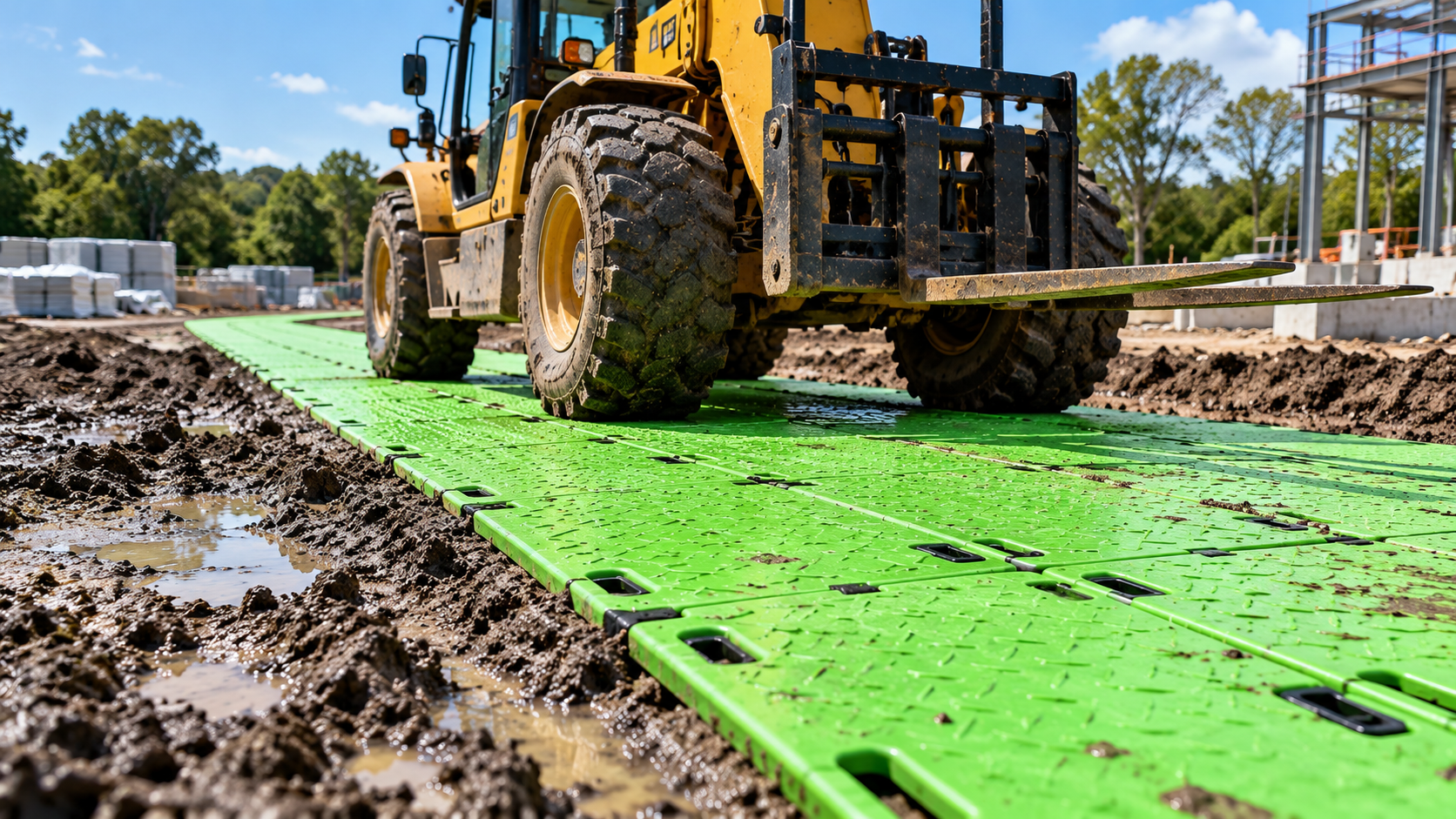
Every job that doesn’t sit right off a paved street needs a road before it needs anything else. Concrete trucks, excavators, delivery flatbeds, and crew vehicles all have to get from the public road to the work zone, and on most sites that route runs straight across grass, gravel, or bare dirt that was never built to carry 40,000-plus pounds on a repeat basis. A single pass might not do much damage. Twenty passes a day for six weeks will turn that route into a rutted, muddy mess that slows down every trade that comes after.
A temporary access road solves that problem without the cost or permitting of actual paving. Built correctly with the right ground protection mats, it gives equipment and trucks a stable, all-weather path for the life of the project, then comes up and ships to the next site when the work is done.
Why a Defined Route Matters More Than a Clear One
Most sites don’t lack space to drive — they lack a planned route. Without one, truck drivers pick their own line each time, widening the damaged area with every trip and eventually turning a 12-foot path into a 40-foot mud field. A defined access road keeps traffic concentrated in one protected corridor instead of spreading damage across the whole site.
It also solves a liability problem. An undefined route through soft ground is where trucks get stuck, where ruts turn into trip hazards, and where neighboring property lines get crossed by accident. A mapped, matted road removes most of that risk before it happens.
Planning the Route Before Equipment Shows Up
Walk it first
Walk the proposed route at the same time of day equipment will be using it, and do it after a rain if you can. Low spots that look fine on a dry afternoon can turn into standing water the next morning. Flag soft spots, drainage paths, and any utility markings before you measure for panels.
Measure width for the widest vehicle, not the average one
A skid steer and a concrete mixer don’t need the same clearance. Measure the route for the widest, heaviest vehicle that will use it regularly, add clearance for mirrors and swing, and build the road to that width from the start rather than widening it later.
Plan turning and staging zones separately
Straightaways take the least coverage. Turns, three-point turns, and load/unload zones take the most, because tires scrub and pivot instead of rolling straight. Budget extra panels — often double coverage — anywhere a vehicle will turn, back up, or sit stationary while loading.
What Makes a Mat System Work as a Real Road
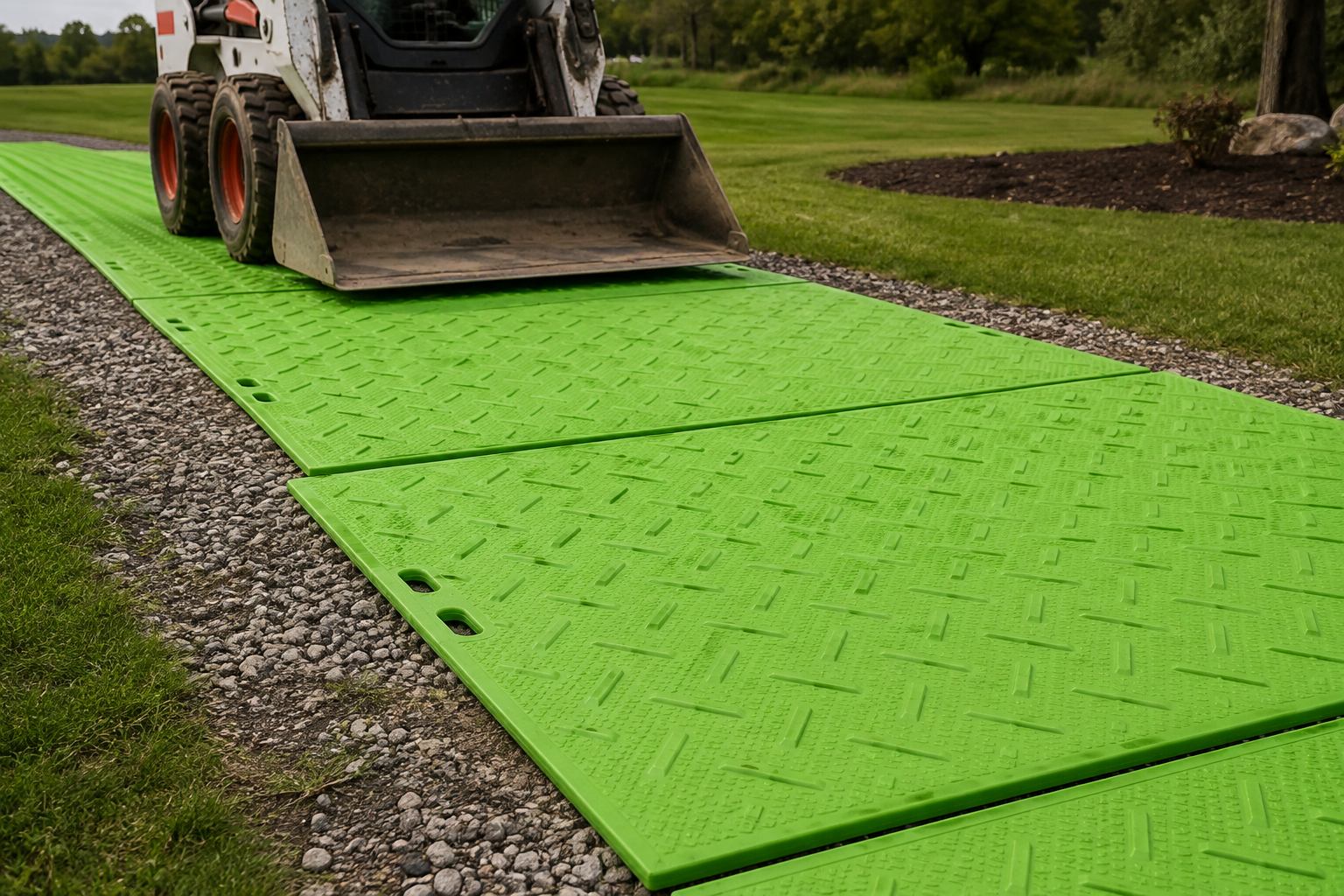
A temporary road isn’t just mats laid end to end. It needs a continuous, interlocking surface that doesn’t shift under a loaded truck’s tires, handles both straight-line travel and turning loads, and sheds water instead of trapping it underneath. BAM! panels interlock edge to edge so the whole run acts as one surface rather than a series of individual plates that can rock or separate.
The panels also need to survive being driven on from multiple directions, in reverse, and at low speed under full load — conditions a lot of lighter-duty matting isn’t built for.
BAM! Panel Features Built for Repeat Traffic
80-ton rating — rated for the heaviest equipment likely to use a jobsite access road, including loaded concrete trucks and cranes.
Hi-vis safety green HDPE — not blue rubber mats — so the road edge stays visible to drivers and pedestrians in low light.
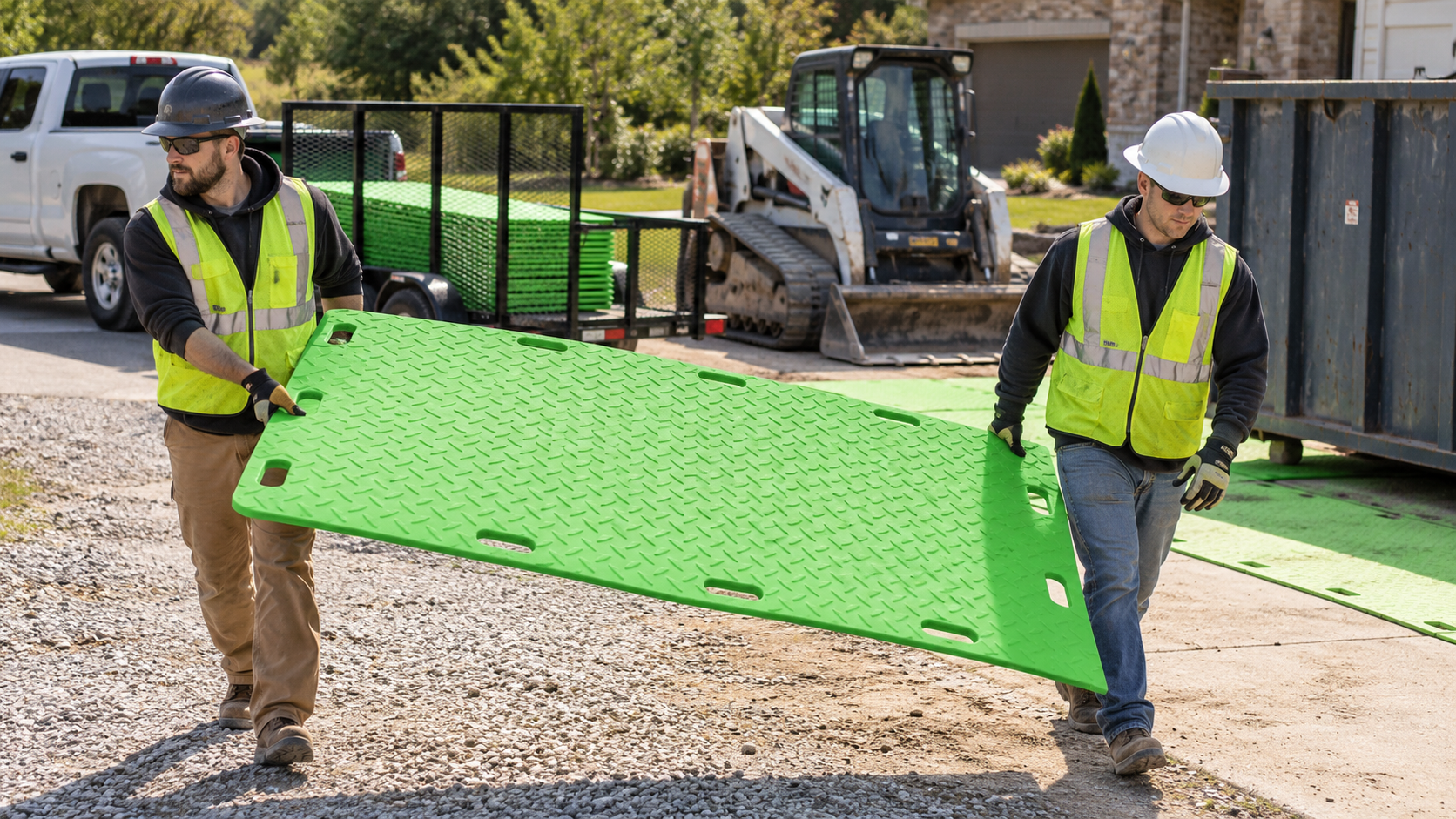
56-lb 4×8 panels — light enough for a two-person crew to place and reposition without machinery.
Non-absorbent surface — unlike plywood or timber, HDPE doesn’t soak up water, swell, or splinter under repeated wet/dry cycles.
Fully reusable — the same panels come up at the end of one job and go straight into service on the next.
Weather Is the Real Test of a Temporary Road
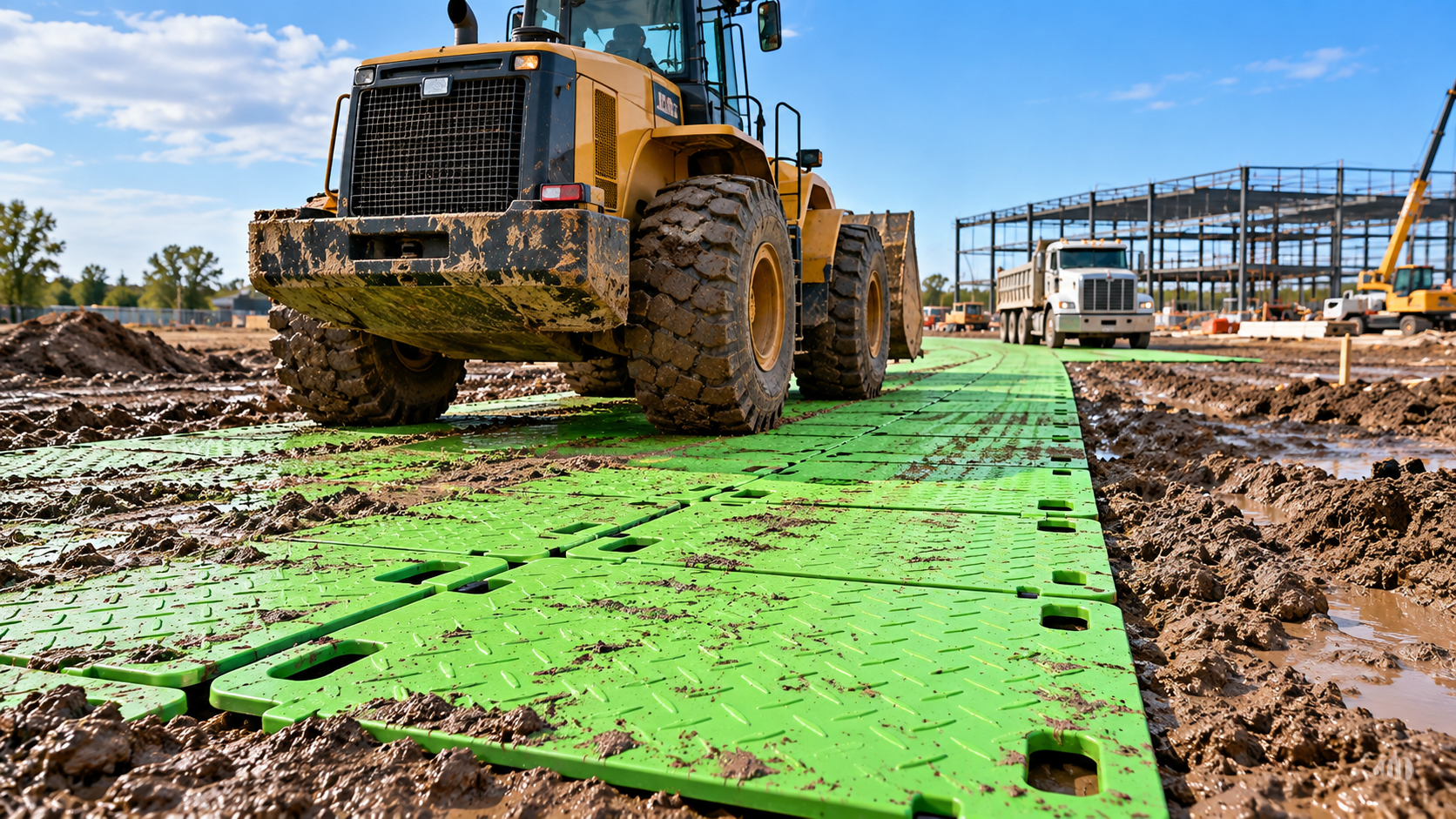
Any access route looks fine on a dry, sunny week. The real test comes after three days of rain, when native soil loses most of its bearing capacity and standing water sits in every low spot. A properly built mat road keeps performing through that stretch because the panels bridge the load across a wider footprint than tires alone, keeping equipment on top of the mud instead of in it.
That said, no mat system replaces drainage planning entirely. Where water consistently pools, grade or crown the route before matting it, and keep an eye on sections where runoff crosses the road.
Installing and Maintaining the Road
Clear major debris and rocks from the route before placing panels.
Start from the firmest ground and work outward into softer sections.
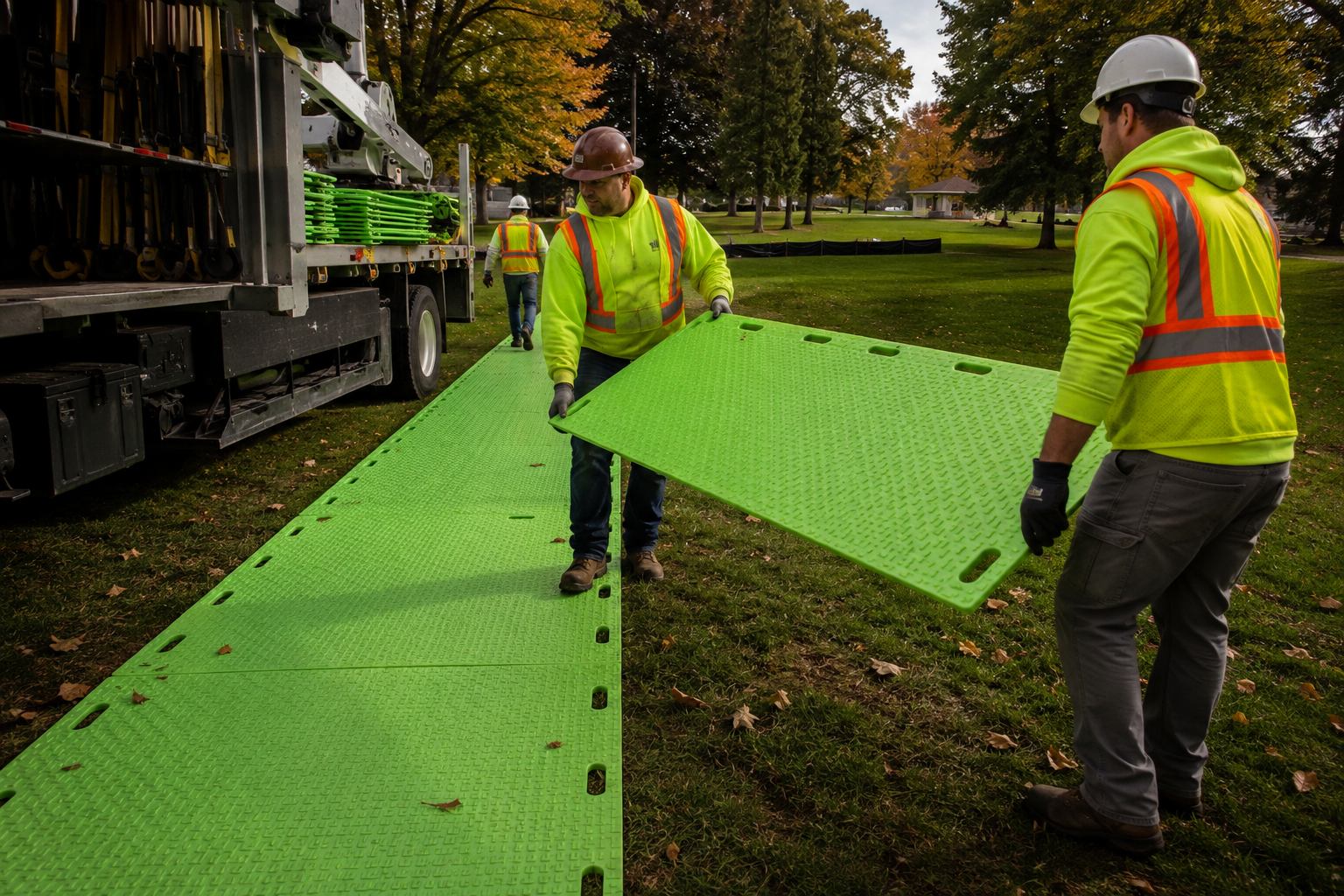
Interlock panels fully — gaps are where tires catch an edge and panels shift.
Inspect after the first few days of heavy traffic and reset any panels that have walked out of position.
Add coverage at turning zones and entry points if wear patterns show they’re taking more abuse than planned.
When a Temporary Road Isn’t Enough on Its Own
Mats manage surface load and protect the ground underneath — they don’t replace proper grading, drainage, or engineering judgment on sites with serious slope, unstable subgrade, or ongoing excavation nearby. Treat the panels as one part of the access plan. Site conditions, equipment instructions, safety requirements, and professional judgment remain essential.
Frequently Asked Questions
Q: How many panels does a temporary access road need?
A: It depends on route length and width, but a good starting formula is to measure total linear footage, divide by the panel’s coverage area, then add 15–20 percent extra for turning zones and staging areas. Contact BAM! for a project-specific estimate.
Q: Can a temporary access road handle concrete trucks and cranes?
A: Yes. BAM! panels carry an 80-ton rating, which covers fully loaded concrete trucks, cranes, and most heavy construction equipment when installed correctly.
Q: Do the panels work on both grass and gravel?
A: Yes. The interlocking panel system distributes load across both surface types, though very soft or saturated ground may need additional coverage or grading first.
Q: How long can a temporary road stay in place?
A: There’s no fixed limit — panels are built for extended rental periods and are routinely left in place for the full length of a construction project, then picked up and reused elsewhere.
Q: What happens to the road when the project is done?
A: The panels are pulled up, cleaned if needed, and shipped to the next site. Unlike gravel or temporary asphalt, there’s no removal cost or disposal problem.
Build a Road That Moves With the Job
A temporary access road only works if it’s planned before the first truck shows up, not patched together after the site turns to mud. Measure the route, account for turning zones, and build with a panel system rated for the equipment that will actually use it.
Work cleaner. Work safer. Pro’s choose BAM!
Explore BAM! Ground Pro mats and specs to find the right panel for your access route.
Find a distributor near you through our Where to Purchase page.
Call 888-870-8158 or email msheridan@alliedplastics.com for project-specific planning help.