Most ground protection mats have one tread pattern on one side. You place it, equipment rolls over it, and it does its job.
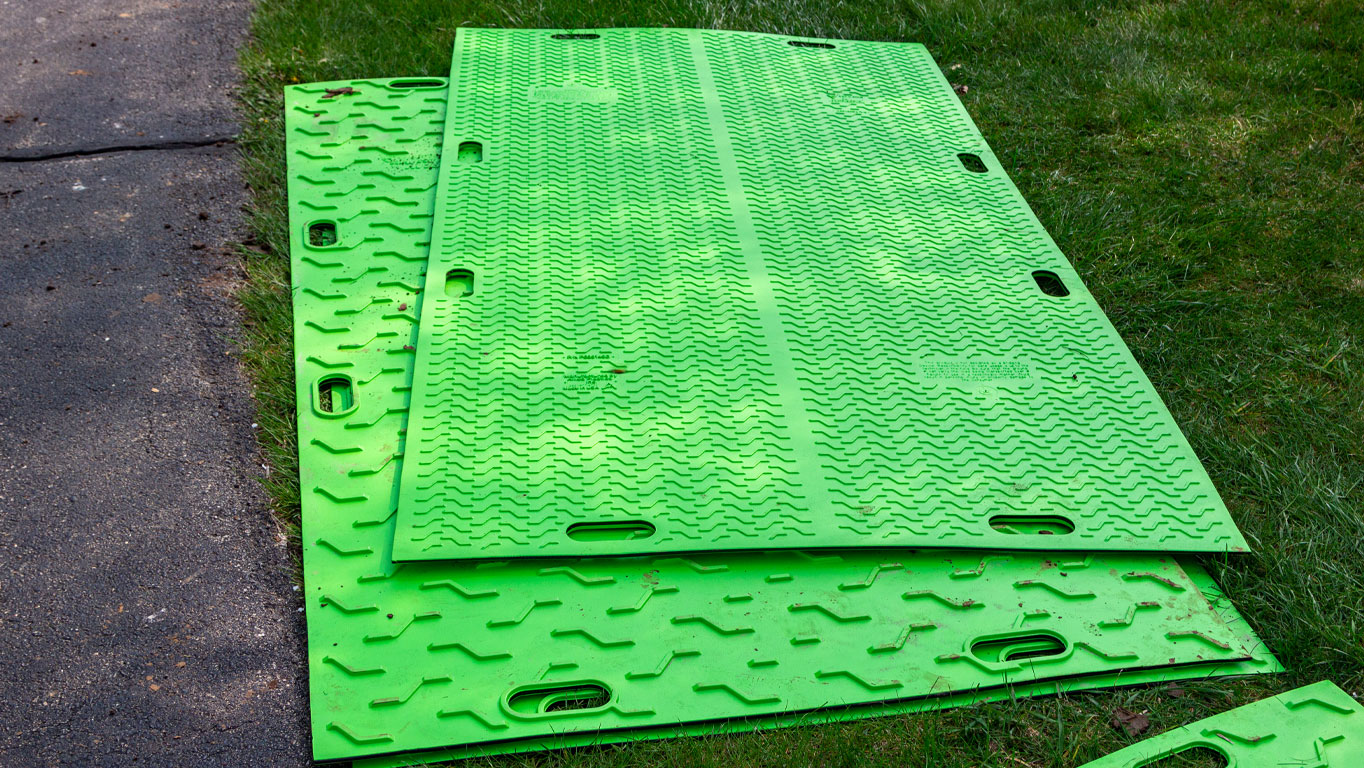
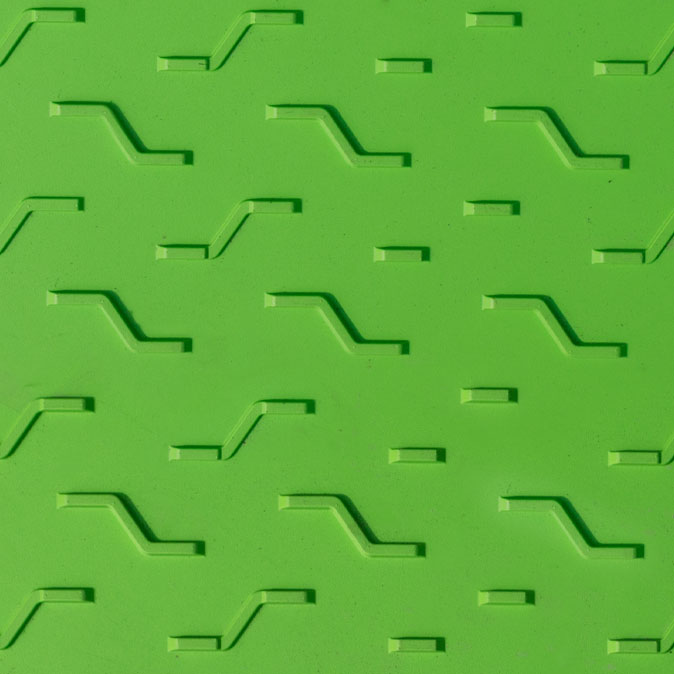
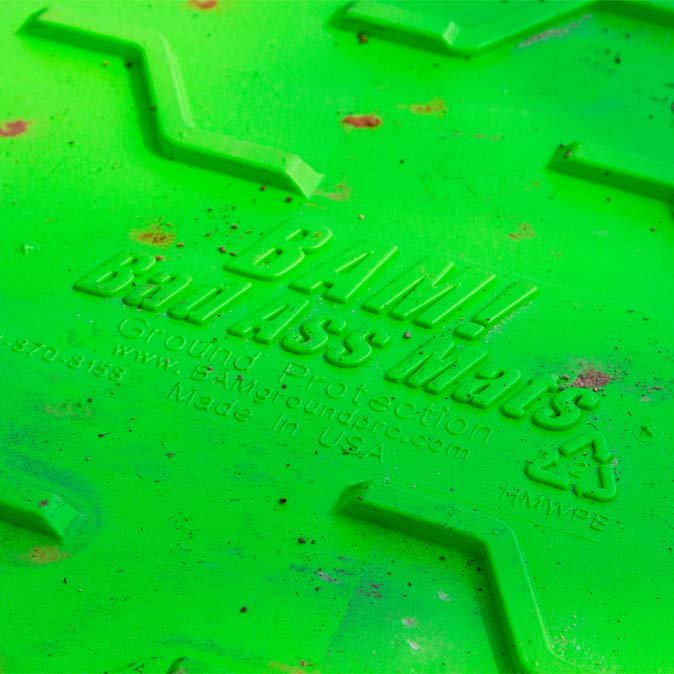
BAM! Bad Ass Mats have an exclusive dual-sided tread design—two different tread patterns on the same panel. One side is engineered for equipment grip. The other is engineered for pedestrian traction. Both sides are in active use on every job.
This isn’t a feature that sounds good in a brochure. It solves a real problem that single-sided mats create on active construction jobsites.
The Single-Sided Mat Problem
Single-sided mats are designed for one purpose: equipment rolling over them. The tread pattern optimizes for machine traction, which typically means a coarser, more aggressive pattern with wider channels.
That works well for machines. But construction sites aren’t only occupied by machines. Crew members work alongside equipment constantly. They carry materials, operate controls, position panels, and move through the same zones the equipment uses.
A tread pattern optimized for equipment traction isn’t necessarily optimized for foot safety. Wide channels and aggressive patterns can catch boot edges. Rough surface textures that grip tires can be harder for boots to navigate in wet conditions.
On a single-sided mat, the crew is using the wrong surface. BAM!’s dual-sided design gives each user—machine or person—the surface they need.
The Equipment Side: Engineered for Machine Grip
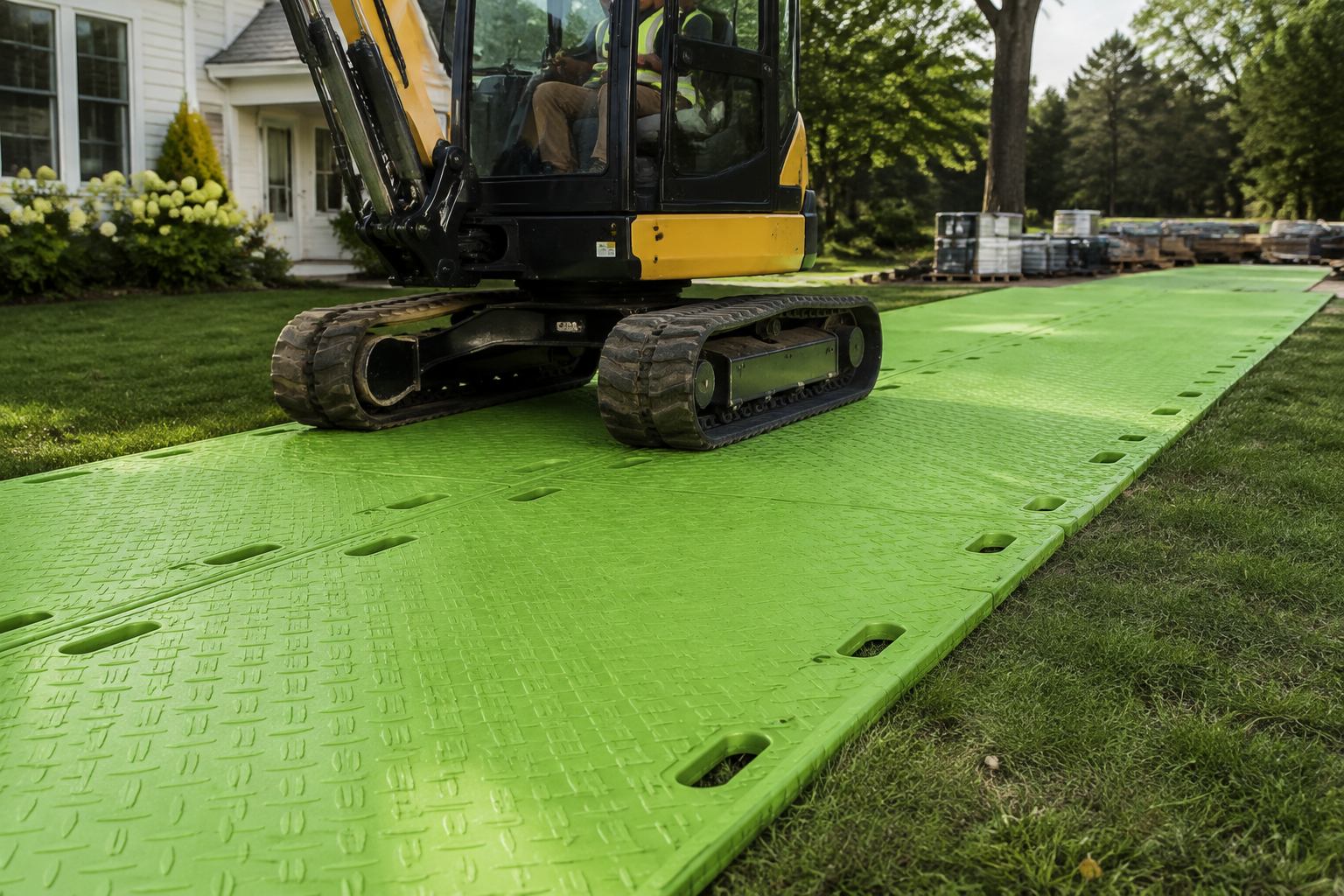
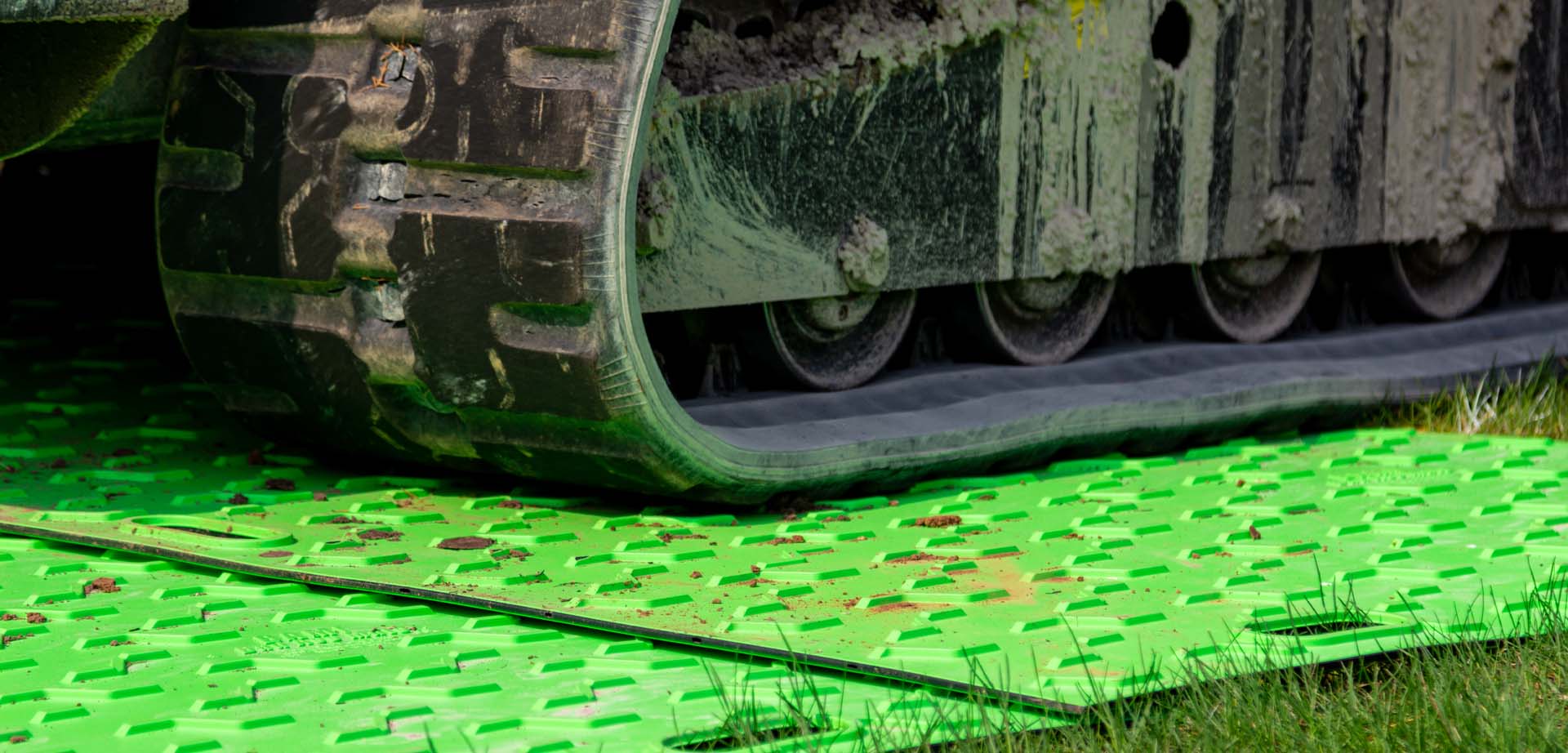
The equipment side of a BAM! mat uses a tread pattern designed for tire contact. The pattern provides consistent grip across the full tire contact area, which means:
- Equipment moves smoothly without spinning tires on the mat surface
- No localized traction loss that creates jerky, unstable machine movement
- Consistent grip in wet and dry conditions
- Reduced risk of equipment sliding during stopping and starting
This consistency matters especially on slopes and during loaded passes, when equipment handling is most demanding.
The Pedestrian Side: Engineered for Safe Footing
The pedestrian side uses a different tread geometry—optimized for boot contact rather than tire contact. This design provides:
- Slip-resistant surface that grips boot soles in wet conditions
- Consistent footing across the full mat surface, not just in specific tread channels
- Stable surface for carrying heavy materials without footing instability
- Reduced fatigue for crew working extended hours on matted surfaces
The pedestrian tread also transitions better for workers stepping on and off the mat surface—the edge condition where slip risk is highest.
How the Dual-Sided Design Works in Practice
Deployment orientation
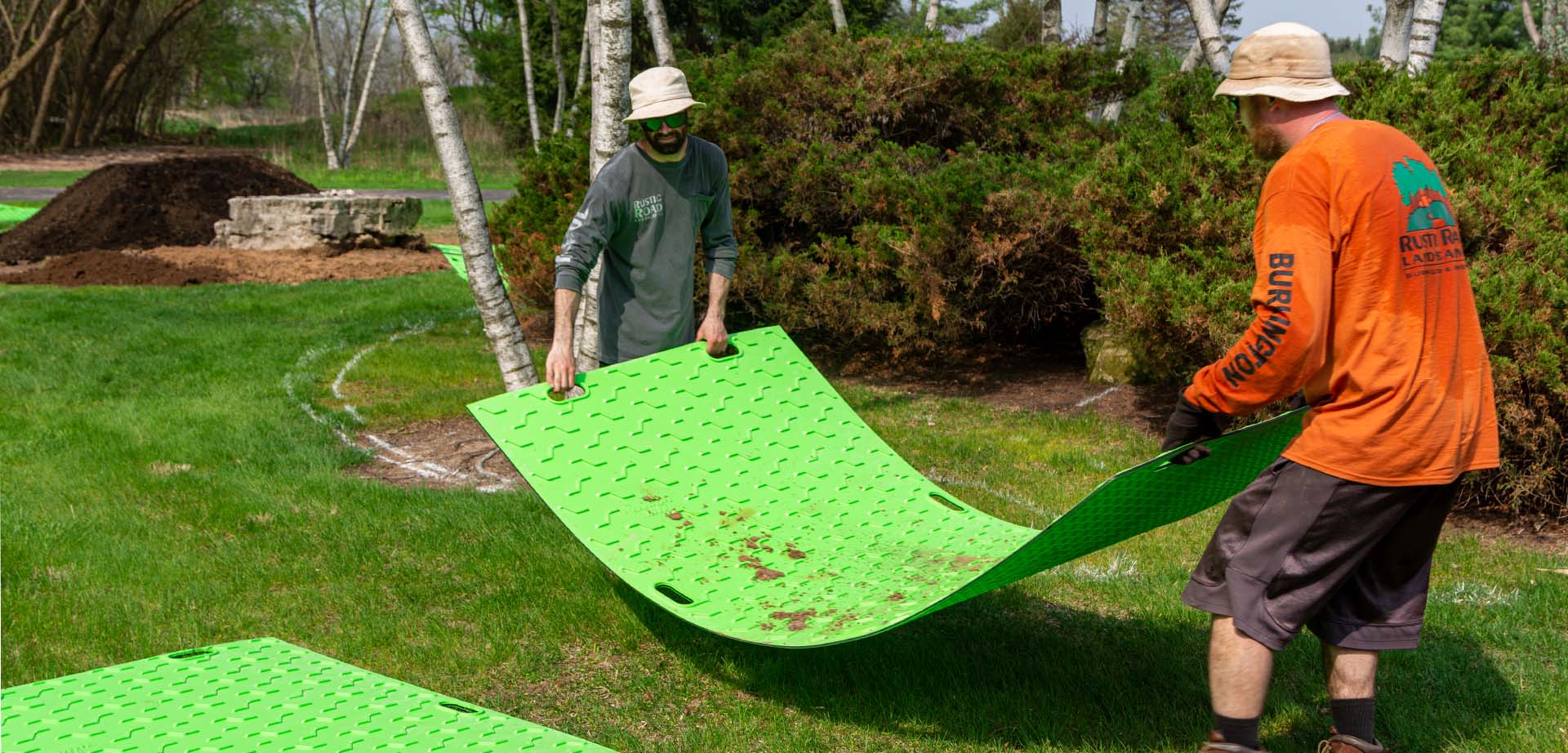
Deployment is straightforward: equipment-side up when machines are the primary users, pedestrian-side up when crew has primary access. In mixed zones where both equipment and crew operate, the choice depends on which use is more safety-critical in that specific area.
Staging zones vs. travel paths
Travel paths where equipment rolls benefit from equipment-side up. Staging zones and material handling areas where crew is most active may benefit from pedestrian-side up. On complex sites, different sections can be deployed with different orientations based on the specific activity in each zone.
The safety benefit in wet conditions
Rain, morning dew, and irrigation are common on residential and commercial jobsites. Wet surfaces dramatically increase slip risk—for both equipment and crew. Both sides of the BAM! dual tread maintain their grip function in wet conditions, which means the safety benefit doesn’t disappear when conditions change.
The Interlocking Stack Feature
The dual tread design serves a second function beyond deployed use: when mats are stacked for transport or storage, the tread patterns interlock. The equipment-side pattern on one mat meshes with the pedestrian-side pattern on the next, creating a stable stack that doesn’t shift during transport.
This means arriving at the job with organized, non-shifted mats—ready to deploy quickly, not requiring repositioning after transit.
Why This Matters for Contractor Liability
Slip-and-fall incidents on construction sites are a significant liability concern. A crew member who slips on an unmarked, untreated surface in a wet construction zone represents a workers’ compensation claim, potential OSHA scrutiny, and project delay.
Matted surfaces that provide appropriate traction for the activities happening on them reduce this risk directly. The dual-sided design ensures that whatever is happening on the mat—equipment movement or crew work—the surface is appropriate for that activity.
Frequently Asked Questions
Q: How do I tell which side of the BAM! mat is the equipment side vs. the pedestrian side?
A: The equipment and pedestrian tread patterns have distinct geometries. Visit bamgroundpro.com/products to see clear images of both tread patterns. When in doubt, the more aggressive, coarser pattern is the equipment side.
Q: Does the dual-sided design affect the mat’s load rating?
A: No. The 80-ton load rating applies to both sides equally. The tread design is a surface feature—it doesn’t affect the structural load capacity of the panel.
Q: Can mats be deployed with either side up in all conditions?
A: Yes. Both sides are safe and functional in all standard conditions. The choice of which side to deploy up depends on the primary use in that zone.
Q: How does the dual-sided tread hold up after repeated use?
A: HDPE tread patterns maintain their geometry through hundreds of uses. The material doesn’t compress or flatten under normal use loads. Tread wear is minimal compared to rubber or softer plastic alternatives.
Two Surfaces. One Panel. Every Job.
The dual-sided tread design isn’t a premium upgrade on BAM! mats. It’s the standard design—because both machines and crew members deserve a surface engineered for their use.
See BAM!’s dual-sided tread design at bamgroundpro.com/products. Find a distributor at bamgroundpro.com/where-to-purchase. Contact us at bamgroundpro.com/contact-us, call 888-870-8158, or email msheridan@alliedplastics.com. Two sides. Every job. Pro’s choose BAM!