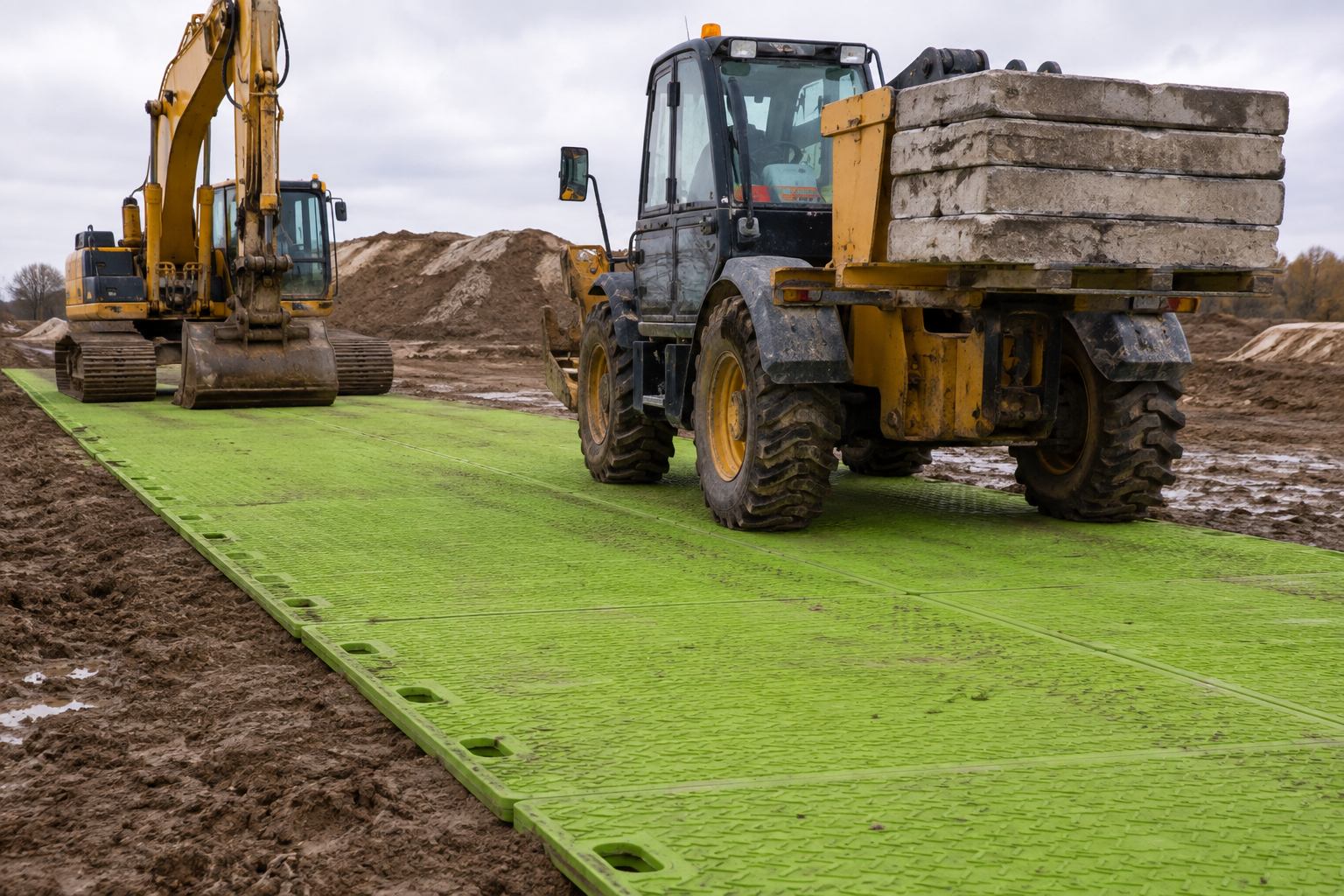
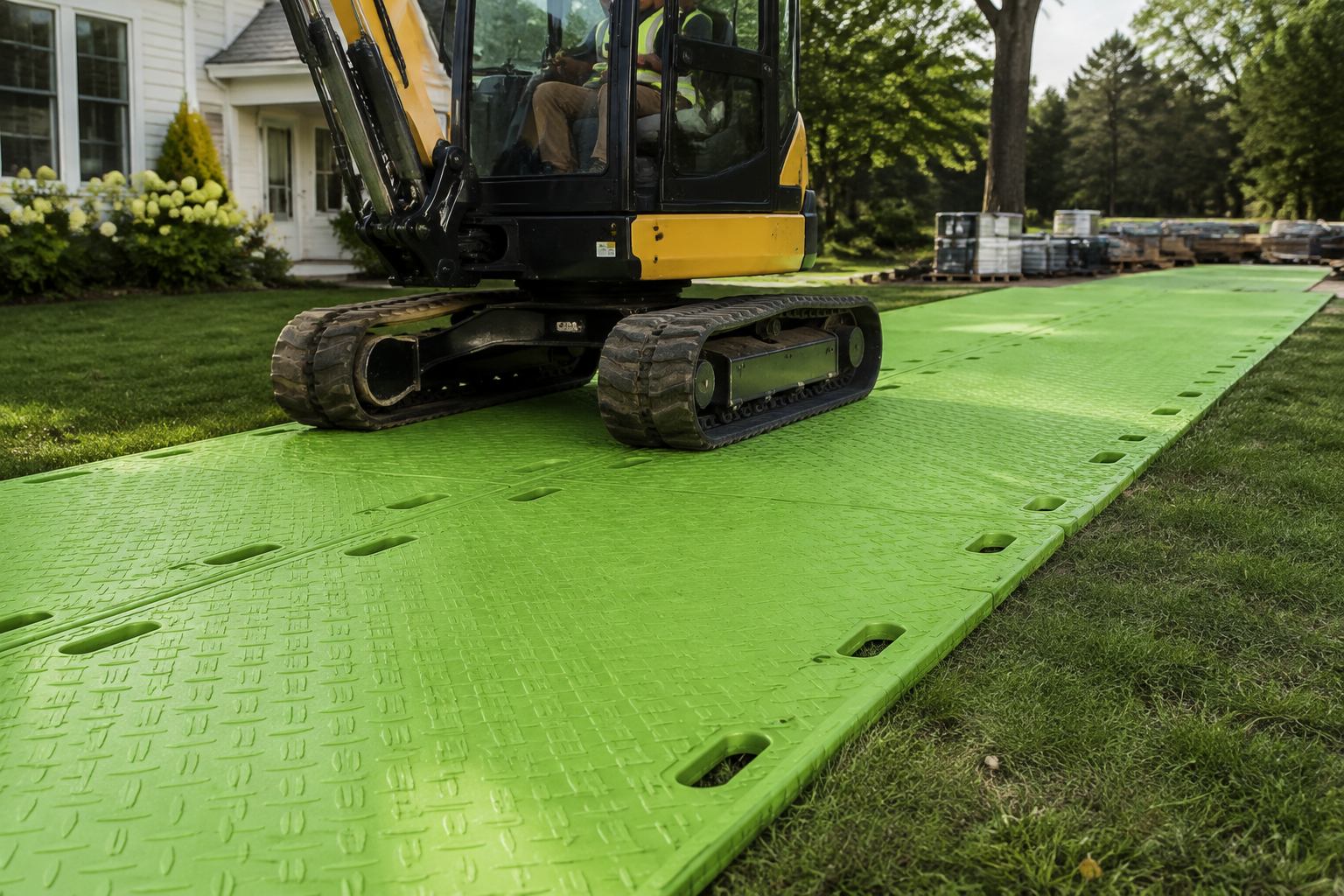
4×8 ground protection mats give contractors planning temporary access across lawns, soil, pavement, and finished surfaces a practical way to manage estimating how many panels a route needs without under-protecting turns, staging areas, or soft sections. A good mat plan protects the surface, supports a more organized work zone, and helps crews avoid costly restoration and downtime.
This guide explains where protection matters most, how to plan coverage, and which BAM! Ground Pro features affect daily use. BAM mats are hi-vis safety green HDPE panels—not blue rubber mats—and are designed for reusable ground protection.
Start With Route Length and Working Width
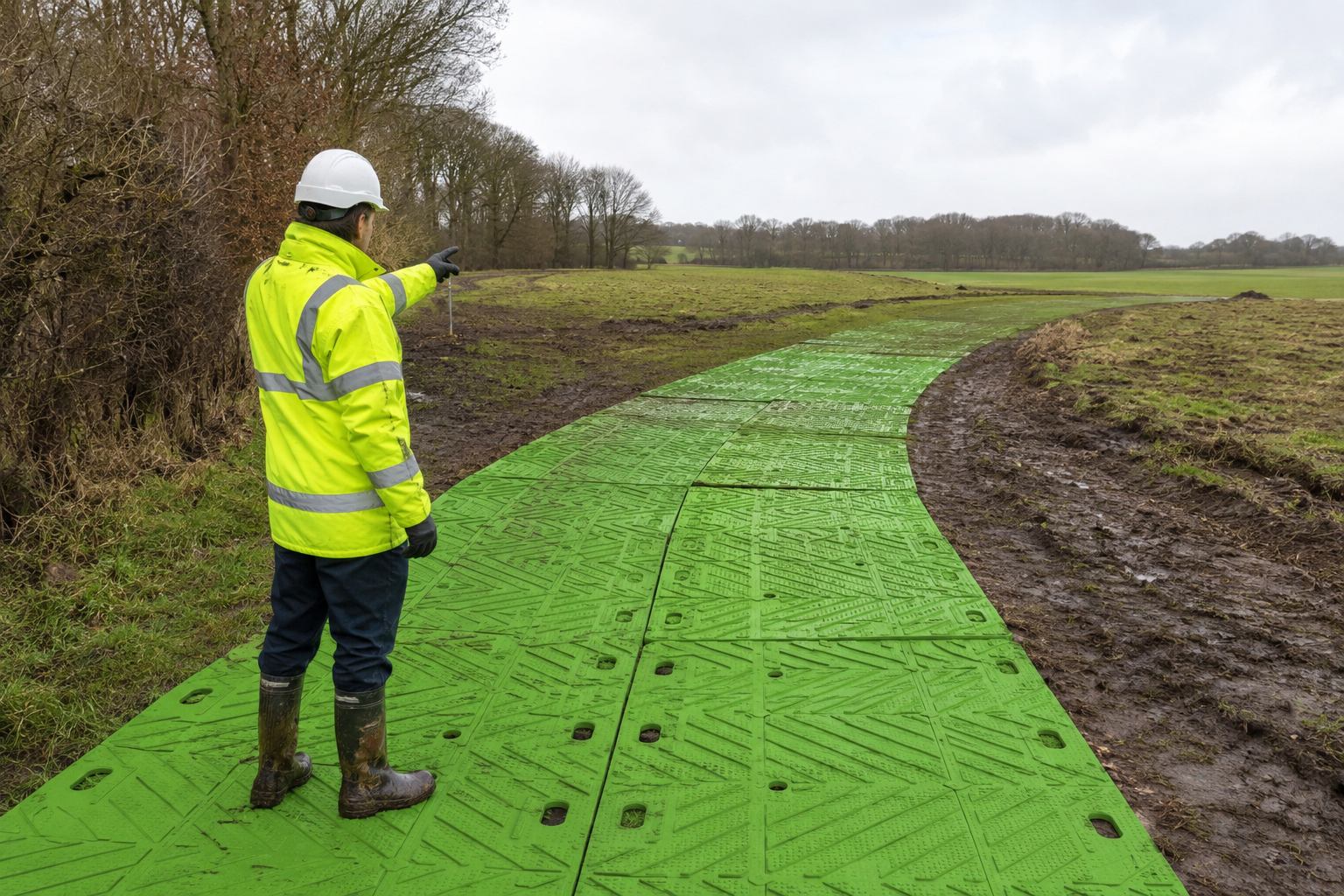
A 4-foot by 8-foot panel covers 32 square feet, but simple square-foot math is only the starting point. Measure the full travel route from firm entry point to the work zone, then decide whether the equipment needs a single track, a full-width lane, or a wider two-panel route. Include loading and unloading areas where machines turn or pause.
The best results begin with a pre-job walk. Note soft ground, drainage, slopes, finished surfaces, turning points, and the exact machine path. Build the protected route before equipment enters the vulnerable area.
Calculate Panels by Layout
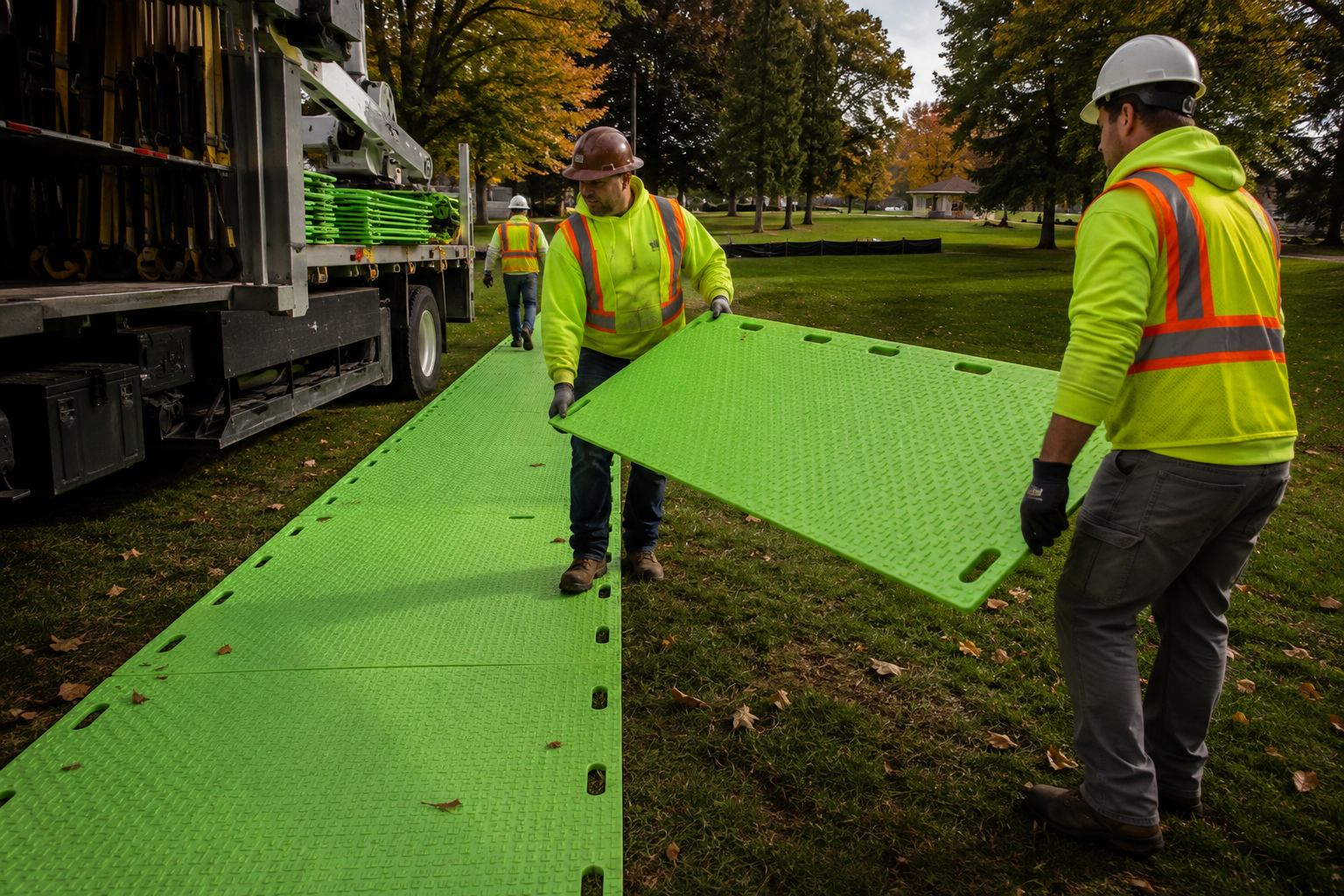
For an 8-foot-wide access lane, each row uses two 4×8 panels. Divide route length by eight and multiply by two, then round up. A 96-foot route therefore starts with 24 panels. Add panels for overlaps, transitions, turns, and unexpected soft ground rather than treating the calculated minimum as the final order.
Treat the panels as one part of the access plan. Site conditions, equipment instructions, safety requirements, and professional judgment remain essential.
Protect Turning and Staging Zones
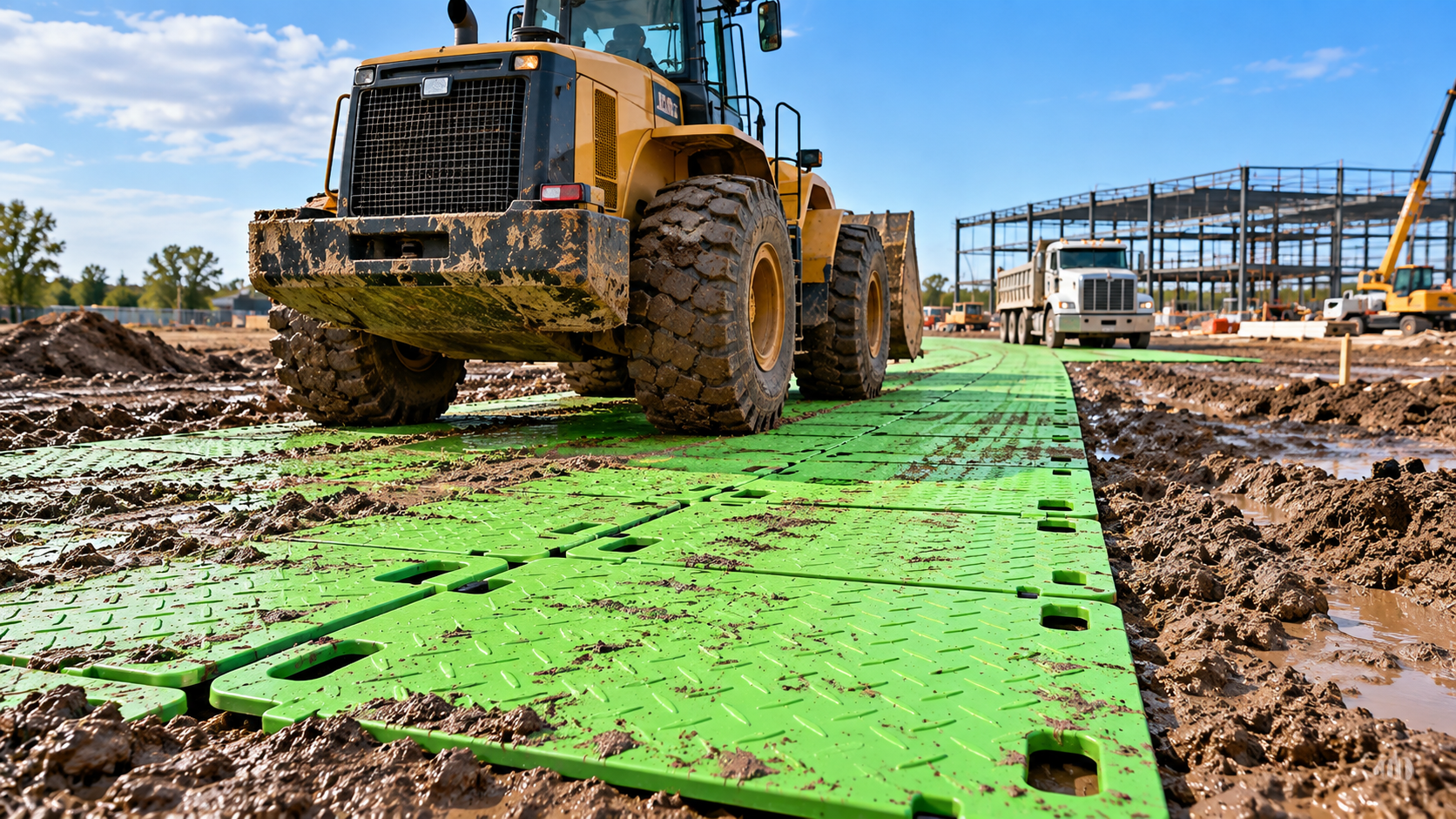
Tires and tracks create more lateral force while turning than while traveling straight. Widen corners and work zones so operators never have to place one side of a machine on unprotected ground. Staging areas also need enough coverage for attachments, outriggers, foot traffic, and repeated passes.
Operators should travel smoothly, avoid abrupt braking and stationary pivot turns, and stay centered on the route. Crew members should inspect alignment as conditions change.
Why BAM Panels Fit Daily Crew Work
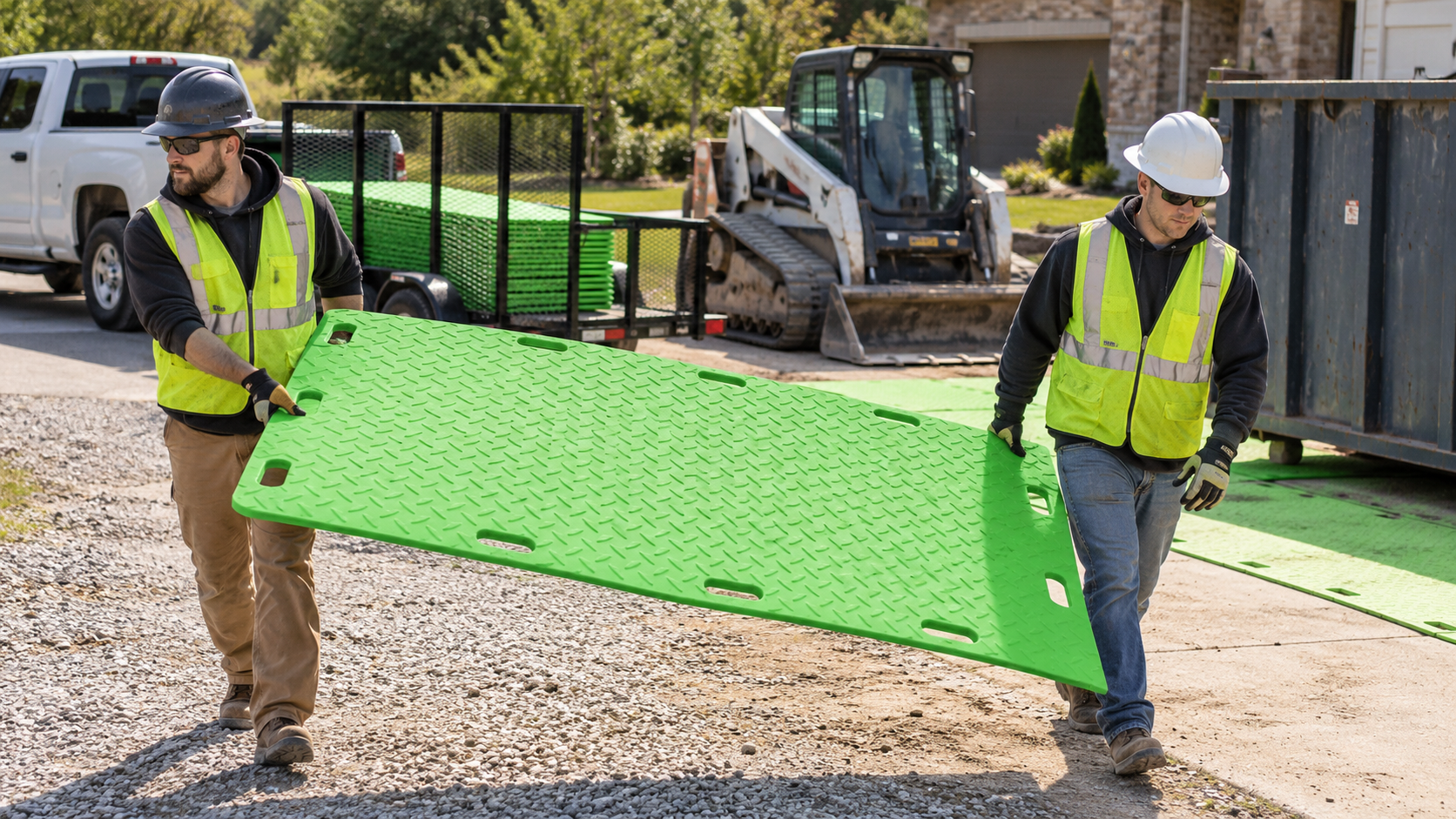
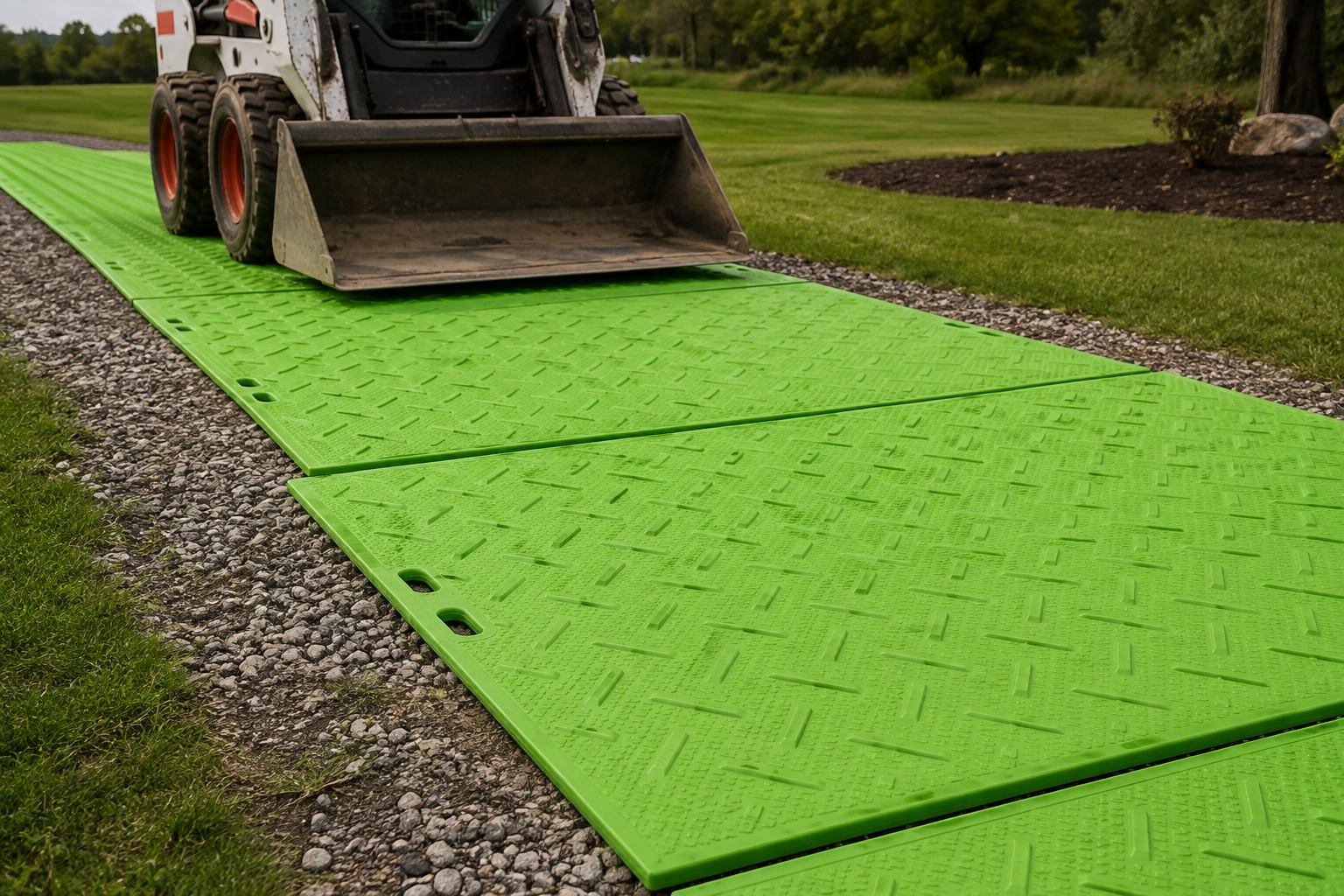
BAM! mats are 3/8-inch thermoformed HDPE and rated at 80 tons. A 4×8 sheet weighs only 56 pounds and includes eight large handholds. The hi-vis safety green color improves visibility, while the dual-sided tread supports equipment traction on one side and pedestrian footing on the other.
Treat the panels as one part of the access plan. Site conditions, equipment instructions, safety requirements, and professional judgment remain essential.
Deployment Checklist
Walk the route before unloading. Mark utilities and obstacles, begin on firm ground, orient the equipment tread correctly, keep edges aligned, and inspect the path after the first pass. Carry spare panels because rainfall and repeated traffic can change conditions during the job.
For complete specifications, review the BAM! product details and match the layout to the equipment, surface, and job duration.
Reuse Changes the Cost Equation
Unlike plywood, HDPE does not absorb water, splinter, or become a disposal problem after a few wet jobs. Clean the mats, inspect edges and handholds, stack them using the interlocking tread design, and move the same system to the next project.
Treat the panels as one part of the access plan. Site conditions, equipment instructions, safety requirements, and professional judgment remain essential.
Frequently Asked Questions
How many 4×8 mats cover a 100-foot route?
An 8-foot-wide lane generally starts with 26 panels after rounding up, before adding turning-zone and contingency coverage.
Can one person move a BAM 4×8 mat?
Yes. Each 4×8 BAM! sheet weighs about 56 pounds and has eight handholds designed for a gloved hand.
Are BAM mats suitable for tracked equipment?
They are designed for equipment access, but operators should avoid sharp stationary turns and follow job-specific loading and surface guidance.
Which side faces up?
Use the equipment tread for machine travel and the pedestrian tread where crew foot traffic is the priority.
Do 4×8 mats work in wet conditions?
HDPE does not absorb water, and the tread helps maintain traction, but crews should still assess underlying soil and changing weather.
Build a Better-Protected Access Plan
The right ground-protection system helps crews arrive prepared, keep equipment on a defined route, and leave a cleaner site behind. Plan adequate width, protect turns and staging areas, and keep spare panels available when weather or workflow changes.
Explore BAM! Ground Pro mats, use the Where to Purchase page to locate a distributor, or contact BAM! for application guidance. Work cleaner. Work safer. Pro’s choose BAM!