Landscaping is supposed to make properties look better. The problem is that getting equipment onto those properties—and running it effectively all day—can leave the property looking worse before the job is done.
Ruts in the lawn. Scuffed driveways. Crushed plants. Soil compaction that kills established root zones.
These aren’t catastrophic failures. They’re the predictable result of running heavy equipment on residential and commercial landscapes without proper ground protection. And they’re completely preventable.
The Landscaping Equipment Problem
Landscapers work with equipment that’s inherently hard on surfaces: skid steers, compact track loaders, mini excavators, riding mowers, dump trucks, and mulch blowers. These machines are excellent at the job they do. They’re equally excellent at tearing up everything they drive across.
Spring conditions amplify everything
The worst damage happens in spring—when soil is saturated from winter snowmelt and rain, when turf root systems are shallow and vulnerable, and when the season’s backlog of jobs creates pressure to move fast. Wet, compacted soil from a single machine pass can take months to recover.
Client properties aren’t construction sites
Homeowners and commercial property managers expect precision. They hired a landscaper to improve their property, not to leave it in worse condition than they found it. The tolerance for visible equipment damage is near zero—especially on high-end residential properties.
What Landscaping Ground Protection Mats Do
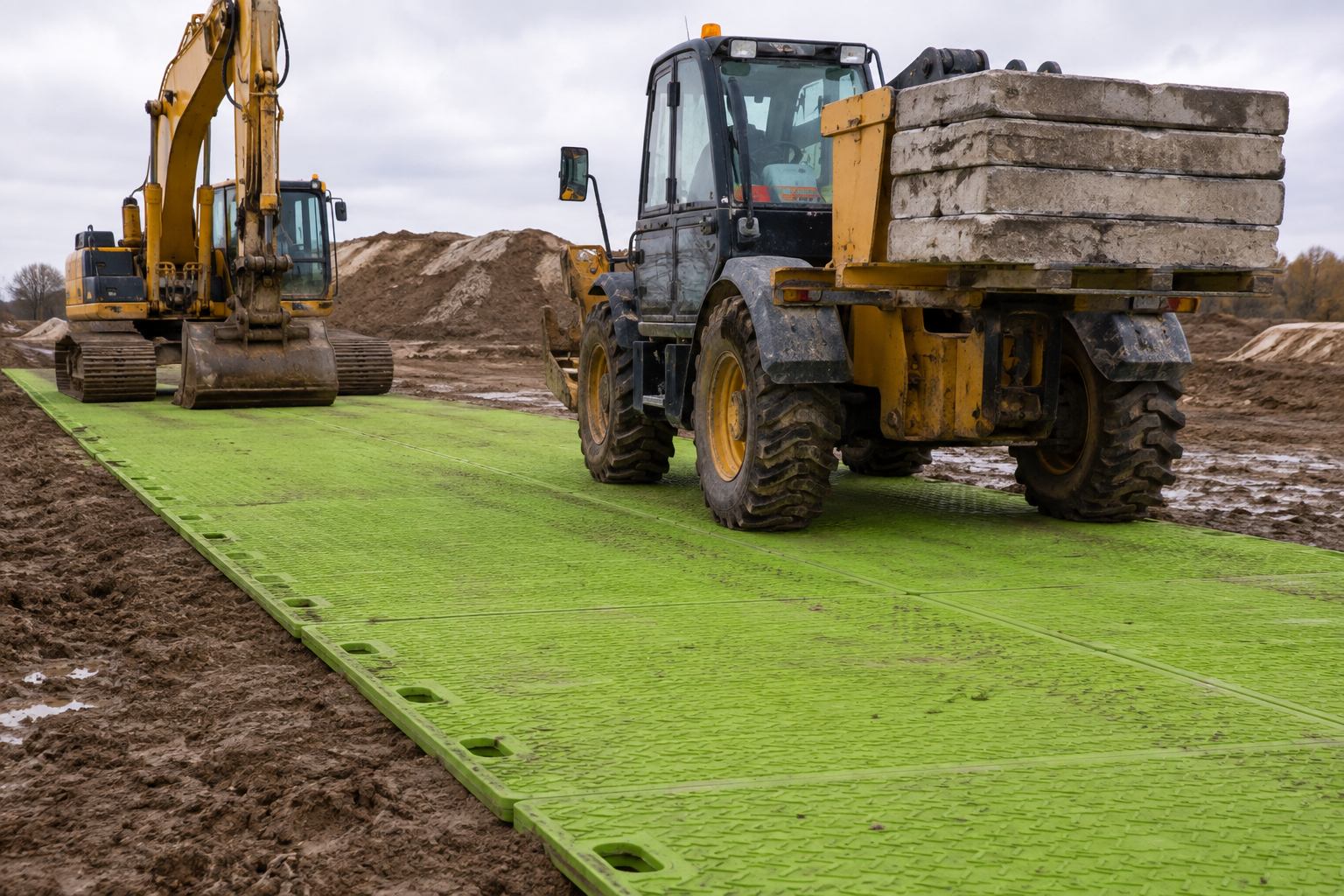
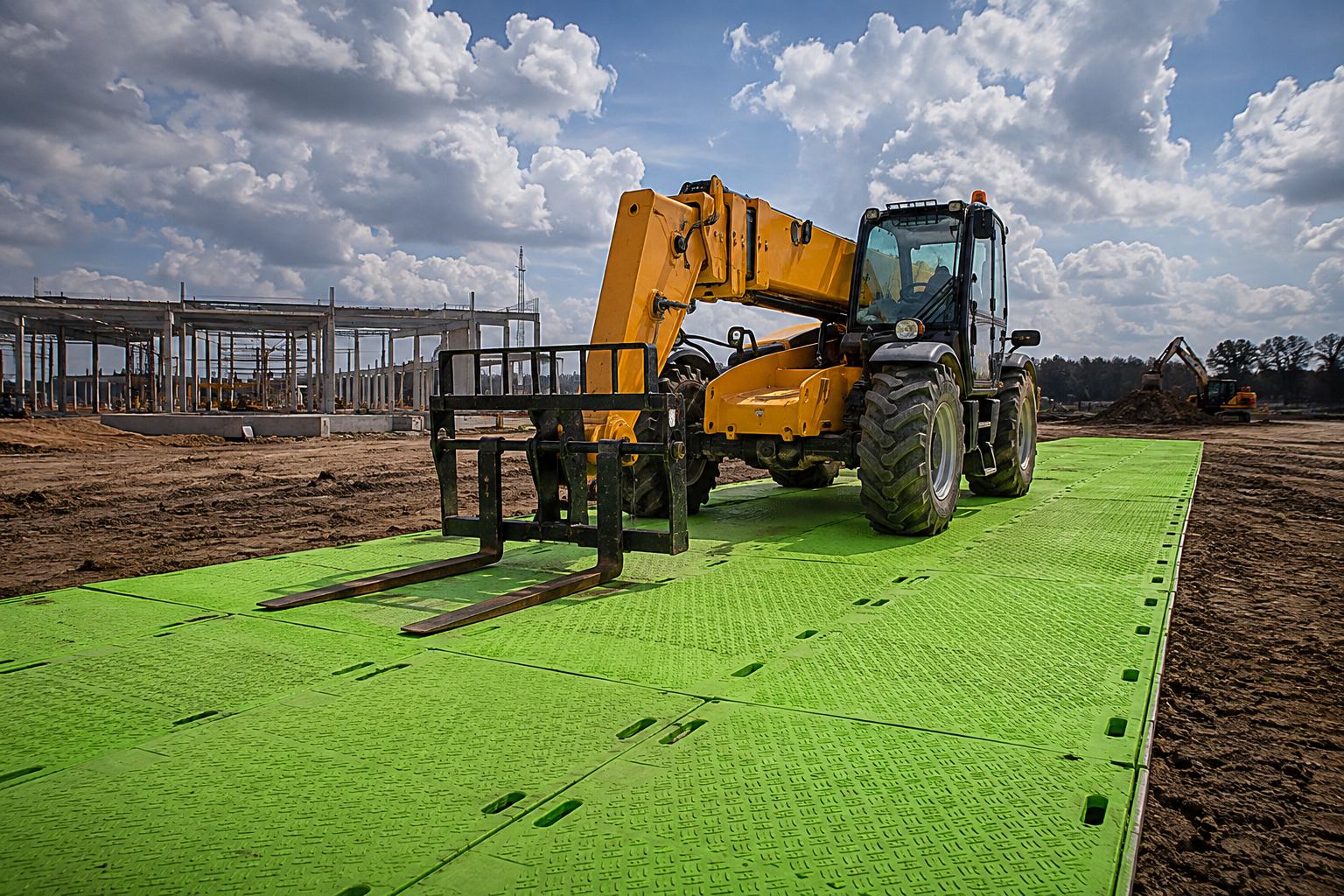
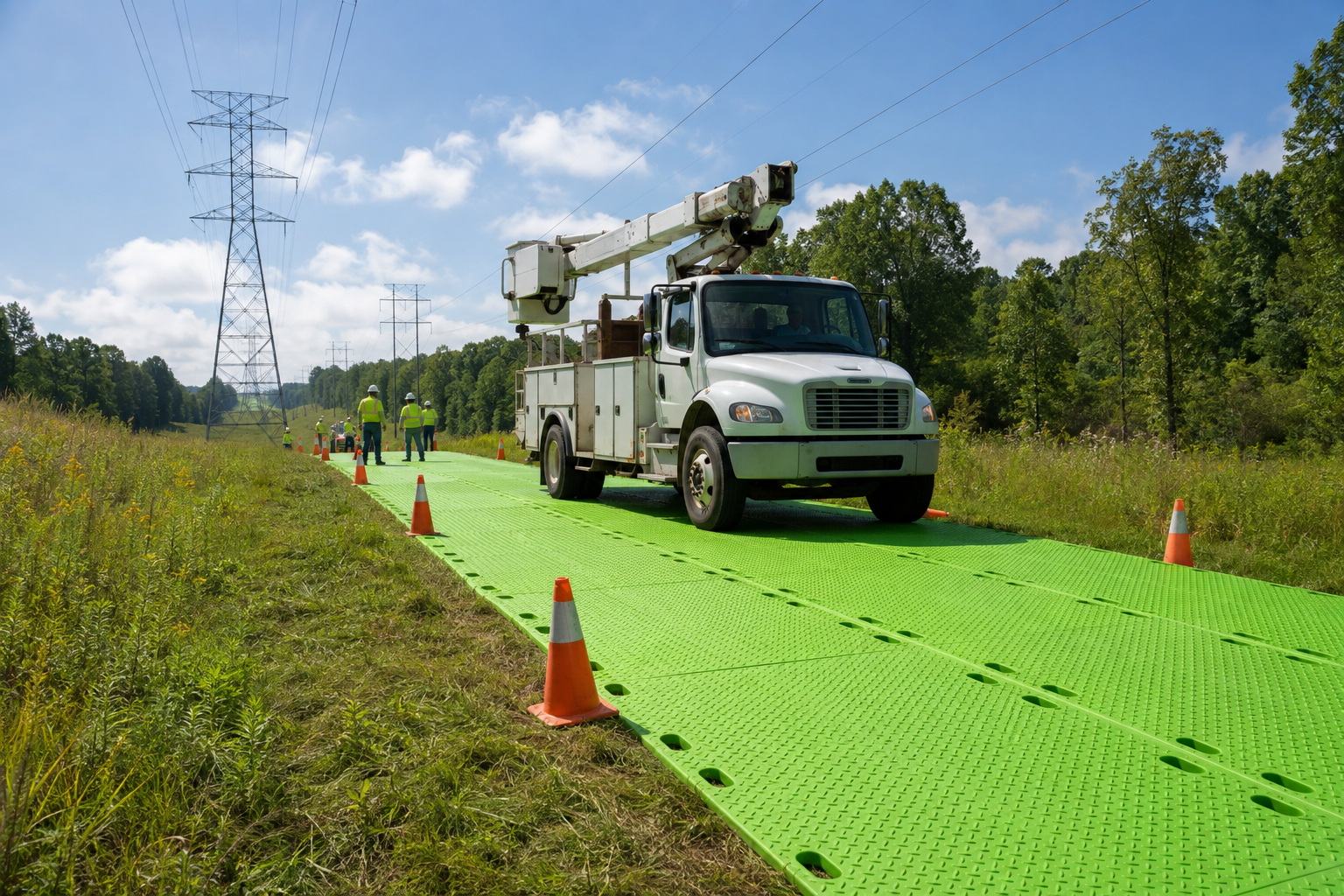
Ground protection mats create a stable surface between equipment and the vulnerable ground below. They distribute the machine’s weight across the full panel surface instead of concentrating it under each tire or track. The result: the equipment moves efficiently, and the ground underneath stays intact.
Turf protection
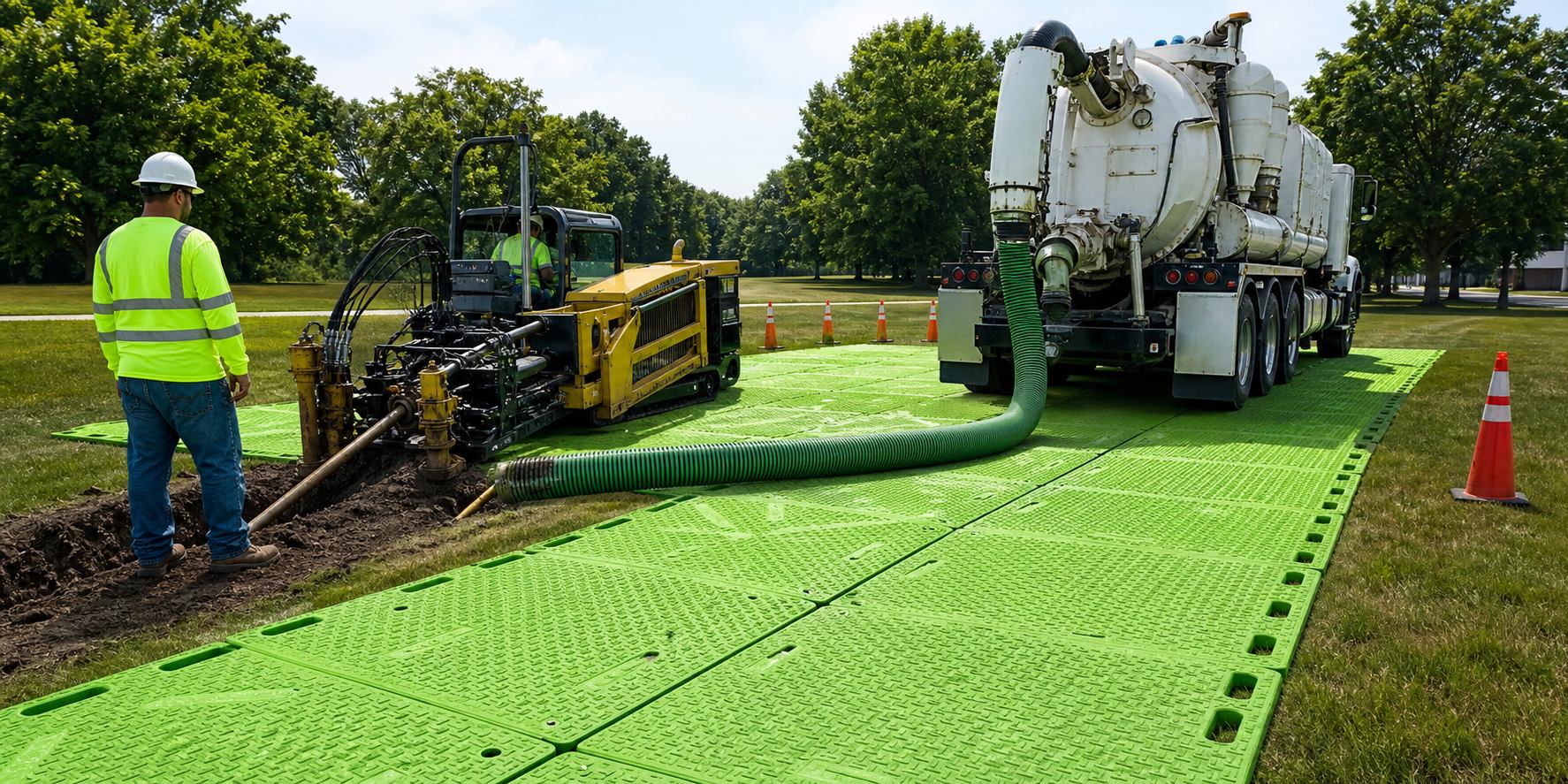
A mat path across a lawn keeps equipment weight distributed and prevents the tire contact from digging into soil. After mat removal, the compressed turf recovers within days to weeks. Without mats, ruts may take a full season—or require expensive repair.
Driveway and hardscape protection
Many landscaping jobs require crossing driveways, patios, and decorative surfaces. Ground protection mats provide a barrier that distributes load and prevents direct contact between the machine and the surface.
Root zone protection
Trees and established plantings have root zones that extend well beyond their visible canopy. Heavy equipment over root zones compresses soil and cuts roots—damage that isn’t visible immediately but kills trees and shrubs over the following years. Mats distribute load and reduce this compaction.
Building a Landscaping Mat System That Works
Map the access route before equipment moves
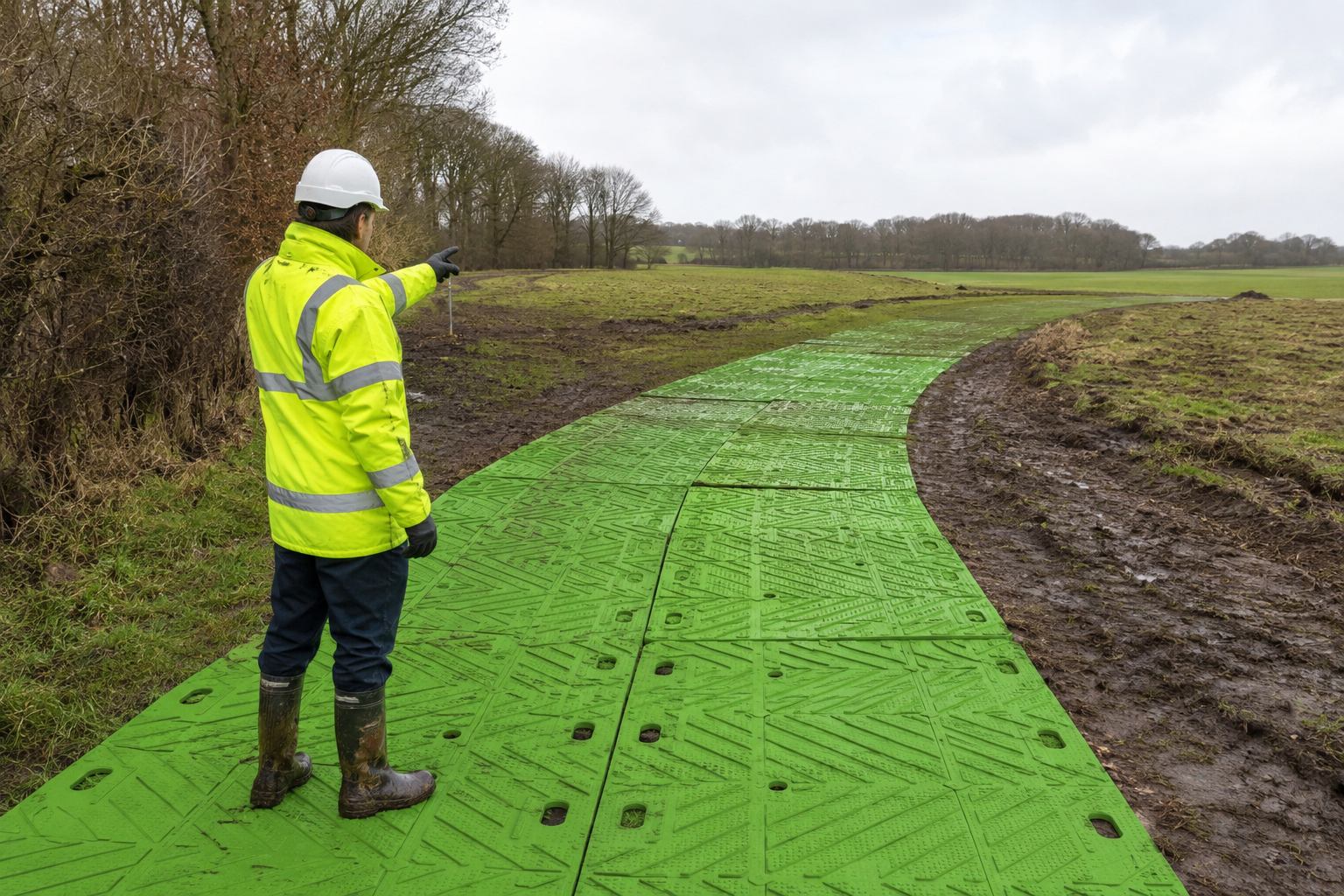
Before the trailer is unloaded, walk the job. Where will equipment travel? Where will it stage? Where will material be delivered? A clear access route established before the first machine rolls off the trailer means protection is in place before damage can occur.
Cover the full travel path
Don’t just protect the high-risk spots. Cover the full path the equipment will travel—from the street to the work zone. Every unprotected section is a potential damage event.
Create a protected staging zone
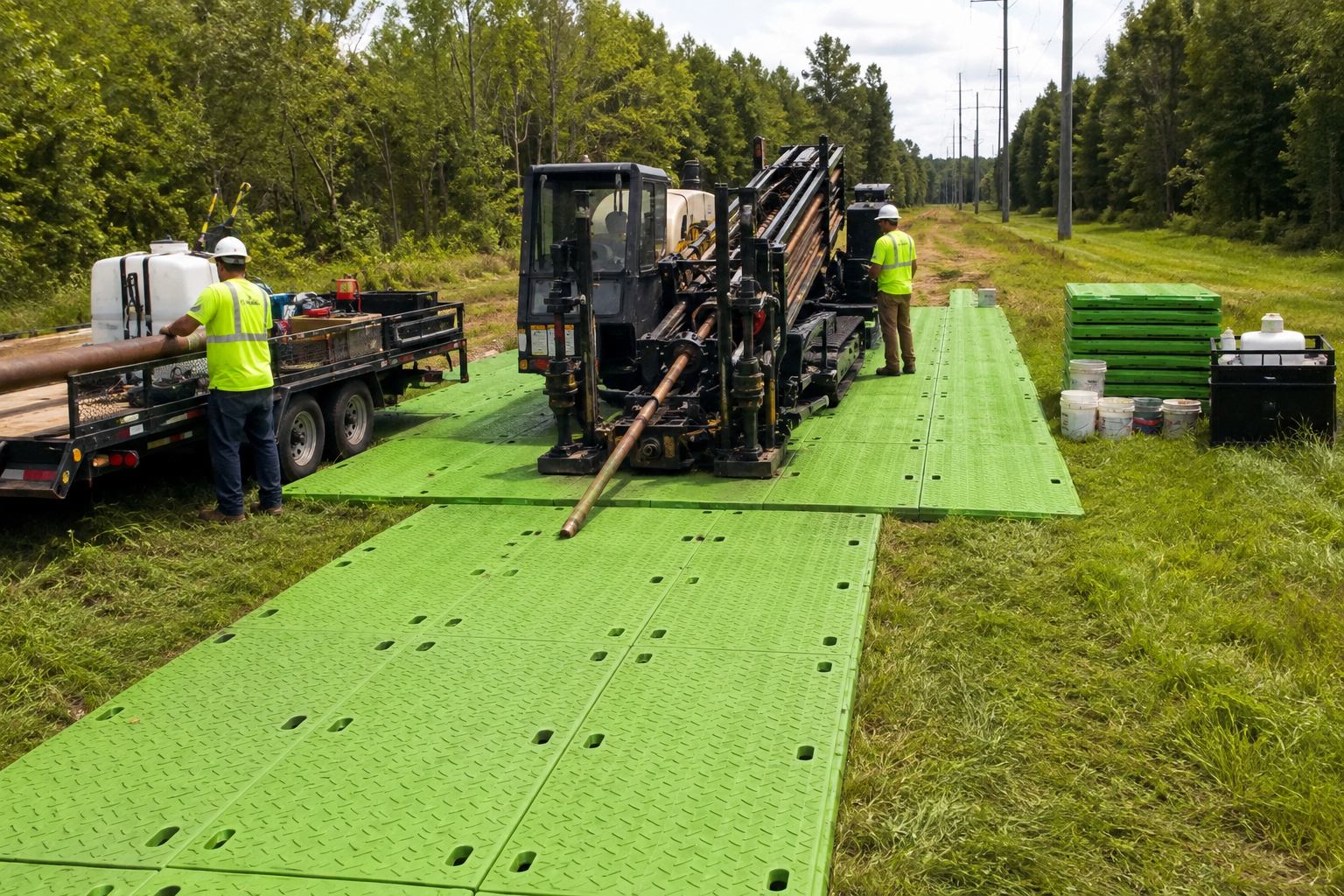
Equipment doesn’t just travel—it stages, turns, and idles. The staging zone where a skid steer sits between loads gets the heaviest repeated load. Mat this zone generously.
Protect delivery routes separately
Material deliveries follow a different path than equipment. A mulch delivery truck backing down the driveway creates different loads than a skid steer crossing the lawn. Map both routes and protect both.
Mat Sizing for Common Landscaping Scenarios
Standard residential lawn job: 8 to 12 BAM! 4×8 panels for access path and staging zone. Add panels for any delivery truck approach zone.
Large commercial landscaping project: 20 to 30+ panels for full coverage of access routes, staging zones, and multiple equipment paths.
Narrow side yard access: 2×8 panels for the gate and tight passage; transition to double-column 4×8 path once in the yard.
Tree work and stump grinding: Cover the full route from the street to the tree location, including any turning zones near the tree.
Landscaping Jobs Where Mats Pay for Themselves Immediately
Sod installation
Moving sod pallets and equipment across a newly graded lawn without protection undoes the grading. Full path coverage ensures the prepared surface stays intact for installation.
Pool and water feature installation
Excavation equipment on residential lawns over multi-week timelines requires comprehensive access route protection throughout each project phase.
Irrigation system installation
Equipment and material movement across established lawns. Mats prevent soil compaction that disrupts irrigation coverage zones and root systems.
Commercial grounds maintenance
Commercial properties, HOAs, and managed landscapes require professional equipment management. Ground protection mats demonstrate that level of professionalism to property managers and commercial clients.
The Competitive Advantage of Using Mats
In competitive landscaping markets, the contractors winning high-value residential and commercial accounts are differentiating on professionalism and property respect—not just plant selection and design.
Showing up with a professional mat system communicates competence before the first plant goes in the ground. Clients who see protected access routes and covered staging zones have confidence that their property will be respected throughout the project.
That confidence translates to better reviews, higher referral rates, and access to premium-tier accounts where the margins are better and the repeat business is more reliable.
Frequently Asked Questions
Q: Do ground protection mats damage turf when left in place?
A: BAM! HDPE mats don’t damage turf chemically. They do limit light and airflow beneath, so extended placement (more than a week) can affect turf. For short-duration jobs, recovery is typically full. For longer placements, check on turf condition periodically and move or remove mats if needed.
Q: Can mats protect established plant beds from foot traffic and light equipment?
A: Yes. Mats distribute load across the panel surface, reducing concentration of foot traffic and light equipment on planted beds. They’re most effective when placed over mulch or bark covering, not directly on delicate plants.
Q: What’s the best way to transport landscaping mats to the job?
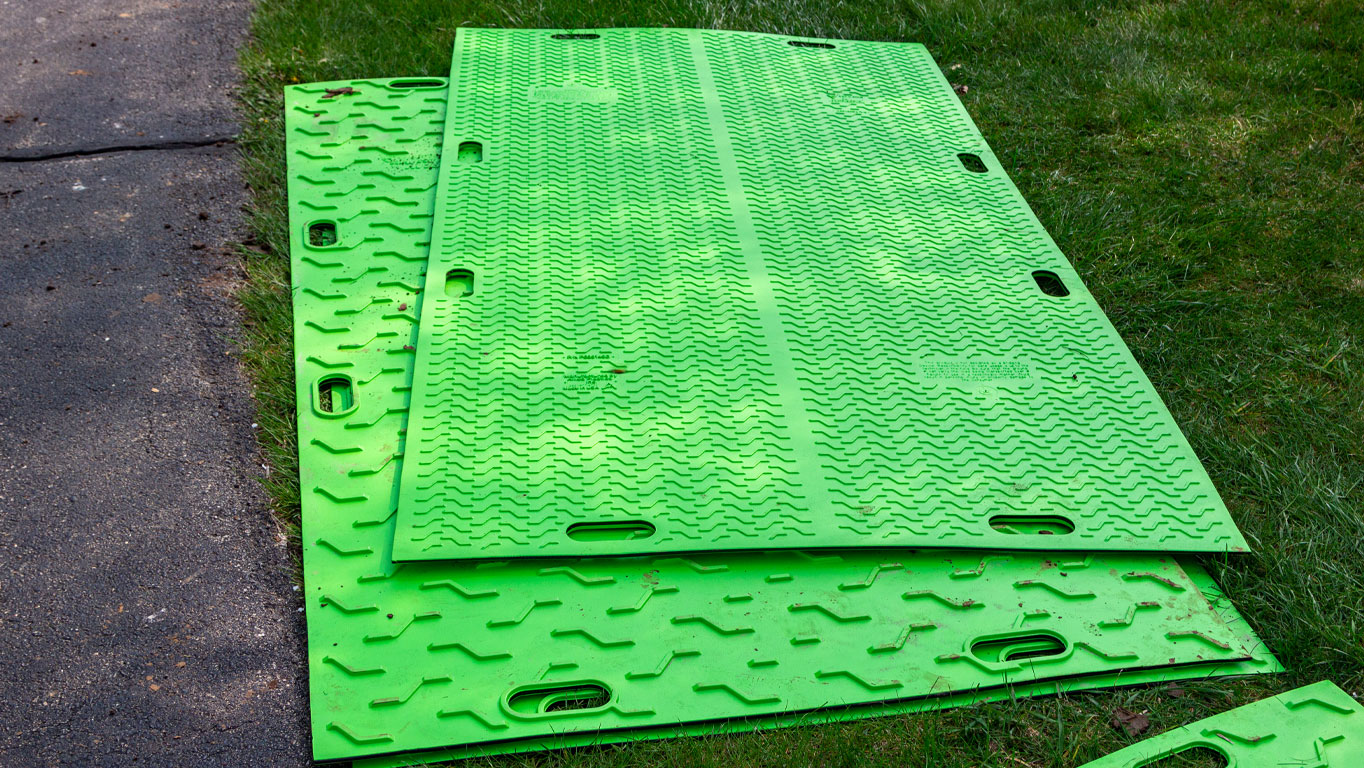
A: BAM! 4×8 panels stack flat in a truck bed or on a trailer. The interlocking tread design keeps stacked panels aligned during transport. At 56 pounds each, panels can be loaded and unloaded by one or two crew members without equipment.
Q: How do I clean mats after a landscaping job with heavy mud and plant material?
A: HDPE cleans easily with a pressure washer. Remove large debris, rinse thoroughly, and stack for the next job. No special cleaning products required.
Protect the Properties You’re Paid to Improve
Ground protection mats aren’t a luxury or a niche product. They’re a core tool for landscapers who take property protection as seriously as plant selection and installation quality.
Find BAM! landscaping protection mats at bamgroundpro.com/products. Locate a distributor at bamgroundpro.com/where-to-purchase. Contact us at bamgroundpro.com/contact-us, call 888-870-8158, or email msheridan@alliedplastics.com. Work cleaner. Work safer. Pro’s choose BAM!