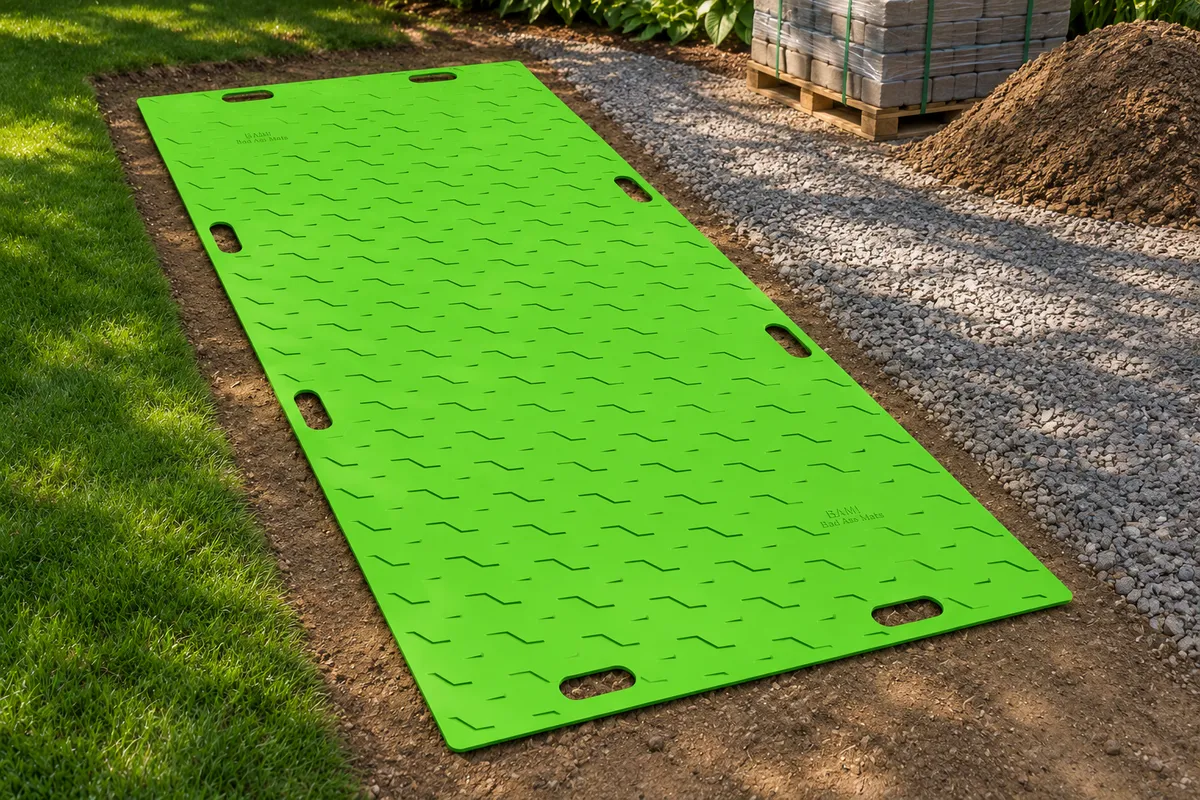
When a job needs an access route, most crews default to the same answer they’ve used for decades: dump stone, spread it, and drive on it. Gravel feels cheap because the invoice is small on day one. But gravel is only half of the bill. The other half shows up at the end of the job, when that stone has to be dug out, hauled off, and the ground underneath restored. That’s where reusable temporary roadway systems built from HDPE mats change the math.
This guide puts gravel and mat-based roads side by side on the numbers contractors actually pay, so the choice is based on total cost, not the first invoice.
Key Takeaways
- Gravel looks cheaper on day one but adds fabric, trucking, removal, and restoration costs at the end of the job.
- Reusable HDPE mat roads go down by hand, come up clean, and move to the next job.
- For contractors who build access routes several times a year, mats usually win on cost per job.
What a Gravel Access Road Really Costs
A gravel road is not a one-line item. It’s a chain of costs that runs from the first truckload to final restoration.
Installation
Stone has to be delivered, spread, and compacted. On soft ground, most crews add geotextile fabric first or the stone simply sinks into the subgrade. That means material, trucking, a machine, and an operator before the first piece of equipment ever uses the road.
Maintenance
Gravel ruts, migrates, and pumps mud up through the surface in wet weather. Expect to top it off with more stone over the life of a long project.
Removal and restoration
This is the cost crews forget to bid. When the job ends, the stone has to come out. That’s another machine, more trucking, disposal or stockpiling, then topsoil and seed to restore the lawn or field underneath. On residential and turf sites, the restoration bill can exceed the original install.
What a Mat-Based Roadway Costs
A mat road has a different cost shape: a higher upfront purchase (or rental), then very little after that.
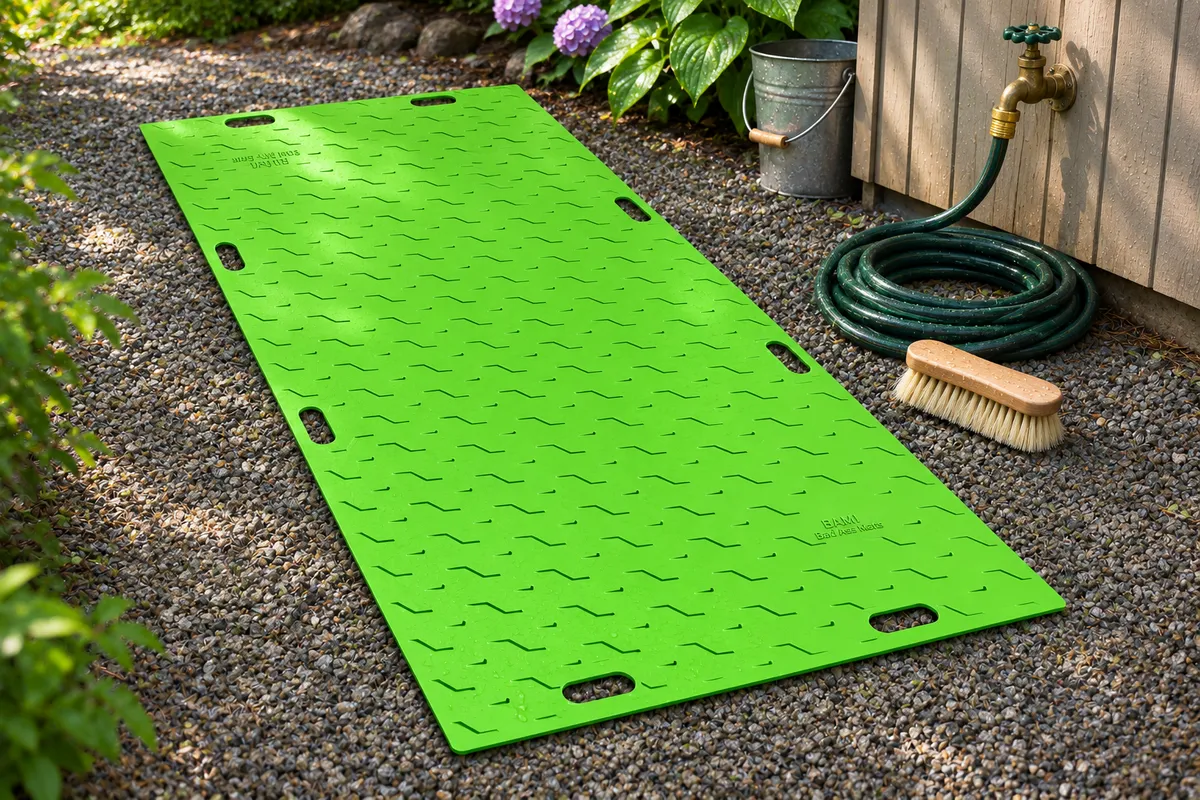
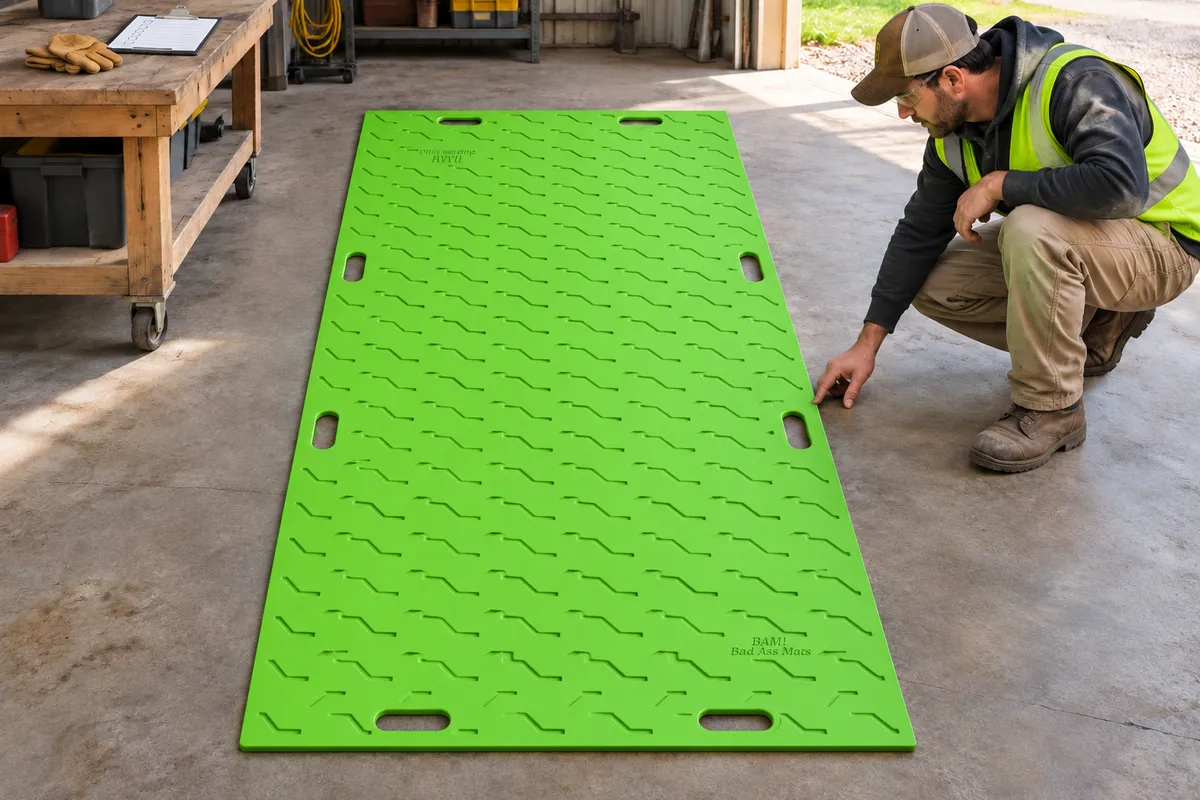
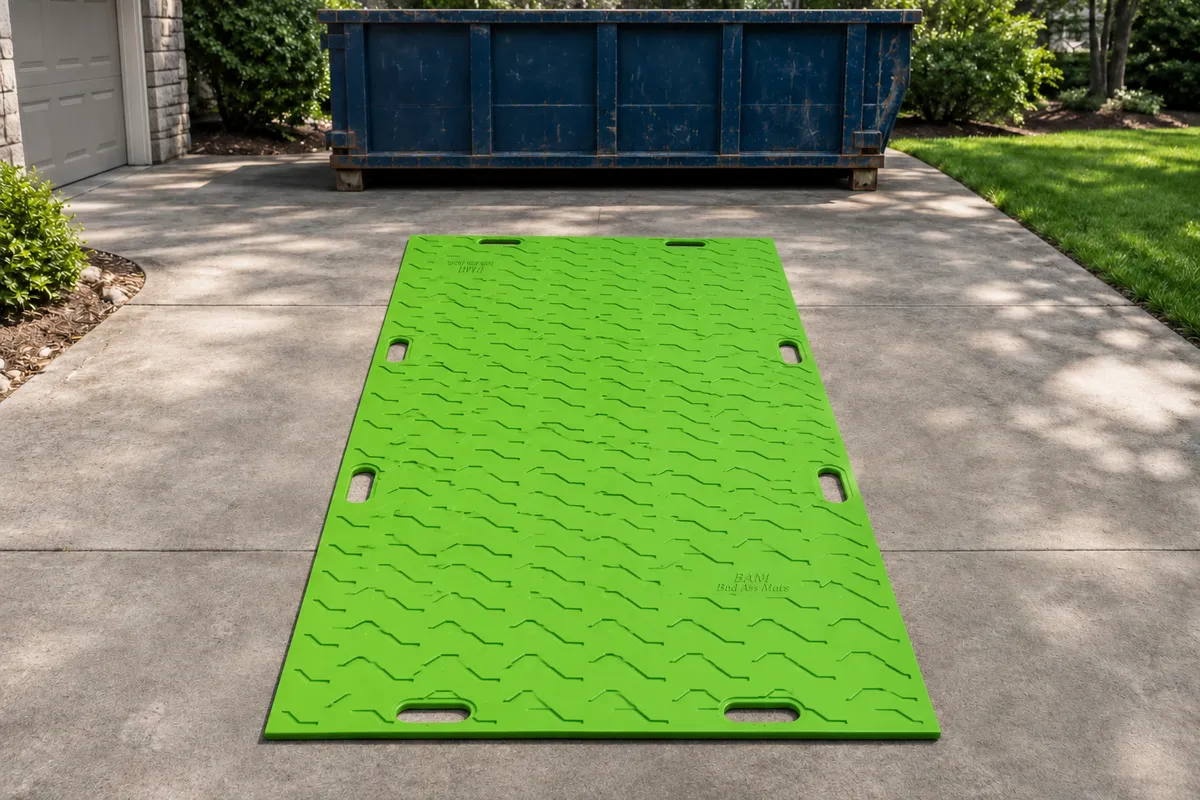
- Installation:two people hand-place 56-lb 4×8 panels. No delivery trucks, no compaction, no machine time.
- Maintenance:check and reset panels after the first few days of heavy traffic. That’s it.
- Removal:pick the panels up, rinse if needed, stack, and load. The ground underneath needs far less restoration because it was never buried.
- Reuse:the same panels go straight to the next job. Gravel never does.
Side-by-Side: Where Each Option Wins
- One-time, permanent route on a site being paved anyway:gravel can make sense, because it becomes part of the base.
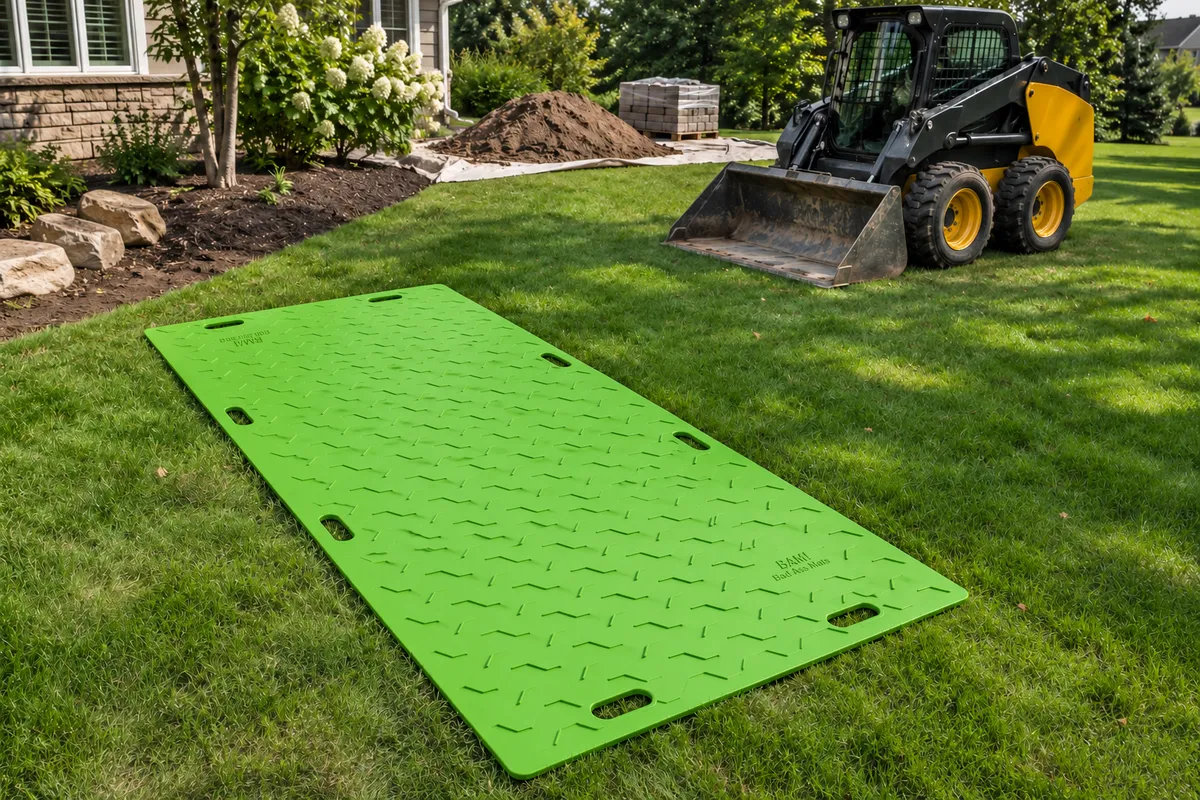
- Temporary access on lawns, turf, or finished landscaping:mats win, because gravel restoration costs eat the margin.
- Short-duration jobs (days to a few weeks):mats win on install and removal speed alone.
- Contractors who build access roads repeatedly:mats win on cost per job, since one panel set serves dozens of projects.
- Sites with environmental limits on fill:mats win, since nothing is left behind.
Portable Roadway Systems Move With the Work
Gravel is fixed the moment it’s spread. If the work zone shifts, the road doesn’t. Portable roadway systems built from interlocking panels can be leapfrogged forward as the job advances, so you only protect the ground that’s being used this week. For more on how to lay out that route, see our 4×8 coverage planning guide and our guide to ground protection matting for utility crews.
How to Build a Temporary Road With Mats
- Walk the route after rain and flag soft spots, drainage paths, and utility marks.
- Measure for the widest vehicle that will use it, plus clearance.
- Start placement from firm ground and work into the soft sections.
- Interlock every panel fully so the run acts as one surface.
- Double up at turns, entrances, and load/unload zones.
- Inspect after the first heavy days and reset any panel that walked.
Treat the panels as one part of the access plan. Site conditions, equipment instructions, safety requirements, and professional judgment remain essential.
Why BAM! Panels Fit Temporary Roadway Work
BAM! panels are hi-vis safety green HDPE—not blue rubber mats—rated to 80 tons and built to shed water instead of soaking it up the way plywood does. They don’t rot, splinter, or turn into a disposal problem. See full BAM! panel specs.
Common Mistakes When Pricing a Temporary Road
The most common bidding mistake is pricing gravel by the ton and stopping there. Fabric, delivery, machine time, operator time, top-offs after rain, excavation at the end, hauling, disposal, topsoil, seed, and a return trip to check the grass all belong in the number. Leave them out and the job looks profitable until the last week.
The second mistake is buying too few mats and stretching them. A road with gaps or single coverage at the turns fails at exactly the spots where trucks put the most load. Count panels for the full route plus turns and entrances, then add a few spares for repairs and surprises.
The third mistake is treating the road as permanent. Temporary roadway systems are most valuable when they move. If the work front shifts, move the mats to where trucks are actually driving, and pull panels from sections nobody is using anymore.
Frequently Asked Questions
Is gravel cheaper than ground protection mats?
Gravel usually costs less on day one. Once you add fabric, trucking, removal, disposal, and lawn restoration, a reusable mat system is often cheaper—especially if you build access roads more than a few times a year.
Can mats replace a gravel road entirely?
On most temporary access jobs, yes. Where a road will become a permanent driveway or paved base, gravel may still be the right call.
How fast can a crew lay a mat road?
A two-person crew can hand-place 4×8 panels quickly because each one weighs about 56 lbs. No machine is needed to set them.
Do mats work on top of existing gravel?
Yes. Mats placed over gravel stop rutting and stone migration and keep tires from grinding stone into the subgrade.
Where can I buy temporary road mats?
Use our Where to Purchase page to find a BAM! distributor near you.
Bid the Whole Road, Not Just the First Load
The cheapest access road is the one you never have to dig back out. Compare the full lifecycle cost before you order stone.
| Work cleaner. Work safer. Pro’s choose BAM! Explore BAM! Ground Pro mats or find a distributor near you. Call 888-870-8158 or email msheridan@alliedplastics.com — or contact the BAM! team for job-specific guidance. |