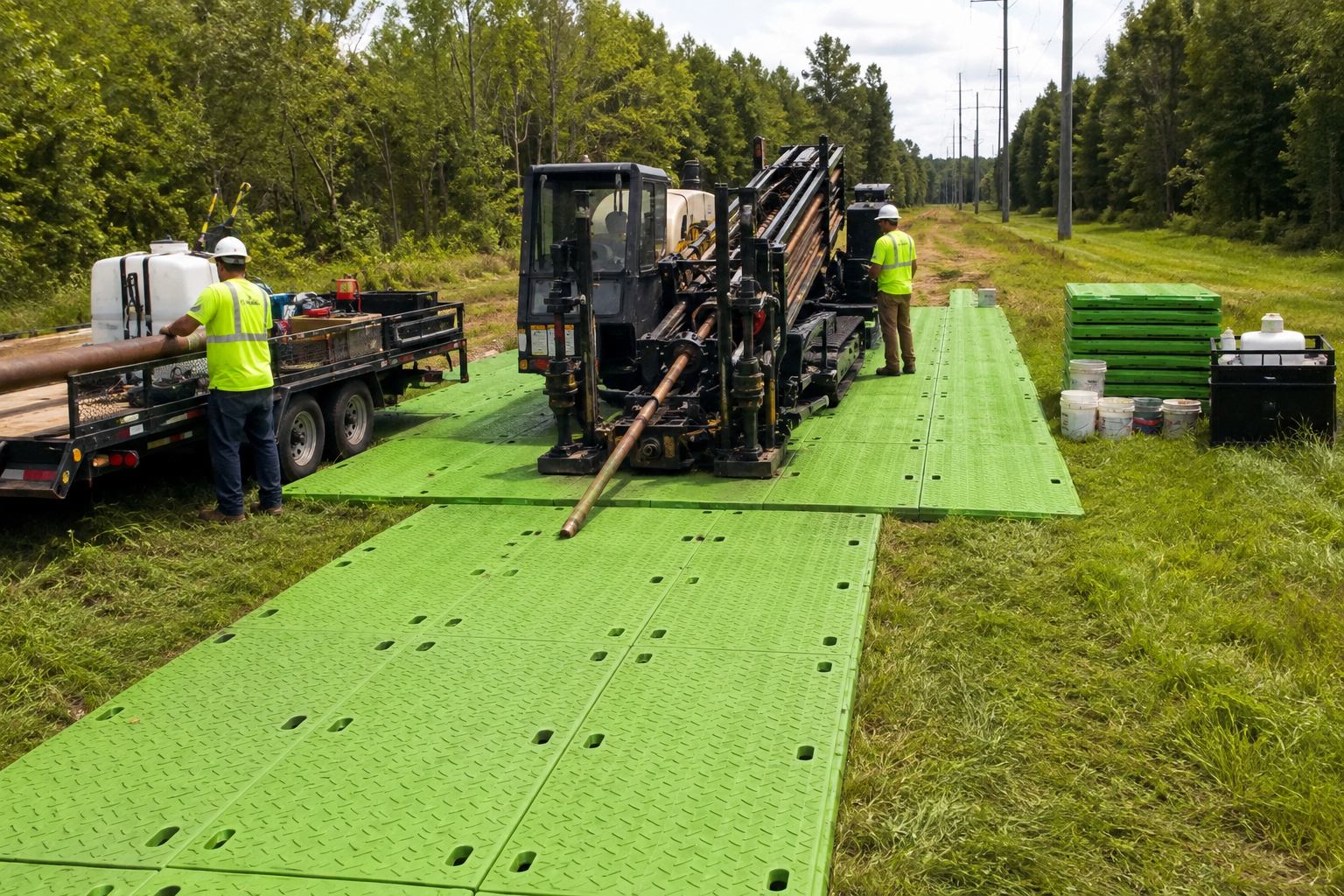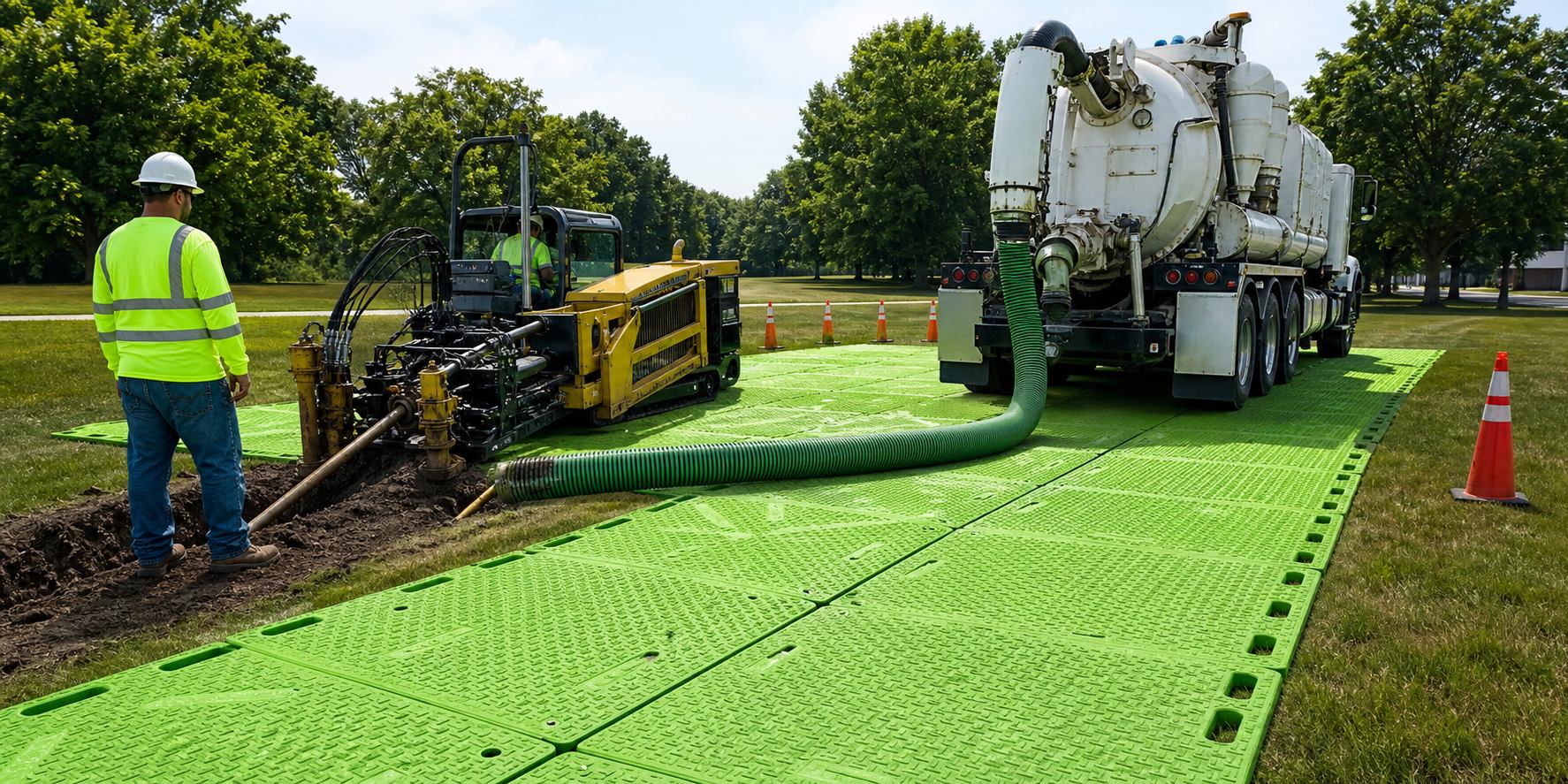
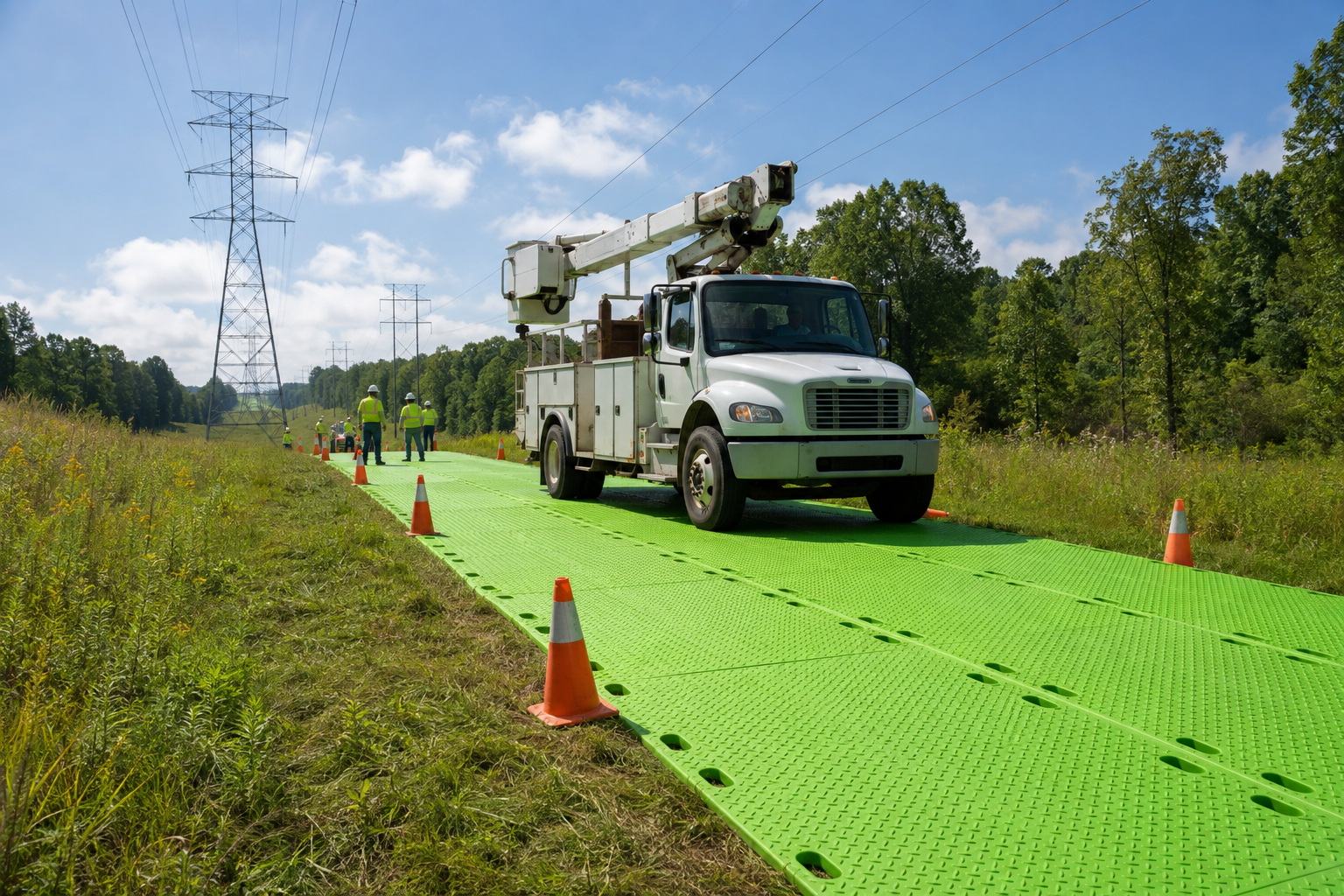
Utility crews rarely work from one fixed point. Trucks, reels, mini excavators, trenchers, and personnel move as the project advances, often across lawns, parks, easements, and soft roadside ground. Ground protection matting gives crews a practical way to build temporary access routes that can move with the work while reducing rutting, mud transfer, and avoidable restoration.
The most effective route is planned before the first heavy vehicle enters the site. A few minutes spent checking soil, slope, drainage, turning space, and equipment weight can prevent delays and protect the customer’s property.
Utility Access Is Rarely Static
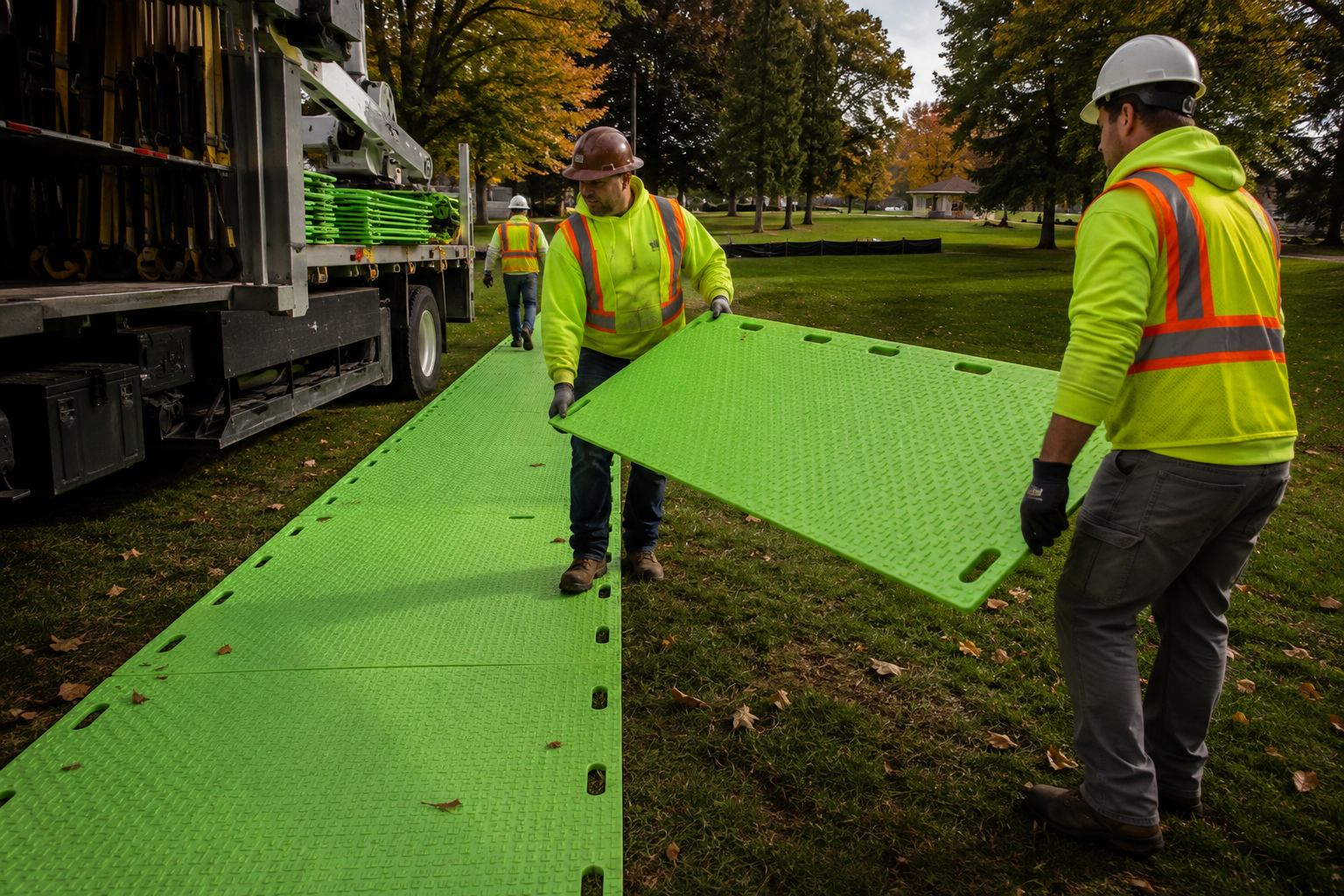
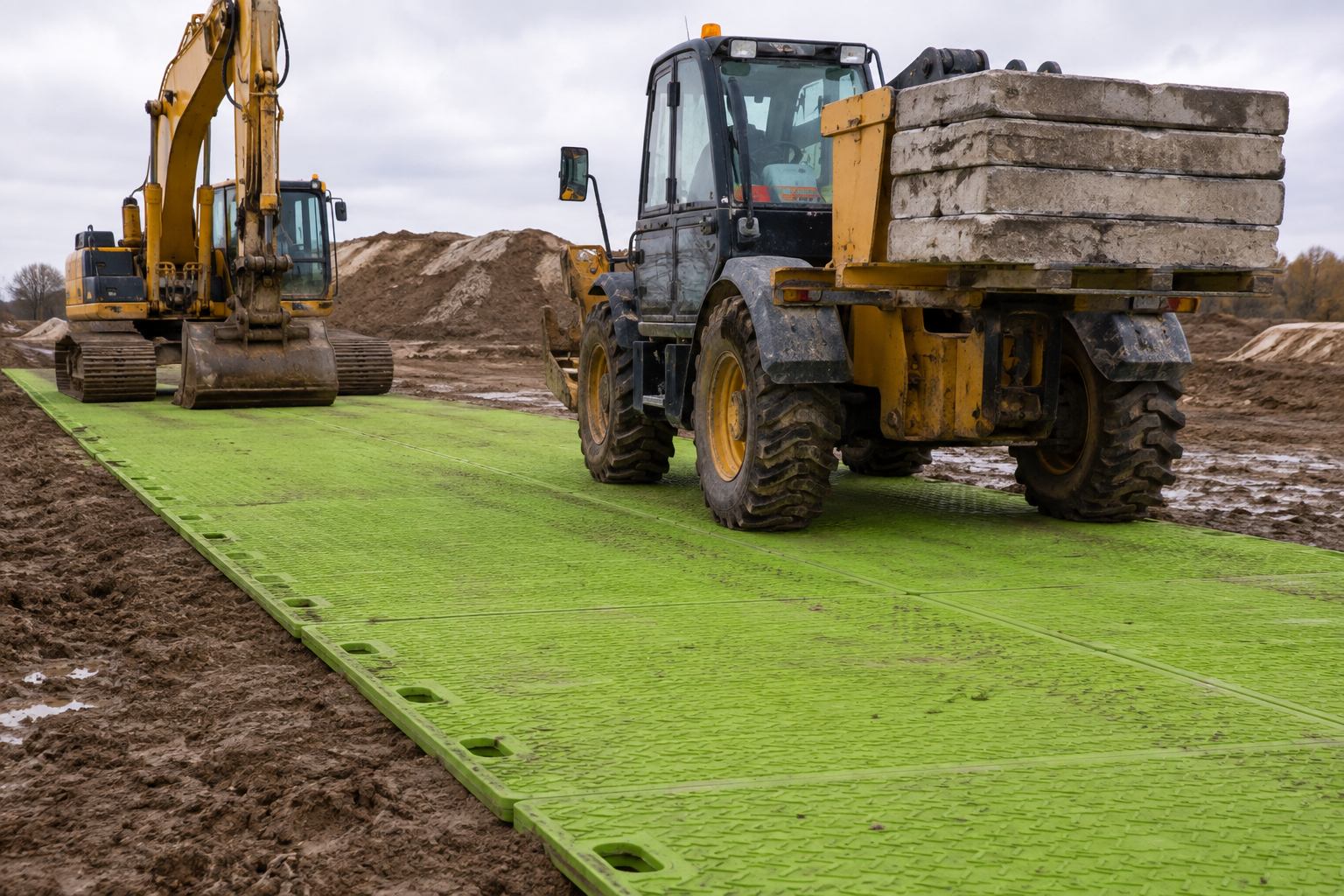
Power, telecom, water, and gas projects may cover hundreds of feet in a single shift. A permanent-style roadway would be excessive, but driving directly on turf can quickly create deep ruts. Reusable HDPE panels let a crew establish a defined path, complete a section, and then move the mats forward as work progresses.
This leapfrog approach can reduce the total number of panels required. It also keeps the protected route close to the active work zone instead of leaving equipment to search for a new path across unprotected ground.
Survey the Route Before Trucks Arrive
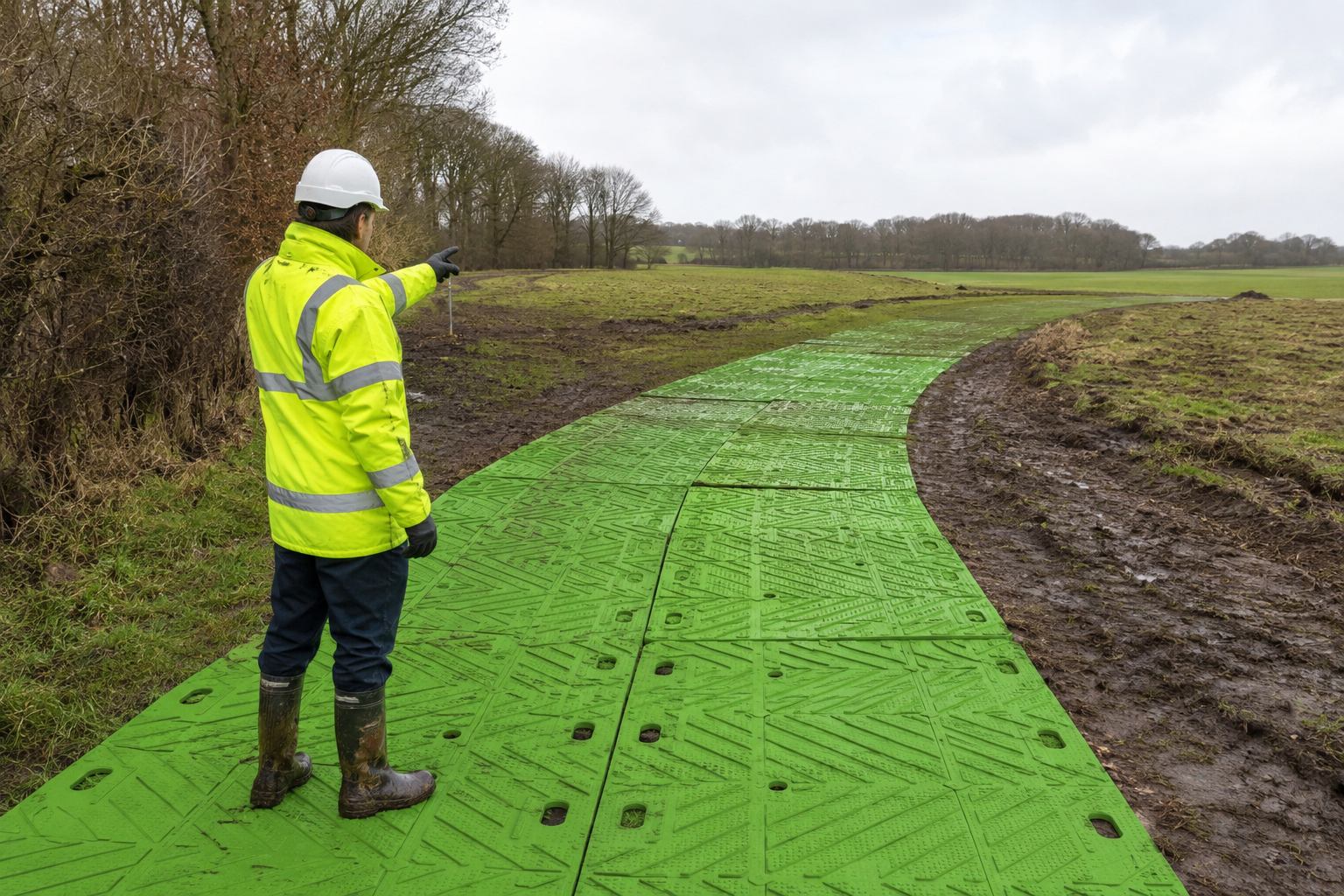
Walk the proposed route and mark soft shoulders, low spots, irrigation heads, tree roots, utility covers, steep transitions, and narrow gates. Note where vehicles must turn or stabilize. Straight travel creates different forces than a loaded truck making a tight turn, so those areas may need wider coverage or additional panels.
After rain, inspect the site again. Soil that supported a pickup yesterday may not support a bucket truck or compact excavator today. When footprints sink, water remains on the surface, or turf separates from the soil, install ground protection matting before traffic begins.
Create Separate Paths Where Needed
One route does not always serve every purpose. A wider equipment lane can carry trucks and machinery, while a narrower pedestrian path helps technicians move tools without walking through mud. Separating people and equipment can improve organization and make the intended travel pattern easier to understand.
At staging areas, extend coverage beyond the wheel tracks. Crews need room to open doors, unload reels, place tools, and work around the vehicle. A small setup pad often prevents concentrated damage beside an otherwise protected lane.
Use Visibility as a Jobsite Control
BAM mats are bright green, making the route easy to identify in grass, soil, and low-light conditions. Visibility helps operators align wheels with the protected surface and gives ground personnel a clear reference for directing traffic. The color does not replace cones, spotters, or a site-specific safety plan, but it supports a cleaner and more obvious work zone.
Adapt Coverage as Work Advances
Inspect connections and alignment throughout the shift. If panels migrate, a corner lifts, or mud builds up on the tread, pause and correct the route before the next vehicle passes. Move panels only when the surface is clear and the crew can handle them safely.
For linear utility work, release mats from the completed end, clean them as needed, and reinstall them at the leading end. Keep enough overlap in the schedule so the next section is ready before equipment moves. This prevents pressure to drive around the protected route.
Why Reusable HDPE Fits Utility Fleets
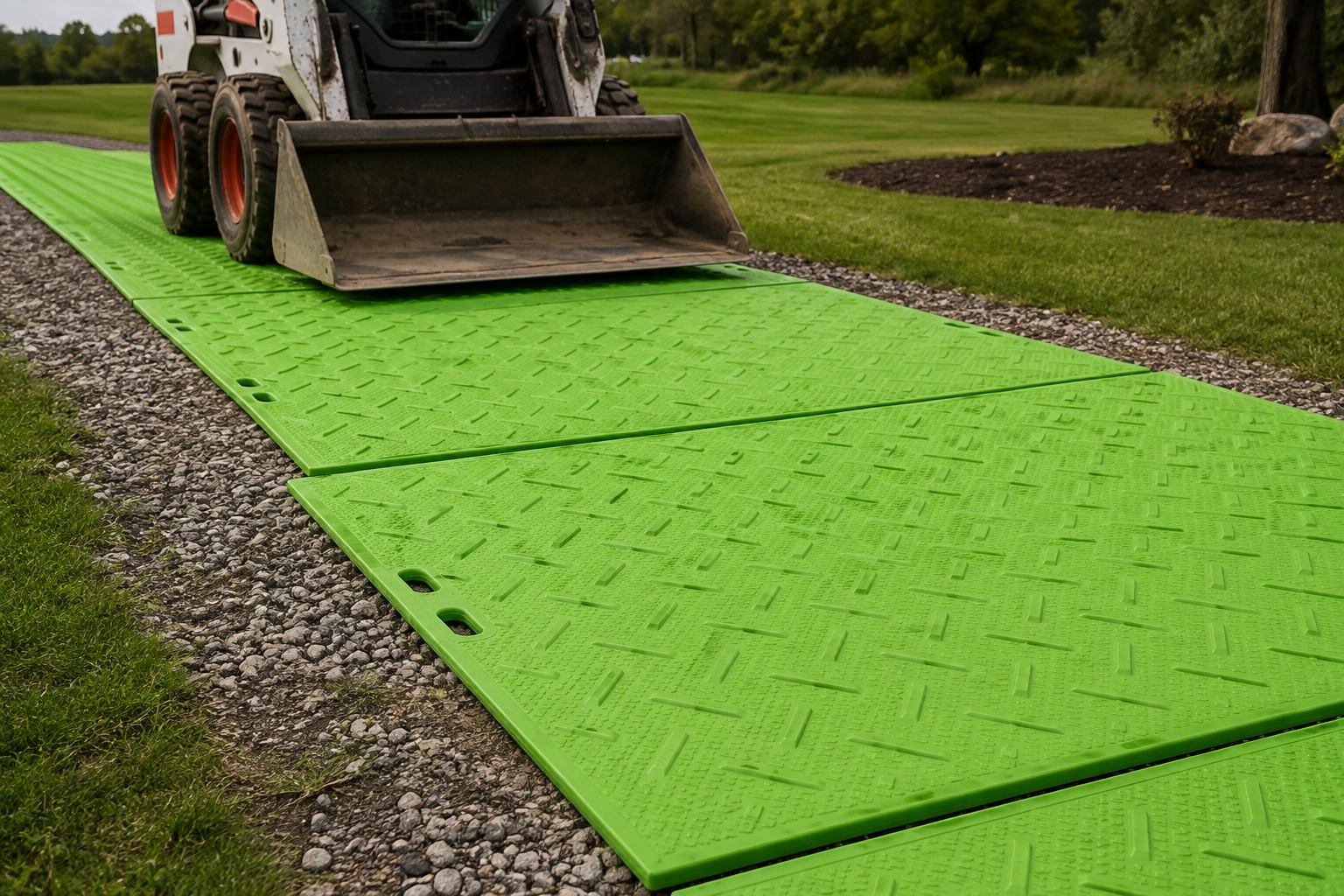
Compared with disposable plywood, HDPE ground protection mats resist water, do not splinter, and are designed for repeated use. BAM’s green panels include handholds for crew handling and tread on both sides for traction. The standard 4-by-8-foot format is useful for equipment lanes, while narrower options can support confined access and pedestrian paths.
Actual performance depends on soil conditions, equipment, installation, and the manufacturer’s guidance. Match the layout to the job rather than relying on capacity ratings alone, especially over voids, trenches, or unstable ground.
Ground Protection Matting Checklist for Utility Crews
- Confirm the heaviest vehicle and its travel path.
- Check soil moisture, drainage, slopes, and hidden obstacles.
- Provide extra width at turns, outriggers, and unloading areas.
- Use appropriate connectors and inspect them during the shift.
- Keep pedestrians away from moving equipment.
- Clean and reposition panels as the project advances.
- Inspect the protected surface before removing the route.
Frequently Asked Questions
Can a utility crew move the mats as the project progresses?
Yes. Many crews use a leapfrog method, moving clean panels from the completed end to the active end. The route should remain continuous before equipment advances.
How wide should a temporary utility access route be?
The route should accommodate the vehicle’s tires or tracks plus turning and alignment tolerance. Widen tight turns, setup pads, and areas where outriggers or tools will be placed.
Do bright green mats improve jobsite safety?
The high-visibility color makes the intended route easier to see. It complements, but does not replace, barriers, traffic control, spotters, and the crew’s safety procedures.
Can ground protection matting be installed near drainage areas?
It can be used near drainage features when the route is stable and does not block water flow. Inspect low areas carefully and follow environmental and site requirements.
Are HDPE mats better than plywood for utility work?
Reusable HDPE avoids splinters, absorbs little water, and is designed for repeated deployment. Plywood may be familiar, but it can break down quickly in wet, high-traffic conditions.
Build a Route That Moves With the Job
A well-planned mat route helps utility crews reach the work, protect the surface, and leave a cleaner site behind. Review BAM’s ground protection products, find a nearby source on the where to purchase page, or contact BAM Ground Pro to discuss your application.