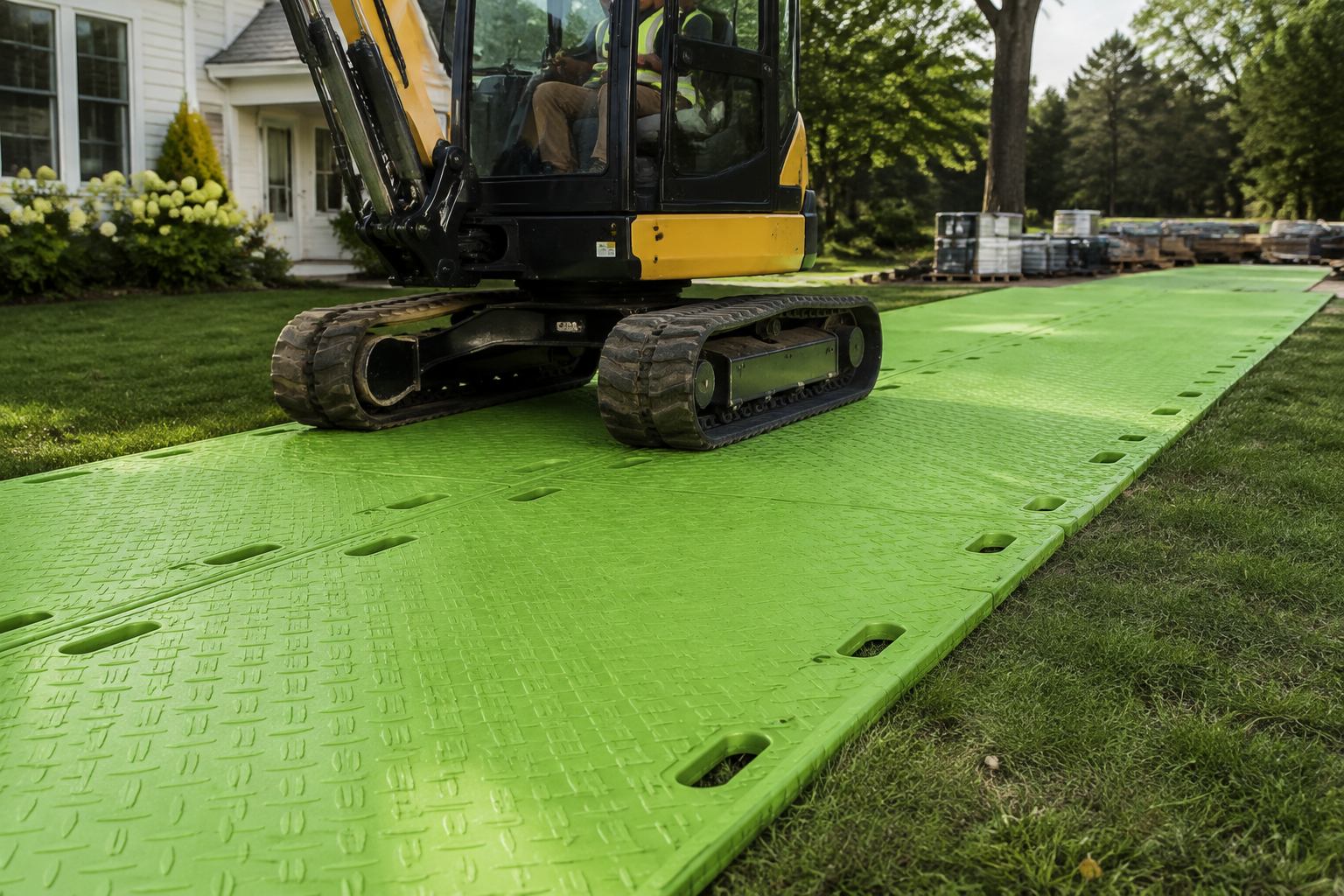
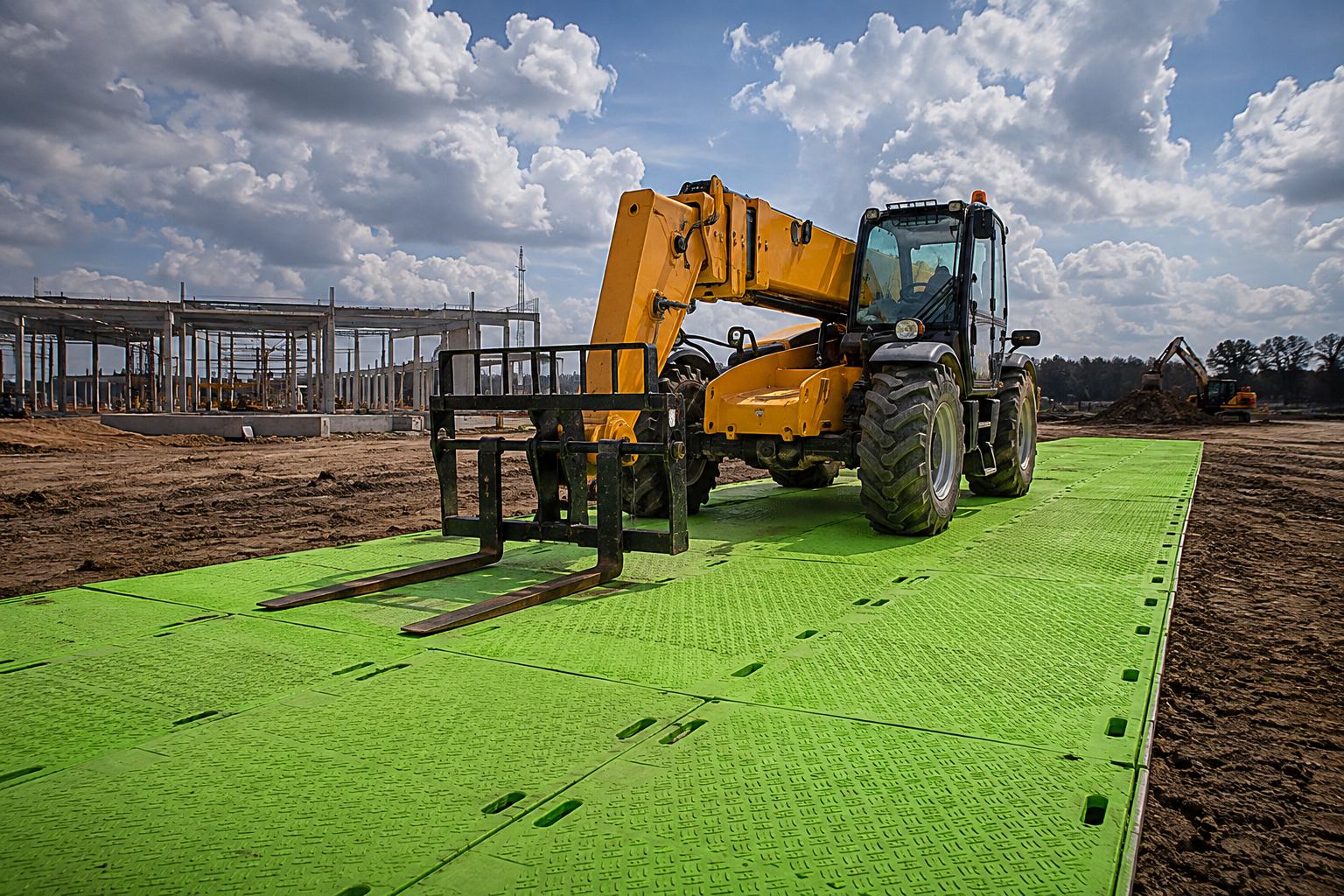
weight distribution mats give contractors evaluating how temporary panels help equipment cross vulnerable ground a practical way to manage understanding what mats can do—and where site conditions still require engineering or additional support. A good mat plan protects the surface, supports a more organized work zone, and helps crews avoid costly restoration and downtime.
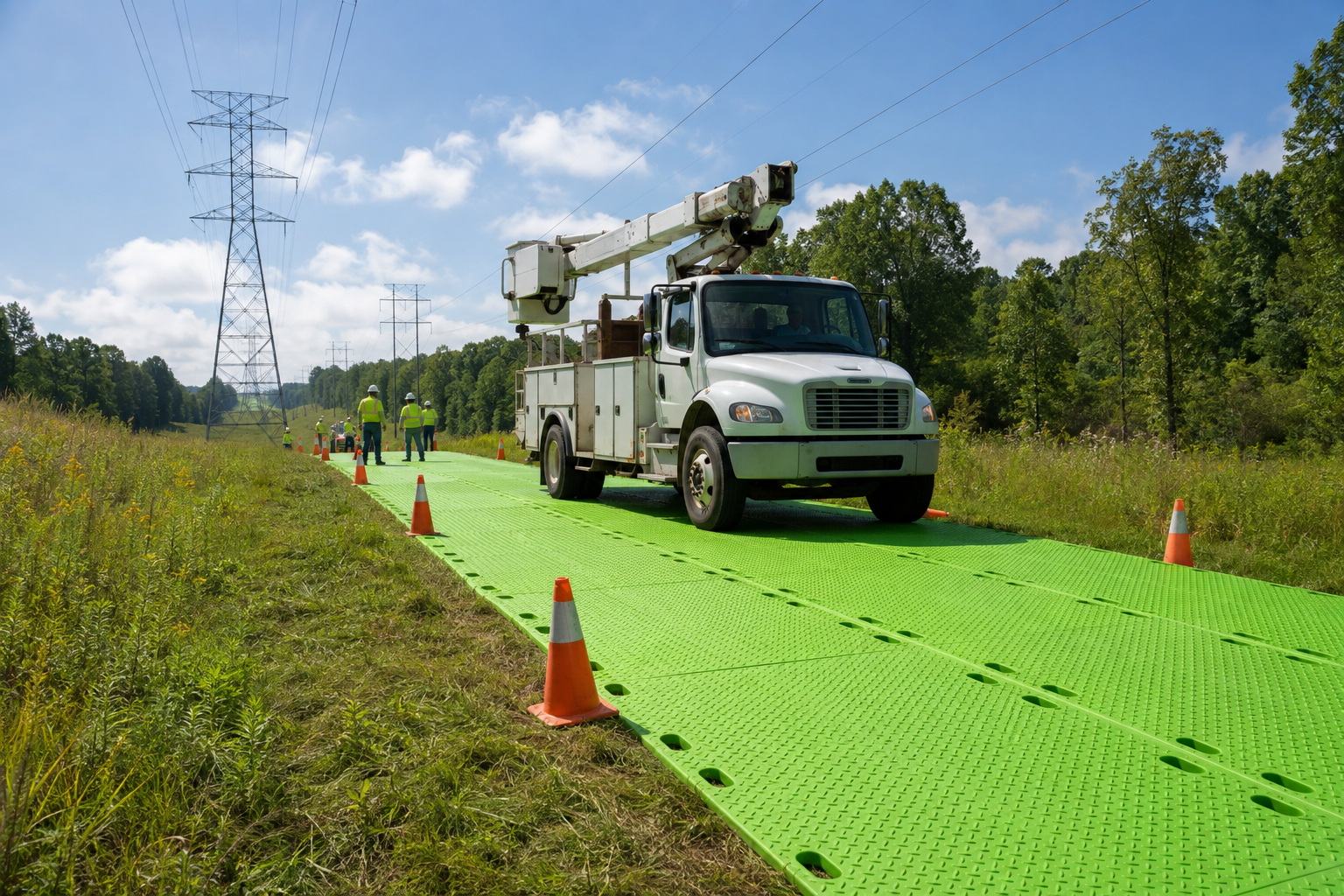
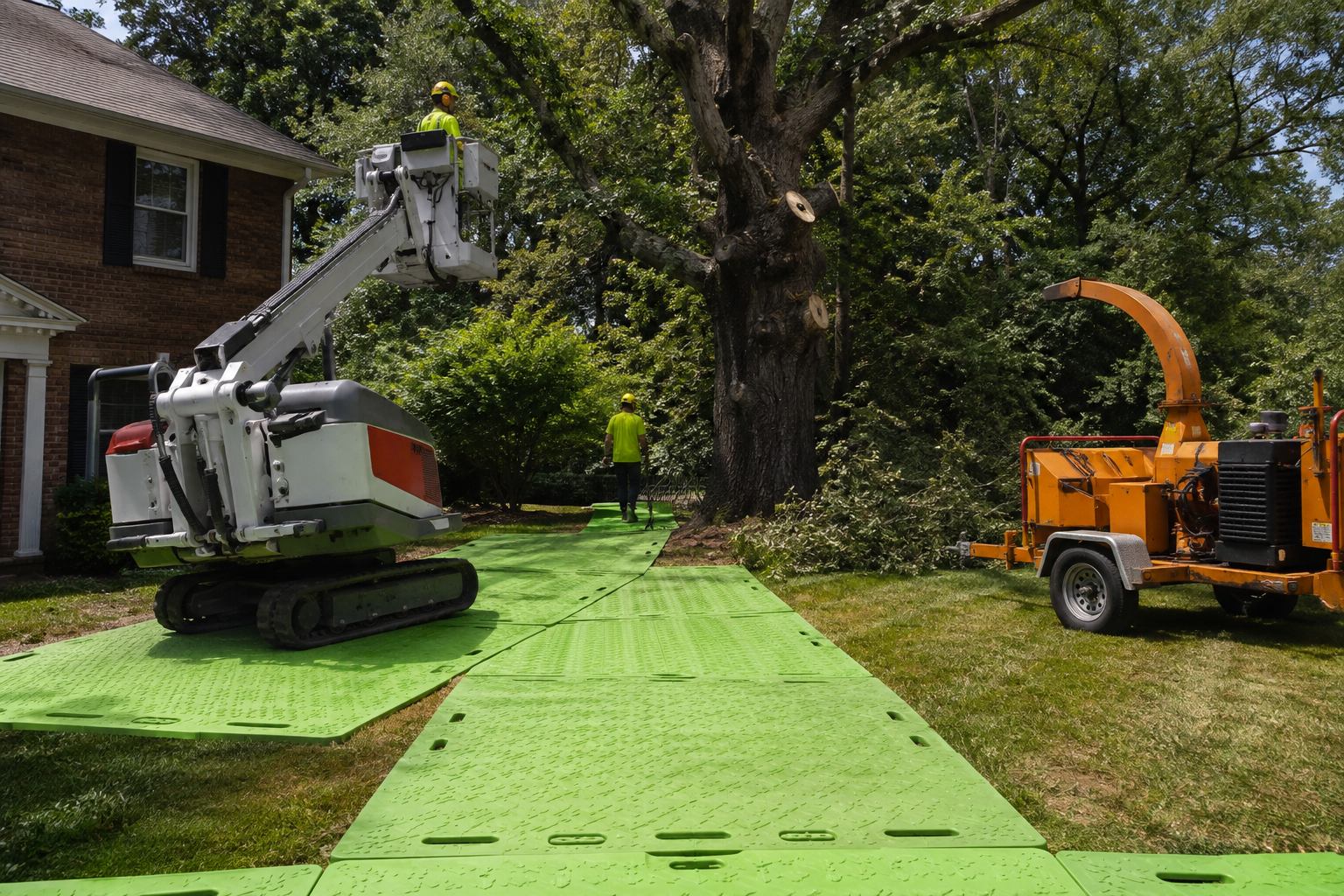
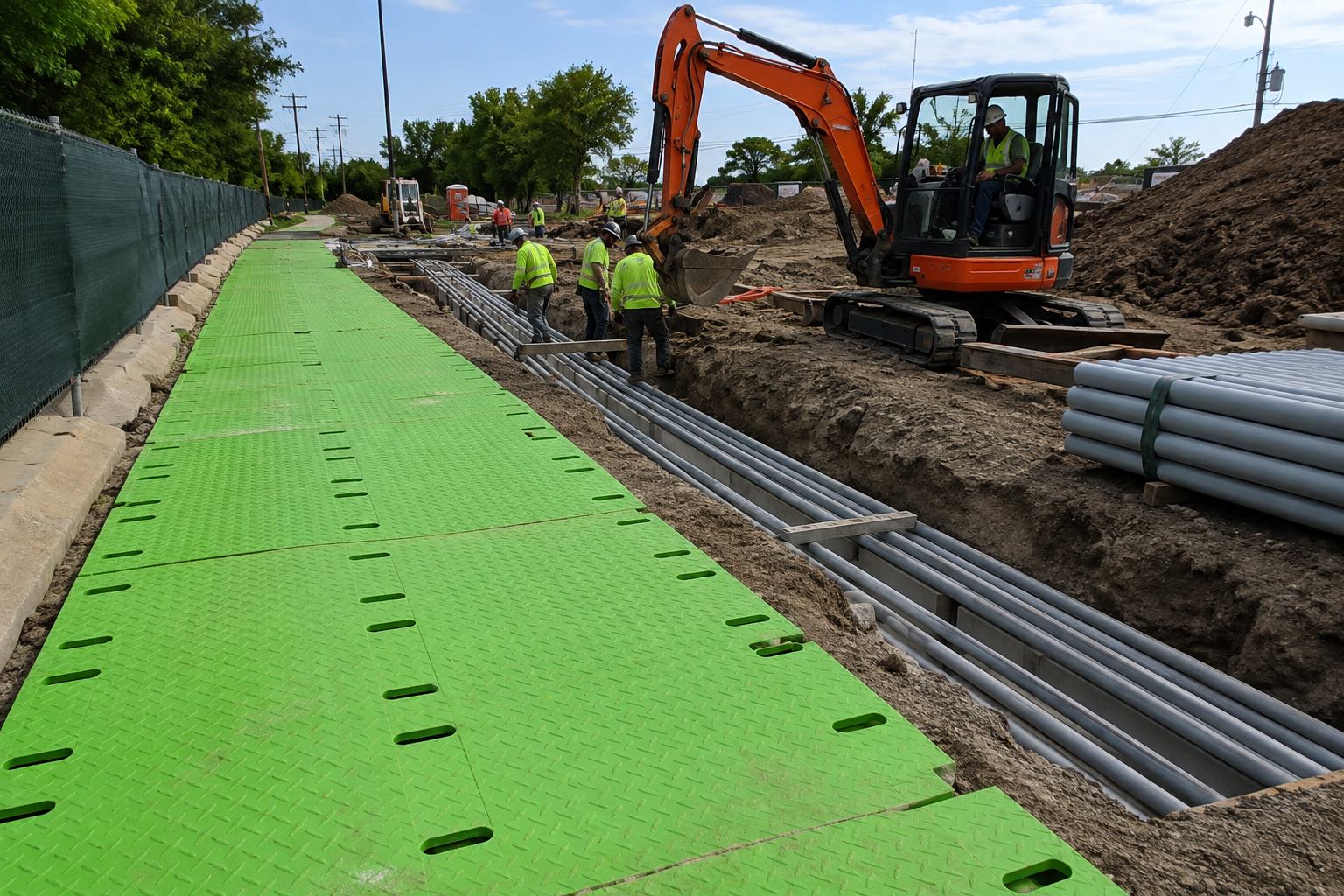
This guide explains where protection matters most, how to plan coverage, and which BAM! Ground Pro features affect daily use. BAM mats are hi-vis safety green HDPE panels—not blue rubber mats—and are designed for reusable ground protection.
Ground Pressure Is About Contact Area
Equipment weight reaches the surface through tires, tracks, outriggers, or stabilizers. When that force is concentrated into a small area, soil can shear, pavement can mark, and turf can rut. A rigid panel increases the area involved in carrying the load.
The best results begin with a pre-job walk. Note soft ground, drainage, slopes, finished surfaces, turning points, and the exact machine path. Build the protected route before equipment enters the vulnerable area.
Distribution Is Not the Same as Unlimited Support
Mats improve load distribution, but the ground beneath them still has a bearing limit. Deep fill, saturated soil, voids, steep slopes, or unsupported edges require site-specific assessment. Never interpret a panel rating as permission to ignore subgrade conditions.
Treat the panels as one part of the access plan. Site conditions, equipment instructions, safety requirements, and professional judgment remain essential.
Keep the Entire Footprint Supported
A tire or track partly on and partly off a panel creates an uneven transition. Build a route wide enough for the machine and add room at turns. For stationary concentrated loads, follow equipment and project guidance rather than assuming travel mats serve as engineered outrigger pads.
Operators should travel smoothly, avoid abrupt braking and stationary pivot turns, and stay centered on the route. Crew members should inspect alignment as conditions change.
How BAM Panels Support Access
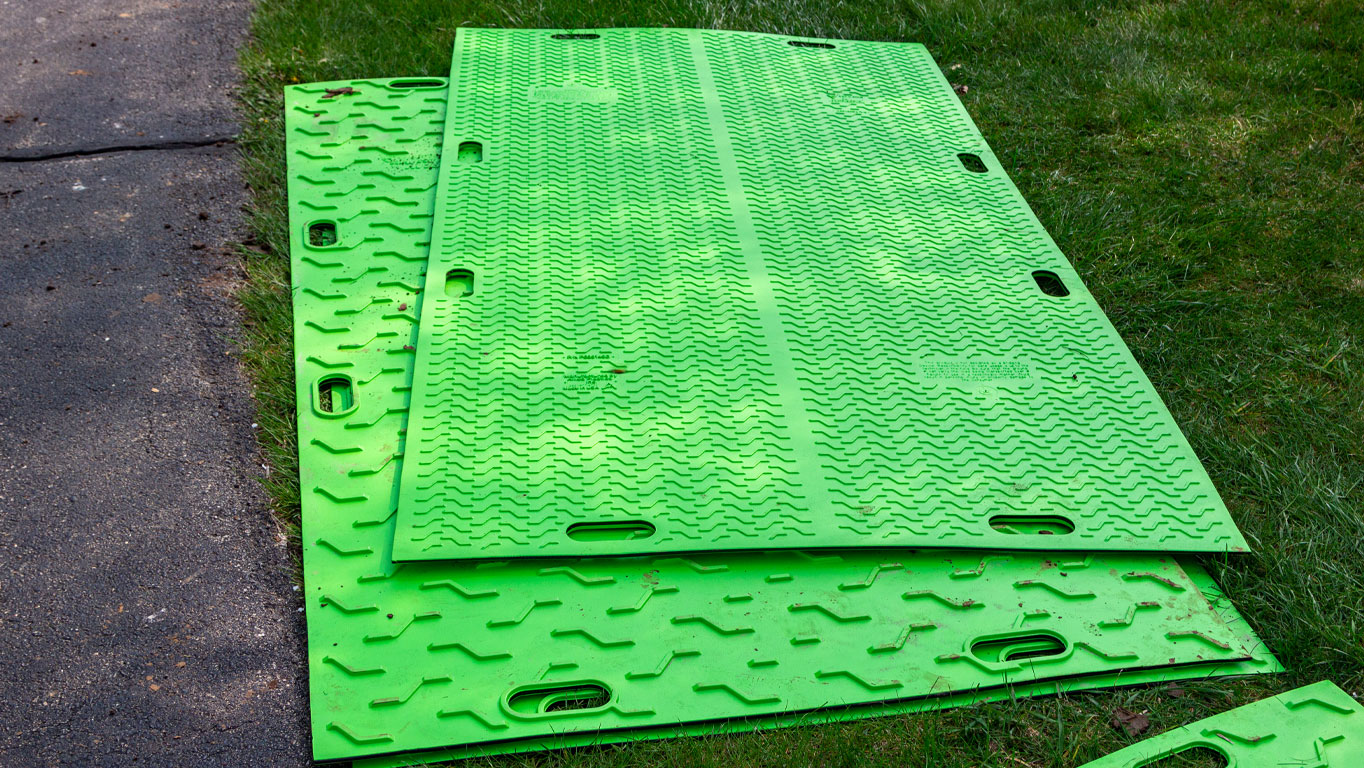
BAM! thermoformed HDPE panels are 3/8 inch thick and rated at 80 tons. The 4×8 format spreads travel loads over 32 square feet, while dual-sided tread supports traction. Hi-vis safety green makes route boundaries clear.
Treat the panels as one part of the access plan. Site conditions, equipment instructions, safety requirements, and professional judgment remain essential.
Inspect During Repeated Passes
The first successful pass does not guarantee the route will remain unchanged. Repeated traffic, rainfall, thawing, and turns can alter support. Watch for rocking, edge lift, migration, pumping soil, or water collecting around the path.
For complete specifications, review the BAM! product details and match the layout to the equipment, surface, and job duration.
Match the System to the Risk
Use wider coverage and more conservative operating practices where restoration would be expensive or conditions are uncertain. The goal is not only to keep equipment moving; it is to finish without transferring avoidable damage to the client.
Treat the panels as one part of the access plan. Site conditions, equipment instructions, safety requirements, and professional judgment remain essential.
Frequently Asked Questions
Do weight distribution mats eliminate ground pressure?
No. They spread load across a larger area, reducing concentration, but total equipment weight and subgrade capacity still matter.
Is an 80-ton mat rating the same as soil capacity?
No. The panel rating and the supporting ground are different parts of the system.
Can these mats be used under outriggers?
Use products and layouts specifically approved for the concentrated load and follow equipment-manufacturer and engineering guidance.
Why inspect after the first pass?
Initial loading can reveal weak areas, panel movement, or transitions that need additional coverage.
What surfaces can benefit from distribution?
Lawns, soil, gravel, and some finished surfaces may benefit when the application and layout are appropriate.
Build a Better-Protected Access Plan
The right ground-protection system helps crews arrive prepared, keep equipment on a defined route, and leave a cleaner site behind. Plan adequate width, protect turns and staging areas, and keep spare panels available when weather or workflow changes.
Explore BAM! Ground Pro mats, use the Where to Purchase page to locate a distributor, or contact BAM! for application guidance. Work cleaner. Work safer. Pro’s choose BAM!