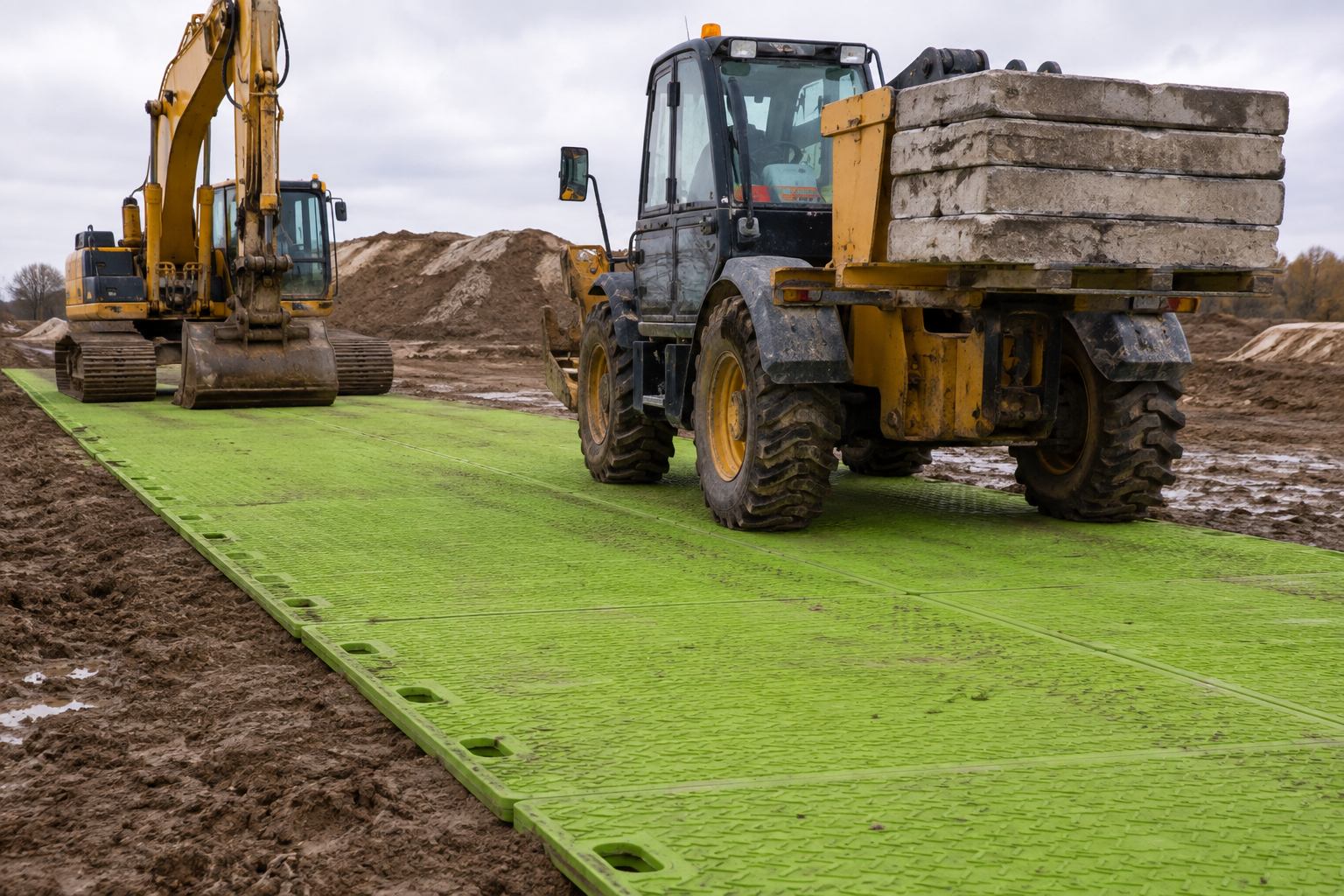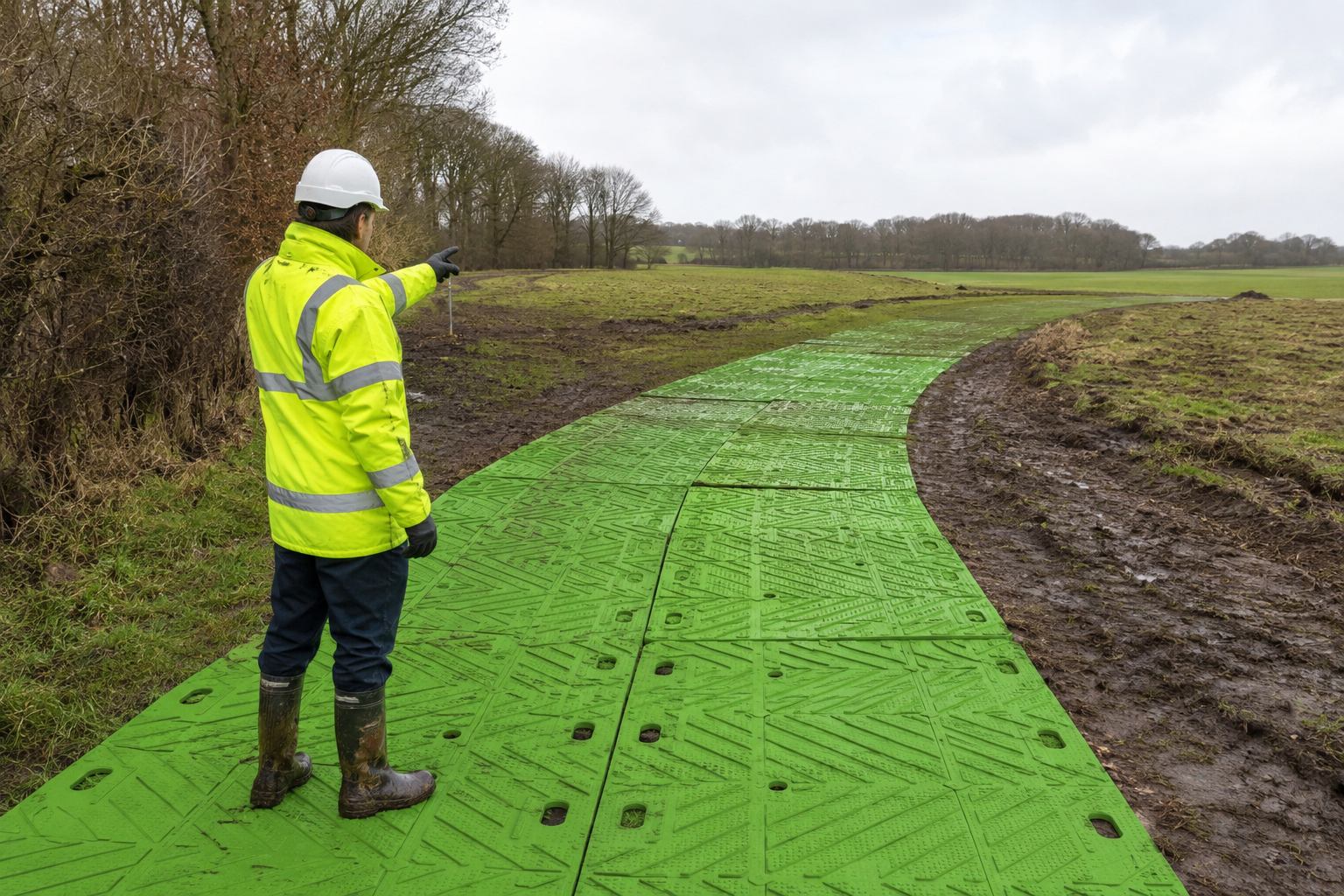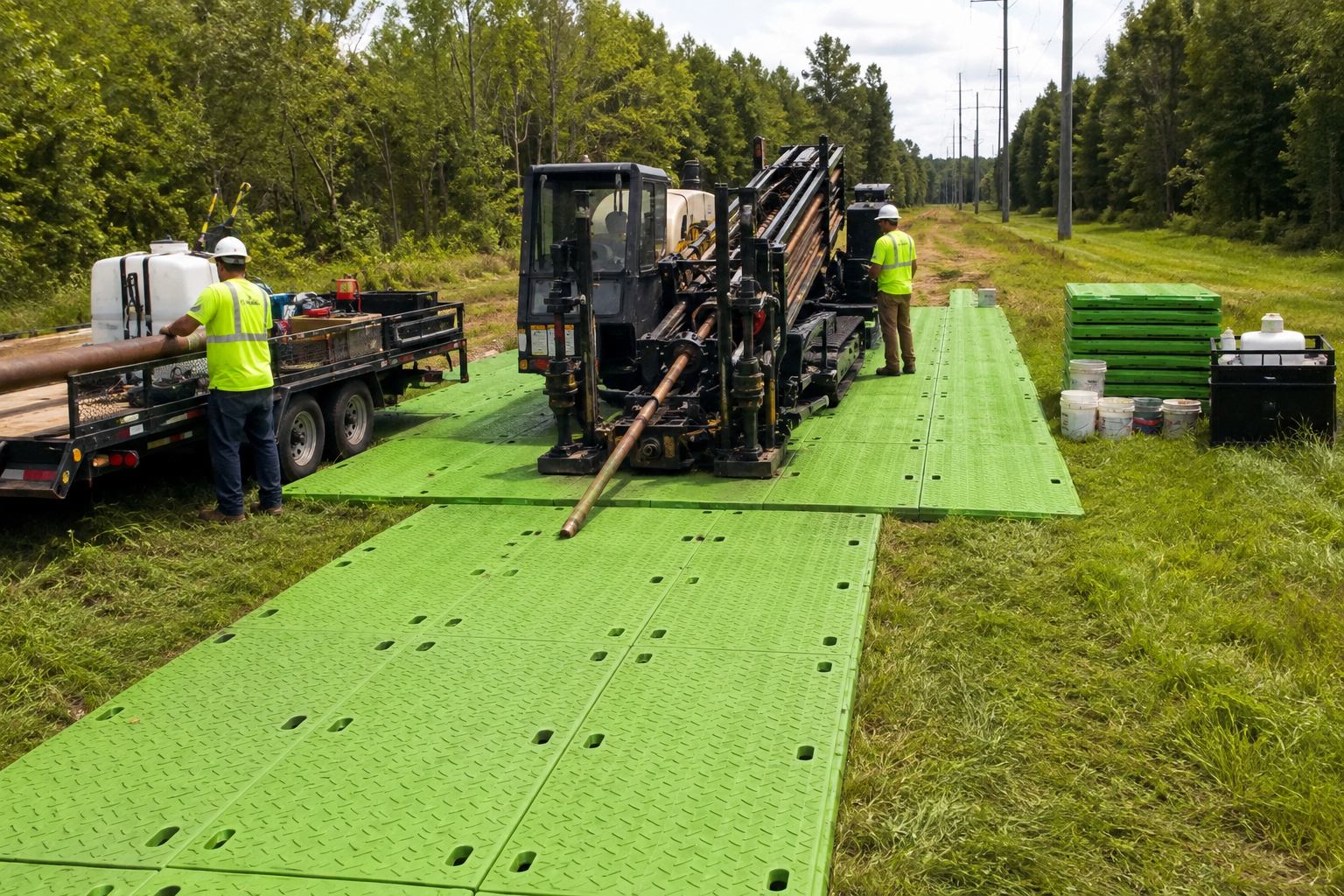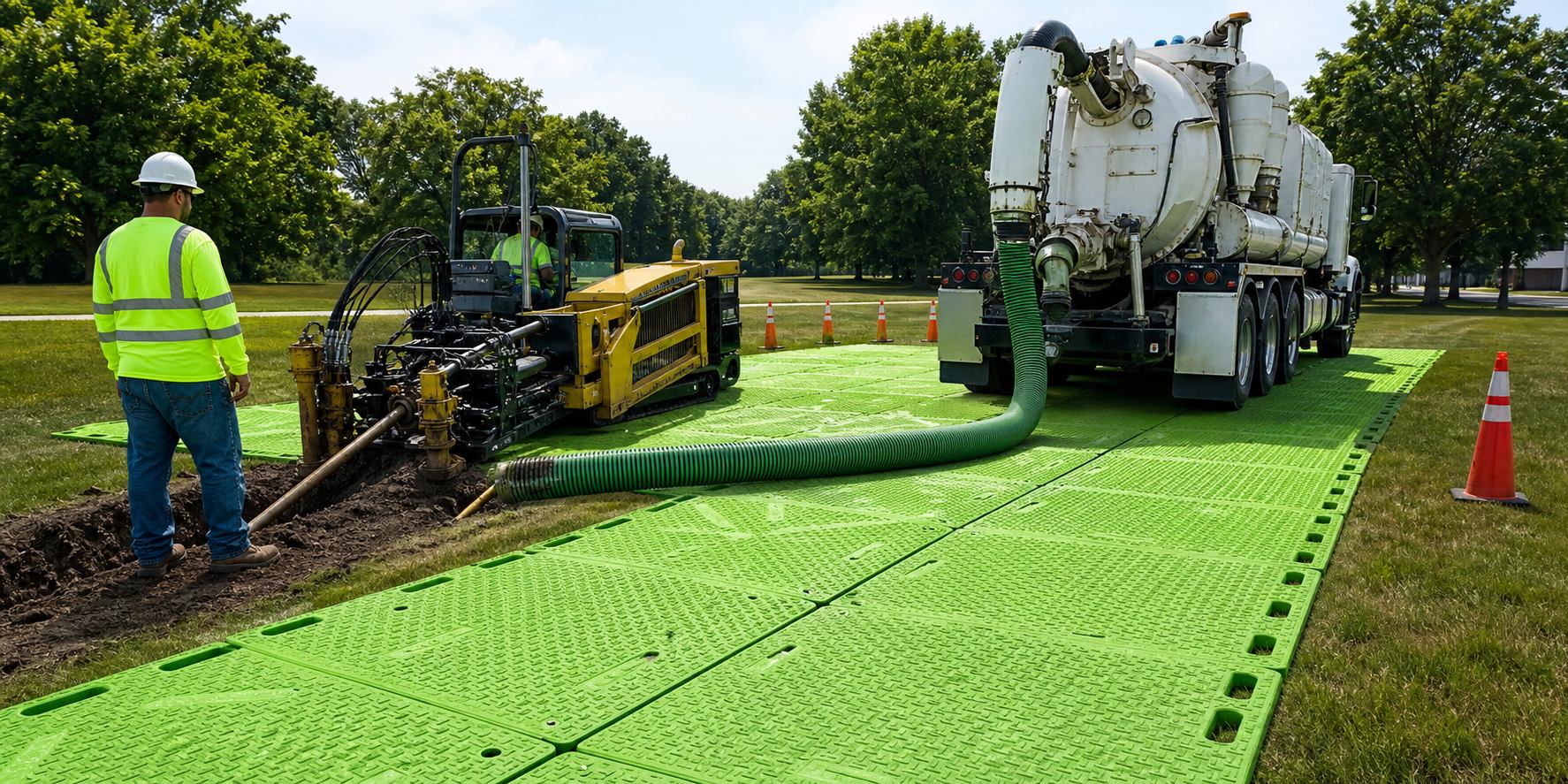
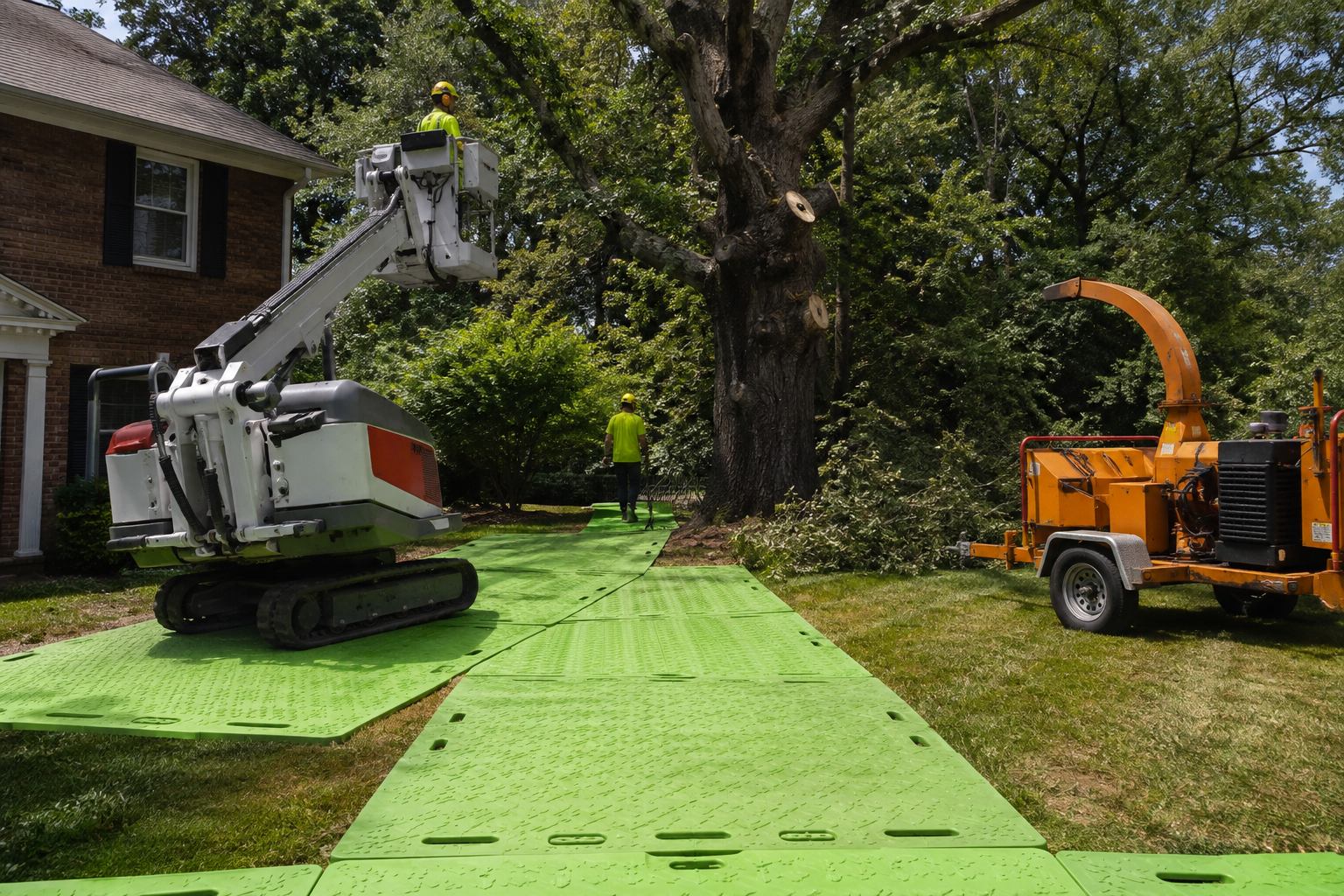
arbor mats give tree-care companies, arborists, and landscape crews moving lifts, chippers, loaders, and trucks across sensitive properties a practical way to manage reaching trees without rutting lawns, compacting exposed soil, or creating unsafe footing around heavy equipment. A good mat plan protects the surface, supports a more organized work zone, and helps crews avoid costly restoration and downtime.
This guide explains where protection matters most, how to plan coverage, and which BAM! Ground Pro features affect daily use. BAM mats are hi-vis safety green HDPE panels—not blue rubber mats—and are designed for reusable ground protection.
Why Tree Work Creates Concentrated Ground Pressure
Tree-care equipment is heavy and often operates in tight residential areas. Bucket trucks, compact lifts, chippers, and loaders repeatedly cross the same route. On damp turf, even a few passes can create ruts and soil displacement that remain long after the tree work is complete.
The best results begin with a pre-job walk. Note soft ground, drainage, slopes, finished surfaces, turning points, and the exact machine path. Build the protected route before equipment enters the vulnerable area.
Plan Around the Root Zone
Ground protection reduces surface damage, but arborists must still respect critical root zones. Identify roots, irrigation, slopes, and soft areas before laying a route. Use mats to distribute travel loads and keep machines on one planned corridor instead of allowing repeated traffic across the entire lawn.
Treat the panels as one part of the access plan. Site conditions, equipment instructions, safety requirements, and professional judgment remain essential.
Build Access From the Street Inward
Begin on a stable driveway or curbside transition and deploy toward the work area. Avoid dropping panels directly onto delicate plantings. Widen the path near turns, chipper feeds, and lift setup points so operators can maneuver without leaving the protected surface.
Operators should travel smoothly, avoid abrupt braking and stationary pivot turns, and stay centered on the route. Crew members should inspect alignment as conditions change.
BAM Features for Tree-Care Crews
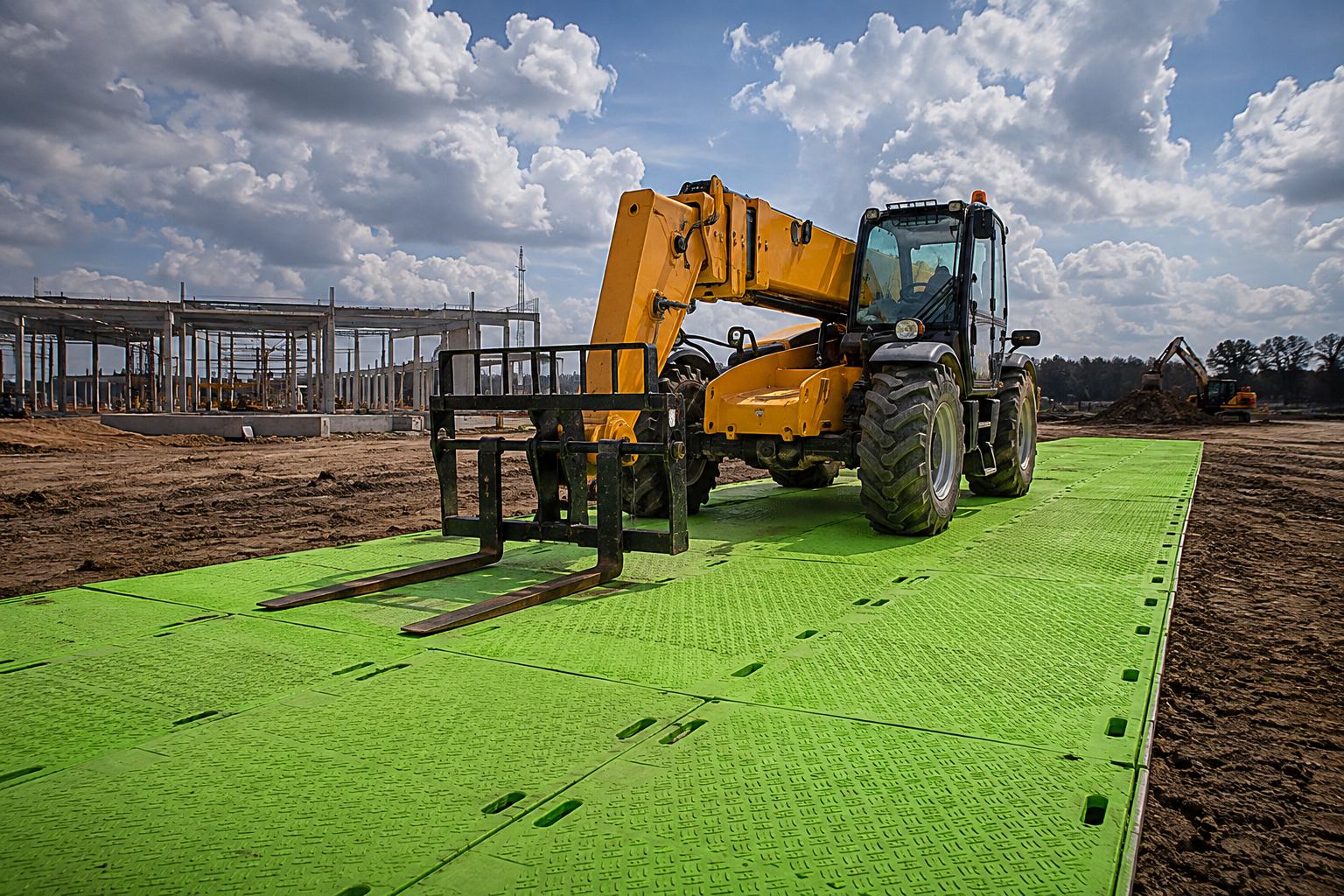
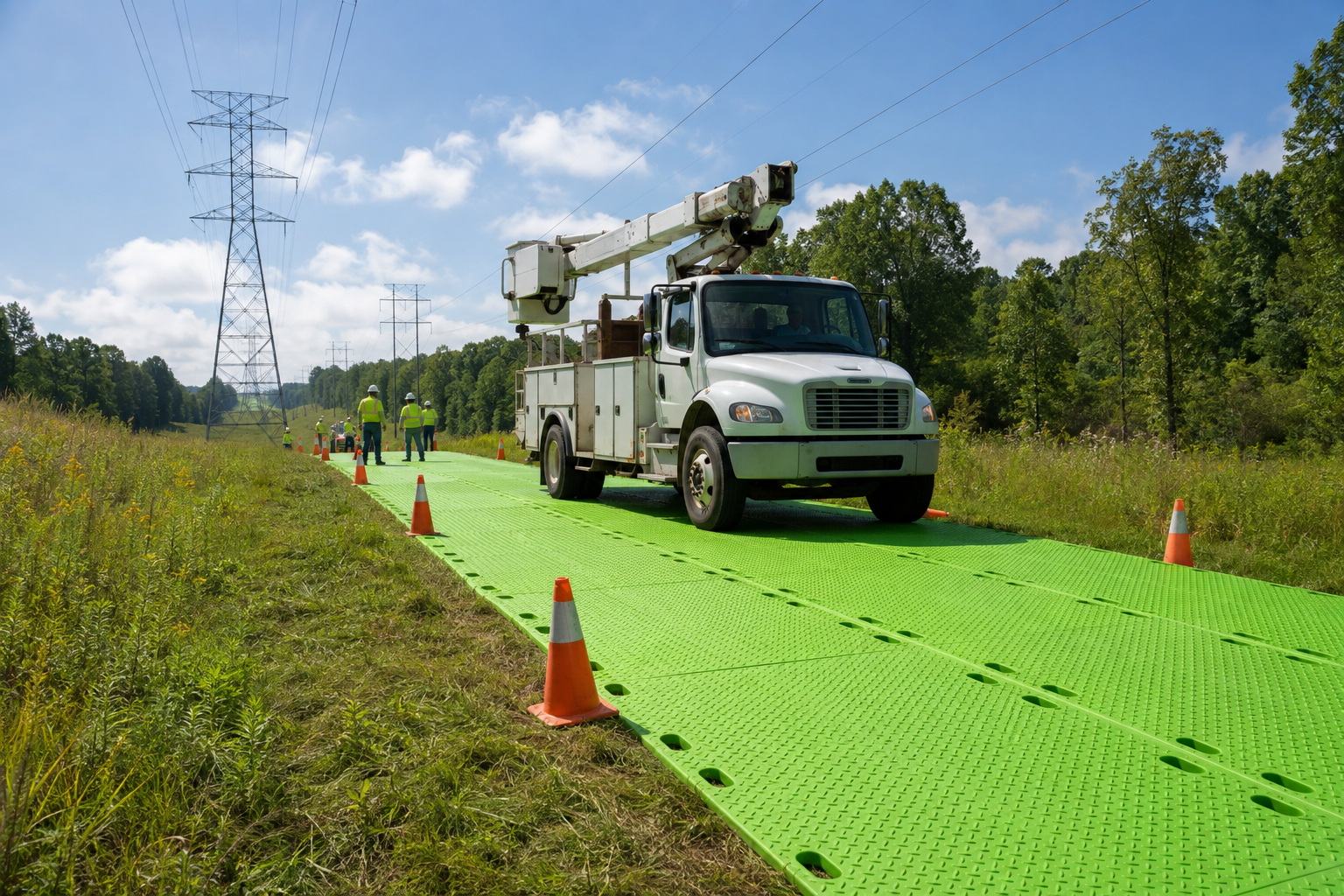
Hi-vis safety green makes the route easy to see around branches, trucks, and moving crews. BAM!’s 56-pound 4×8 mats and large handholds support quick repositioning. Dual tread provides equipment grip and a dedicated pedestrian surface, while the 80-ton rating provides capacity for demanding jobs.
Treat the panels as one part of the access plan. Site conditions, equipment instructions, safety requirements, and professional judgment remain essential.
Protect the Client Relationship
A clean lawn at closeout is visible proof of professional planning. Photograph the property before setup, keep mud and chips contained, and remove panels from the far end back toward the street. Pressure-wash mats before the next residential job.
For complete specifications, review the BAM! product details and match the layout to the equipment, surface, and job duration.
Common Arbor-Mat Mistakes
Do not wait for tires to spin before deploying protection. Avoid tight turns on panel edges, unsupported gaps, and routes that cross marked irrigation without assessment. Never assume frozen ground will stay firm as daytime temperatures rise.
Treat the panels as one part of the access plan. Site conditions, equipment instructions, safety requirements, and professional judgment remain essential.
Frequently Asked Questions
Do arbor mats prevent all soil compaction?
They distribute loads and reduce rutting, but sensitive root zones still require professional assessment and careful route planning.
Can arbor mats be used under compact lifts?
Yes, when the layout, equipment weight, ground conditions, and manufacturer guidance are appropriate for the job.
How wide should a tree-service access path be?
It should fully support the equipment footprint and be wider at turns, setup zones, and attachment areas.
Are green mats useful on busy jobsites?
Yes. Hi-vis safety green helps operators and ground crews identify the protected route.
How should mats be cleaned after tree work?
Remove soil and organic debris with water or pressure washing, inspect them, dry as needed, and stack securely.
Build a Better-Protected Access Plan
The right ground-protection system helps crews arrive prepared, keep equipment on a defined route, and leave a cleaner site behind. Plan adequate width, protect turns and staging areas, and keep spare panels available when weather or workflow changes.
Explore BAM! Ground Pro mats, use the Where to Purchase page to locate a distributor, or contact BAM! for application guidance. Work cleaner. Work safer. Pro’s choose BAM!