Driveway damage doesn’t announce itself ahead of time. One delivery. One dumpster. One piece of equipment on the wrong section of concrete—and a client has a repair bill they didn’t expect and a contractor they won’t call again.
Driveway protection mats eliminate that scenario. They go down before the work starts and come up clean when the job is done. The driveway looks the same as day one. The client is happy. The job is complete.
This guide covers how driveway protection mats work, what to look for, and how to deploy them on the jobs where they matter most.
The Anatomy of Driveway Damage on Construction Jobsites
Understanding how driveways get damaged helps you know exactly where to place protection.
Point load damage
Point loads occur when weight concentrates in a small area—a dumpster corner, an outrigger pad, a loaded tire on a cracked section. The pressure per square inch in a point load scenario can exceed what even thick concrete is designed to handle.
Shear and friction damage
Turning equipment—especially skid steers and compact loaders—applies lateral force to the surface. That’s the scuffing and scratching pattern that’s impossible to fully repair on decorative concrete.
Repeated load cycling
One heavy truck pass might be survivable for a driveway. Twenty passes over the same delivery route, over a week-long remodeling project, is a different story. Load cycling accelerates the fatigue failure of concrete and asphalt.
Thermal stress plus load
Asphalt softens in summer heat. Combine a warm afternoon with a delivery truck sitting on the same section for two hours, and you get permanent deformation. This happens more often than contractors realize because it’s invisible until the truck pulls away.
What Makes a Driveway Protection Mat Actually Effective
Not all mats provide real protection. These are the features that separate effective driveway protection from products that look the part but underperform.
Load rating that matches real equipment
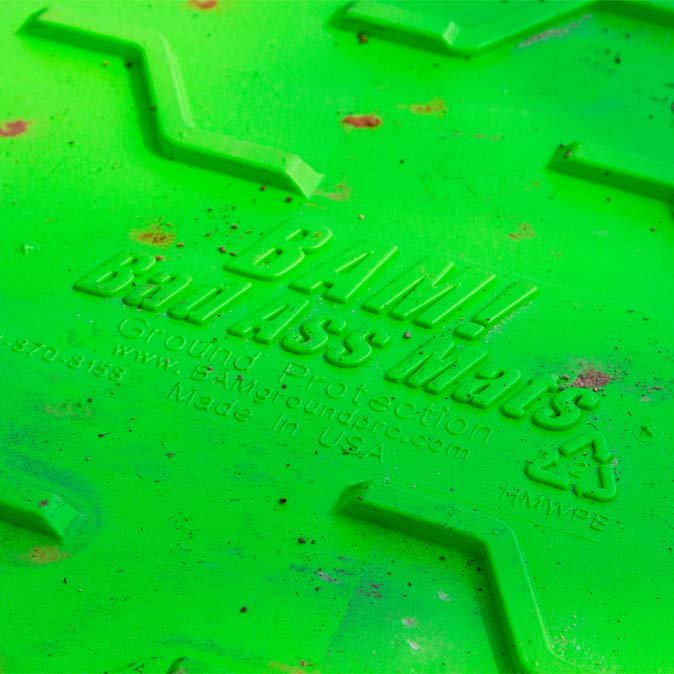
BAM! Bad Ass Mats carry an 80-ton load rating. That’s 160,000 pounds—far above any equipment or vehicle combination a residential contractor would deploy. Working well within the load rating means the mat isn’t under stress at normal working loads, which translates to consistent performance and long life.
Material that doesn’t absorb moisture or degrade
Thermoformed HDPE doesn’t absorb water. It won’t warp in rain, rot over time, or crack from freeze-thaw cycles. This is critical for contractors working in the Midwest or Northeast where weather conditions change rapidly and mat performance needs to be consistent regardless of conditions.
Traction on both sides
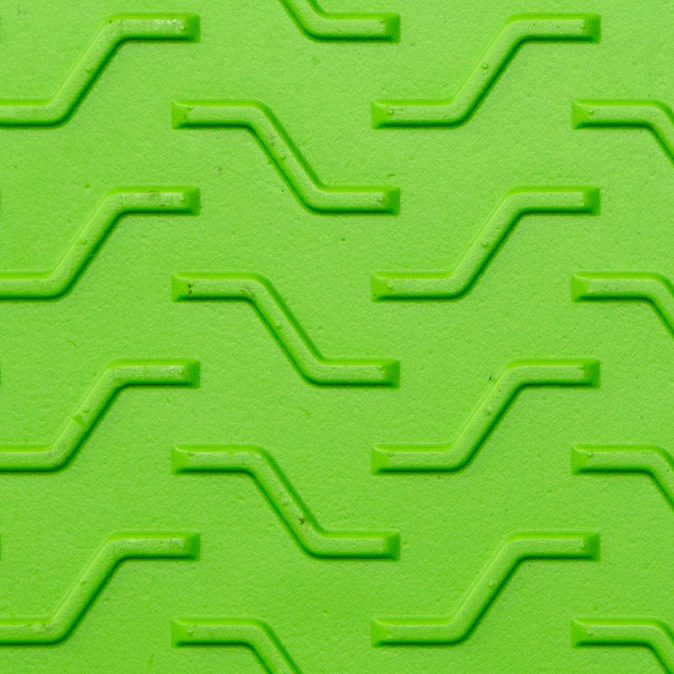
A driveway protection mat that’s slippery is its own hazard. BAM! mats feature an exclusive dual-sided tread—equipment-side grip for machines, pedestrian-side traction for crew. Safe footing matters on every surface, especially a driveway that can get wet from rain or irrigation.
Size and weight for fast deployment
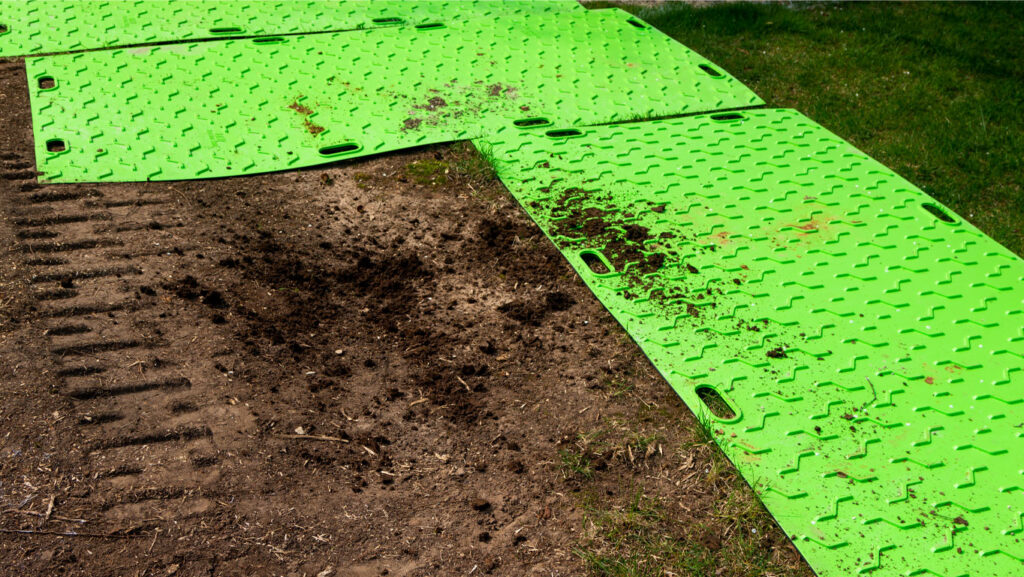
A 4×8 panel at 56 pounds is the standard for a reason: it covers meaningful surface area and one person can carry it. Faster setup means the crew isn’t spending half the morning on mat placement.
Driveway Damage Scenarios and the Right Mat Response
Scenario 1: Landscaping job with skid steer access
A landscape contractor needs to move a skid steer from the street trailer to the backyard through a side yard gate. The path crosses the full length of the driveway. Without mats, 10 to 15 passes over the same path creates visible ruts in the grass and scuffing where the skid steer pivots off the pavement.
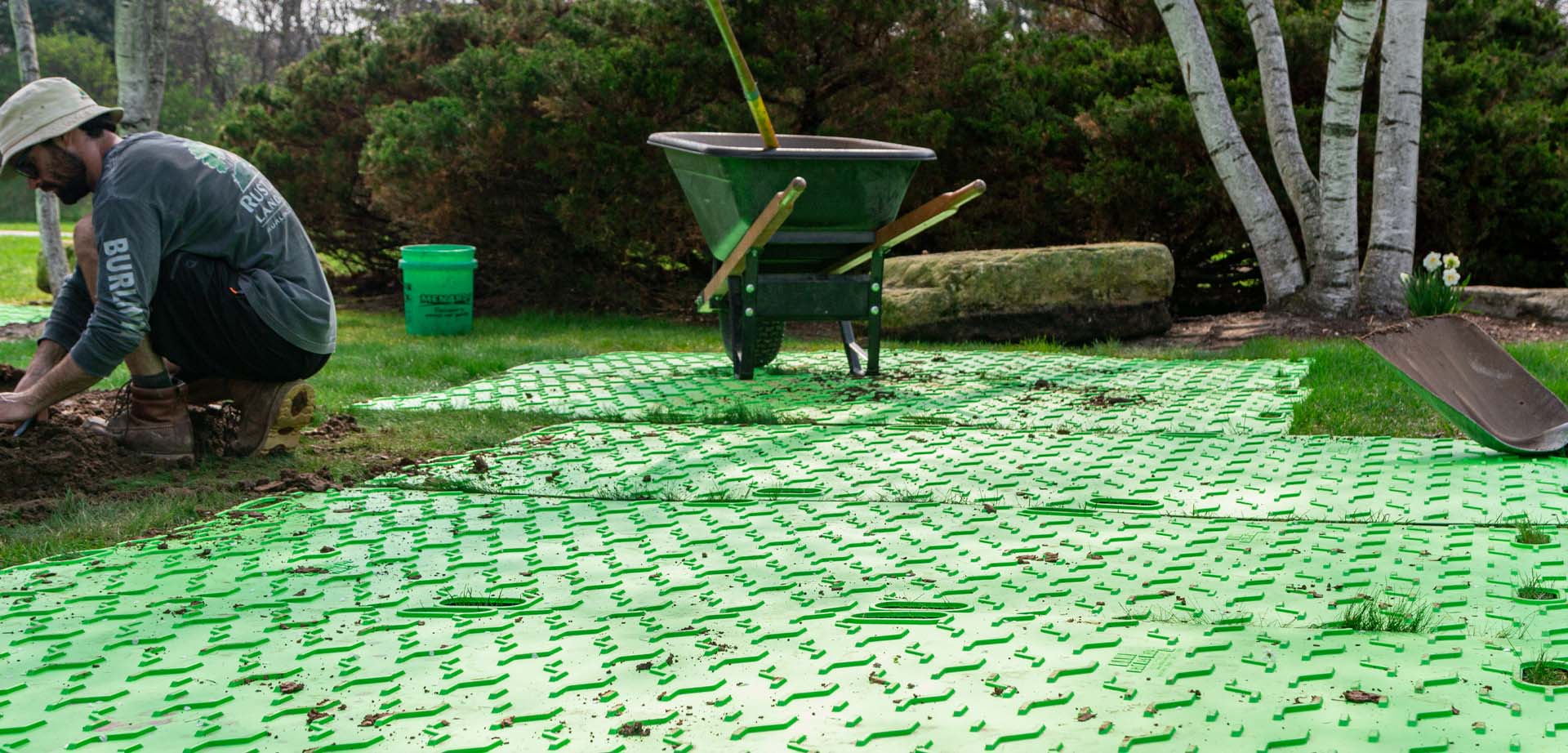
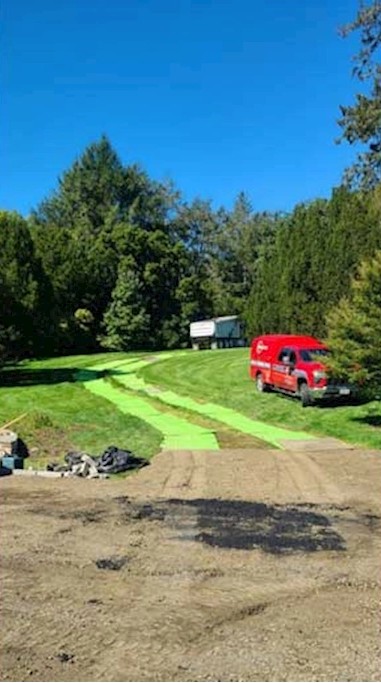
Correct response: BAM! 4×8 panels laid as a continuous path from the street to the gate. 2×8 panels through the narrower gate opening. Protect the turning zone at the end of the driveway where the skid steer pivots.
Scenario 2: Roofing job with dumpster and delivery truck
A roofing crew positions a dumpster on a stamped concrete driveway. A delivery truck backs in with shingles. The dumpster is in place for 4 days and is 60% full by pickup.
Correct response: 4 to 6 BAM! 4×8 panels under the full dumpster footprint plus overhang. Additional panels covering the delivery truck approach zone from the apron to the staging area.
Scenario 3: Pool excavation with multiple equipment types
A pool contractor deploys a mini excavator, concrete truck, and skid steer on a property with a paver driveway. The job runs two weeks.
Correct response: Full paver coverage along all equipment paths. Extra panels at any turning zone. Revisit coverage as job phases change and equipment access points shift.
Sizing Your Driveway Protection Mat Setup
Getting the size right isn’t complicated, but it does require thinking ahead.
- Measure the equipment footprint plus 12 inches on all sides
- Measure the full length of high-traffic routes from street to work zone
- Add panels for turning zones where equipment pivots
- Use 2×8 panels for widths under 4 feet or for precise placement
- Keep extra panels on the truck for unexpected coverage needs
Driveway Protection Mats for High-Value Properties
On luxury residential properties—custom pavers, heated driveways, specialty finishes—the standard of protection needs to match the quality of the surface. High-value property owners have high expectations, and they notice everything.
Showing up with professional HDPE mats on a high-end job isn’t just good practice—it’s table stakes for contractors working in premium markets. It signals that you understand what’s at risk and that you’re equipped to protect it.
Frequently Asked Questions
Q: Do driveway protection mats damage driveways they’re placed on?
A: No. HDPE mats are non-abrasive and won’t scratch or damage the surfaces they protect. They distribute weight rather than concentrating it, which is the opposite of damaging.
Q: Can driveway protection mats be used in winter conditions?
A: Yes. BAM! HDPE mats are rated for all four seasons. They perform in cold temperatures without becoming brittle, and their slip-resistant tread provides traction in icy or wet conditions.
Q: How long does it take to set up driveway protection mats on a standard residential job?
A: A two-person crew can lay a complete driveway protection setup for a standard residential job in 10 to 20 minutes. The 8 large hand holds and manageable panel weight make positioning fast.
Q: Can driveway protection mats be rented instead of purchased?
A: Some equipment rental companies offer ground protection mats. Contact BAM! at 888-870-8158 or msheridan@alliedplastics.com to learn about options in your area and to discuss purchase quantities for your operation.
Make Driveway Protection a Standard—Not an Exception
The contractors who never have driveway damage complaints didn’t get lucky. They made driveway protection a standard part of every job setup—as routine as safety equipment and staging plans.
Visit bamgroundpro.com/products for full specs on BAM! driveway protection mats. Find your nearest distributor at bamgroundpro.com/where-to-purchase. Contact us at bamgroundpro.com/contact-us, call 888-870-8158, or email msheridan@alliedplastics.com. Protect your worksite. Protect your reputation. Pro’s choose BAM!