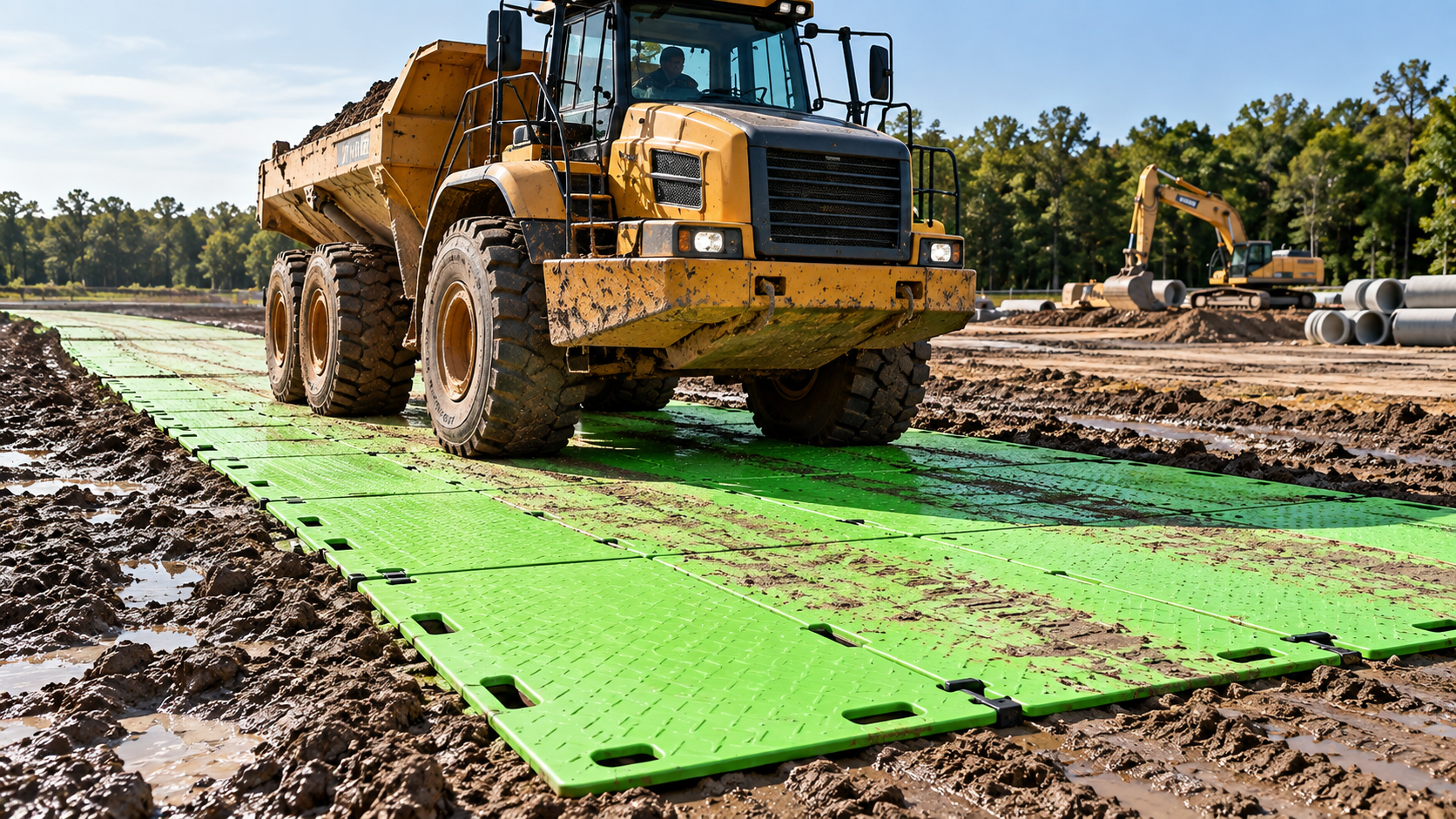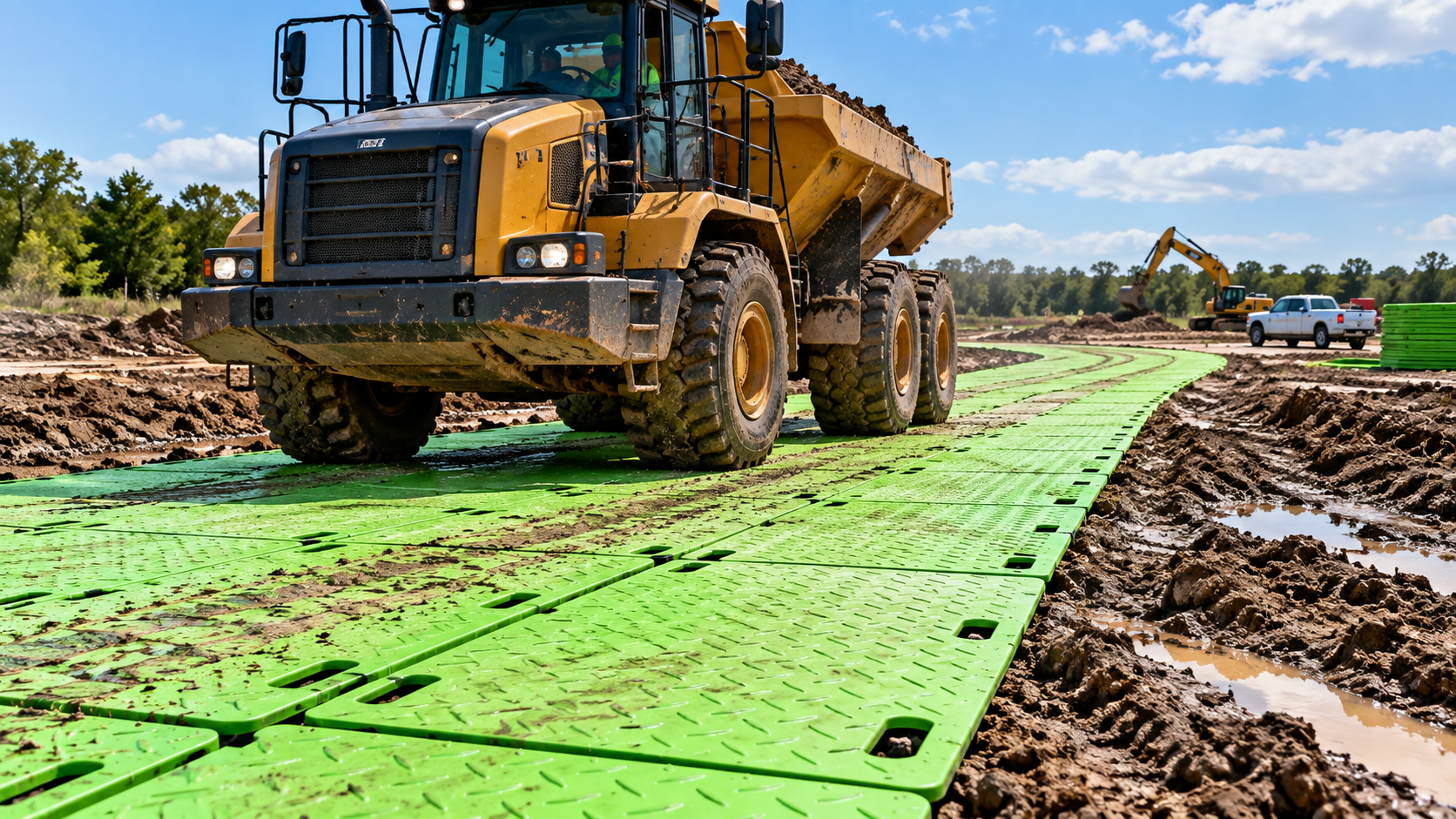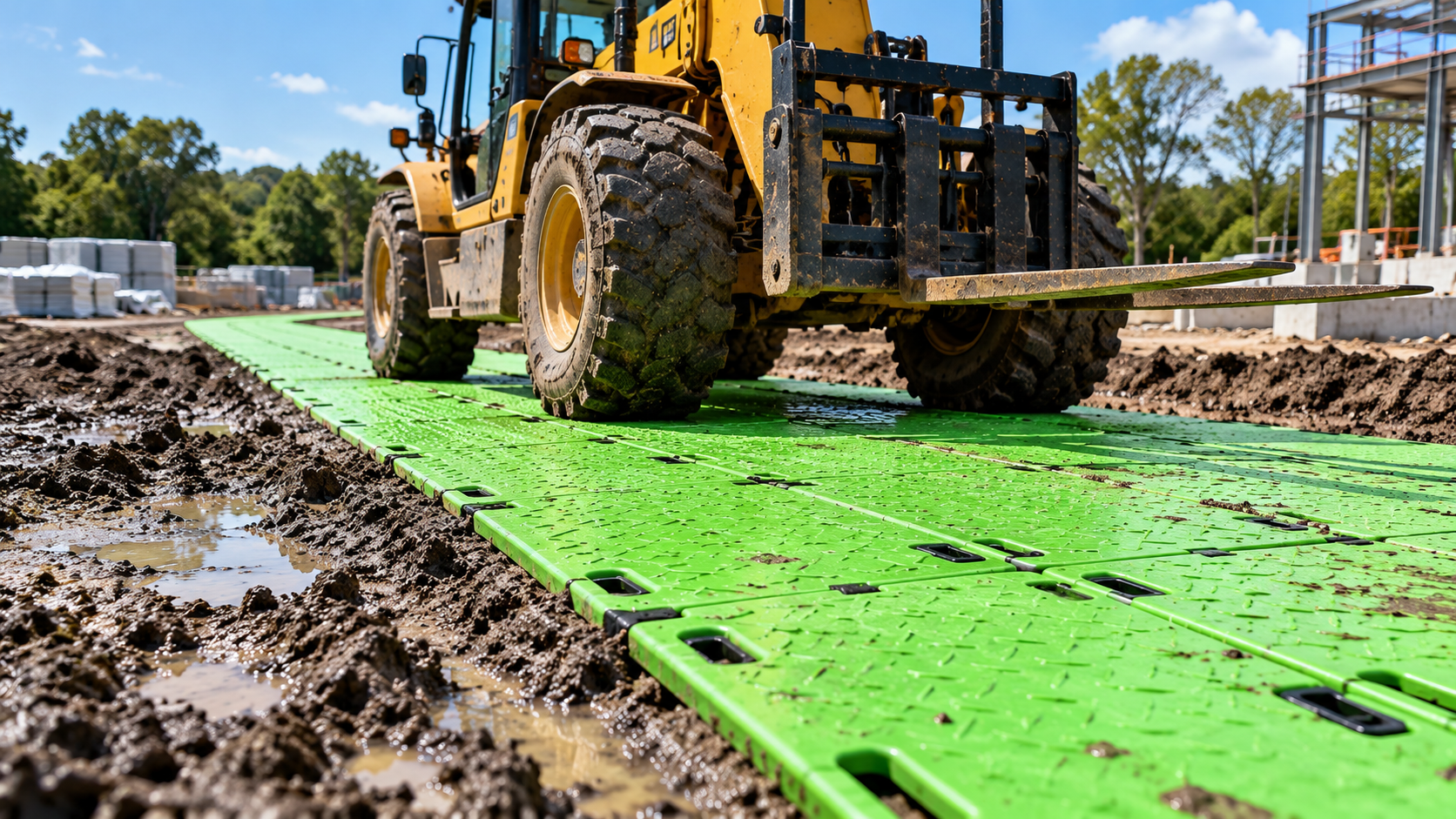
A lawn can take years to establish and about ten minutes to ruin. One pass from a skid steer in soft spring soil leaves ruts that outlast the job by a full growing season. Multiply that by every piece of equipment that needs to reach a backyard pool install, a foundation repair, or a simple delivery, and a homeowner’s yard turns into the most expensive line item nobody budgeted for.
Lawn and yard protection mats give equipment a path across grass that doesn’t compact the soil, tear the turf, or leave a muddy scar that takes months to grow back.
Why Grass Fails So Fast Under Equipment Weight
Turf relies on loose, aerated soil to support root growth. A single heavy pass compacts that soil structure, squeezing out the air pockets roots depend on. Once compacted, grass struggles to recover even after the equipment is long gone — which is why a yard that looked fine the day the crew left can show dead, thin patches weeks later.
Jobs Where Yard Protection Gets Skipped — and Shouldn’t
Pool, patio, and hardscape installs that route equipment across the backyard
HVAC and generator installs reaching units set off the driveway
Fence and deck construction crossing open lawn
Moving trucks and delivery equipment cutting across the yard to avoid the driveway
Tree removal and storm cleanup where access isn’t from a paved surface
How Mats Keep the Lawn Intact
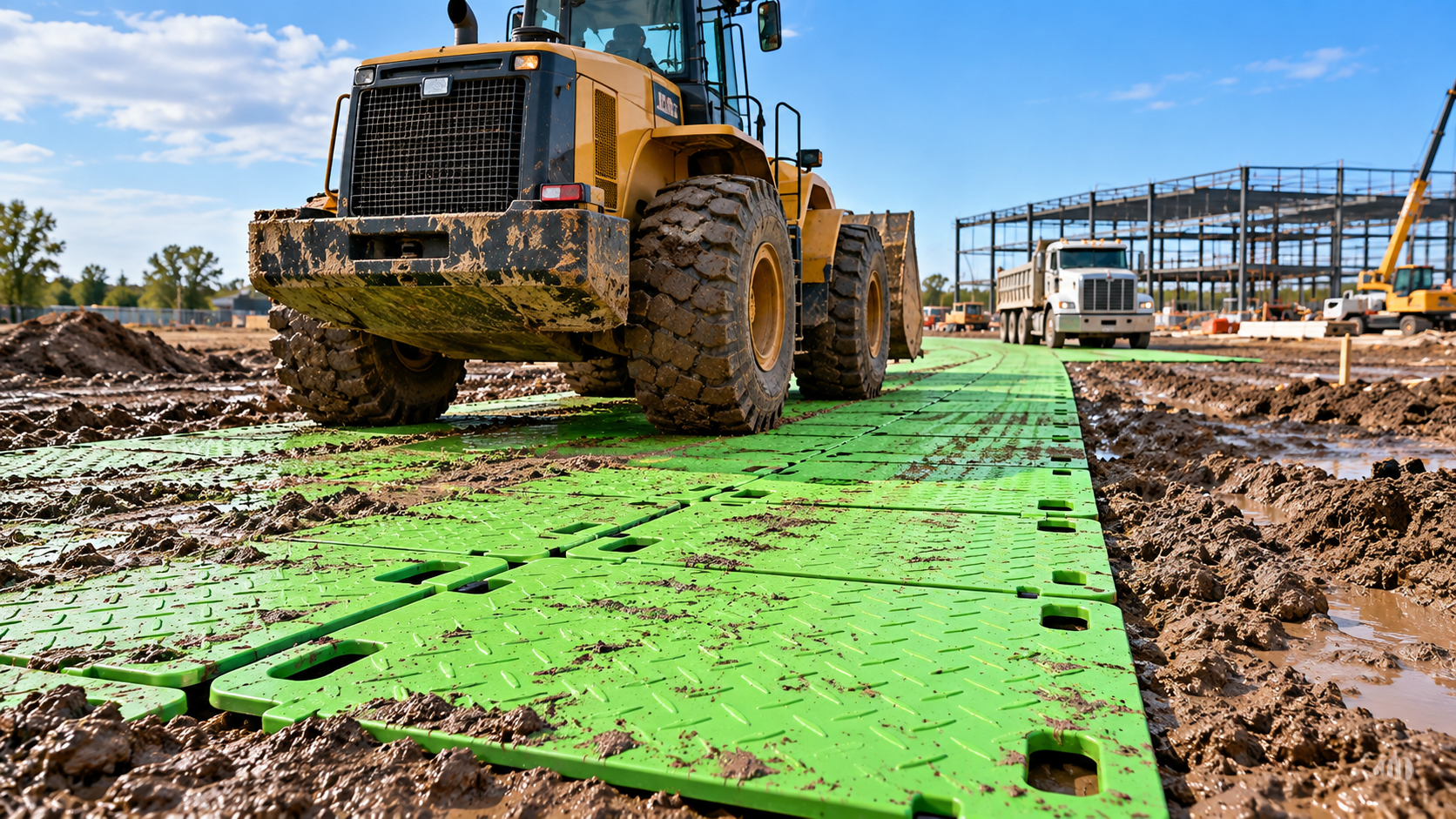
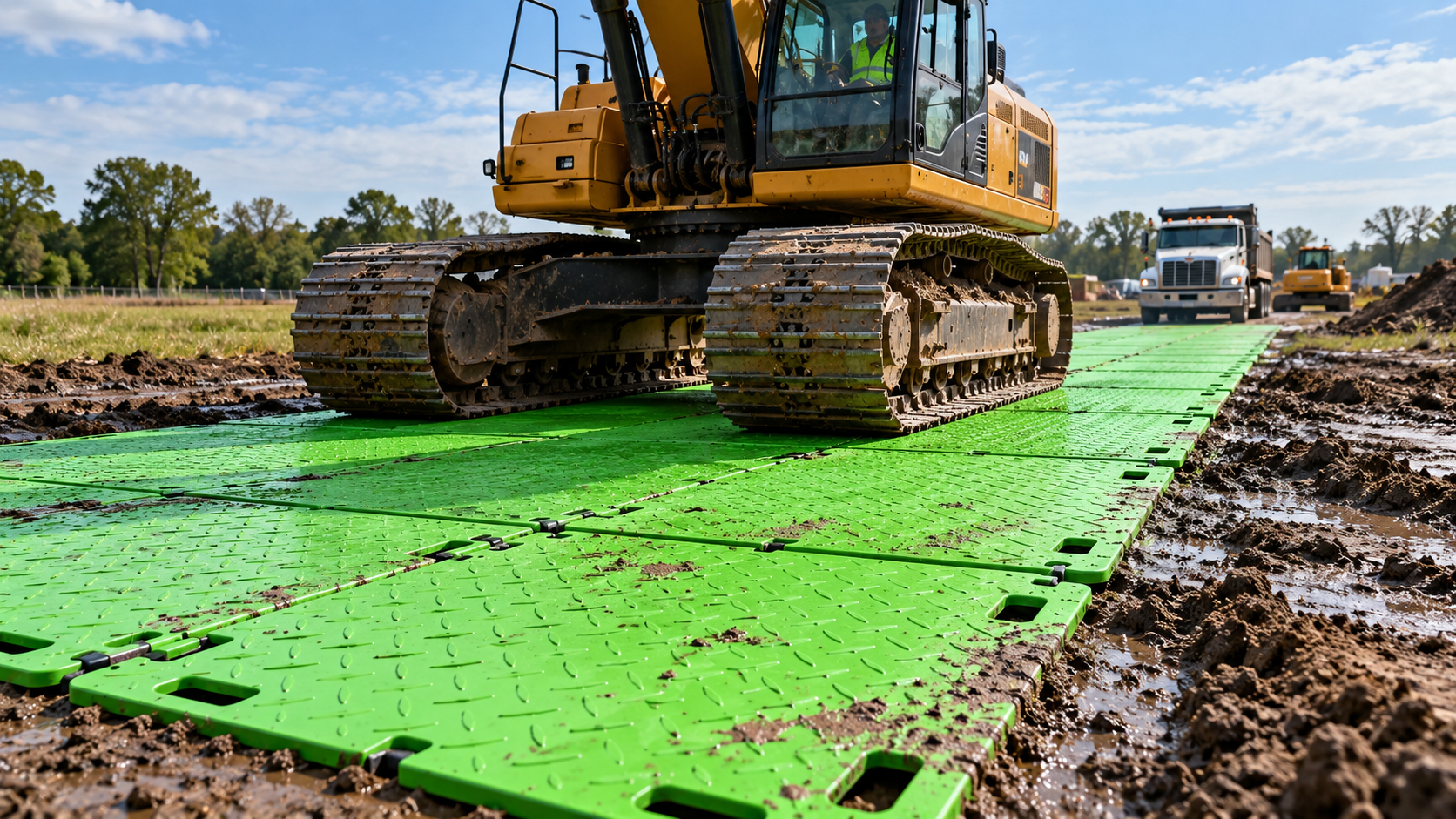
BAM! panels bridge equipment weight across a footprint much wider than a tire or track alone, keeping the pressure on the grass blades and thatch layer rather than driving straight down into the root zone. That’s the difference between grass that bounces back in a week and soil that stays compacted for a season.
The panels also keep equipment from digging in during turns, which is where most yard damage actually happens — straight-line travel does far less harm than a tire spinning or pivoting against wet turf.
Planning a Yard Access Route
Pick the shortest reasonable path
The less lawn equipment crosses, the less there is to protect or repair. Map the shortest practical route from the hard surface to the work area before equipment ever enters the yard.
Widen coverage at gates and tight turns
Gate openings and tight turns around trees, fences, or structures concentrate wear. Add extra panels in these pinch points rather than relying on the same single-wide path used for straight travel.
BAM! Features Built for Residential Lawn Work
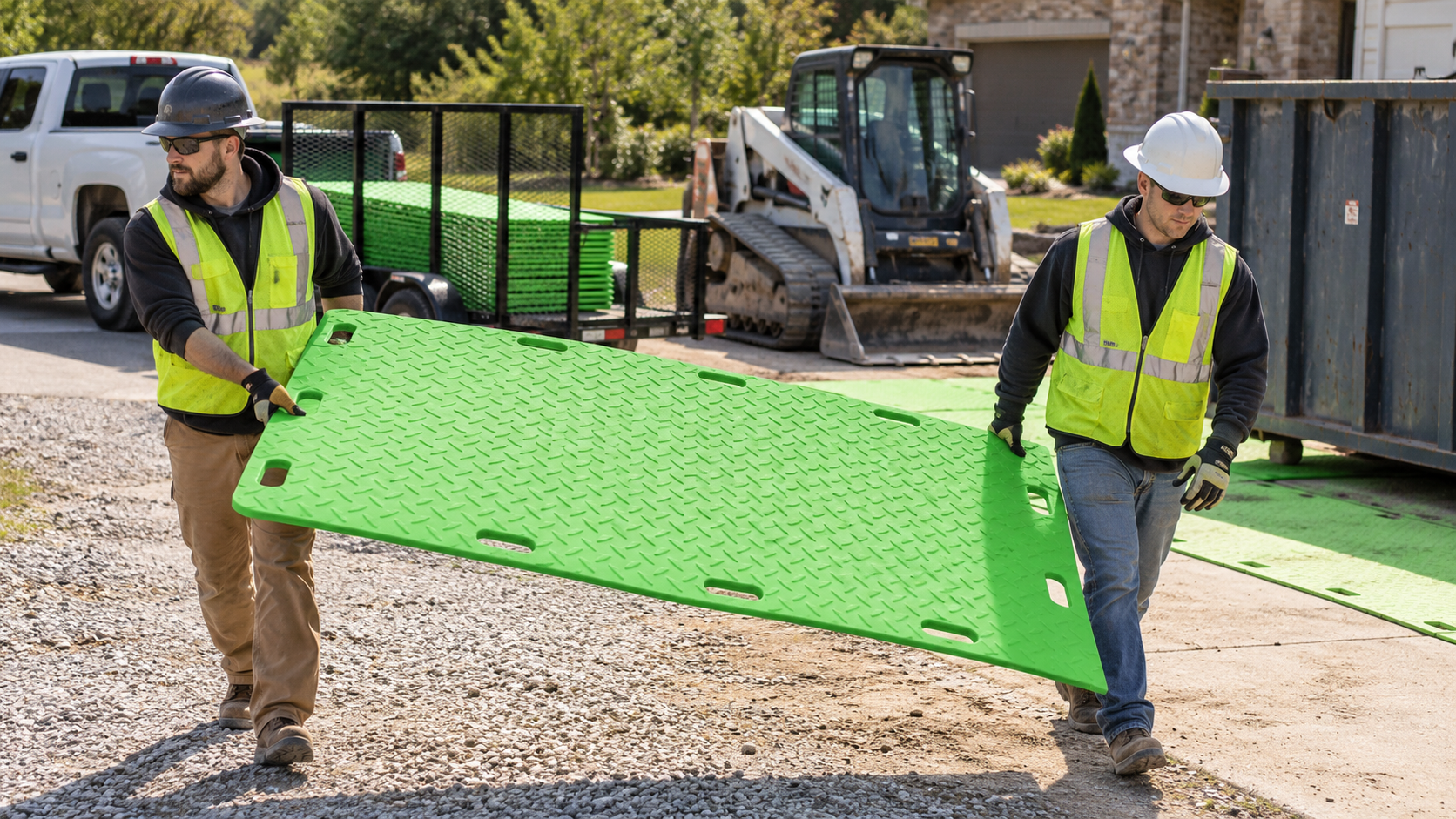
Lightweight 56-lb panels — easy for a two-person crew to place by hand without additional equipment or lawn damage from a second machine.
Hi-vis safety green surface keeps the protected path visible to homeowners, kids, and pets.
Non-slip surface texture maintains footing for crew walking the route.
Fully reusable — the same panels protect this yard today and the next job tomorrow.
Protecting the Relationship, Not Just the Grass
A torn-up lawn is one of the fastest ways to turn a satisfied customer into an unhappy one, even when the actual work — the pool, the HVAC unit, the deck — came out perfect. Laying protection before equipment crosses the yard is a visible signal that the crew respects the property, and it heads off a dispute over reseeding or sod replacement before it starts.
Frequently Asked Questions
Q: Will mats completely prevent lawn damage?
A: They significantly reduce compaction and rutting by spreading the load, but very saturated soil can still show some impact under repeated heavy traffic. Treat mats as risk reduction, not a guarantee the grass will look untouched afterward.
Q: How long can mats stay down without smothering the grass?
A: For most short-term jobs — days to a few weeks — grass recovers fine once panels are removed. For longer projects, periodically shifting or lifting panels helps maintain some light and airflow to the turf underneath.
Q: Can the same mats be used for both driveway and lawn protection on one job?
A: Yes — the same 4×8 and 2×8 HDPE panels work across driveways, lawns, and gravel, which is part of why contractors keep a standard set on hand rather than buying surface-specific matting.
Q: What’s the difference between these and arbor mats for tree work?
A: Arbor mats are sized and positioned specifically to protect root zones around existing trees. General lawn protection mats cover the broader access route across a yard where root-zone precision isn’t the primary concern.
Protect the Yard Before the First Pass
A lawn takes a season to recover from a single bad afternoon of equipment traffic. Planning the route and laying protection first is the cheapest insurance on the job.
Work cleaner. Work safer. Pro’s choose BAM!
Explore BAM! Ground Pro mats for your next residential job.
Call 888-870-8158 or email msheridan@alliedplastics.com for sizing help.