Turf is the most common surface contractors damage—and the most visible. Ruts across a residential lawn are immediately apparent to every neighbor and the client who hired you. A scuffed driveway can be explained. A torn-up front yard cannot.
Turf protection mats and turf reinforcement panels are the solution. They allow equipment to cross grass without leaving evidence that it was ever there. This post covers how they work, when to use them, and how to set up a system that protects turf effectively on every job type.
Why Turf Needs Dedicated Protection
Turf is not just a surface—it is a living system. Understanding what equipment does to that system explains why turf protection matters and why the right mat setup makes the difference between full recovery and a lawn that needs re-sodding.
Root compression and severing
The most significant turf damage is invisible at the time it happens. Equipment tires and tracks apply pressure that compresses root systems and, at higher loads, physically severs roots from the soil. The surface grass may appear intact for 24 to 48 hours—then begins to yellow and die as the severed root system fails to deliver water and nutrients.
Soil compaction
Repeated equipment passes compress the soil profile, reducing pore space between soil particles. Compacted soil has reduced water infiltration, lower oxygen availability, and restricted root penetration capacity. Even when surface turf survives the initial equipment pass, compacted soil causes long-term decline that shows up weeks and months later.
Surface ruts from shear and sinking
Wet or soft turf fails under concentrated equipment loads—the soil pushes sideways or downward as the tire sinks. Turning equipment (especially skid steers) applies lateral shear force that tears turf at the surface, creating the distinctive pivot scuff pattern that is one of the most common landscaping complaints.
What Turf Protection Mats Do
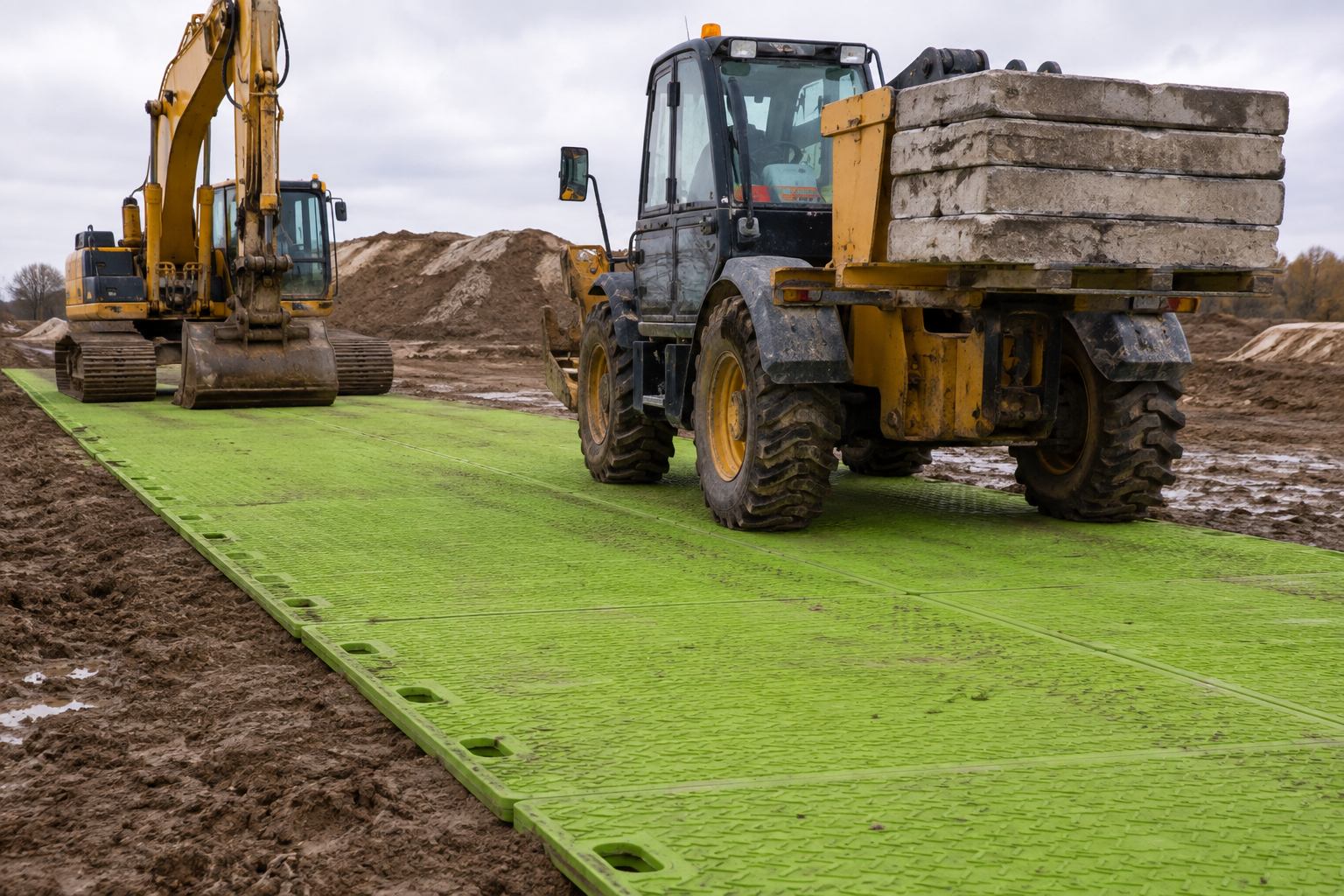
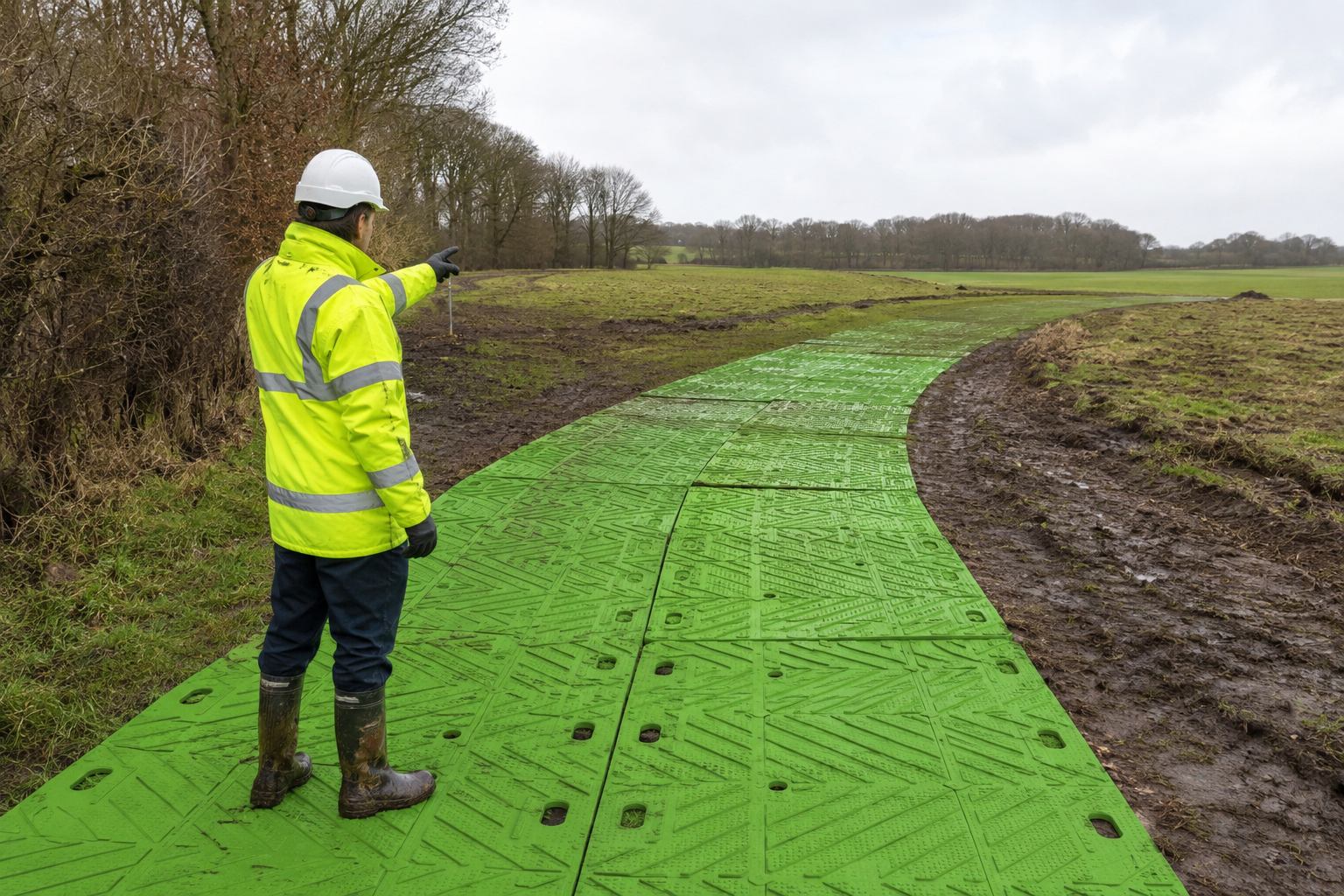
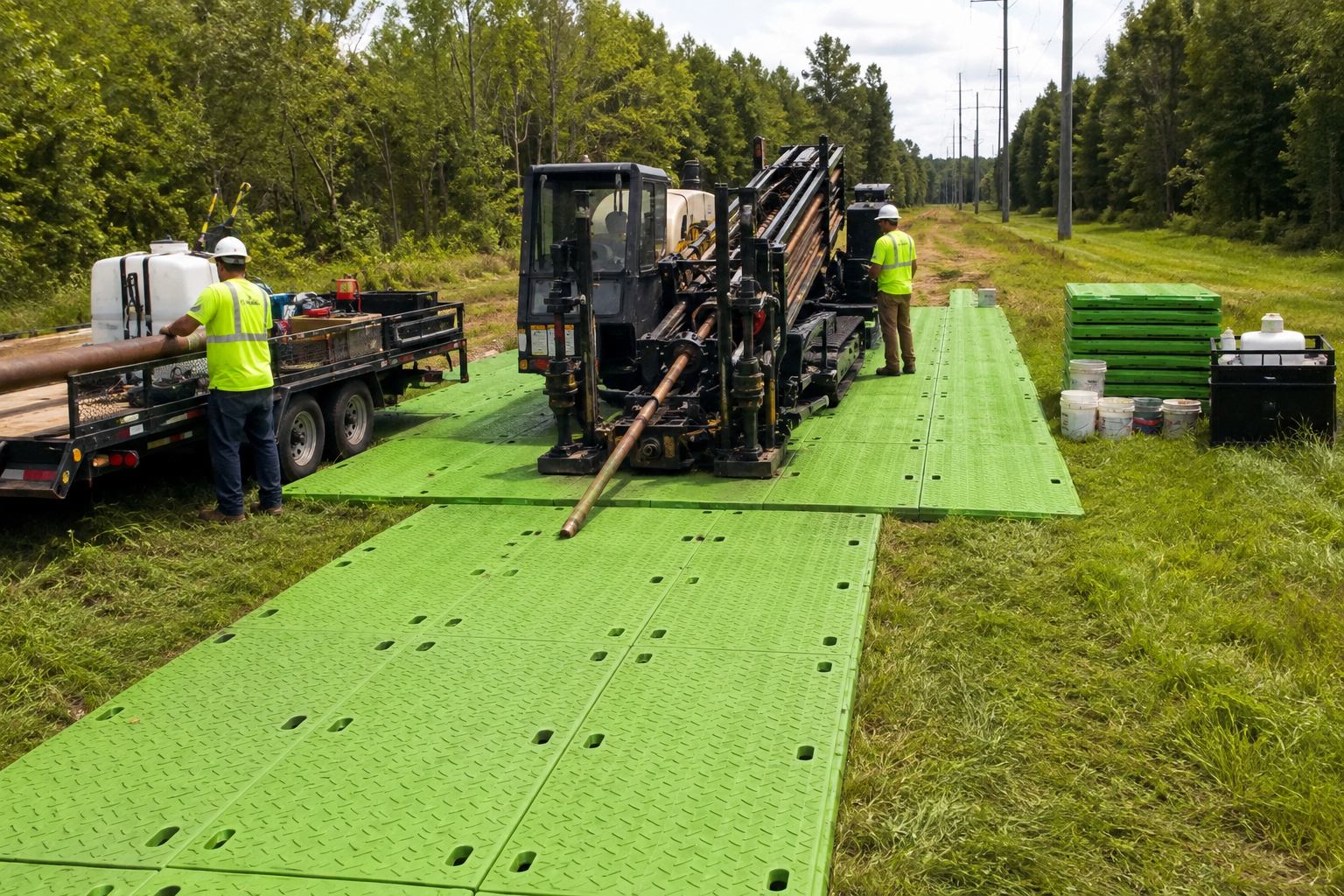
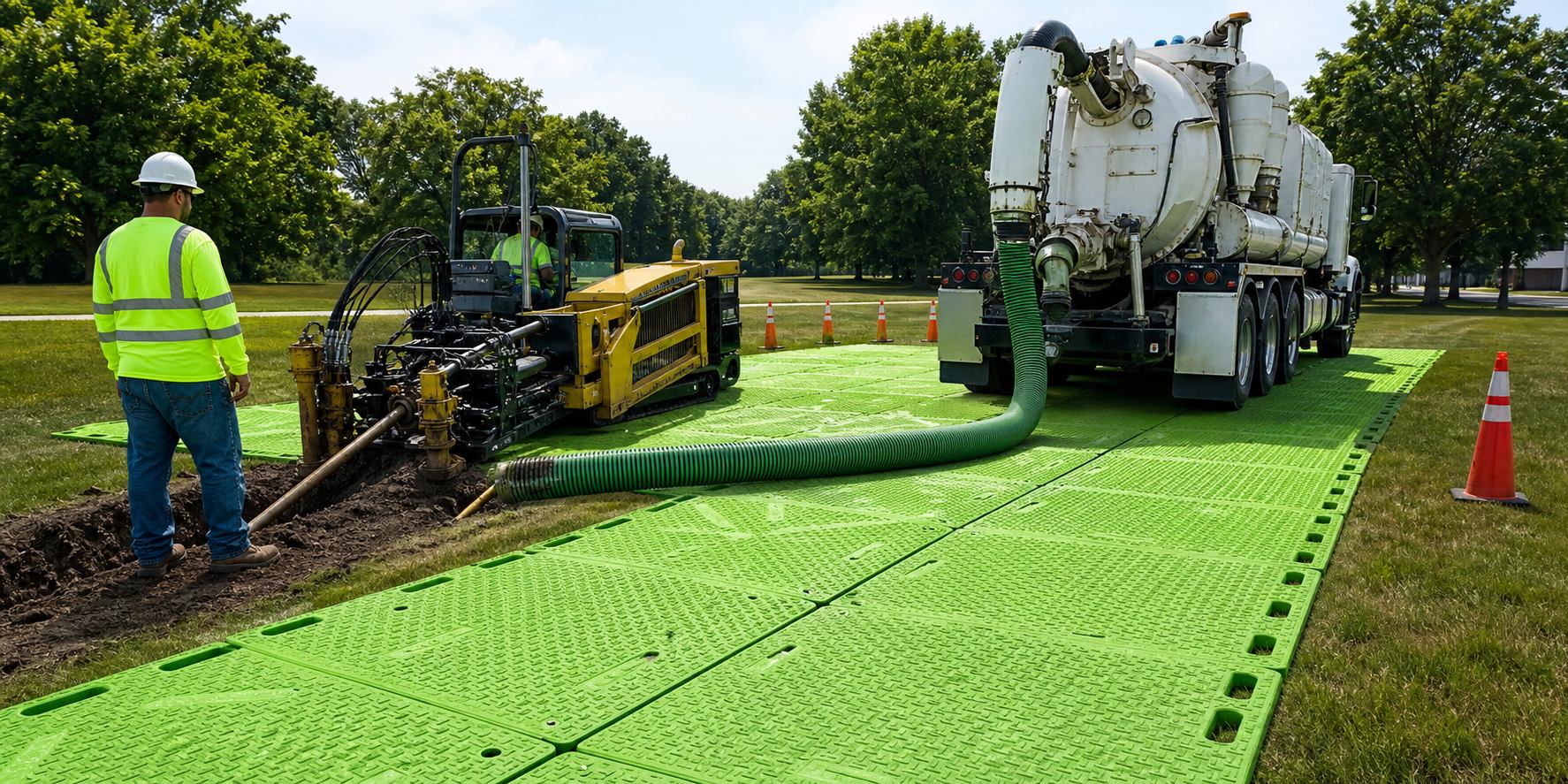
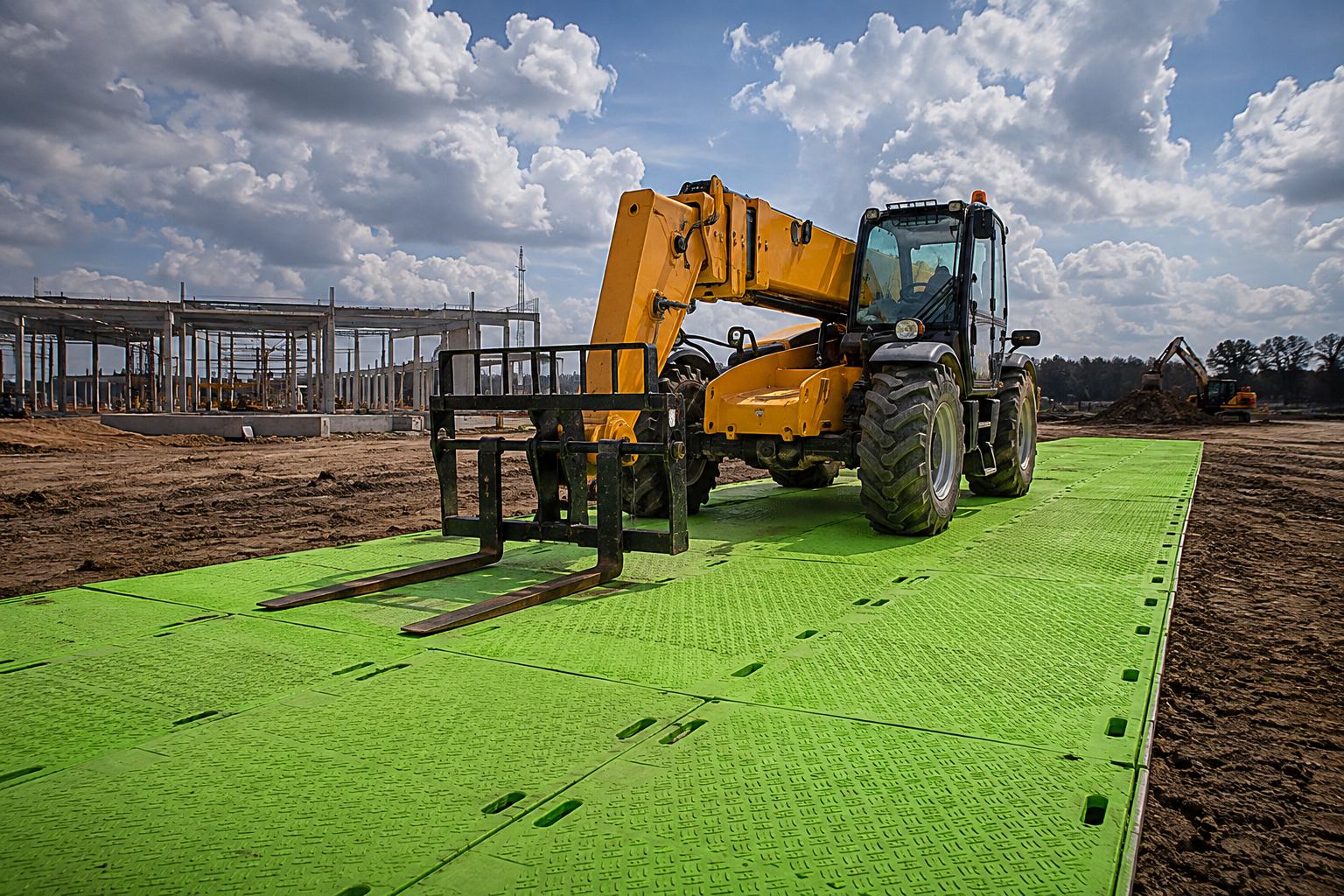
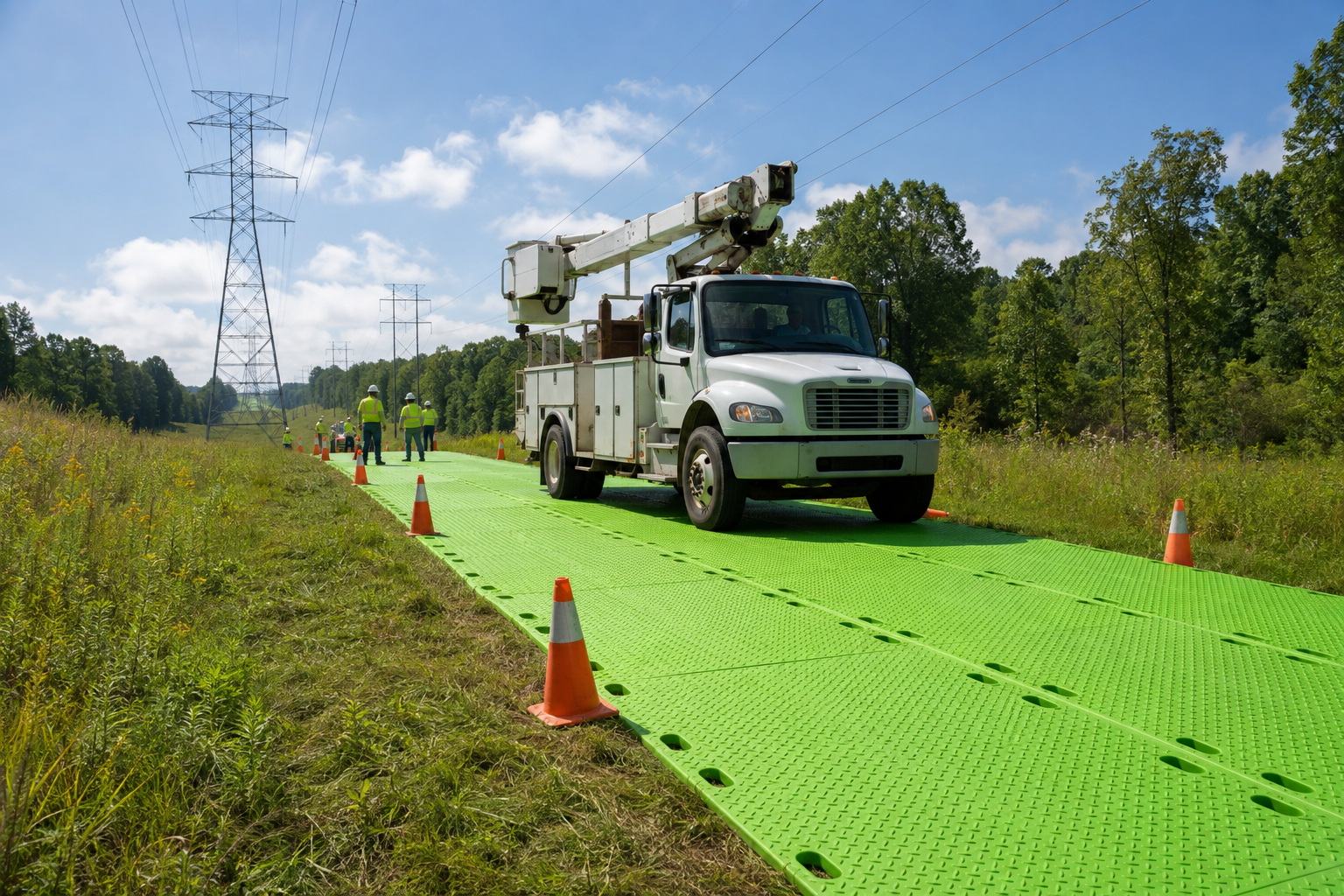
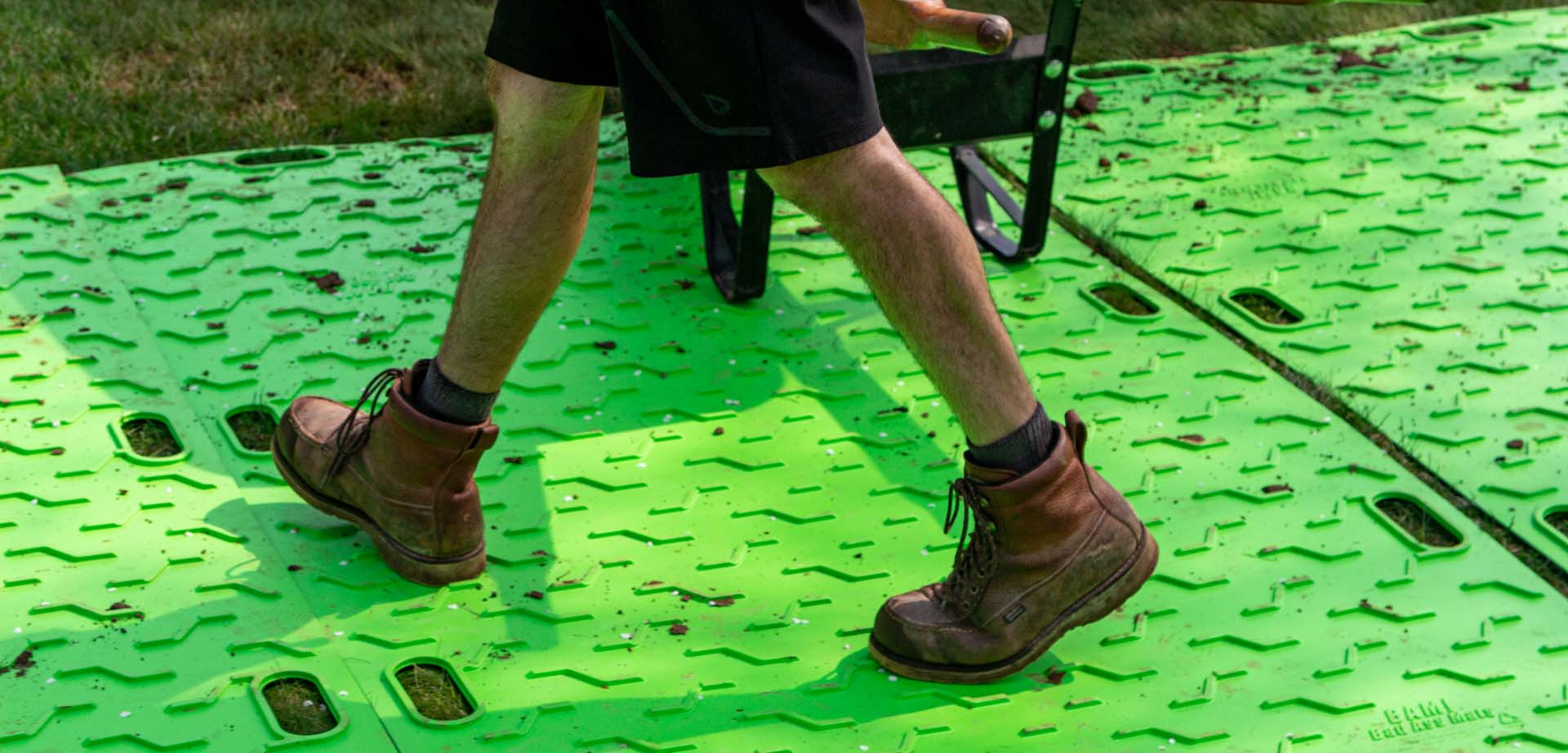
BAM! HDPE ground protection panels serve as turf protection mats by bridging equipment load across the full 32 square feet of a 4×8 panel—distributing what would be concentrated tire pressure into manageable distributed load. The turf and soil below experience a fraction of the pressure they would under direct equipment contact.
The root system stays intact. The soil structure is preserved. When the mats come up after the job, the turf shows compression marks that disappear within 24 to 72 hours in growing season.
Turf Reinforcement vs. Turf Protection: Understanding the Distinction
Turf protection
Turf protection focuses on preventing damage during a specific event—an equipment access operation, a delivery, a construction phase. The protection is temporary: mats go down before equipment moves, stay through the job, and come up cleanly at completion. This is the primary BAM! mat application for turf.
Turf reinforcement
Turf reinforcement refers to systems that provide long-term load support for turf used as a traffic surface—event lawns, overflow parking areas, access roads that see repeated vehicle traffic over months or years. Turf reinforcement grids or cellular confinement systems are typically installed permanently or semi-permanently.
For construction and landscaping applications, turf protection (temporary deployment of load-rated panels) is the correct approach. For permanent high-traffic turf applications (overflow parking on grass, permanent event access roads), turf reinforcement systems designed for that purpose are the right solution.
Turf Protection Mat Setup by Job Type
Landscaping with skid steers and compact loaders
This is the highest-volume turf protection scenario for contractors. Standard setup: double-column BAM! 4×8 path (8 feet wide) from the equipment trailer to the backyard or work zone. Extended coverage at any turning zone. Deploy before the machine comes off the trailer.
Key detail: the turning zone at the far end of the access path is where the most turf damage happens on unprotected lawns. Skid steers pivot tightly and apply lateral shear force. Add 4 to 6 extra panels at the turning zone beyond the standard path width.
Roofing jobs with equipment across front lawn
When staging equipment or materials on a front lawn, mat the full equipment access route and staging area. The front lawn visibility makes this the highest-reputation-risk turf scenario—damage is visible to neighbors, to passers-by, and to the client from their front window throughout the project.
Pool and excavation on residential properties
Multi-week projects with heavy equipment on residential lawns require consistent mat coverage throughout all project phases. Access routes change as the project progresses—maintain updated mat coverage to match current equipment paths.
Tree removal and arborist work
Turf protection for tree work serves a dual purpose: protecting visible surface turf and protecting root zones. Tree roots extend significantly beyond the canopy edge. Equipment over root zones without mat protection causes soil compaction that damages trees adjacent to the one being worked on.
Commercial grounds maintenance
Commercial properties, HOAs, and corporate campuses with maintained turf expect professional equipment management. Turf protection mats demonstrate that standard on high-value commercial accounts and protect the turf surface that the client’s landscape contract likely requires to be maintained in specific condition.
Event setup on turf venues
Outdoor events requiring vehicle access across turf—deliveries, equipment staging, generator positioning—need full turf protection on every vehicle route. Event turf damage is often visible during the event itself, which makes it a higher-profile issue than construction turf damage.
Landscaping Mats: The Trade Term Explained
‘Landscaping mats’ is a broad trade term used to describe any mat deployed on landscaping jobsites—which in practice means turf protection mats, driveway protection mats, and temporary access road panels used together as a system.
Professional landscaping contractors who use mats consistently typically maintain a fleet inventory of BAM! 4×8 panels plus BAM! 2×8 panels for gate passages and tight access areas. This combined system handles every surface type and access scenario a landscaping job presents.
Turf Recovery After Mat Removal
When turf protection mats are used correctly, recovery is rapid. In active growing season:
- Surface impressions from mat tread: visible immediately after removal, typically disappear within 24 to 72 hours
- Grass blade compression: rebounds within 1 to 7 days
- Soil recovery where mats were briefly placed: no lasting effect on turf health with deployments under 1 week
Extended mat placement (more than 1 to 2 weeks in growing season) begins to affect turf from light and airflow deprivation. For longer projects, check turf condition weekly and shift mat placement if yellowing is observed beneath mats.
Frequently Asked Questions
Q: What is the difference between turf protection mats and regular ground protection mats?
A: In practice, they are the same product. ‘Turf protection mats’ describes the application—protecting turf surfaces from equipment—while ‘ground protection mats’ describes the product category. BAM! HDPE panels serve both functions: turf protection when deployed on grass surfaces, and ground protection on any other surface type.
Q: Can turf protection mats be used on artificial turf?
A: Yes. BAM! HDPE mats are non-abrasive and do not damage artificial turf fibers or infill. They are appropriate for equipment access across artificial turf sports fields, residential synthetic lawns, and commercial synthetic turf installations.
Q: How long can turf protection mats stay in place without damaging the grass?
A: On established turf in growing season, 3 to 7 days of mat placement typically results in full turf recovery after removal. For extended placement beyond 2 weeks, periodically shift mats to allow recovery of covered sections. In dormant season (winter), mats can remain longer without light-deprivation concerns.
Q: Where can I buy turf protection mats for a landscaping operation?
A: BAM! mats are available through a national distributor network. Visit bamgroundpro.com/where-to-purchase or call 888-870-8158 to find a distributor near you with landscape contractor experience and regional inventory.
Protect the Turf. Protect the Job.
Turf damage is visible, expensive to repair, and entirely preventable. The landscapers, contractors, and event professionals who use turf protection mats on every job do not get called back for lawn repairs. They get called back for the next job.
Find BAM! turf protection mats at bamgroundpro.com/products. Locate a distributor at bamgroundpro.com/where-to-purchase. Contact us at bamgroundpro.com/contact-us, call 888-870-8158, or email msheridan@alliedplastics.com. Work cleaner. Work safer. Pro’s choose BAM!