Ground protection mats are easiest to justify before a jobsite is damaged. The decision should be based on soil, weather, traffic, equipment weight, turning forces, and the cost of restoring the surface. If several of these risk factors are present, installing a protected route before work begins is usually faster and less expensive than repairing ruts later.
The Ground Shows Early Warning Signs
Walk the intended route before equipment arrives. If boots sink, standing water remains, tire tracks from light vehicles are already visible, or turf separates from the soil, the surface is vulnerable. Soft shoulders, newly landscaped areas, and recently irrigated lawns also deserve extra attention.
Conditions can vary across one property. A firm entrance may lead to a shaded, low area that stays wet. Protect the weakest section and connect it to stable ground so operators are not tempted to drive around the route.
Weather Makes the Site Less Predictable
Rain, freeze-thaw cycles, and snowmelt can change bearing strength quickly. A route that worked during the morning may deteriorate after repeated afternoon passes. When the forecast is uncertain, stage mats nearby and install them before the ground begins to pump or rut.
Equipment Is Heavy or Traffic Is Repeated
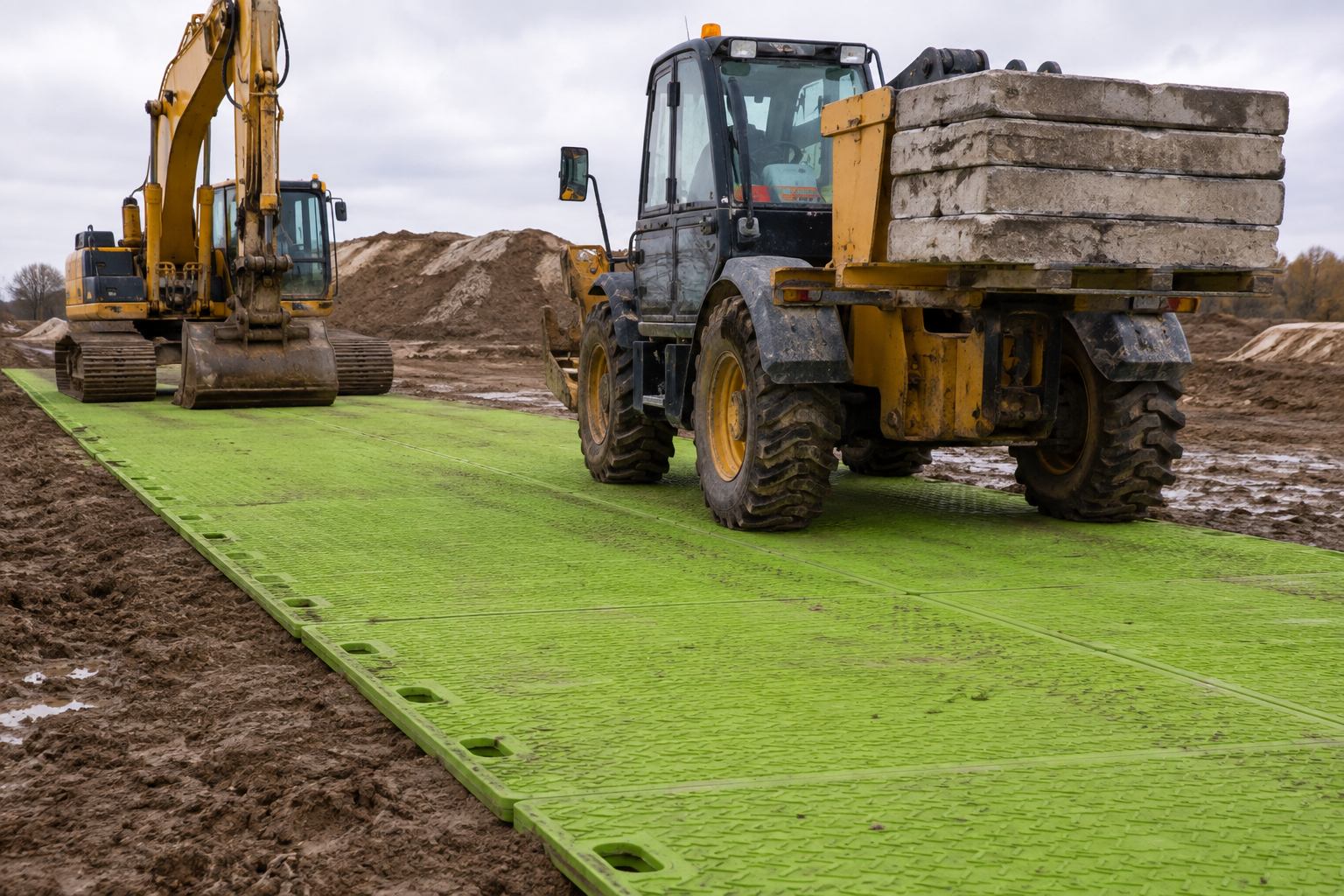
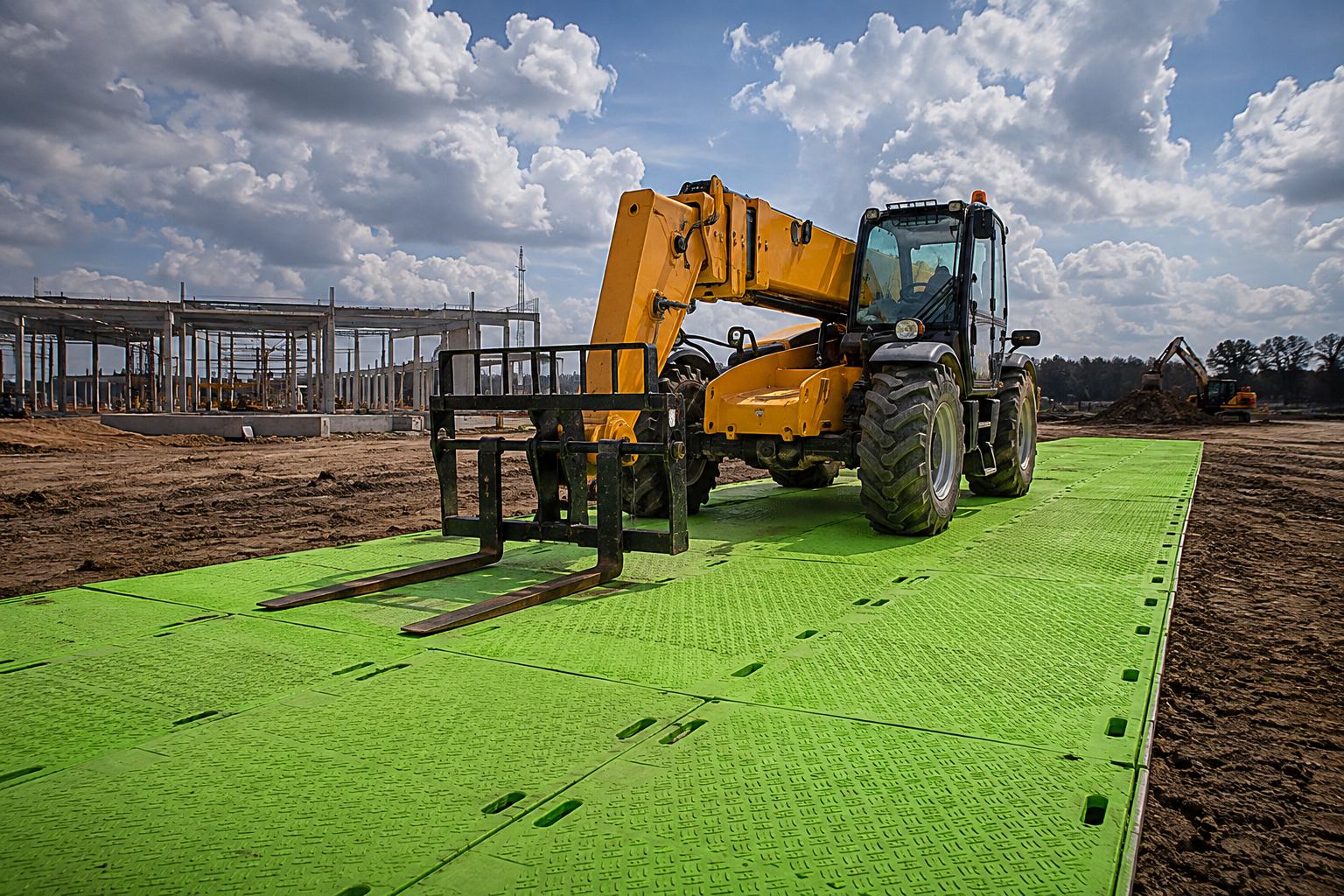
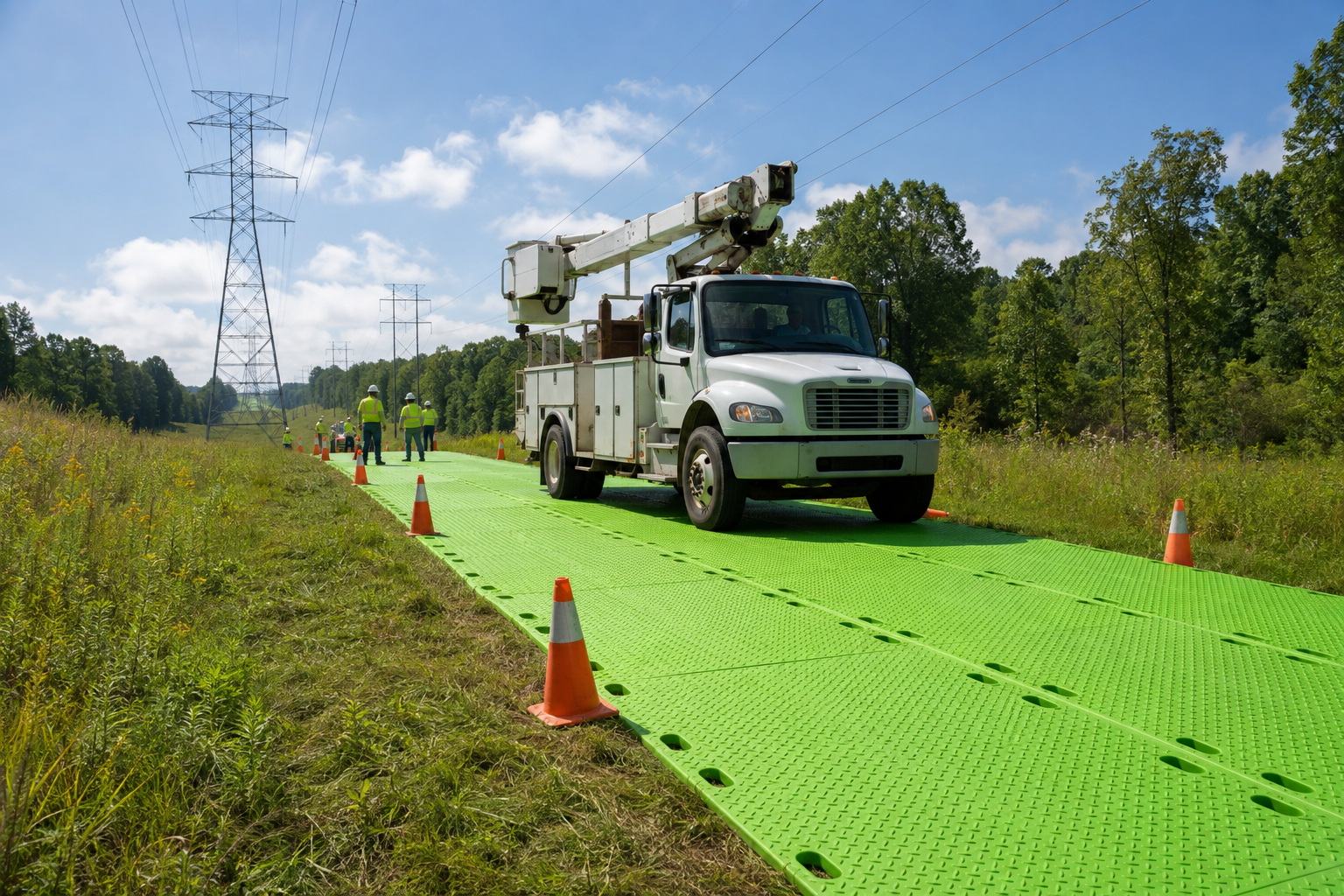
A single pickup crossing firm ground is different from a mini excavator, bucket truck, skid steer, or loaded trailer using the same path all day. Repeated passes concentrate stress and can turn a small depression into a deep rut. Heavy equipment ground protection mats spread the load over a larger area and define where traffic should travel.
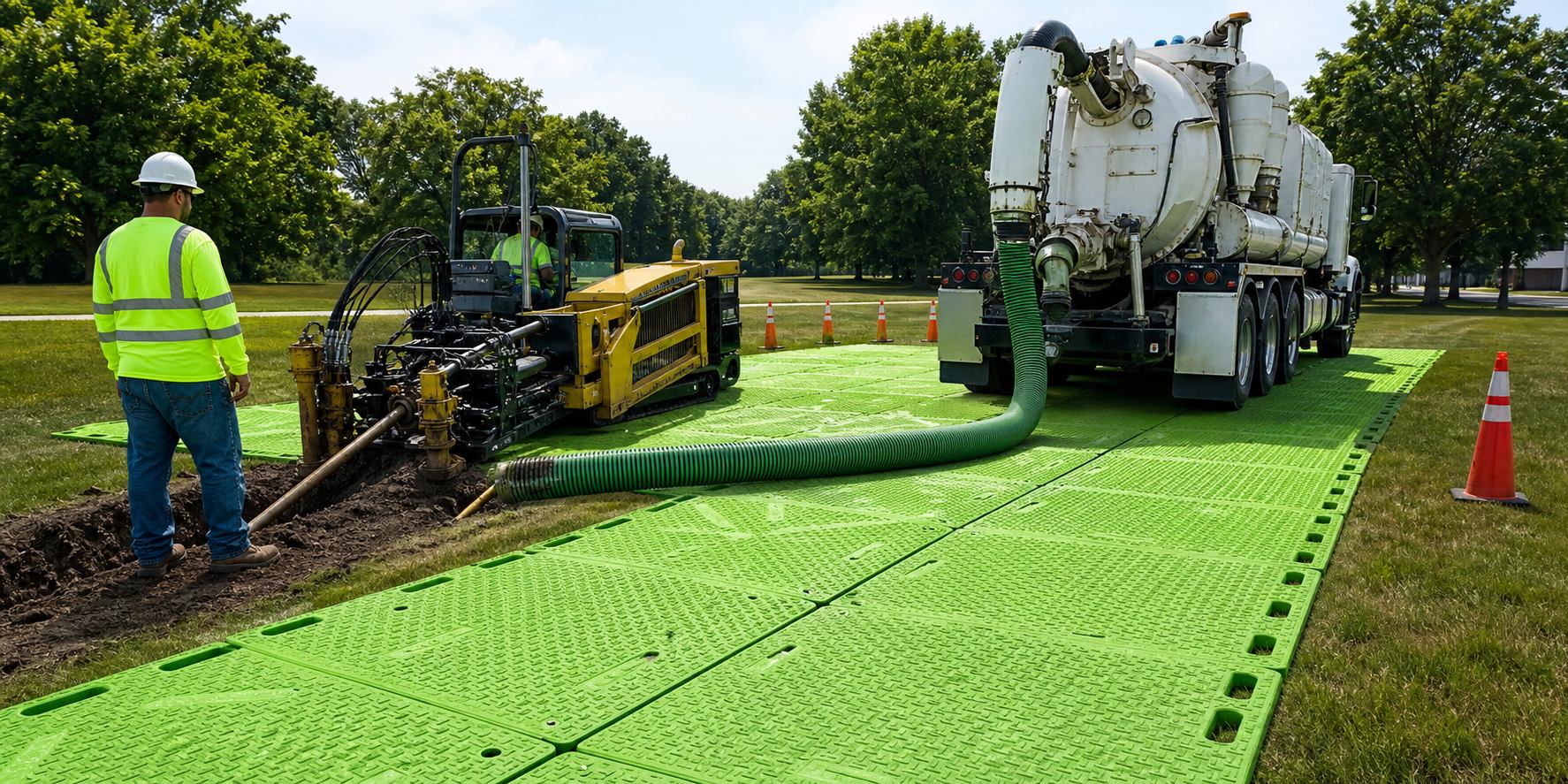
Pay special attention to tight turns, braking areas, unloading zones, and stationary work. Wheels and tracks apply greater lateral forces when turning, while outriggers and parked equipment create concentrated loads. These locations often need a wider mat pad than a straight travel lane.
The Surface Is Expensive to Restore
Finished lawns, athletic fields, parks, pavers, and landscaped commercial properties can be costly to repair. Restoration may include soil replacement, grading, seed or sod, irrigation work, cleaning, and return visits. When appearance matters to the customer, temporary protection also supports a more professional handoff.
You Need a Cleaner, More Visible Route
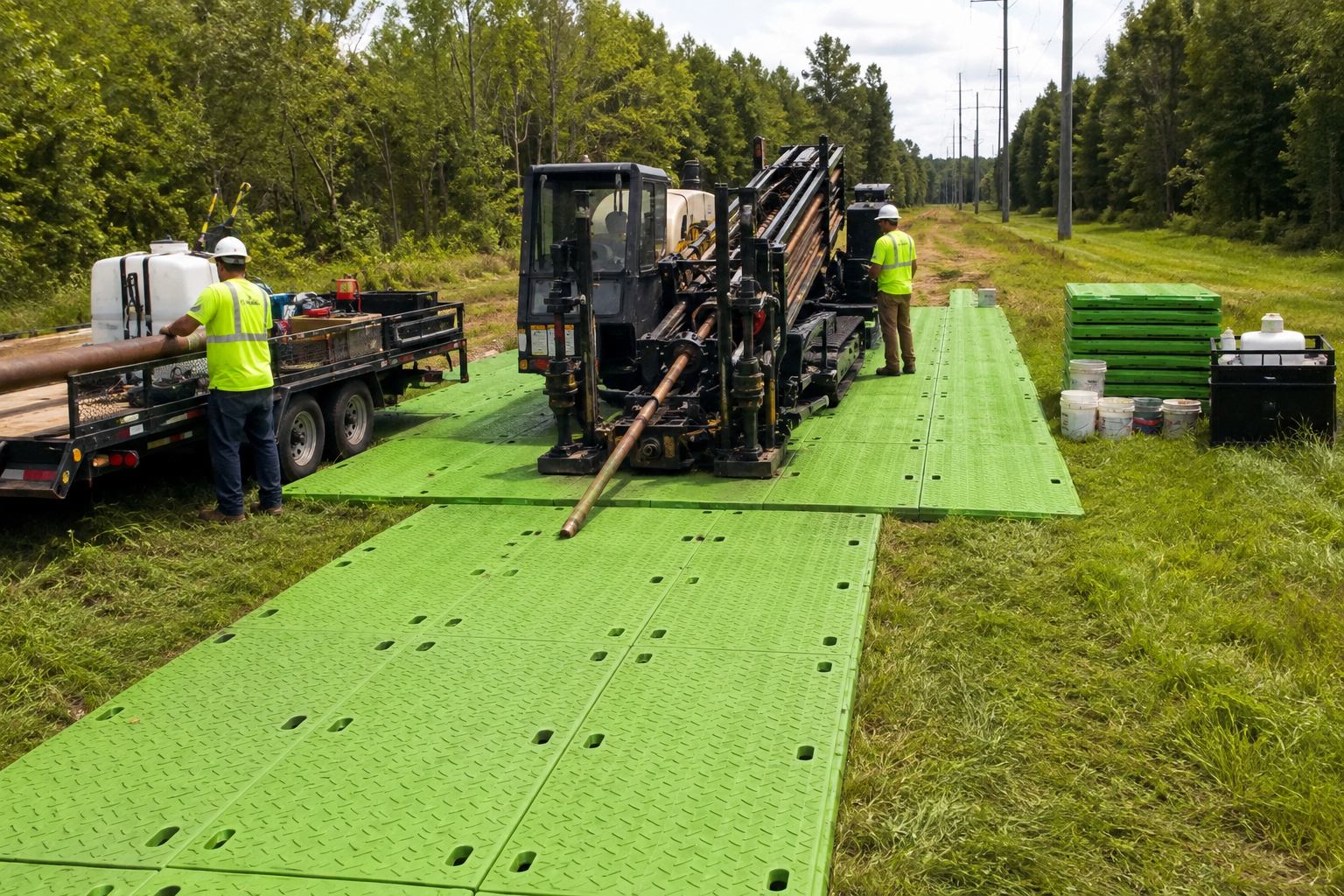
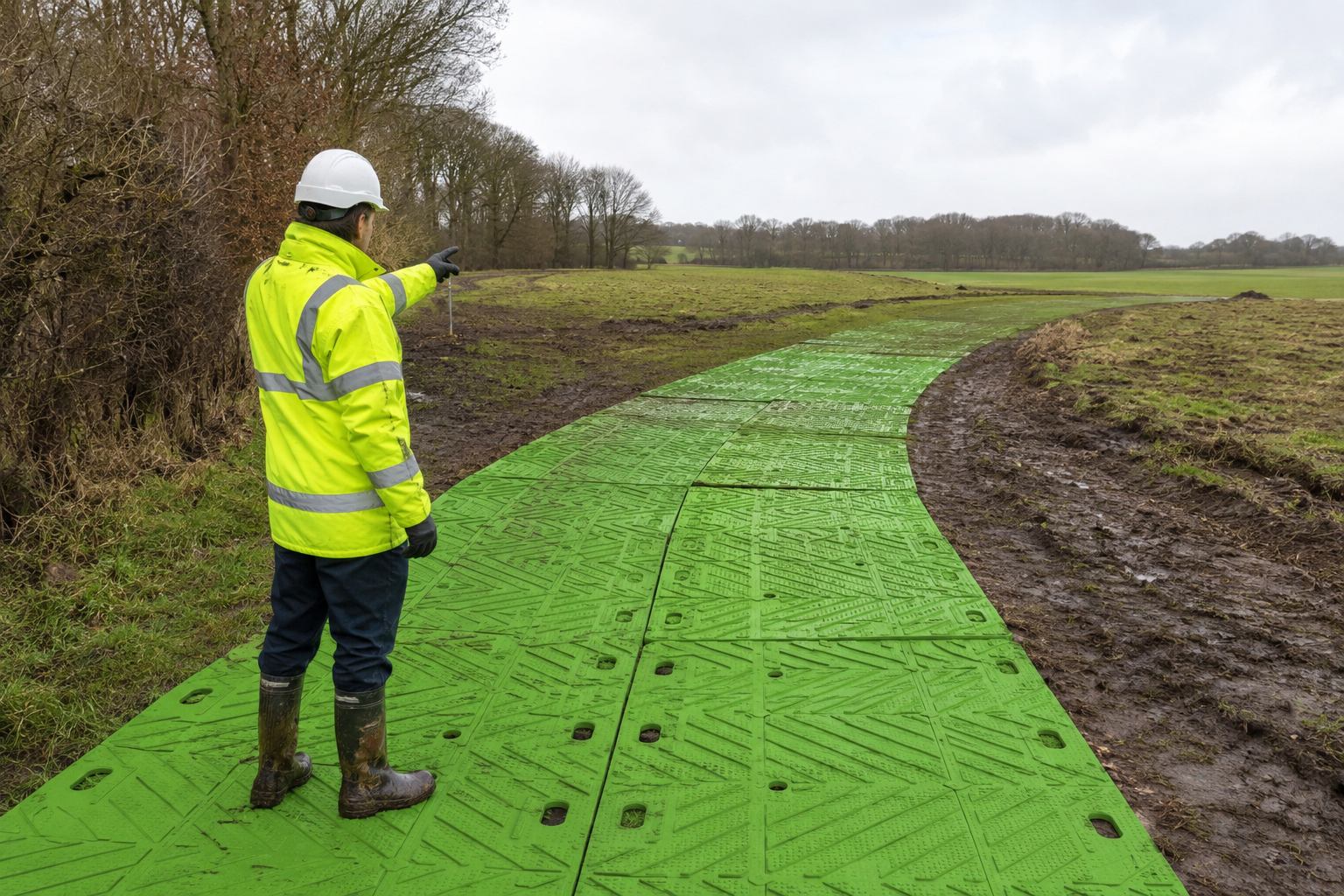
Mats help reduce mud carried onto pavement and make the approved route easier to follow. BAM mats are bright green, which stands out against grass and soil. Visibility supports operator alignment and crew communication, although it does not replace cones, barriers, spotters, or a site-specific safety plan.
Why BAM Ground Protection Mats Fit Daily Work
BAM’s thermoformed HDPE panels are designed for repeated deployment. The standard 4-by-8-foot mat weighs about 56 pounds and includes eight handholds for crew handling. Dual-sided tread supports traction, and the bright green color makes the route easy to identify. BAM also offers narrower panels for confined access.
Published capacity ratings depend on installation and ground conditions. Do not bridge unsupported voids or trenches unless the manufacturer specifically approves the application. Inspect connectors, panel alignment, and the supporting surface throughout the shift.
Pre-Job Decision Checklist
- Will heavy equipment or repeated traffic cross turf or soft soil?
- Has rain, irrigation, snowmelt, or freeze-thaw weakened the route?
- Are tight turns, outriggers, or loading areas part of the plan?
- Would surface restoration be expensive or disruptive?
- Does the customer expect a clean, low-impact jobsite?
- Can the route be installed continuously from stable entry to the work zone?
Frequently Asked Questions
When should ground protection mats be installed?
Install them before the first heavy pass when soil is soft, weather is uncertain, traffic will be repeated, or the surface is valuable. Waiting until ruts appear reduces the benefit.
Do mats eliminate all lawn damage?
No system can guarantee zero impact. Correct layout, suitable equipment, careful driving, and regular inspection all matter, but mats can substantially reduce rutting and surface disturbance.
How wide should the protected route be?
Cover the full tire or track path with room for normal steering error. Add width at turns, gates, setup pads, and unloading zones.
Can mats be used after rain?
Yes, when the supporting ground is evaluated and the route can be installed safely. Very unstable areas may require drainage, additional support, or a different access plan.
Are plastic mats better than plywood?
Reusable HDPE mats resist water and splintering and provide engineered tread and handholds. Plywood may break down quickly under wet, repeated use.
Protect the Site Before the First Pass
If the ground is already showing warning signs, the safest time to act is before equipment enters. Explore BAM’s ground protection mats, use the where to purchase page, or contact BAM Ground Pro for application guidance.