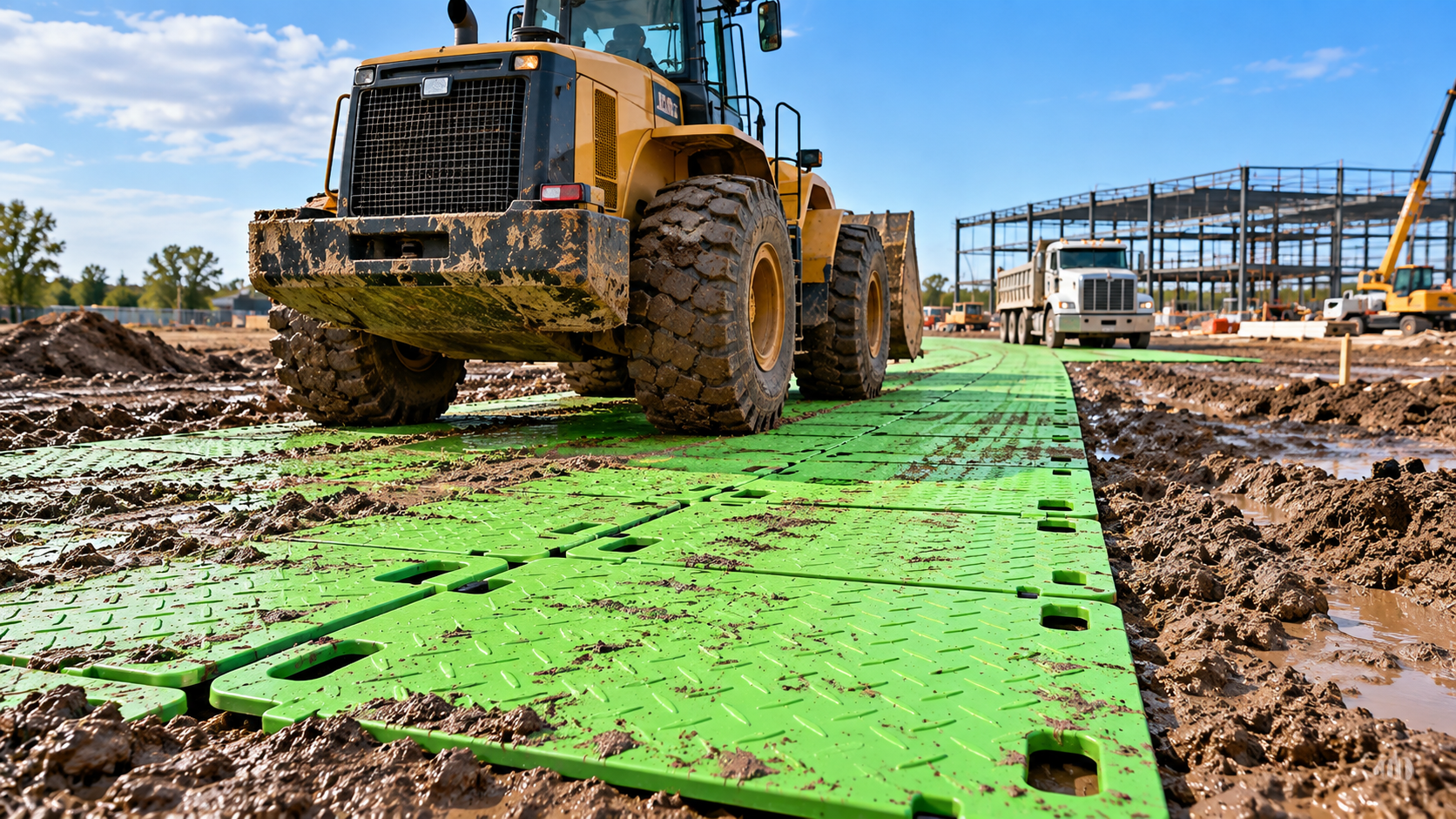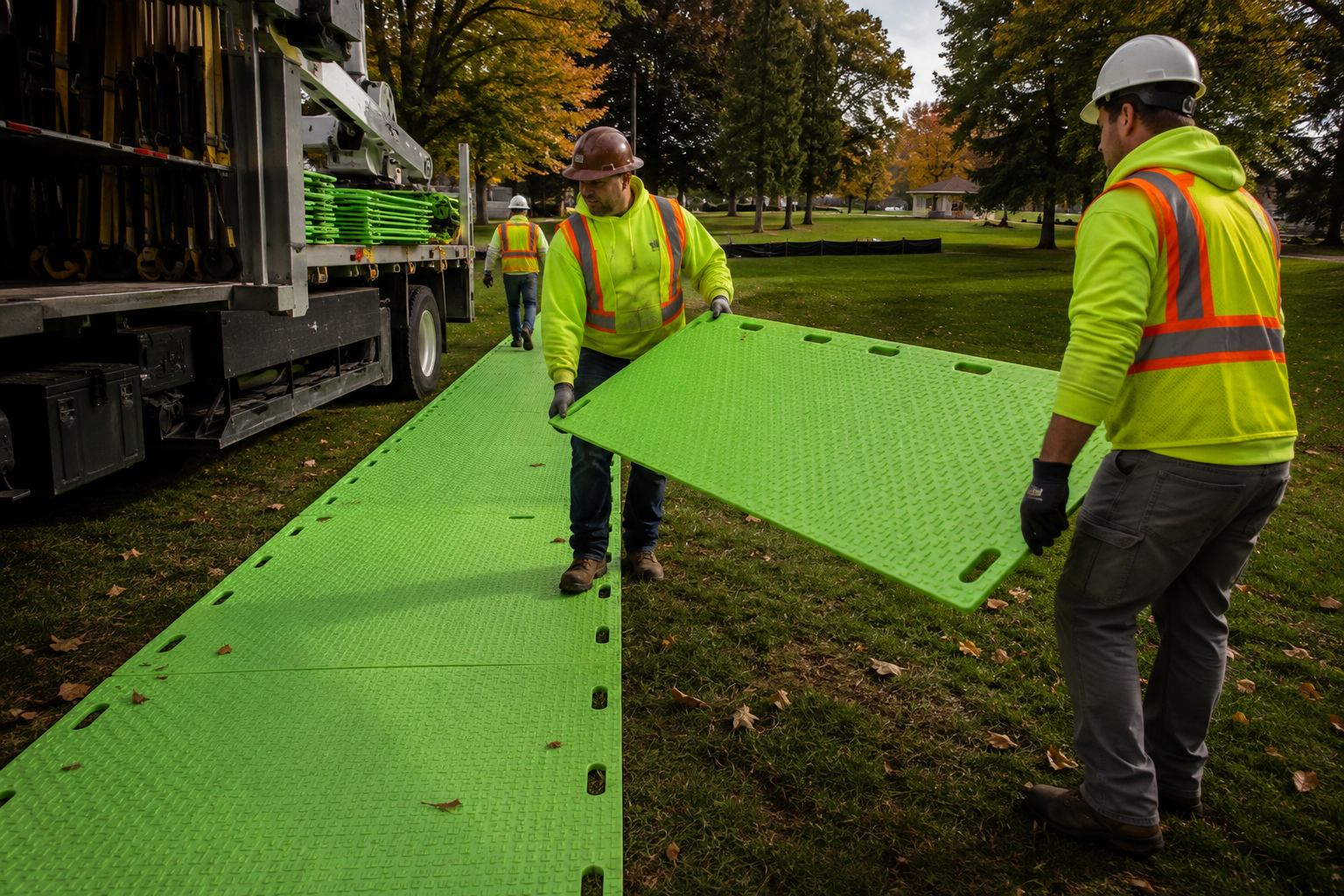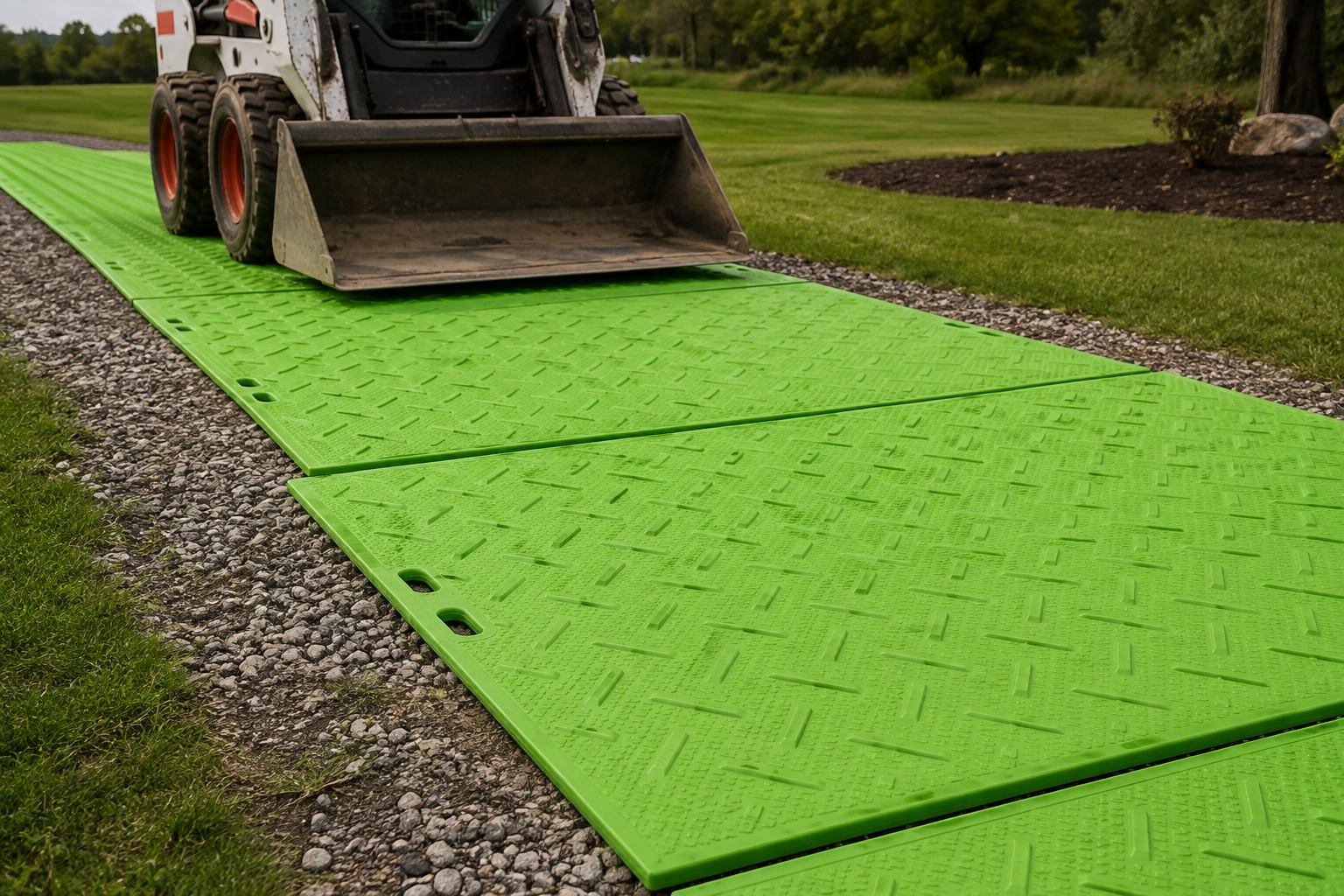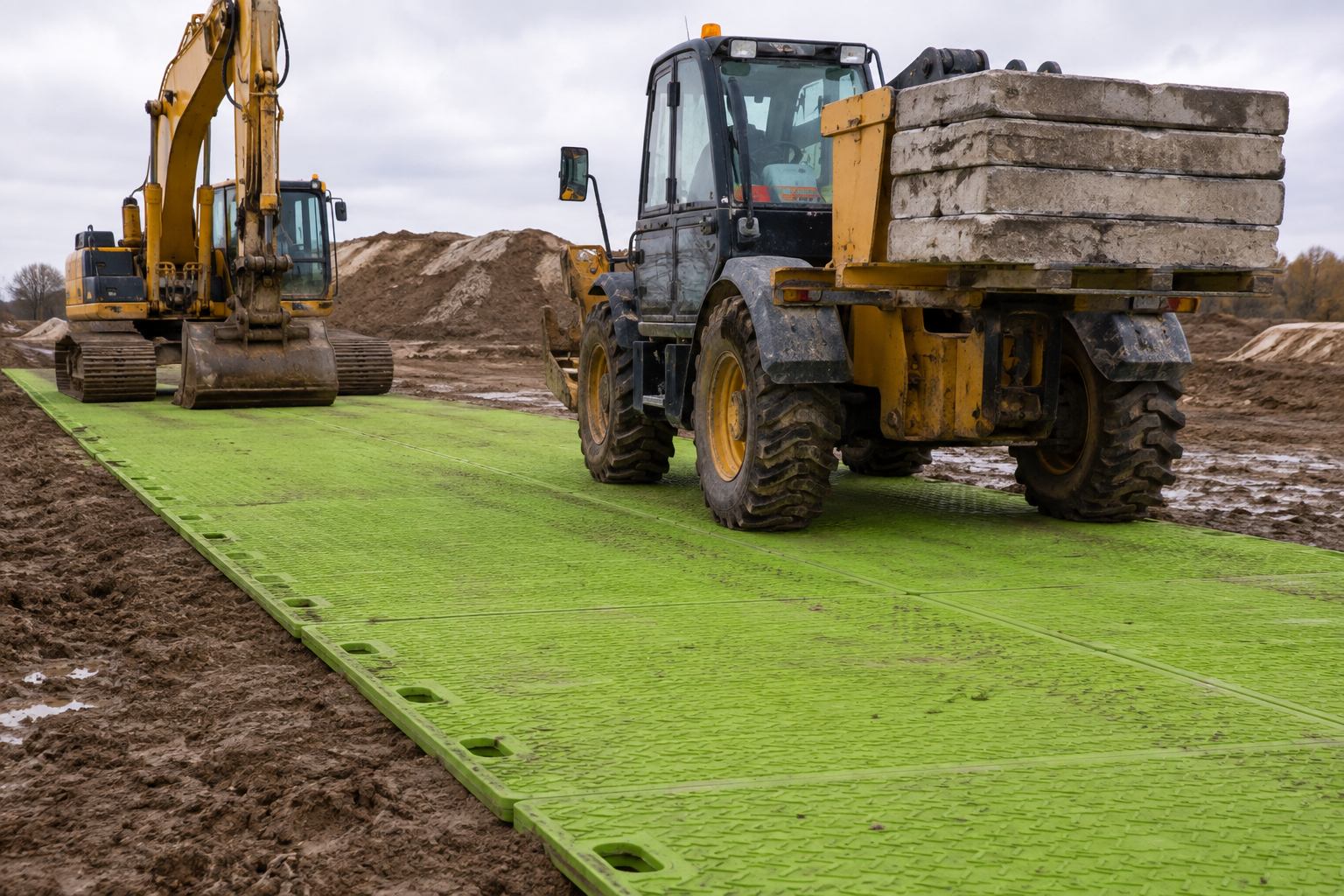
Ground protection matting is a term that covers a range of products and applications—from a single panel under a dumpster to a complete temporary road system across a commercial property. What unites them is the same core function: protecting ground surfaces from equipment loads that would otherwise cause damage.
This field guide covers the full range of ground protection matting applications, organized by job type, so contractors can quickly identify what they need for the work in front of them.
The Foundation: What All Ground Protection Matting Does
Every ground protection matting application shares the same mechanism: distributing the applied load across a larger surface area than the equipment contact patch provides.
Equipment wheels and tracks concentrate load in a small area. The mat spreads that load across its full surface. The ground below experiences reduced pressure per square inch. Turf stays intact. Concrete stays uncracked. Asphalt stays undeformed. Soil doesn’t rut.
The application determines how much coverage you need, how to configure the panels, and which size works best for the specific access geometry. The matting technology is the same across all applications.
Field Guide: Ground Protection Matting by Job Type
Roofing and exterior work
Primary risks: driveway damage from dumpsters and delivery trucks, surface contamination from roofing materials, scuffing from crew foot traffic on decorative surfaces.
Standard setup: 6 to 8 panels under dumpster, 4 panels for delivery truck approach, 2 to 4 panels for crew high-traffic zones. Total: 12 to 16 panels.
Key tip: deploy before the dumpster arrives—never after. The heaviest load event is dumpster placement, not pickup.
Landscaping and lawn care
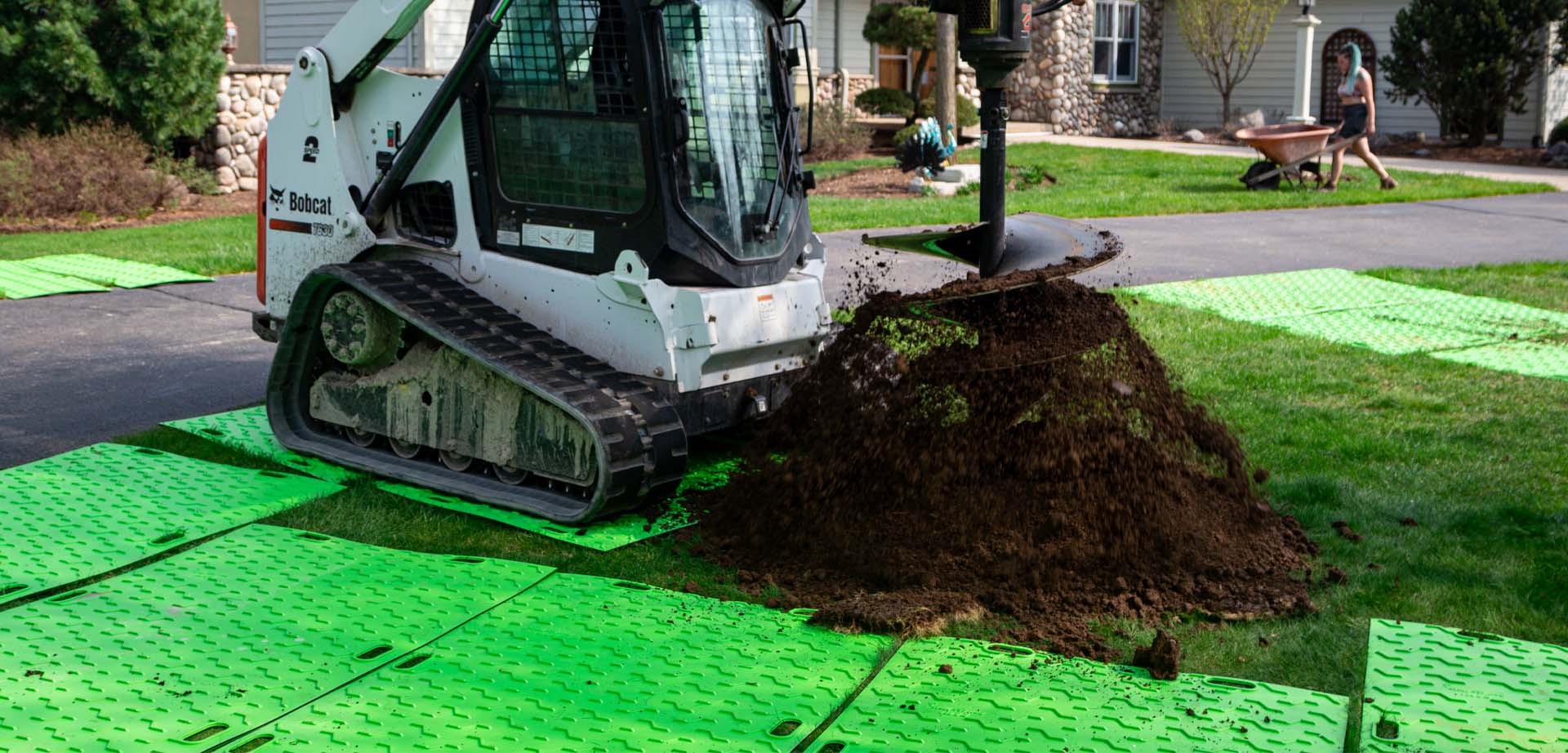
Primary risks: turf ruts from skid steers and loaders, root zone compaction, driveway scuffing from equipment transitions.
Standard setup: double-column access path from trailer to backyard (10 to 16 panels), turning zone coverage (4 to 6 panels), material staging (4 panels). Total: 18 to 26 panels.
Key tip: mats must go down before the machine comes off the trailer. Retroactively protecting already-rutted ground does not repair the damage already done.
Remodeling and construction
Primary risks: repeated vehicle traffic over driveways, dumpster damage, equipment access across landscaped approaches.
Standard setup: full driveway coverage for delivery trucks, dumpster protection, equipment access route. Revisit coverage as project phases change.
Key tip: long-duration projects (weeks or months) require maintained mat coverage throughout. Do not remove protection between phases; equipment returns.
Pool and excavation
Primary risks: heavy excavation equipment on residential lawns, concrete truck access, spoil staging loads.
Standard setup: full access path coverage (16 to 24 panels), spoil staging area (4 to 6 panels), concrete truck approach route at pour phase.
Key tip: pool excavation generates significant spoil volume. Mat the spoil staging zone as thoroughly as the equipment access route.
Utility and infrastructure
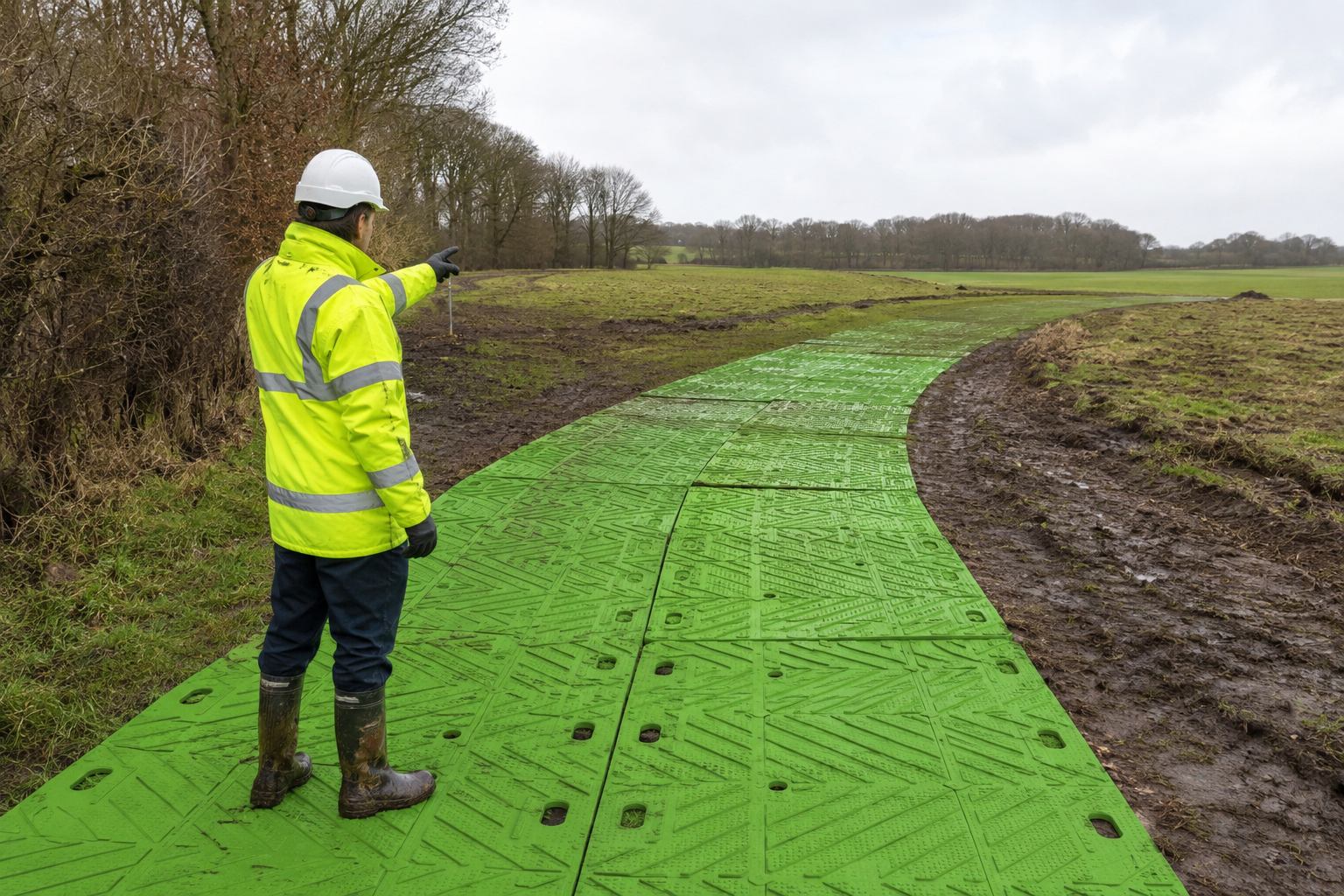
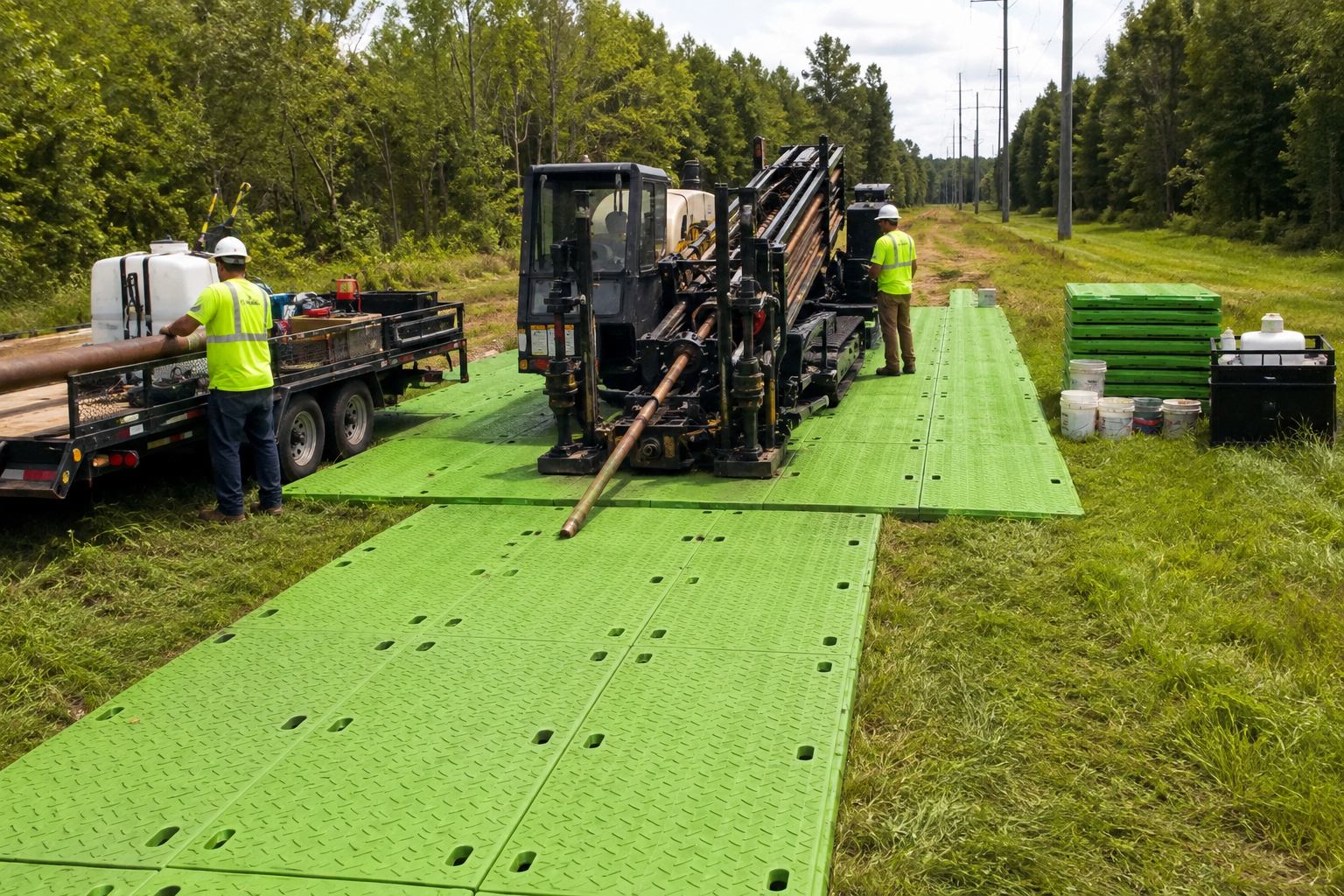
Primary risks: narrow easement access across maintained lawns, directional drilling equipment on residential properties, restoration requirements after work.
Standard setup: single or double-column path along easement corridor, wider staging coverage at drill head or work point.
Key tip: utility contractors often have explicit property restoration requirements in contracts. Mat coverage that prevents damage is far more cost-effective than post-job restoration.
Events and venues
Primary risks: equipment damage to turf during setup and teardown, guest safety on soft or uneven ground, ADA walkway requirements.
Standard setup: full vehicle route coverage for setup equipment, guest walkways from parking to event areas (single or double column based on expected traffic volume).
Key tip: build guest walkways at the same time as equipment routes—not as an afterthought. Event logistics and guest access often share the same pathways.
Emergency and storm response
Primary risks: equipment access on saturated post-storm ground, time pressure reducing setup thoroughness.
Standard setup: quick deployment on highest-risk sections—access route from street to structure, any soft ground sections.
Key tip: in emergency response, get mats down first on the softest sections. Partial coverage on the worst ground is better than comprehensive coverage on firm ground.
Choosing Panel Size: 4×8 vs. 2×8
4×8 panels: standard for most applications—access routes, staging areas, wide coverage. 56 lbs, 8 hand holds, single-person deployable.
2×8 panels: tight access points, gate passages, narrow easements, precise placement around landscaping features. Proportionally lighter, 4 hand holds.
Mixed configurations: many jobs benefit from both—4×8 for the main route and staging, 2×8 for the gate passage and narrow side yards.
When to Add More Coverage
These conditions always warrant additional mat coverage beyond the standard setup:
- Rain within 24 hours before or during the job—saturated ground fails faster
- Spring conditions (March through May in most of the US)—lowest seasonal soil bearing capacity
- Clay-dominant soils—hold moisture and lose bearing capacity faster than sandy soils
- Newly graded or disturbed ground—no root structure to provide cohesion
- Repeat equipment passes over the same route—each pass compounds cumulative load
Frequently Asked Questions
Q: Can ground protection matting be used for pedestrian walkways in addition to equipment?
A: Yes. BAM! mats feature a dedicated pedestrian-side tread pattern that provides slip-resistant footing for crew and guests. The same panels serve equipment access and pedestrian walkway functions.
Q: How many ground protection mat panels should I keep as standard inventory?
A: A starting inventory of 20 to 24 BAM! 4×8 panels plus 4 to 6 BAM! 2×8 panels covers most residential and light commercial jobs without requiring panel counting on every setup. Scale up as job volume and size increase.
Q: Is there a guide to deploying ground protection mats on my specific type of job?
A: Contact BAM! at 888-870-8158 or msheridan@alliedplastics.com and describe your specific application. We can help you plan the right quantity and configuration for your operation.
Q: Can ground protection matting be used on rooftops or elevated surfaces?
A: BAM! mats are designed for ground-level applications. For rooftop equipment or HVAC access protection, different products and surface protection considerations apply. Contact BAM! to discuss your specific scenario.
One System. Every Job.
Ground protection matting doesn’t need to be complicated. One product—BAM! HDPE panels in 4×8 and 2×8 sizes—handles every application in this guide. The configurations differ. The mat is the same.
Explore the full BAM! ground protection matting system at bamgroundpro.com/products. Find a distributor at bamgroundpro.com/where-to-purchase. Contact us at bamgroundpro.com/contact-us, call 888-870-8158, or email msheridan@alliedplastics.com. Work cleaner. Work safer. Pro’s choose BAM!