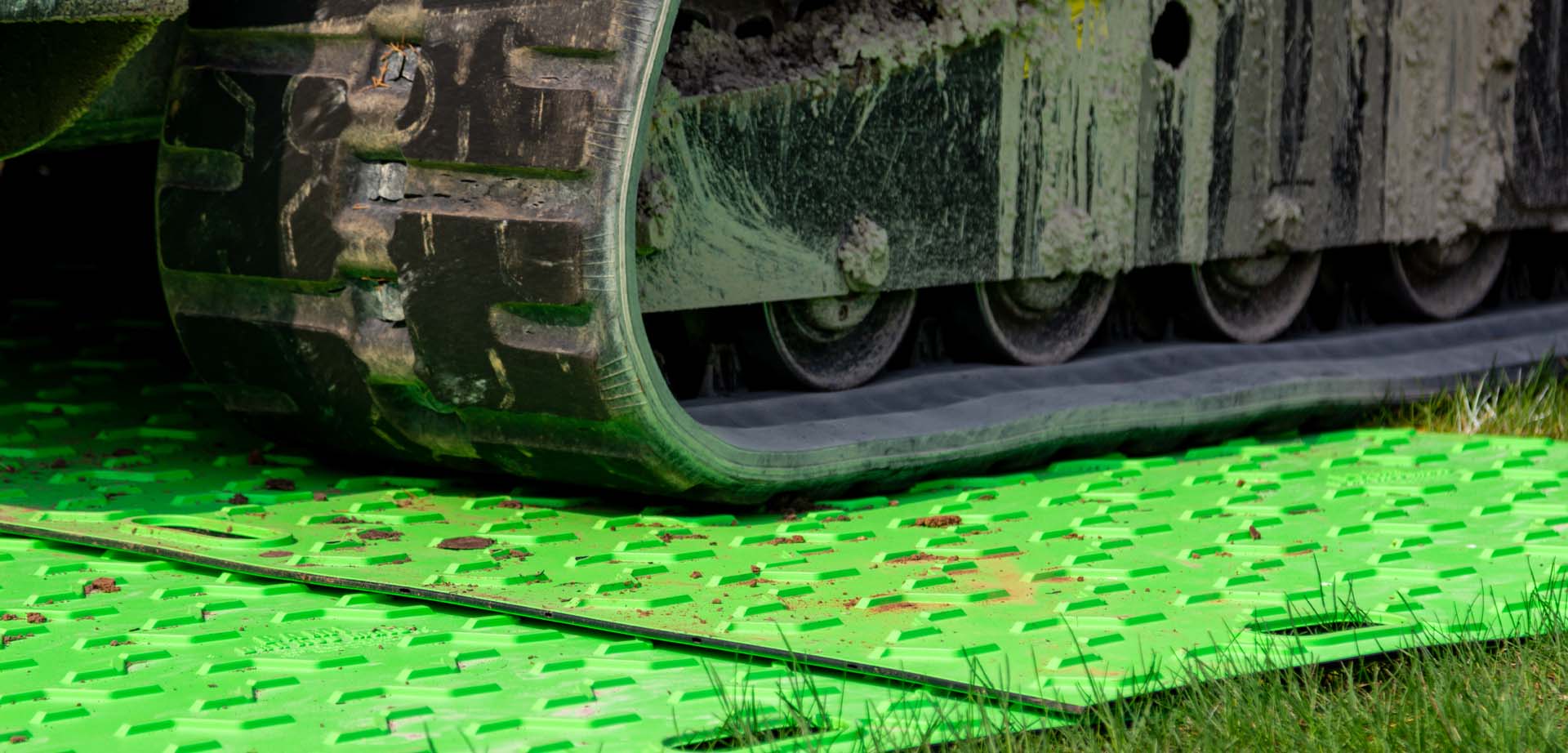
Heavy equipment is the most productive tool on any jobsite. It’s also the most destructive if the ground underneath isn’t protected. One skid steer on a wet lawn without mats. One delivery truck backing across an old concrete driveway. One excavator repositioning on a paver patio.
The damage happens fast. The repair cost comes later.
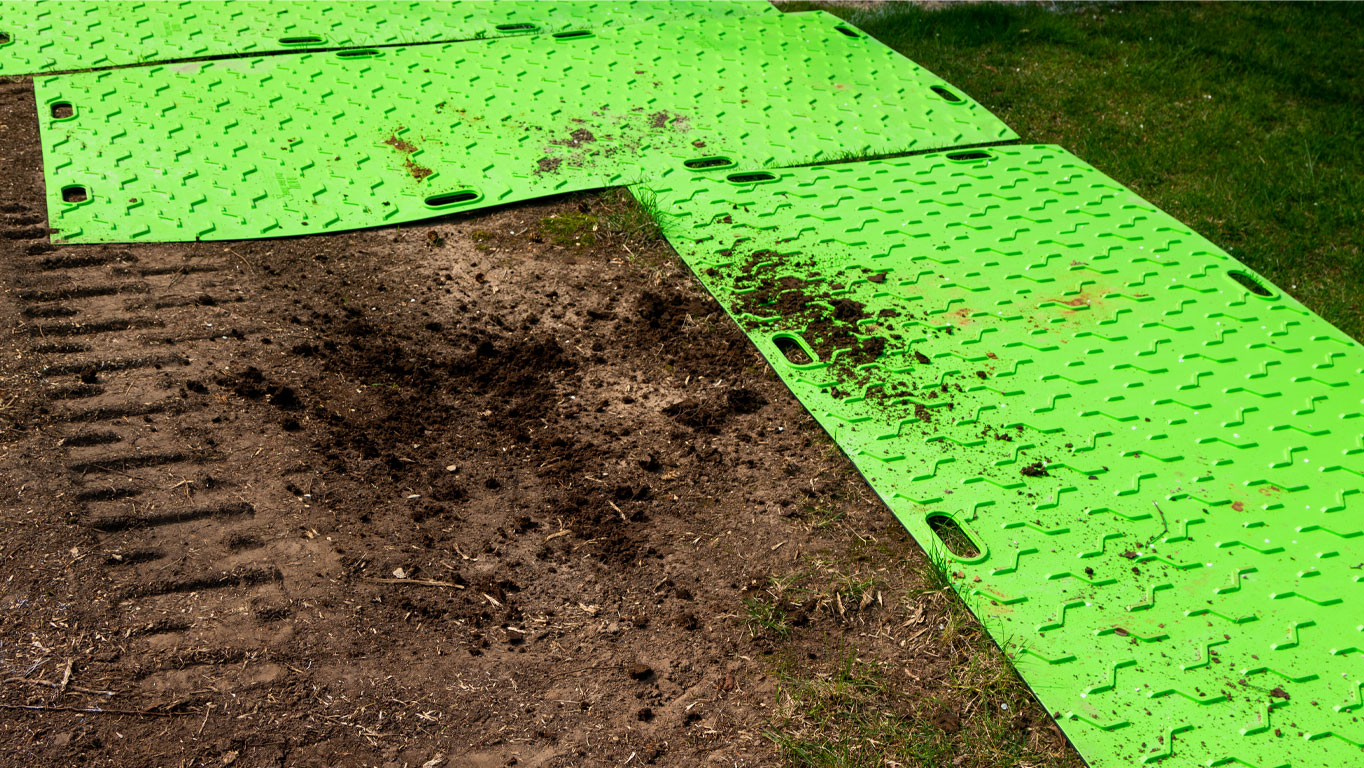
Heavy equipment mats are what professional contractors put between their machines and client property. This guide covers everything you need to know to use them correctly.
What Heavy Equipment Mats Do
The core function of a heavy equipment mat is load distribution. Equipment applies force to the ground through its tire or track contact patches. The smaller the contact area, the higher the pressure per square inch—and the more likely the surface is to crack, rut, or fail.
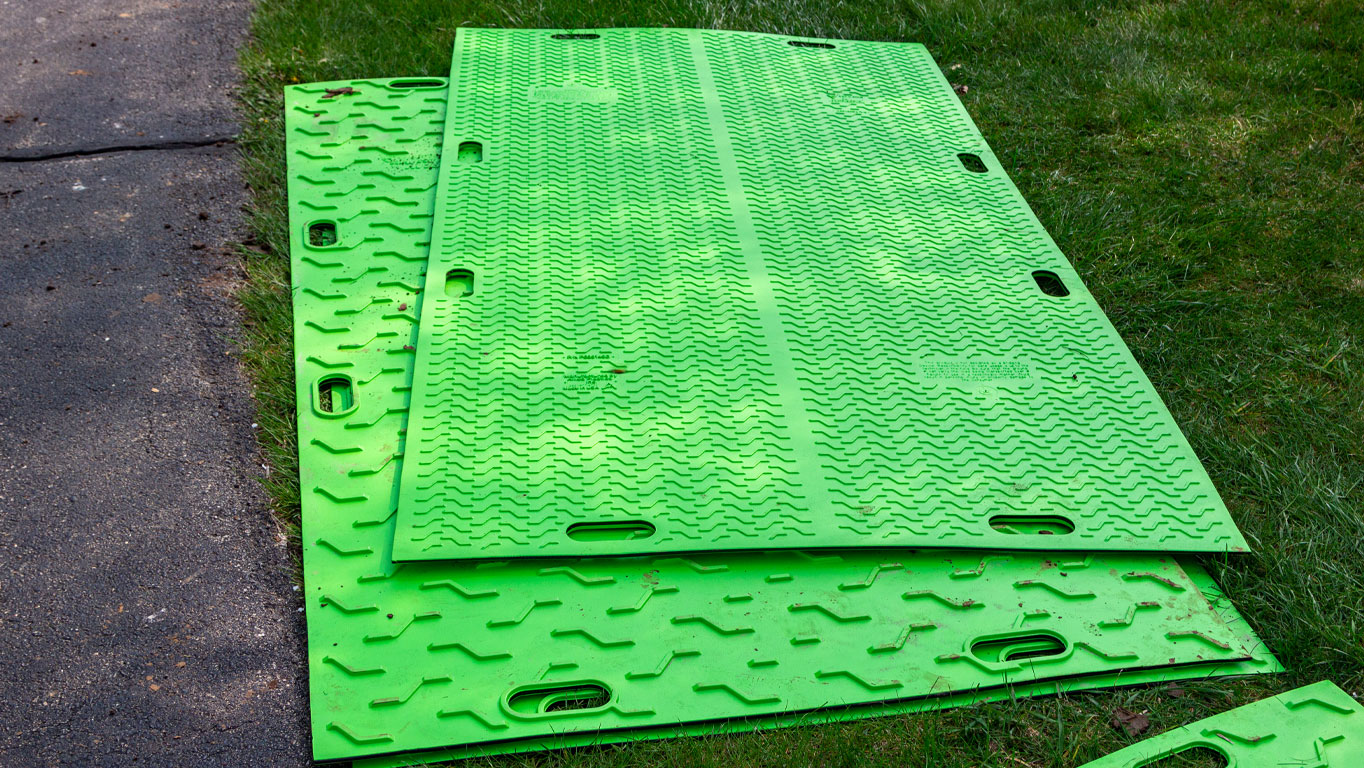
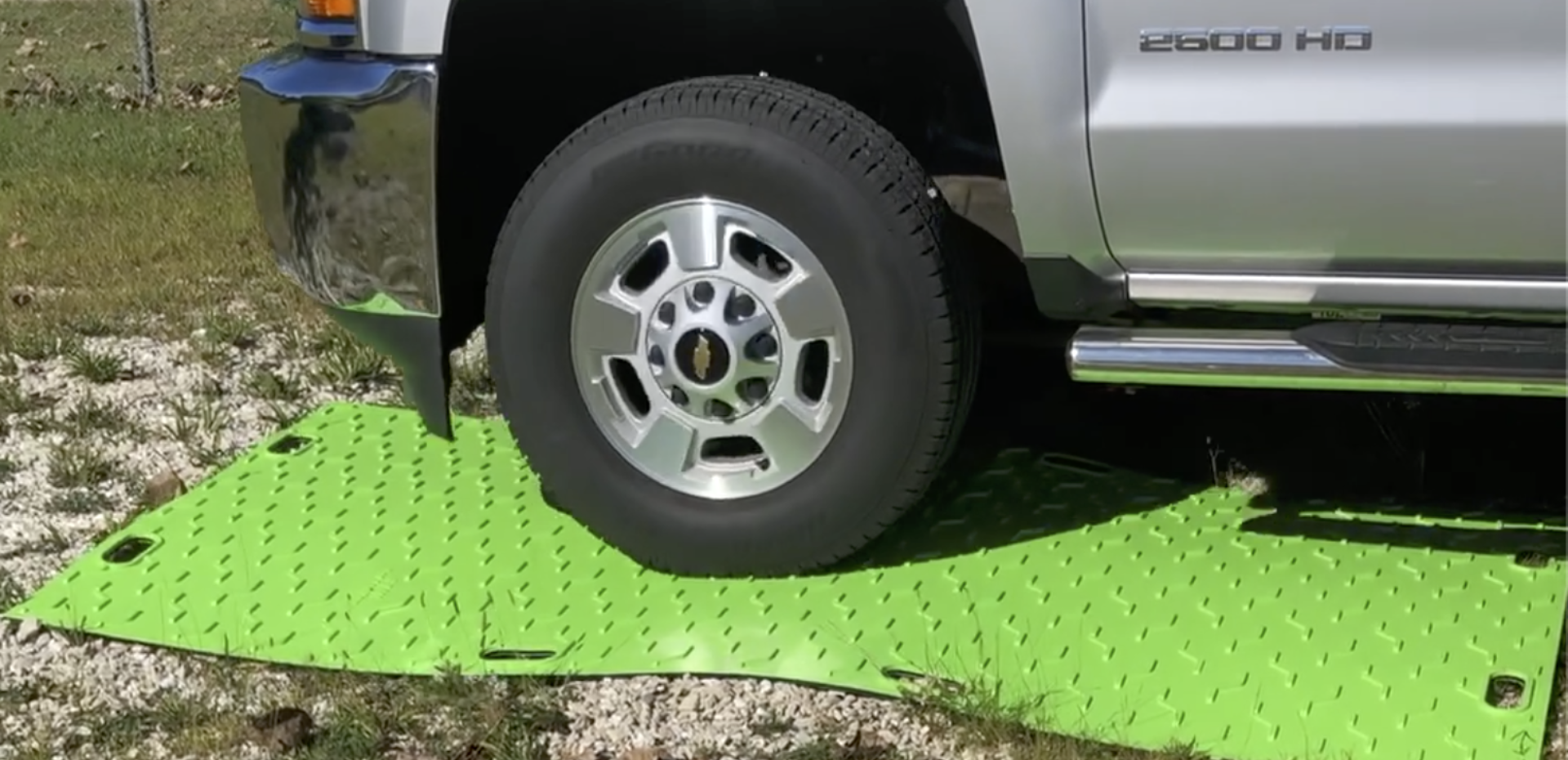
A mat bridges across the contact area and spreads the load over the full panel surface. A 4×8 BAM! panel covers 32 square feet. Equipment load distributed across 32 square feet exerts a fraction of the pressure that the same load applied through four tires exerts. The surface below—turf, concrete, asphalt, soil—experiences manageable distributed load rather than destructive concentrated point load.
Equipment Weight Reference
Compact track loaders: 8,000 to 13,000 lbs — most common residential excavation equipment
Skid steer loaders: 6,000 to 11,000 lbs — most common residential landscaping equipment
Mini excavators: 4,000 to 14,000 lbs — common for trenching, pool work, drainage
Boom lifts: 18,000 to 45,000 lbs — roofing, HVAC, and facade work
Loaded dump trucks: 40,000 to 80,000 lbs — material delivery and spoil removal
Loaded dumpsters: 10,000 to 30,000 lbs — roofing, remodeling, demolition
Concrete trucks: 30,000 to 66,000 lbs — foundation and flatwork pours
BAM! mats carry an 80-ton (160,000-pound) rating. Every machine in this table operates at less than 50% of that rating—often much less. That margin handles dynamic loading, point loads, and soil condition variation without performance risk.
The Six Jobsite Zones That Need Heavy Equipment Mat Coverage
1. The equipment approach route
From where the equipment exits the trailer to where it begins work. Covers the full path including any pavement crossings, lawn sections, and narrow access passages. This route is used every time the machine enters or exits the property.
2. The turning zone
Where equipment pivots and changes direction. Turning creates lateral shear forces that cause the most turf damage and pavement scuffing. Turning zones need extra coverage—more panels, wider coverage beyond the machine footprint.
3. Equipment staging area
Where equipment idles, loads material, or waits between active passes. Repeated stationary loads on soft ground create sinking and deformation. Staging areas need full coverage plus margin beyond the machine’s footprint.
4. Material delivery zones
Where trucks back in and offload. Delivery trucks are often the heaviest vehicles on residential jobsites. Full coverage from the street apron to the offloading position, including the approach zone where loaded rear axles contact the driveway.
5. Dumpster and container positions
Where containers sit for the duration of the job—often the longest period of sustained load. Full coverage under the container footprint plus 12 to 18 inches beyond, plus the truck approach zone.
6. Lift and crane stabilizer positions
Where outrigger legs or crane pads make contact with the ground. These positions see the highest point loads of any equipment operation. Dedicated panel coverage at each stabilizer position, in addition to the travel route.
Heavy Equipment Mat Setups by Trade
Roofing contractors
Standard setup: 6 to 8 panels for dumpster protection, 4 to 6 panels for delivery truck approach zone, 2 to 4 panels for crew access route from staging area to structure. Total: 12 to 18 panels per job.
Landscapers
Standard setup: double-column access path from trailer to work zone (10 to 16 panels), turning zone coverage (4 to 6 additional panels), material staging coverage (4 panels). Total: 18 to 26 panels per major job.
General contractors
Varies by project phase. Frame equipment access routes at project start. Update coverage as phases change—foundation, framing, mechanical, and finish phases have different equipment access requirements. Maintain 20 to 30 panels of flexible inventory for phase transitions.
Utility contractors
Directional drilling and trenching require access path coverage to the drill head or trench line, plus wider coverage at the equipment staging area. 16 to 24 panels for standard residential utility work.
The Professional Standard
Contractors who consistently use heavy equipment mats operate at a different level than those who don’t. Clients notice. Property managers notice. General contractors notice.
The professional presentation of a protected jobsite—defined access routes, covered staging areas, no ruts, no cracks—signals competence and care that generates reviews, referrals, and premium account access.
The contractors winning the best residential and commercial work aren’t just doing technically excellent work. They’re presenting a professional operation at every stage of every job.
Frequently Asked Questions
Q: What is the minimum load rating I should accept for heavy equipment mats?
A: For any application involving equipment over 5 tons, accept nothing under 30-ton rating. For the range of residential equipment—skid steers, mini excavators, delivery trucks—an 80-ton rating provides adequate safety margin. Do not use unrated plastic mats for heavy equipment applications.
Q: Can heavy equipment mats be used in freezing conditions?
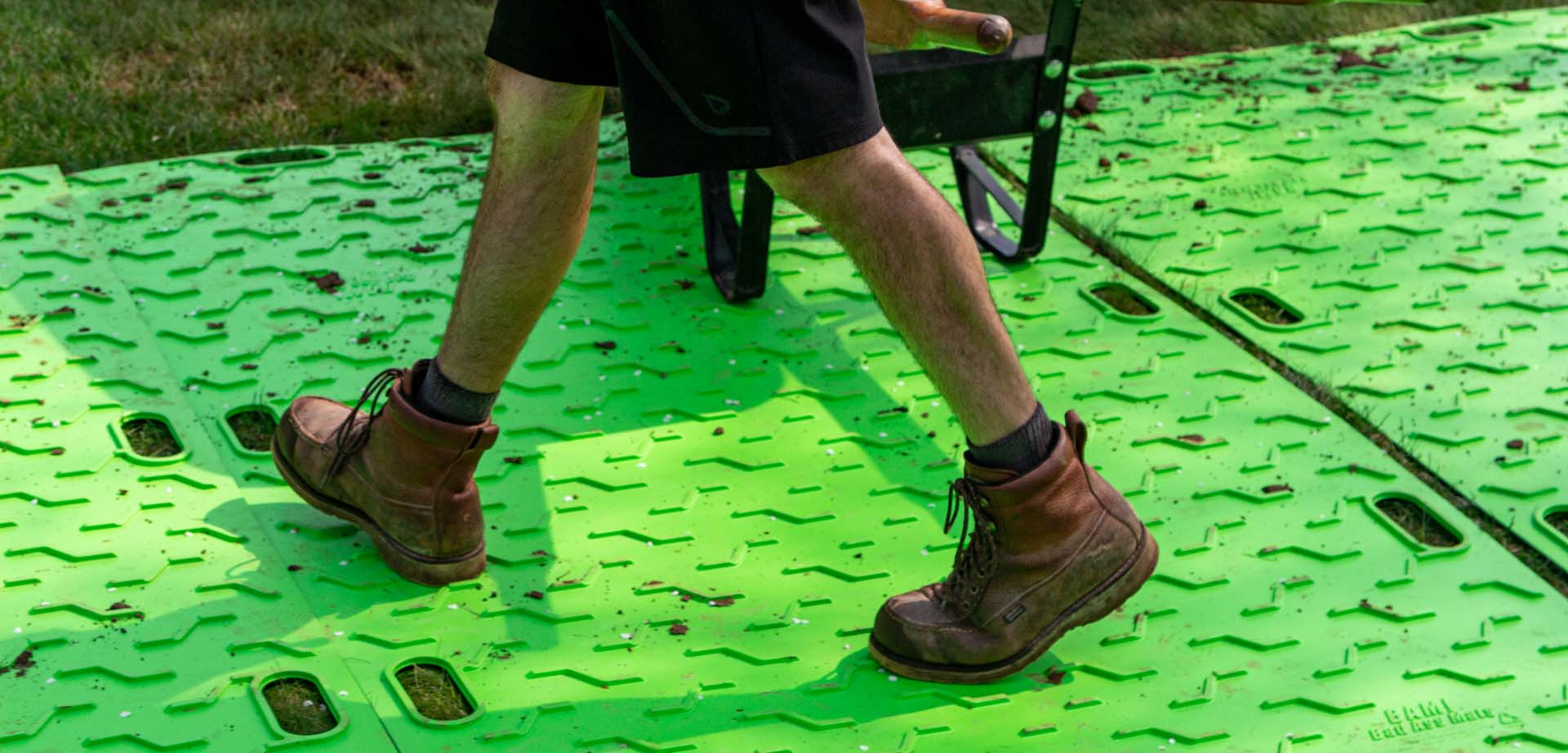
A: BAM! HDPE mats perform normally in freezing temperatures. The material does not become brittle or lose structural capacity in cold. The pedestrian traction surface is particularly valuable in winter conditions.
Q: How do I handle a job where equipment access routes change during the project?
A: Keep extra panels available for route adjustment. As access needs change, retrieve panels from sections no longer in use and redeploy to new zones. The 56-pound weight and hand holds make rapid redeployment practical.
Q: Do I need different mats for different types of heavy equipment?
A: No. BAM!’s 80-ton rating handles the full range of residential and light commercial equipment with the same panel. One product, one inventory, any machine.
Protect What You Worked to Build
Your equipment earns the job. Your mats protect the property while it works. That’s the combination that builds a contractor reputation worth having.
Explore BAM! heavy equipment mats at bamgroundpro.com/products. Find a distributor at bamgroundpro.com/where-to-purchase. Contact us at bamgroundpro.com/contact-us, call 888-870-8158, or email msheridan@alliedplastics.com. Protect your worksite. Protect your reputation. Pro’s choose BAM!