
Buying Ground Protection Mats Is a Smart Investment (When You Buy the Right Way)
When contractors search for ground protection mats for sale, they’re usually looking for more than just a product—they’re looking for a better way to run jobsites. A system that prevents ruts, protects driveways, improves access, and looks more professional than warped plywood sheets thrown down as a quick fix.
In 2025, more crews are investing in HDPE ground protection mats because they last longer, perform better in wet conditions, and pay for themselves over repeated use. But the key is buying the right quantity, choosing the right order format, and understanding what really affects pricing.
This guide will help you decide how many mats you need, when pallet orders make sense, what impacts the cost, and how to make sure you’re getting long-term value—not just the lowest upfront price.
Why Contractors Are Moving Away From Plywood
Plywood might seem cheaper at first, but it fails quickly on real jobsites. It absorbs water, cracks under equipment, and becomes dangerously slick in rain. Most importantly, it’s disposable. After one or two jobs, it ends up in a dumpster and you’re buying it again.
HDPE mats are different. They’re built to be reused over and over, which means your “ground protection cost” drops every time you deploy them.
You also gain something plywood can’t offer: a clean, uniform, professional jobsite presentation that clients notice immediately.
Step One: Choose the Right Quantity for Your Work
The number of mats you need depends on how you actually use them. Most contractors are surprised by how quickly mats pay off once they cover the right zones consistently.
Start with how you build access
Think about where your equipment and crews move most often:
- driveway-to-backyard routes
- side yard access paths
- staging zones near dumpsters or material piles
- equipment turning areas
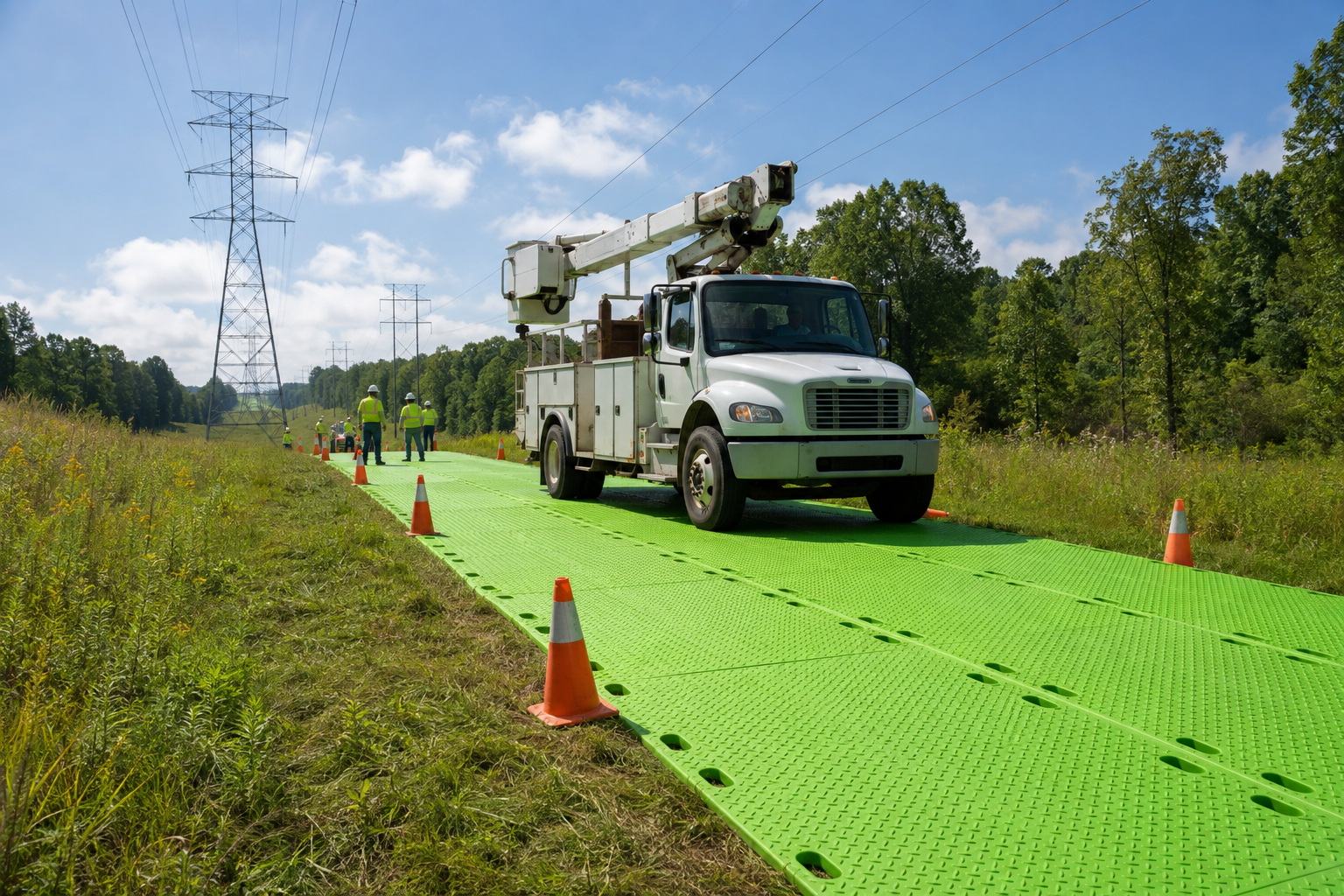
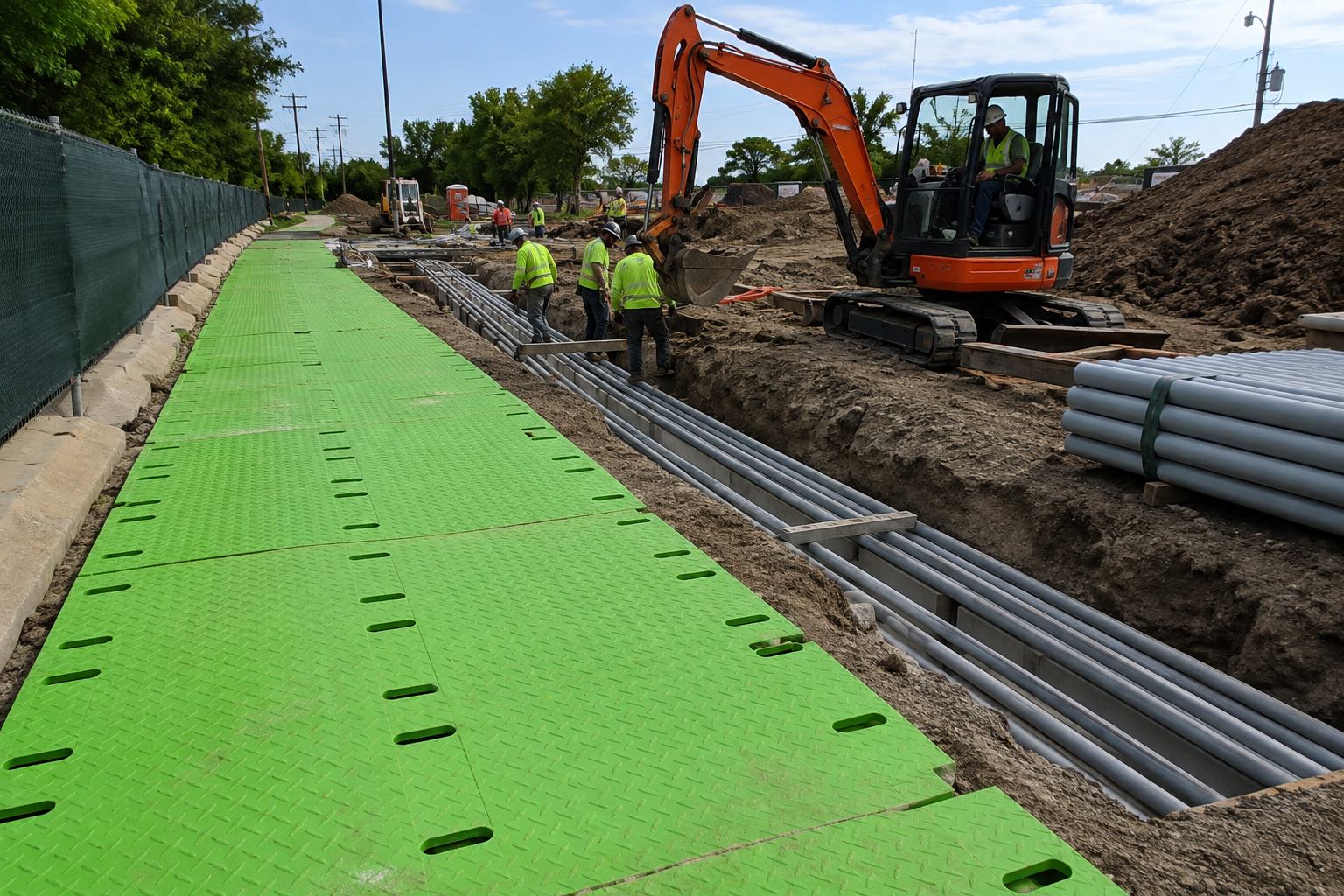
- utility easements or wet ground crossings
If you’re only protecting a narrow path, you may need a small quantity. If you’re building full lanes or staging heavy equipment, you’ll want more coverage.
Think in “work zones,” not single mats
Contractors don’t usually need one mat—they need a protected system. Even a simple driveway protection plan can take multiple panels to cover turning zones, wheel tracks, and dumping areas.
Plan for overlapping job phases
Many jobs need mats in more than one spot as the project progresses. If you only buy enough for one area, your crew may end up moving mats constantly. Having a few extra panels reduces labor, keeps workflow smooth, and improves safety.
How Pallet Options Help Contractors Save Money
Buying mats one by one works for small needs, but once you’re deploying mats regularly, pallet orders become the more cost-effective strategy.
Pallet orders reduce cost-per-mat
Larger orders typically reduce the price per unit and make inventory planning easier for contractors who want to stay ready for any job.
You stay stocked during peak seasons
Spring landscaping, summer construction, and event season can create shortages. Pallet orders help ensure you don’t run out when demand spikes.
You build a professional standard across your crews
Contractors who use ground mats daily often standardize their protection systems across multiple teams. Pallet ordering supports fleet consistency and keeps your jobsite presentation uniform across every project.
If your crew uses mats weekly, pallet orders usually make the most financial sense long-term.
What Impacts Ground Protection Mat Pricing in 2025
Pricing is more than just the product itself. Several real-world factors affect the final cost.
Mat material and engineering quality
High-quality HDPE mats designed for repeat use and heavy loads will cost more than thin, low-grade mats. But they typically last far longer, perform better under equipment, and reduce failures that lead to jobsite damage.
Freight and delivery distance
Ground mats are large and ship stacked. Freight can vary based on:
- distance from distributor or warehouse
- pallet quantity
- delivery speed
- jobsite access conditions
This is why many contractors prefer buying through trusted distributor networks that reduce shipping distance and improve lead times.
Project urgency
Rush delivery or last-minute orders can raise freight costs. Planning ahead gives you better pricing and fewer scheduling surprises.
Quantity ordered
Bulk pricing is common, which is why serious contractors buy in larger quantities once they know their typical job needs.
How to Calculate ROI the Contractor Way
Instead of thinking about price as a one-time expense, contractors should evaluate ground protection mats using cost-per-use.
Plywood has a lower upfront cost, but it breaks down quickly, needs constant replacement, and creates surface damage risk. Over time, plywood becomes a permanent monthly expense.
HDPE mats are built to last. If you use them across dozens of jobs, your cost per use drops dramatically. And because mats prevent ruts and surface damage, they also reduce the expensive “hidden costs” that destroy profit margins.
HDPE mats improve ROI through:
- less replacement purchasing
- fewer property repairs
- fewer damage claims
- faster jobsite setup
- improved client satisfaction and referrals
- a cleaner professional appearance on-site
The value isn’t just durability—it’s how the mat strengthens your entire operation.
What to Look for Before You Buy
Not all ground mats are built the same. Before purchasing, contractors should look for features that improve performance and workflow.
Strength and load handling
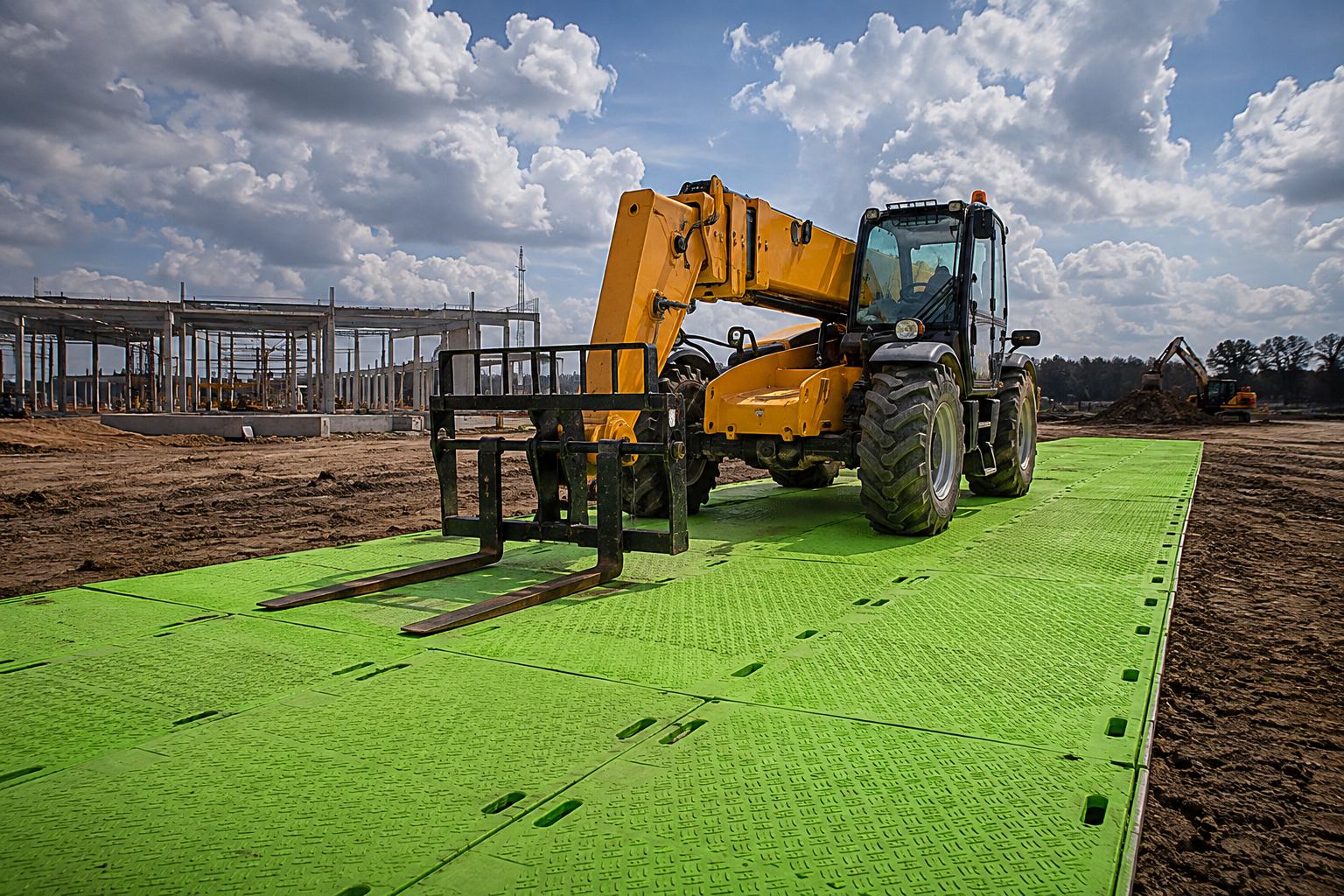
A strong mat should support real equipment use without cracking or collapsing. Load capacity matters, especially for heavy machinery and point-load pressure zones like outriggers.
Traction patterns
Slip resistance protects crews and helps equipment stay stable in wet, muddy conditions. A good tread design improves safety and reduces downtime.
Easy handling and storage
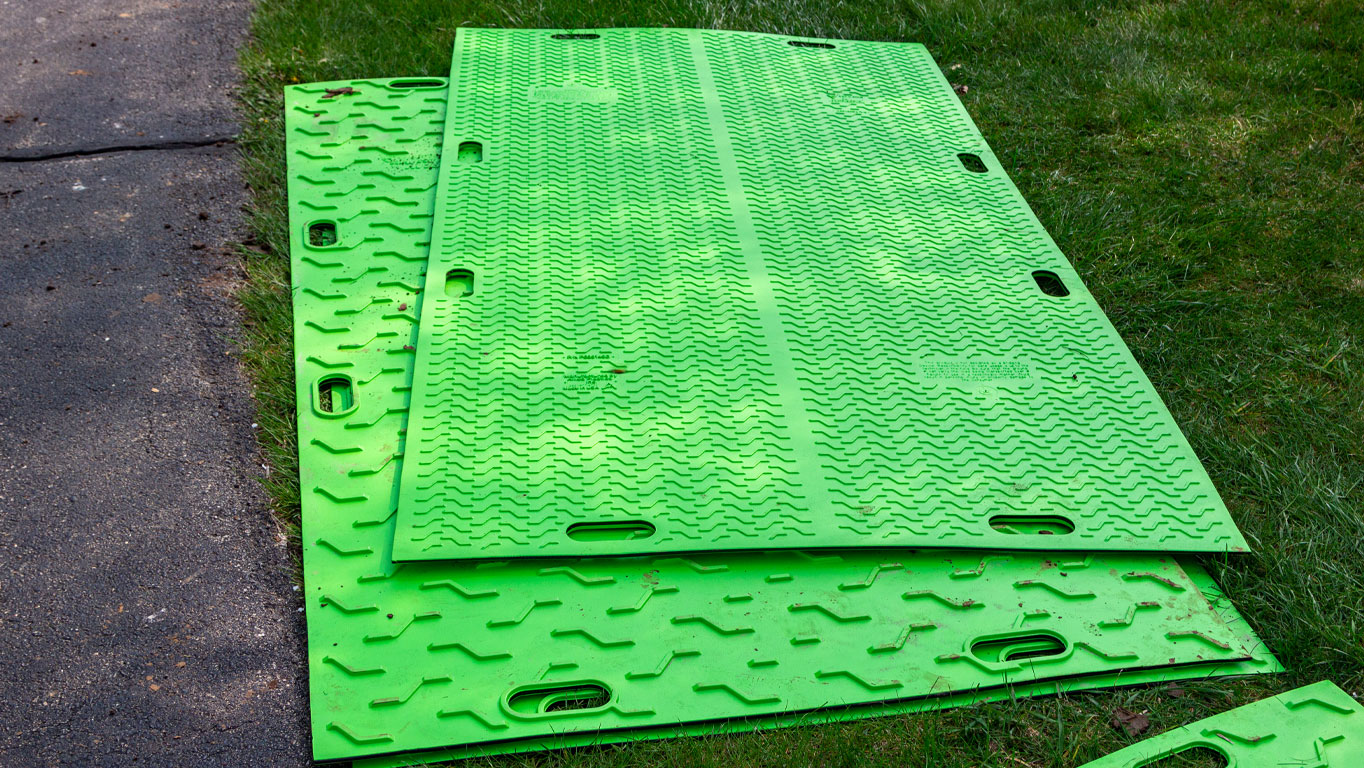
A mat should be deployable without slowing crews down. Built-in hand-holds and stackable design make a major difference in daily workflow.
Professional appearance
Clients notice when a contractor shows up prepared. Clean, uniform mats look far better than plywood sheets and help reinforce your professionalism from the moment the job begins.
The Best Time to Buy Ground Mats Is Before You Need Them
The worst time to order mats is when the job has already started and the site is already failing. Contractors who get ahead of demand run smoother operations and avoid last-minute scrambling.
If you want mats for:
- driveway protection during remodeling
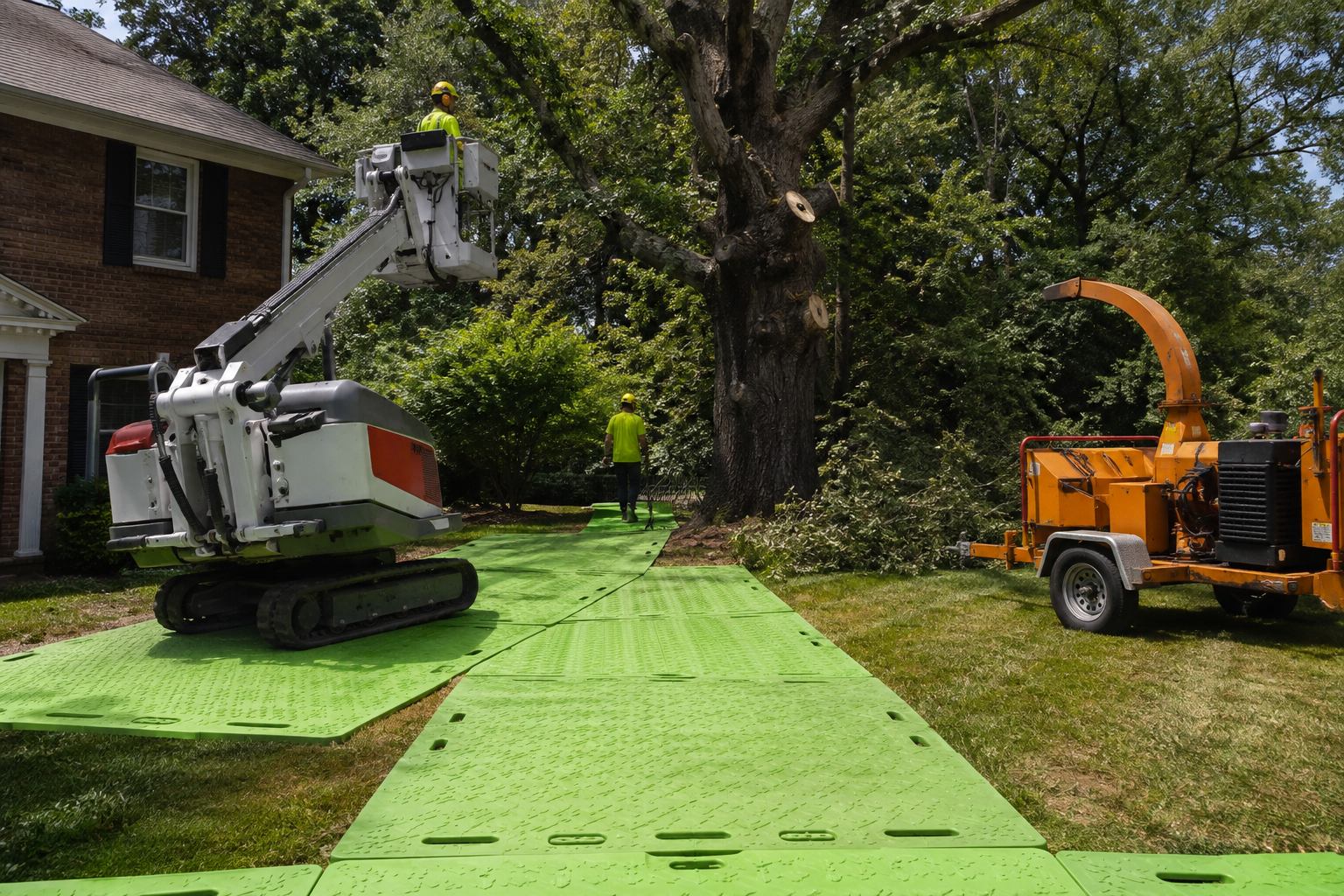
- landscaping and turf preservation
- equipment access roads
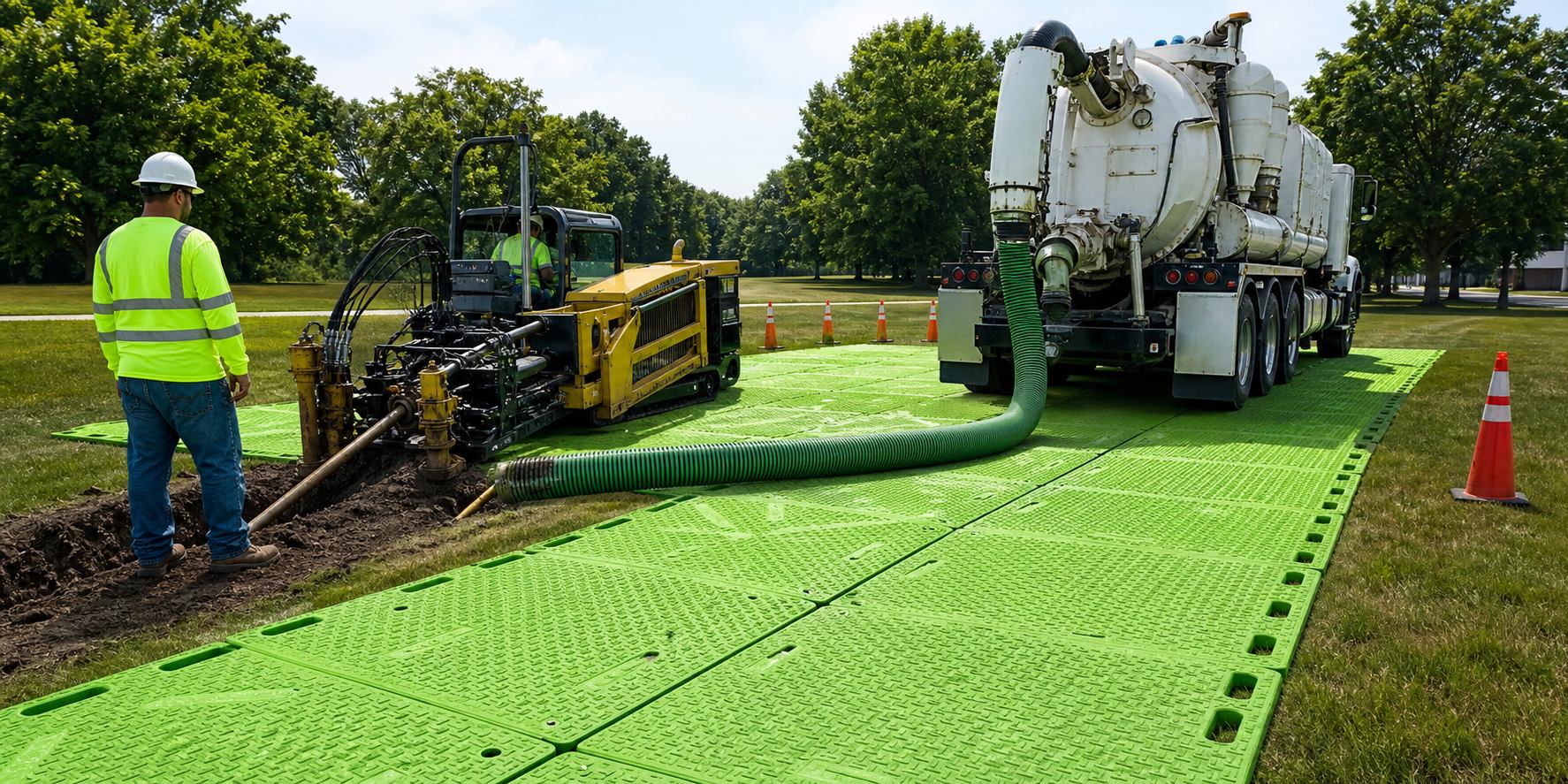
- utility or trenchless drilling work
- high-visibility commercial sites and events
Buying in the right quantity now helps you win jobs faster, protect properties better, and look more professional across every site.
Buy Once. Use for Years.
Ground protection mats are more than materials—they’re a long-term tool that protects your projects, your workflow, and your reputation. If you want professional-grade performance, clean jobsite presentation, and long-term ROI, HDPE mats are the clear upgrade from plywood.
Explore available options on our Products page or connect with our team through the Contact page to get help choosing the right quantity, pallet options, and pricing approach for your crew.
Buy smarter. Protect better. Look more professional—because Pro’s choose BAM!