
Dumpster placement is where a significant percentage of residential driveway damage happens. Not because contractors are careless—but because most people underestimate how much a loaded dumpster actually weighs.
An empty 20-yard container weighs approximately 5,500 to 7,000 pounds. Fill it with concrete rubble from a remodeling job or shingles from a roof tear-off, and that number can hit 30,000 pounds or more. Sitting on a residential concrete driveway for 3 to 5 days.
A dumpster mat eliminates the risk. This post covers exactly how.
How Dumpsters Damage Driveways
Point loads from container legs and corners
Most roll-off dumpsters make contact with the ground at a small number of points—the corners of the frame or specific leg structures. When a 20,000-pound load concentrates through four small contact points, the pressure per square inch far exceeds what residential concrete was designed to handle.
Load applied during placement and removal
The heaviest loads on the driveway don’t come from the dumpster sitting still—they come from the truck during placement and removal. As the container swings off the truck frame and settles onto the surface, the dynamic load briefly exceeds the static weight. Mats absorb this impact and distribute it.
Extended contact on asphalt in heat
Asphalt softens in summer. A heavy dumpster sitting on the same spot for several days in warm weather creates permanent deformation—visible as depressions that persist long after the container is removed. On hot days, the risk is significant even for containers that aren’t fully loaded.
Staining and contamination
Dumpsters leak. Paint, concrete slurry, adhesive, and other materials seep through the floor over time. These stains penetrate concrete and asphalt and are often permanent. A mat provides a barrier that’s easy to clean.
The Right Dumpster Mat Setup
Cover the full container footprint plus overhang
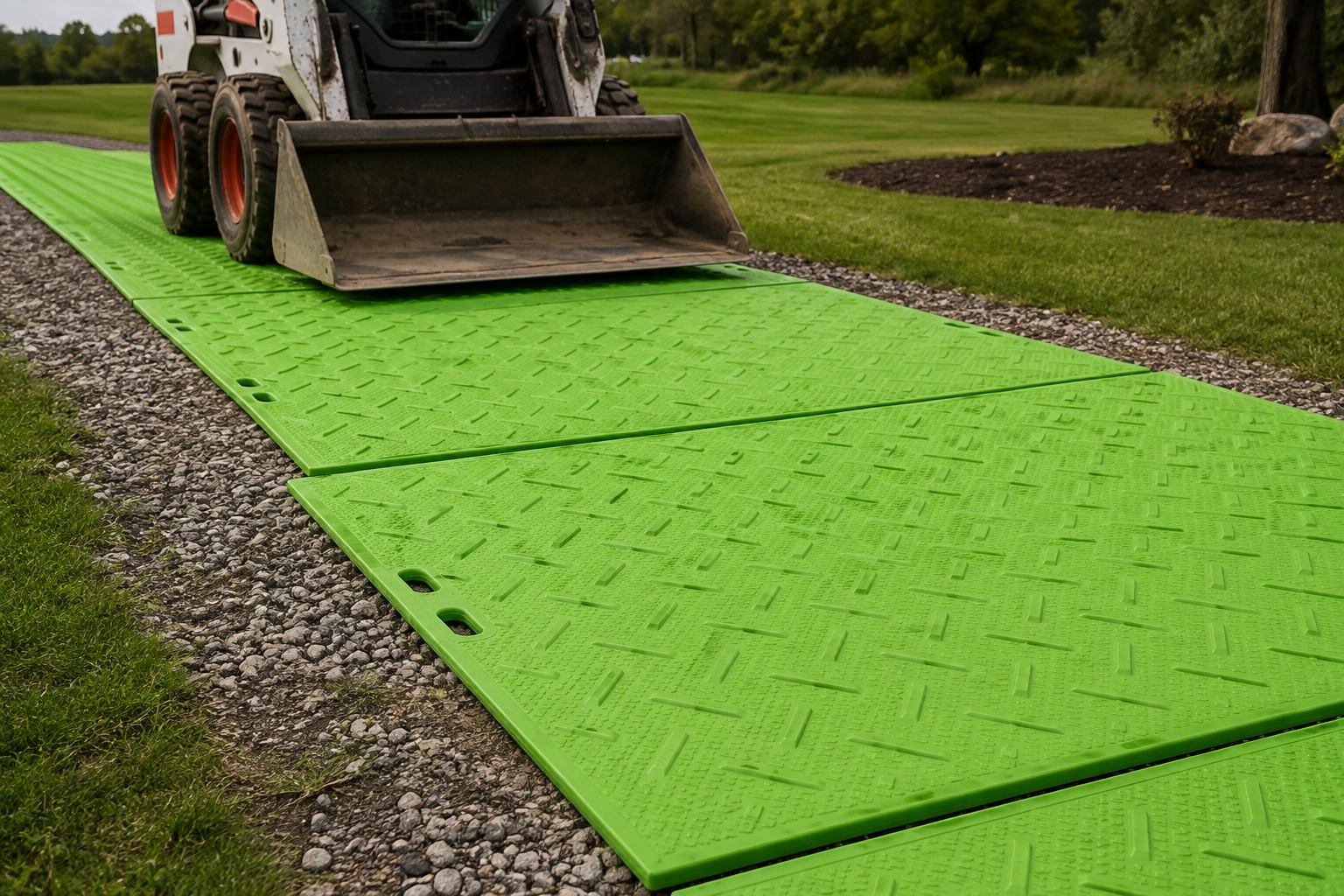
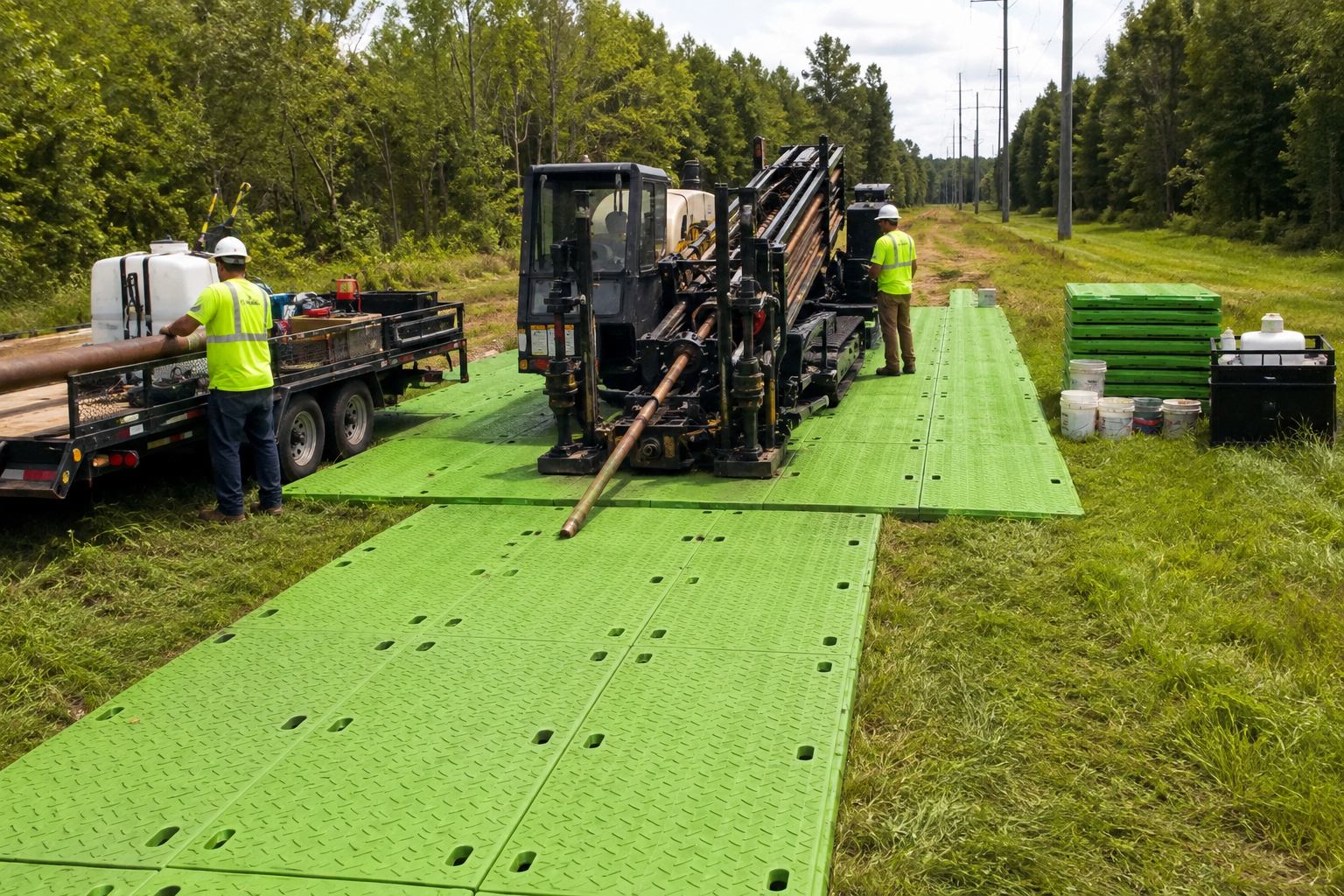
Standard 20-yard dumpsters are approximately 22 feet long by 8 feet wide. This means you need a mat coverage area of at least 22 x 8 feet—typically 6 to 8 BAM! 4×8 panels arranged in two columns of 3 to 4 panels each.
Extend coverage 12 to 18 inches beyond the container footprint on all sides. The dumpster truck doesn’t always place the container with perfect precision, and edge conditions see the highest point loads.
Cover the truck approach zone
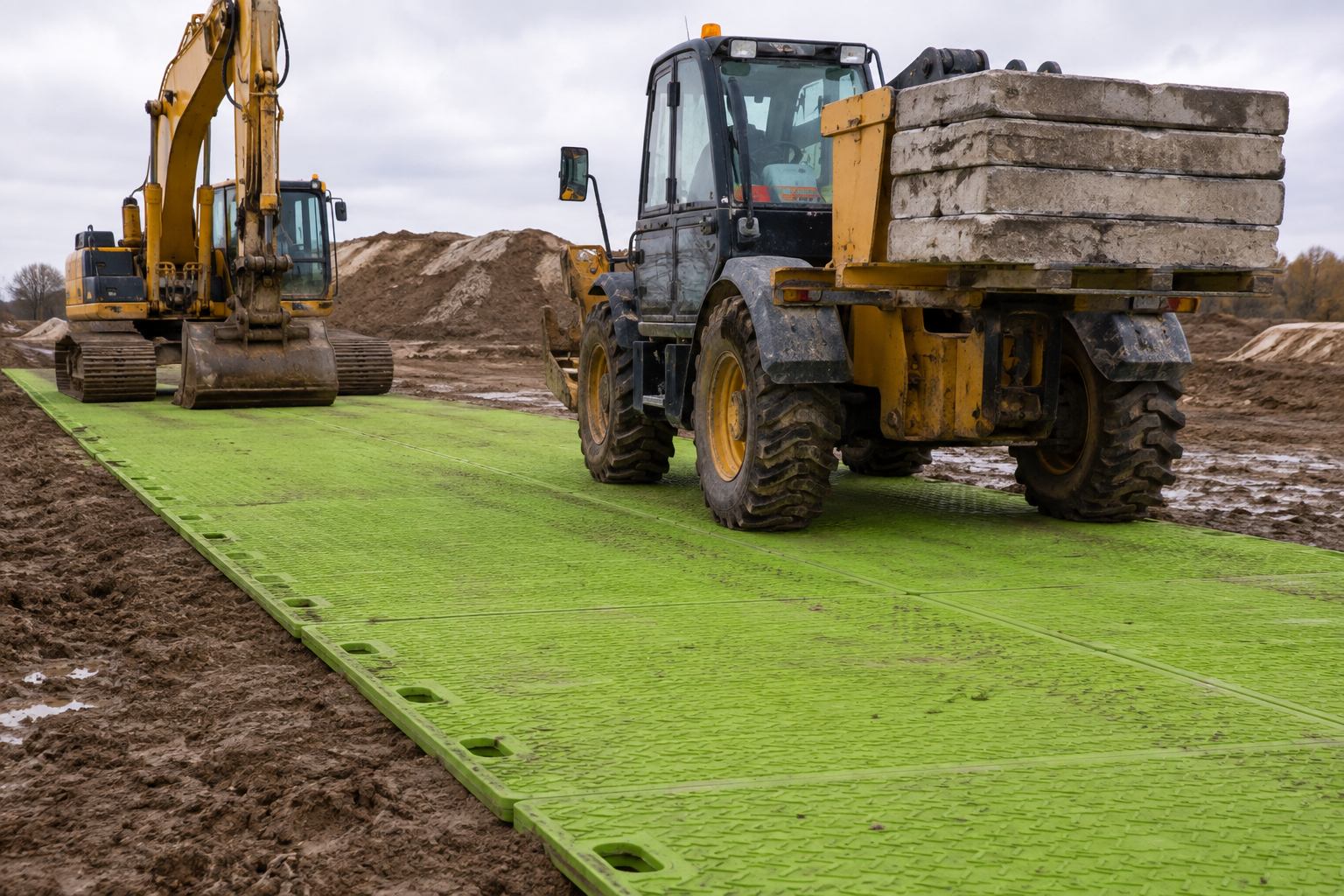
The dumpster truck backs across the driveway to reach the placement position. Its heaviest loads—loaded rear axles—apply to the driveway apron and the first section of the driveway during approach. Cover this approach zone with additional panels.
Use panels under the truck’s frame contact points
When a roll-off truck deploys its frame to lower the container, it makes contact with the driveway at specific points along the rear frame. These contact points see extreme point loads for a short time. Place panels under these positions as well as under the container landing zone.
Dumpster Mats by Surface Type
Concrete driveways
Concrete is strong in compression but weak at joints and edges. The highest-risk areas for a dumpster on concrete are near control joints, expansion joints, and driveway edges—anywhere that stress can concentrate and propagate as a crack. Mats distribute load away from these vulnerable areas.
Asphalt driveways
Asphalt is more forgiving than concrete in some respects but more vulnerable to heat and point loads. For asphalt, mats are especially important on warm days and for dumpsters that will sit for multiple days.
Paver driveways and walkways
Pavers are the most vulnerable to dumpster damage. The sand-set base shifts under point loads, and individual pavers crack when a concentrated load exceeds their structural capacity. Mats on pavers are essential—not optional.
New or recently repaired driveways
Concrete cures for 28 days before reaching full strength. New asphalt needs 6 to 12 months to fully harden. Dumpsters on new surfaces without mat protection almost always cause damage. If a customer’s driveway is new or recently repaired, mats are non-negotiable.
Beyond Dumpsters: Delivery Mats for Every Container Type
The principles of dumpster mat protection apply to any heavy container or delivery that makes contact with a driveway.
- Pod and portable storage containers: similar weight and contact point issues to roll-off dumpsters
- Concrete mixing trucks: rear axle loads during stationary discharge are enormous
- Flatbed material deliveries: equipment lowered from the truck bed applies point loads during transition
- Propane and fuel tanks: delivery trucks applying contact loads to the driveway during tank exchange
The Business Case for Dumpster Mats
For roofing contractors, landscapers, remodelers, and general contractors, dumpster placement is a recurring event. Every job that includes a dumpster is a potential damage event—without mats.
The average concrete driveway repair costs $400 to $800. A paver repair can run $1,000 to $3,000. A set of BAM! mats to protect against this damage costs a fraction of a single claim—and they’re reusable across hundreds of jobs.
The math is straightforward. The risk without mats is not.
Frequently Asked Questions
Q: How many BAM! mats do I need to protect a standard 20-yard dumpster?
A: A 20-yard dumpster is typically about 22 feet long and 8 feet wide. A two-column arrangement of 4×8 panels—three panels per column—covers approximately 24 feet by 8 feet. Six to eight panels provides good coverage with adequate overhang.
Q: Can dumpster mats be reused between jobs?
A: Yes. BAM! HDPE mats clean easily and are designed for years of repeated use. After each job, remove debris and rinse the mats before stacking for the next job.
Q: Do I need special mats for concrete wash-out under concrete trucks?
A: For concrete washout, mats provide a physical barrier but aren’t a containment solution. Always use appropriate containment for concrete washout. Mats protect the surface from the truck’s weight and contact during discharge.
Q: What if the dumpster truck driver doesn’t want to use mats?
A: As the contractor, you’re responsible for protecting the client’s property. Brief the driver before they back in, and have mats positioned and ready so placement is fast. Most drivers are accommodating when the process is streamlined.
Make Dumpster Protection a Standard Part of Every Job
Dumpster mats aren’t a luxury on high-end properties. They’re a standard practice for contractors who take property protection seriously—and who want to avoid the cost, time, and reputation damage of a driveway claim.
Explore BAM! dumpster mat options at bamgroundpro.com/products. Find a distributor at bamgroundpro.com/where-to-purchase. Contact us at bamgroundpro.com/contact-us, call 888-870-8158, or email msheridan@alliedplastics.com. Protect your worksite. Protect your reputation. Pro’s choose BAM!