Walk onto any construction supply lot and “ground protection mat” can mean four completely different products — plywood sheets, rubber mats, timber crane mats, or HDPE composite panels. They all claim to protect the ground. They don’t perform anywhere near the same, and the differences show up fastest in exactly the conditions where protection matters most: wet weather, repeated heavy traffic, and extended use.
Here’s how the four main material categories actually compare, so the choice isn’t based on whichever option happens to be sitting in stock.
Plywood and Timber Mats
Plywood is the cheapest option up front and the most common default on budget-conscious jobs. It works for a short-term, light-duty, one-time use — but it has real limits. Plywood absorbs water, which causes swelling, warping, and delamination after just a few wet/dry cycles. It splinters under heavy, repeated traffic, and once it’s structurally compromised, it becomes a disposal problem rather than a reusable asset.
Timber crane mats (thick wood beams, sometimes called “mega mats”) handle far heavier loads than plywood sheets and are standard in oilfield and utility work, but they’re extremely heavy to move, require machinery to place, and still degrade with rot and splitting over time outdoors.
Rubber Mats
Rubber mats offer good traction and some give underfoot, which makes them popular for pedestrian walkways and livestock applications. For heavy equipment ground protection, though, rubber mats typically carry lower load ratings than HDPE panels, are heavier per square foot (making them harder to hand-place), and degrade under UV exposure and temperature extremes faster than HDPE.
Composite Mats
Composite mats blend materials — often wood fiber with resin, or layered synthetic materials — aiming for a middle ground between timber strength and plastic durability. Quality varies widely by manufacturer, and composite panels can be more expensive than HDPE while not necessarily matching its weather resistance or weight-to-strength ratio.
HDPE Panels — the Professional Standard
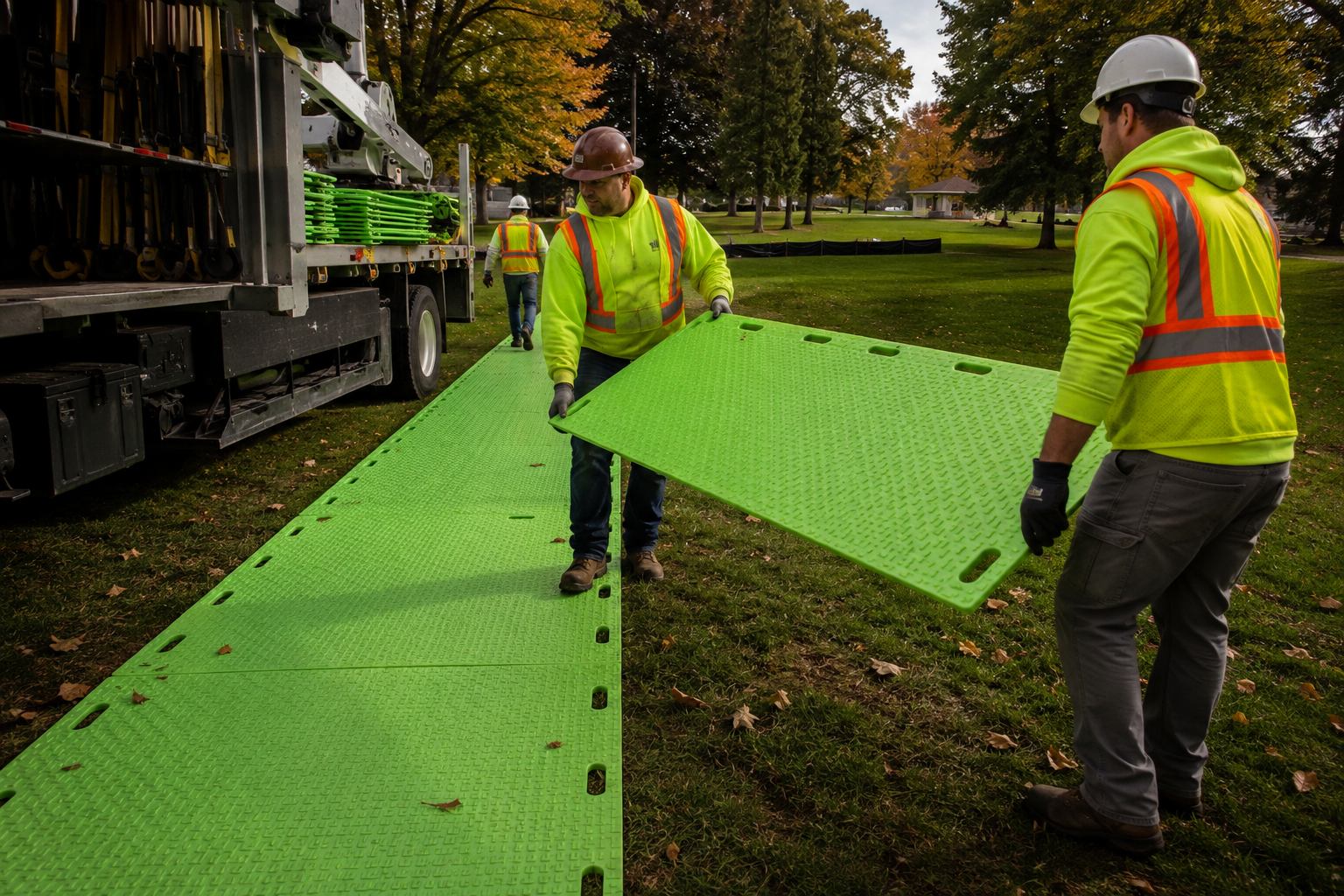
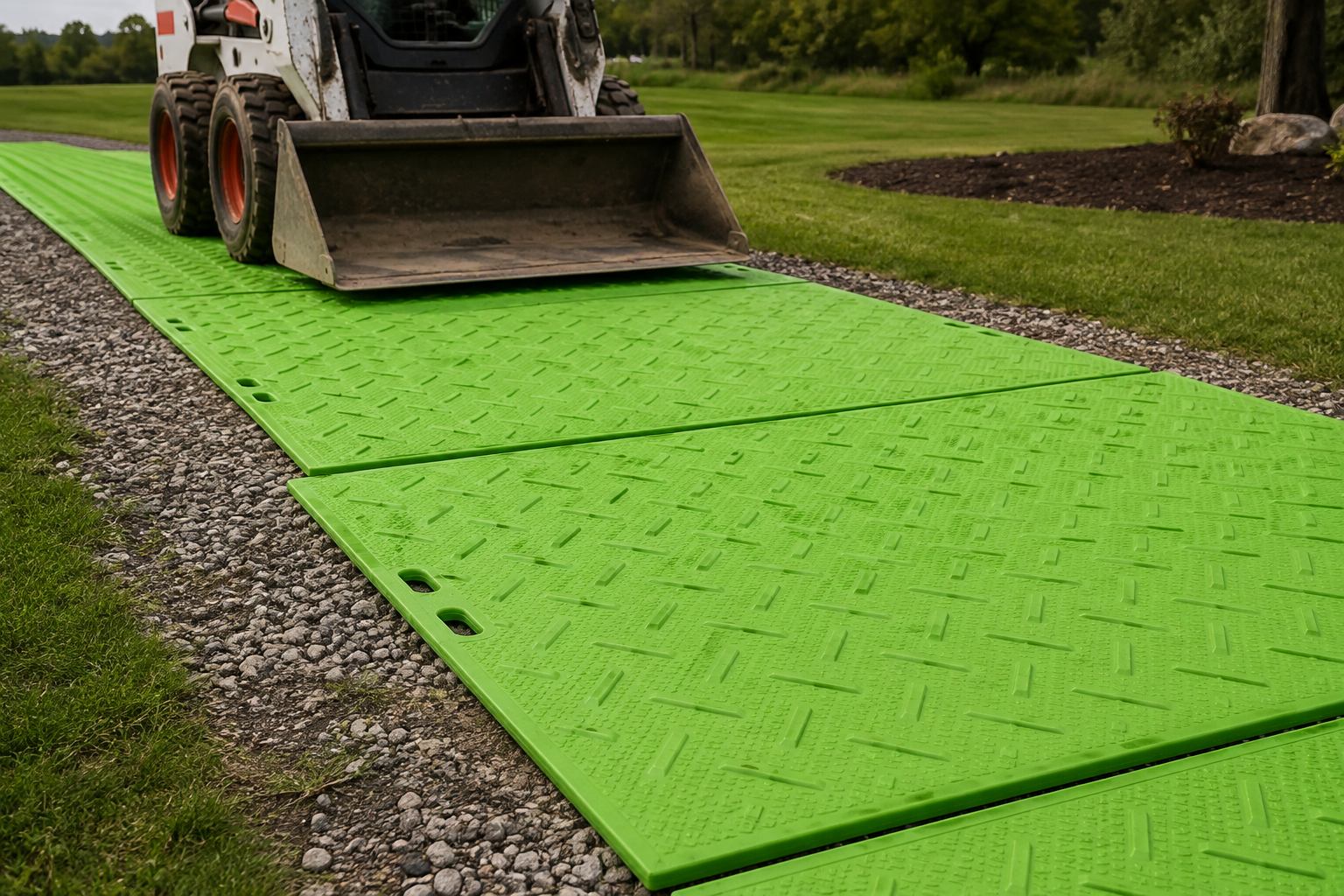
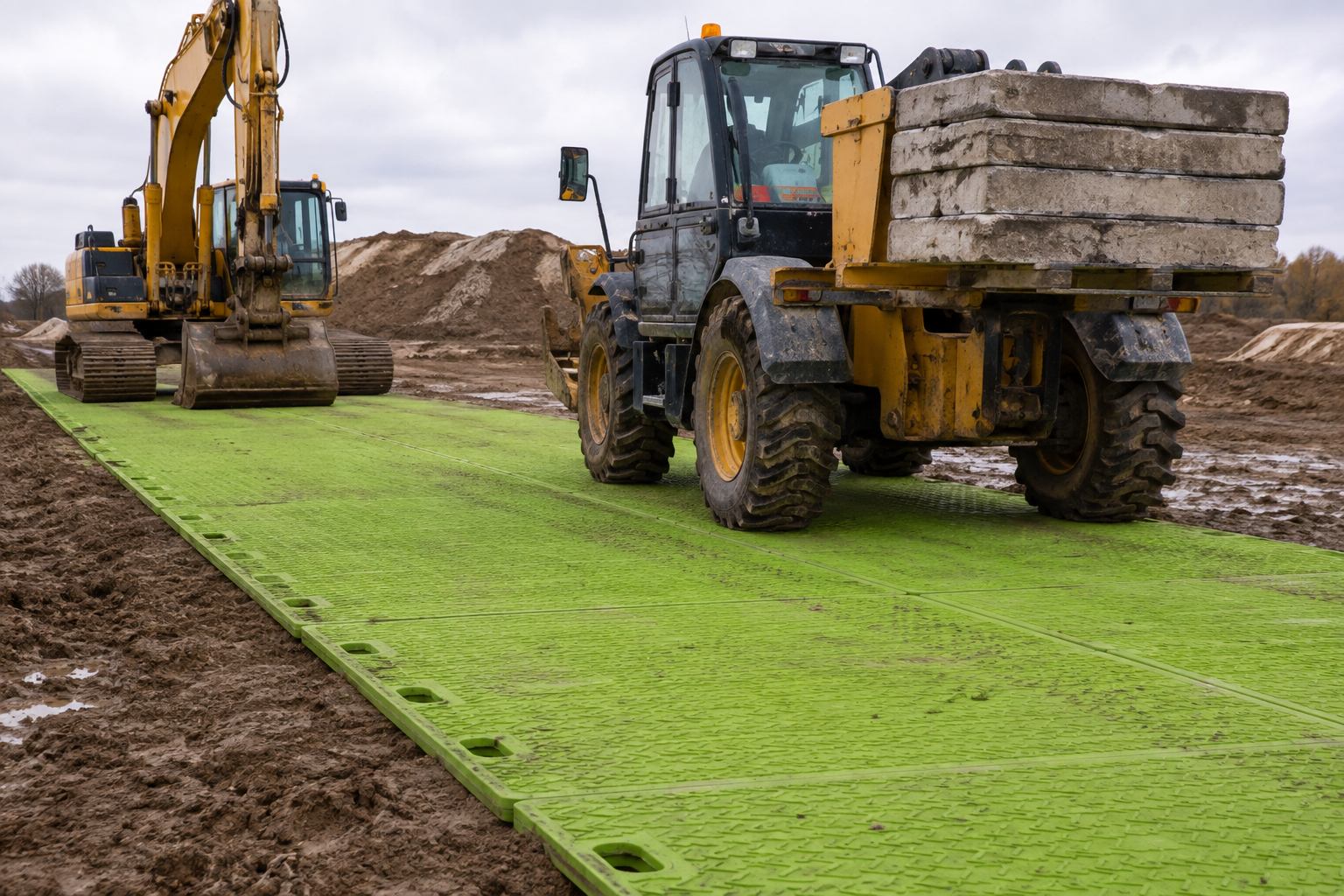
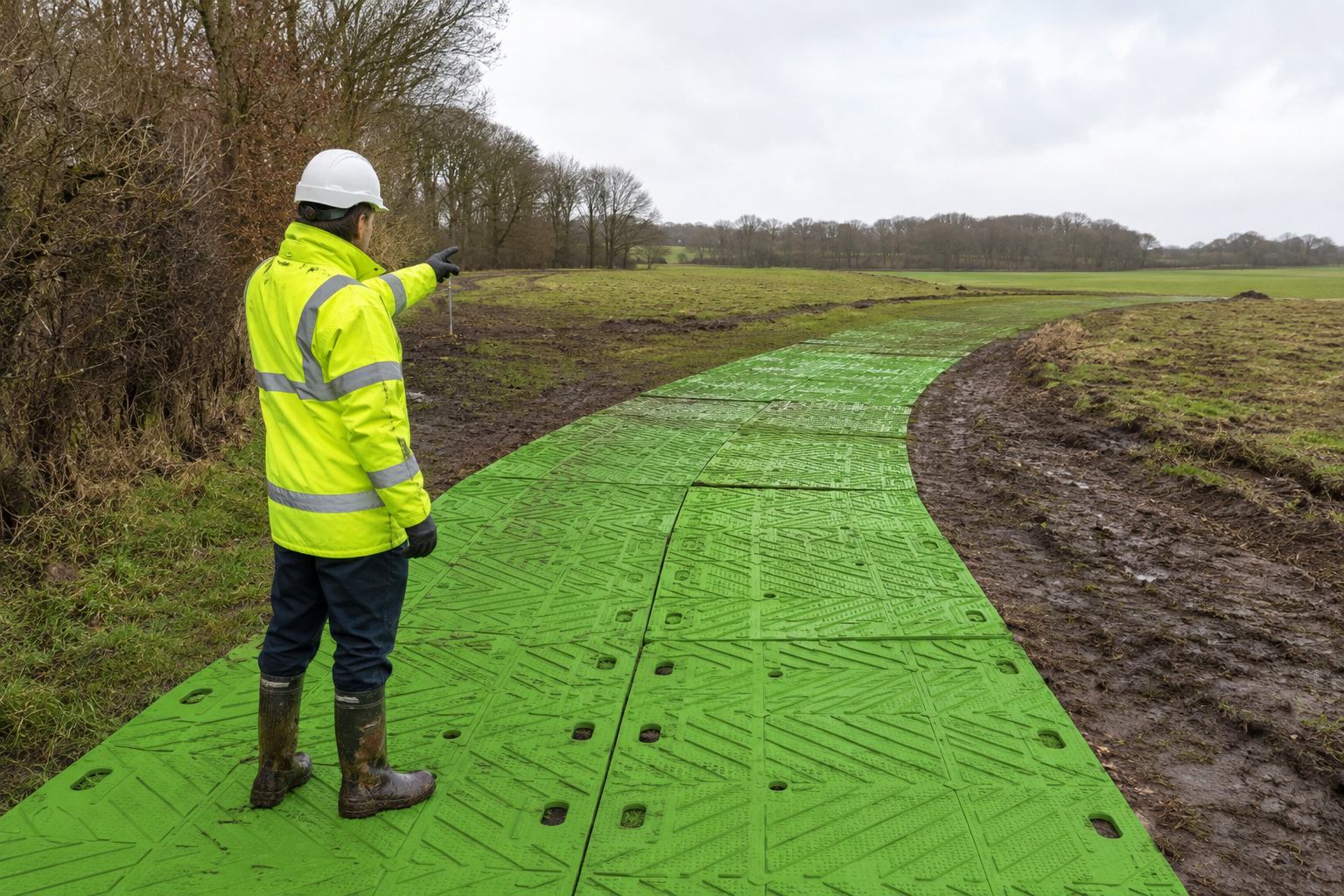
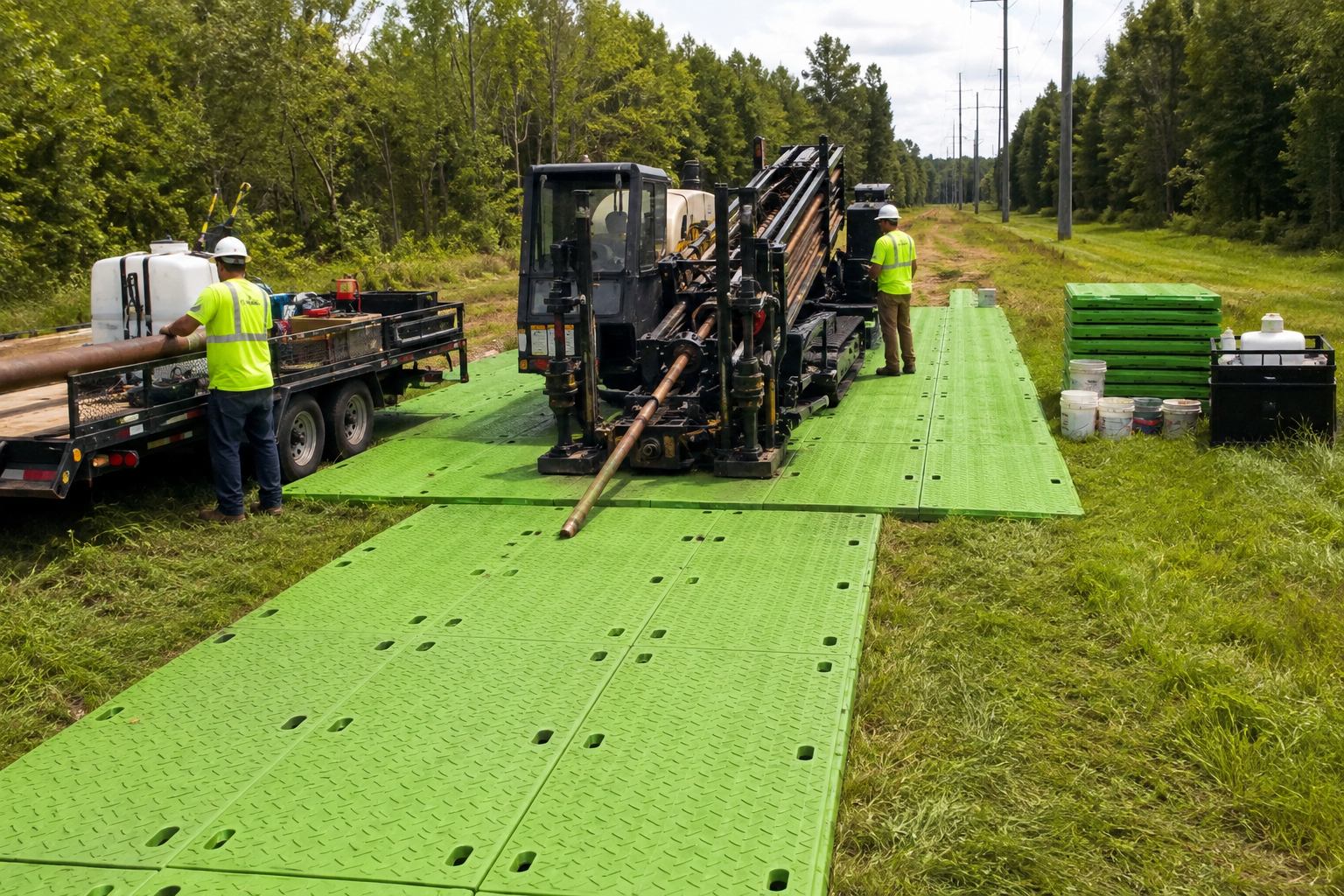
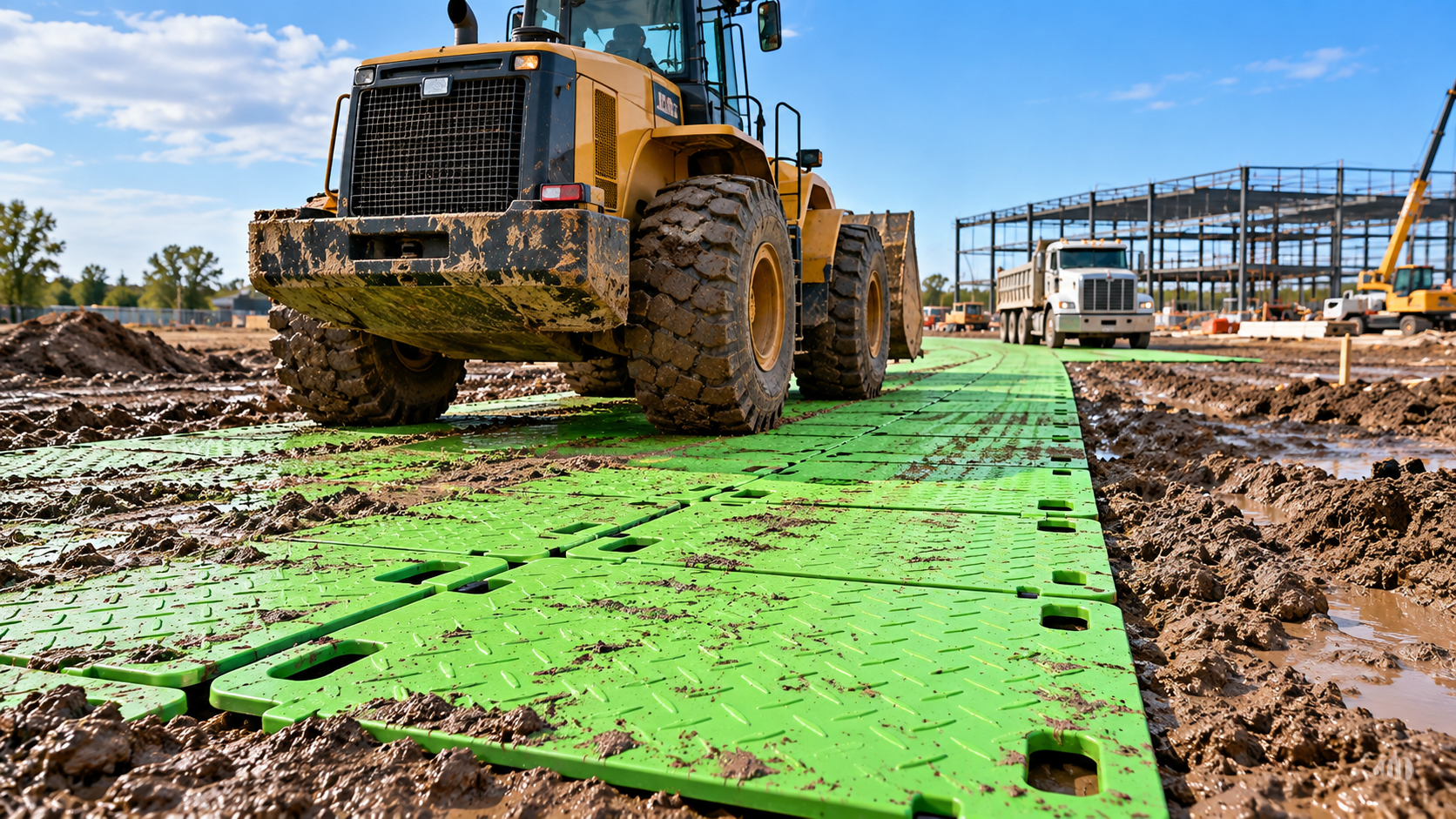
High-density polyethylene (HDPE) is the material BAM! panels are built from, and it’s become the standard for contractors who need mats that perform the same way on day 400 as they did on day one. HDPE doesn’t absorb water, so there’s no swelling, warping, or rot. It resists UV degradation far better than rubber. And at a 56-lb weight for a 4×8 panel with an 80-ton load rating, it delivers a strength-to-weight ratio none of the other three materials match.
The tradeoff is upfront cost — HDPE panels typically cost more per panel than a sheet of plywood. Where HDPE wins is cost per use: a panel that gets reused across dozens of jobs over several years costs far less per deployment than plywood that gets replaced every job or two.
Comparing the Four Materials
- Weather resistance: HDPE and rubber hold up well; plywood and timber degrade fastest when wet.
- Weight-to-strength ratio: HDPE offers the best combination of light handling weight and high load rating.
- Reusability: HDPE and quality composite panels are built for repeat use; plywood is generally single- or short-term use.
- Handling: HDPE panels are light enough for hand-placement; timber mats typically require equipment to move.
- Cost per use over time: HDPE wins on long-term economics despite higher per-panel cost, because of reuse across many jobs.
Choosing the Right Material for the Job
A single-day, one-time, light-duty task might not justify HDPE’s higher upfront cost. But for any contractor doing repeat ground protection work — access roads, driveway protection, utility and crew access — the math favors a reusable HDPE system over materials that need replacing every job or two. For a deeper look at buying considerations beyond material, see our guide on heavy equipment mats for sale.
Frequently Asked Questions
Q: Is HDPE actually stronger than plywood?
A: HDPE panels like BAM!’s carry an 80-ton load rating in a 56-lb panel, a strength-to-weight ratio plywood sheets can’t match, and HDPE doesn’t lose strength from water absorption the way plywood does over repeated use.
Q: Are composite mats a good middle-ground option?
A: Quality varies significantly by manufacturer. Some composite mats perform well, but buyers should compare load rating, weather resistance, and reuse life directly against HDPE rather than assuming “composite” automatically means better value.
Q: Why don’t rubber mats work as well for heavy equipment?
A: Rubber mats generally carry lower load ratings, weigh more per square foot than HDPE, and degrade faster under UV and temperature extremes — all of which matter more as equipment weight and job duration increase.
Q: Does HDPE cost more than plywood?
A: Per panel, usually yes. Per use over the life of the panel, HDPE is typically cheaper because it survives dozens of deployments where plywood needs replacing after one or two.
Buy the Material That Matches the Job, Not Just the Price Tag
The cheapest mat on day one is rarely the cheapest mat over a year of use. Match the material to how often you’ll deploy it and what it needs to survive.
| Work cleaner. Work safer. Pro’s choose BAM!
Explore BAM! HDPE panel specs and compare against what you’re using now. Call 888-870-8158 or email msheridan@alliedplastics.com with material questions. |