
A residential driveway is built to carry cars, not a 30,000-pound delivery truck, a crane outrigger, or a loaded dumpster roll-off. One heavy pass is often all it takes to crack decorative concrete, shatter pavers, or leave permanent tire ruts in asphalt that was never designed for that kind of point load. For contractors, that damage turns into a change order, a customer dispute, or a repair bill that eats the job’s margin.
Driveway protection mats exist for exactly this gap — a surface that spreads equipment weight wide enough that the driveway underneath never feels the full force of the load.
Why Driveways Crack Under Equipment That Seems Fine on a Road
Public roads are engineered with thick base layers specifically for heavy loads. Residential driveways are not — most are 4 inches of concrete or a few inches of asphalt over minimal base. Add in temperature cracking, age, and tree roots already working against the surface, and even a single pass from a delivery truck’s rear axle can be enough to finish the job a crack had already started.
Common Situations Where Driveways Take the Hit
Material deliveries — lumber, pavers, roofing, concrete trucks backing up to the garage
Dumpster and roll-off drop-offs and pickups
Crane and boom-lift outriggers set up in the driveway for roof or tree work
HVAC, pool, and equipment installs that require heavy machinery access
Moving trucks and trailers parked or maneuvering on the slab
How BAM! Panels Protect the Surface
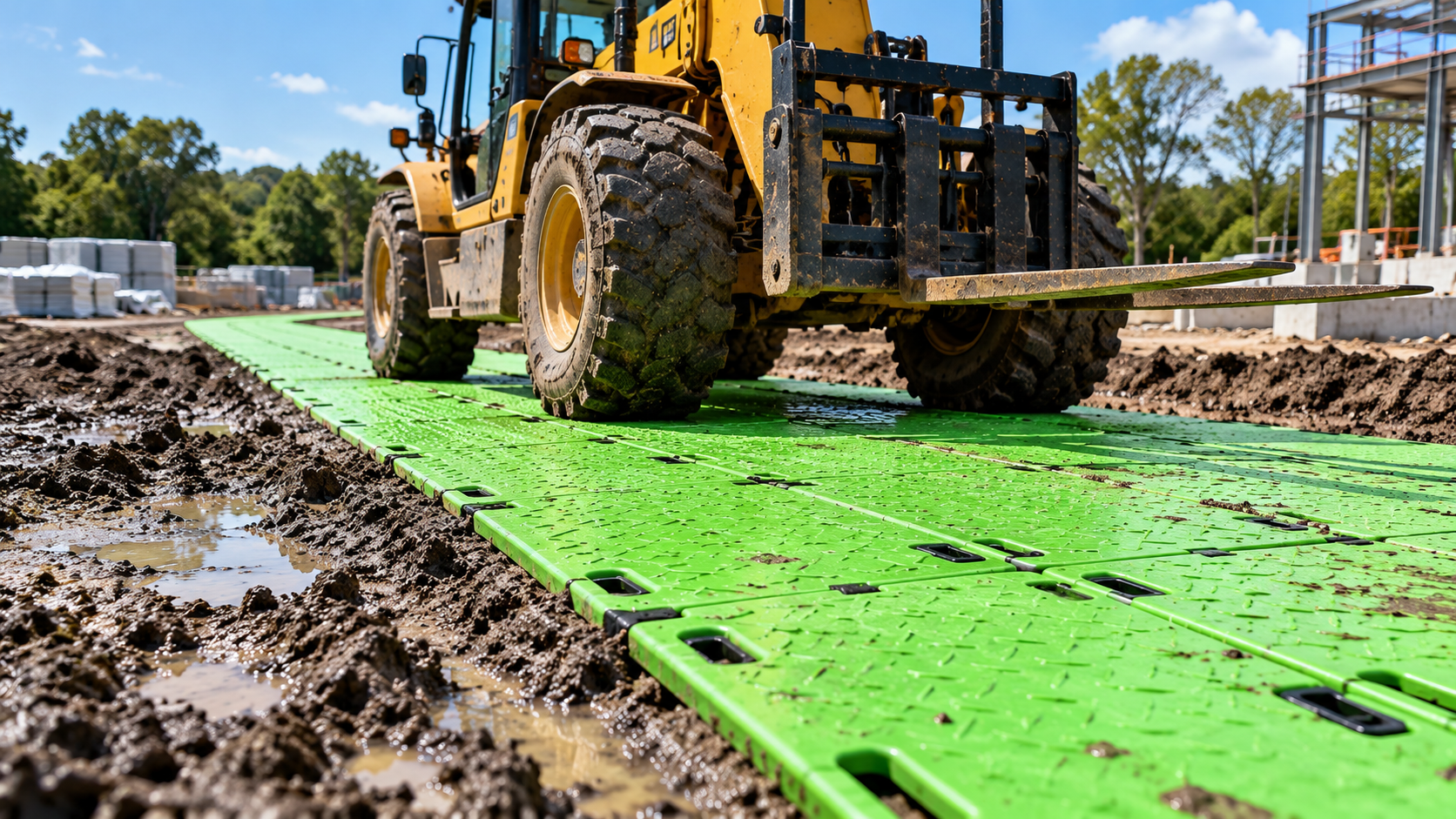
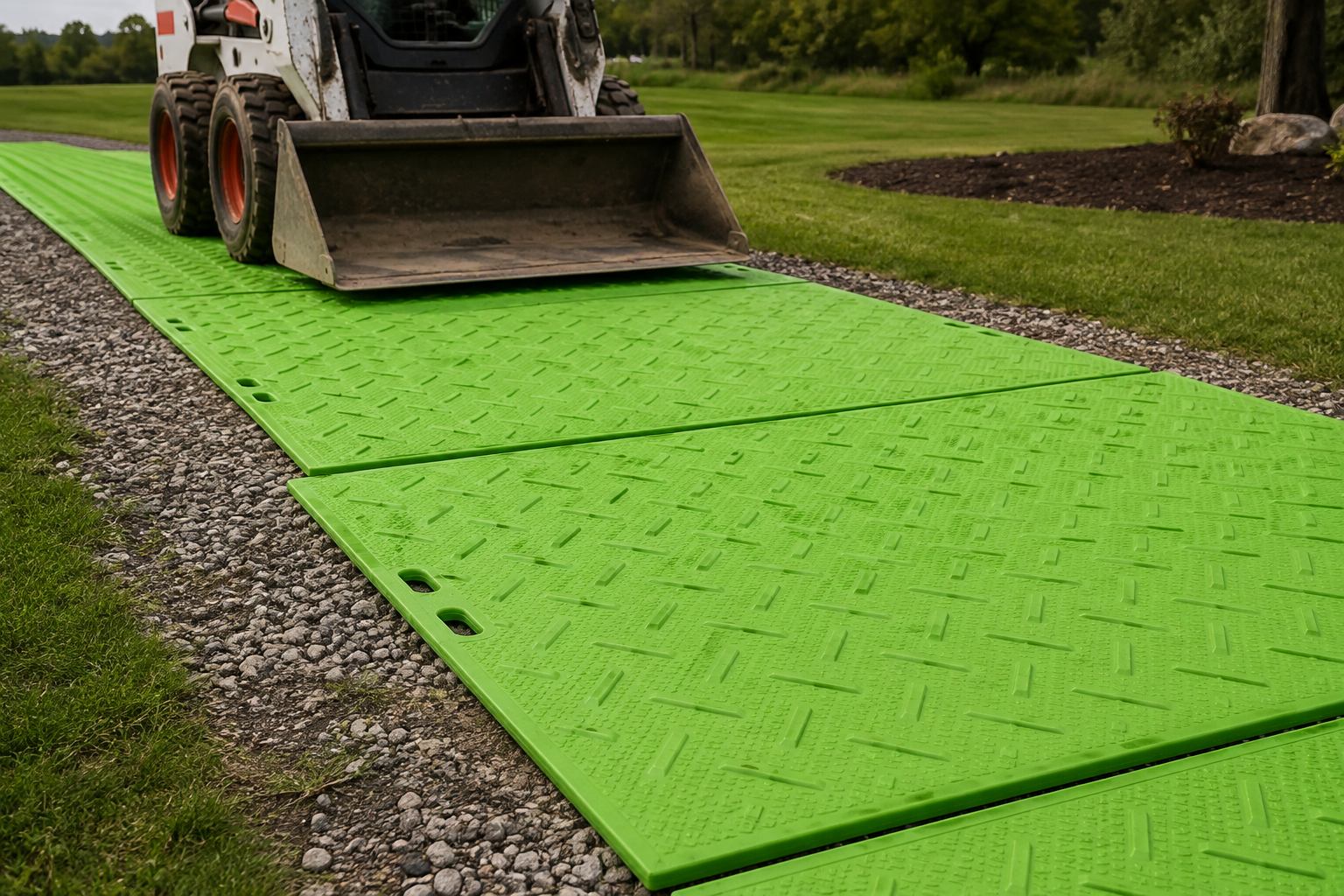
BAM! HDPE panels work the same way on a driveway as they do on a jobsite access road: they take a concentrated point load — a tire, an outrigger pad, a jack stand — and spread it across a much wider footprint before it ever reaches the surface underneath. That bridging effect is what keeps a crane outrigger from punching through decorative concrete or a loaded truck from leaving a rut in fresh asphalt.
The panels also protect against scuffing and staining from tires, oil drips, and equipment tracks — a smaller issue than cracking, but still something homeowners and property managers notice immediately.
Sizing a Driveway Protection Layout
Cover the full wheel path, not just the parking spot
Equipment doesn’t just sit still — it drives in, maneuvers, and drives back out. Cover the entire path a vehicle will travel across the driveway, not only the spot where it parks, since turning and backing up concentrate load differently than straight-line travel.
Double up under outriggers and jack stands
Stationary point loads from crane outriggers or jack stands need extra coverage directly underneath — a single panel thickness is rarely enough when the entire weight of the equipment rests on four small pads.
BAM! Features That Matter for Driveway Work
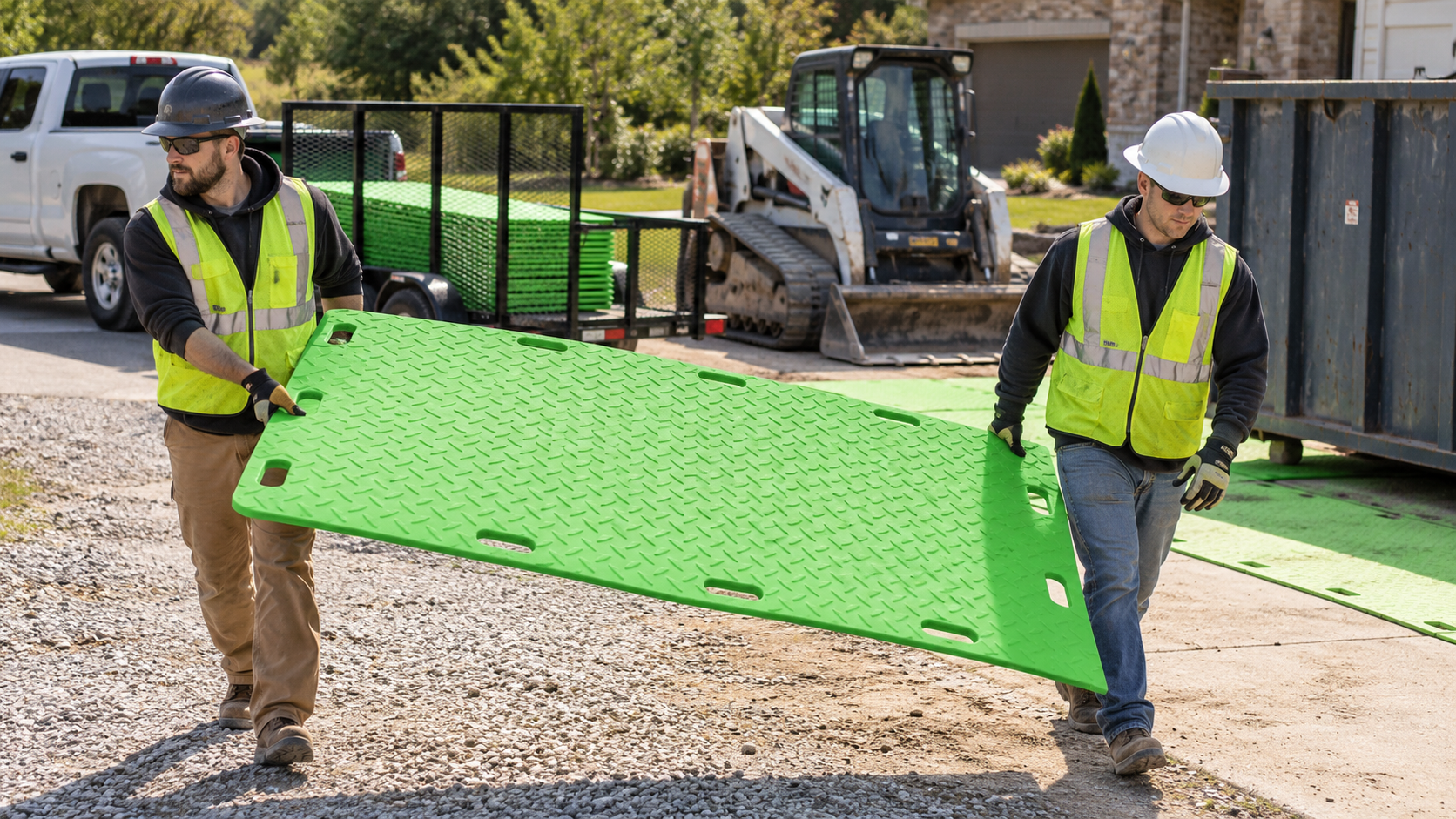
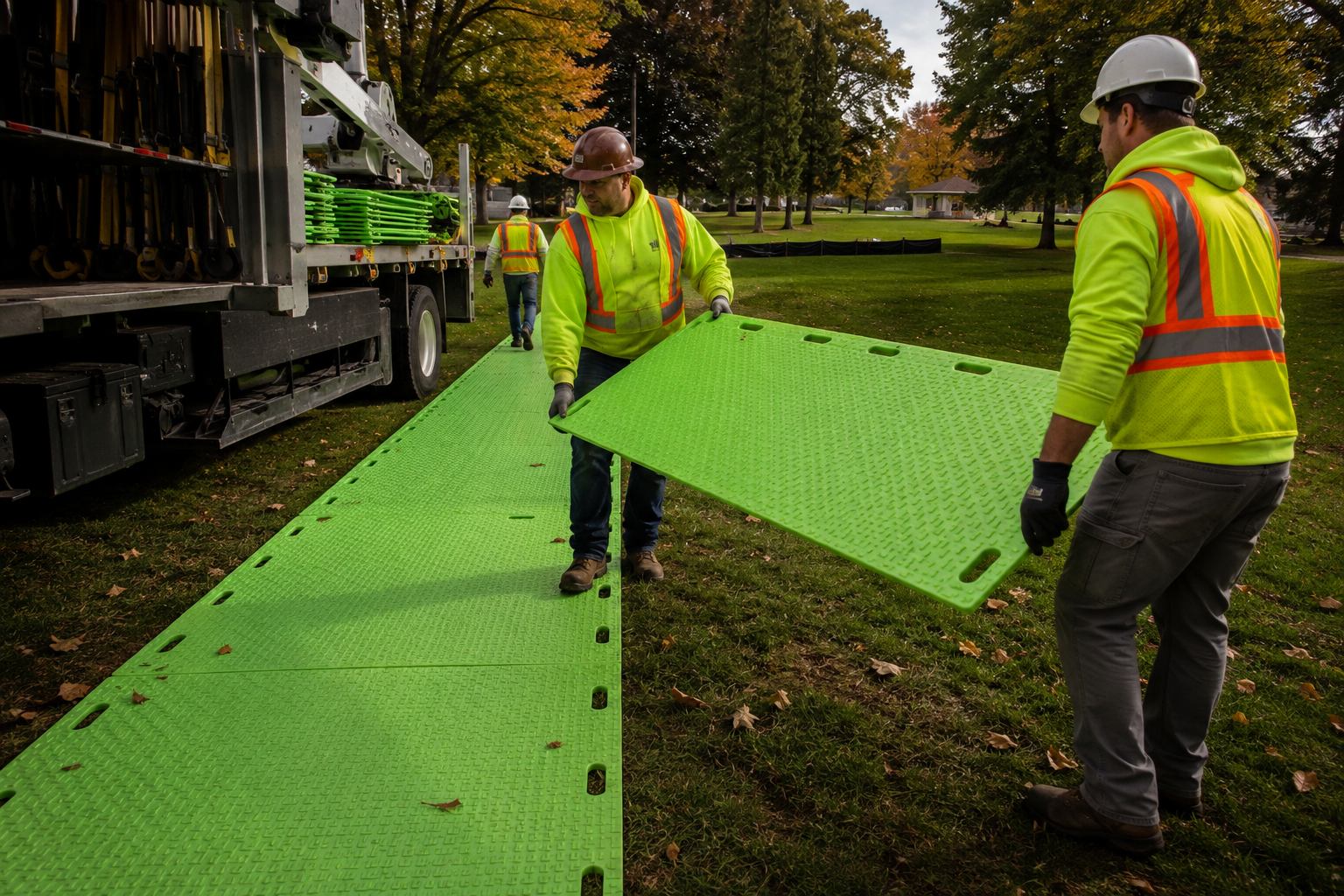
Lightweight 4×8 and 2×8 panels — easy for a two-person crew to carry and place without scratching the surface during handling.
Non-marking HDPE surface — no oil absorption or staining transfer onto concrete or pavers.
Reusable across jobs — the same panels protect this week’s driveway and next week’s.
Hi-vis safety green panels keep the protected zone visible to homeowners and foot traffic.
Protecting the Client Relationship, Not Just the Concrete
For contractors working on occupied residential or commercial property, a cracked driveway isn’t just a repair cost — it’s the detail a customer remembers about the whole job. Laying down visible, professional-grade protection before equipment ever touches the driveway signals that the crew is thinking ahead, and it heads off a dispute before it starts.
Frequently Asked Questions
Q: Will driveway protection mats prevent all cracking?
A: They significantly reduce the risk by spreading point loads, but they don’t change the condition of the driveway underneath. A slab that’s already cracked or has an unstable base can still fail under extreme weight. Treat mats as load management, not a guarantee.
Q: Can the panels be used on pavers without shifting them?
A: Yes, when the panels are placed flat and fully interlocked, they distribute weight evenly enough to avoid shifting individual pavers under normal equipment loads.
Q: Do the mats work for crane outrigger pads specifically?
A: Yes — doubling coverage directly under each outrigger pad is standard practice and handles the concentrated point loads cranes put on a driveway surface.
Q: How many panels does an average residential driveway need?
A: Most single driveways need 6–12 4×8 panels depending on length and width. Contact BAM! with your driveway dimensions for a specific recommendation.
Protect the Driveway Before the First Truck Pulls In
Driveway damage is one of the most avoidable callbacks in the business. A few panels placed before equipment arrives cost far less than a concrete repair or a dissatisfied customer.
Work cleaner. Work safer. Pro’s choose BAM!
See BAM! Ground Pro mat specs and pick the right panel size for your next job.
Find a distributor near your service area.
Call 888-870-8158 or email msheridan@alliedplastics.com with questions.