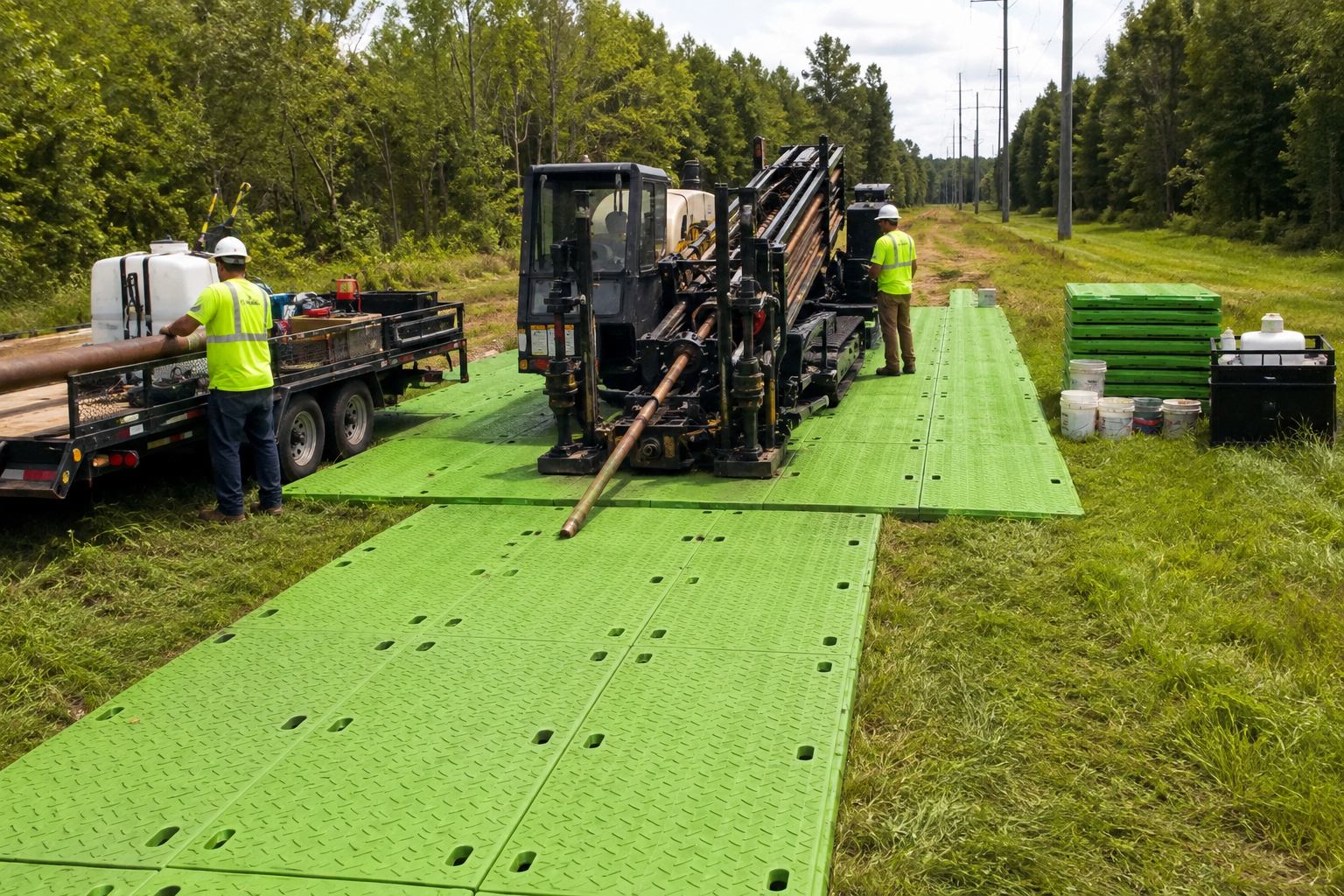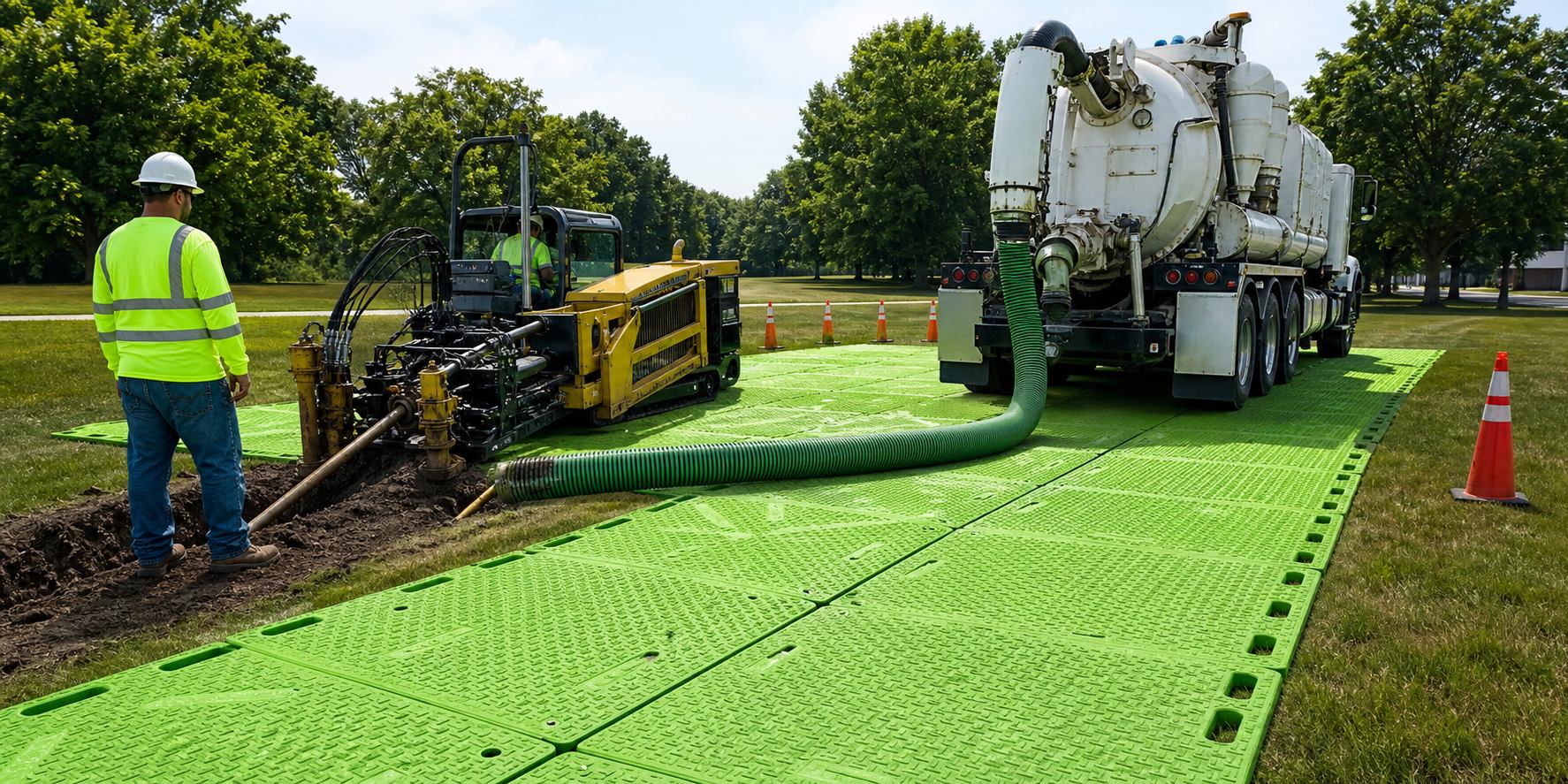
The yard is where the job lives or dies. Every piece of equipment that crosses a residential lawn on the way to the backyard — every skid steer, every mini excavator, every compact loader, every delivery truck across the grass verge — creates a damage event waiting to happen if the ground is not protected.
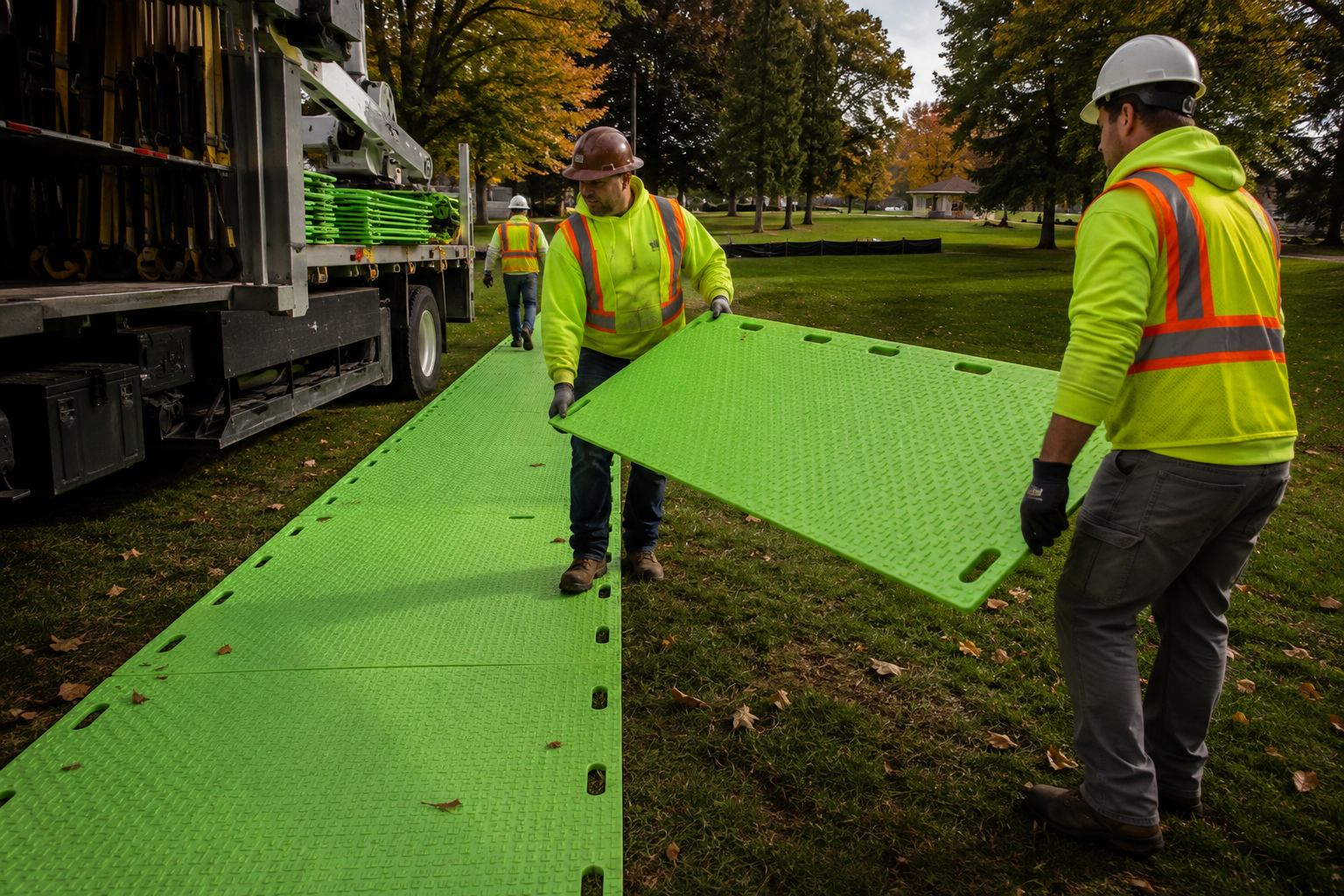
Yard mats and lawn mats for heavy equipment are the direct solution. They go down before equipment moves, create a stable access path across the grass, and come up at job end leaving the yard intact. This guide covers what contractors need to know to protect every yard they work on.
Why Yards Are the Hardest Surface to Protect
Concrete cracks. Asphalt deforms. Pavers shift. But yards are living systems — and living systems respond to damage in ways that are not always immediately visible.
Root compression happens on the first pass
When equipment tire pressure exceeds the turf’s load capacity, the soil compresses downward and sideways — and turf roots compress with it. Surface grass may look intact 24 hours after a machine passes. By day 3, yellowing begins. By day 10, the root system has failed and the turf is dead in the tire tracks. The equipment is long gone. The damage bill is just arriving.
Wet yards fail faster than anyone expects
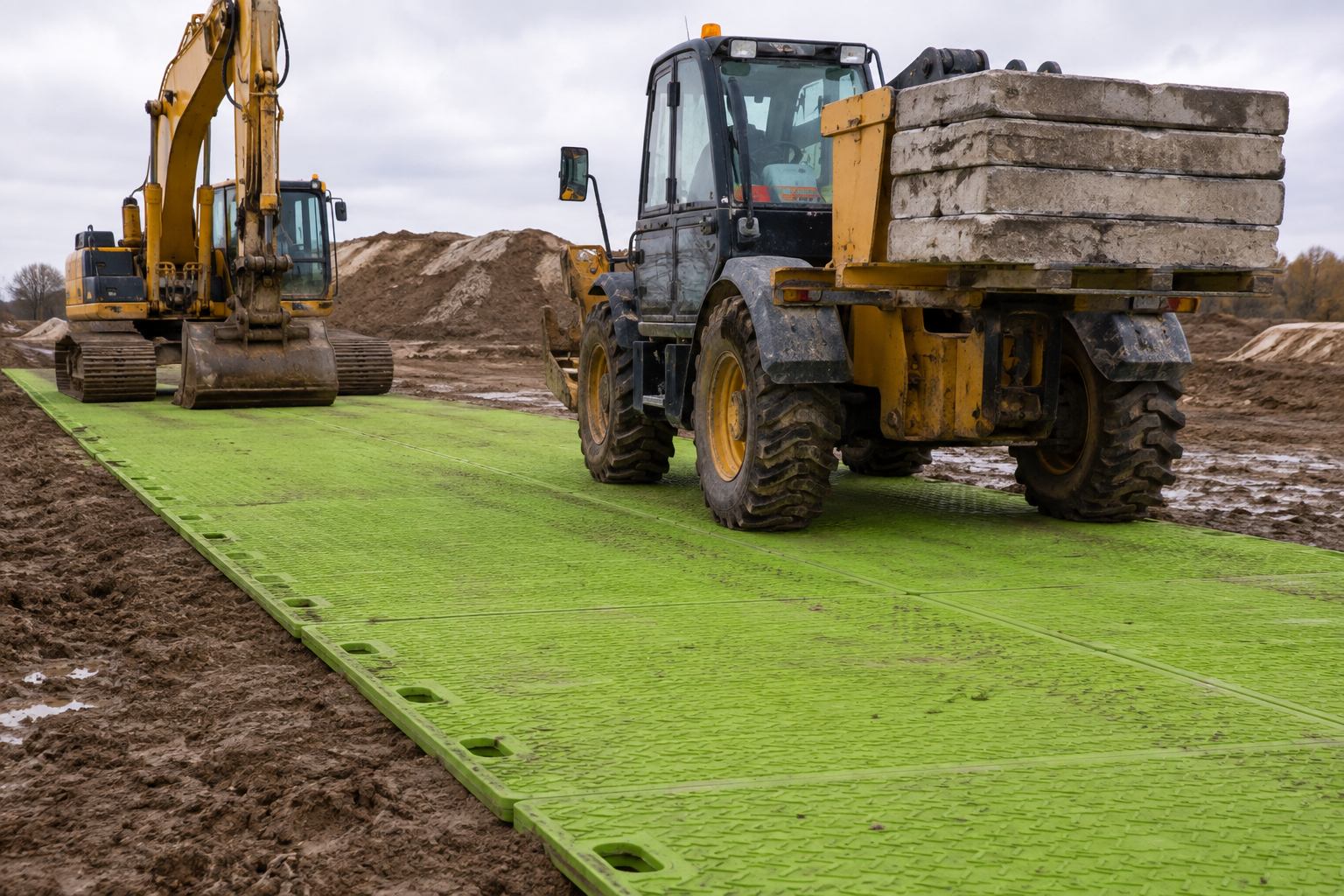
A yard that handled light foot traffic in dry weather can fail catastrophically under equipment in wet conditions. Saturated soil — common in spring, after rain, or in clay-heavy areas — has dramatically reduced bearing capacity. A skid steer that crossed the same yard fine in August can sink 6 inches into the same spot in April.
Turning equipment is its own category of damage
Skid steers and compact loaders pivot rather than turn. The lateral force from a pivot on unprotected turf tears grass at the root and creates the distinctive spiral scuff pattern that is one of the most common landscaping complaints contractors face. A single pivot on wet turf can require resodding to fix.
Yard Mats for Heavy Equipment: How They Work
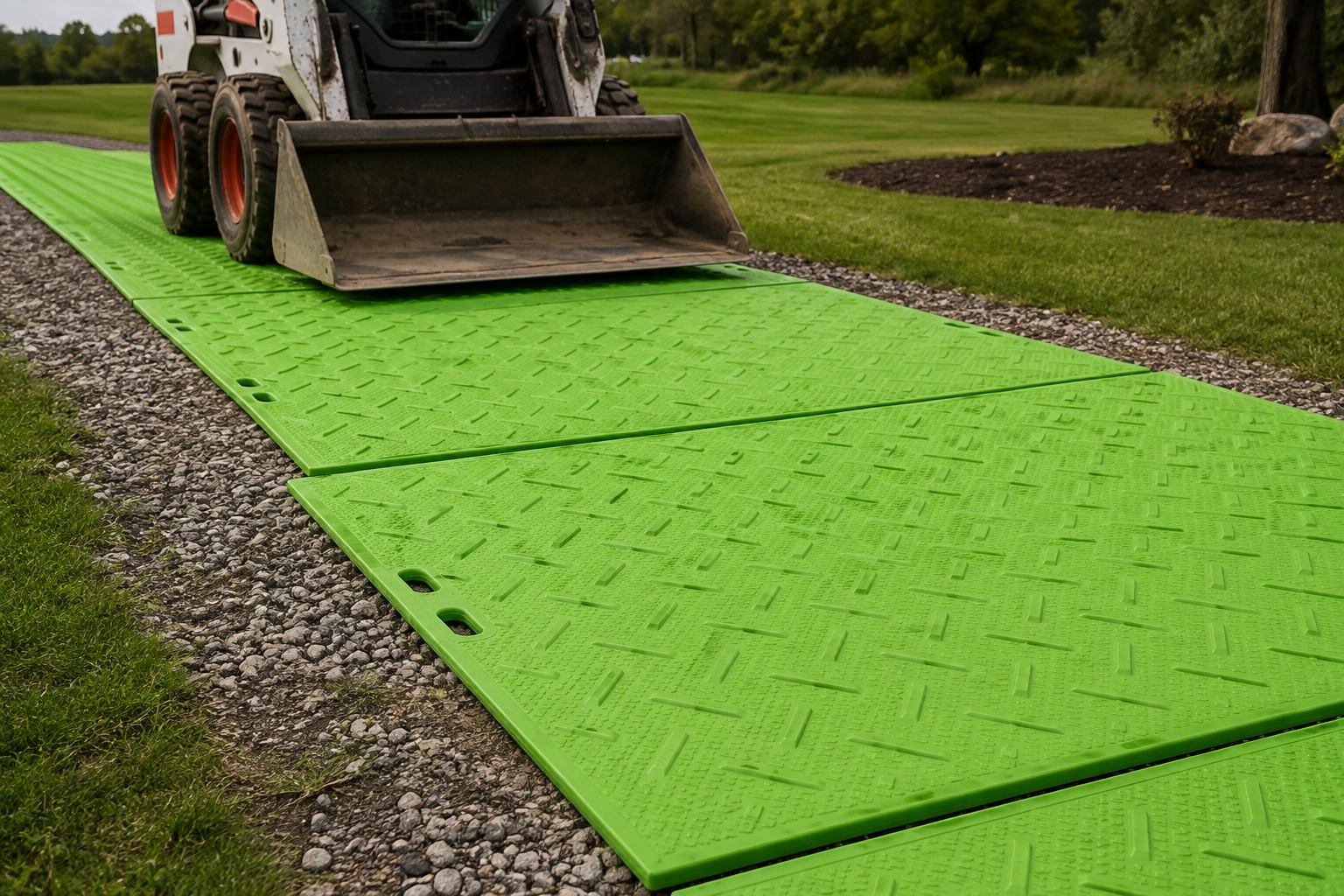
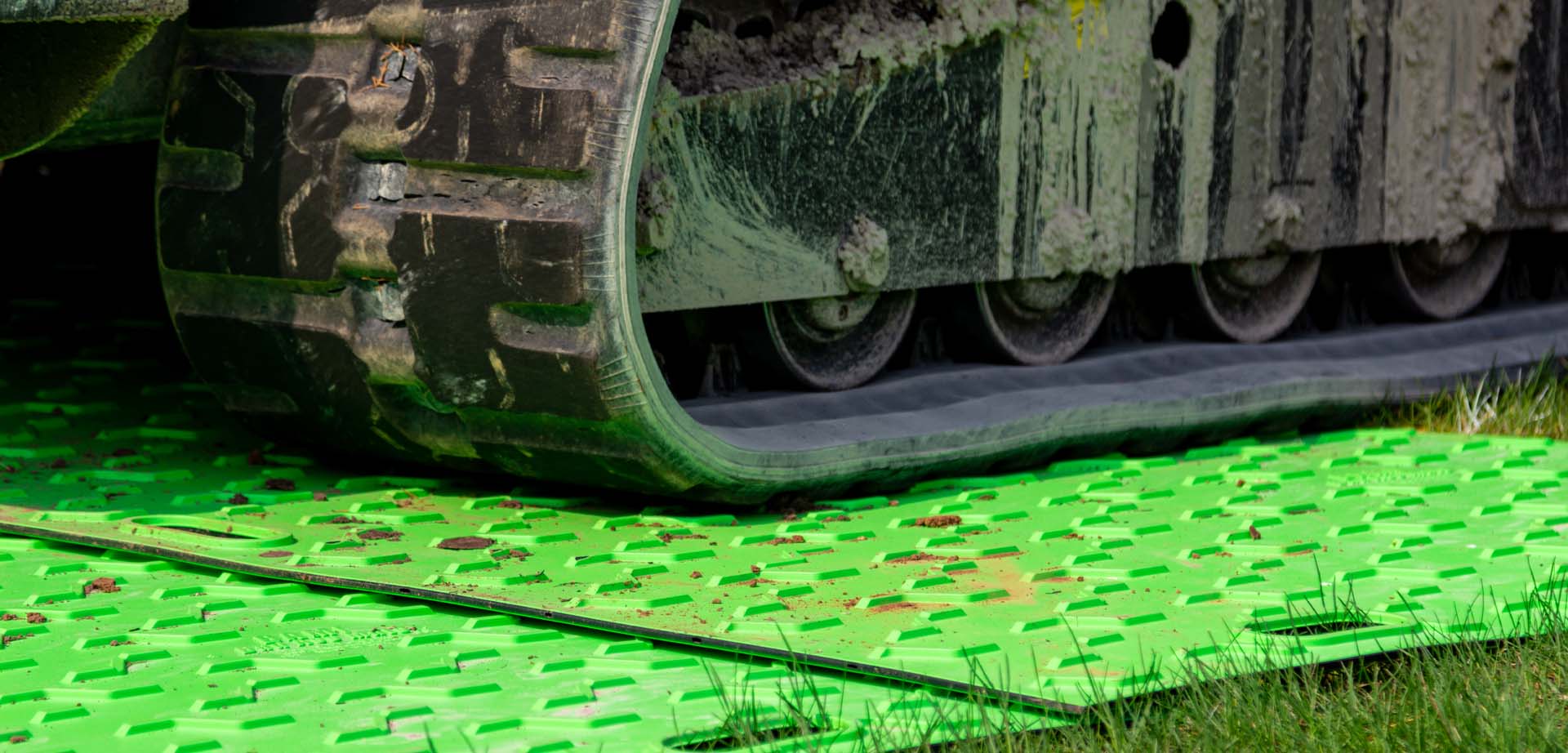
BAM! Bad Ass Mats placed on yard turf distribute equipment load across 32 square feet per 4×8 panel — dramatically reducing the pressure per square foot that the soil and root system experience. Equipment rides on the mat surface, not on the grass. The grass surface is compressed but not torn. The root system experiences distributed load rather than concentrated point load.
The result: mats come up at job end, the yard shows temporary mat impressions that disappear within 24 to 72 hours, and the client sees a professional crew that left the property in exactly the condition they found it.
Sizing Yard Mats for Common Equipment Types
Skid steer loaders (6,000 to 11,000 lbs)
Standard width: 5 to 6 feet. Required mat coverage: double-column 4×8 path (8 feet wide) from trailer to work zone. Extended turning zone coverage at both ends where the machine pivots. Typically 14 to 20 panels for a complete residential job including staging pad.
Compact track loaders (8,000 to 13,000 lbs)
Heavier than skid steers, tracks distribute load better — but on wet yard conditions, the weight still demands full mat coverage. Same double-column path setup as skid steers; wider staging pad recommended given the higher weight.
Mini excavators (4,000 to 14,000 lbs)
Mini excavators need coverage from the trailer position to the excavation zone, plus additional coverage around the active working area where the machine repositions frequently. A spoil pile staging area needs its own mat coverage — excavated soil is heavy and creates sustained point loads on whatever surface it sits on.
Delivery trucks crossing yard verges
Delivery trucks that cross a grass verge or side lawn to access the rear of a property are a frequent source of residential yard damage. Even a partial pass — rear wheels crossing a grass strip — can rut a lawn edge deeply in wet conditions. Two to four BAM! 4×8 panels across the verge crossing point prevent this damage entirely.
Yard Mat Setup: The Right Sequence
Step 1: Plan before the equipment comes off the trailer
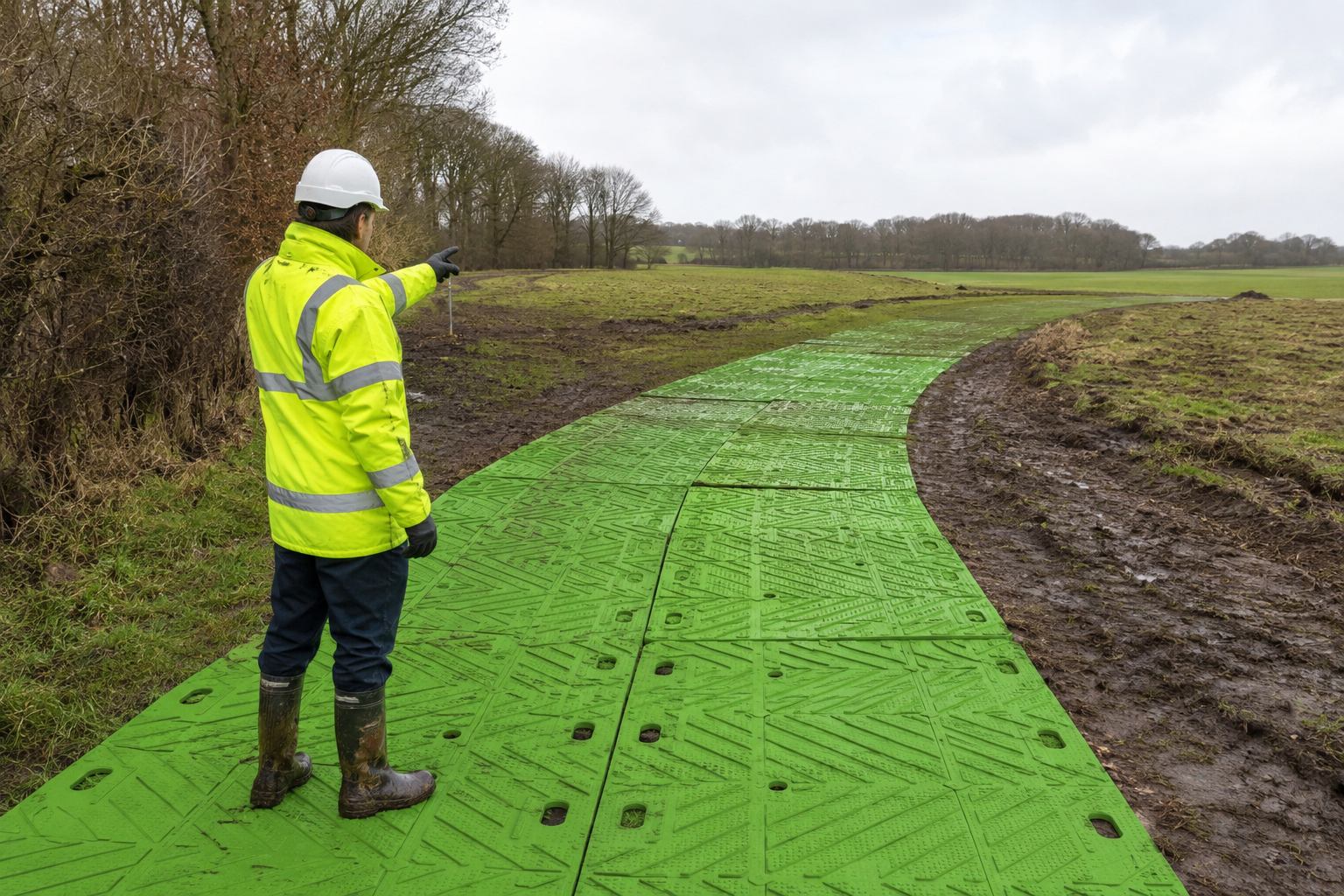
Walk the access route before any equipment moves. Identify soft spots, slopes, gate passages, and areas where the machine will turn. Plan mat placement based on the actual route — not the theoretically direct route.
Step 2: Lay mats from the firmest ground inward
Start at the street or driveway — the firmest available surface — and lay mats toward the yard. This gives the crew a stable starting point and allows ground conditions to be assessed as coverage advances into softer areas.
Step 3: Use 2×8 panels through gates
Residential side yard gates are typically 36 to 48 inches wide — narrower than a 4-foot BAM! panel deployed perpendicular to the path. Two BAM! 2×8 panels (24 inches each) laid side by side create a 48-inch protected path through a standard gate opening, then transition back to double-column 4×8 coverage in the yard.
Step 4: Add extra coverage at turning zones
The most critical coverage zone is the turning area — where the machine pivots, reverses, and repositions. Equipment in a turning movement applies lateral forces that dig into turf far more aggressively than straight-line travel. Add 4 to 6 extra panels beyond the standard path width at every turning point.
Step 5: Cover staging areas separately
The area where equipment stages between passes — where it idles, waits, and is repositioned — takes repeated concentrated loads. Cover the staging zone as thoroughly as the travel path; do not assume it is lower priority because the machine is stationary.
Lawn Mat Protection Across Job Types
Landscaping and grading: full path coverage from trailer to all work zones; material staging areas covered separately; protection updated as project phases shift equipment positions
Pool and excavation: heavy equipment on residential lawns for weeks; comprehensive coverage throughout all phases including concrete truck access during pour phase
Tree removal and clearing: bucket trucks, chippers, and stump grinders all require yard mat coverage; root zone protection is especially important for adjacent trees
HVAC and utility service: even service vehicles that park on yard verges for hours need 2 to 4 mat panels at their parking position on wet or soft grass
Remodeling and addition projects: long-duration projects with material deliveries across lawn sections; update mat coverage as delivery routes change across project phases
After the Job: What Good Yard Mat Protection Looks Like
When BAM! mats are used correctly on a residential yard job, this is what you see after removal: the tread pattern is temporarily visible as a light impression in the grass. The grass itself is compressed but structurally intact — not torn, not rutted, not dead.
Within 24 hours in growing season, the grass begins rebounding. Within 72 hours, the impression is typically gone. The client walks out, sees their yard, and cannot tell equipment was ever there. That is the professional standard.
Frequently Asked Questions
Q: Can yard mats for heavy equipment be used on slopes?
A: BAM! mats perform effectively on slopes up to approximately 15 degrees for most residential equipment. On steeper slopes or with very heavy machines, contact BAM! at 888-870-8158 to discuss anchoring options and slope-specific guidance.
Q: How long can yard mats stay in place without harming the grass?
A: On established turf in growing season, 3 to 7 days of mat placement results in full recovery after removal. Extended placement beyond 2 weeks begins to affect turf from light deprivation — shift mats periodically on long-duration projects and check grass condition weekly.
Q: Do yard mats work on newly seeded lawns?
A: Newly seeded areas are significantly more vulnerable than established turf. Avoid equipment access on newly seeded sections whenever possible. For recently sodded lawns, allow 3 to 4 weeks of root establishment before using yard mats with heavy equipment.
Q: How many yard mats do I need for a standard residential excavation job?
A: A typical residential pool or excavation job with one mini excavator requires 16 to 24 BAM! 4×8 panels: 10 to 14 for the access path, 4 to 6 for the working zone staging area, and 2 to 4 for the spoil staging area. Call 888-870-8158 for job-specific sizing.
The Yard Stays Intact. The Job Gets Done.
Yard mats for heavy equipment are not a specialty product for unusual situations. They are the standard tool for contractors who work on residential properties and take property protection seriously. Every job that sends equipment across a lawn is a job that needs yard mats — no exceptions.
Find BAM! yard and lawn mats for heavy equipment at bamgroundpro.com/products. Locate a distributor at bamgroundpro.com/where-to-purchase. Contact us at bamgroundpro.com/contact-us, call 888-870-8158, or email msheridan@alliedplastics.com. Protect your worksite. Protect your reputation. Pro’s choose BAM!