The cost case for HDPE ground protection mats depends on one thing: how long they last. A mat that survives 500 deployments costs almost nothing per use. A mat that survives 50 costs ten times as much per job.
BAM! Bad Ass Mats are rated for years of active contractor use and carry a 3-year manufacturer’s warranty. But the difference between getting 3 years out of a set of mats and getting 8 years comes down to how they are handled, cleaned, stored, and rotated.
This guide covers every practice that extends ground protection mat lifespan — so every panel in your fleet stays in service as long as possible.
What Actually Shortens Ground Protection Mat Lifespan
Before getting into what to do, it helps to understand what actually causes mats to fail early. Most premature mat failure is not from legitimate load events — it is from avoidable handling and storage issues.
Sharp object damage
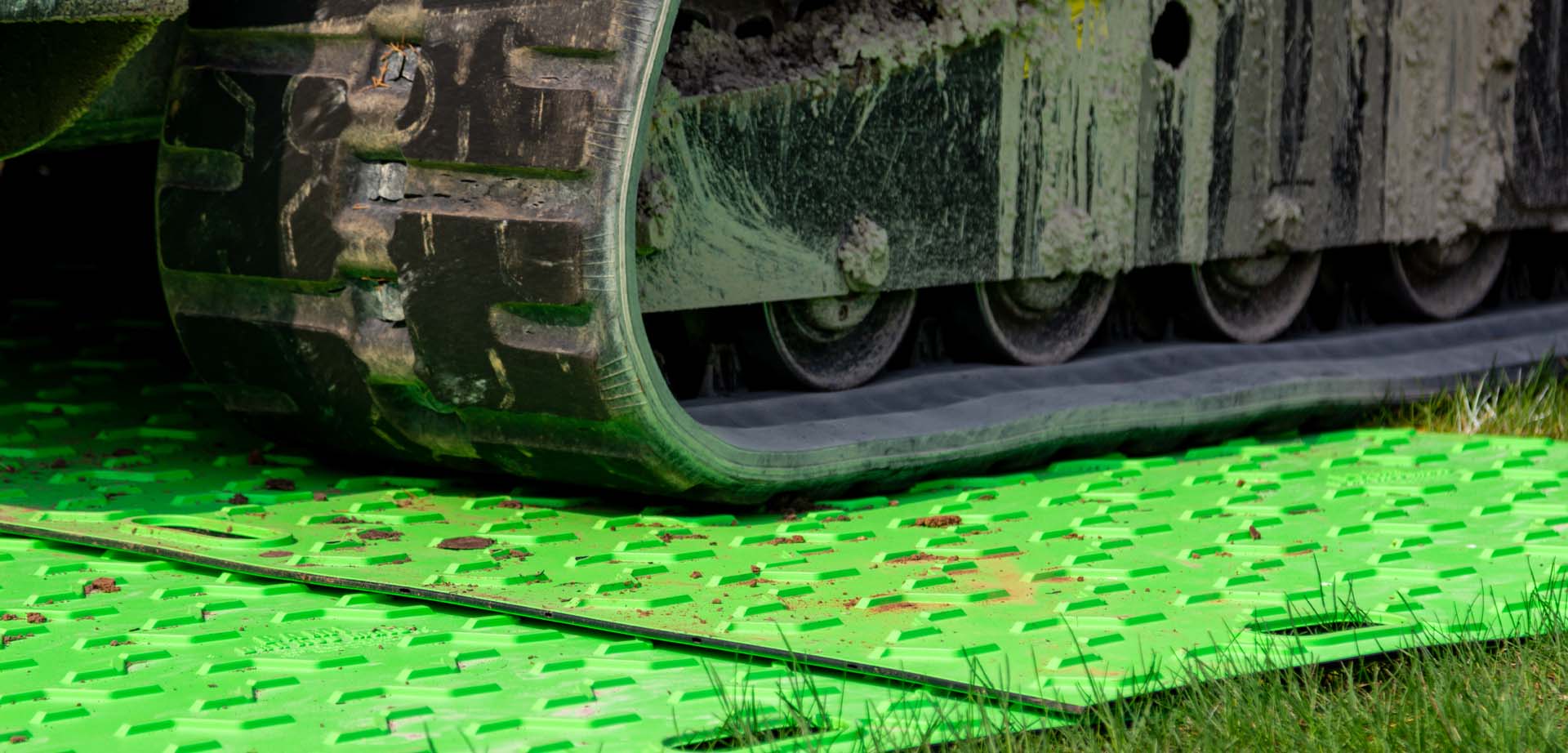
HDPE is tough under distributed load but vulnerable to concentrated point damage from sharp objects. Running equipment with metal attachments directly across mat surfaces, storing mats against sharp metal edges in the truck bed, and dragging mats over concrete curbs or rebar all cause cuts and gouges that reduce structural integrity over time.
Incorrect stacking
Mats stacked on their edges, leaned against walls for extended periods, or stacked unevenly under a heavy pallet load experience bending stress that gradually deforms the panels. HDPE has memory — sustained bending stress causes permanent deformation that prevents panels from lying flat in deployment.
UV accumulation without protection
HDPE is highly UV-resistant but not UV-proof. Extended outdoor storage over multiple seasons without cover gradually bleaches the surface and can begin to affect surface toughness after several years. This is a slow process — but it is avoidable entirely with basic storage cover.
Mud and debris left on panels during storage
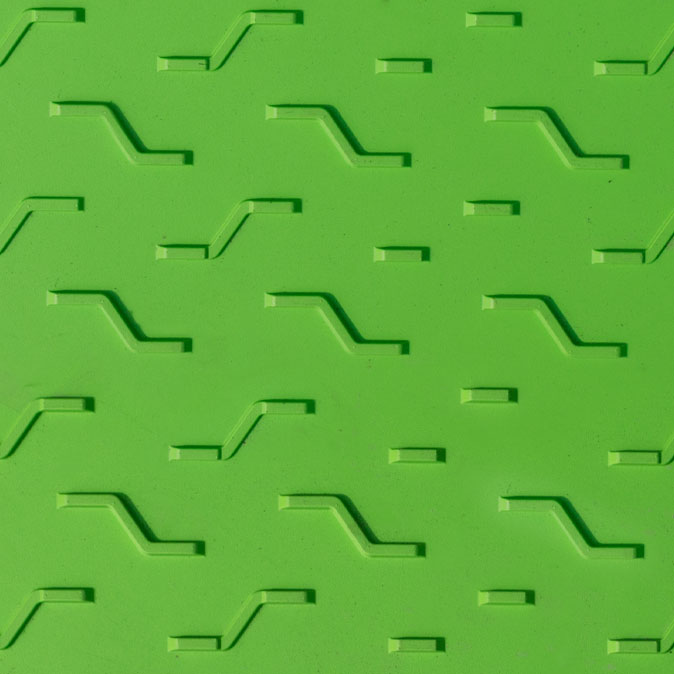
Mud left to dry on mat surfaces bonds to the HDPE tread pattern during storage. When the mat is next deployed and equipment crosses it, dried mud breaks into abrasive particles under load — abrading both the mat surface and the surface below it. This also makes traction evaluation inaccurate, since dried mud masks the actual tread condition.
Uneven wear from always using the same panels
Many contractors have a stack of mats and consistently pull from the same side of the stack. The top panels get 80% of the deployments. The bottom panels barely get used. Concentrated use on a subset of the fleet creates uneven wear — some panels near end of service while others are almost new.
7 Practices That Extend Ground Protection Mat Lifespan
1. Clean after every deployment
HDPE’s biggest advantage is that it does not absorb mud, concrete, or debris. That advantage is only realized if the surface is actually cleaned. After each job, remove large debris by hand or with a brush, then pressure wash the panels before stacking.
Pressure washing HDPE mats takes 2 to 3 minutes per panel — fast enough to do at the end of every job day before loading the truck. Clean panels stack tighter, store cleaner, and deploy faster on the next job.
2. Stack flat on a solid, level surface
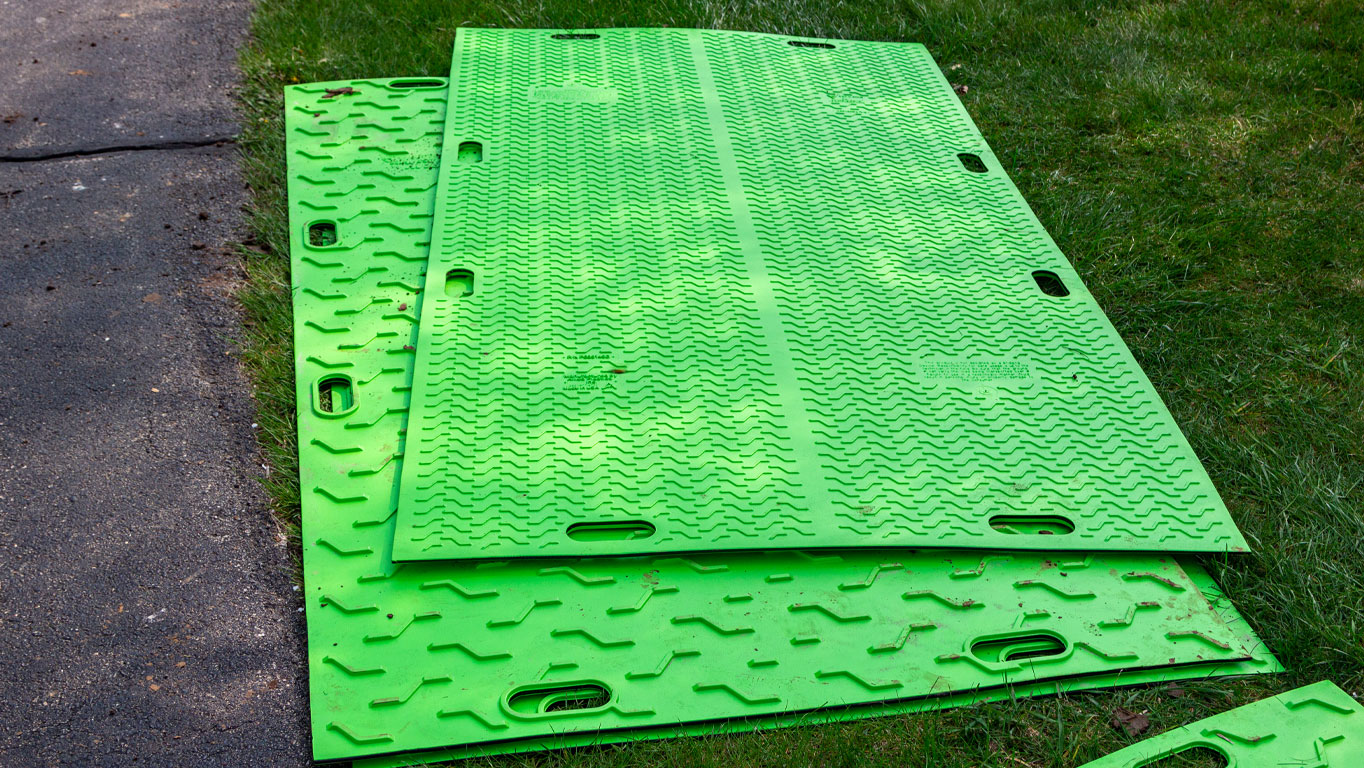
Store panels stacked flat — not on edge, not leaning against a wall, not across uneven ground. Flat stacking distributes the stack weight evenly across all panels and prevents the bending stress that causes permanent warping.
Use the interlocking tread design to keep stacks aligned. BAM!’s tread pattern meshes when panels are stacked face-to-face — keeping the stack from shifting during storage and transport.
3. Cover stored panels between seasons
For panels stored outdoors through multiple seasons, a tarp cover significantly reduces UV accumulation and keeps debris from settling into the tread pattern during storage. A few dollars of cover material extends HDPE lifespan measurably over a 5 to 10-year service life.
4. Rotate your panel fleet
Keep a simple rotation system: when panels come off a job, they go to the bottom of the stack. New deployments pull from the top. This ensures every panel in the fleet gets approximately equal use over time — preventing the concentrated wear pattern that degrades a subset of panels prematurely.
For larger fleets with multiple sets, number panels with paint or marker on the edge and track which panels were deployed on which jobs. It takes 30 seconds per panel and extends fleet life significantly.
5. Protect panels from sharp object contact
Keep mats away from metal edges, rebar, and sharp debris in storage areas and truck beds. When transporting panels in a truck bed that also carries tools and equipment, stack panels on the bottom and pad the edges where they contact metal surfaces.
During deployment, keep equipment attachments — buckets, blades, forks — raised above mat surfaces when possible. Contact from metal bucket edges and blade corners is the most common cause of cuts in deployed panels.
6. Inspect panels after each job
After cleaning and before stacking, briefly inspect each panel for surface cuts, edge damage, or hand hold deformation. Catch damage early — a surface cut that is not addressed may propagate under repeated load into a structural crack.
Mark damaged panels with tape or marker so they are flagged for closer inspection on the next deployment. Track which panels show accumulating damage and retire them before they become a field problem.
7. Deploy within rated capacity — always
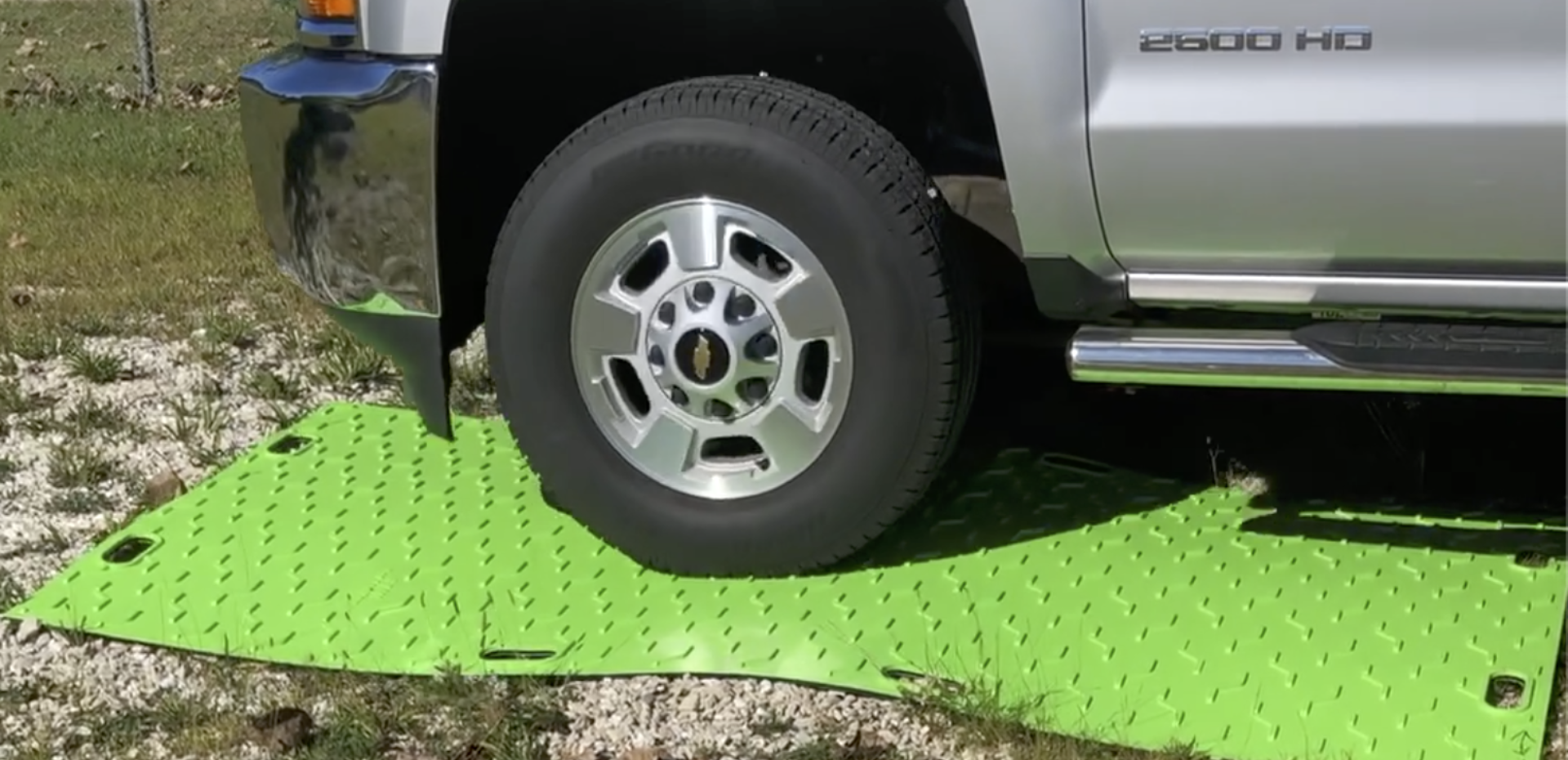
BAM! mats are rated to 80 tons. Using mats within their rated capacity — which all residential and light commercial equipment falls within comfortably — ensures that load events do not stress panels beyond their design parameters. Mats that are consistently loaded within their rated capacity last far longer than mats pushed to or beyond their limits.
Ground Protection Mat Lifespan: What to Expect
Year 1-2: Full performance across all metrics. No maintenance beyond standard cleaning and storage. Panels look and perform like new.
Year 3-5: Surface tread may show minor wear in highest-use areas. Load rating unaffected. BAM!’s 3-year warranty covers manufacturing defects through this period. Rotation and cleaning keep the fleet performing consistently.
Year 5-10: With proper maintenance, HDPE mats continue performing at rated capacity. Surface color may fade. Hand holds may show wear at the edges. Inspect periodically for structural cracks — retire panels that show penetrating cracks.
End of service: When structural cracking, significant deformation, or hand hold failure makes a panel unsafe, retire it. HDPE is highly recyclable — check local HDPE recycling resources rather than landfilling retired panels.
The Cost Case for Mat Maintenance
A BAM! mat that lasts 8 years across 400 deployments costs a fraction of a cent per use. The same mat replaced after 3 years because of inadequate maintenance — at 150 deployments — costs several times as much per use, and you are buying again in year 4.
The maintenance practices in this guide take less than 10 minutes per deployment when they become standard routine. That 10 minutes extends panel life by years. The math is not close.
Frequently Asked Questions
Q: How do I know when a ground protection mat has reached end of service?
A: Structural cracking that penetrates fully through the panel thickness is the primary end-of-service indicator. Surface scratches, color fading, and minor tread wear do not affect load performance. Hand hold damage that makes a panel unsafe to carry also indicates retirement. If in doubt, contact BAM! at 888-870-8158 for assessment guidance.
Q: Can HDPE mats be repaired if they develop cracks?
A: Surface-only cracks that do not penetrate through the panel can often remain in service with close monitoring. Full-penetrating structural cracks mean the panel should be retired. HDPE welding repair is technically possible but not generally cost-effective for field panels.
Q: Does the BAM! warranty cover wear from regular use?
A: The 3-year BAM! warranty covers manufacturing defects, not normal wear from deployment. Proper maintenance — cleaning, flat stacking, avoiding sharp object contact, rotating the fleet — is what protects against wear over time. Contact BAM! at 888-870-8158 or msheridan@alliedplastics.com for specific warranty questions.
Q: Is there a way to restore faded HDPE mats to their original color?
A: Color fading is cosmetic and does not affect load performance. HDPE-compatible plastic restorer products can improve the appearance of faded panels. Performance-critical specs — load rating, dimensional stability, tread geometry — are unaffected by surface fading.
Q: How should I store BAM! mats between seasonal use?
A: Clean panels thoroughly, stack flat on a solid level surface, cover with a tarp to block UV and debris accumulation. HDPE does not require heated storage and performs normally through freeze-thaw cycles. Panels stored correctly between seasons should be in full working condition when the next season starts.
Get More Jobs From Every Panel
The contractors getting the best value from their ground protection mat investment are not the ones who bought cheapest — they are the ones who maintain consistently. Every panel that stays in service another season instead of being replaced is pure savings on the equipment budget.
Explore the full BAM! ground protection mat lineup at bamgroundpro.com/products. Find a distributor at bamgroundpro.com/where-to-purchase. Contact us at bamgroundpro.com/contact-us, call 888-870-8158, or email msheridan@alliedplastics.com. Work cleaner. Work smarter. Pro’s choose BAM!