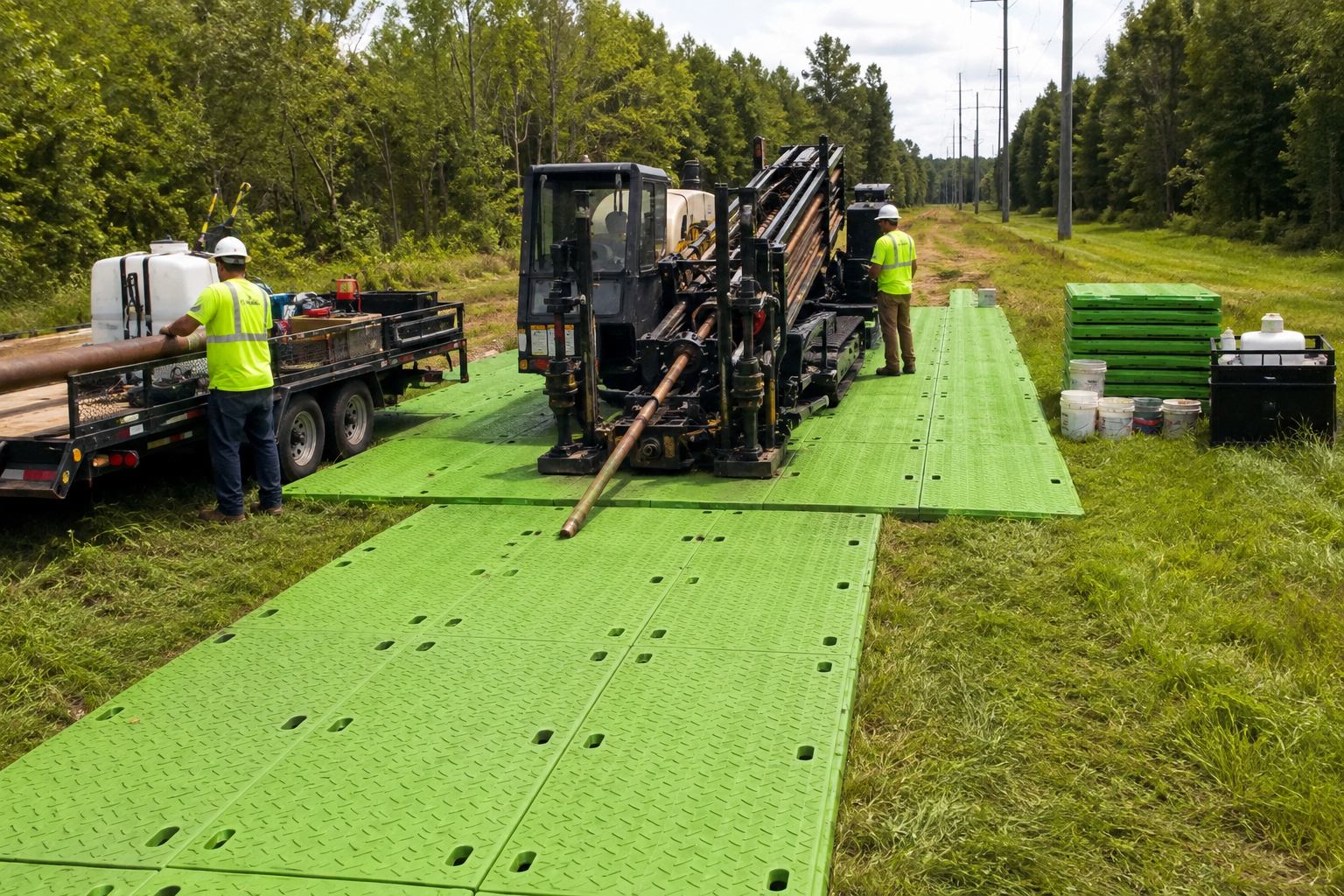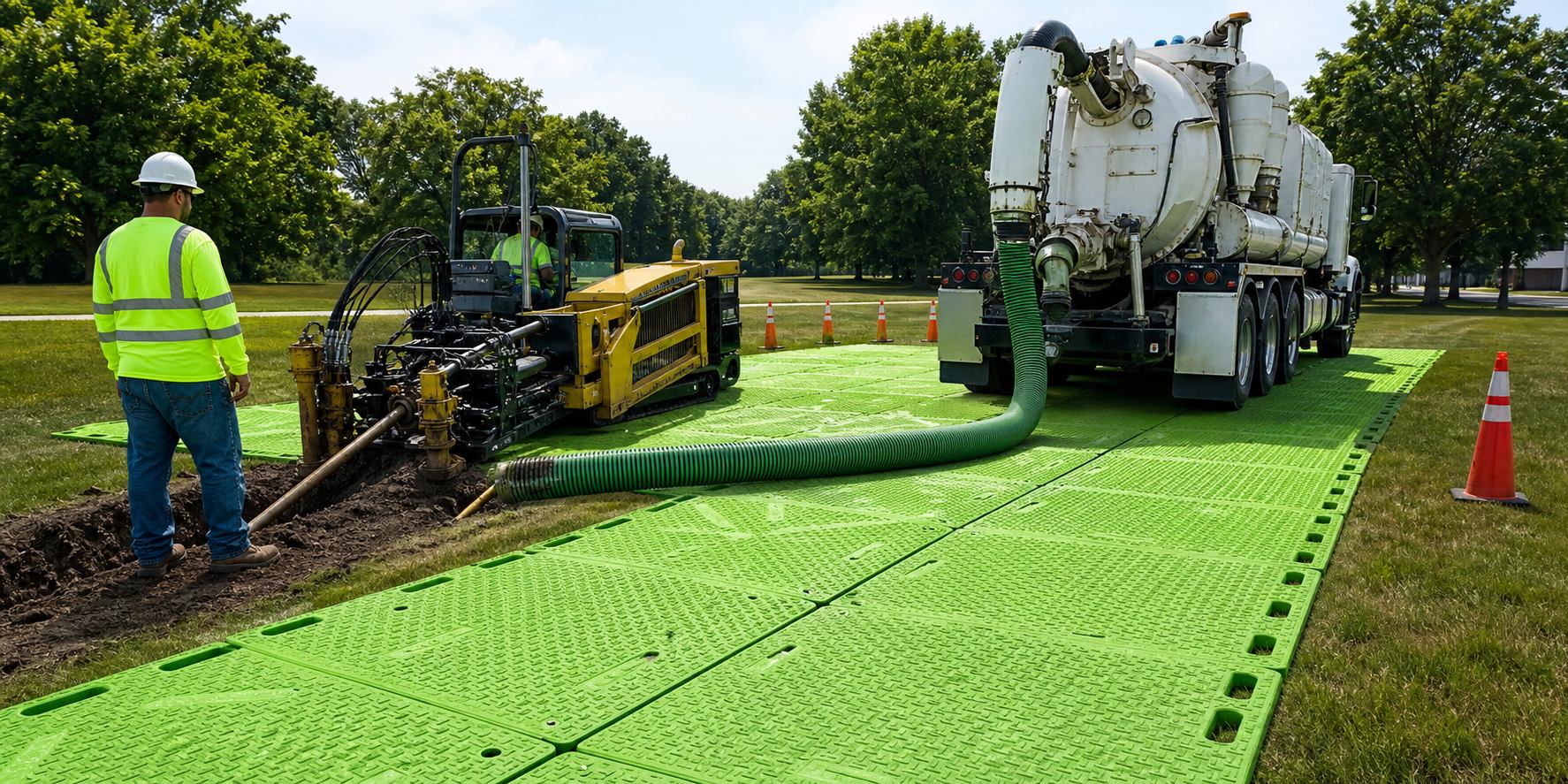

A temporary road mat for driveway use is a specific product for a specific problem: creating a load-rated, protective surface over a residential or commercial driveway so equipment, delivery trucks, and dumpsters can cross without cracking, scuffing, or deforming the pavement underneath.
The distinction from other ground protection applications matters. Driveways are not soft turf or soft soil—they are rigid surfaces with their own structural characteristics and their own failure modes. A mat system that works on grass must work differently on concrete to be effective.
Why Driveways Need Temporary Road Mats—Not Just Any Mat
Driveways crack differently than soft surfaces fail
Soft turf fails by compression and rutting—the surface deforms under load. Driveways fail by cracking from point loads concentrated at joints, edges, and existing hairline cracks. The mat’s job on a driveway is not to prevent sinking—it is to prevent load concentration at vulnerable points.
This means driveway mat coverage needs to extend beyond the equipment footprint to cover the vulnerable edge and joint sections that see the highest stress concentration under load.
Asphalt deforms; concrete cracks
Concrete and asphalt fail differently, and temporary road mat selection and placement strategy should account for both:
Concrete: high compressive strength but low tensile strength. Cracking occurs at tension zones—joints, edges, and areas below existing hairlines. Point loads from equipment legs, dumpster corners, or loaded truck tires at these zones reliably cause cracking.
Asphalt: lower strength than concrete and temperature-sensitive. In summer heat, asphalt softens and is permanently deformed by sustained loads. In cold weather, it becomes brittle and more susceptible to impact cracking.
Pavers: the weakest of the common driveway surfaces under point loads. Individual pavers crack from concentrated force, and the sand or aggregate base shifts under lateral load, disrupting the entire paver pattern.
What Makes a Good Temporary Road Mat for Driveway Use
Rigid construction that bridges, not conforms
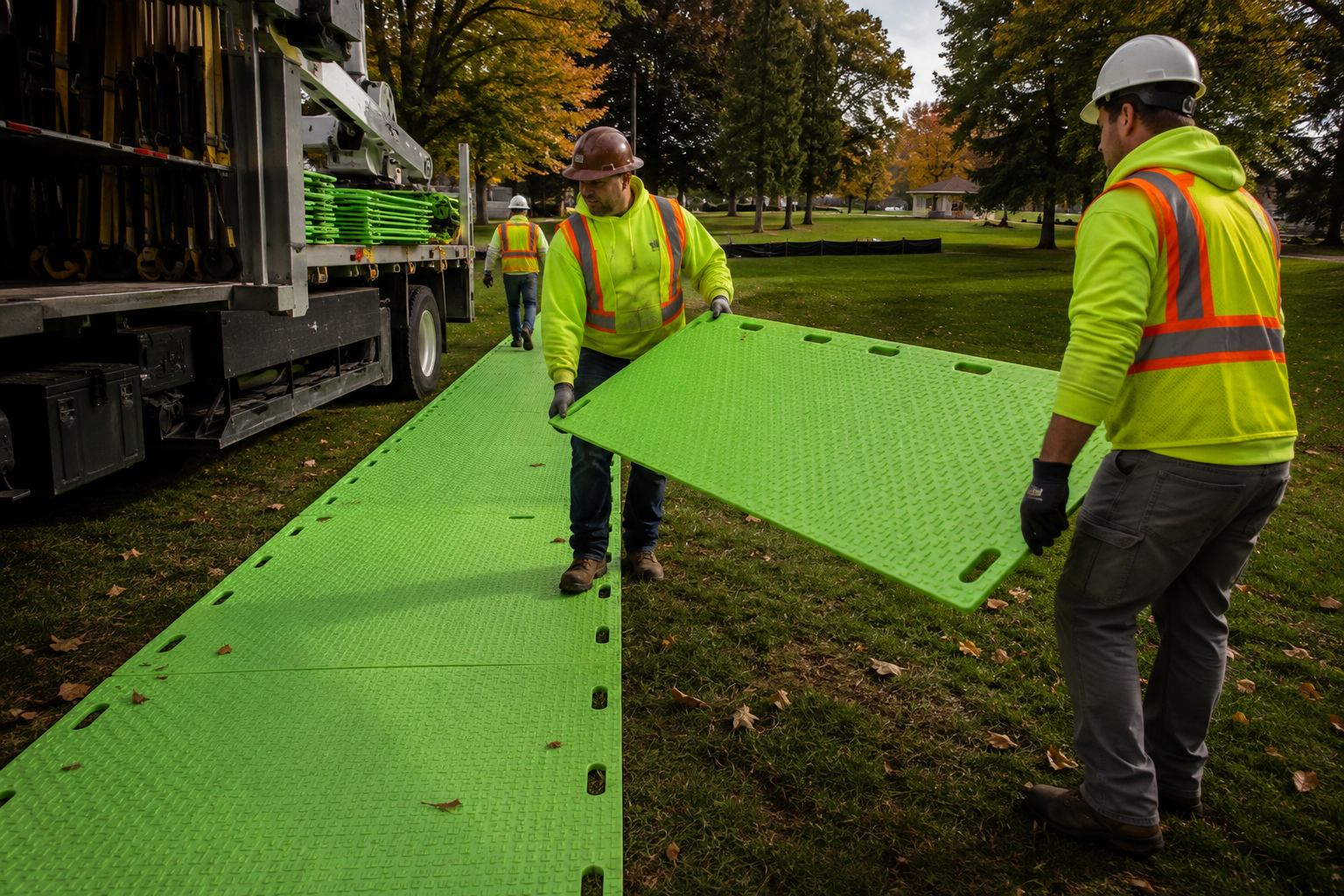
The best temporary road mats for driveways are rigid panels, not flexible mats. Rigid panels bridge across the driveway surface and distribute load through the panel structure rather than conforming to the surface profile and concentrating load at existing vulnerabilities.
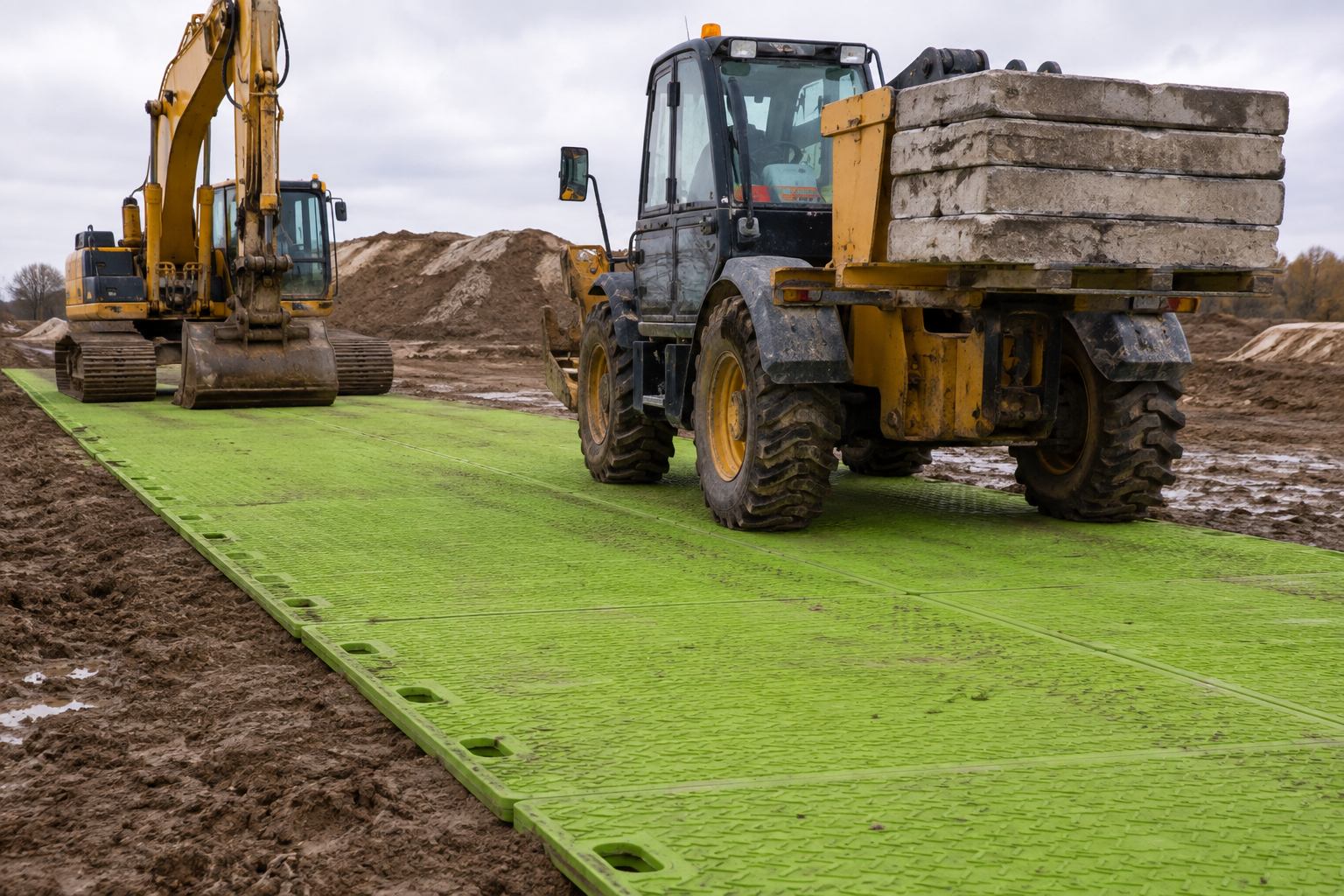
BAM! HDPE panels are 3/8-inch thermoformed HDPE—rigid enough to maintain their flat profile under 80-ton loads. The panel does the structural work of load distribution, not the driveway.
Coverage area matched to the load footprint
A mat that is too small for the equipment it is protecting against does not provide real protection—it just moves the point load from under the machine directly to under the mat’s edge. The mat needs to extend beyond the load source footprint on all sides.
Non-damaging surface contact
The mat itself must not damage the driveway it is protecting. BAM! HDPE mats have no sharp edges, do not leave stains or chemical residue, and do not abrade concrete, asphalt, or paver surfaces. Clean mats leave no trace on the driveway surface.
Temporary Road Matting Setup for Specific Driveway Scenarios
Roofing job with dumpster and delivery truck
Standard setup: 6 to 8 BAM! 4×8 panels under the dumpster footprint plus 12 inches of overhang. 4 to 6 panels from the street apron to the dumpster position, covering the delivery truck’s approach and the truck’s frame contact points during container deployment.
Deploy all panels before the delivery truck arrives. The heaviest load event is container placement—not pickup. Protection must be in place before that event.
Landscaping with skid steer crossing the driveway
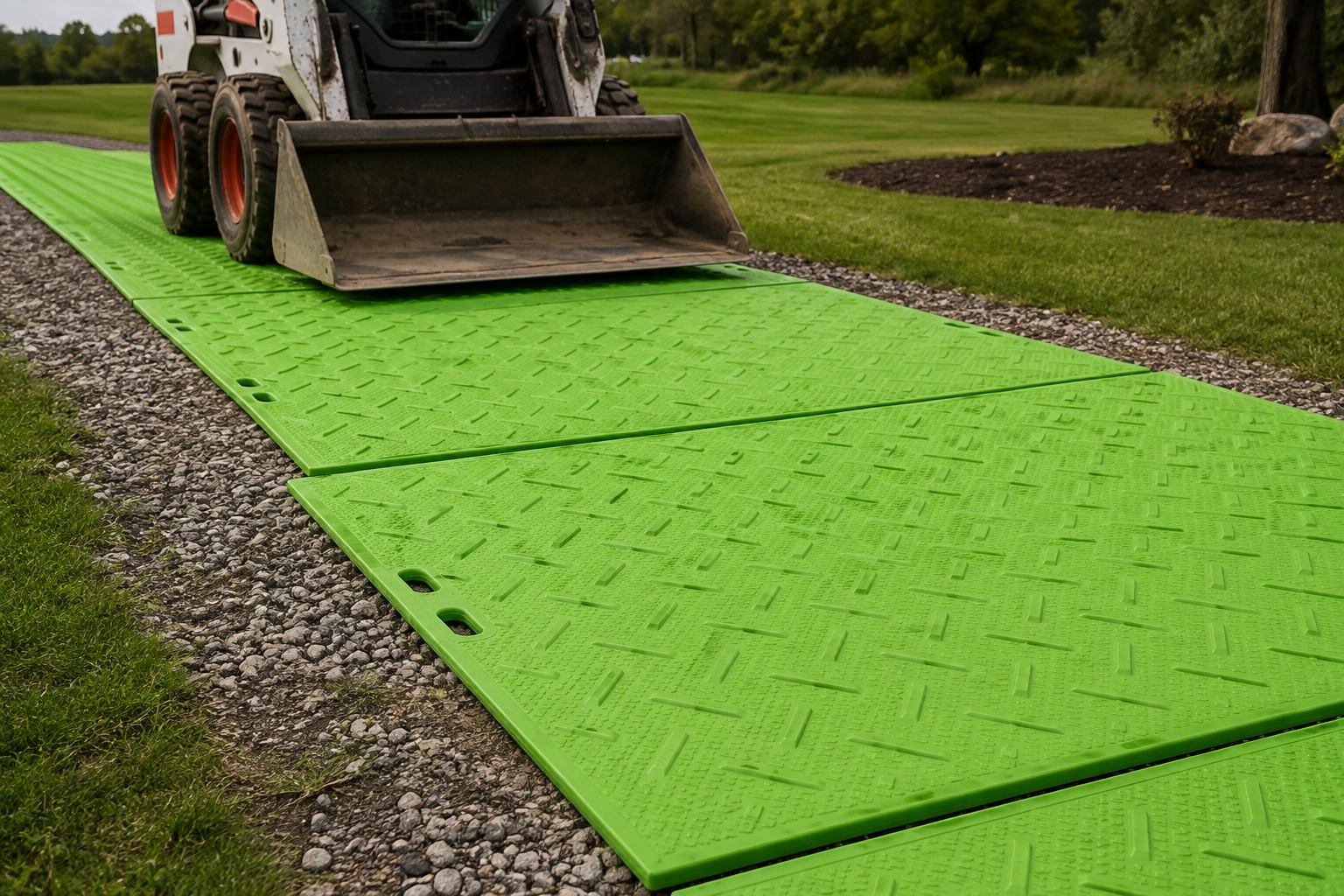
A skid steer crossing a residential driveway to access the backyard creates a specific damage pattern: pivot scuffs at the edge of the driveway where the machine turns from the street to the driveway approach, and again at the rear of the driveway where it transitions to the lawn.
Standard setup: double-column BAM! 4×8 mat path across the full driveway width, with extended turning zone coverage at both ends. Two 2×8 panels through the side yard gate where the path narrows.
Long remodeling project with repeated truck traffic
Multi-week remodeling projects with consistent delivery traffic need permanent-for-project coverage. Lay the full approach route coverage on project day one and maintain it throughout. Check panels after significant rain events or heavy use days and replace any shifted panels.
HVAC, plumbing, or service vehicle staging
Service vehicles that back onto driveways and work from the truck bed for hours apply sustained loads to the driveway apron. Two to four BAM! 4×8 panels under the vehicle’s staging position—focused on the rear axle position—protects the apron from deformation and the concrete from edge cracking.
Road Matting Across the Full Driveway Length
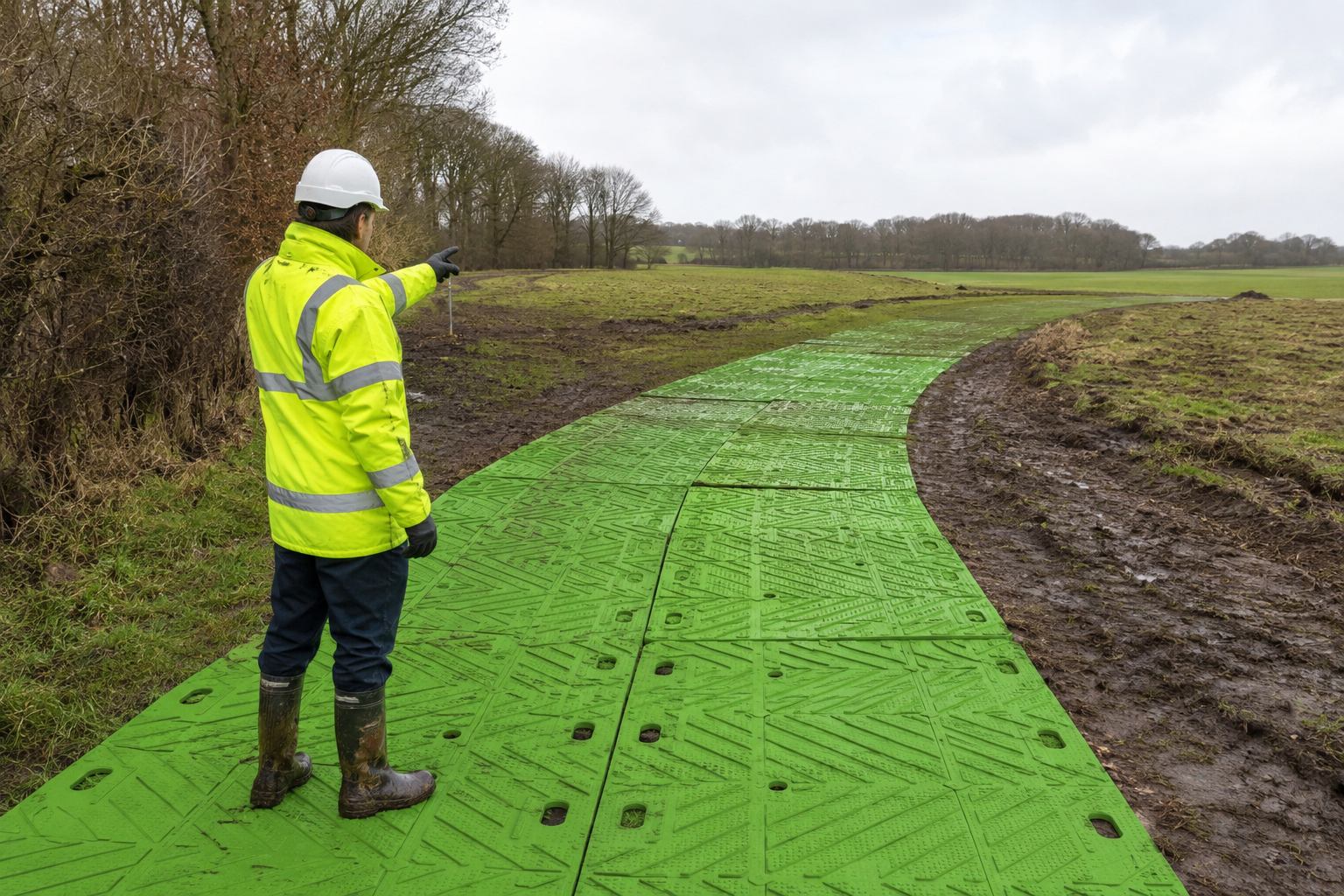
Some projects require temporary road matting across the full driveway length—from the street to the structure. This is common for:
- Foundation and excavation projects where concrete trucks must reach close to the structure
- Large landscaping projects where equipment makes multiple daily trips across the driveway
- Commercial properties where service vehicle traffic across a paved approach is regular throughout the project
For full-length driveway coverage, calculate the route length in 8-foot increments (panel length) and the route width required (4 feet per column). A 60-foot double-column route requires approximately 16 panels, plus additional panels for any turning or staging zones.
The Temporary Driveway Mat Standard: What Professional Contractors Do
Professional contractors who work on high-value residential and commercial properties deploy temporary road mats on driveways as a standard part of project setup—not as a response to a client request or a previous damage incident. The mat goes down on day one, before the first truck backs in.
This standard approach eliminates a specific category of client complaint—driveway damage—that is disproportionately impactful to contractor reputation. Homeowners who hire roofing, landscaping, or remodeling contractors are invested in their property’s appearance. Driveway damage is not a small inconvenience—it is a violation of the implicit promise that the contractor will respect the property throughout the work.
A temporary road mat system visible on the driveway before the job begins communicates professionalism and property respect before a single shingle goes up or a single shovelful of soil moves.
Frequently Asked Questions
Q: How is a temporary road mat for driveway use different from a standard ground protection mat?
A: The product is the same—BAM! HDPE panels work on driveways and on any other surface. The deployment strategy differs. Driveway-specific deployment focuses on coverage of joints, edges, and load concentration points, and extends coverage to the delivery truck approach zone that other applications may not require.
Q: Will temporary road mats damage my client’s decorative concrete driveway?
A: No. Clean BAM! HDPE mats leave no stain, mark, or abrasion on decorative concrete surfaces. The HDPE material is non-reactive and non-abrasive. Ensure mats are clean before deployment on stamped or decorative surfaces—any embedded rocks or debris in the mat surface could transfer to the driveway.
Q: How do I handle an irregular driveway with slopes or drainage features?
A: BAM! panels remain functional on driveway slopes up to approximately 15 degrees. For driveways with drainage channels, trench drains, or significant grade changes, contact BAM! at 888-870-8158 to discuss the specific driveway configuration and appropriate mat placement strategy.
Q: Can the same mats be used on the driveway and on the lawn in the same job?
A: Yes. BAM! panels are the same product for both surfaces. After the driveway protection phases are complete, retrieve the panels and redeploy them on the lawn access route or staging area. The same 20 panels that protected the driveway protect the lawn.
One System. Every Driveway. Every Job.
Temporary road matting for driveways is not a specialty application requiring specialized products. It is a standard application of the same BAM! HDPE panels that protect turf, build access roads, and stage dumpsters. The deployment strategy is specific to the driveway surface—the product is the same across every job.
Explore BAM! temporary driveway road mats at bamgroundpro.com/products. Find a distributor at bamgroundpro.com/where-to-purchase. Contact us at bamgroundpro.com/contact-us, call 888-870-8158, or email msheridan@alliedplastics.com. Protect every surface. Pro’s choose BAM!