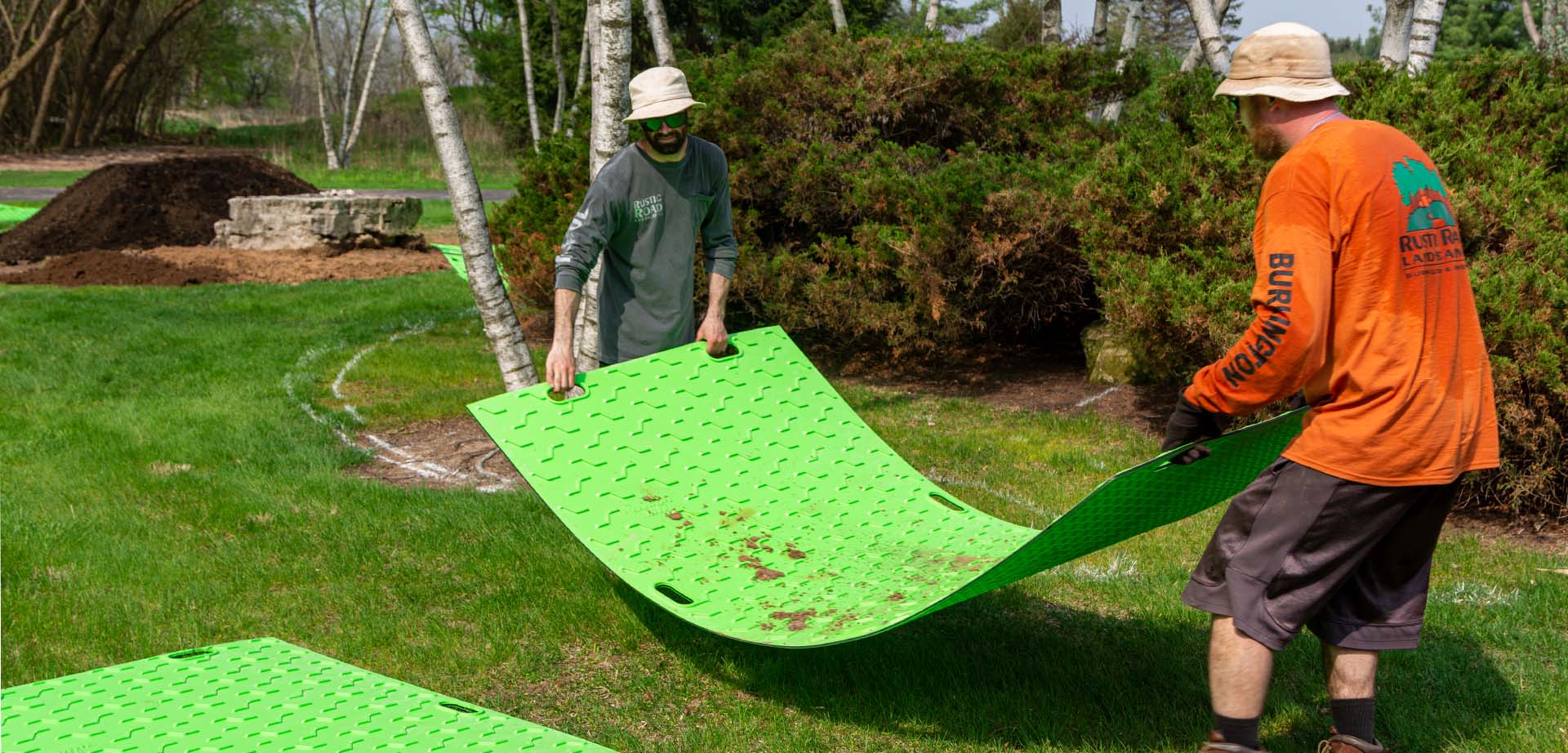

When contractors and homeowners search for ‘drive on mats for grass,’ they know exactly what they need: something they can lay on a lawn so equipment or vehicles can drive across it without turning the yard into a rutted mess.
The need is simple. The solution needs to be simpler. This post explains what drive on mats for grass are, what separates effective options from ineffective ones, and how to set up a proper system for every situation where equipment needs to drive across a lawn or soft surface.
What Makes a Mat Safe to Drive Equipment On
Load rating that matches the machine
The single most important specification for any drive on mat is its load rating. A mat that looks solid but has no verified load rating—or a rating below the weight of the equipment crossing it—is not a drive on mat. It is a slip hazard and a liability.
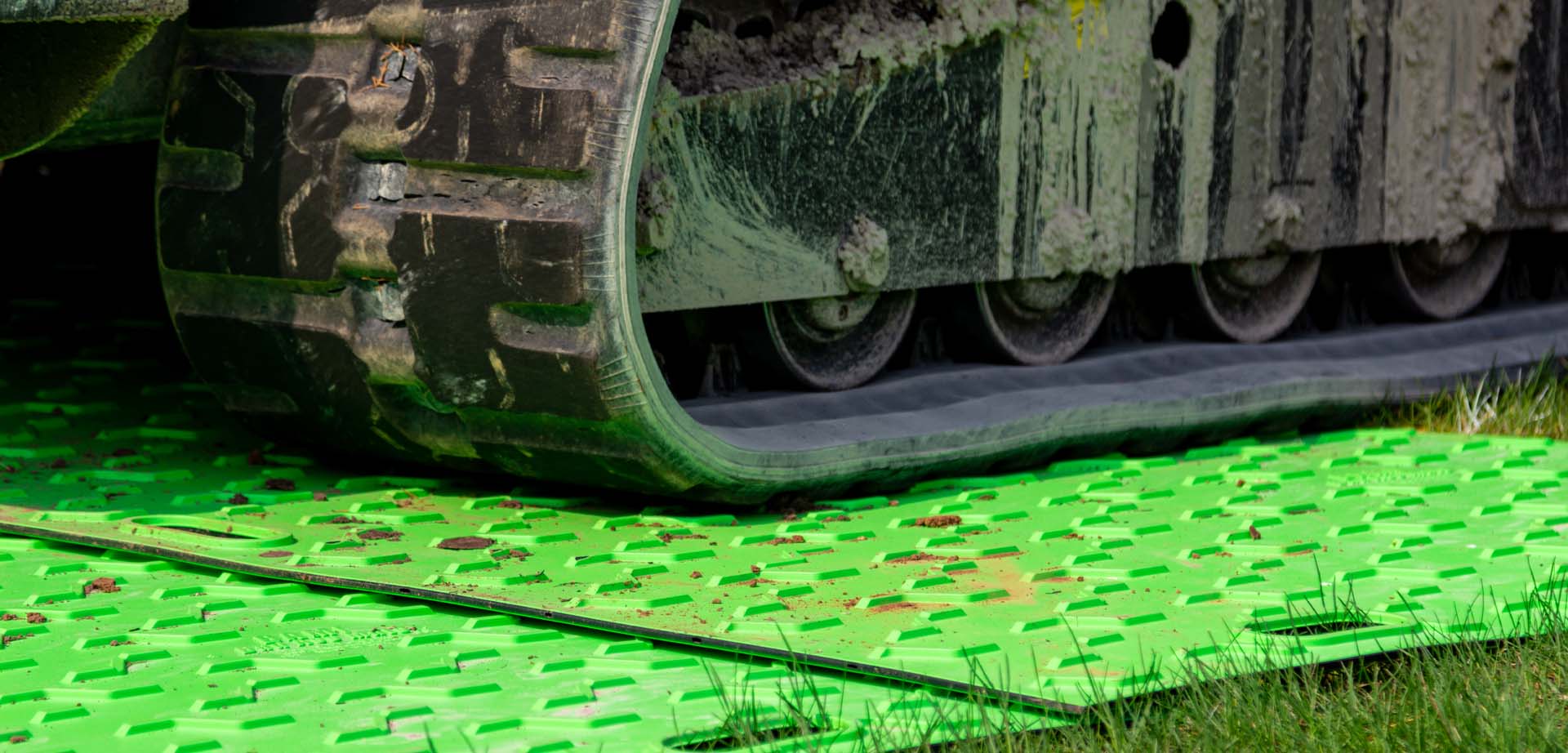
BAM! Bad Ass Mats carry an 80-ton (160,000-pound) rating established at an ISO 9001:2015 certified manufacturing facility. No residential equipment—skid steers, loaders, mini excavators, dump trucks—comes close to that limit. Contractors drive equipment across BAM! mats with real safety margin, not hopeful estimation.
Rigidity that prevents mat rollover
Flexible mats—rubber rolls, thin plastic sheets—can fold at the edges under equipment weight, creating a rollover hazard where the mat itself becomes an obstacle. Rigid HDPE panels stay flat under load, maintaining a consistent, predictable surface for equipment operators.
Traction on both faces
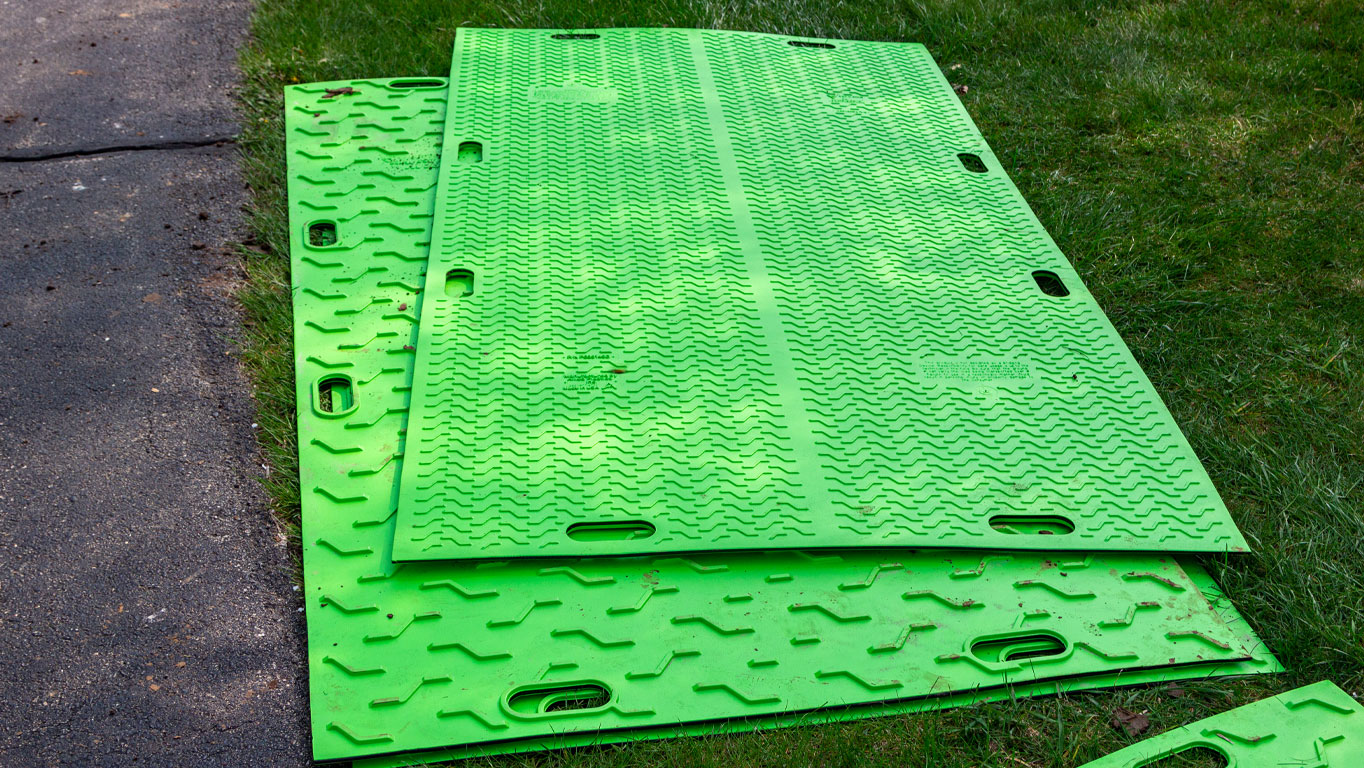
Equipment that slides on a mat surface is more dangerous than equipment on unprotected ground. BAM! mats feature dual-sided tread designed specifically for equipment traction on the machine face and pedestrian grip on the crew face. Both sides work in wet and dry conditions.
Drive On Mats for Grass: Why Lawns Need Specific Protection
Grass is not just a surface—it is a living system with roots, soil structure, and moisture dynamics that all respond differently to load than concrete or asphalt.
Tire pressure on turf
A skid steer applies thousands of pounds through a small tire contact area. On turf, this concentrated pressure compresses the soil and shears the root system. The surface grass may look intact immediately after—but beneath the surface, the root damage becomes visible within days as the turf browns and dies back.
Spring and post-rain conditions
Saturated turf has almost no bearing capacity. What appears to be firm ground in dry summer conditions becomes equipment-swallowing mud after a week of rain or during spring snowmelt. Drive on mats for grass distribute load across the full panel surface—reducing the effective pressure to a level the saturated ground can handle.
Repeated passes kill what single passes only compress
A single light pass across turf in dry conditions may leave only a visible tire impression. Twelve passes over the same line on a full-day landscaping job—or a week-long remodeling project—progressively kills the root system, compacts the soil, and creates ruts that take a season to recover.
How to Set Up Drive On Mats for Grass
Cover the full route before equipment moves
The mat path goes down before the equipment comes off the trailer. Not after the first pass. Not when you notice the ground starting to churn. Before any equipment touches the grass.
Double-column coverage for equipment wider than 4 feet
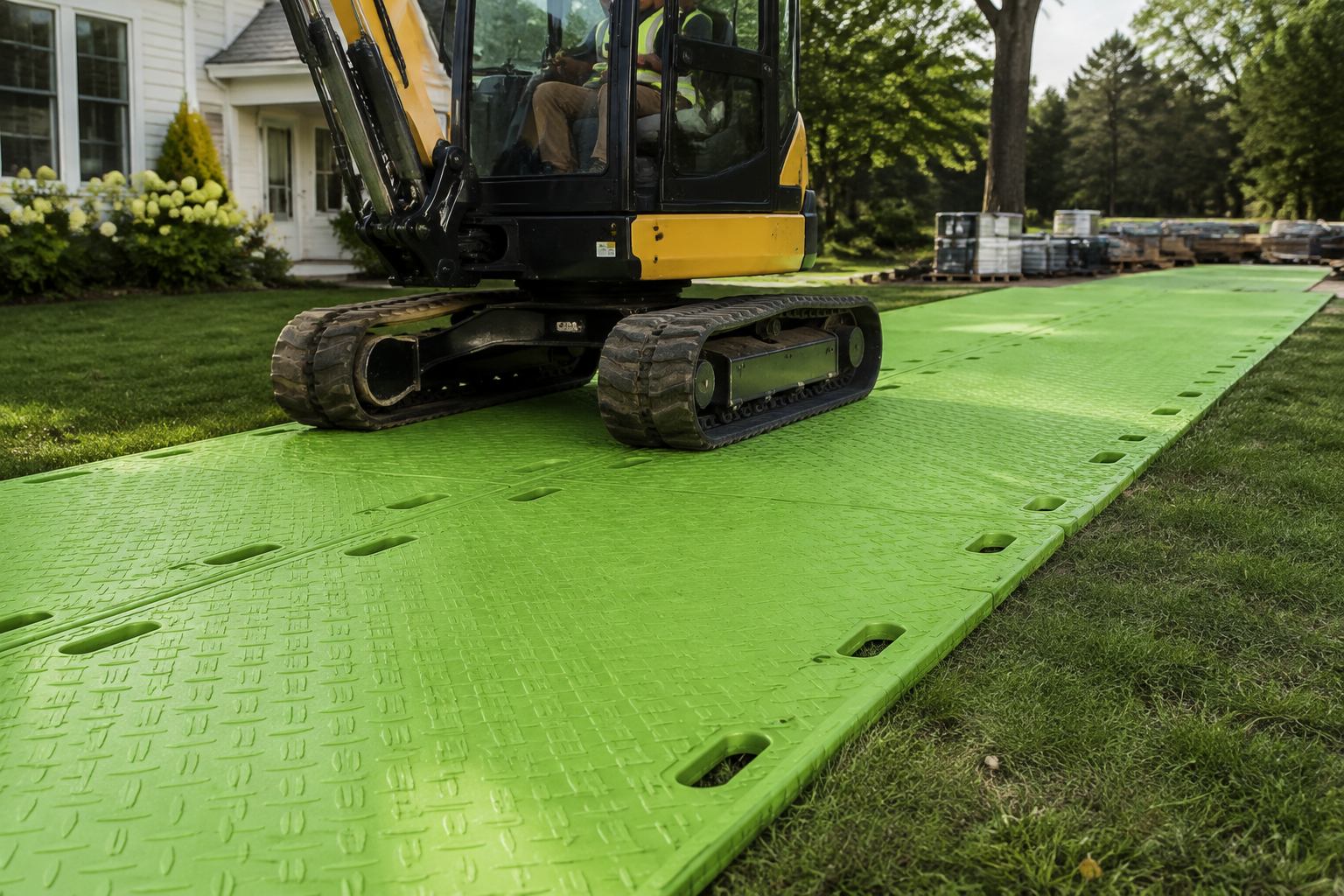
Most equipment—skid steers, compact loaders, mini excavators—is 5 to 6 feet wide. A double column of BAM! 4×8 panels creates an 8-foot-wide path that keeps both tires or tracks fully on the mat from start to finish.
Extended coverage at turning zones
Turns are where the most turf damage happens on unprotected lawns. Pivoting equipment applies lateral shear force that tears grass at the root. At every point where equipment turns or changes direction, add extra mat coverage beyond the standard path width.
Gate and narrow passage handling
Residential side yard gates are typically 36 to 48 inches wide—narrower than a 4-foot BAM! panel deployed with its width across the path. BAM! 2×8 panels (24 inches wide) handle gate passages: two 2×8 panels side by side create a 48-inch protected path through a standard gate opening, then transition back to double-column 4×8 coverage in the yard.
Drive On Mats for Specific Yard and Lawn Scenarios
Landscaping and grading jobs
Full coverage from trailer to work zone. Protect the entire route the equipment uses—not just the sections you think are most vulnerable. Cover the staging area where the machine idles and turns between passes.
Pool and excavation work
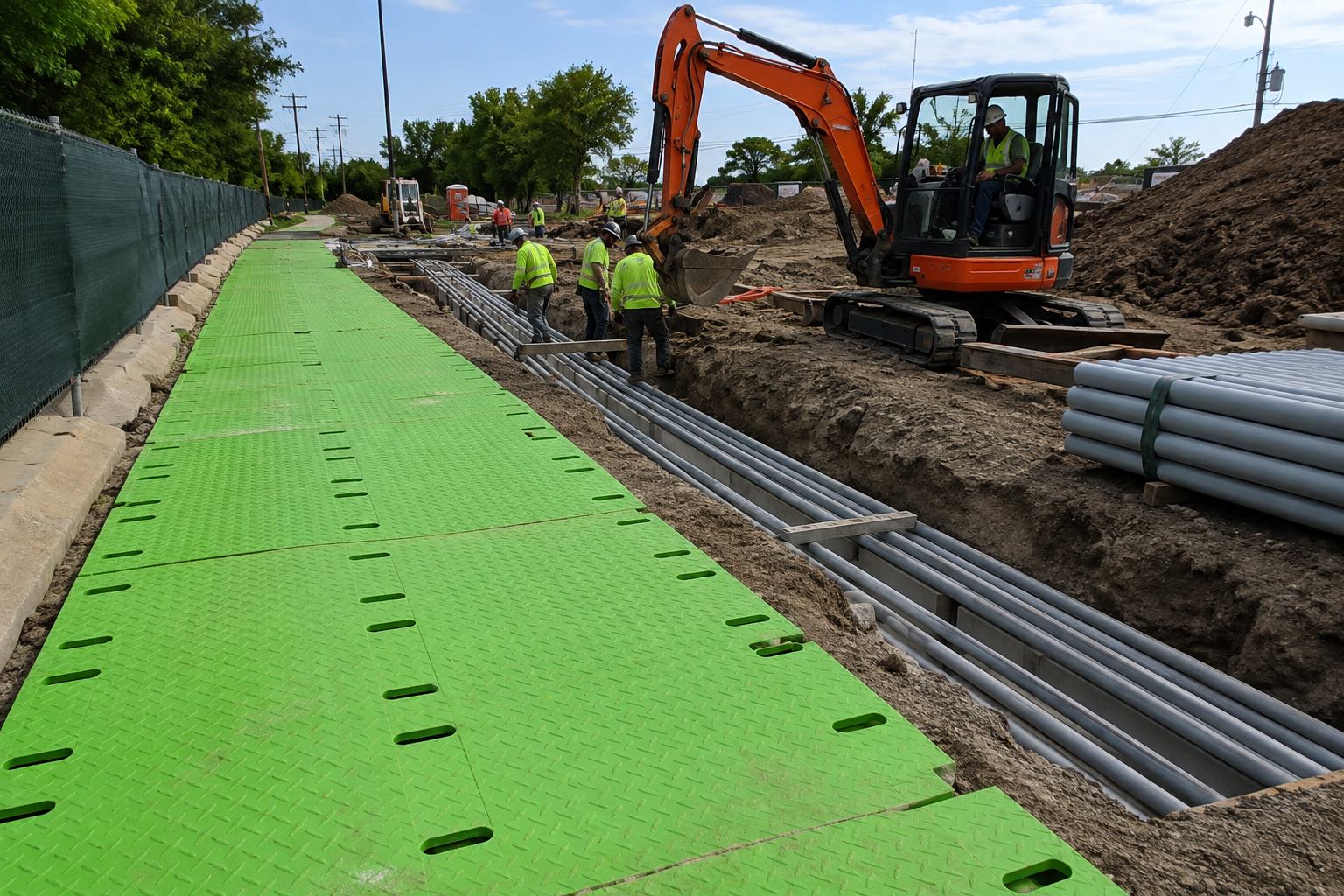
Heavy excavation equipment on residential lawns over multi-week projects requires consistent coverage throughout all phases. As the project progresses and access needs change, update mat coverage to match new equipment routes.
Tree removal and land clearing
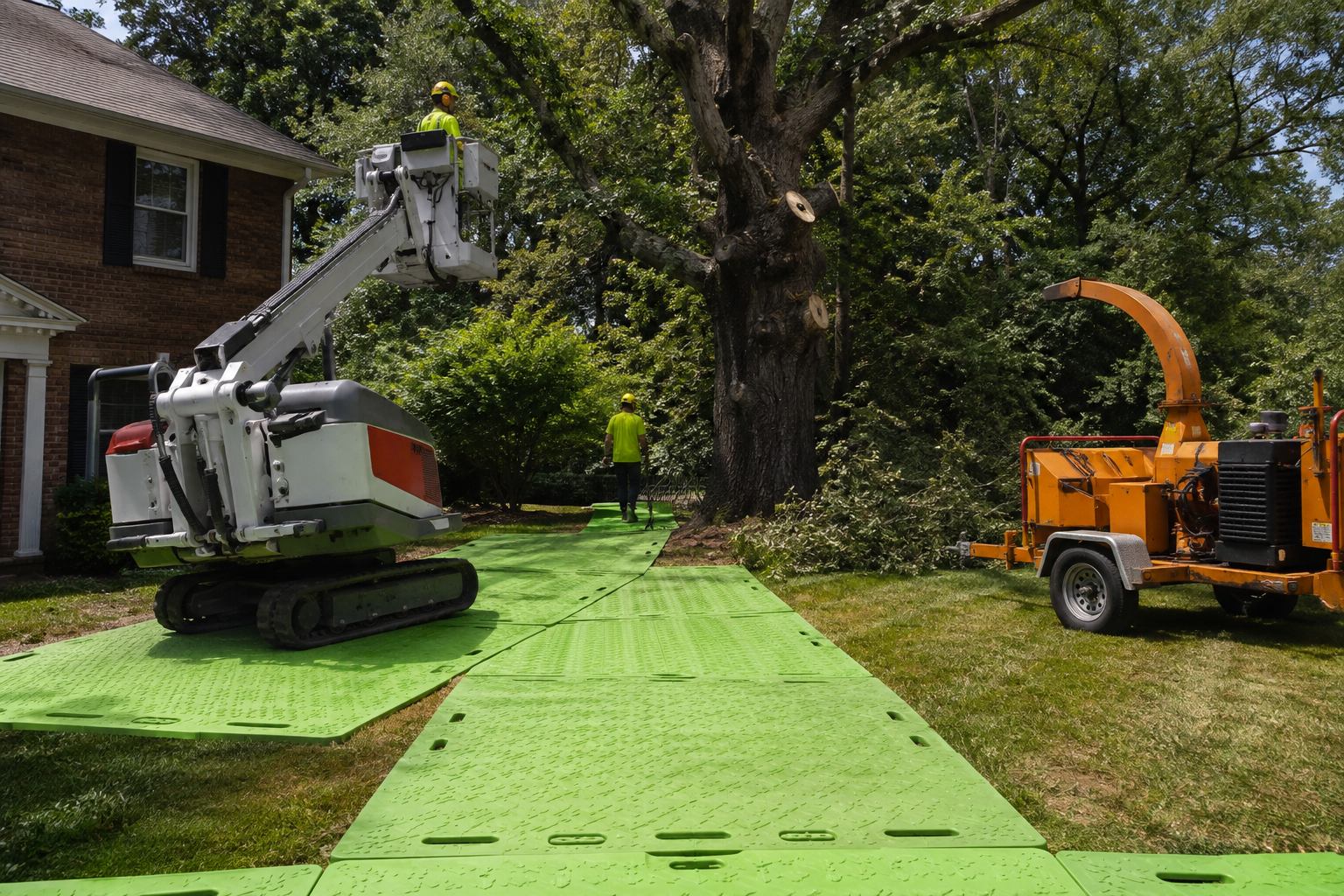
Bucket trucks, chippers, stump grinders, and loaders all need drive-on mat coverage across the lawn route. The repeated heavy traffic from multiple machine types over a full removal job creates some of the most intensive turf damage when mats are not used.
Event and festival setup
Vehicles delivering tents, equipment, and supplies at outdoor events on grass need drive on mat paths from the access point to each delivery zone. The same panels that protect construction lawns protect event turf—and support guests as walkways after setup.
Yard Mats for Heavy Equipment: When Loads Get Serious
Yard mats for heavy equipment carry a higher burden than drive on mats for light traffic. The equipment is heavier, the passes are more frequent, and the consequences of mat failure are more severe.
For yard applications with equipment over 5 tons—full-size excavators, concrete trucks, boom lifts—BAM!’s 80-ton rating provides the margin that makes performance predictable. The mat is not stressed by the load; it handles it with capacity to spare.
Heavy equipment on yard mats: double-column path minimum; wider staging pads where equipment turns or idles; extra panels at the trailer ramp landing zone where the heaviest dynamic loads occur.
Frequently Asked Questions
Q: Can I use drive on mats for grass on newly seeded or recently sodded lawns?
A: Newly seeded lawns are far more vulnerable than established turf. Drive on mat use on new seed is not recommended. For newly sodded lawns, allow at least 3 to 4 weeks of establishment before using drive on mats with any equipment. Contact BAM! at 888-870-8158 for guidance on your specific situation.
Q: How quickly does grass recover after drive on mats are removed?
A: On established turf in growing season, visible mat impressions typically disappear within 24 to 72 hours. Deeper turf recovery—where roots were compressed but not severed—happens within 1 to 3 weeks. Recovery is faster when mats were used correctly and soil moisture is adequate.
Q: What is the best way to keep drive on mats from shifting on a slope?
A: BAM! mats have enough mass and surface grip to remain stable on slopes up to approximately 15 degrees for most equipment types. For steeper slopes or applications where shift risk is a concern, contact BAM! at 888-870-8158 to discuss anchoring options.
Q: How many drive on mats do I need for a standard residential landscaping job?
A: A typical residential job with one machine requires 12 to 18 BAM! 4×8 panels for a complete access route, gate passage, and staging zone. Larger properties with longer access routes from the street to the backyard need proportionally more. Call 888-870-8158 to plan your setup.
Drive On Without Driving Through
Drive on mats for grass work when they are the right product—load-rated, rigid, properly deployed, covering every contact zone before equipment moves. The contractors who use them consistently are the ones who leave lawns intact after jobs that would otherwise leave ruts.
Explore BAM! drive on mats at bamgroundpro.com/products. Find a distributor at bamgroundpro.com/where-to-purchase. Contact us at bamgroundpro.com/contact-us, call 888-870-8158, or email msheridan@alliedplastics.com. Work cleaner. Work safer. Pro’s choose BAM!