Every piece of equipment on a contractor’s fleet creates a different ground protection challenge. A skid steer pivots. A boom lift deploys outriggers. A mini excavator vibrates. A dump truck distributes load across tandem rear axles. A dumpster sits still for days.
Ground mats for equipment work across all of these machines—but deploying them effectively requires understanding how each machine type applies load to the ground and where protection is most critical.
This guide covers the ground mat approach for every major equipment type contractors use.
The Universal Principle: Cover Every Contact Zone
Regardless of machine type, the core principle is the same: any zone where equipment makes contact with the ground requires mat coverage. That includes travel paths, turning zones, staging positions, outrigger placements, and any area where the machine repositions during the job.
The biggest mistake contractors make with equipment ground mats is covering the travel path but leaving the turning zone and staging area unprotected. Those high-activity zones often cause more damage than the travel path itself.
Equipment-by-Equipment Mat Guide
Skid steer loaders
Weight: 6,000 to 11,000 lbs. Key damage mechanism: zero-turn pivot creates lateral shear force that tears turf and scuffs pavement.
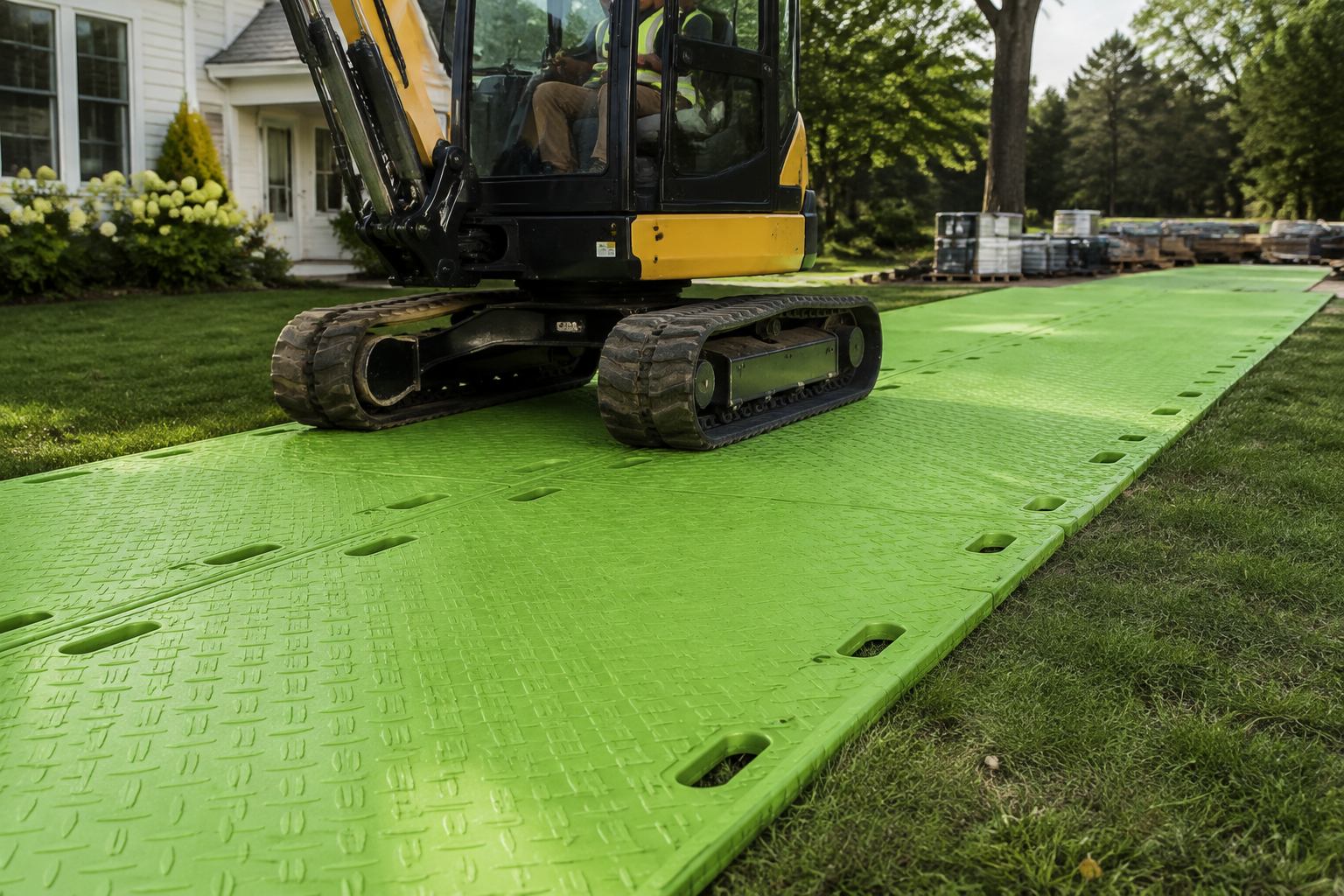
Mat setup: double-column 4×8 path (8 feet wide) from trailer to work zone. Extended turning zone coverage at both ends. Extra panels at any location where the machine pivots repeatedly. Protect the trailer ramp landing area separately.
Compact track loaders
Weight: 8,000 to 13,000 lbs. Key damage mechanism: heavier than skid steers, rubber tracks distribute load somewhat better but still create significant surface pressure on soft ground.
Mat setup: same as skid steers. Wider turning zone coverage recommended given higher weight. Full staging area coverage where the machine idles between passes.
Mini excavators
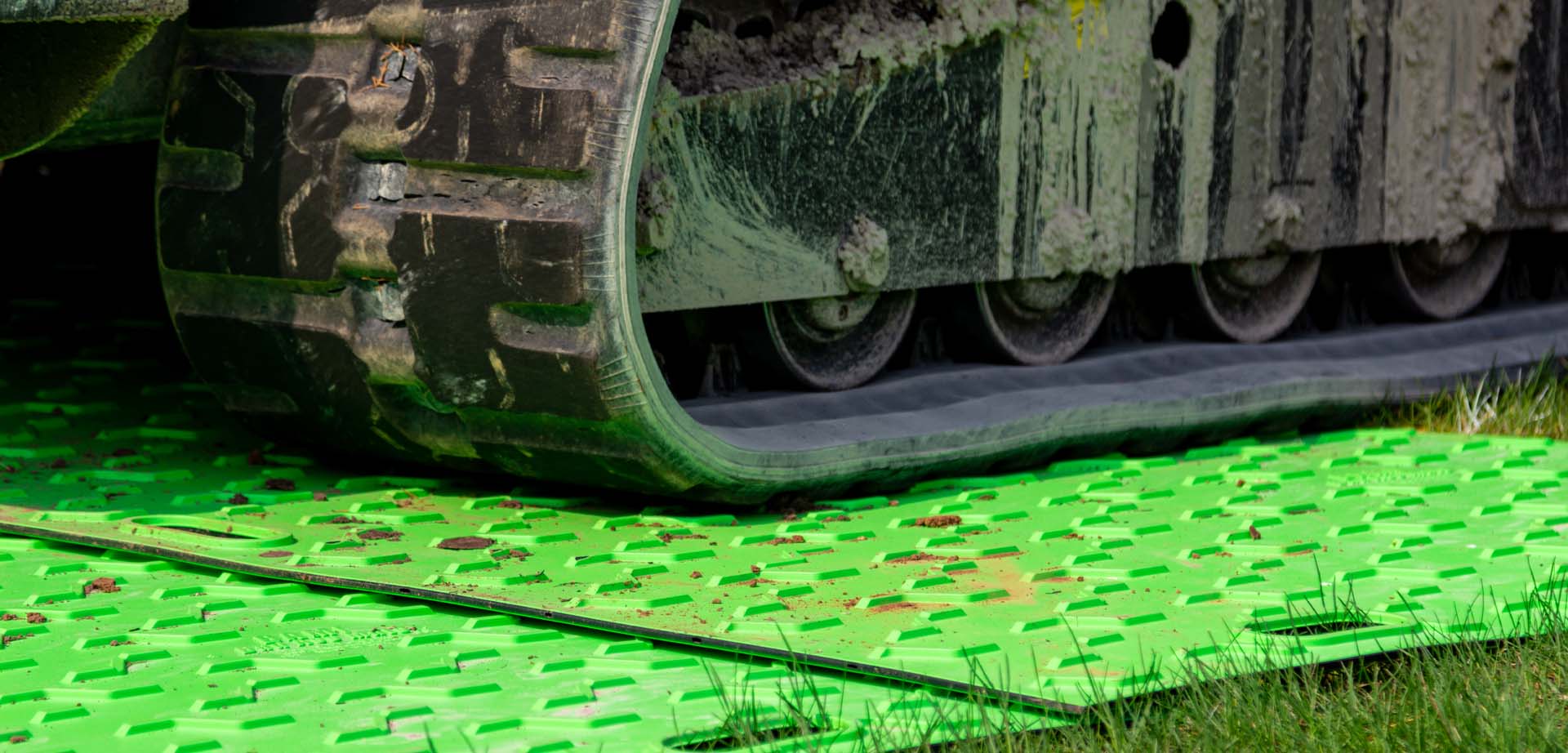
Weight: 4,000 to 14,000 lbs depending on size. Key damage mechanism: vibration during digging propagates through access route; repeated repositioning creates cumulative path damage.
Mat setup: double-column access path. Extended staging area where the machine works—the excavator repositions frequently and the work zone takes repeated load. Cover the spoil pile staging area separately.
Boom lifts and telescopic equipment
Weight: 18,000 to 45,000 lbs. Key damage mechanism: outrigger legs create extreme point loads at four discrete positions during lift operations.
Mat setup: travel path plus dedicated panels under each outrigger position (in addition to the path coverage—not instead of). Outrigger loads are the highest point loads on any residential jobsite. Two to three panels per outrigger position, depending on the outrigger pad size.
Scissor lifts
Weight: 8,000 to 20,000 lbs. Key damage mechanism: similar to boom lifts but typically without outriggers—load distributes through the four wheel/outrigger positions.
Mat setup: travel path coverage plus staged position coverage. On hard surfaces (concrete, asphalt) confirm that mat placement is compatible with the lift’s tipping load requirements per the operator manual.
Dump trucks
Weight loaded: 40,000 to 80,000 lbs. Key damage mechanism: tandem rear axle loads concentrate on the rear sections of any driveway or access surface.
Mat setup: full approach coverage from street to dump position. Focus heaviest coverage on the section where rear axles cross during loaded approach. Cover the dump position separately if on turf or soft ground.
Roll-off dumpster trucks and containers
Container weight loaded: 10,000 to 30,000 lbs. Key damage mechanism: container corners create point loads on placement surface; sustained weight over multiple days.
Mat setup: full container footprint plus 12 to 18 inch overhang on all sides. Truck approach zone. Positions where truck frame contacts surface during container deployment.
Concrete trucks
Weight loaded: 30,000 to 66,000 lbs. Key damage mechanism: extremely heavy vehicle accessing residential properties; rear axle loading during stationary discharge is the highest load event.
Mat setup: full driveway approach from street to pour position. Extended coverage at stationary discharge position. If discharge arm extends over turf or other surface, cover that zone as well.
Forklifts
Weight with load: 8,000 to 20,000 lbs for common construction forklifts. Key damage mechanism: loaded forks create front-heavy weight distribution; turning under load applies high lateral force.
Mat setup: full travel path. Extended turning zone coverage—loaded turns are the highest-load event for forklifts. Staging zone where loads are set down and picked up repeatedly.
Building a Flexible Equipment Mat System
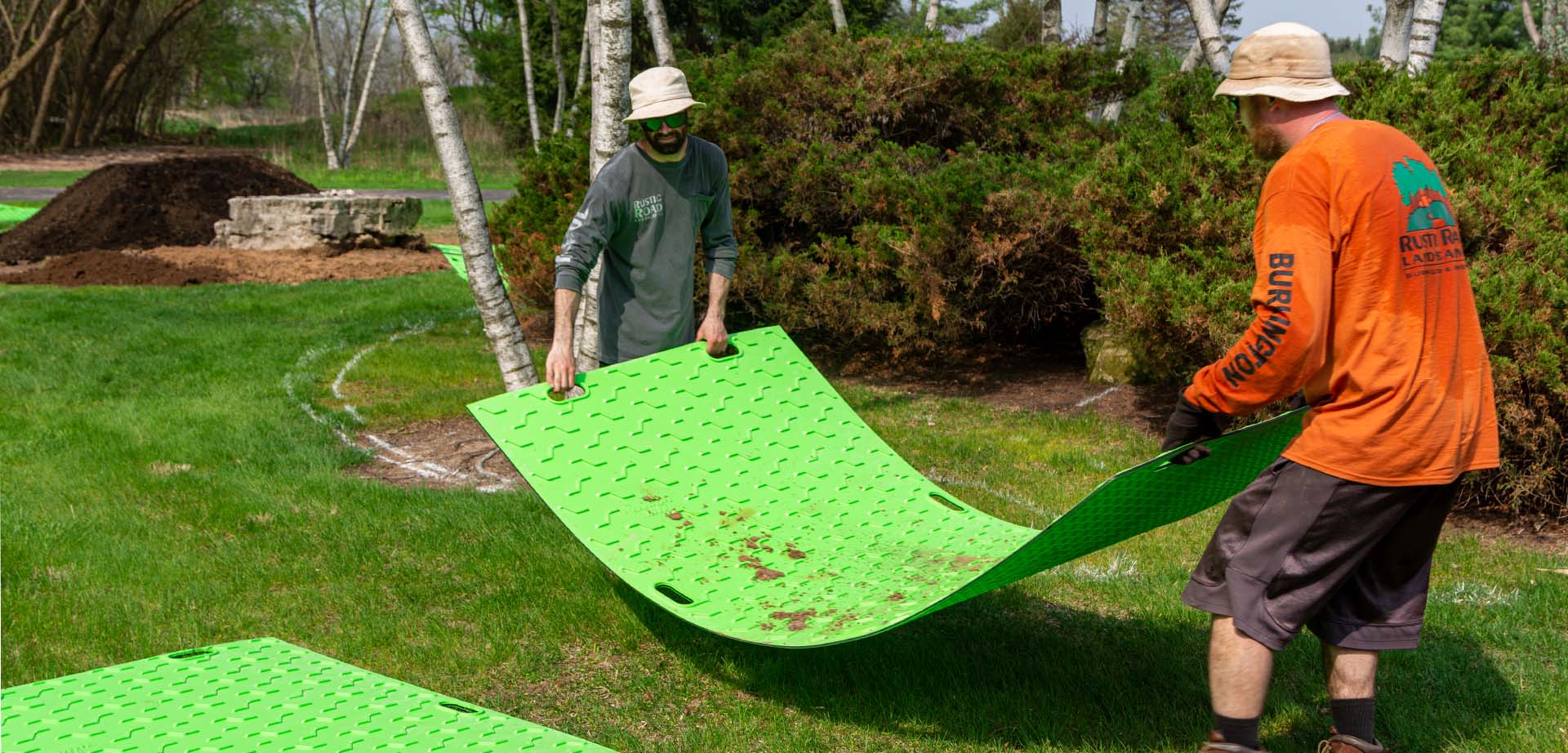
Contractors who run multiple equipment types benefit from a flexible mat inventory that handles the full range of machines. BAM!’s 80-ton rating handles every equipment type in this guide—no machine-specific mat products required.
Core fleet inventory: 24 to 30 BAM! 4×8 panels plus 4 to 6 BAM! 2×8 panels handles most jobs across all equipment types
Specialty outrigger zones: keep 4 to 6 extra panels designated for outrigger coverage on lift and crane jobs
Emergency surplus: 2 to 4 extra panels available for unexpected coverage needs without pulling from the core fleet
The Efficiency Argument for Standard Inventory
Contractors who match their mat inventory to their equipment fleet stop making job-by-job decisions about whether to use ground protection. The mats are on the truck. They go down before any equipment moves. The decision is already made.
This automatic behavior—standard ground protection as part of standard setup—is what separates contractors who consistently protect property from contractors who use mats occasionally and experience damage the times they don’t.
Frequently Asked Questions
Q: Can the same BAM! mats be used for a skid steer on one job and a boom lift on the next?
A: Yes. BAM! mats are not machine-specific. The same panel works for any equipment within the 80-ton load rating. Use more or fewer panels based on the coverage requirements of the specific machine, but the mat product is the same.
Q: How do I account for equipment I rent occasionally versus own?
A: Size your core mat inventory for your owned fleet. For rental equipment, contact BAM! at 888-870-8158 to confirm whether the specific rental equipment is within the standard mat’s capacity and whether any specialized coverage is needed for that machine type.
Q: Are there application situations where BAM! mats are not appropriate?
A: BAM! mats are designed for terrestrial ground protection applications. They are not designed for structural load support, underground applications, or crane loads exceeding their rated capacity. For applications outside standard contractor use, contact BAM! at 888-870-8158 for application-specific guidance.
Q: Where can I learn more about using BAM! mats for a specific machine I run?
A: Contact BAM! at bamgroundpro.com/contact-us, call 888-870-8158, or email msheridan@alliedplastics.com. The BAM! team can discuss your specific equipment fleet and recommend the right quantity and configuration for your operation.
Match the Mat to the Machine. Cover Every Contact Zone.
Ground mats for equipment work best when the contractor knows their machines, covers every contact zone, and keeps consistent inventory on every truck. The result is the same on every job: the property stays intact, the client is satisfied, and the next call is a referral.
Build your equipment mat system at bamgroundpro.com/products. Find a distributor at bamgroundpro.com/where-to-purchase. Contact us at bamgroundpro.com/contact-us, call 888-870-8158, or email msheridan@alliedplastics.com. Protect every machine. Protect every surface. Pro’s choose BAM!