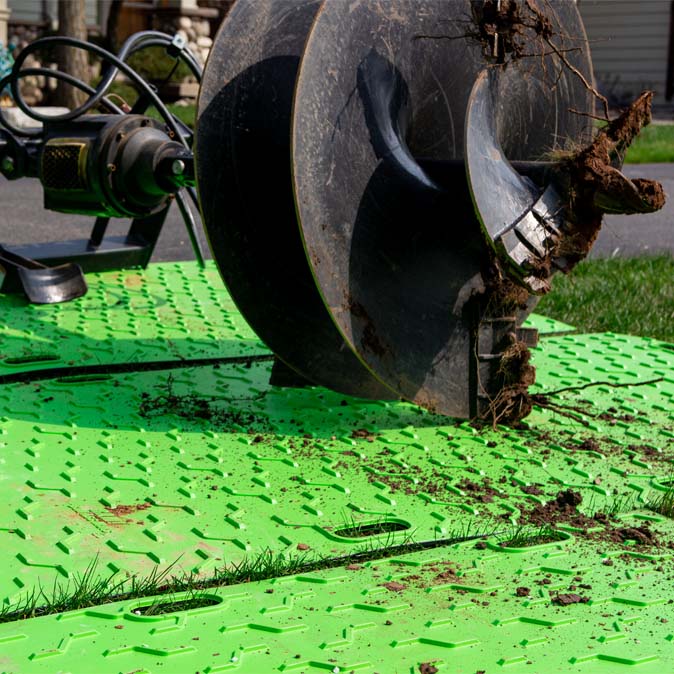
Excavation is one of the most equipment-intensive operations contractors perform. Mini excavators, backhoes, and full-size machines move substantial material, generate enormous vibration, and create access demands across all types of residential and commercial ground surfaces.
Without excavation mats, every one of those access demands leaves a mark—on driveways, lawns, easements, and sensitive surfaces that clients expect to remain undamaged throughout the project.
The Unique Ground Protection Challenges of Excavation Work
Heavy machines on residential properties
Even a compact mini excavator in the 4-to-6-ton range applies significant ground pressure through its tracks. Tracked machines distribute load better than wheeled equipment, but on soft or wet ground, even tracked excavators create ruts and surface damage without mat protection underneath.
Vibration and dynamic loading
Excavators generate significant vibration during digging, especially when breaking hard soil or rock. This vibration propagates through the ground and can cause cracking in concrete driveways and patios, shifting in paver bases, and soil liquefaction in saturated conditions. Mats absorb and distribute this dynamic loading.
Repeated repositioning
Excavators don’t stay in one place. They advance as the trench progresses, reposition to reach different areas, and travel access routes multiple times per day. Every repositioning pass over unprotected ground adds to cumulative damage.
Spoil pile and material staging
Excavated material has to go somewhere—typically staged adjacent to the excavation. A loaded spoil pile can weigh thousands of pounds and creates a sustained point load on whatever surface it sits on. The area under spoil staging needs the same protection as the equipment access route.
Excavation Mat Setup by Machine Size
Mini excavators (under 6 tons)
The most common excavation equipment on residential jobs. Full double-column 4×8 mat path from the street or trailer to the excavation area. Extended staging pad at the working position where the machine repositions frequently.
Mid-size excavators (6 to 20 tons)
Heavier machines require wider mat coverage to maintain the load distribution function. Consider triple-column mat paths for mid-size excavators on soft ground. Pay particular attention to the transition from the trailer ramp to the ground—this is where dynamic loading peaks.
Backhoes
Backhoes deploy stabilizer legs during digging that create concentrated point loads separate from the machine weight. Position additional panels under each stabilizer leg position. These legs can cause significant driveway and pavement damage when deployed without adequate surface protection.
Excavation Scenarios and the Right Mat Approach
Pool installation
Pool excavation jobs involve heavy machines on residential lawns over multiple days or weeks. Full access route from the street to the excavation site, protected staging pad for the excavator’s working area, and separate coverage for the spoil pile location.
Foundation work and basement excavation
Larger excavators on residential lots require comprehensive mat coverage. Driveways and access routes often carry loaded dump trucks removing spoil—the truck traffic requires its own protected route alongside or overlapping the excavator’s path.
Utility trenching
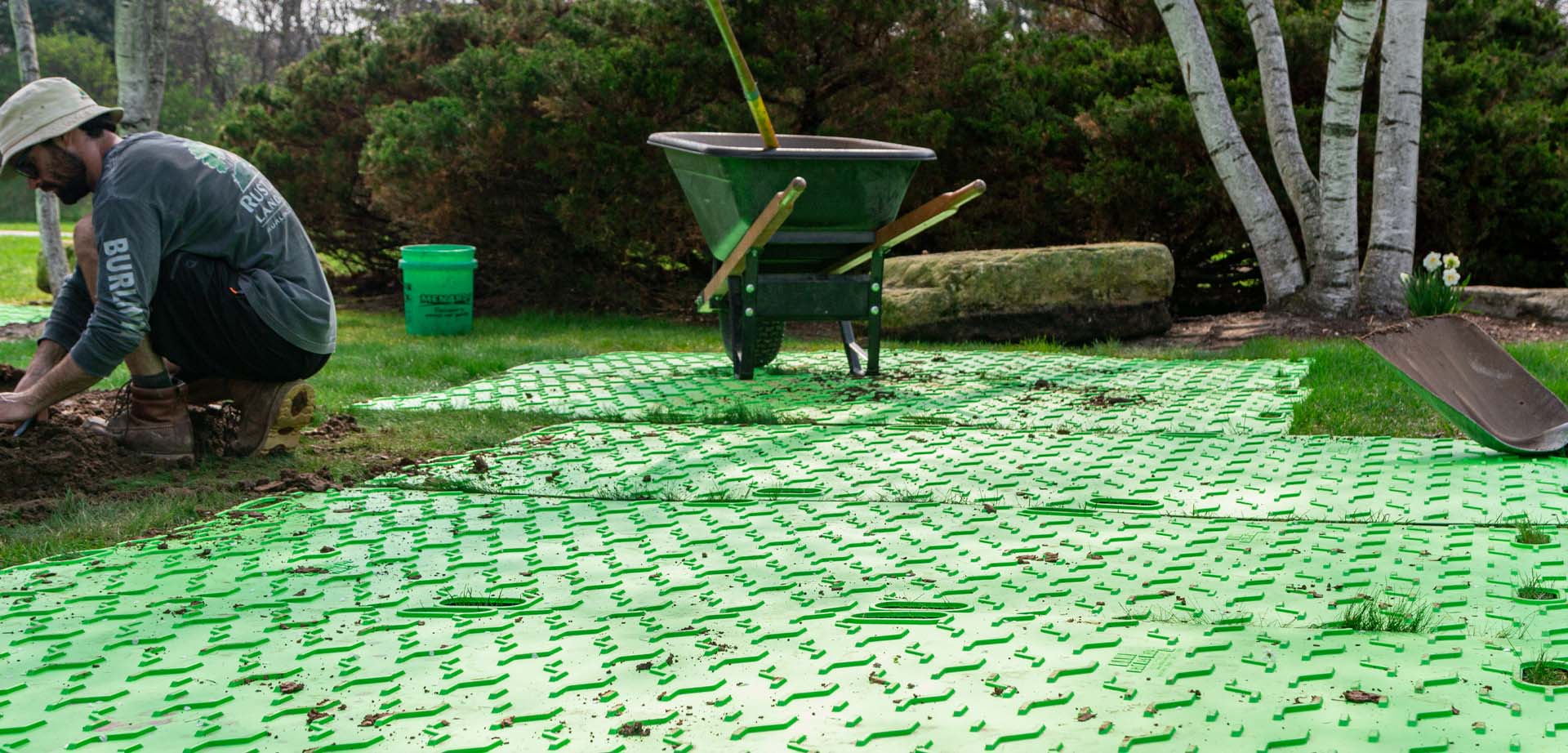
Trenching in residential easements crosses lawns, driveways, and planted areas. The narrow, linear nature of trenching allows efficient single-column mat deployment along the trench line, with wider staging coverage at the equipment’s working position.
Septic and drain field installation
Often the most access-constrained excavation type. Backyards, side yards, and narrow lot access. Combine 2×8 and 4×8 panels to navigate gate openings and narrow passages while providing adequate coverage in the main excavation zone.
Landscaping excavation and grading
Lighter excavation but often on the most visible parts of the property—the front yard, the driveway, the main lawn. Ground protection throughout is a client-facing quality signal.
Protecting the Excavation Work Zone
Around the active digging area
The 10 to 15 feet around the active digging area takes constant traffic from the machine repositioning. This zone often gets treated as unprotected because the ground near the excavation is going to be disturbed anyway—but the surface immediately outside the dig boundary should be protected, because clients see it.
Spoil staging protection
Excavated soil is heavy. A cubic yard of soil weighs 2,000 to 3,000 pounds. Staging even a small spoil pile on an unprotected driveway or patio creates point loads that exceed the surface’s design capacity. Mat the spoil staging area as carefully as the equipment access route.
Concrete truck access for foundations
Foundation excavations are often followed immediately by concrete pours. The concrete truck’s access route from the street to the pour position must be protected. Coordinate mat coverage to handle both the excavator’s access and the concrete truck’s subsequent access.
BAM! Mat Features for Excavation Applications
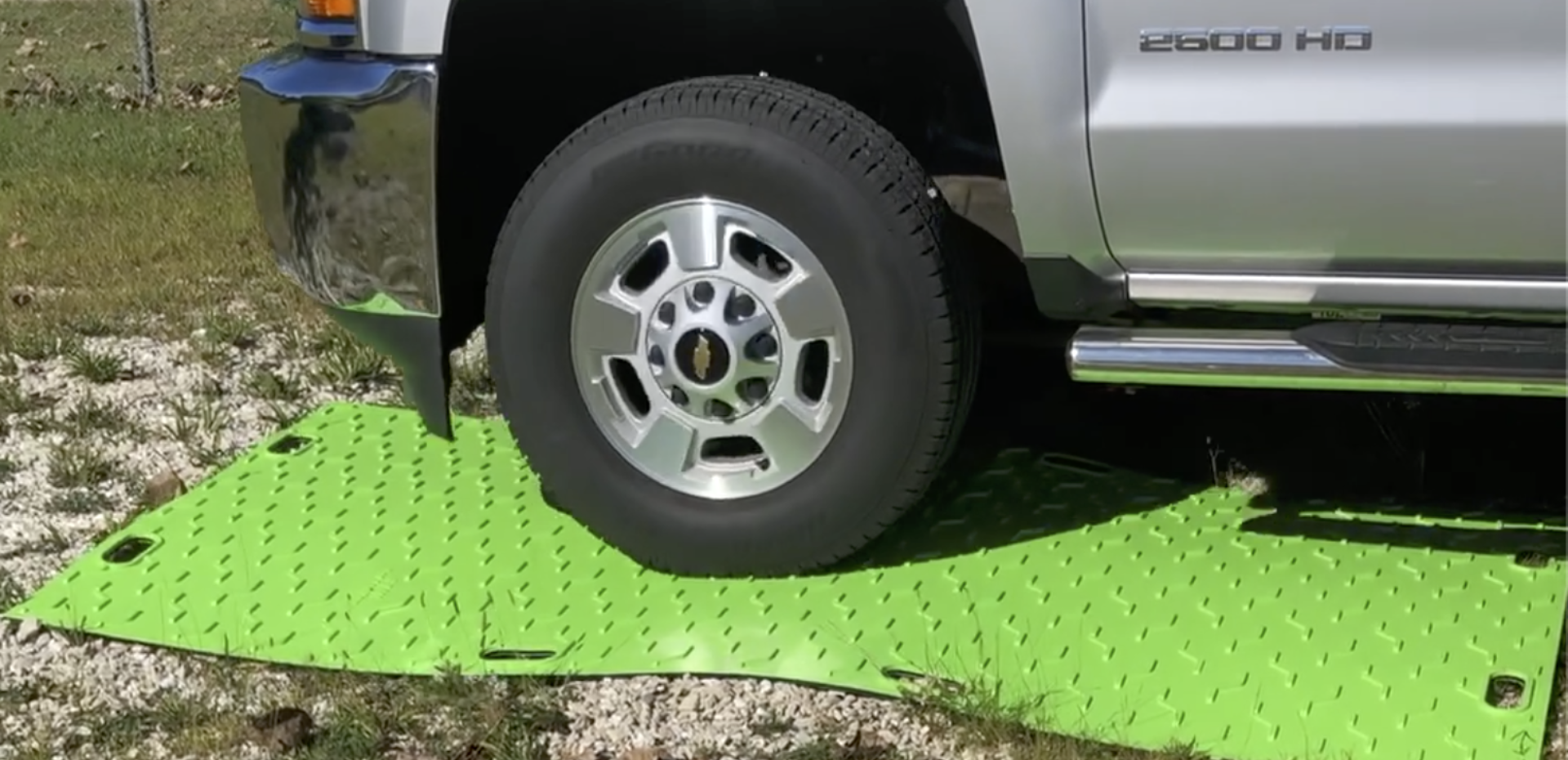
80-ton rating with safety margin: mini and mid-size excavators operate at 10% to 25% of the BAM! mat’s capacity—the margin handles dynamic loading from machine movement and digging vibration without performance concern
HDPE that cleans completely: excavation jobs are muddy—HDPE releases mud cleanly with a pressure wash, ready for the next job
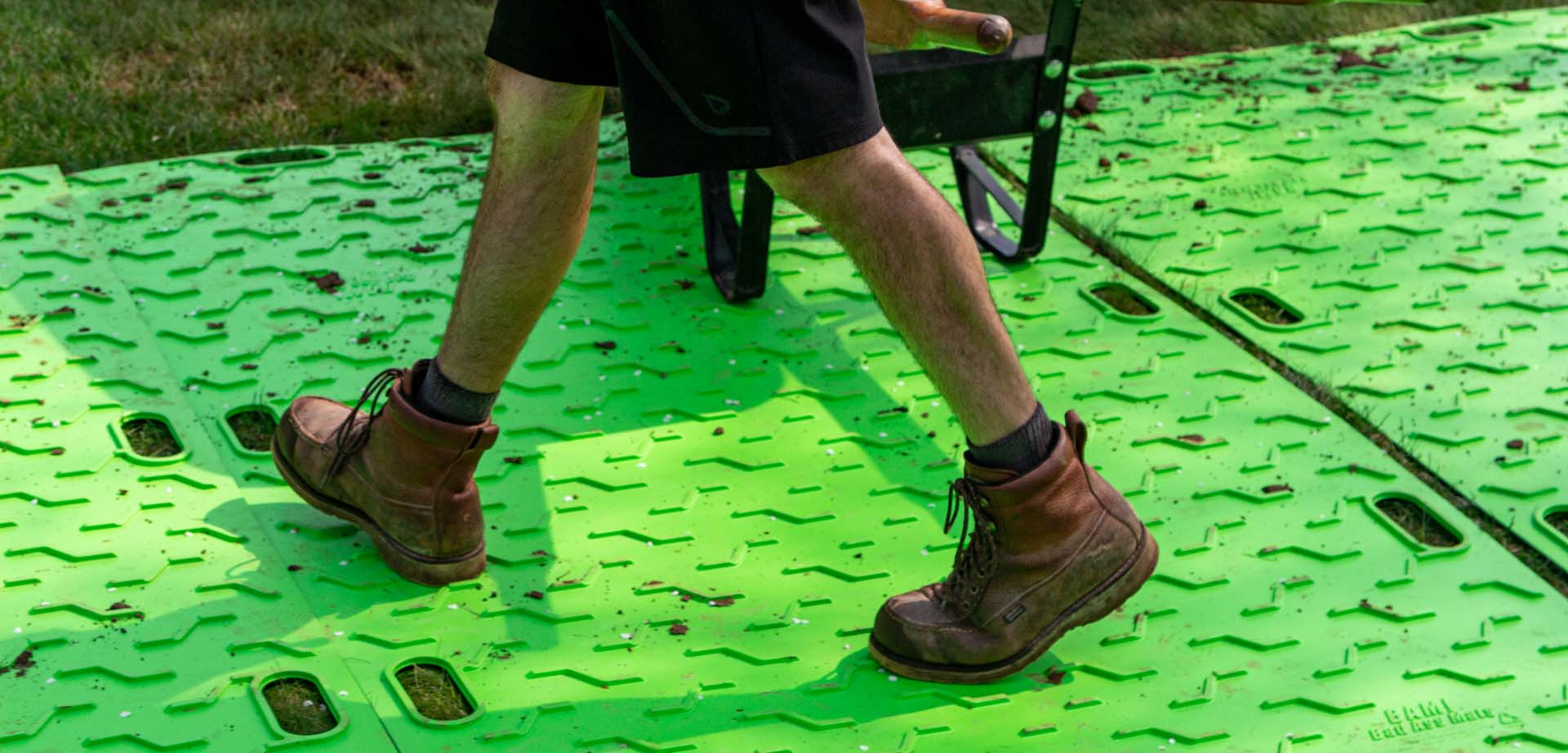
Dual tread for excavator operators: operators climbing on and off machines throughout the day benefit from the pedestrian-side traction, especially on muddy sites
56 pounds per panel: crew can keep up with the excavator’s repositioning needs without slowing the machine’s workflow
Frequently Asked Questions
Q: Do excavation mats work under rubber tracks or steel tracks?
A: Yes. BAM! HDPE mats handle both rubber-tracked and steel-tracked machines. Rubber tracks are gentler on the mat surface, but steel tracks in the equipment’s load range remain well within the mat’s structural capacity.
Q: How do I protect mats from bucket damage during digging?
A: During active digging, the excavator’s bucket works in the excavation area—not on the mats. The mats primarily serve the travel and staging areas. Keep bucket operations over the excavation zone and away from mat surfaces.
Q: Can mats be used inside the excavation to stabilize the bottom?
A: BAM! mats are designed for surface protection and access routes. For excavation bottom stabilization (standing on wet soil, working surfaces inside a trench), consult with a geotechnical engineer for appropriate solutions.
Q: How many mats do I need for a typical pool excavation?
A: A typical residential pool excavation job requires 16 to 24 BAM! 4×8 panels: 10 to 14 for the access route, 4 to 6 for the working zone staging area, and 2 to 4 for the spoil staging area. Call 888-870-8158 to plan your specific job.
Dig the Job. Protect the Site.
Excavation and ground protection aren’t competing priorities. They’re complementary—mats enable the excavation to proceed faster, cleaner, and without property damage claims that slow everything down.
Explore BAM! excavation mats at bamgroundpro.com/products. Find a distributor at bamgroundpro.com/where-to-purchase. Contact us at bamgroundpro.com/contact-us, call 888-870-8158, or email msheridan@alliedplastics.com. Work cleaner. Work safer. Pro’s choose BAM!