Mud is the enemy of any job with equipment. It slows movement, reduces traction, destroys access routes, and can bring a productive day to a complete halt when a machine gets stuck.
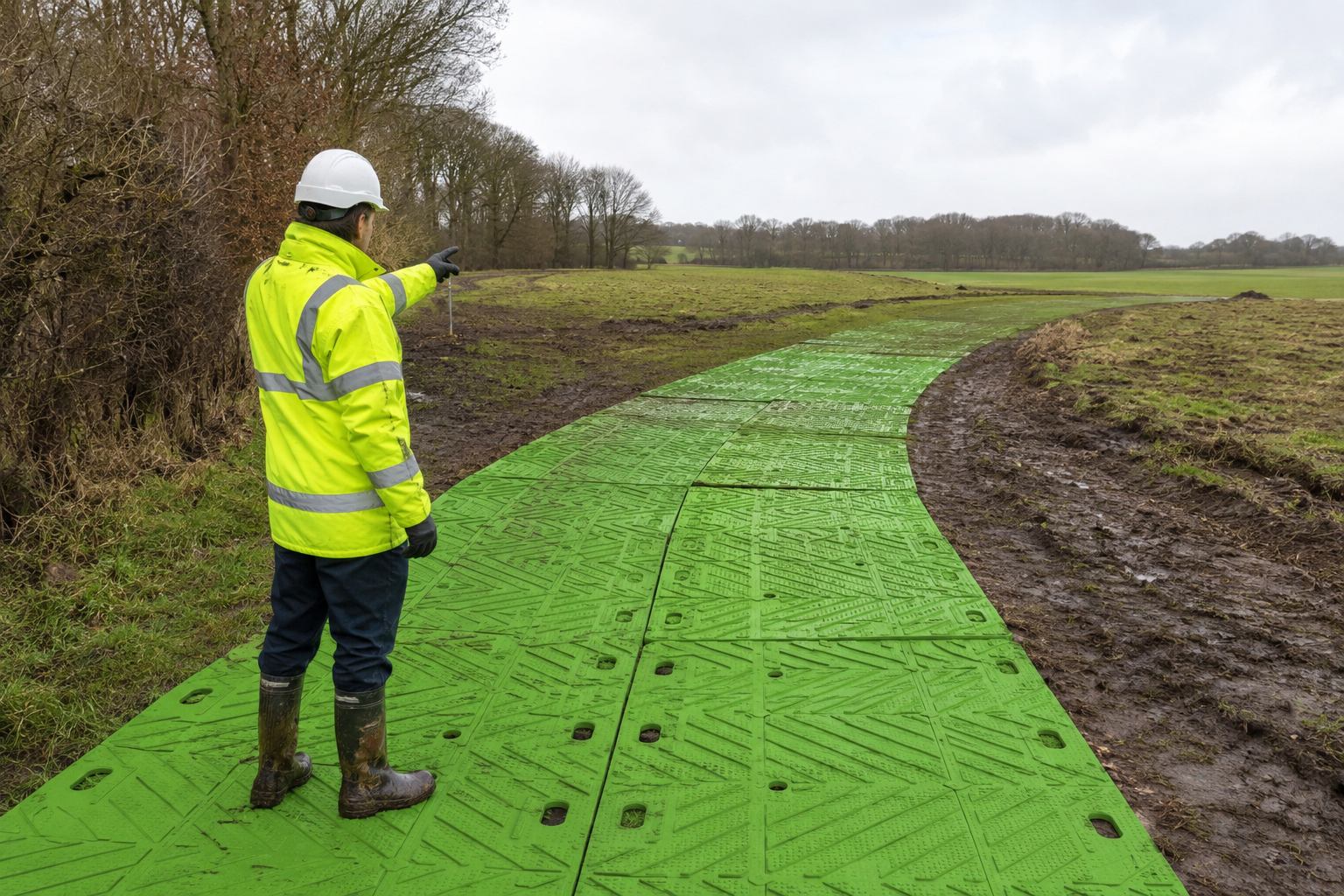
Mud mats for heavy equipment solve access problems that rain and soft soil create—by giving machines a stable, defined surface to travel on regardless of what the ground below looks like.
This post covers exactly when, where, and how to use mud mats on construction and landscaping jobs where soft or saturated ground is the reality.
Why Heavy Equipment Struggles in Mud
Loss of traction
Tires and tracks need a surface with bearing capacity to generate traction. Mud provides almost none. Wheels spin, tracks slip, and the machine consumes enormous engine power to move forward—or doesn’t move at all.
Ground deformation and rutting
When equipment repeatedly passes over soft ground, each pass pushes soil aside or downward. The ruts deepen with each pass. By the fifth or sixth pass, the machine is running in a trench that’s difficult to exit. The harder it works, the deeper it sinks.
Getting stuck
A machine that’s fully stuck in mud is an expensive problem. Equipment recovery—pulling a machine with another machine, using recovery equipment, or waiting for conditions to dry—can take hours. The job stops entirely. Other crew are idle. The schedule slips.
Collateral ground damage
Beyond the direct access problem, mud churning creates damage to the surrounding area. Soil compaction, displaced topsoil, and rutting around the work zone create cleanup and repair costs on top of the delay.
What Mud Mats Actually Do
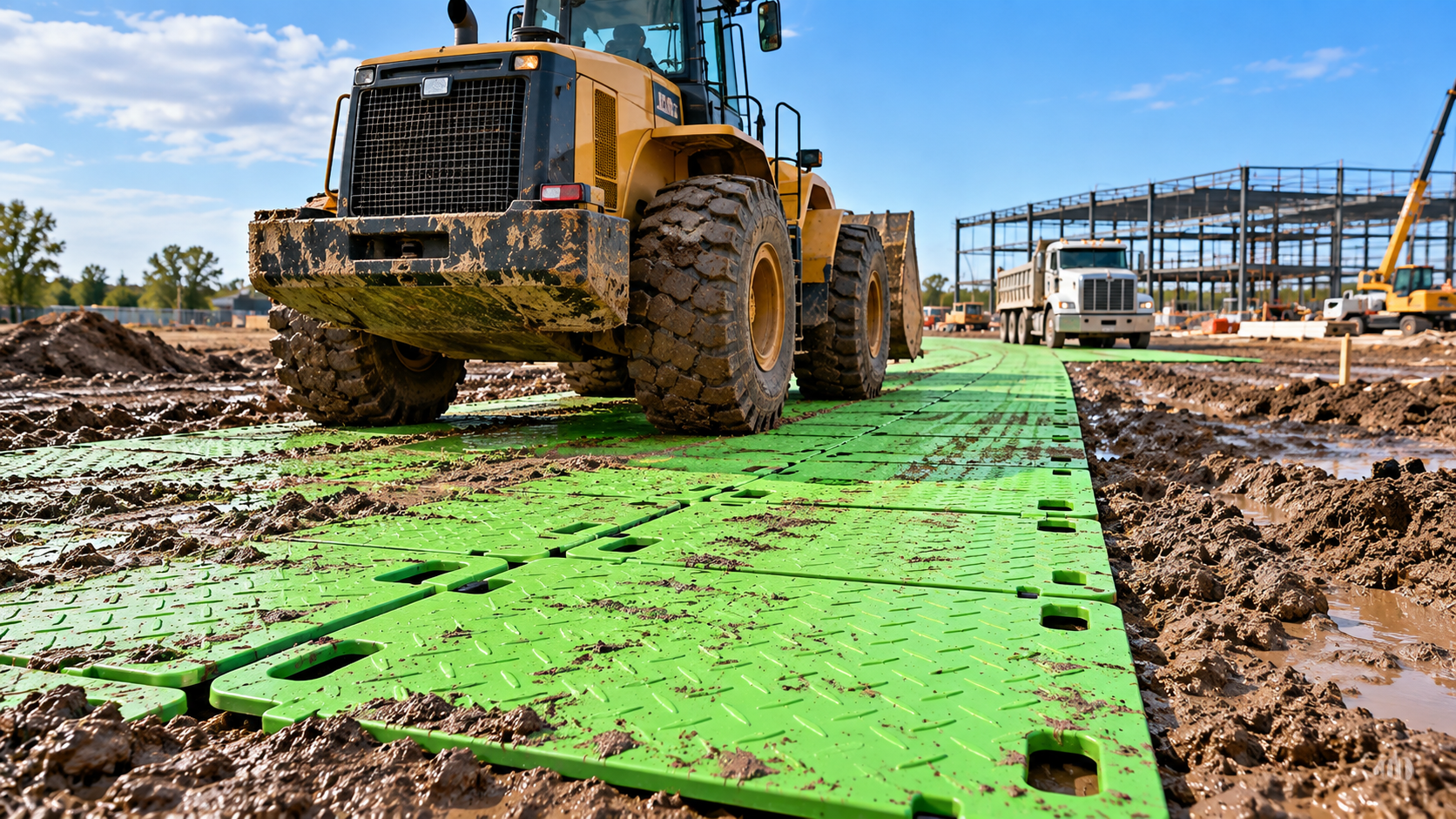
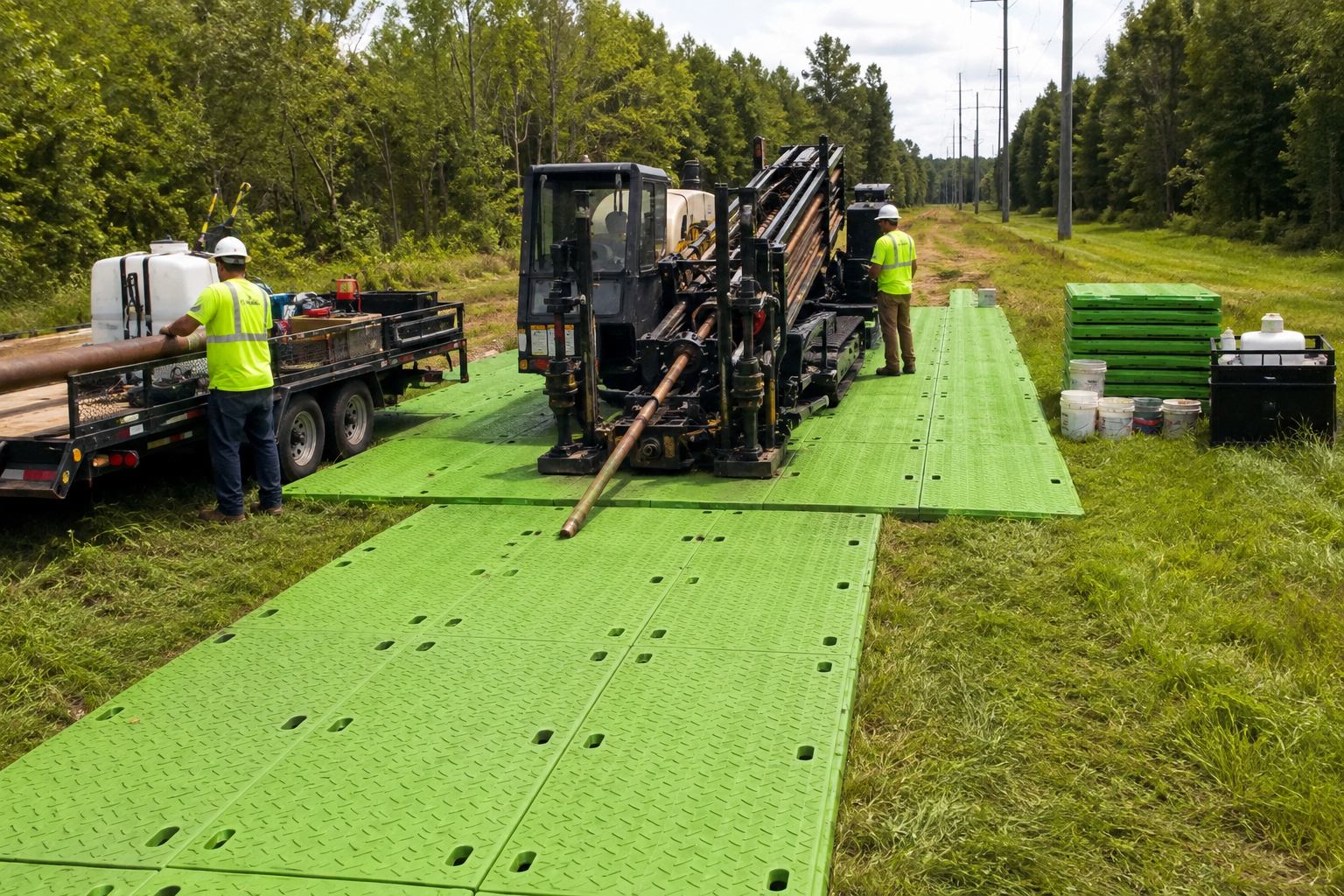
A mud mat provides a firm, stable surface that distributes equipment weight across the full panel rather than concentrating it under each tire or track. The distributed load reduces the pressure per square foot below what the soft ground would otherwise experience.
The machine rides on the mat surface—which is stable and level—rather than on the mud below. Traction improves because the mat surface provides grip that the mud cannot. And the mat bridges over the worst soft spots, allowing the machine to cross without sinking.
When You Need Mud Mats on a Jobsite
After significant rainfall
Ground that appears firm before rain may be completely saturated afterward. Any job site that would have used mats in normal conditions needs them more urgently after rainfall. Sites that seemed fine before can become impassable after a single day of rain.
Spring thaw conditions
Late winter and early spring bring the most challenging soil conditions of the year. Frost leaving the ground creates a layer of saturated, unstable soil above the still-frozen subsoil. This condition—sometimes called ‘frost boil’—provides almost no bearing capacity. Access without mats is often impossible and always destructive.
High-water-table sites
Some sites have permanently high water tables that keep soil near saturation year-round. Landscaping and utility work in these areas requires consistent mat coverage throughout the project.
Clay soils
Clay soils absorb and hold water far better than sandy or gravelly soils. A clay lawn or site that receives normal rainfall can be extremely soft. Heavy equipment on wet clay creates deep ruts quickly. Mats are standard practice for any heavy equipment job on clay-dominant soil.
Building a Mud Mat Access Route
Assess before you set up
Before laying mats, walk the access route. Test soil firmness by pressing a heel into the ground—if you sink more than an inch or two, the ground won’t support equipment without mats. Identify the worst sections of the route and plan coverage accordingly.
Start from firm ground
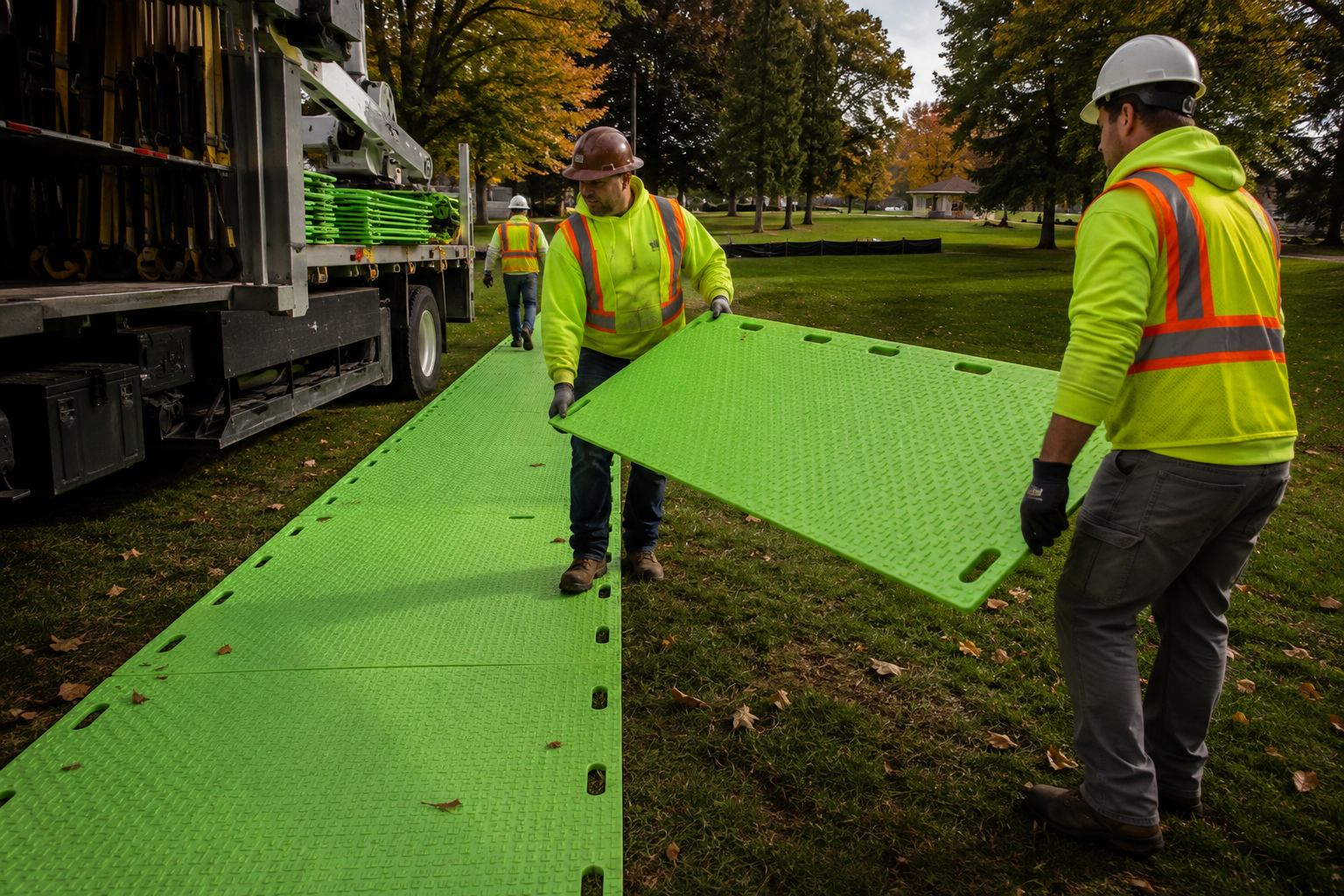
Lay mats from the firm surface inward—not from the soft area outward. Starting on firm ground gives you a stable base and allows you to work toward the problem area without compromising your starting position.
Cover the worst sections generously
The sections of the route with the softest ground need the most coverage. Don’t scrimp on mats in the worst areas to save on coverage—this is exactly where mat failure creates the most expensive problems.
Build a turning zone on firm ground if possible
Equipment turns create lateral forces that compound soft ground problems. If possible, position turning zones on the firmest ground available—even if that means a longer travel route. If turning must happen on soft ground, add extra panel coverage at the turning zone.
BAM! Mat Features That Matter for Mud Access
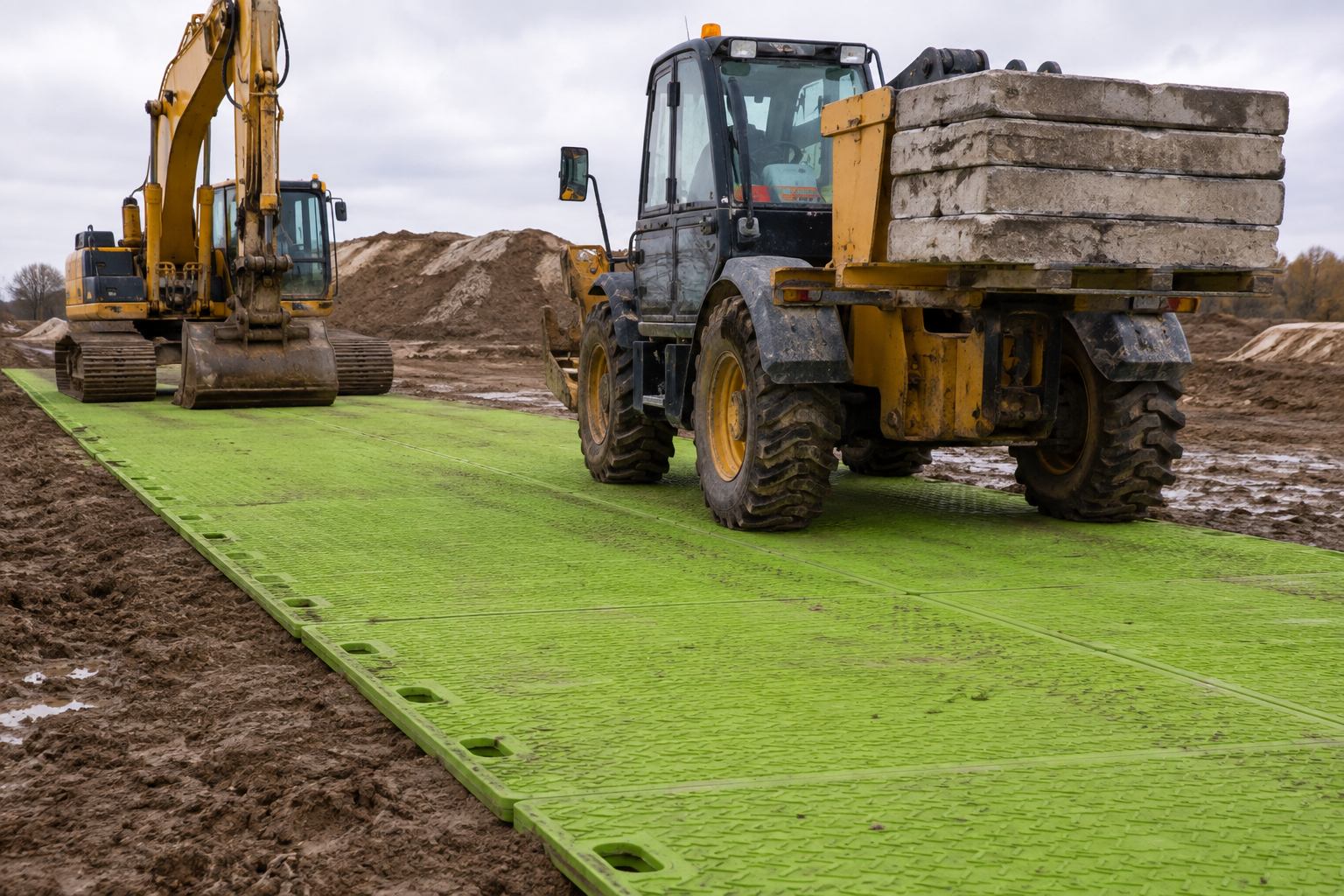
80-ton rating with real margin: Equipment running on soft ground creates higher effective loads as the ground deforms. The large safety margin in BAM!’s 80-ton rating is especially valuable in soft ground conditions.
HDPE that doesn’t absorb moisture: Mats deployed in mud and water don’t absorb moisture, swell, or degrade. They perform identically after days of wet-condition deployment.
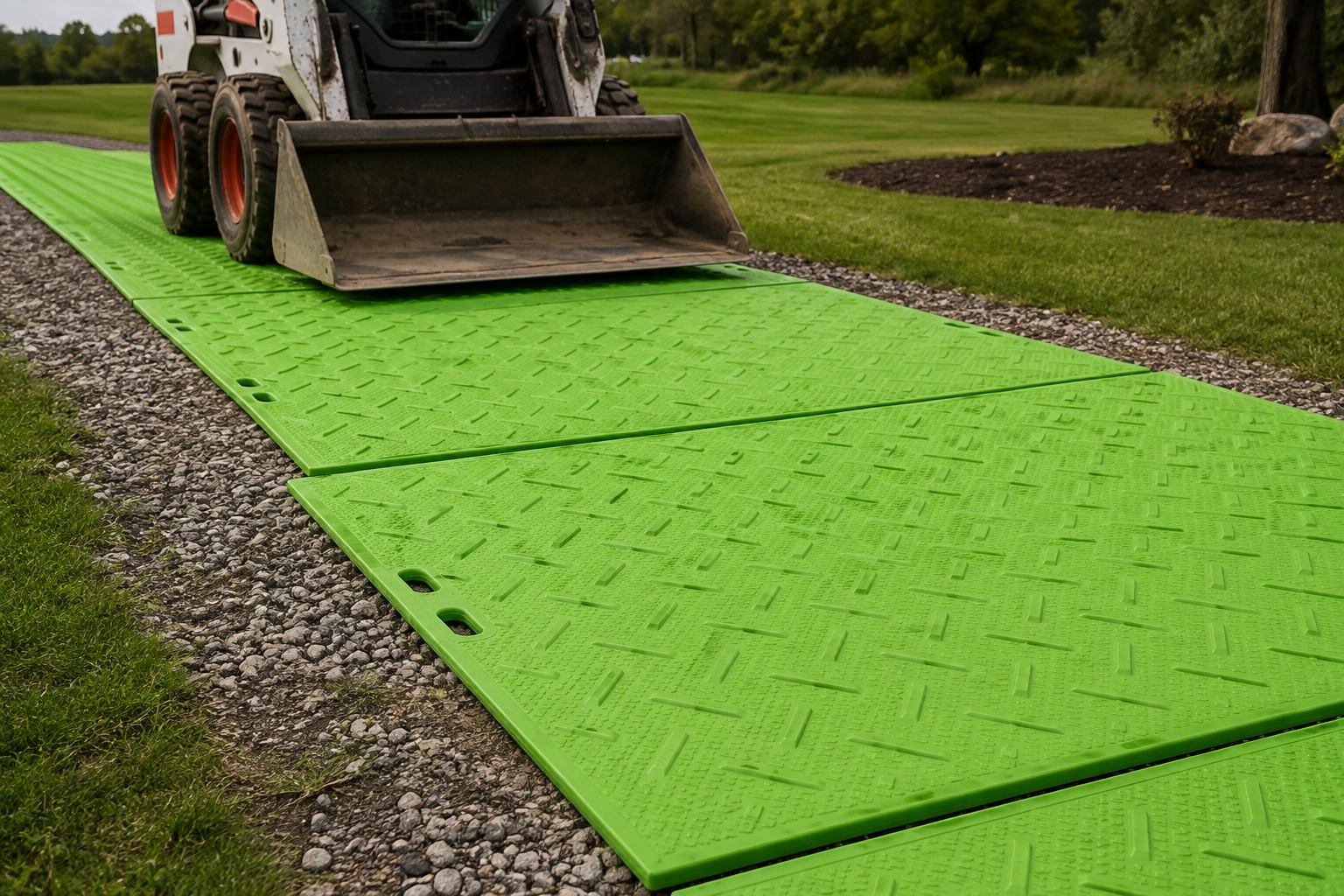
Dual-sided traction: Equipment-side grip for machine traction, pedestrian-side grip for crew members working in wet conditions. Both matter in mud scenarios.
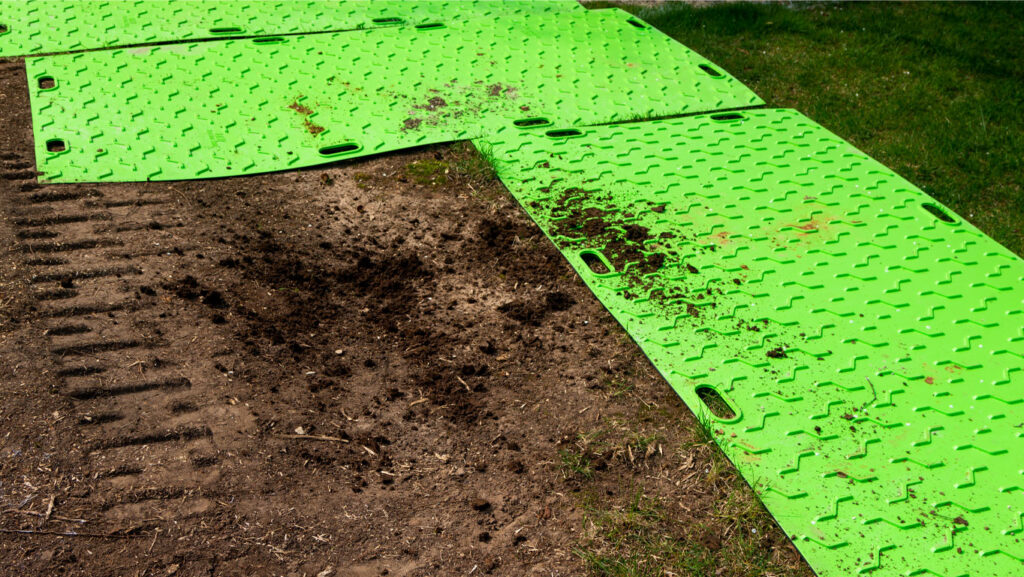
Easy cleaning after deployment: A pressure washer removes mud completely. Mats are ready for the next job.
Retrieving Mats After a Muddy Job
Mat retrieval from muddy sites is easier than many contractors expect. The HDPE surface doesn’t bond to mud—panels lift cleanly from the surface. Crew members use the 8 large hand holds to retrieve panels one at a time without requiring additional equipment.
On extremely muddy sites, a rubber mat at the truck can serve as a scraper—sliding panels across it removes the heaviest mud before loading. A pressure wash at the yard completes the cleaning.
Frequently Asked Questions
Q: Can mud mats completely replace gravel or fill for temporary access roads?
A: In many residential and light commercial applications, yes. For longer-duration access roads under sustained heavy traffic, gravel underlayment combined with mat coverage may be preferable. Contact BAM! at 888-870-8158 for specific application guidance.
Q: How do I keep mats from sliding on soft ground?
A: BAM! mats have enough mass and tread contact to remain stable on most soft ground surfaces. For extreme conditions or slopes, consider pinning options. Contact BAM! at 888-870-8158 to discuss specific stabilization approaches.
Q: What’s the best way to handle a site where some areas are firm and some are soft?
A: Cover all soft sections consistently. Use the firm sections as transition zones. Don’t assume firm-looking surface will remain firm under repeated equipment loads—conditions change during a job.
Q: Can mud mats be used in water or saturated drainage areas?
A: Yes. HDPE is non-reactive in water and safe around drainage areas. Contact BAM! at 888-870-8158 for guidance on water-adjacent applications and any local regulatory considerations.
Keep Jobs Moving When the Ground Doesn’t Cooperate
Mud is a problem. Mud mats are the answer. The contractors who build access routes before conditions deteriorate keep jobs on schedule. The ones who wait until machines are stuck in mud spend that day on recovery.
Explore BAM! mud mats at bamgroundpro.com/products. Find a distributor at bamgroundpro.com/where-to-purchase. Contact us at bamgroundpro.com/contact-us, call 888-870-8158, or email msheridan@alliedplastics.com. Work cleaner. Work safer. Pro’s choose BAM!