The phrase ‘heavy duty’ gets applied to a lot of products that aren’t actually heavy duty. In ground protection, that gap between marketing language and real-world performance creates a real risk: equipment that exceeds the mat’s actual capacity damages property and creates safety hazards.
BAM! Bad Ass Mats are rated to 80 tons—160,000 pounds. That’s not a marketing target. It’s an engineering specification from a product manufactured at an ISO 9001:2015 certified facility in Twin Lakes, Wisconsin.
This post explains what 80-ton ground protection actually means in practice, which equipment and applications require it, and how to size a heavy duty mat system for the work you do.
What ’80-Ton Rated’ Actually Means
Load ratings for ground protection mats can be stated in different ways, and it’s important to understand what the number represents.
An 80-ton rating means the mat can support 80 tons of load—160,000 pounds—under the test conditions used to establish the rating. In practice, contractors should always work well within rated capacity, accounting for dynamic loading, soil conditions, and load concentration factors.
Static vs. dynamic loads
A static load is equipment sitting still. A dynamic load is equipment in motion—driving over the mat, accelerating, braking. Dynamic loads create impact forces that exceed static weight. A 40,000-pound truck crossing a mat at working speed applies dynamic forces higher than 40,000 pounds. Working with a 2:1 or greater safety factor relative to the mat’s rated capacity is standard practice.
Point loads vs. distributed loads
Load rating assumes distributed load across the mat surface. Outrigger pads, crane feet, and equipment stabilizers create point loads—force concentrated in a small area. Point loads require additional consideration even on high-rated mats. Always use outrigger pads in addition to ground mats for lift equipment.
Equipment Weight Reference: What You’re Actually Running
Compact track loaders: 8,000 to 12,000 lbs
Mini excavators (under 6 ton): 8,000 to 13,000 lbs
Standard excavators: 30,000 to 80,000 lbs
Loaded dump trucks: 40,000 to 80,000 lbs
Concrete trucks: 30,000 to 60,000 lbs
Loaded roll-off dumpster: 15,000 to 30,000 lbs
Boom lifts (large): 20,000 to 45,000 lbs
Cranes (small): 40,000 to 100,000+ lbs
BAM!’s 80-ton rating covers the full range of residential and light commercial equipment. For large cranes and heavy construction equipment, consult with a geotechnical engineer for site-specific bearing capacity calculations.
Heavy Duty Applications: Where the 80-Ton Rating Earns Its Keep
Excavation and site development
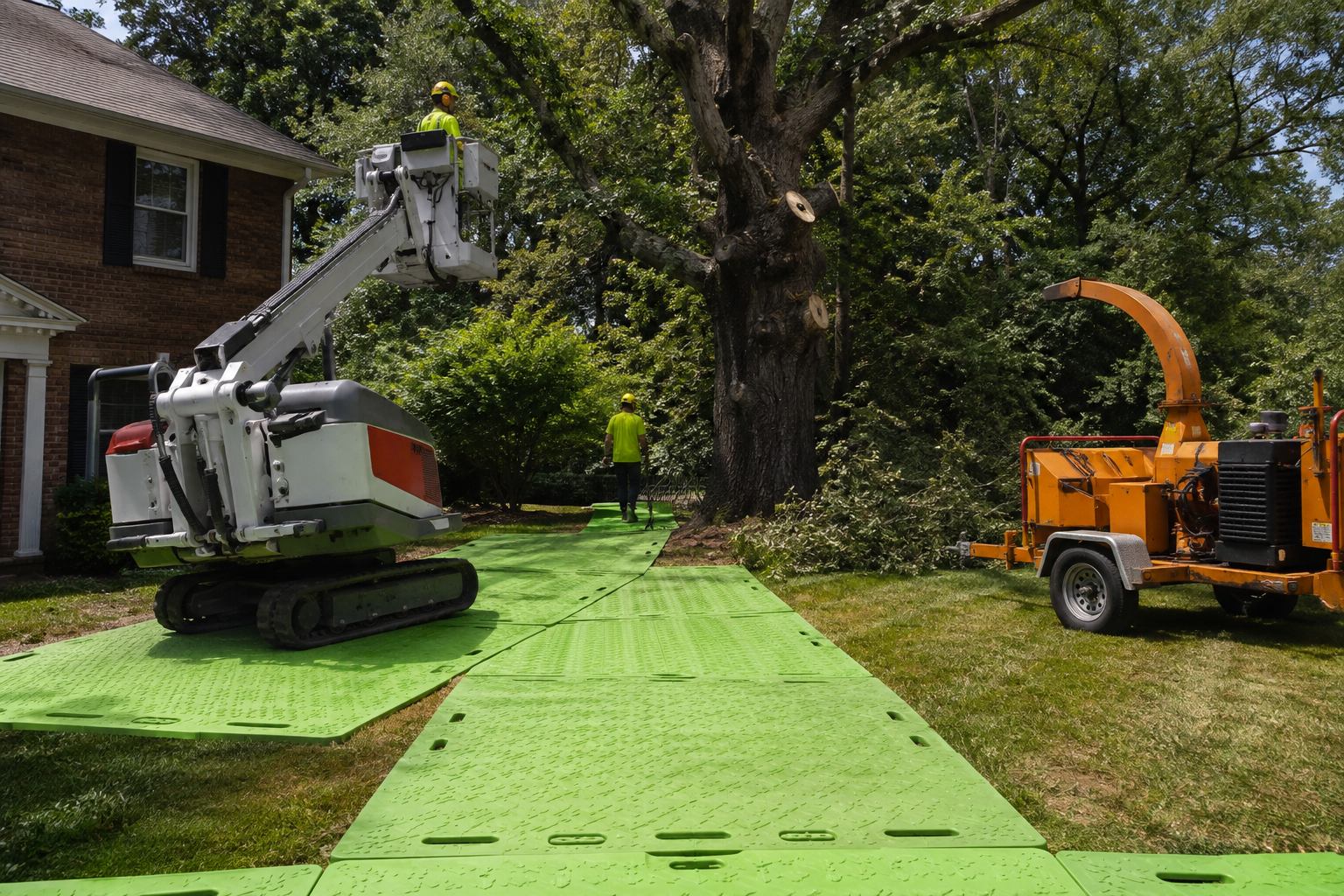
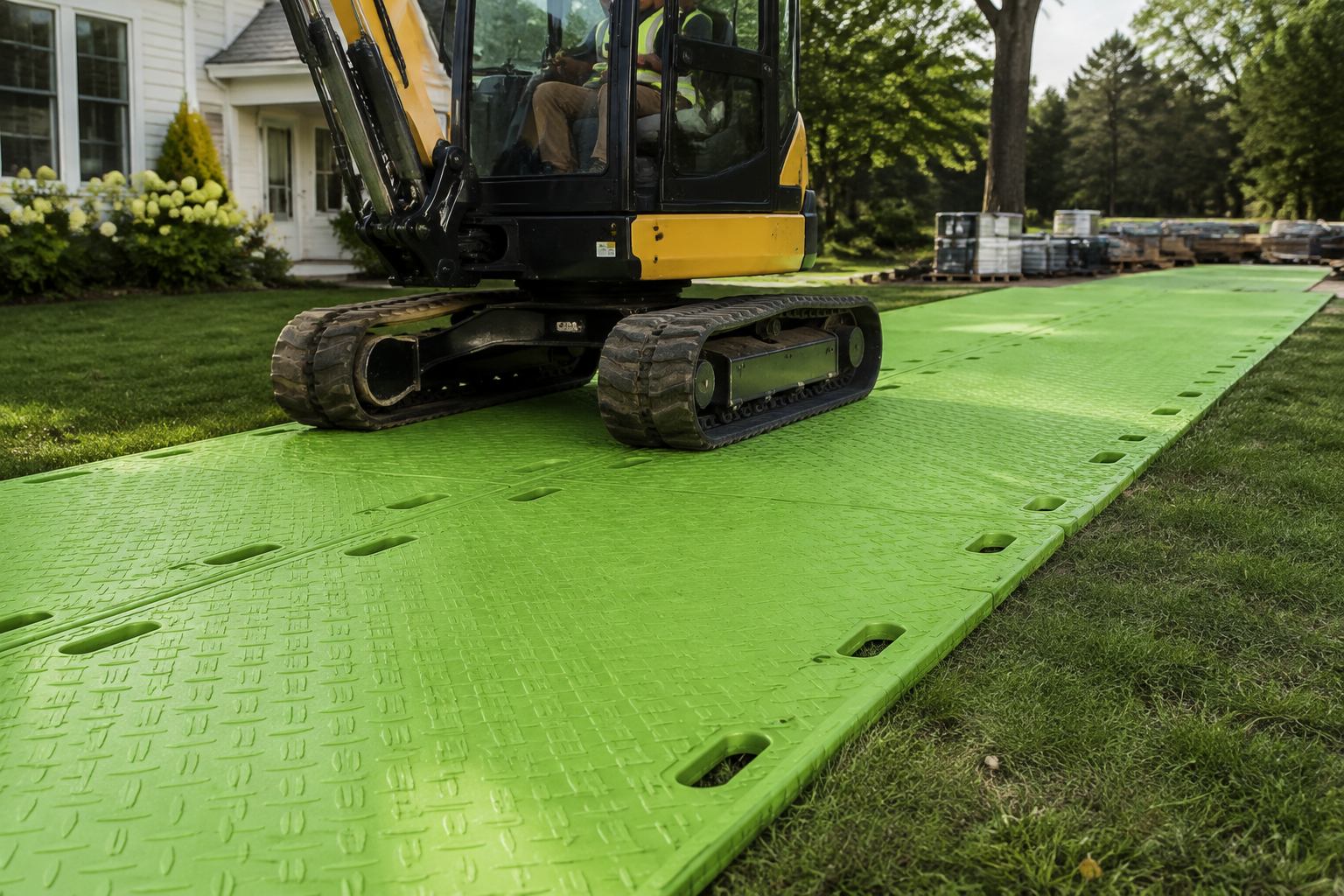
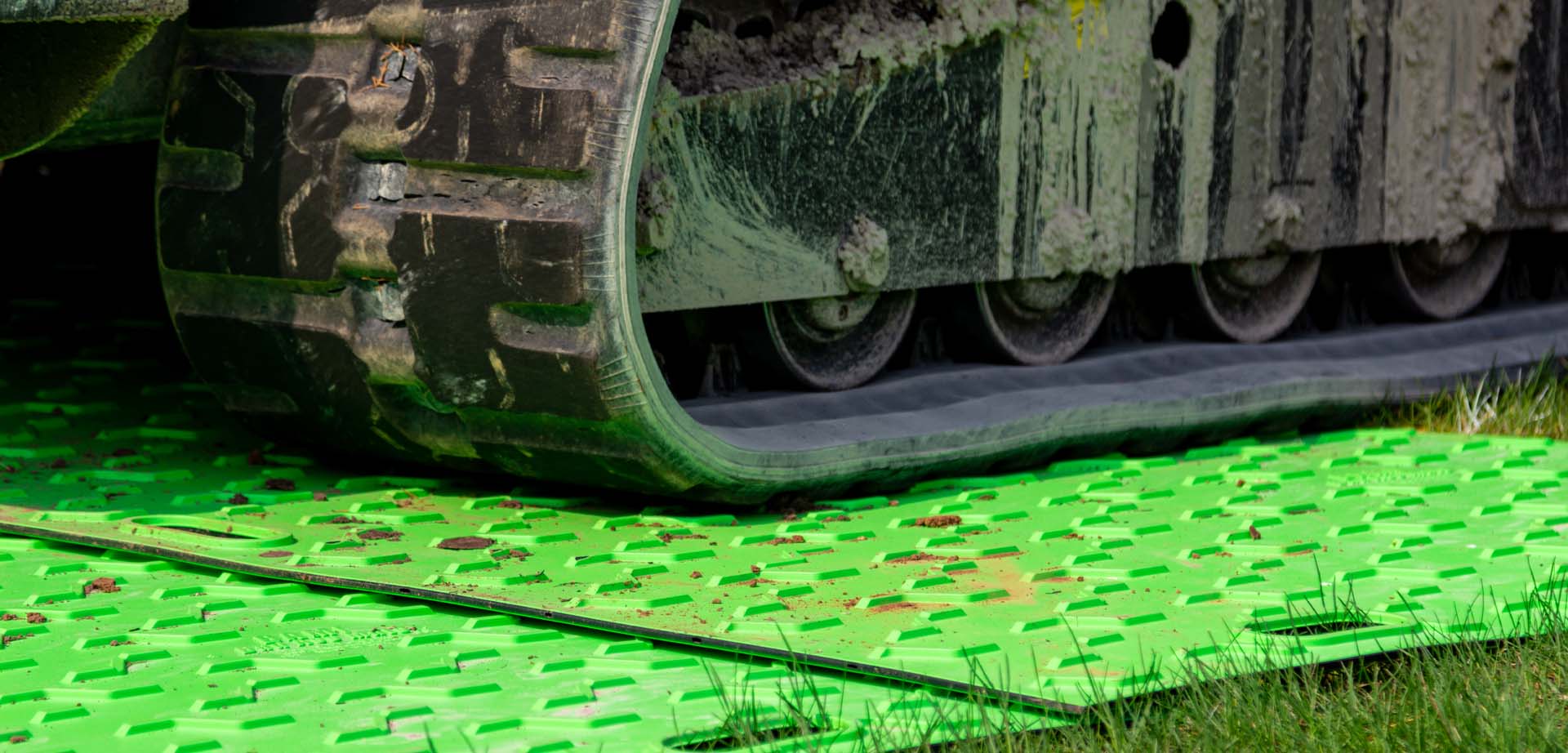
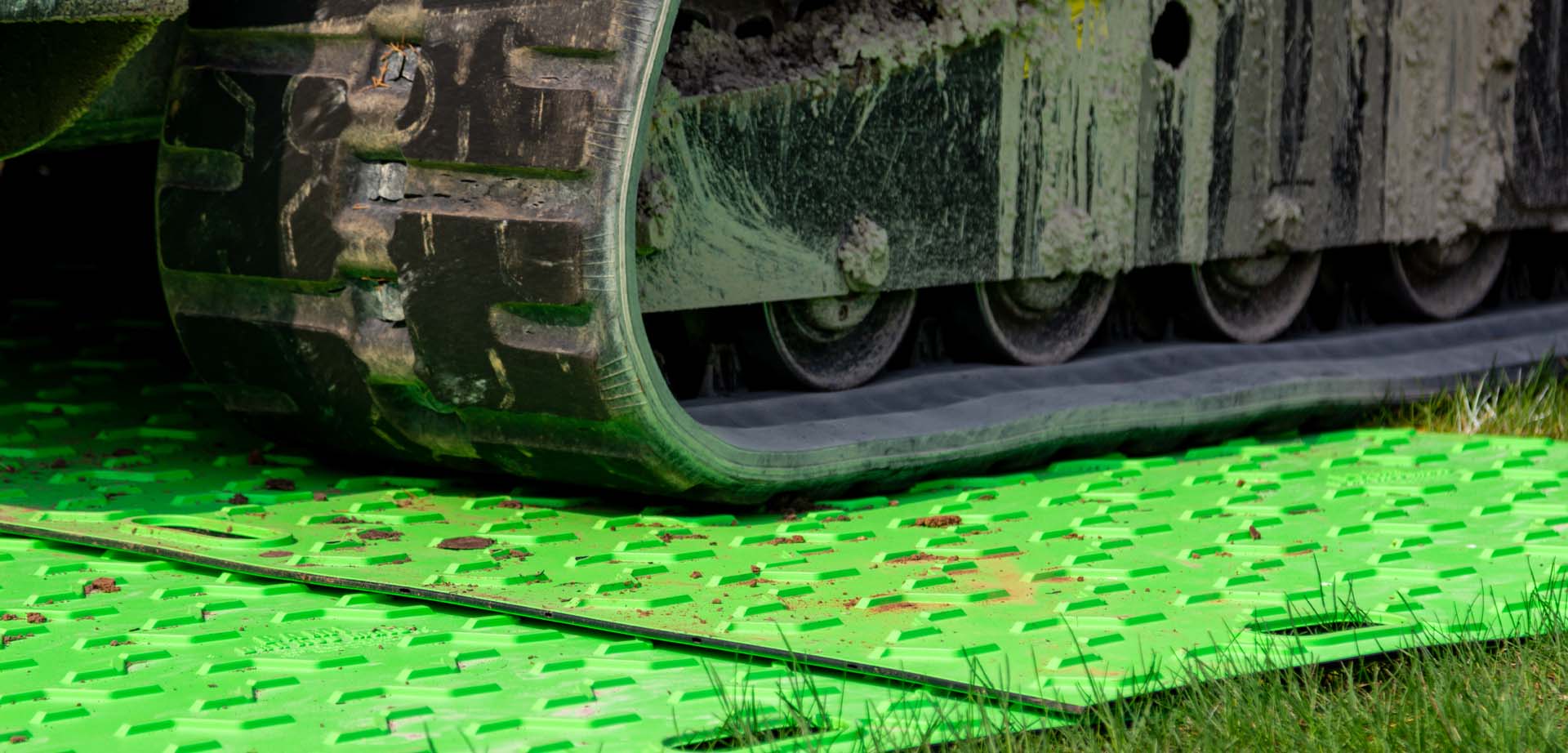
Full-size excavators and graders are among the heaviest equipment contractors encounter on residential and commercial sites. A 40-ton excavator requires a mat system rated well above its weight—BAM!’s 80-ton rating provides the necessary margin with additional capacity for dynamic loading factors.
Concrete truck access
Concrete truck deliveries are one of the highest-load events on residential sites. A fully loaded concrete truck can reach 60,000 pounds. Mats under the approach route and under the truck during discharge protect driveways, lawns, and access paths.
Crane setup and lift operations
Mobile crane setup on soft ground or residential surfaces requires ground protection under both travel and outrigger positions. The 80-ton BAM! rating provides adequate support for small to mid-size cranes while outrigger pads address the concentrated load at each leg.
Utility and pipeline construction
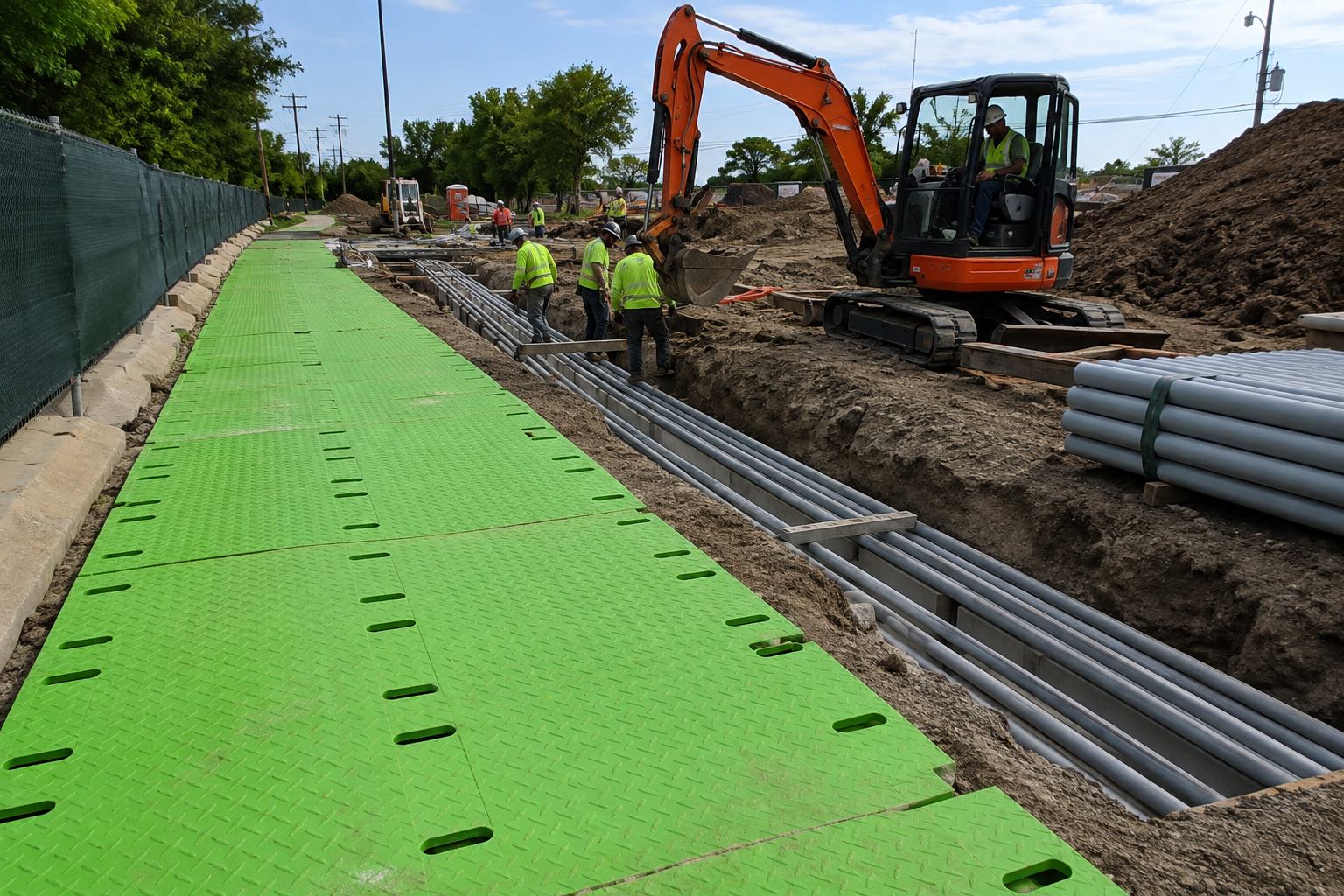
Backhoes, directional drilling rigs, and utility excavators work in easements that are often soft, wet, or adjacent to established landscaping. Mats protect both the work surface and the landscaping alongside the access route.
Event setup with heavy equipment
Large tents, temporary structures, and stage equipment requires heavy equipment to set up—forklifts, boom lifts, and flatbed trucks on turf venues. BAM! mats protect the turf and provide stable ground for equipment operation.
Heavy Duty Foot Traffic: Why Crew Safety Matters Too
Heavy duty mats aren’t just for machines. Active construction sites have crew members working alongside heavy equipment constantly—and the ground conditions that require mats for equipment often create hazards for workers as well.
Mud and saturated ground
Workers walking on muddy, uneven ground are at significant fall risk. A mat surface—even on saturated ground—provides a stable, non-slip surface that dramatically reduces slip-and-fall incidents.
Adjacent to operating equipment
Crew working alongside operating heavy equipment must have stable, predictable footing. A mat path provides a defined, stable work zone separate from the equipment’s operating area.
Material staging areas
Crew members repeatedly lifting and carrying materials on unstable or muddy ground face fatigue, slip risk, and dropped load risk. Matted staging areas give crews a level, stable surface for material handling.
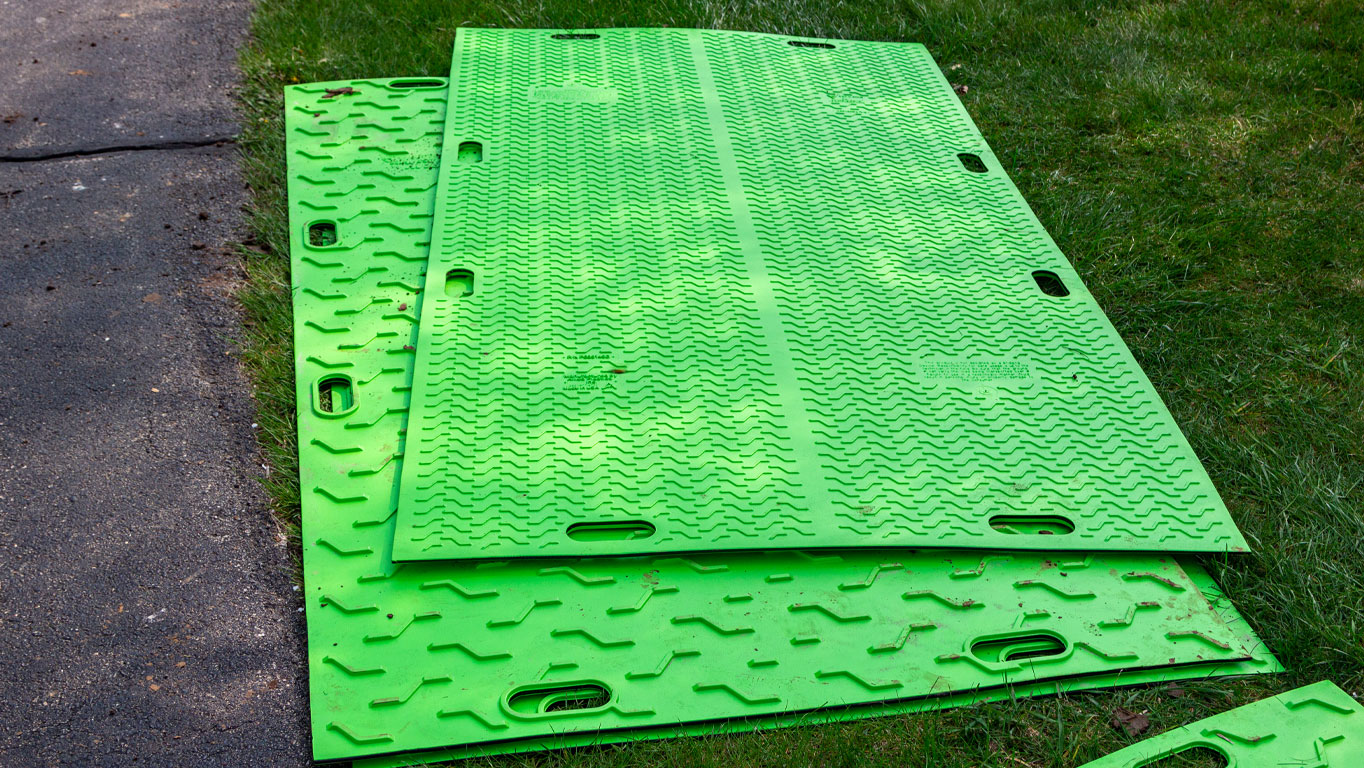
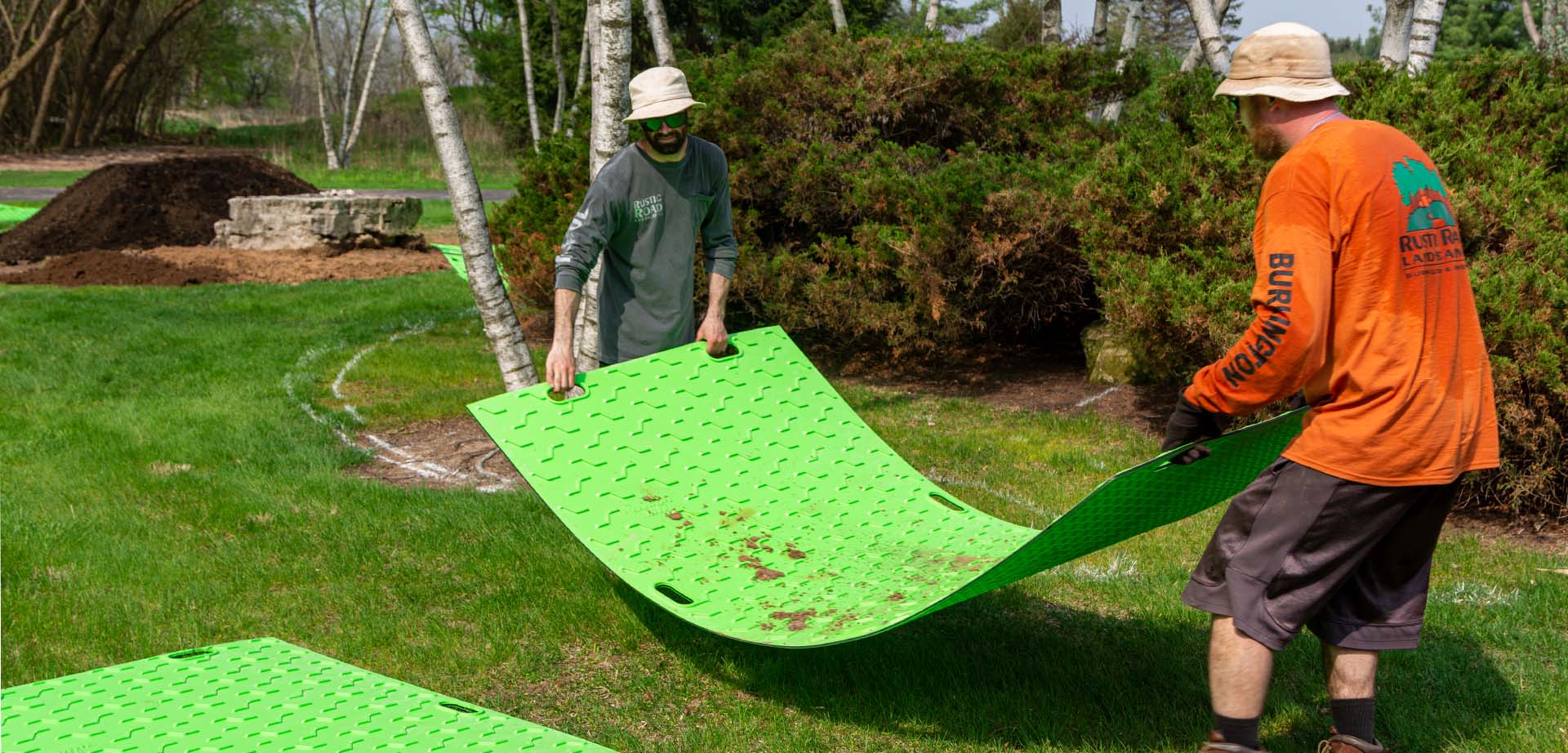
BAM!’s pedestrian-side tread pattern is designed specifically for this: a different tread geometry that provides the slip resistance crew members need for safe footing throughout the workday.
Sizing a Heavy Duty Mat System
For heavy duty applications, the mat system needs to cover more than just the travel path. Standard sizing principles:
- Equipment footprint: cover the full equipment footprint plus 18 to 24 inches beyond in all directions
- Access route: double-column for equipment wider than 4 feet; triple-column for equipment wider than 8 feet
- Staging zones: cover the full staging area plus turning radius—generously
- Outrigger positions: dedicated panels under each outrigger pad, sized to the outrigger plate area
- Crew work zones: single-column paths for crew movement adjacent to equipment
Frequently Asked Questions
Q: Is there a difference between the 4×8 and 2×8 BAM! mats in terms of load rating?
A: Both the 4×8 and 2×8 BAM! mats carry the 80-ton rating. The difference is panel size and resulting coverage area. The 4×8 is the standard for access routes and staging areas. The 2×8 provides flexibility for narrow access points and precise placement.
Q: How does soil type affect mat performance under heavy equipment?
A: Soil bearing capacity varies significantly by type and moisture content. Saturated clay, sand, and organic soil have lower bearing capacities than compacted gravel or dry clay. In soft soil conditions, consider wider coverage (more mats) to distribute load across a larger footprint.
Q: Do BAM! mats require any surface preparation before placing heavy equipment?
A: Remove large rocks, debris, or sharp objects from the surface before placing mats. On extremely soft or uneven ground, minor grading to level the surface improves mat stability under heavy loads. Contact BAM! at 888-870-8158 for site-specific guidance.
Q: Can BAM! mats be stacked to increase load capacity?
A: Stacking mats does not proportionally increase load rating and is not a recommended practice for load rating purposes. Contact BAM! at 888-870-8158 to discuss specific high-load applications.
When the Job Demands Real Heavy Duty Protection
Don’t compromise on load rating for heavy equipment jobs. A mat that’s not rated for the loads it encounters is worse than no mat—it creates a false sense of security and can fail without warning.
Explore BAM! heavy duty ground protection mats at bamgroundpro.com/products. Find a distributor at bamgroundpro.com/where-to-purchase. Contact us at bamgroundpro.com/contact-us, call 888-870-8158, or email msheridan@alliedplastics.com. Work cleaner. Work safer. Pro’s choose BAM!