Tree service work is physically demanding, equipment-intensive, and often happens in the exact places homeowners care about most: their lawns, their landscaping, and the access routes to their backyards.
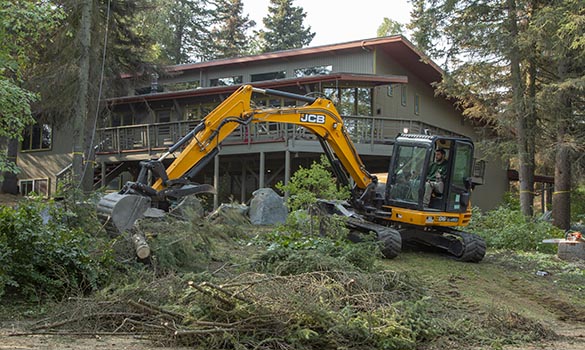
A large tree removal job might involve a bucket truck, a wood chipper, a stump grinder, a skid steer, and multiple crew members making dozens of equipment passes across a residential lawn. Without ground protection, the lawn at the end of that job looks nothing like the lawn at the beginning.
Ground protection mats are what separates tree service companies that leave properties looking professional from the ones that leave behind a damage bill.
The Tree Service Equipment Problem
Bucket trucks and wood chippers are heavy
A fully equipped bucket truck can weigh 30,000 to 50,000 pounds—enormous for a residential driveway or lawn. Wood chippers, while lighter, still weigh 5,000 to 10,000 pounds loaded. Both machines often need to get close to the tree, which means crossing turf, driveways, and sometimes delicate landscaping.
Stump grinders create concentrated pressure
Self-propelled stump grinders are compact but heavy relative to their footprint. They also vibrate significantly during operation, which compounds ground disturbance. Getting a stump grinder to a backyard tree typically requires crossing the lawn.
Crew foot traffic adds to the total
Beyond the machines, tree crews are constantly moving. Hauling branches, positioning ropes, operating equipment controls, cleaning debris. On a full-day removal job, crew foot traffic over the same lawn area creates compaction and wear that’s visible even without machine involvement.
Root Zone Protection: The Invisible Priority
Tree service contractors know something homeowners often don’t: the most valuable trees on a property are their own worst enemy when heavy equipment is deployed nearby.
Tree root systems extend far beyond the drip line—often 2 to 3 times the canopy radius. Heavy equipment over root zones compresses soil, reduces oxygen and water infiltration, and physically damages surface roots. This damage doesn’t show immediately—it manifests as decline and death over the following 1 to 3 years.
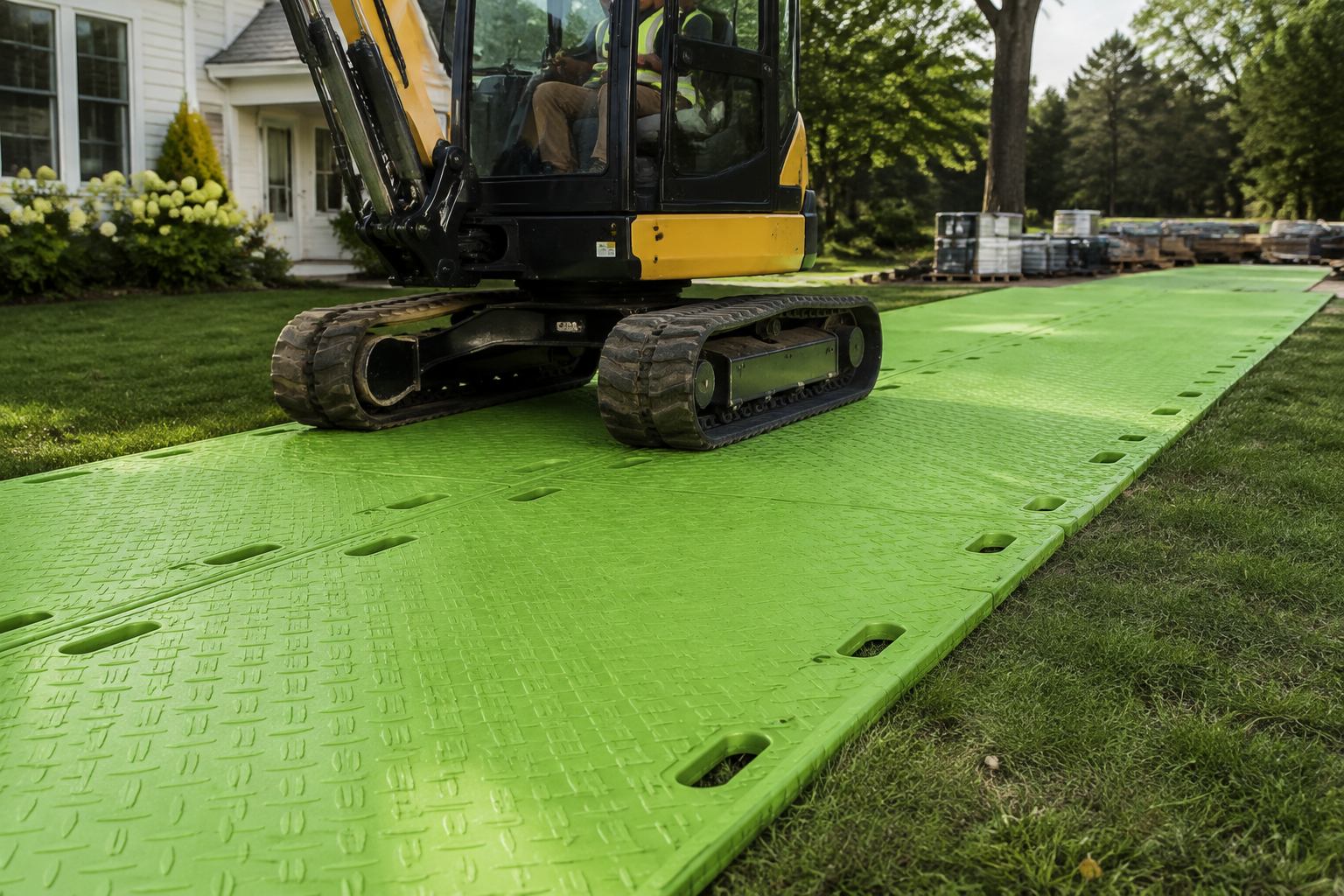
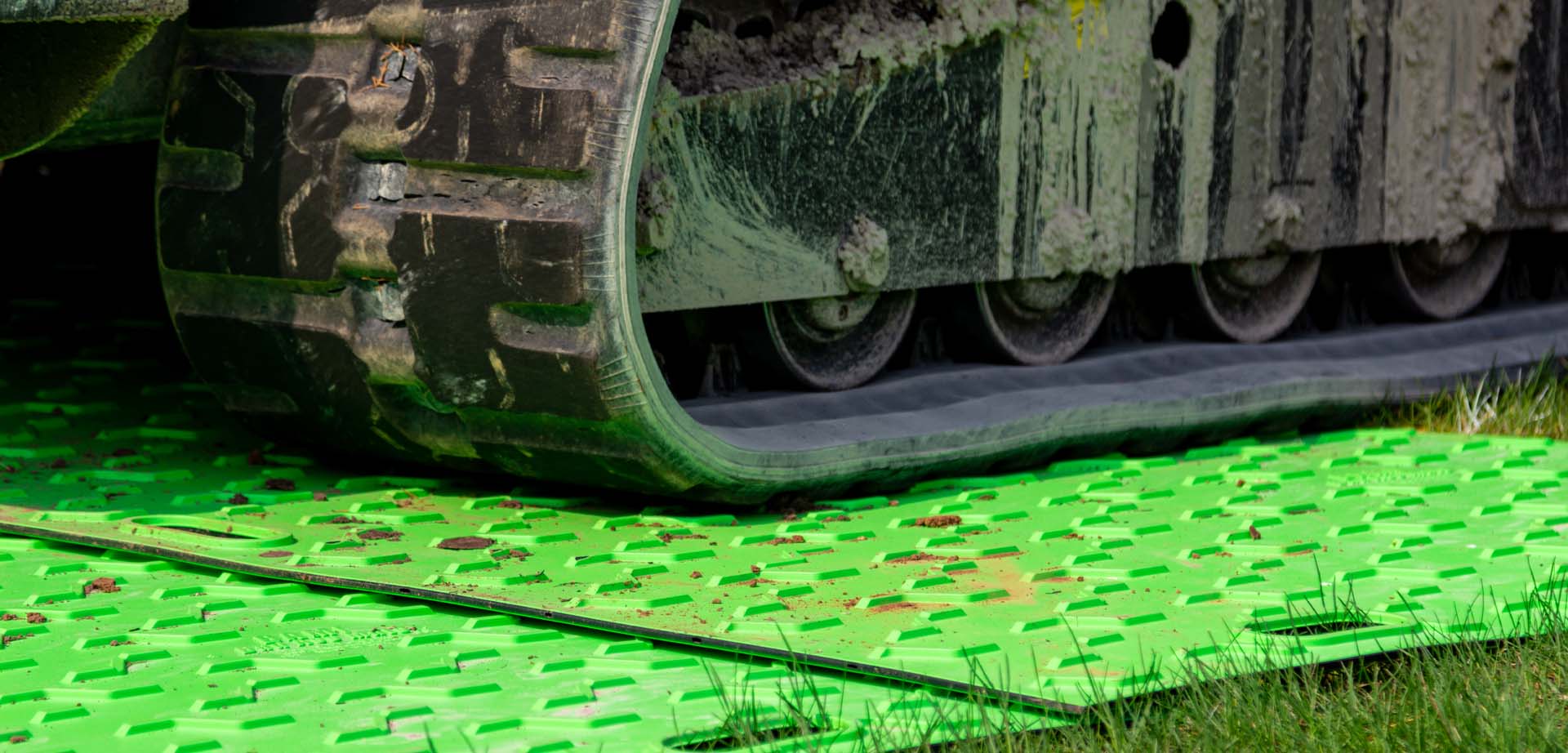
Ground protection mats distribute load across the panel surface, reducing the pressure per square foot on root zones. They don’t eliminate the risk of root damage from extremely heavy equipment, but they significantly reduce soil compaction—which is the primary mechanism of root zone damage.
Setting Up Tree Service Ground Protection
Plan access before any equipment moves
Walk the property before the crew arrives. Identify the access route from the street to the tree. Note where the driveway is, where established landscaping borders the path, and where roots from the target tree (and other nearby trees) are likely to be.
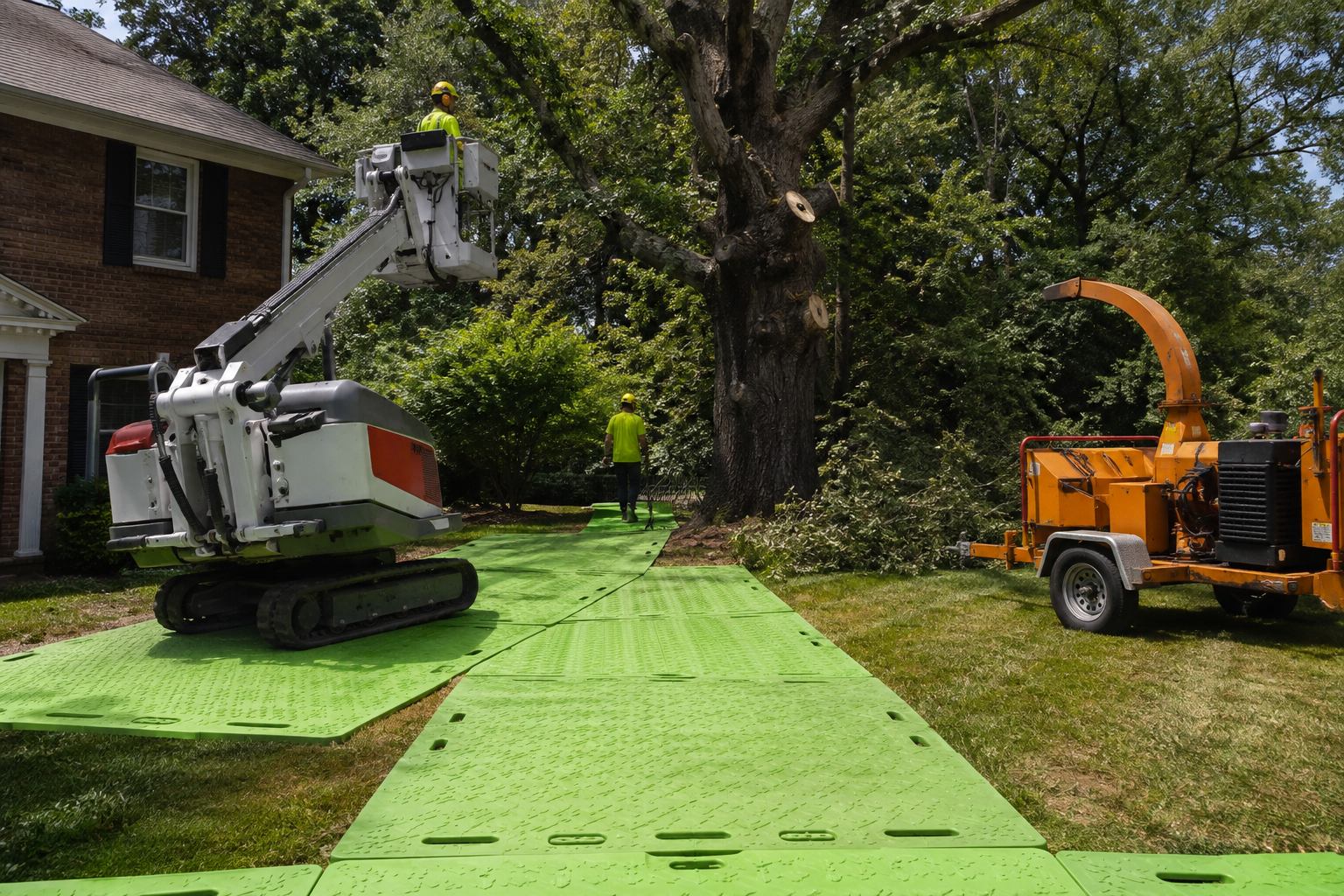
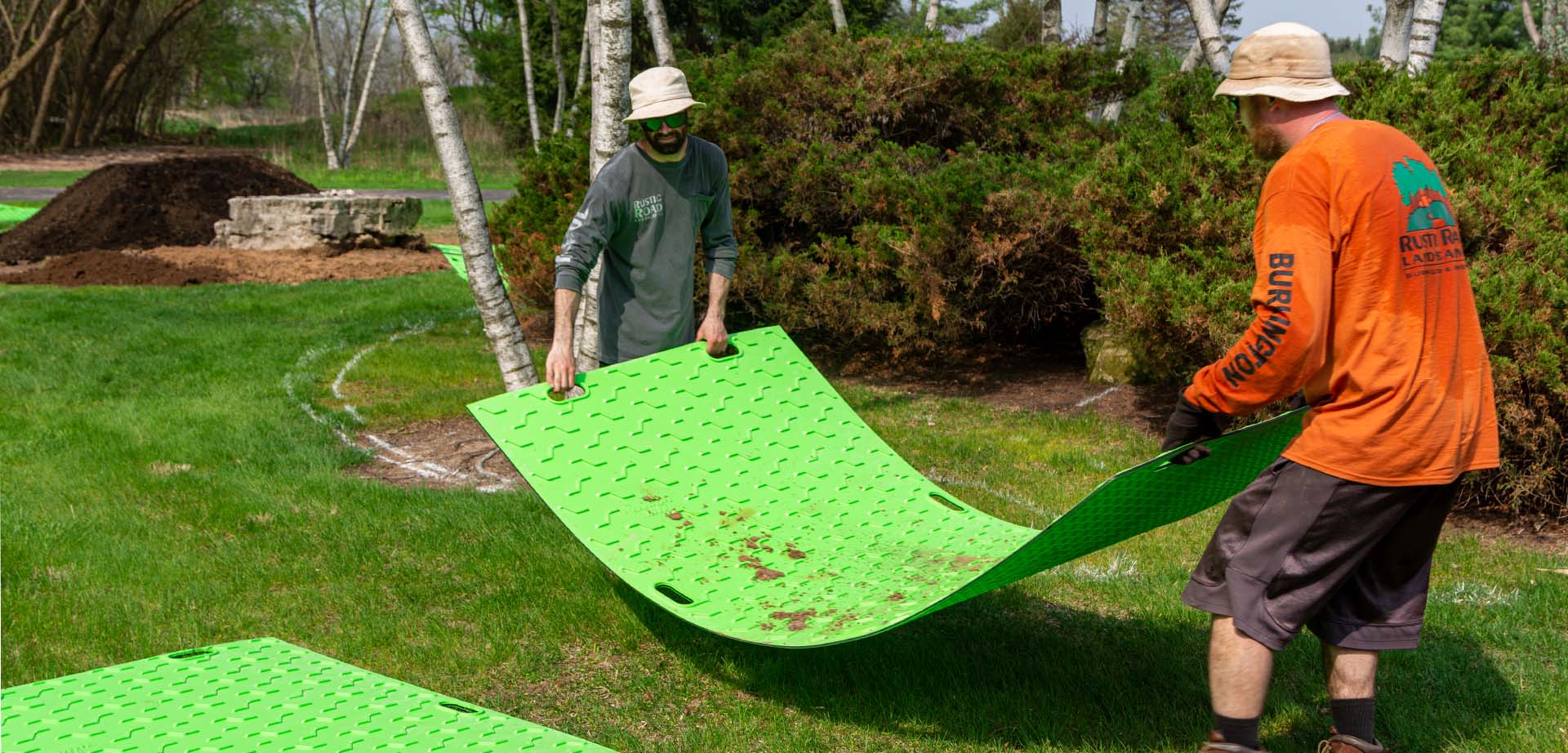
Lay mats for this route before any equipment is moved from the truck. This is especially important for bucket trucks, which cause the most damage per pass.
Cover the full bucket truck and chipper approach
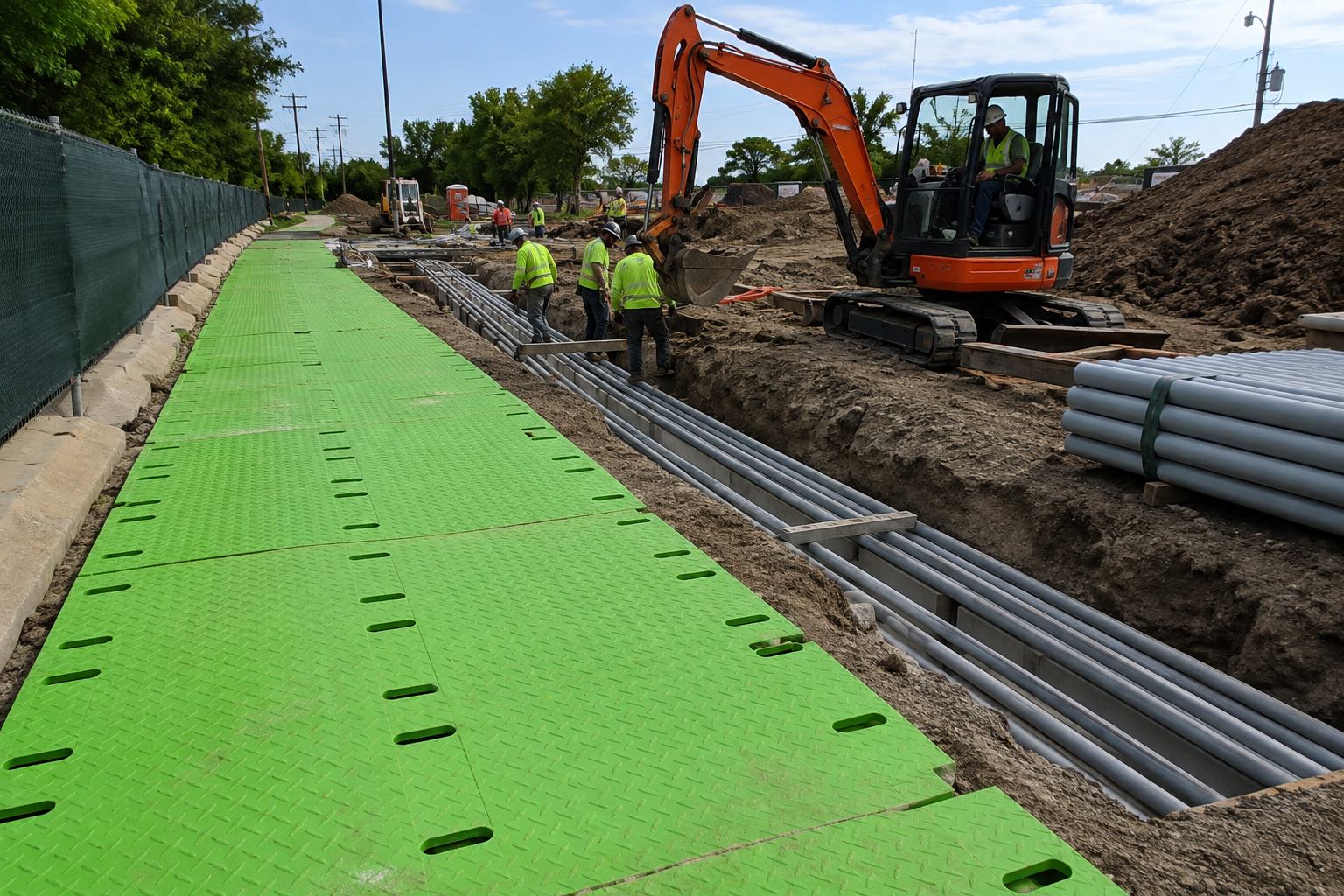
Bucket trucks and chippers need stable, defined routes. A double-column BAM! 4×8 mat path provides an 8-foot lane—sufficient for most equipment. Run the path from the street to the working position.
Protect the setup zone around the tree
Where equipment positions and operates around the tree is the highest-activity zone. Cover the full perimeter of operations—not just the travel path. This is where crew is most active, where material falls, and where equipment is repositioned most frequently.
Extended protection for stump grinding
Stump grinding often happens after the main removal is complete. The stump grinder needs its own access path—potentially different from the bucket truck route if the access point was removed with the tree. Lay a new mat path for the stump grinder rather than assuming the previous coverage is adequate.
Tree Service Jobs Where Mats Are Most Critical
Large residential tree removal
Full-day removals with bucket trucks and chippers create the most equipment traffic. Comprehensive mat coverage from street to work zone is standard practice for professional tree companies.
Storm damage cleanup
Storm response jobs happen fast. Ground conditions are often wet from the storm itself. Mud and saturated turf make access much more difficult—and damage much more likely. Mats on storm response jobs enable faster, cleaner work.
Commercial and institutional tree work
Parks, campuses, and corporate properties expect professional equipment management. Damage to commercial landscaping can trigger significant claims. Mats protect both the turf and the business relationship.
High-value residential properties
Clients with luxury landscaping have the highest expectations and the most to lose. Showing up with mats is often the standard that separates preferred vendors from the competition on premium residential accounts.
What BAM! Mats Bring to Tree Service Specifically
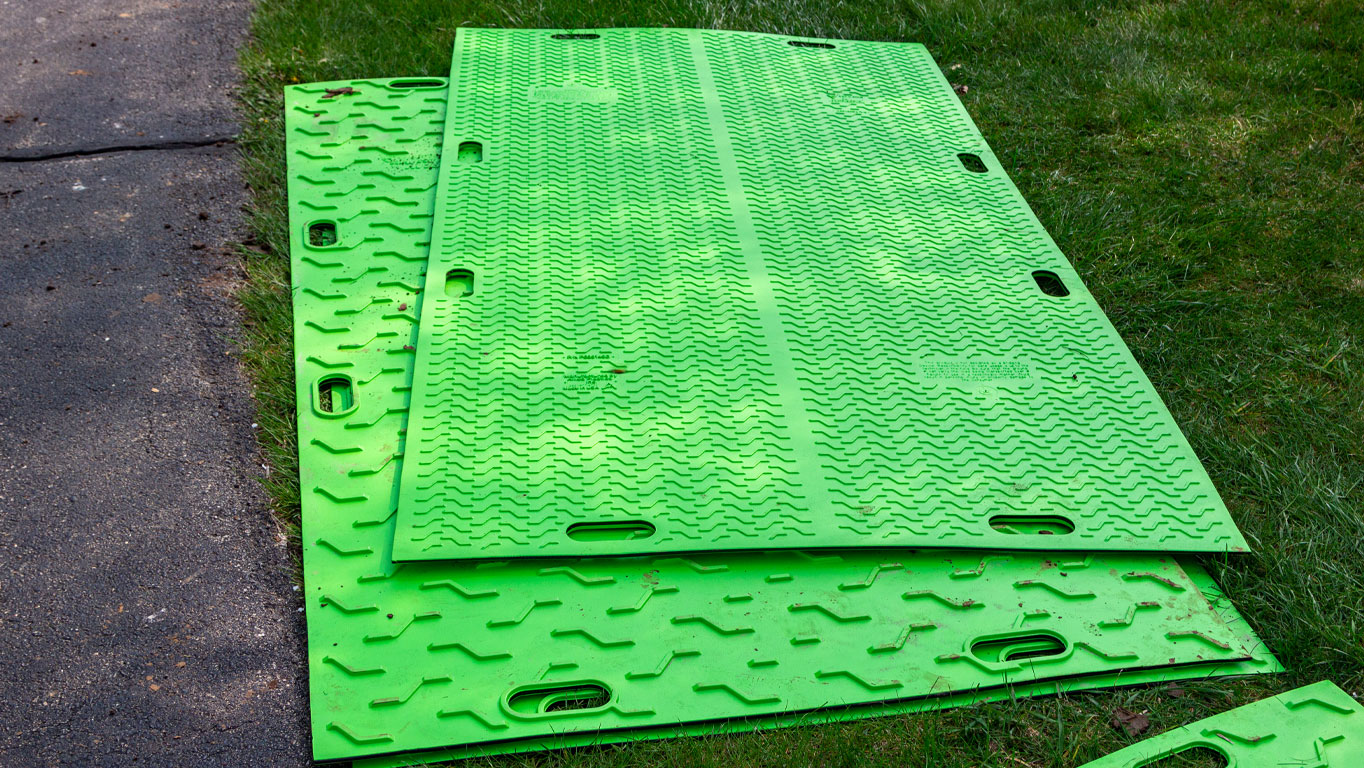
The 80-ton rating handles bucket truck loads with significant margin. The dual-sided tread keeps both heavy equipment and crew members safe in wet conditions. At 56 pounds per panel, tree service crews can deploy and retrieve mats quickly without additional labor overhead.
The Hi-Vis Safety Green color also matters for tree work: fallen branches, leaf debris, and sawdust accumulate quickly on a tree removal site. High-visibility mats are easy to locate under debris, making cleanup and retrieval faster at job end.
Frequently Asked Questions
Q: How much protection do ground mats actually provide for tree root zones?
A: Mats significantly reduce soil compaction under equipment loads by distributing pressure across the full panel surface. They don’t eliminate all risk from very heavy equipment over root zones, but they substantially reduce the compaction that is the primary cause of root zone damage. Any protection is better than none in root zones.
Q: Can mats be used on slopes common in tree work sites?
A: BAM! mats perform on slopes up to approximately 15 degrees for most equipment types. For steeper slopes, contact BAM! at 888-870-8158 to discuss application-specific guidance.
Q: What’s the best way to deploy mats for a bucket truck that needs to reposition during the job?
A: Lay enough mats to cover the full range of positions the bucket truck will need to occupy. If the truck needs to reposition significantly, the crew can leapfrog mats—moving rear mats to the front of the travel direction as the truck advances.
Q: Are mats useful for smaller tree trimming jobs, not just large removals?
A: Yes. Even smaller jobs with a single chipper and a crew create repeated foot traffic and light equipment passes that can damage turf. For jobs where a truck or chipper approaches the tree, mats are a simple protection measure that takes minutes to deploy.
Leave the Property Better Than You Found It
Tree service companies build reputations on two things: the quality of the tree work and the condition of the property afterward. Ground protection mats make the second part predictable—every time.
Explore BAM! tree service protection mats at bamgroundpro.com/products. Find a distributor at bamgroundpro.com/where-to-purchase. Contact us at bamgroundpro.com/contact-us, call 888-870-8158, or email msheridan@alliedplastics.com. Pro’s choose BAM!