Speed matters on jobsites. Every minute spent setting up access protection is a minute not spent on the actual job. That’s why the deployment efficiency of ground protection mats is just as important as their load rating.
This post covers the strategies and setups that let crews build temporary access routes and staging zones fast—with the right protection in the right places before the first truck backs in.
What ‘Roll-Out’ Ground Protection Actually Means
‘Roll-out’ is a term that gets used in two different ways in the ground protection market, and it’s worth clarifying upfront.
Some products are literally rolled—flexible plastic or rubber sheets on a spool that unroll across a surface. These work in some light-duty applications but typically carry lower load ratings and can buckle or shift under heavy equipment.
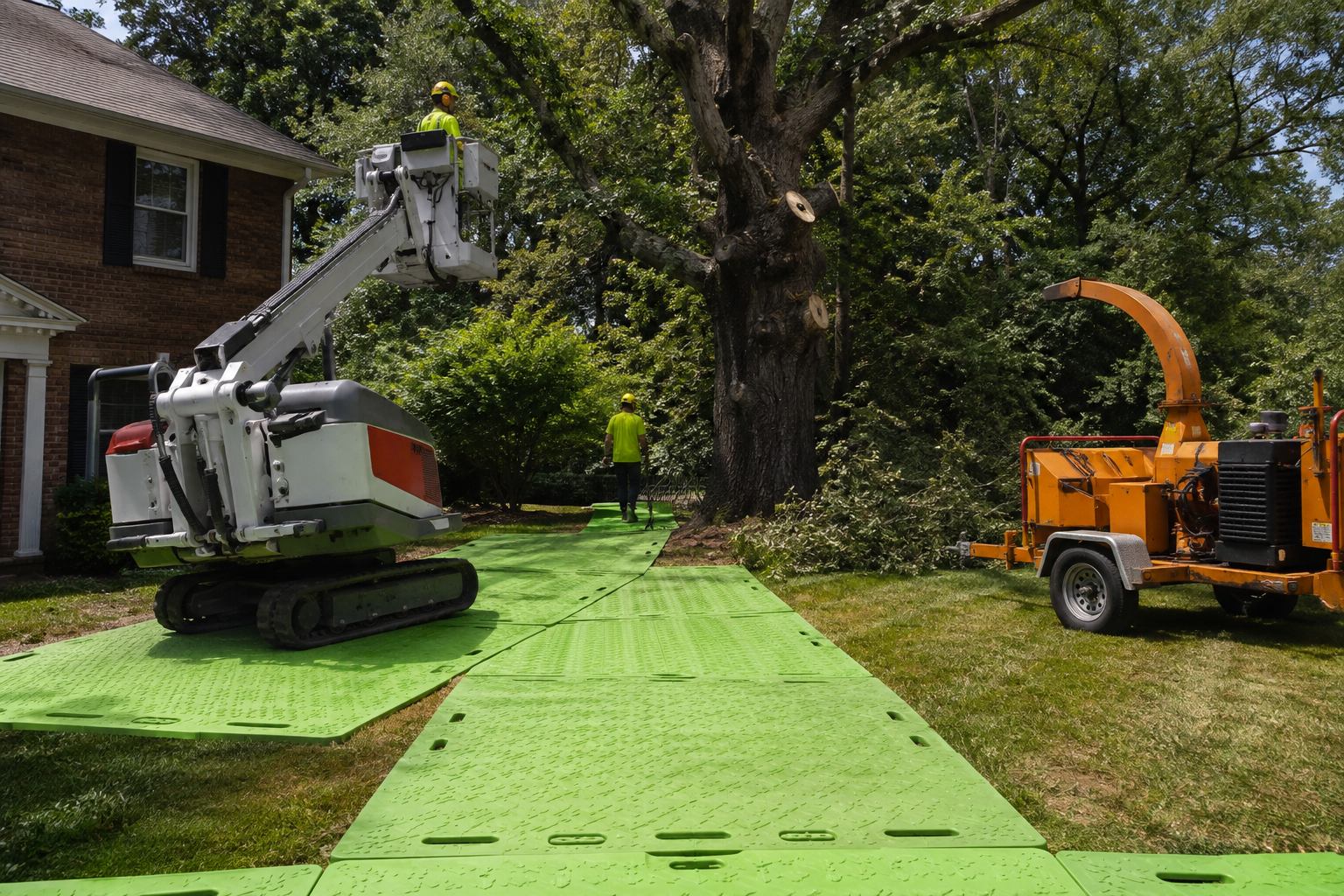
More often, ‘roll-out’ refers to the deployment workflow of panel-based HDPE mats: laying panels end to end in a continuous path, effectively rolling out a temporary access road one panel at a time. This approach combines the structural strength of rigid HDPE panels with the speed and flexibility of a sequential deployment.
BAM! Bad Ass Mats are panel-based mats deployed using this sequential roll-out method—and it’s the approach that handles real equipment loads.
Building Temporary Access Roads with HDPE Panels
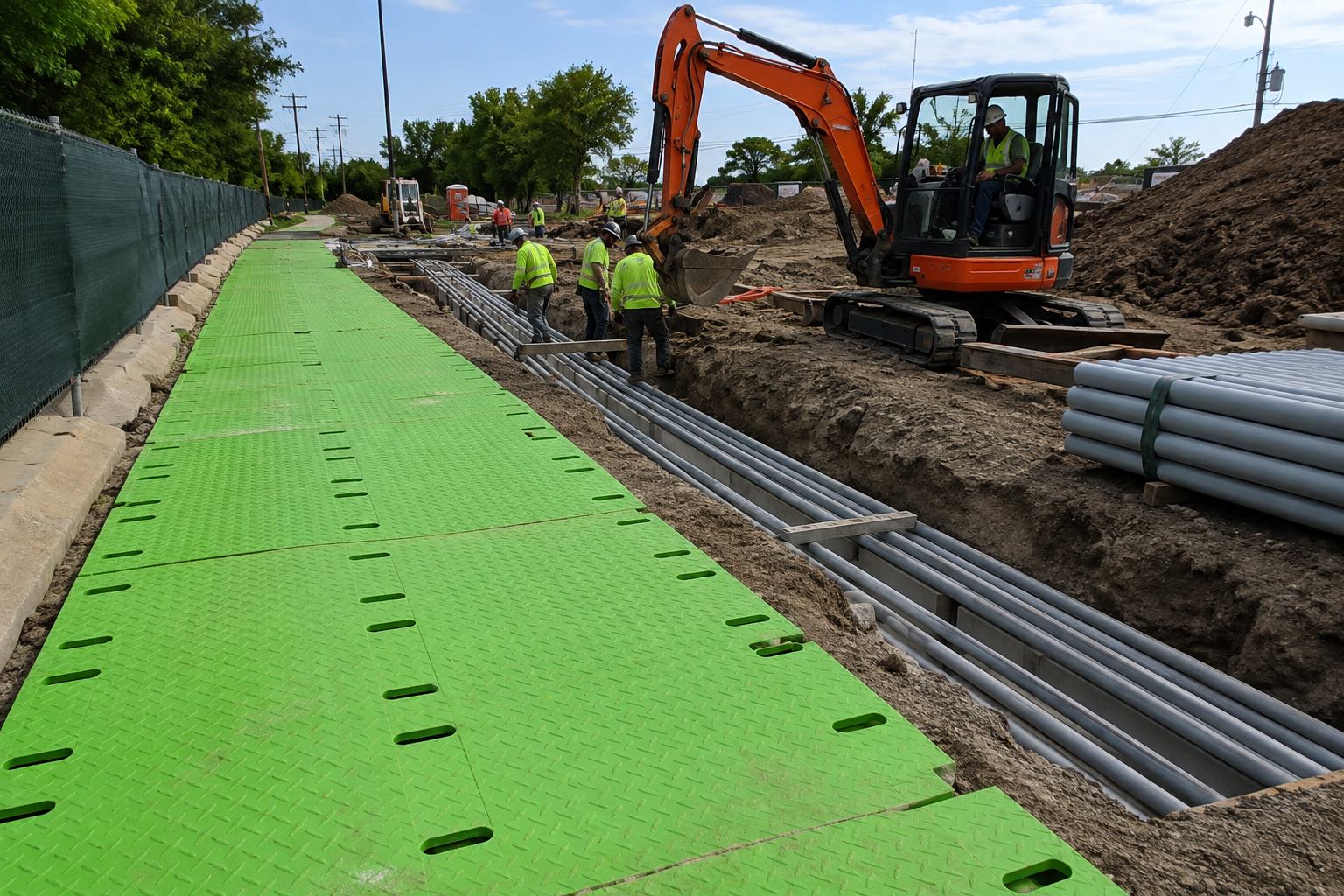
Temporary access roads are one of the most valuable applications of ground protection mats. They transform soft, wet, or otherwise inaccessible terrain into reliable equipment pathways—without the cost, time, and permanence of gravel or compacted fill.
Single-column paths for light access
A single column of 4×8 panels provides a 4-foot-wide access route. This is sufficient for foot traffic, wheelbarrows, hand equipment, and lighter motorized equipment like turf tractors or small utility vehicles.
Double-column paths for equipment access
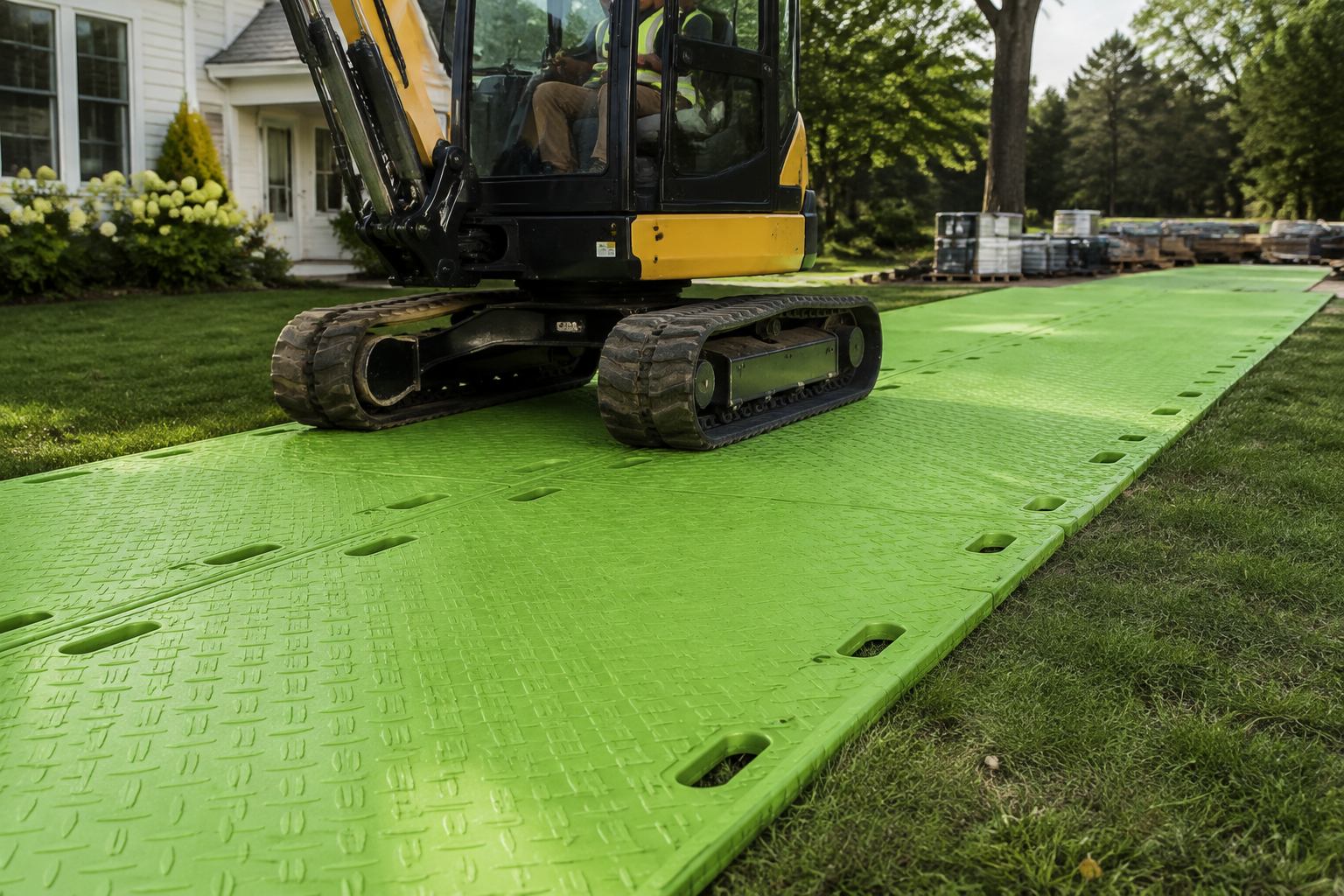
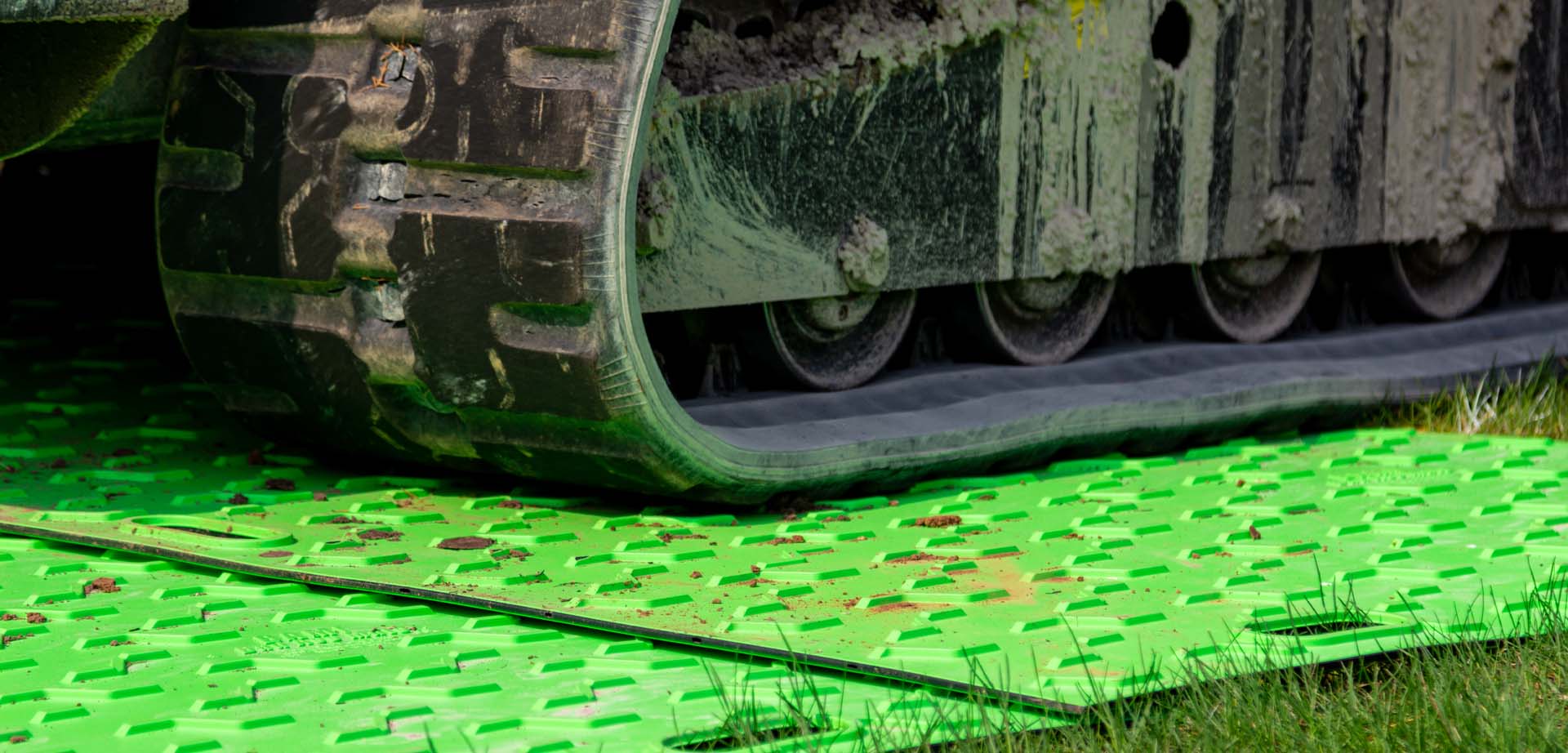
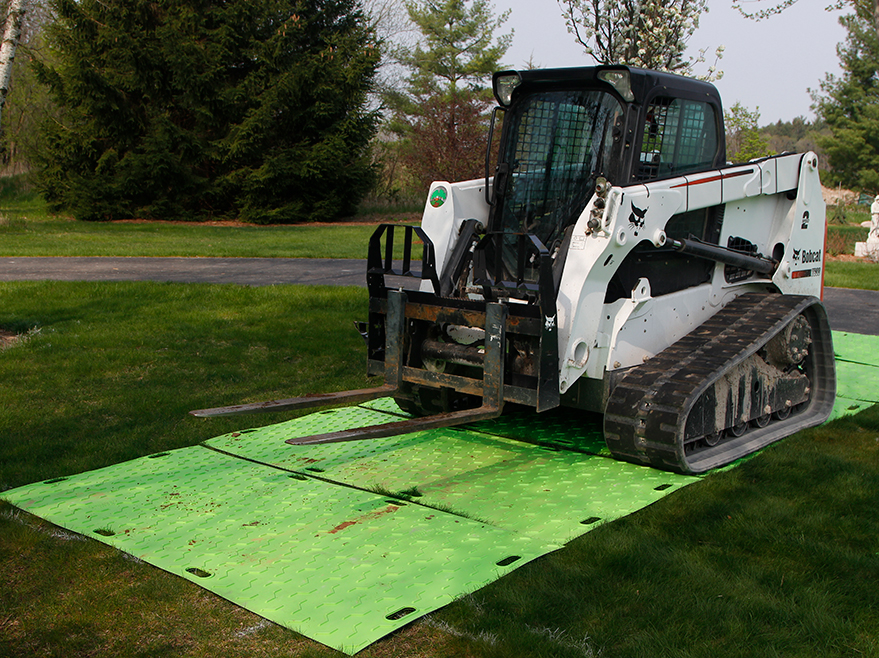
For skid steers, compact track loaders, mini excavators, and similar equipment, a double-column path (two 4×8 panels side by side = 8 feet wide) provides full coverage. The equipment’s tires or tracks stay on the mat throughout the route.
The flip-and-lay deployment method
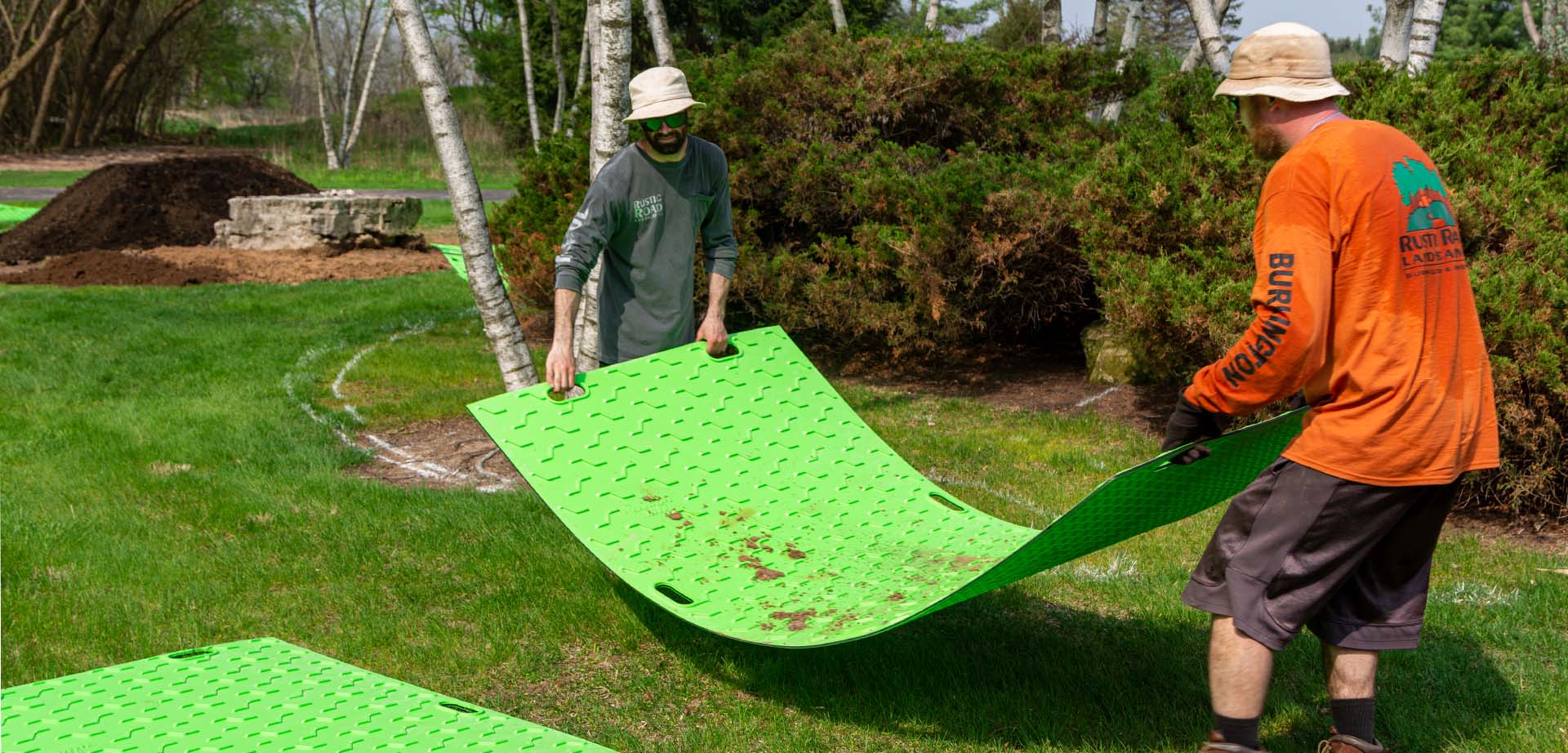
Experienced crews use a flip-and-lay method to build access roads efficiently. Place one panel, then flip the next panel off the stack directly into position ahead of the first. This rhythm—place, flip, advance—lets a two-person crew cover ground quickly without heavy lifting or awkward carries.
Straight paths vs. curves
Panel mats create straight paths more easily than curves. For slight directional changes, angle individual panels incrementally. For tight curves, consider a combination of 4×8 and 2×8 panels to navigate the turn without leaving exposed ground on the inside of the curve.
Staging Zone Setup
Staging zones are areas where equipment idles, turns, or accumulates material. They’re often the highest-load zones on a jobsite because equipment concentrates in one place repeatedly.
Identify the staging zone before deployment
Before the first mat goes down, identify where equipment will stage. Where will the skid steer sit between passes? Where will material pallets accumulate? Where will crew gather tools and equipment?
Covering these zones first ensures protection is in place before the heaviest activity begins.
Overlap at transitions
Where the access path meets the staging zone, overlap panels by at least 6 inches. This prevents equipment tires from catching on a mat edge as they transition from the travel path to the staging area.
Wider is better for staging
Access paths can be narrow because equipment travels in a defined direction. Staging zones need more coverage because equipment turns, pivots, and repositions repeatedly. When in doubt, add more panels to a staging zone.
Deployment Speed: Making Setup as Fast as Possible
The efficiency of a BAM! mat deployment comes from several design features working together.
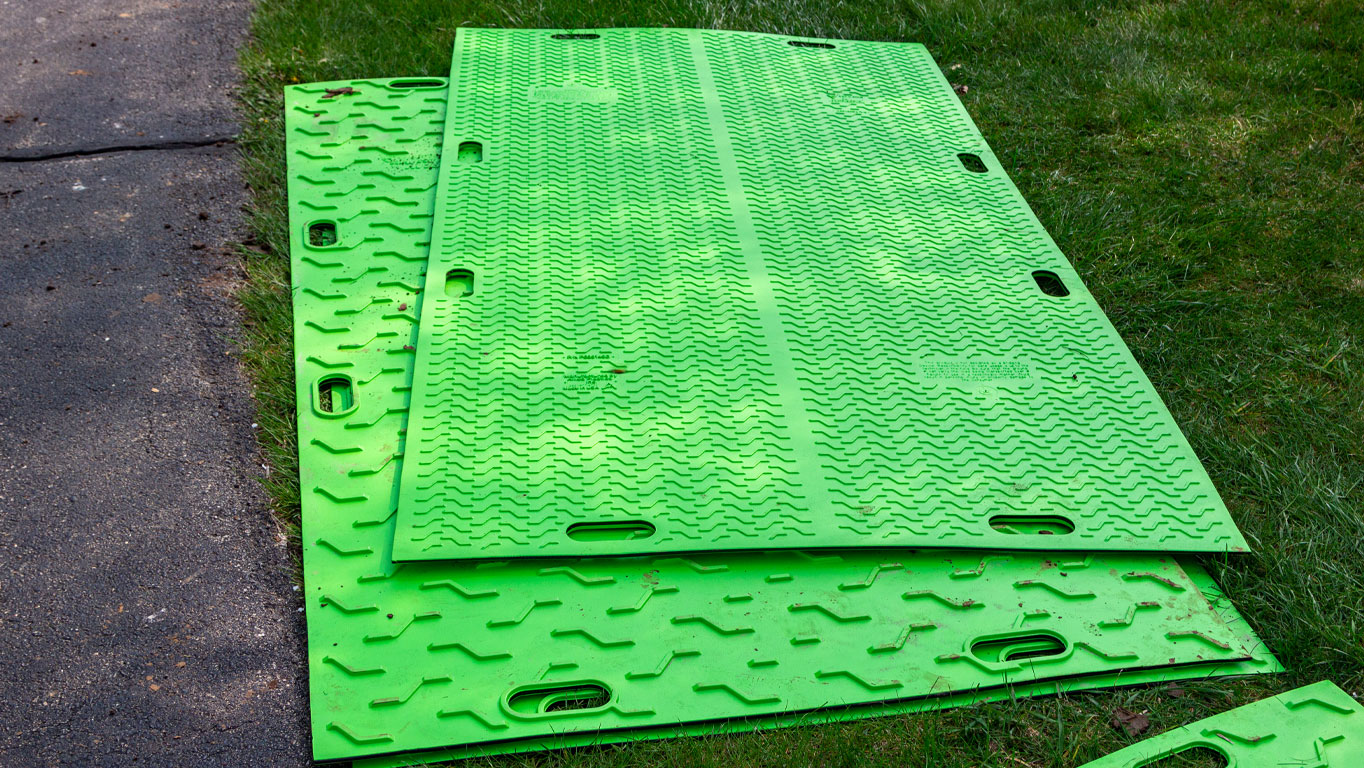
- 56 pounds per 4×8 panel: one crew member can carry and position without assistance
- 8 large hand holds: no fumbling, no awkward grips, no removing gloves
- Interlocking tread design: stacked panels stay organized on the truck, reducing time spent untangling or sorting
- Hi-Vis Safety Green: panels are easy to see, which speeds layout planning and retrieval at job end
Terrain Scenarios and the Right Approach
Wet soil and mud
Wet soil is where the value of a temporary access road is most obvious. Equipment that would sink and churn without mats moves smoothly and predictably with them. The key is getting mats down before the ground gets churned—which means setting up the access route before equipment moves.
Turf and landscaped areas
Mats on turf distribute load and prevent rutting. The grass beneath the mat is compressed but not destroyed. After mat removal, most turf recovers fully within a few weeks.
Soft or sandy soil
Sandy soil loses bearing capacity under load faster than clay. Mats are essential for any equipment access on sandy ground. Wider staging zones are preferable because load spreads better across more panels.
Sensitive root zones
Trees and established landscaping have root zones that extend well beyond the drip line. Mats provide some protection for root zones—but the best practice is to route equipment around root zones when possible and use mats to minimize compaction when routing around isn’t an option.
Teardown and Retrieval
The same features that make BAM! mats fast to deploy make them fast to retrieve. Hand holds let crew members grab and move panels efficiently. The hi-vis color makes it easy to confirm all panels have been retrieved before leaving the site.
After retrieval, brush off loose debris, stack panels with the interlocking tread engaged, and rinse before storage if mud accumulation is significant.
Frequently Asked Questions
Q: How long can a temporary access road made from HDPE panels remain in place?
A: As long as the job requires. BAM! HDPE mats don’t degrade from extended exposure to sun, rain, or temperature changes. They can remain in place for days, weeks, or months without performance change.
Q: What’s the maximum slope for a temporary HDPE mat access road?
A: On slopes up to approximately 15 degrees, panel mats perform well with adequate traction for most equipment. Steeper slopes may require additional anchoring or a different access solution. Contact BAM! at 888-870-8158 to discuss slope-specific applications.
Q: How many panels do I need for a 100-foot temporary access road?
A: A single-column 100-foot road requires approximately 13 panels (100 ft / 8 ft per panel = 12.5). A double-column road (for equipment) requires 26 panels. Add extra panels for the staging zone at the far end.
Q: Can temporary mat access roads support concrete trucks?
A: With proper soil preparation underneath and adequate panel coverage, BAM! mats (80-ton rated) can support loaded concrete trucks in the 30,000 to 40,000-pound range. Consult with BAM! at 888-870-8158 for specific load scenarios.
Build Your Access Route Before the Equipment Moves
The biggest mistake contractors make with temporary access roads is waiting until the ground is already churned. Get mats in place first. Set the access route before the first truck backs in or the first machine rolls off the trailer.
Plan your temporary access road at bamgroundpro.com/products. Find a distributor at bamgroundpro.com/where-to-purchase. Contact us at bamgroundpro.com/contact-us, call 888-870-8158, or email msheridan@alliedplastics.com. Work cleaner. Work safer. Pro’s choose BAM!