If you’ve been researching ground protection mats for more than five minutes, you’ve encountered the acronym HDPE. It shows up in product descriptions, technical specs, and contractor forums—but the explanation of what it actually means for jobsite performance is often missing.
This post fills that gap. Here’s what HDPE is, why it matters, and how to evaluate HDPE ground protection mats for the work you actually do.
What Is HDPE?
HDPE stands for High-Density Polyethylene. It’s a thermoplastic polymer known for exceptional strength-to-weight ratio, resistance to moisture and chemicals, and durability across extreme temperature ranges.
You encounter HDPE every day in products that need to be strong, lightweight, and weather-resistant: cutting boards, water pipes, milk jugs, and marine equipment are all commonly made from HDPE. In the construction and industrial world, it’s used for geomembranes, tank liners, and—ground protection mats.
Why HDPE Is the Right Material for Ground Protection
It doesn’t absorb water
HDPE is hydrophobic—it repels moisture rather than absorbing it. Plywood, by contrast, absorbs water rapidly. Once saturated, plywood swells, weakens, and eventually delaminate. A wet HDPE mat performs identically to a dry one.
It resists cracking in cold and deformation in heat
HDPE maintains structural integrity across a wide temperature range. It doesn’t become brittle in winter or soft in summer heat. This four-season consistency is critical for contractors working in variable climates.
It doesn’t rot, splinter, or corrode
Biological degradation doesn’t affect HDPE. It won’t rot, grow mold, or splinter over time. This means long-term storage between jobs doesn’t degrade performance.
It’s highly recyclable
HDPE is one of the most recyclable plastics in common use. BAM! Bad Ass Mats are made from recyclable HDPE, which means end-of-life disposal has a lower environmental impact than timber or composite alternatives.
How HDPE Ground Protection Mats Work on a Jobsite
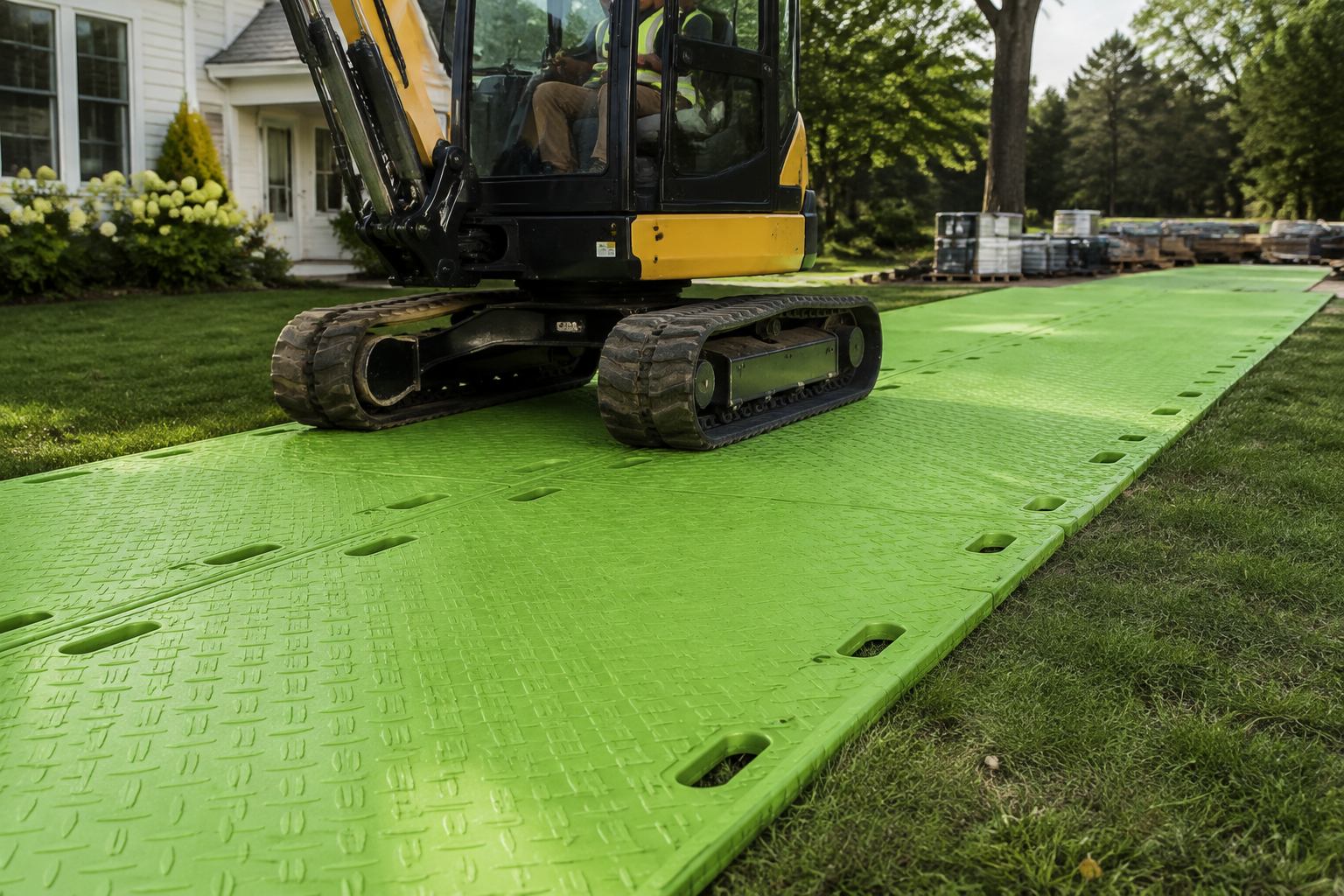
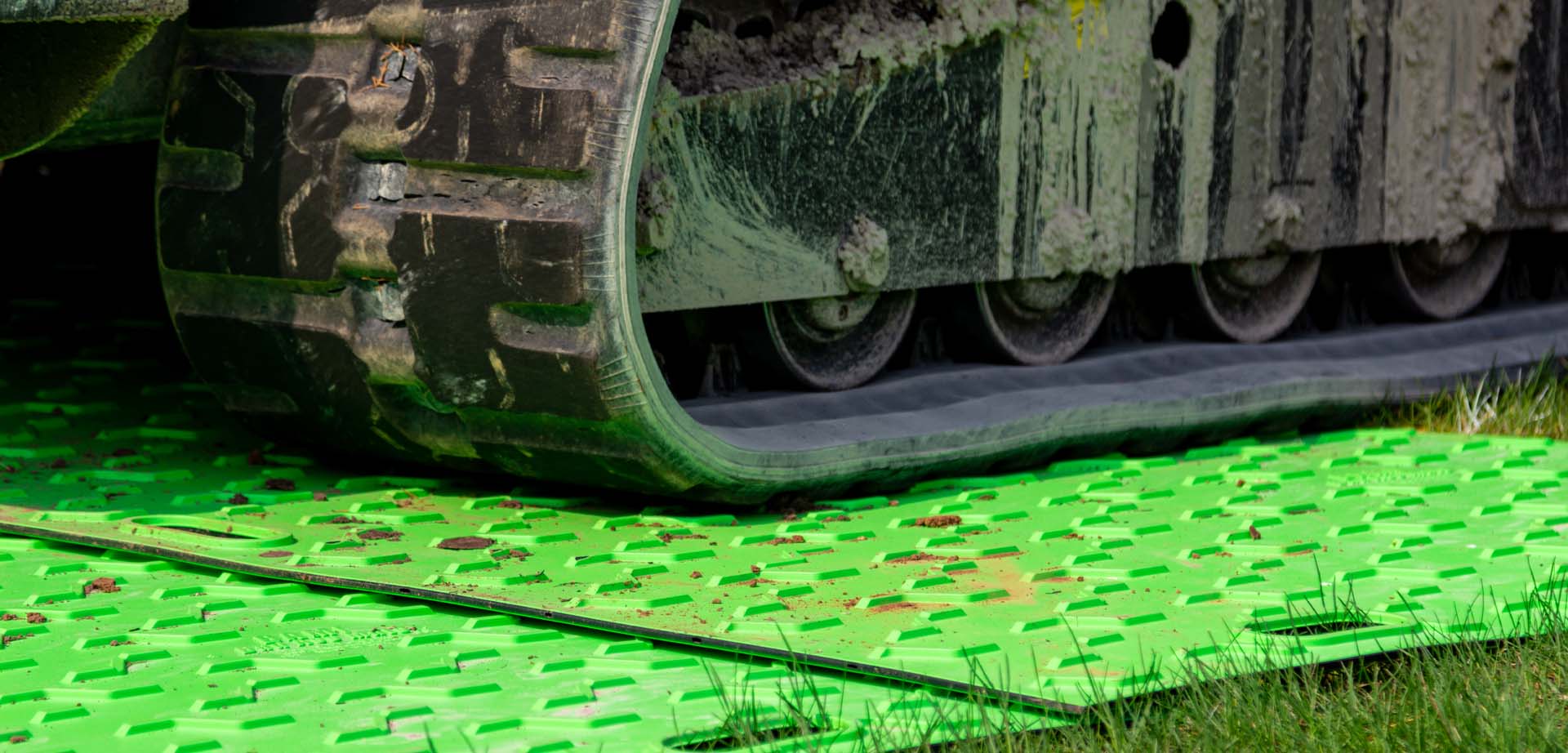
The core function of any ground protection mat is load distribution. When equipment applies weight to a surface—whether it’s turf, a driveway, or soft soil—that weight concentrates at the tire or track contact patch. The smaller the contact area, the higher the pressure, and the more likely the surface is to fail.
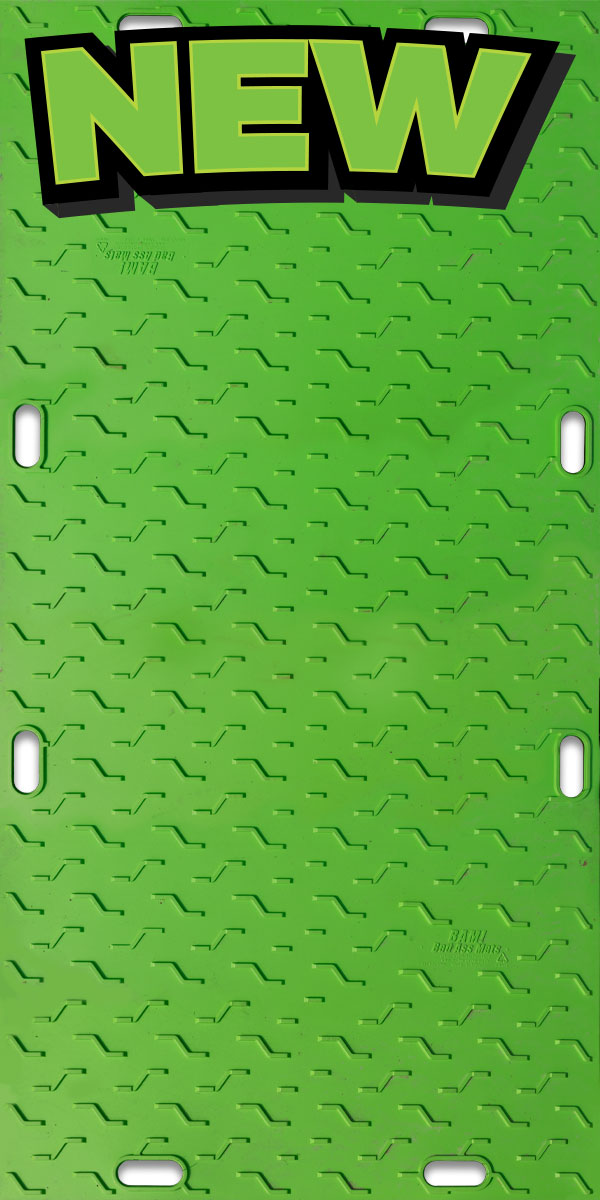
An HDPE mat bridges across the contact area and spreads that load across the full panel surface. Instead of 10,000 pounds concentrated under four tires on a small area, the load spreads across 32 square feet (a 4×8 panel). The ground surface underneath experiences a fraction of the pressure.
The 80-ton rating in context
BAM! mats carry an 80-ton weight rating. Most residential equipment—skid steers, mini excavators, compact loaders—weighs between 3 and 12 tons. Even fully loaded dumpsters and delivery trucks rarely exceed 20 tons. An 80-ton rating means BAM! mats handle real-world residential and commercial loads with enormous margin.
HDPE vs. Competing Materials
HDPE vs. plywood
Plywood absorbs moisture, warps, cracks under load, and typically lasts 2 to 4 uses. HDPE is waterproof, maintains dimensional stability, and lasts for years. The cost-per-use comparison is not close.
HDPE vs. timber mats
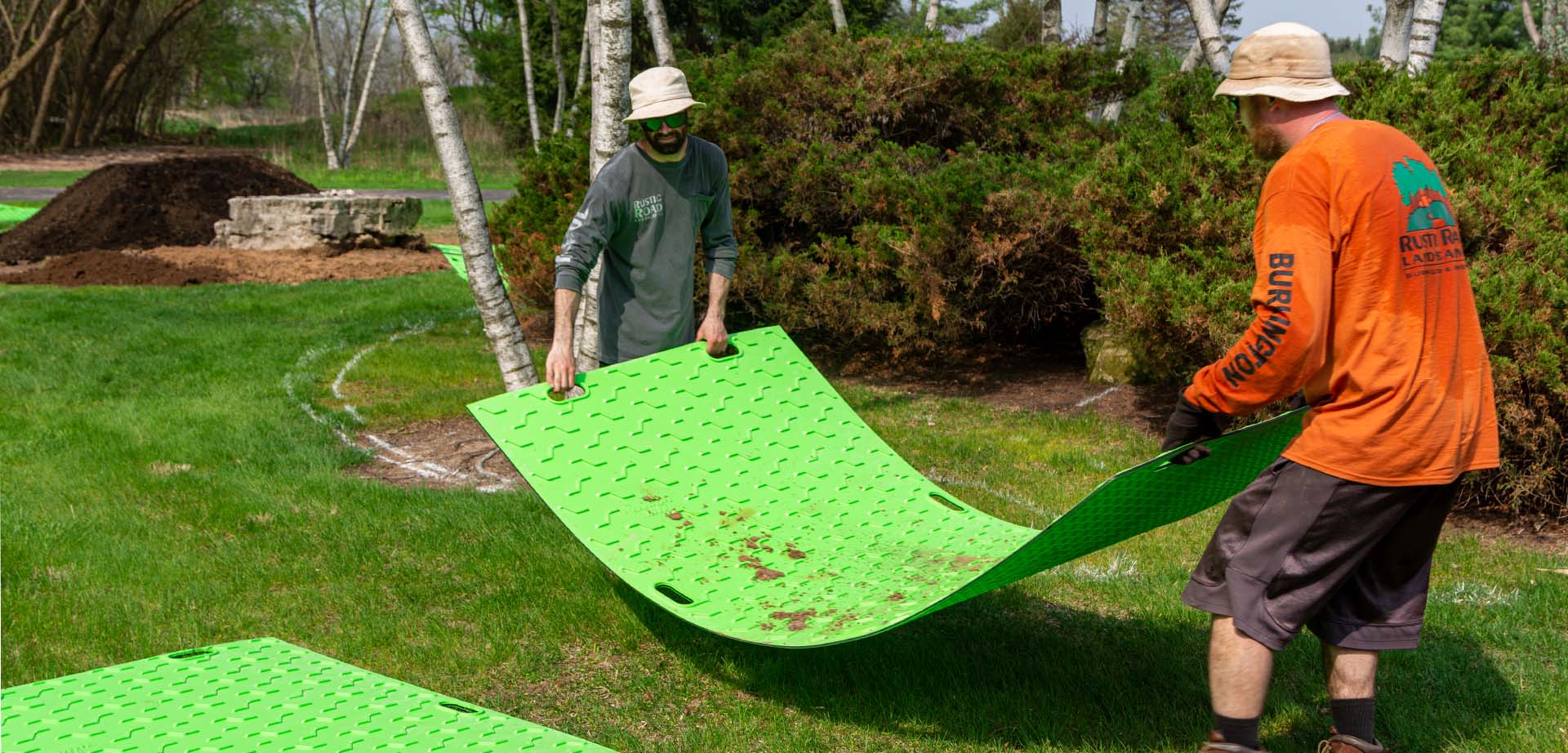
Timber mats are heavy—often 300 to 500 pounds per piece—requiring machinery to move. They’re strong but impractical for residential jobs and many commercial applications. HDPE mats at 56 pounds per 4×8 panel are one-person portable.
HDPE vs. rubber mats
Rubber mats are typically lower load-rated and designed for lighter applications. For heavy equipment on soft ground, HDPE provides more consistent performance and better load distribution.
HDPE vs. composite mats
Composite mats vary significantly in quality. Premium composites can perform well, but they often cost more than HDPE while offering similar or lower performance. HDPE’s material properties are well-established and consistent.
Features That Distinguish BAM! HDPE Mats
Thermoformed construction
BAM! mats are thermoformed—shaped under heat and pressure—which creates a consistent, dense structure throughout the panel. This manufacturing process is more precise and produces better dimensional consistency than alternatives.
Exclusive dual-sided tread
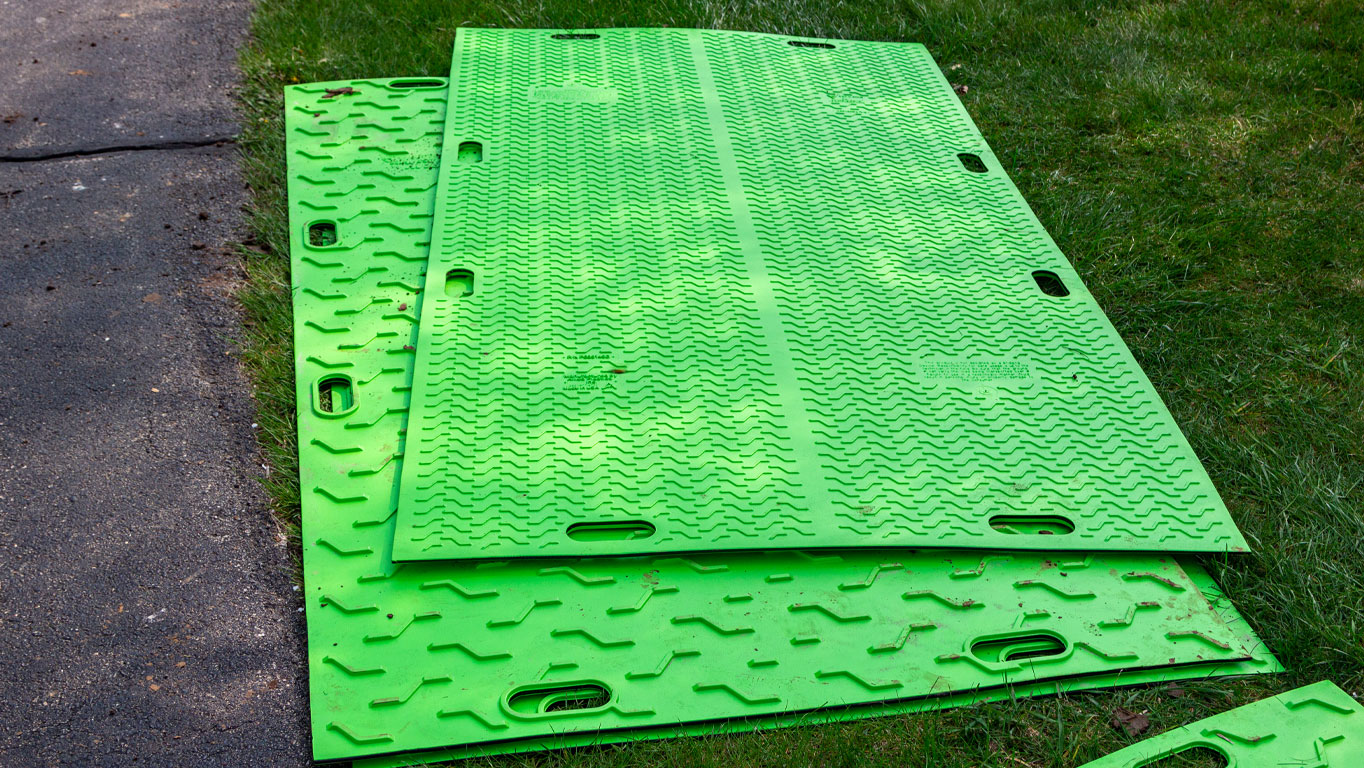
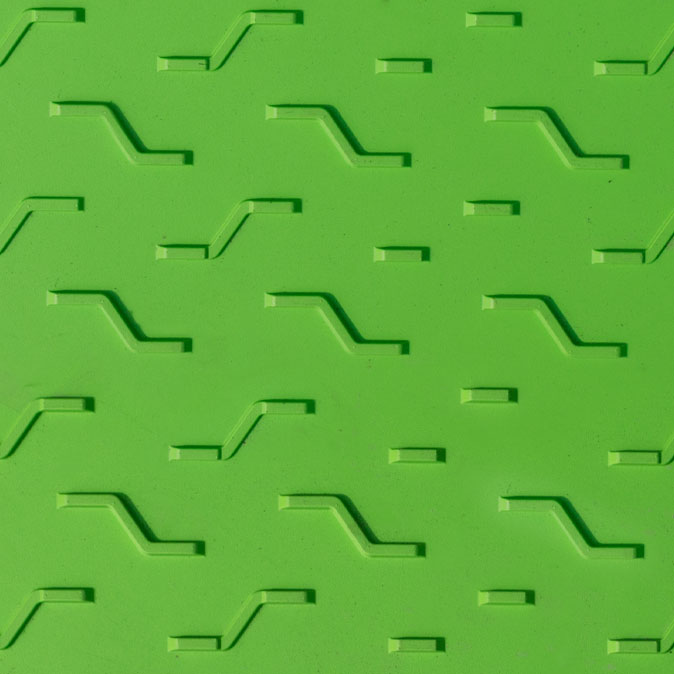
BAM! mats have different tread patterns on each side: an equipment-side pattern for machine grip and a pedestrian-side pattern for crew safety. Most mats are single-sided. The dual tread design means every deployment provides the right surface for both machines and workers.
Integrated interlocking tread
The tread pattern that provides grip during use also keeps stacked panels from shifting during transport. This means mats arrive organized and go into position faster.
ISO 9001:2015 certified manufacturing
BAM! mats are produced by Allied Plastics at an ISO 9001:2015 certified facility in Twin Lakes, Wisconsin. That certification means the manufacturing process meets internationally recognized quality standards—consistently.
When to Use HDPE Ground Protection Mats
- Any time heavy equipment crosses a residential driveway, lawn, or landscaped area
- Dumpster staging on concrete, asphalt, or pavers
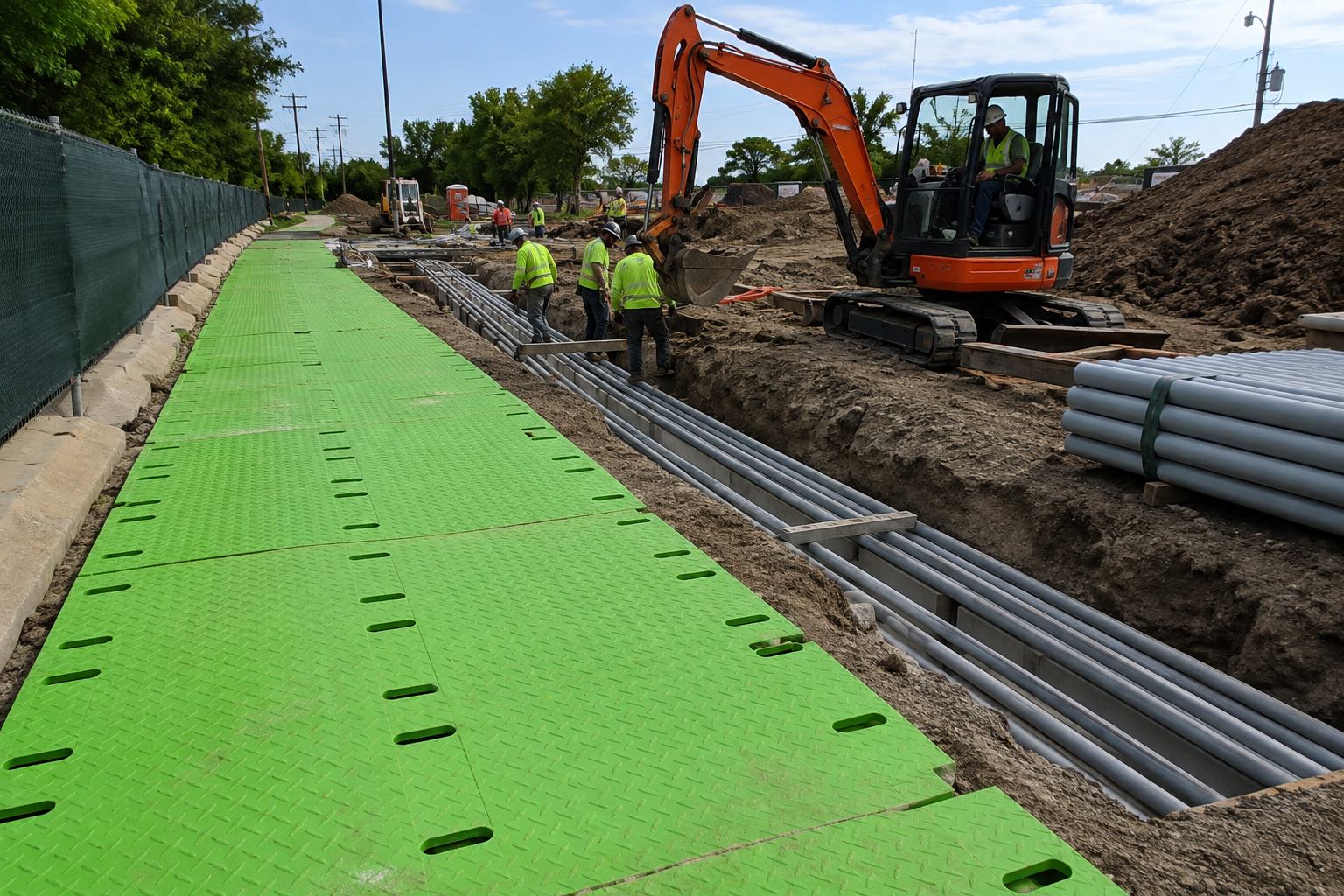
- Temporary access roads across turf or soft soil
- Equipment staging zones where machines will idle, turn, or discharge loads
- Event walkways across grass or soft ground
- Utility work in narrow easements and residential access areas
Frequently Asked Questions
Q: How thick are BAM! HDPE mats?
A: BAM! mats are 3/8 inch thick. This thickness provides the balance of structural rigidity and manageable weight (56 pounds per 4×8 panel) that contractors need for repeated single-person deployment.
Q: Are HDPE ground protection mats safe around water and drainage areas?
A: Yes. HDPE doesn’t leach chemicals and is non-reactive in water. It’s safe for use near storm drains, irrigation systems, and natural drainage paths.
Q: Can HDPE mats be cut or modified in the field?
A: While BAM! mats are designed as standard panels, HDPE can be cut with standard woodworking tools if a specific application requires it. Contact BAM! at 888-870-8158 for guidance on field modifications.
Q: What colors do BAM! HDPE mats come in?
A: BAM! mats are Hi-Vis Safety Green—a deliberate choice. High-visibility color means mats are easy to see on busy jobsites, reducing the chance of vehicles missing their coverage zone, and they’re easy to spot and retrieve at job end.
The Material Matters
HDPE isn’t just a marketing term. It’s the specific material choice that makes BAM! ground protection mats perform across seasons, across equipment types, and across hundreds of jobs without degradation.
Explore the full BAM! HDPE mat lineup at bamgroundpro.com/products. Find a distributor at bamgroundpro.com/where-to-purchase or contact us at bamgroundpro.com/contact-us. Phone: 888-870-8158 | Email: msheridan@alliedplastics.com. Work cleaner. Work safer. Pro’s choose BAM