Temporary driveway mats are one of the simplest upgrades a contractor can make—and one of the highest-return ones. They go down before the job starts, they stay down through every delivery and equipment pass, and they come up clean when the job is done.
The driveway looks exactly the same as it did on day one. The client is happy. The review is good. The referral happens.
That’s the promise. This post covers everything you need to know to deliver on it.
Why ‘Temporary’ Doesn’t Mean ‘Less Protection’
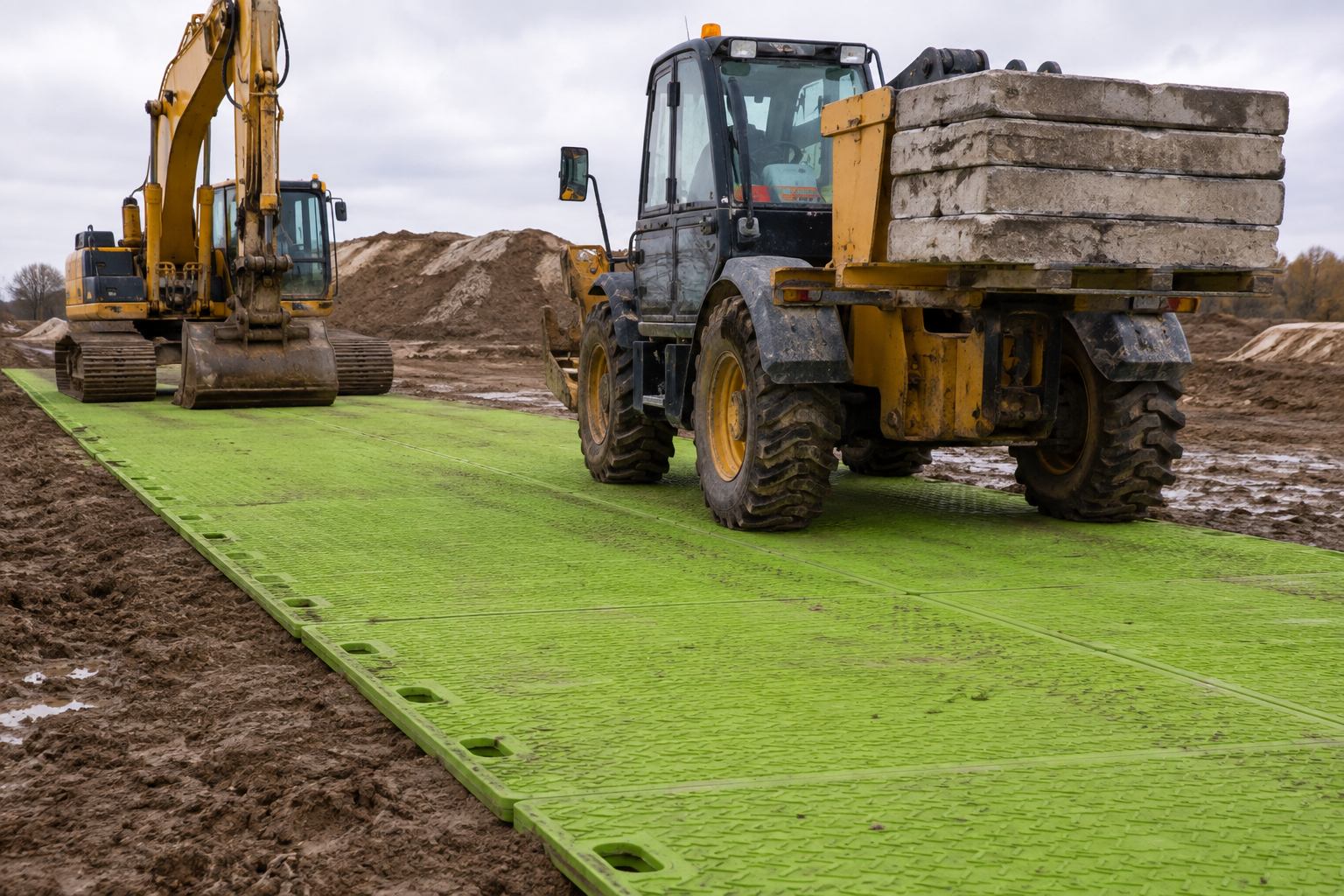
Temporary driveway mats are called temporary because they’re deployed for the duration of a job—not because they’re lightweight or disposable. The best ones are built from heavy-duty HDPE that handles 80-ton loads and lasts for years across hundreds of jobs.
‘Temporary’ refers to the deployment, not the durability.
That distinction matters because contractors sometimes assume temporary = plywood or cardboard. Those materials are genuinely disposable. Engineered HDPE mats are the opposite: they’re reusable assets that get better value with every additional job.
What Surfaces Need Temporary Driveway Mat Protection
Concrete driveways
Concrete looks tough—and compared to some surfaces, it is. But it was designed for passenger vehicles, not construction equipment. Delivery trucks, dumpsters, and heavy equipment apply loads that exceed residential concrete’s design limits, especially at edges and expansion joints where stress concentrates.
Asphalt driveways
Asphalt is more flexible than concrete but also more vulnerable to deformation, especially in summer heat. Heavy equipment sitting in place on soft asphalt—even for a few hours—can leave permanent impressions. Turning equipment scuffs the surface in ways that are visible and almost impossible to fix cleanly.
Decorative pavers
Pavers are the most vulnerable residential surface on construction jobsites. They’re installed on a sand-set or gravel base, and any significant point load—from a lift’s outrigger, a dumpster corner, or a loaded truck—can crack individual pavers or shift the entire installation. Repairs never look perfect and almost always require removing and resetting a section.
Stamped concrete
Stamped concrete combines the load sensitivity of regular concrete with the added vulnerability of a decorative surface finish. A single heavy equipment pass can permanently scar the pattern. These clients paid a premium for their driveway. Protect it accordingly.
The Phases Where Driveway Damage Happens Most
Material delivery
Delivery trucks are the most common cause of driveway damage on residential jobsites. They back in loaded, sit while material is offloaded, and pull out—all while applying enormous loads to the same section of driveway repeatedly.
Dumpster placement and pickup
Dumpsters get heavier as the job progresses. By the time they’re picked up—fully loaded with debris—they can exceed 10 tons. That load sits in one spot, on the same surface, until the truck arrives. Mats under the dumpster are essential, not optional.
Equipment staging
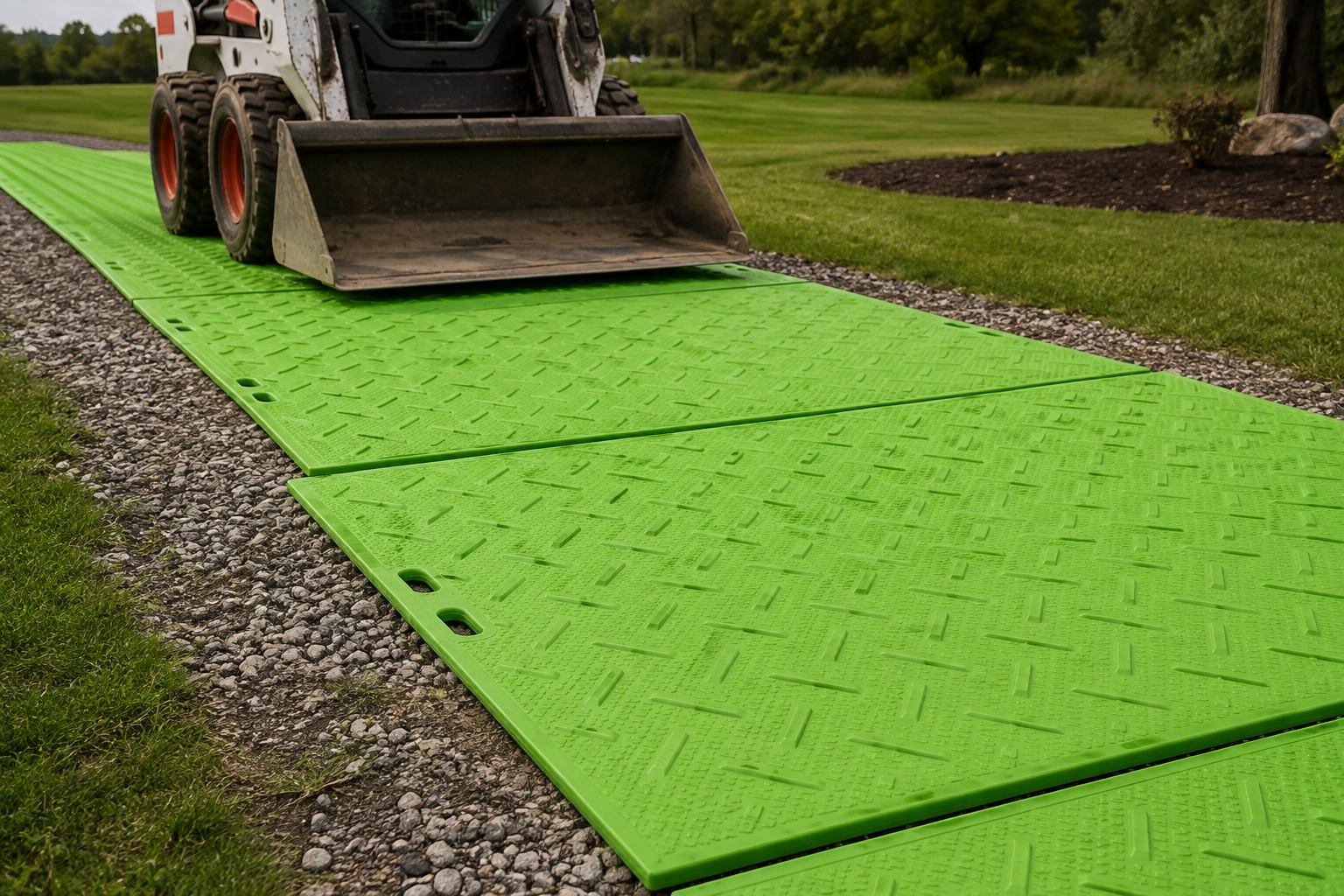
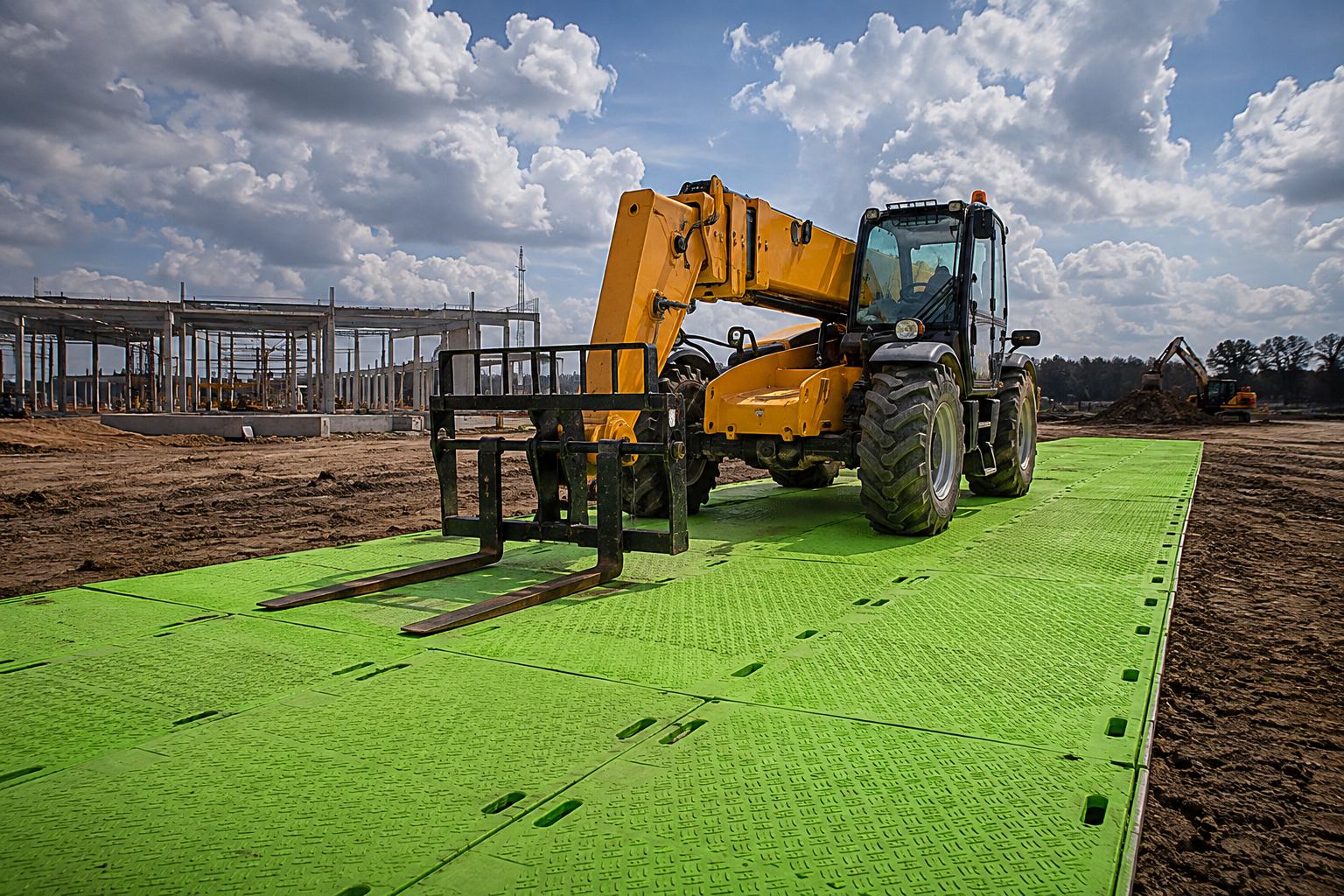
Skid steers, excavators, boom lifts, and forklifts all cross driveways on residential jobs. The damage compounds with each pass—first pass leaves a light impression, third pass starts showing rutting, fifth pass is visible from the street.
Crew traffic and materials handling
Crews walking, carrying bundles, and rolling materials back and forth create surface wear on decorative concrete and pavers. Over a full day or week-long job, that wear becomes visible. A mat path for high-traffic crew routes prevents it.
BAM! Mats: Built for Temporary Driveway Protection
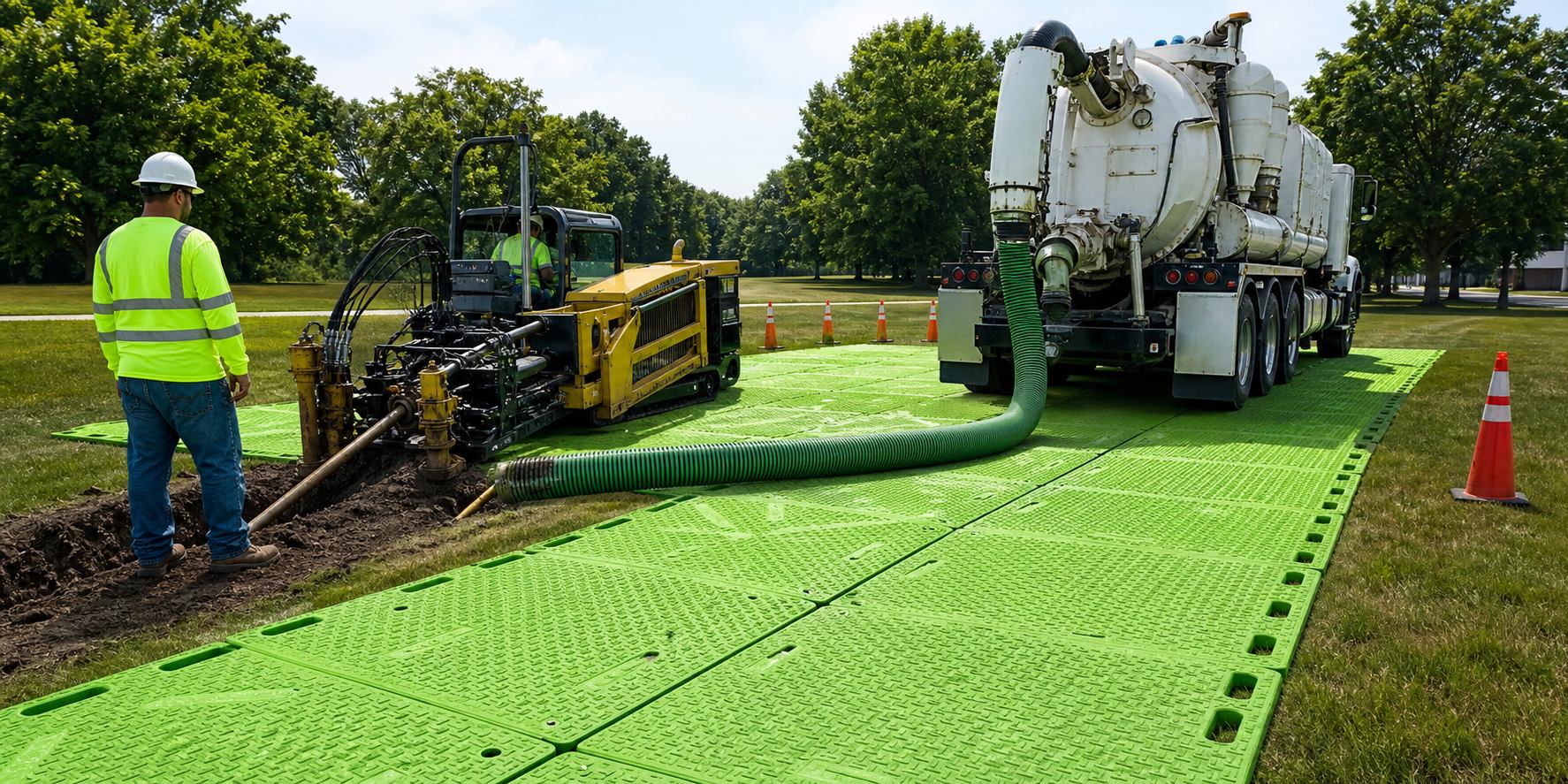
BAM! Bad Ass Mats check every box for temporary driveway protection. They’re made from thermoformed HDPE—a material that doesn’t warp, rot, crack, or absorb moisture. They handle 80 tons, which means any equipment or vehicle combination a residential contractor deploys stays well within the mat’s rated capacity.
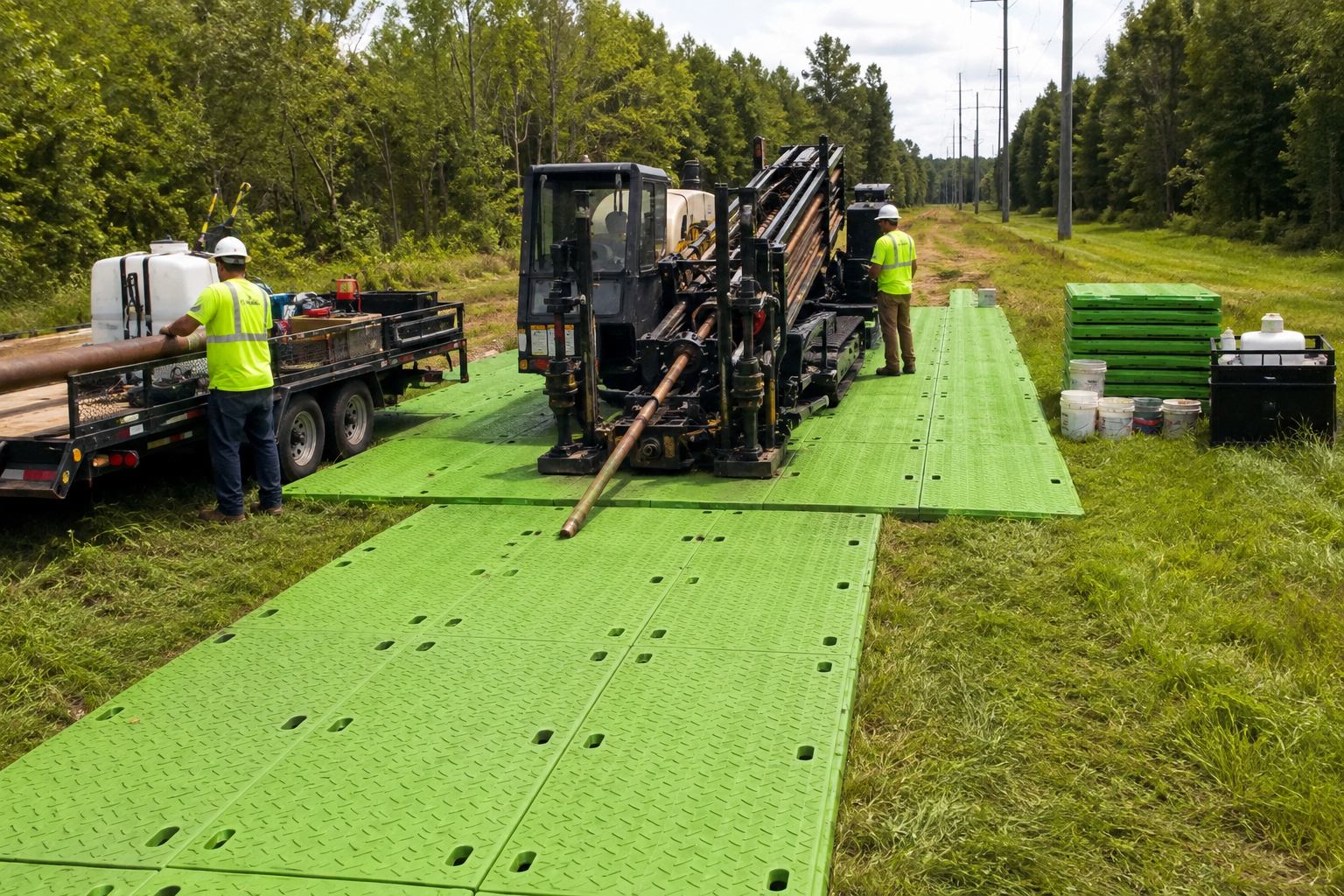
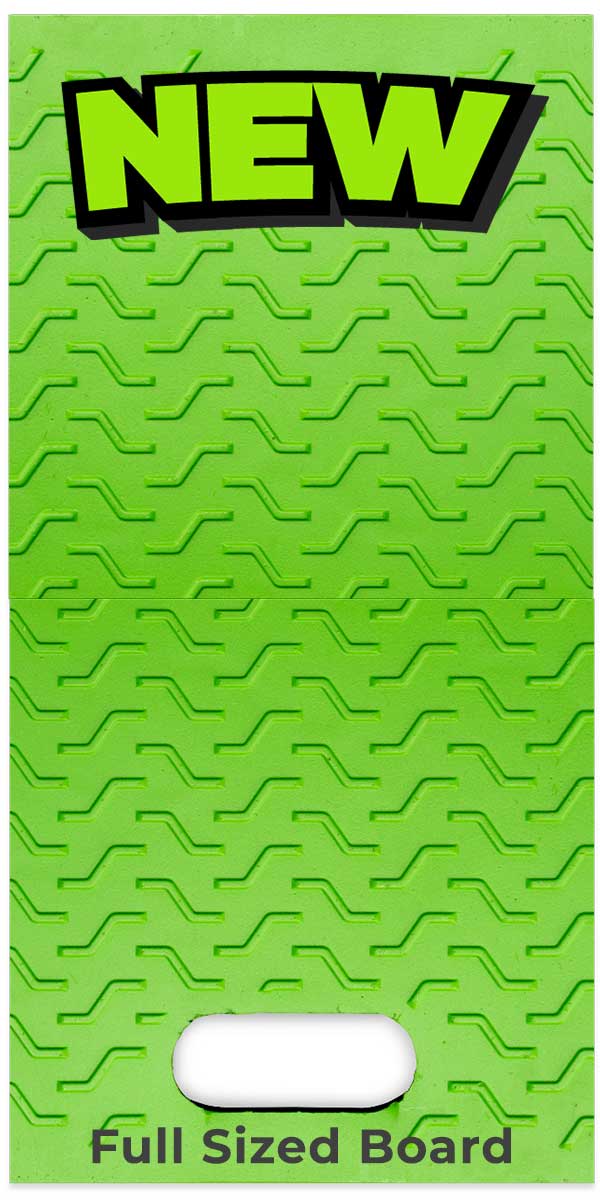
4×8 panels at 56 pounds: Light enough for one person to carry and position, large enough to cover meaningful surface area quickly. A crew can lay a full driveway protection setup in minutes.
Dual-sided tread design: Equipment-side grip for machines, pedestrian-side traction for crew. Both surfaces are slip-resistant—an important feature on driveways that get wet from rain, irrigation, or hose runoff.
8 large hand holds: Designed for gloved hands. Crew doesn’t need to set tools down or remove gloves to reposition panels. Faster handling means faster transitions between job phases.
Interlocking tread design: Panels stay organized on the truck and go into position without shifting. Less time managing mats means more time on the actual job.
How to Deploy Temporary Driveway Mats for Maximum Protection
Map the traffic before you start
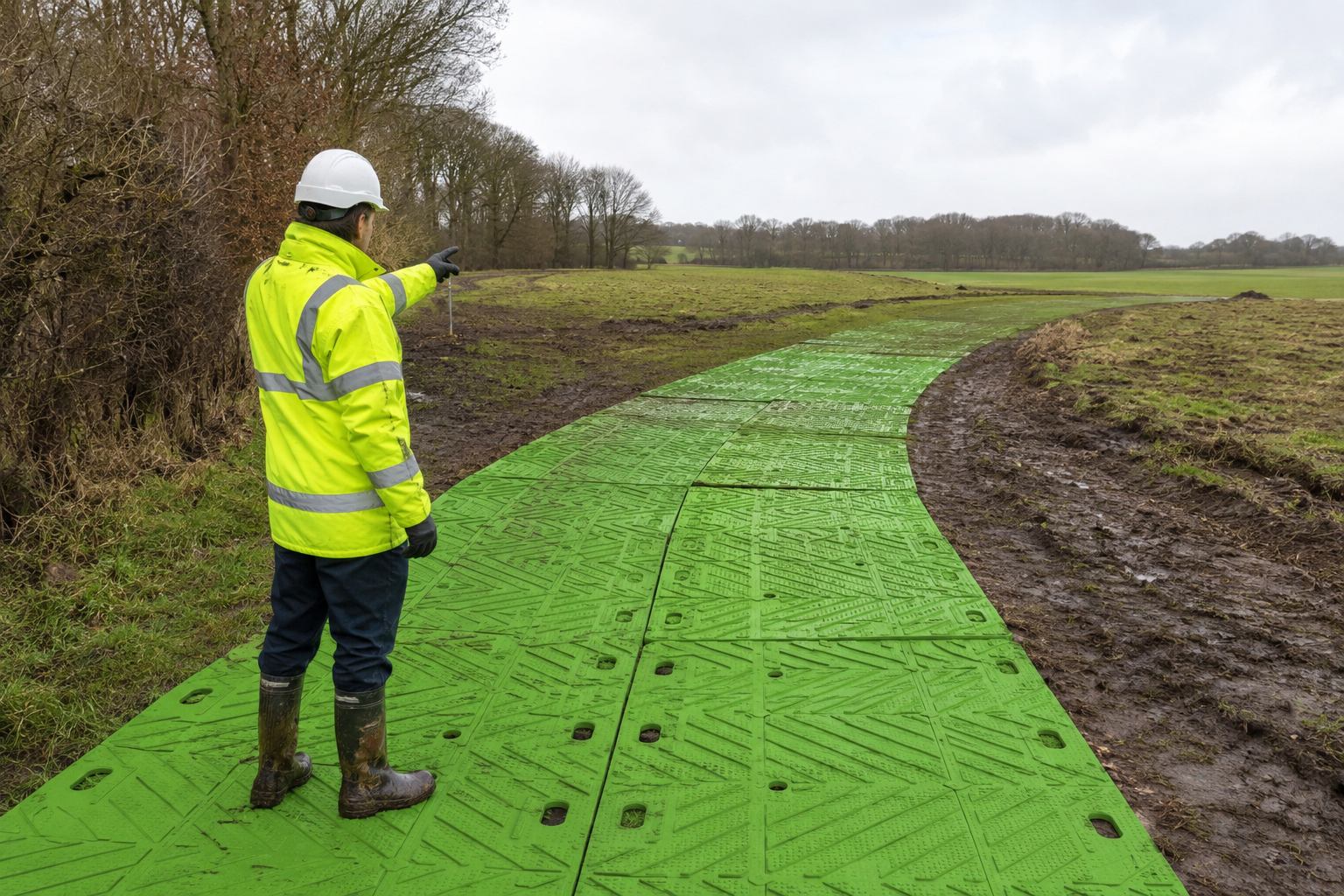
Before the first truck backs in or the first piece of equipment rolls off the trailer, identify where the traffic will go. Where will the dumpster sit? Where will delivery trucks park? What path will the skid steer take from the street to the backyard?
Lay mats for those routes first. Add coverage as the job develops.
Cover the driveway apron first
The apron—where the driveway meets the street—takes the most repetitive load from trucks and deliveries. This is the highest-priority section to protect.
Extend under the full equipment or dumpster footprint
Mats should cover the entire footprint of staged equipment or containers, plus at least 12 inches beyond in all directions. Positioning isn’t always exact, and the edges of the footprint often take the highest point loads.
Use 2×8 panels for access paths and tight zones
When the driveway narrows, when there’s an offset access route, or when you need to protect a specific strip rather than a wide zone, 2×8 panels give you precise control without over-covering.
Temporary Driveway Mat Setups by Job Type
Roofing jobs
Cover from the dumpster position back to the street. Add coverage for the delivery truck approach. Run a mat path for crew carrying materials from delivery area to the structure.
Landscaping and hardscaping
Cover the equipment access route from trailer to backyard. Protect any staging zone where material pallets or equipment will sit. Add coverage at any tight turn where a skid steer’s pivot creates the most lateral force on the surface.
Pool and excavation
These jobs involve the heaviest equipment residential contractors deploy. Full driveway coverage from street to backyard access point is the standard approach. Add extra panels at the turning zone.
HVAC, plumbing, and utility service
Service vehicles often back up onto driveways and work from the truck bed for hours. Mats under the vehicle staging area protect the surface from oil drips and point loads from equipment lowered to the ground.
The ROI of Temporary Driveway Mats
A set of BAM! mats costs a fraction of a single driveway repair. And on high-value properties—custom pavers, stamped concrete, new asphalt—a single damage incident can trigger a claim that runs thousands of dollars.
But the ROI goes beyond avoiding claims. Clients who watch a crew deploy professional mats before the first truck backs in see a team that respects their property. That builds the kind of trust that generates reviews and referrals—the two things that grow a contracting business faster than any advertising.
Frequently Asked Questions
Q: How many temporary driveway mats do I need for a standard roofing job?
A: A typical residential roofing setup—one dumpster and a delivery truck—requires 6 to 10 BAM! 4×8 panels. If the approach from the street to the dumpster position is long, add panels to cover that route. Call 888-870-8158 for help sizing your specific setup.
Q: Can I use temporary driveway mats on stamped concrete without scratching it?
A: Yes. HDPE mats don’t scratch decorative concrete. The tread surface is designed to grip without abrasion. For stamped concrete specifically, the mat distributes weight away from the surface rather than concentrating it—which is exactly what the surface needs.
Q: How do I store temporary driveway mats between jobs?
A: Stack them neatly on a flat surface or in the truck bed. The interlocking tread design keeps stacked panels from shifting during transport. Clean off mud before stacking to keep storage areas clean.
Q: Are temporary driveway mats reusable?
A: BAM! mats are designed for years of repeated use. Unlike plywood—which typically lasts 2 to 3 uses before disposal—HDPE mats hold up through hundreds of jobs with no degradation in performance. The 3-year warranty backs that durability.
Q: Do temporary driveway mats work on gravel driveways?
A: Yes. Gravel driveways actually benefit from mats in a specific way—mats prevent equipment from displacing gravel and creating bare spots that then need regrading. The mat distributes load and keeps the gravel base intact.
Protect Every Phase, Every Surface, Every Time
Temporary driveway mats aren’t a specialty product for unusual jobs. They’re a standard tool for contractors who take property protection seriously. Every job that involves a driveway is a job that needs mats.
Explore BAM! Bad Ass Mats at bamgroundpro.com/products. Find a distributor at bamgroundpro.com/where-to-purchase, or contact us at bamgroundpro.com/contact-us. Phone: 888-870-8158 | Email: msheridan@alliedplastics.com | Twin Lakes, WI 53181. Protect your worksite. Protect your reputation. Pro’s choose BAM!