The Hidden Cost of Ground Damage
Ask any contractor what causes the biggest headaches on a jobsite and you’ll hear the same themes: weather delays, equipment access issues, and unexpected property damage. A single set of tire ruts across a customer’s lawn or cracks in a driveway can turn a profitable job into a costly cleanup.
That’s why ground mats have become a must-have tool for modern contractors. But not all mats deliver the same results. Many crews still rely on plywood because it seems cheap and easy, while others invest in composite mats expecting long-term performance. And then there’s HDPE—an engineered alternative built for repeat use, safety, and professionalism.
So what actually lasts when you’re running real jobsites, in real weather, with real equipment? Let’s break it down.
What Contractors Need From a Ground Mat
Ground mats aren’t just “something to drive on.” A true jobsite mat should do three things consistently:
Protect the surface underneath
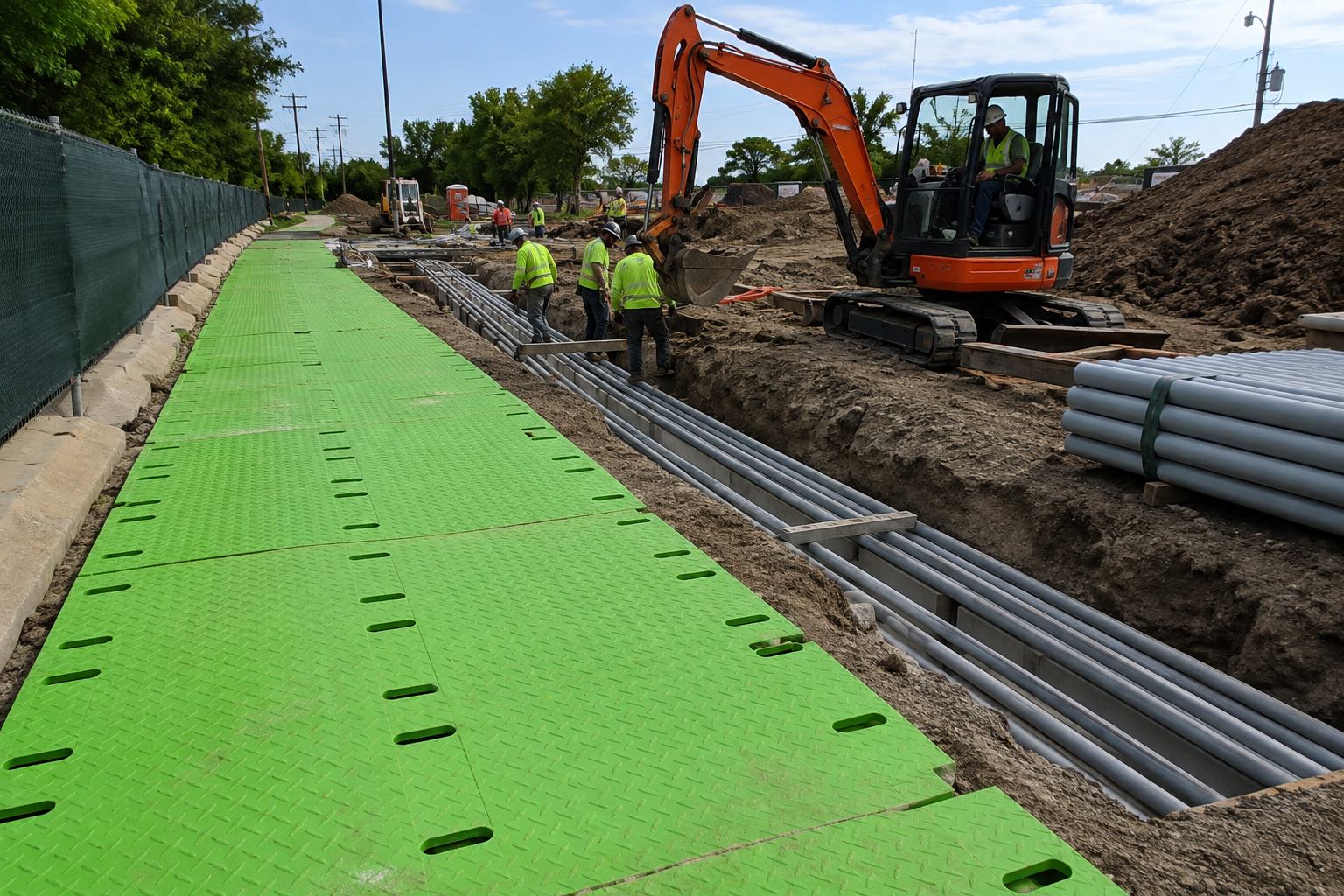
Whether it’s turf, soil, asphalt, decorative concrete, or pavers, the mat should prevent rutting, cracking, and ground displacement.
Create a stable work surface
Mats should improve traction and access so equipment doesn’t sink, spin, or get stuck.
Make the jobsite look professional
Clients notice the difference between organized protection and temporary plywood patches. The way your jobsite looks affects trust, referrals, and repeat work.
Now let’s compare the three most common options contractors consider.
Plywood: The False Economy
Plywood has been used for decades because it’s widely available and inexpensive up front. You can pick it up quickly and lay it down fast. But once the job begins, plywood almost always becomes the weak link.
Moisture damage destroys it quickly
Plywood absorbs water. When it rains or the ground is saturated, it swells, warps, and softens. It loses structure fast and becomes unpredictable under load.
Cracks and splinters are inevitable
Even with medium-weight equipment, plywood splits under turning forces and point loads. Once cracked, the sheet stops functioning as ground protection and becomes a trip hazard.
Poor traction creates safety risks
Wet plywood becomes slick. Add mud, sawdust, or debris and it becomes even more dangerous for foot traffic and equipment movement.
It looks unprofessional on serious jobs
Clients don’t want to see warped, muddy sheets scattered across their driveway or lawn. Plywood makes a jobsite look temporary and sloppy, even if your work is high quality.
Plywood may feel like a savings, but it quickly becomes a repeating expense due to replacements and cleanup costs.
Composite Mats: Better Than Plywood, But Not Always Practical
Composite mats are often marketed as a step up from plywood. They can offer improved durability and higher load tolerance depending on how they’re manufactured. But composite options come with tradeoffs contractors should be aware of.
Heavier handling can slow crews down
Many composite mats are bulky and heavy, requiring two people or machinery to place efficiently. If you’re deploying mats frequently, that time and labor adds up.
Not always consistent under jobsite stress
Composite blends vary widely in quality. Some hold up well, while others lose structural performance over time—especially around edges, connection points, or high-traffic zones.
Connectors and interlocks can become weak points
Some composite systems rely on attachment hardware that wears down or loosens. That can lead to shifting panels, uneven surfaces, and reduced safety.
Composite mats can work, but for many contractors they feel like an upgrade that still creates handling challenges and unpredictable long-term performance.
HDPE Ground Mats: Built to Last
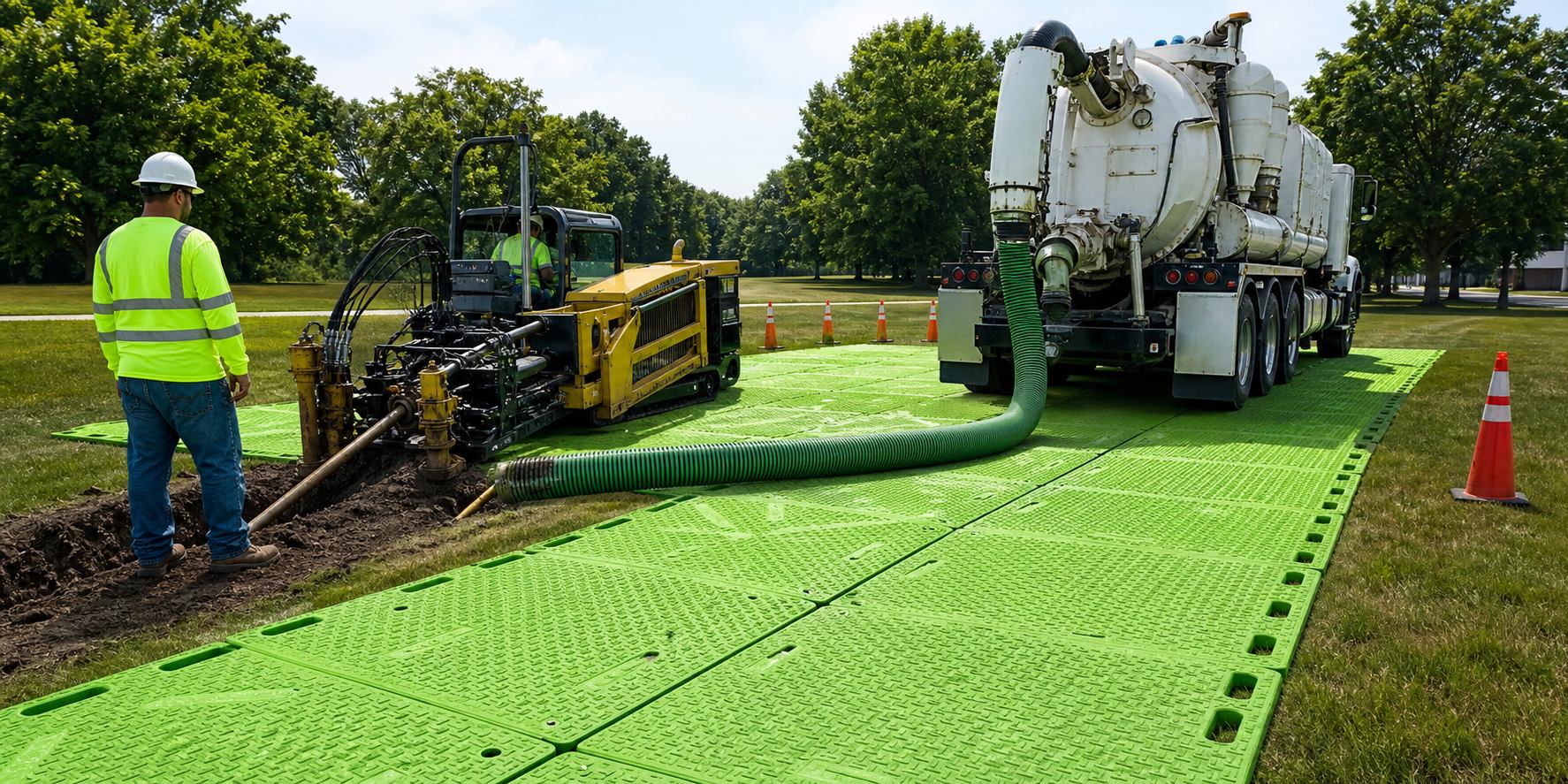
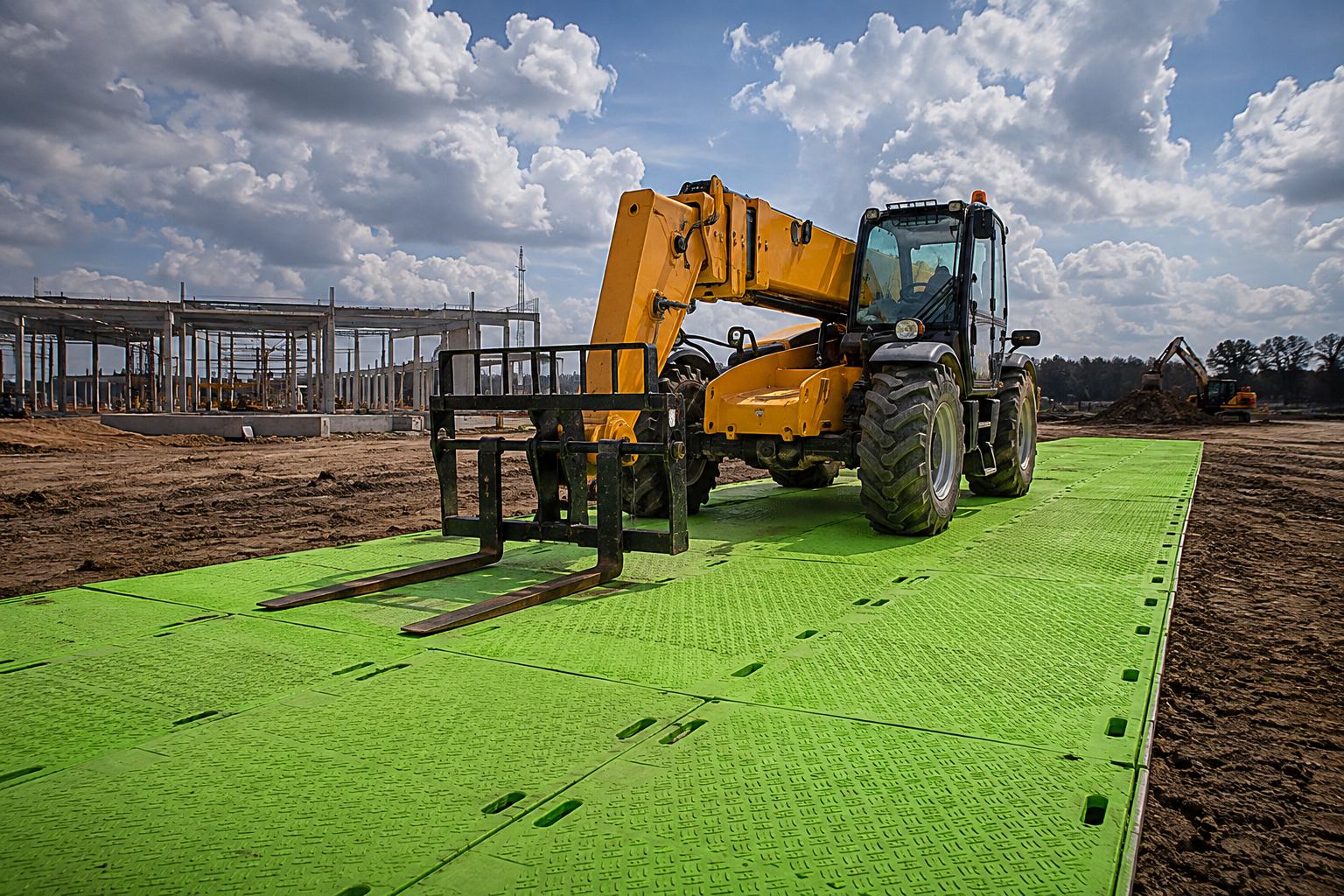
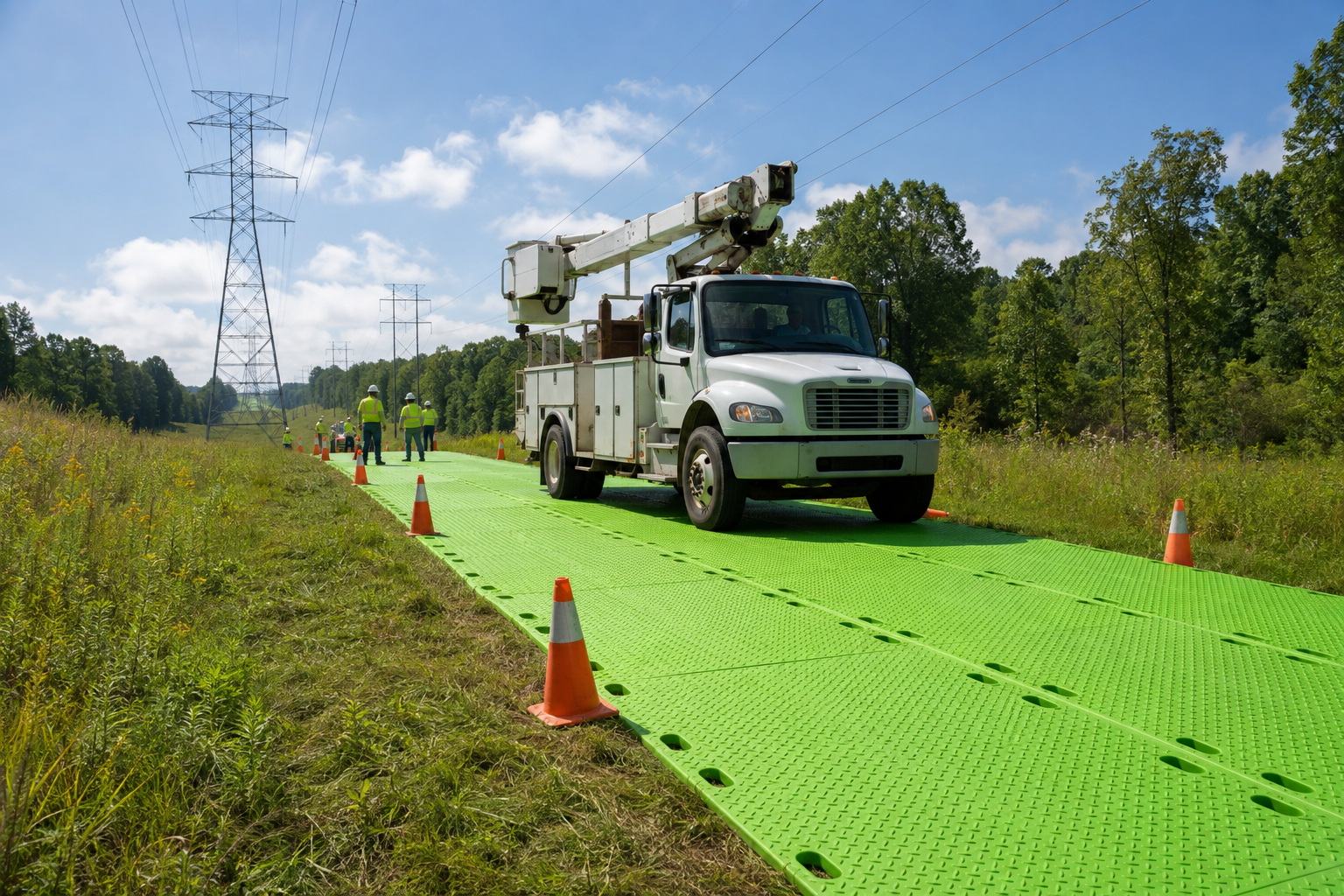
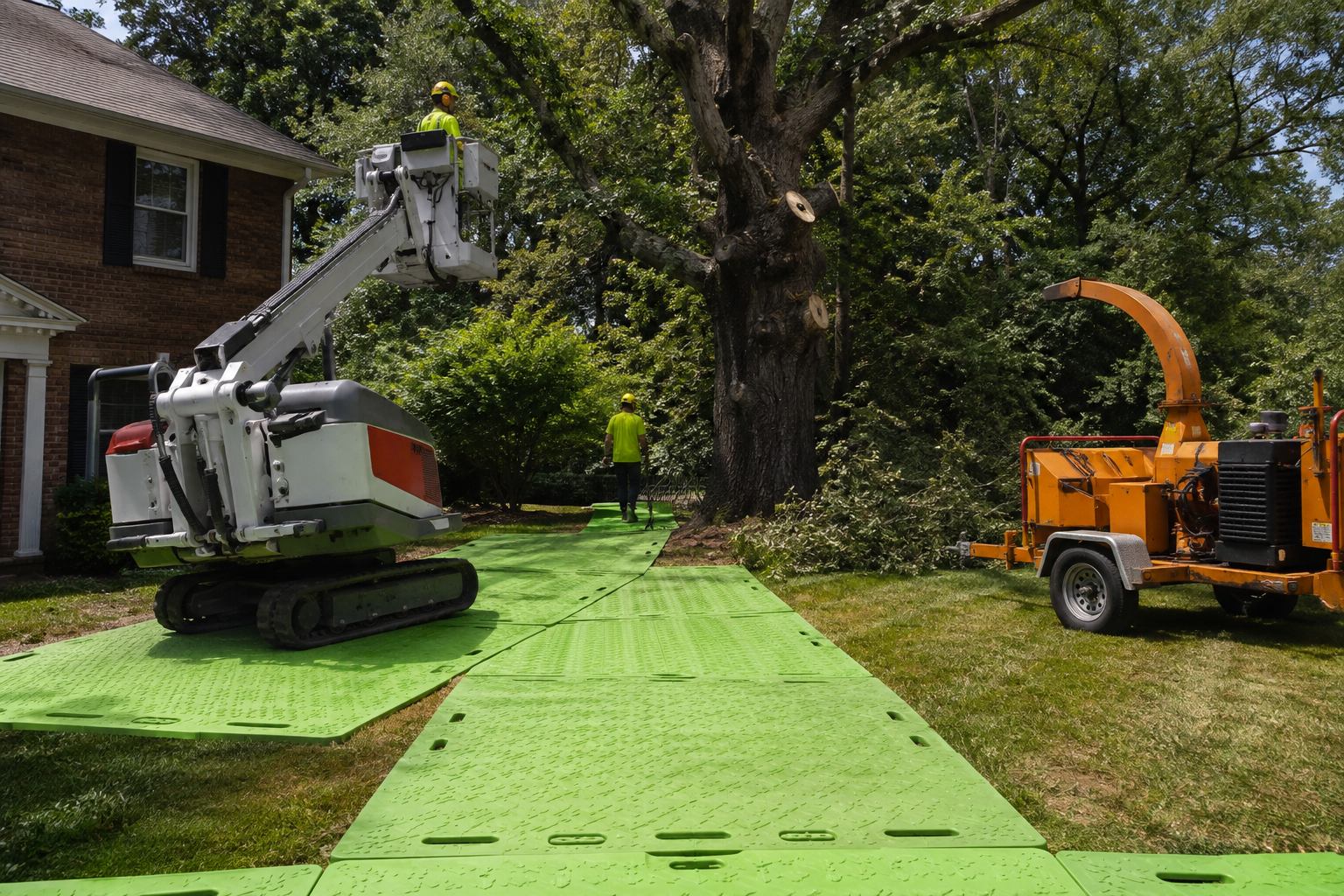
HDPE—high-density polyethylene—is the material professionals choose when they want strength, portability, and reliable repeat use. It is engineered to perform outdoors in all seasons and under real equipment loads.
Four-season performance
Unlike plywood, HDPE doesn’t absorb water. It won’t swell, rot, delaminate, or break down in rain, snow, or mud. That means contractors get reliable support job after job without replacing materials constantly.
Strong under load
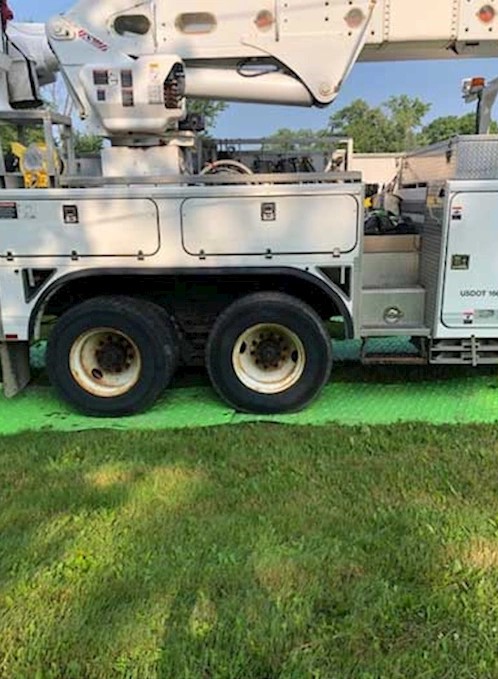
HDPE mats are built to distribute weight evenly, preventing rutting and soil displacement. High-quality HDPE mats are designed for tough equipment use and remain stable even under heavy traffic.
Safer traction
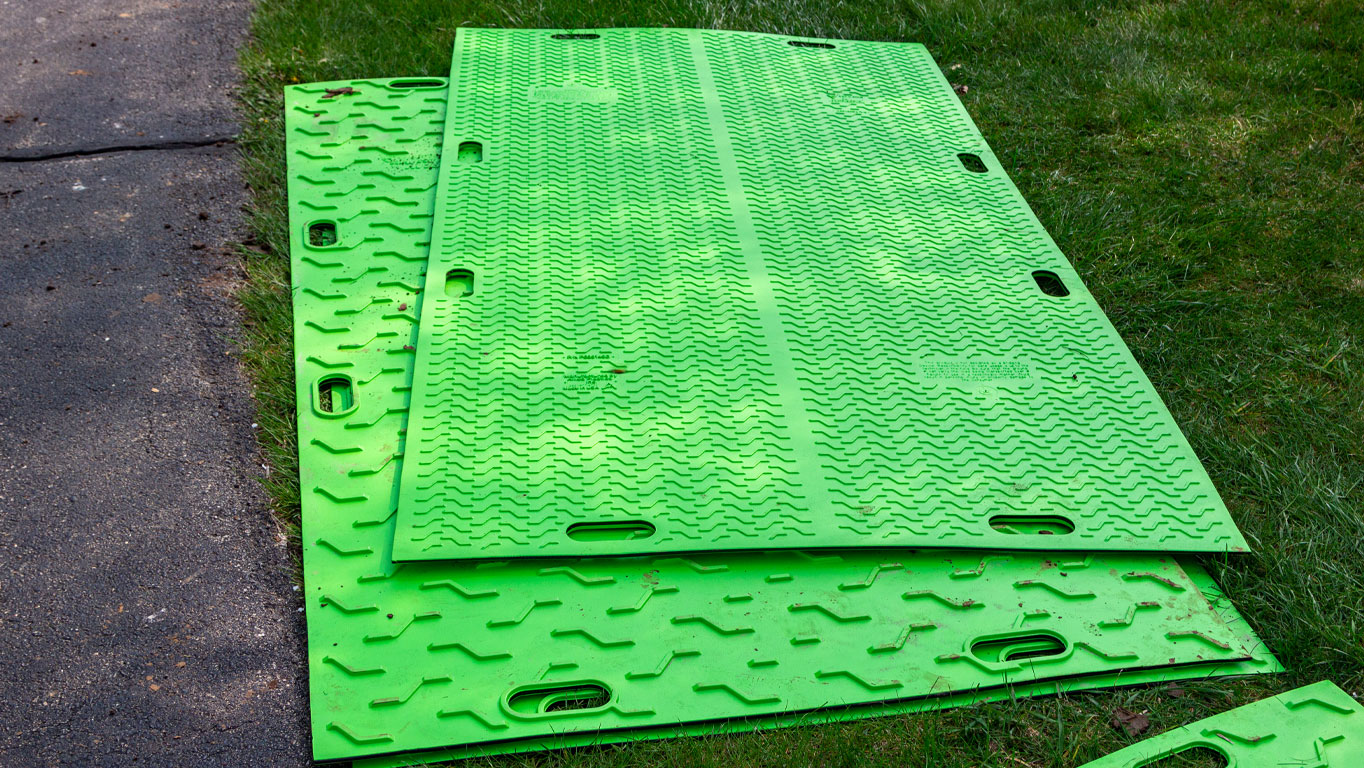
HDPE mats can feature dual-sided tread patterns that improve grip for both foot traffic and machinery. That matters on muddy job sites where slips and poor traction slow work and increase liability.
Better handling and deployment
Contractors need mats that improve efficiency—not create extra work. HDPE mats are designed for fast placement, easier movement, and quick jobsite setup.
Professional appearance
HDPE mats look clean, uniform, and intentional. That’s a major advantage when you’re working in residential neighborhoods, commercial properties, or any environment where client perception matters. A polished jobsite sends a message that your crew works at a higher standard.
Real Jobsite Advantages Contractors Notice Immediately
Contractors who switch to HDPE mats typically notice improvements in multiple areas:
Faster access and fewer delays
Stable access paths reduce equipment getting stuck and improve workflow across the site.
Less property damage
Better weight distribution means fewer ruts, fewer cracked surfaces, and fewer repairs at the end of the project.
Cleaner jobsite presentation
Clients see organized protection, not improvised plywood patches. That builds trust.
Lower replacement costs
HDPE mats are reusable for years, reducing the cycle of buying and disposing of plywood repeatedly.
The Verdict: What Really Lasts?
If the goal is simply a short-term patch, plywood may seem fine—until it fails. Composite mats can be stronger than plywood, but often add weight, complexity, and inconsistent performance depending on quality.
HDPE mats are the option that consistently wins where it matters most: durability, traction, repeat use, and professional presentation.
For contractors who want to reduce damage claims, speed up setup, protect surfaces, and look more professional on every jobsite, HDPE is the clear long-term solution.
Upgrade Your Ground Protection Standard
If you’re ready to stop replacing plywood and start using a solution built for serious work, explore the full lineup on our Products page or reach out through our Contact page for help selecting the right mats for your projects.
Protect the ground. Protect your reputation. Pro’s choose BAM!