Protect Your Worksites, Protect Your Reputation
Every contractor, landscaper, utility crew, or event organizer knows the sinking feeling of finishing a job and realizing the ground underneath took a beating. Torn-up turf, cracked driveways, gouged pavers, and deep ruts don’t just create cleanup costs—they create reputation damage.
In 2025, clients expect better. They expect crews to protect lawns, pavement, and access routes with solutions that look professional, perform in all conditions, and hold up job after job. That’s exactly why ground protection mats have become a standard across construction, landscaping, utilities, and events.
This guide breaks down everything you need to know about mat sizes, pricing factors, and load ratings so you can choose the right solution confidently—and stop relying on temporary plywood fixes that fail fast.
Why Ground Protection Mats Are Better Than Plywood or Timber
For years, plywood sheets and timber mats were the “go-to” option for temporary ground protection. But on modern jobsites, those materials don’t keep up.
Plywood is a short-term patch
Plywood absorbs water, swells, and warps. It cracks under equipment weight, becomes slippery in rain, and often ends up in the dumpster after only one or two uses. Worst of all, it looks messy and unprofessional on client properties—especially in residential and commercial environments where appearance matters.
Timber is often overkill
Timber mats can be strong, but they’re heavy, expensive to transport, and difficult to move without machinery. For many contractors, they slow down efficiency and don’t provide the clean, organized site setup clients expect.
HDPE mats offer the modern advantage
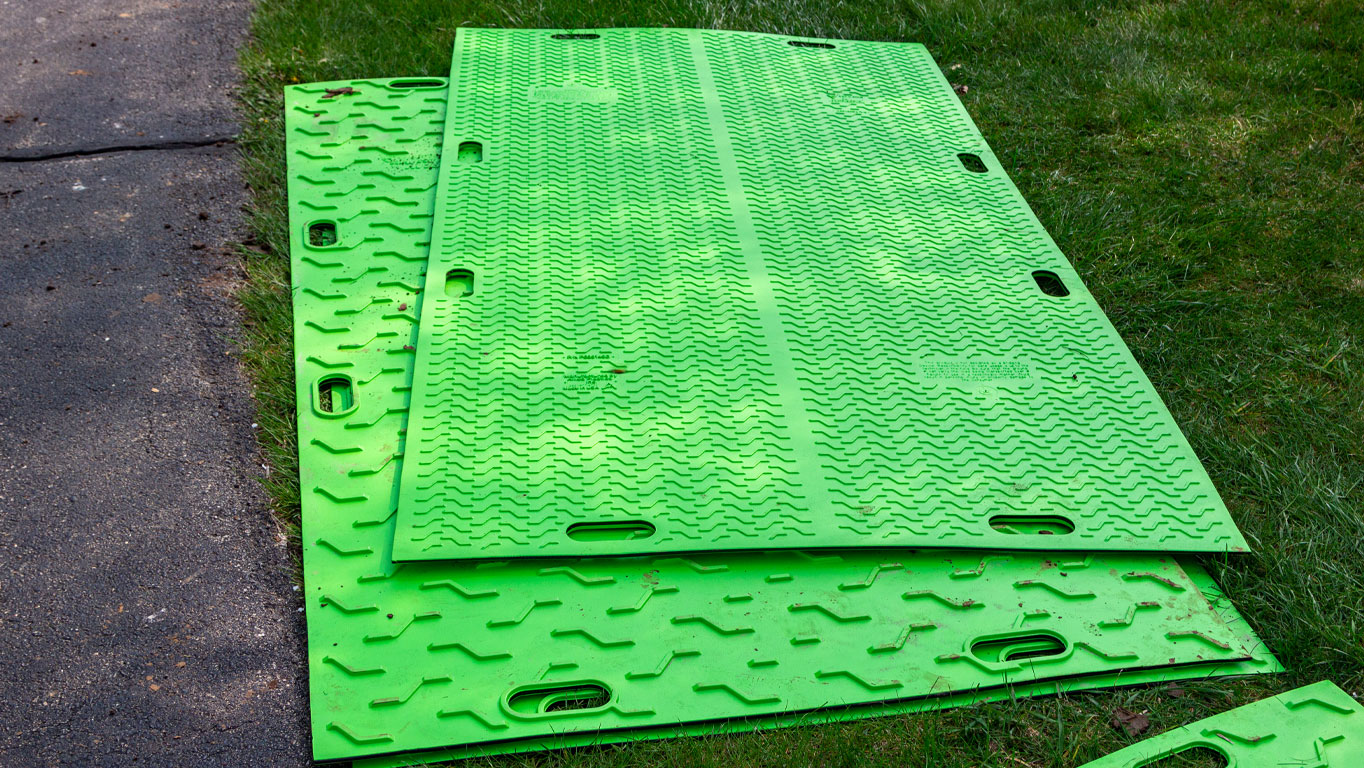
HDPE ground protection mats are engineered for performance, portability, and long-term reuse. They don’t rot, splinter, or absorb moisture. They maintain traction in wet conditions. They clean up easily. And most importantly—they help your jobsite look professional from start to finish.
The Ground Protection Mat Sizes You’ll See Most in 2025
Size matters because it determines coverage, handling speed, and how easily mats fit into tight access areas or larger staging zones.
4×8 ground protection mats
The 4×8 panel is the industry standard for a reason. It provides excellent coverage while remaining manageable for crews to move and deploy quickly. It’s ideal for:
- Temporary access roads
- Driveway protection during remodeling or roofing
- Equipment staging zones
- Lawn and turf protection during landscaping projects
- Event walkways and high-traffic areas
This size is often the “workhorse” mat contractors rely on for nearly any job.
2×8 mats for tight access and smaller protection zones
When projects involve narrow gates, side yards, utility easements, or tighter staging spaces, smaller panels make handling easier and allow more precise placement. Many crews use 2×8 mats for:
- Narrow access paths
- Backyard equipment routes
- Residential jobs with limited space
- Smaller footprint protection needs
Choosing the right size is about your workflow
A smart mat setup isn’t always about using the biggest panel—it’s about using the size that matches how your crew moves materials and equipment. Many contractors keep both options available so they can build flexible paths and staging zones on demand.
Understanding Load Ratings the Right Way
Load ratings are one of the most important specs to understand before buying mats. But they’re often misunderstood.
Total weight vs. point load
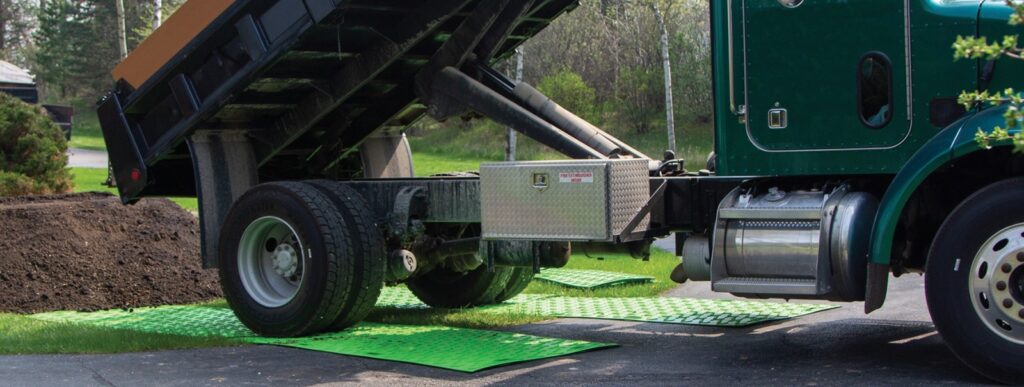
A machine might weigh “only” 10,000 pounds, but the pressure it applies depends on how that load is distributed. A wide tire spreads weight out. An outrigger concentrates weight into a small footprint—creating huge ground pressure.
That’s why lifts, cranes, and trucks can cause major damage even on surfaces that appear solid.
Soil conditions matter
Load ratings don’t exist in a vacuum. A mat that performs well on compact gravel may behave differently on wet soil. Soft ground, saturated turf, and loose soil will all increase rutting potential, even with a strong mat.
Why plywood is not load-rated ground protection
Plywood may feel strong at first, but it fails under real-world conditions. It bends, breaks down when wet, and provides inconsistent support. That’s why professionals upgrade to engineered mats that are designed for serious equipment and repeated use.
What Drives the Price of Ground Protection Mats
Contractors often ask: “What’s the price difference between plywood and real mats?”
The honest answer is that plywood looks cheaper up front—but mats win on total value.
Mat pricing depends on several factors:
Quantity ordered
Many suppliers offer better pricing per mat when purchasing in bulk or by the pallet. Contractors who protect multiple sites per month often prefer pallet orders for cost efficiency and dependable stock.
Shipping and freight
Because mats are large and typically shipped in stacks, freight costs can vary depending on delivery distance, access requirements, and delivery speed. Ordering through a distributor network can help reduce delivery costs and lead time.
Mat thickness and engineering
Higher-quality HDPE mats with real strength and proven jobsite performance may cost more than thin alternatives—but they last longer, support more weight, and deliver a better return over time.
Accessories and add-ons
Some job sites require additional support such as connectors or customized configurations. Those can influence total project cost, especially for large access roads or staging zones.
Why Cost-Per-Use Is the Best Way to Compare Value
If you want to choose the best mat for your money, don’t compare the upfront price—compare cost per use.
Plywood is a repeating cost. It warps, cracks, and gets thrown away. Over a season, many contractors spend far more replacing plywood than they realize.
HDPE mats are reusable for years. Every job reduces the cost per use, and every job becomes cleaner, safer, and more professional. That’s why HDPE mats become one of the smartest investments contractors make—especially when property damage claims and jobsite repairs are factored in.
The Features Contractors Should Look for in 2025
When comparing mats, focus on real jobsite performance—especially in unpredictable conditions.
Lightweight handling
A mat should be easy for crews to move quickly. Faster setup and teardown means better labor efficiency and smoother job flow.
Built-in hand holds
Good mats are designed with crews in mind, making it easier to lift and position without strain or unsafe handling.
Slip-resistant traction
Traction matters for both machines and foot traffic. Wet grass and muddy soil are common on outdoor sites, and a slip-resistant surface reduces risk and improves workflow.
Visibility and jobsite organization
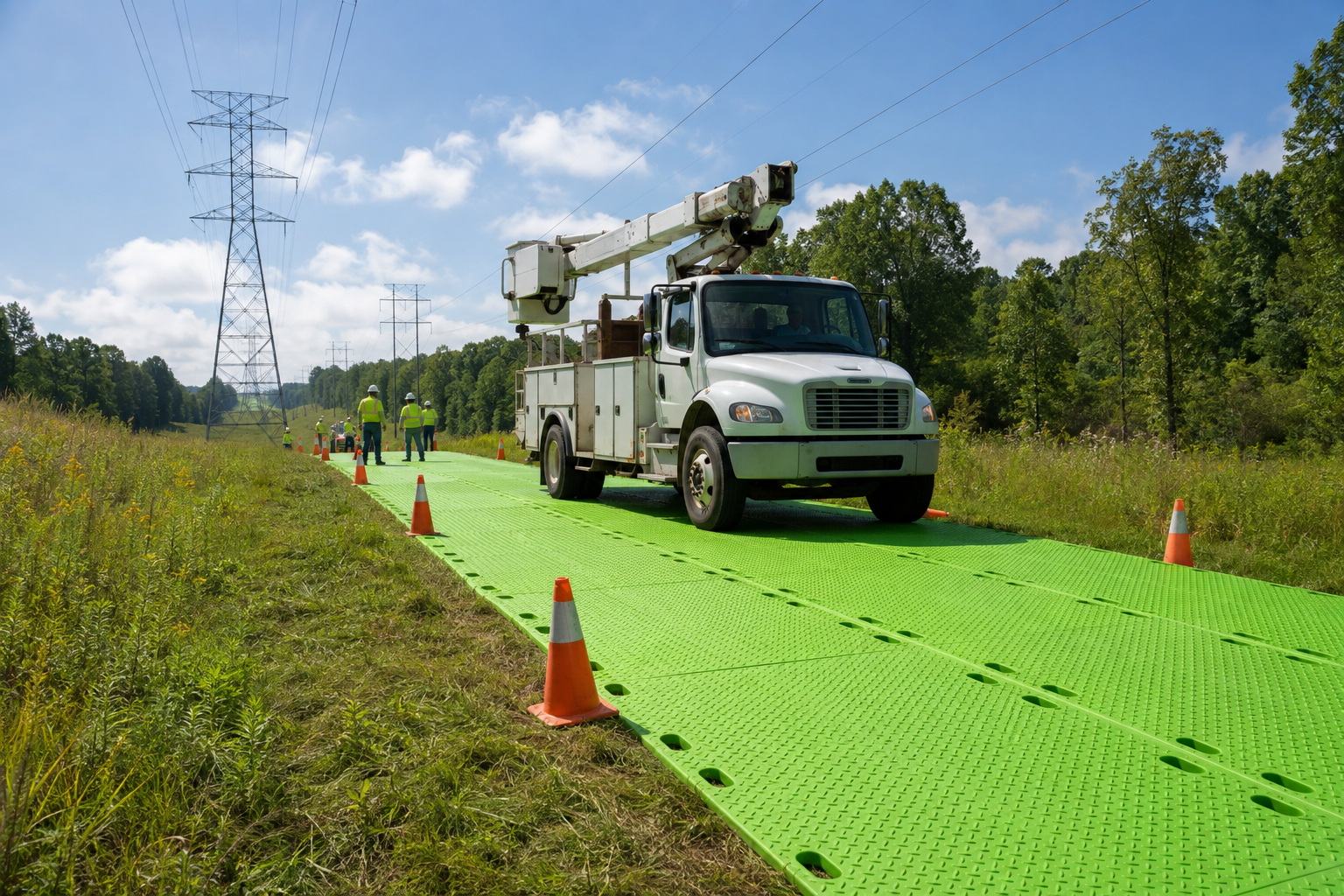
High-visibility mats help define access paths and staging areas clearly, which improves safety and makes the jobsite look more professional for clients and inspectors.
Where Ground Protection Mats Deliver the Best Results
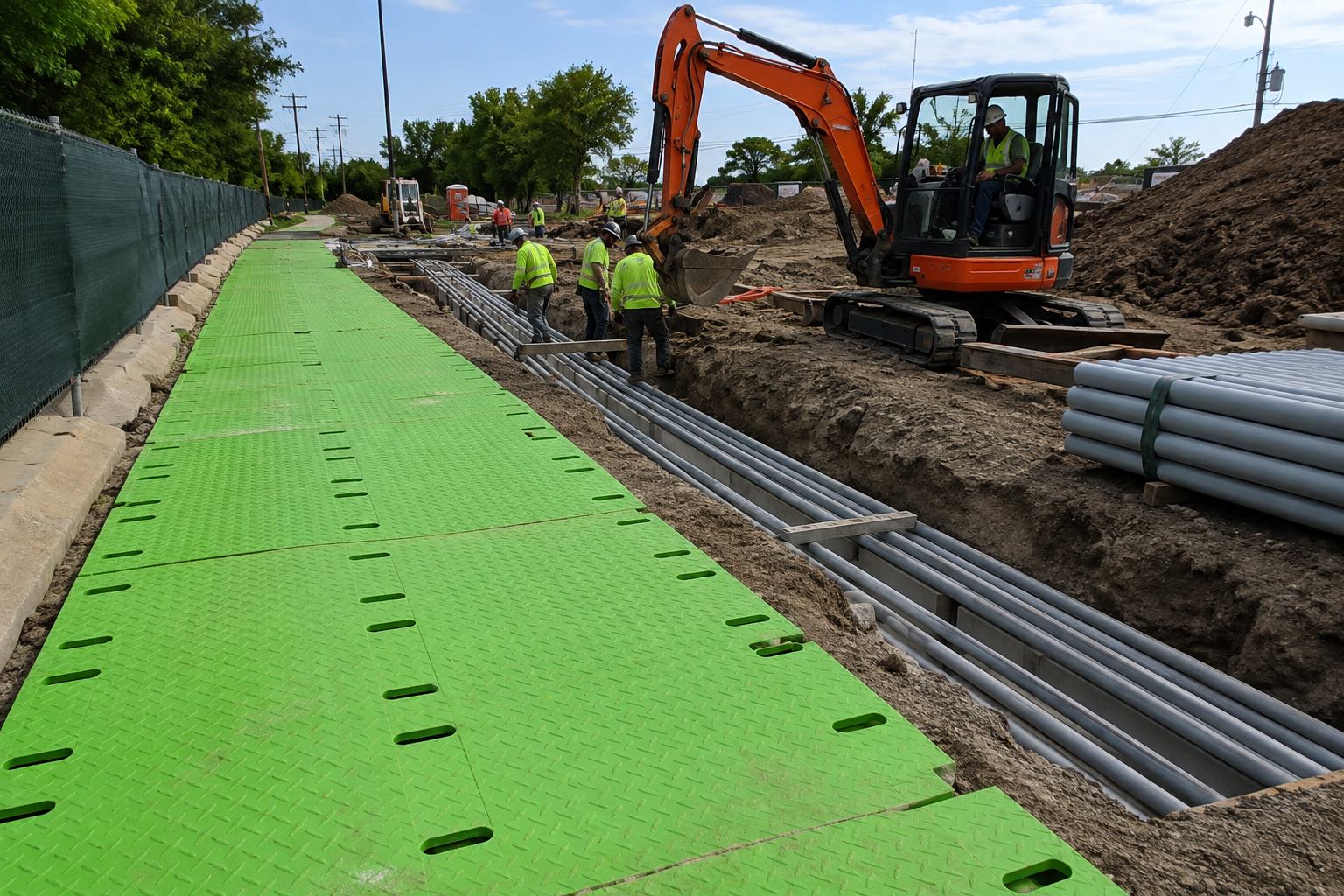
Ground protection mats aren’t just for one type of contractor. Their value shows up across nearly every industry that involves moving equipment over vulnerable surfaces.
Construction and renovation
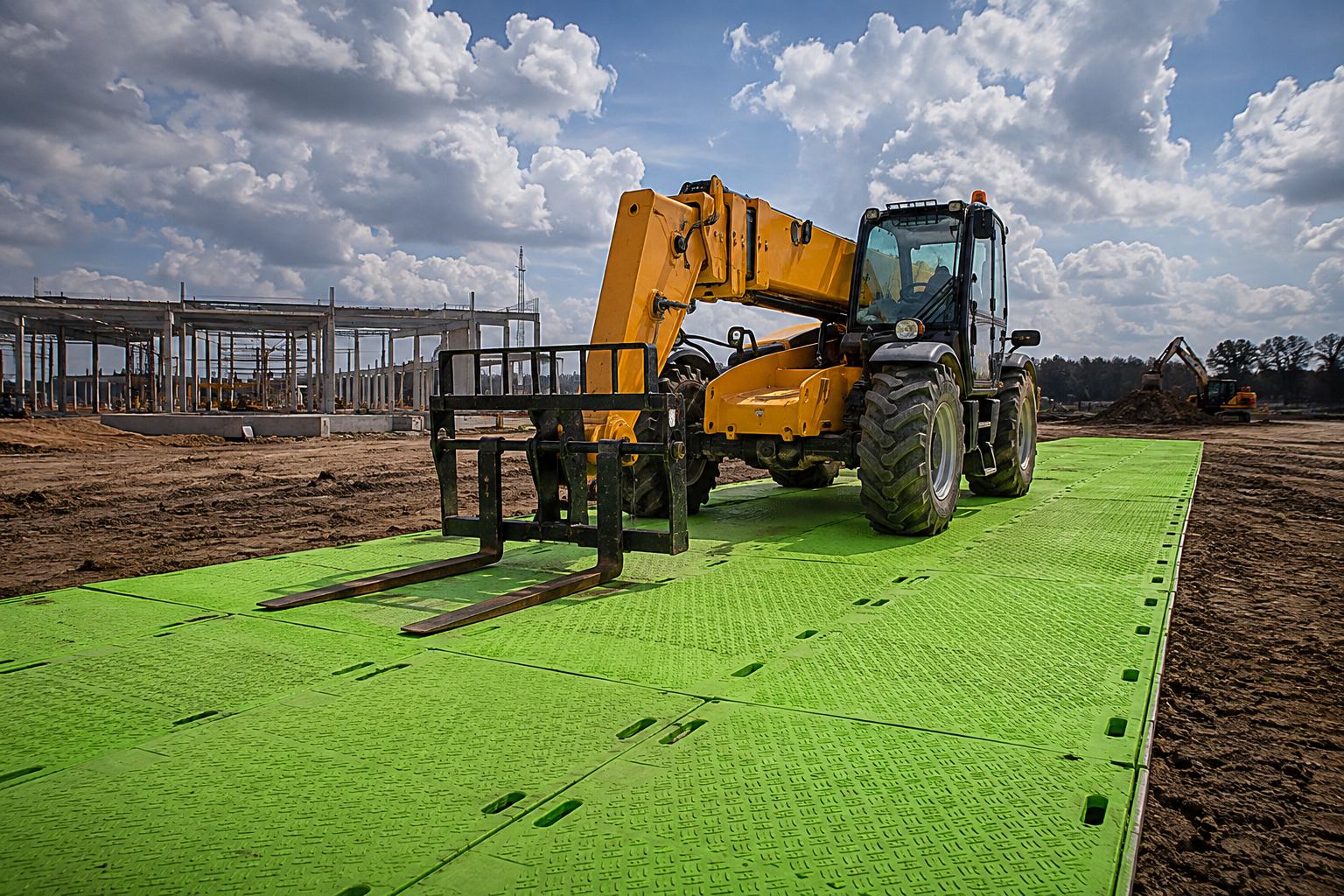
Mats protect surfaces from loaders, dumpsters, and heavy deliveries while keeping access clean and predictable.
Landscaping and hardscaping
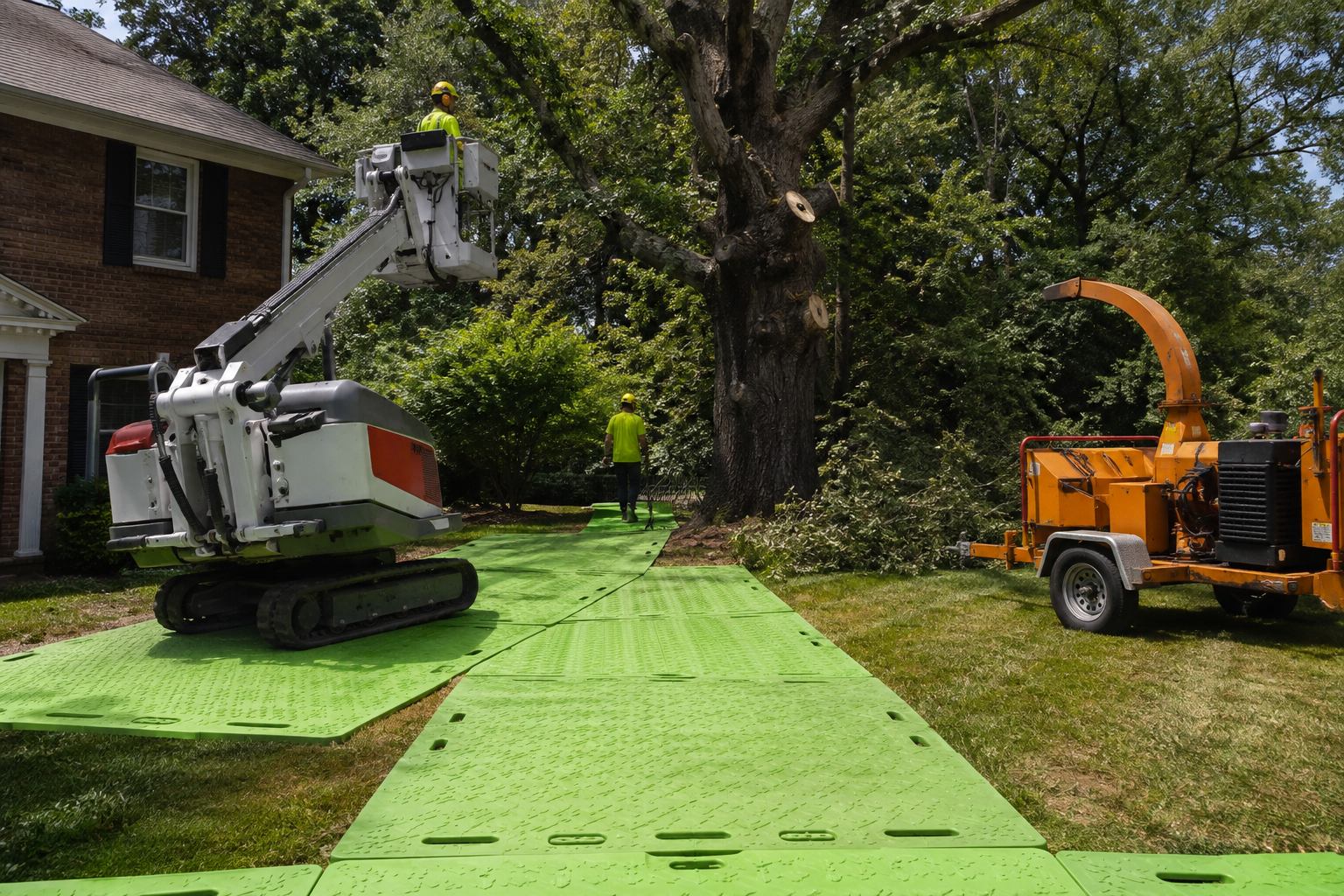
Mats protect lawns, root zones, and irrigation areas while supporting equipment transport across turf.
Utilities and trenchless drilling
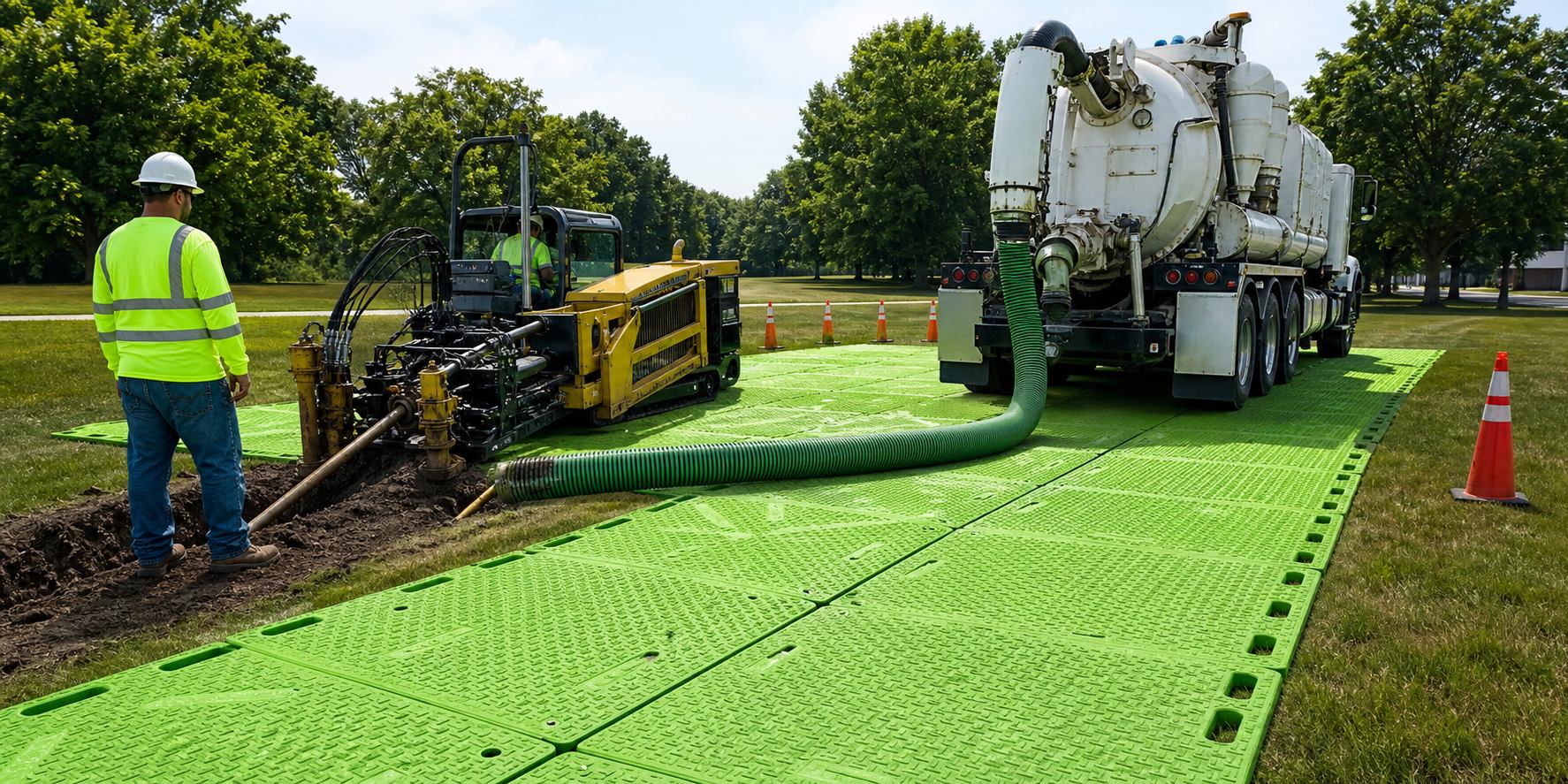
Mats provide stable routes for rigs and service vehicles while minimizing soil disturbance and protecting client property.
Events and stadiums
Mats create safe walkways and protect turf under foot traffic and light equipment, keeping the venue presentable throughout the event.
How to Get the Best Long-Term Performance
To maximize lifespan and keep mats looking professional:
- Clean mud and debris after jobs
- Stack mats neatly for storage
- Rotate use to spread wear evenly
- Keep mats organized so setup remains fast
The goal isn’t just durability—it’s repeatable, professional performance on every project.
Make the Smart Choice in 2025
Ground protection mats aren’t just a product purchase—they’re a professional upgrade. They help crews protect property, reduce damage risk, improve workflow, and present a jobsite that clients trust.
Explore mat options on our Products page or reach out through our Contact page for guidance on choosing the best sizes, quantities, and configurations for your next project.
Protect your worksite. Protect your reputation. Pro’s choose BAM!