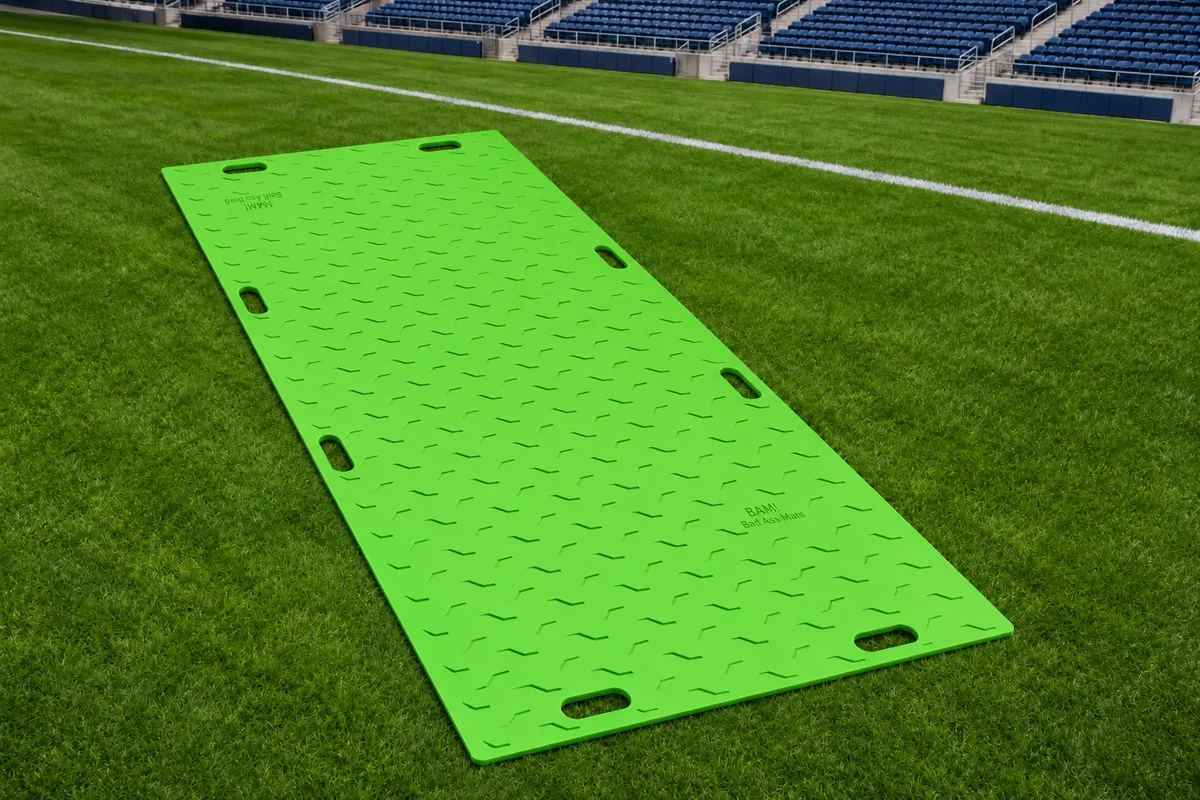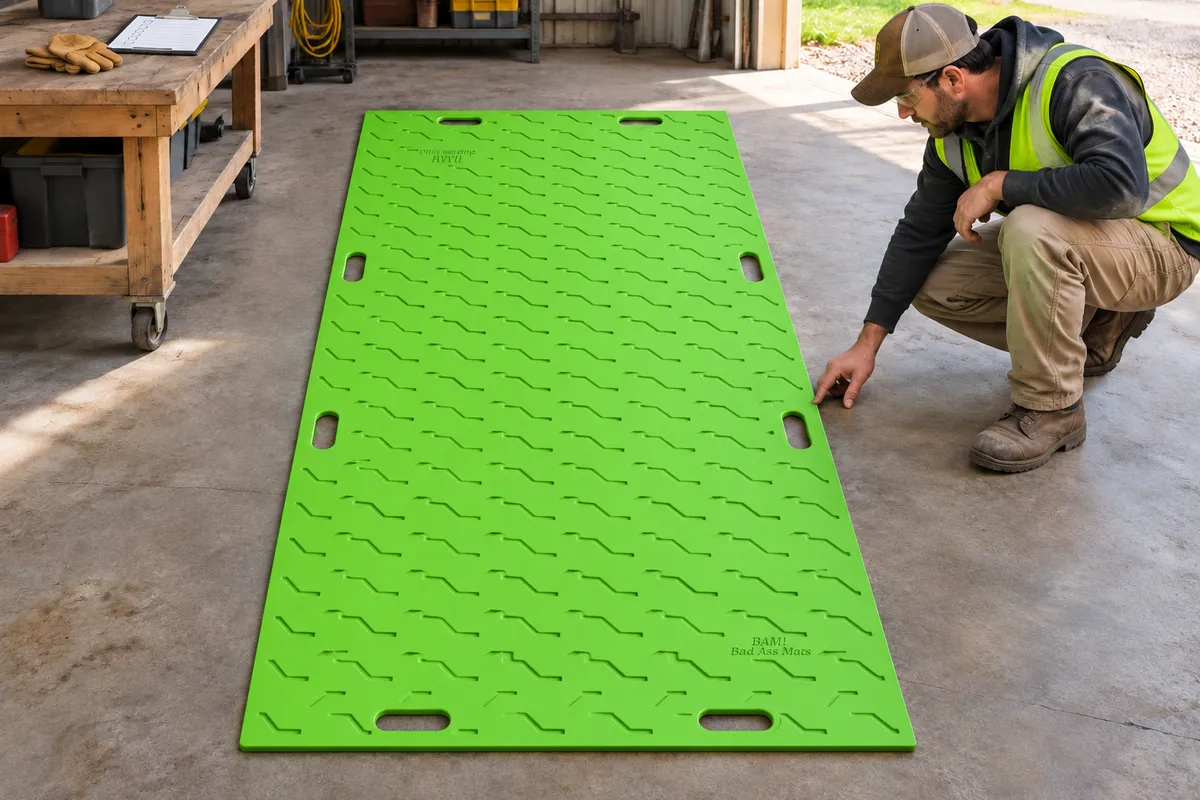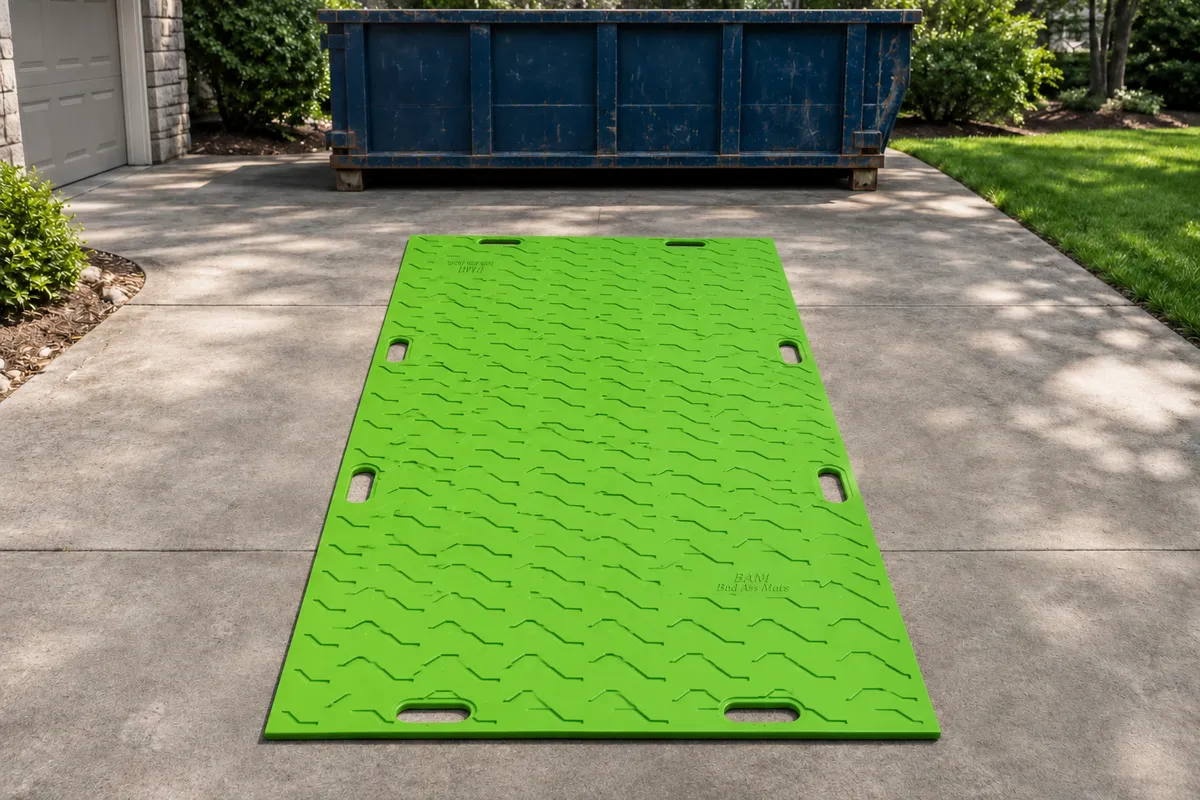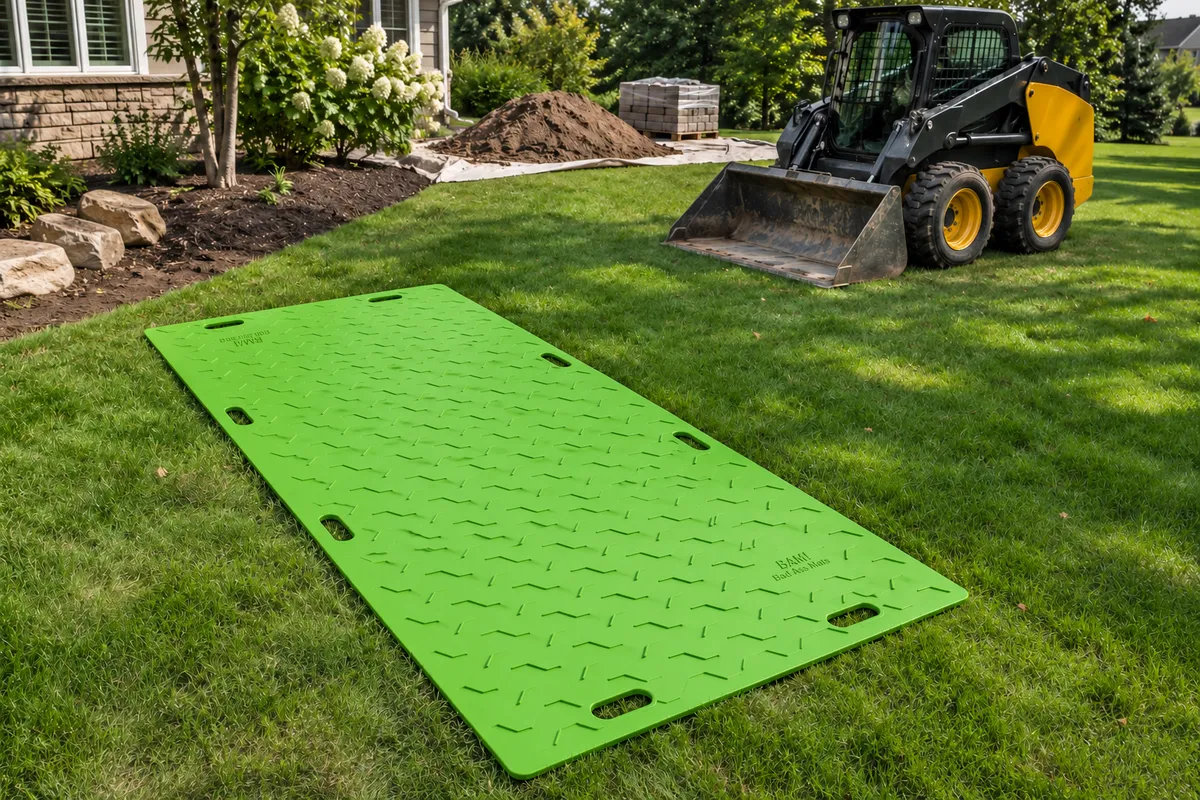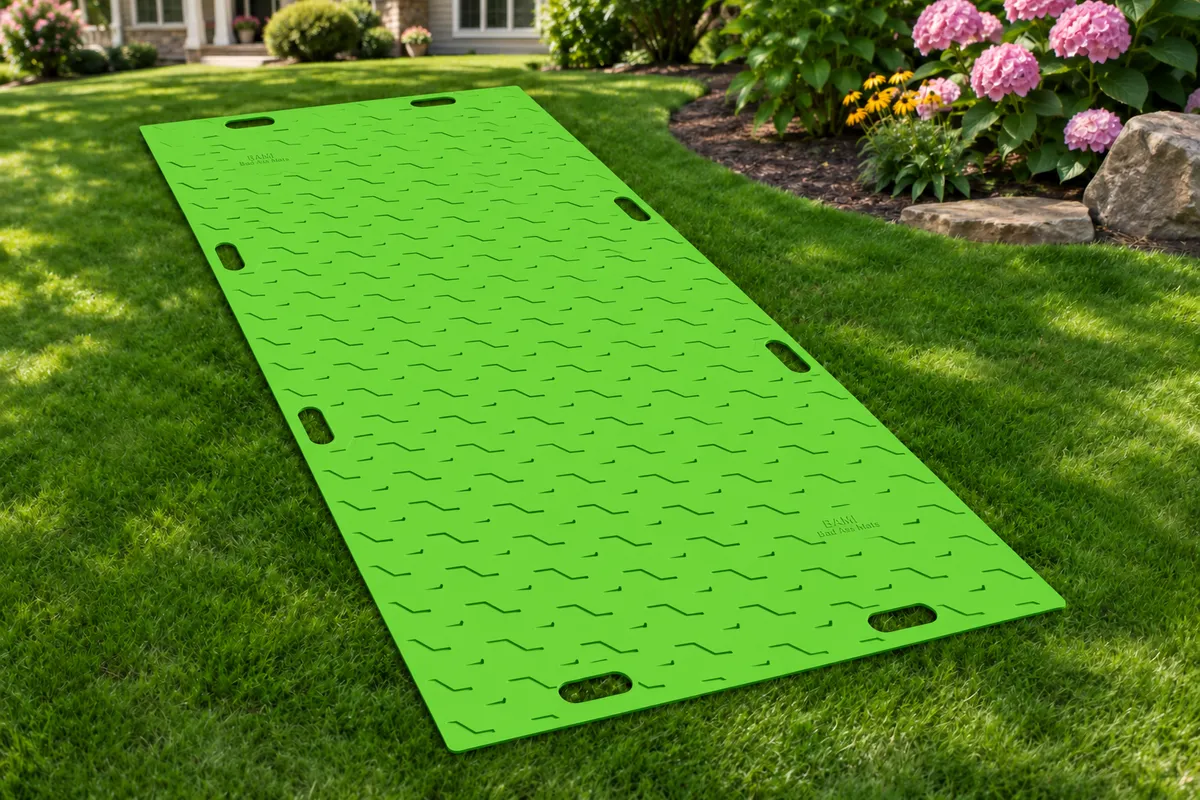
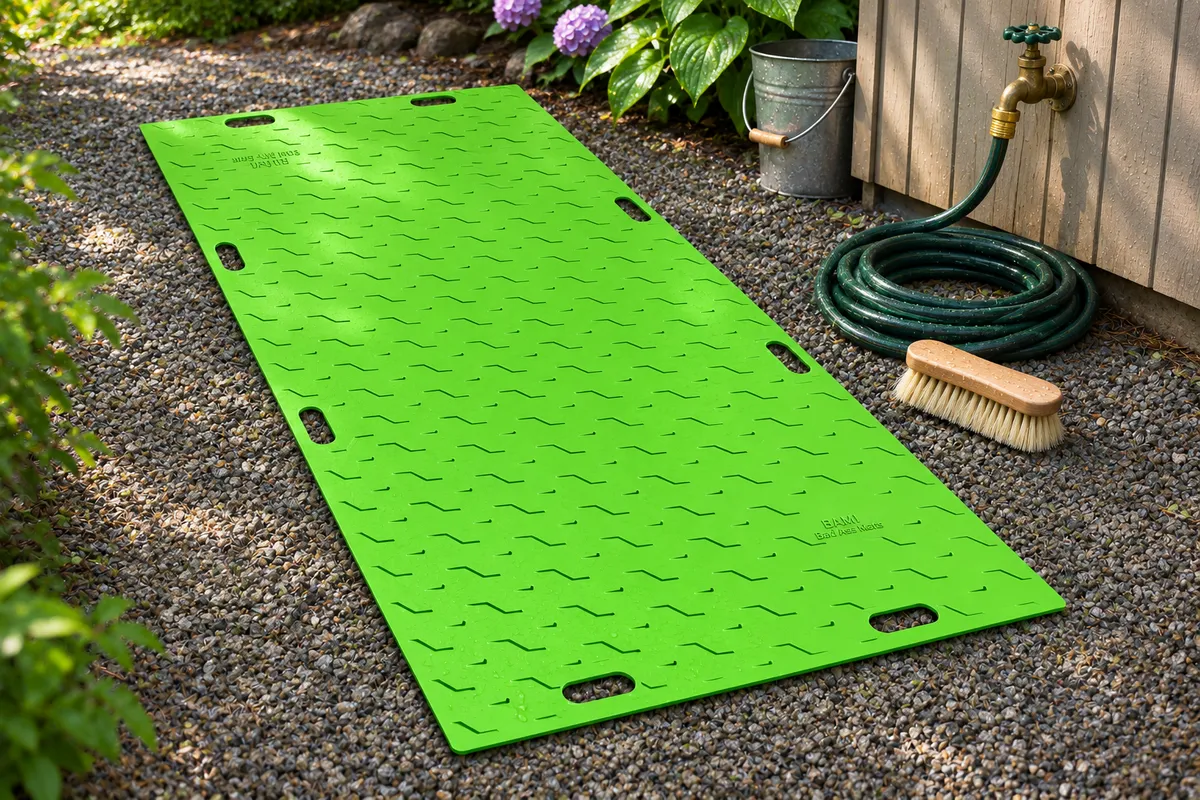
A ground protection mat is a capital purchase, not a consumable — which means the real question behind “how much does it cost” is actually “how many jobs will this panel survive.” A $200 panel that lasts three jobs is a worse deal than a $250 panel that lasts fifty. Understanding what actually drives mat lifespan is the difference between buying based on sticker price and buying based on true cost per use.
What Determines How Long a Mat Lasts
Material matters more than almost anything else
Plywood and timber mats have a built-in ceiling on lifespan because the material itself degrades with water exposure, regardless of how carefully it’s handled. HDPE panels don’t face that same structural decay — they don’t absorb water, rot, or swell, which removes the single biggest lifespan limiter other materials face.
UV exposure affects every outdoor material eventually
Even UV-resistant HDPE sees gradual surface changes from years of sun exposure. Quality HDPE formulations are engineered specifically to slow this process, but it’s still a factor in long-term durability regardless of material type.
Handling and transport cause more damage than daily use
Counterintuitively, a lot of mat damage happens during loading, unloading, and transport between jobs rather than while the panel is actually deployed and doing its job. Dragging panels across rough surfaces, dropping them from truck beds, or stacking them carelessly causes more cumulative wear than months of proper on-site use.
Signs a Mat Is Nearing the End of Its Useful Life
- Deep surface gouges or cracking, especially extending through the panel thickness
- Warping or bowing that prevents panels from laying flat and interlocking properly
- Chalky, brittle, or faded surface texture indicating UV-driven material breakdown
- Damaged or worn interlocking edges that no longer lock securely with adjacent panels
How to Extend a Mat’s Service Life
- Transport carefully: use proper lifting points and avoid dragging panels across abrasive surfaces during loading and unloading.
- Stack and store properly: flat stacking on a level surface prevents warping during storage between jobs.
- Inspect between uses: catching minor damage early prevents it from becoming a structural issue under full load.
- Rotate panels across a job: distributing wear across a full panel inventory rather than always deploying the same ones extends the fleet’s overall life.
- Clean when needed: removing accumulated mud and debris prevents buildup that can mask developing damage during inspection.
What Realistic Lifespan Looks Like
There’s no single number that applies to every panel and every use case — a mat deployed on a gentle residential driveway job sees far less wear than one running under constant heavy equipment traffic on an industrial site. What’s consistent across use cases is that quality HDPE panels, properly handled, are built to survive many years and dozens to hundreds of deployments — a service life that plywood and most composite materials simply can’t match. For more on how load distribution affects wear patterns over time, see our guide on weight distribution mats.
Why Lifespan Changes the Buying Math Entirely
Once cost per use replaces cost per panel as the comparison point, the calculation shifts dramatically in favor of durable materials. A panel that costs more upfront but survives ten times as many deployments as a cheaper alternative isn’t the expensive option — it’s the cheaper one, once the math plays out across a year or a career of jobs.
Frequently Asked Questions
Q: How many years do HDPE ground protection mats typically last?
A: With proper handling and storage, quality HDPE panels are built to last many years across dozens to hundreds of job deployments — significantly longer than plywood or untreated composite materials.
Q: Does storing mats outdoors year-round shorten their lifespan?
A: Extended UV exposure does contribute to gradual surface wear over years, but quality HDPE is engineered to resist this far better than rubber or wood-based materials. Flat, level storage still matters more for preventing warping.
Q: What’s the single biggest cause of premature mat failure?
A: Rough handling during transport and loading — dragging, dropping, or improper stacking — causes more cumulative damage over a mat’s life than normal on-site deployment use.
Q: How do I know when it’s time to replace a panel instead of keep using it?
A: Deep structural cracking, warping that prevents flat interlocking, or worn interlock edges that won’t lock securely are the clearest signs a panel has reached the end of its safe service life. Contact BAM! if you’re unsure about a specific panel’s condition.
Buy for Cost Per Use, Not Just Cost Per Panel
The mats that save the most money over time are rarely the cheapest ones at checkout. Understanding what drives lifespan — and handling panels to protect that lifespan — turns a mat purchase into a long-term asset instead of a recurring expense.
| Work cleaner. Work safer. Pro’s choose BAM! Explore BAM! Ground Pro panels built for long-term reuse. Call 888-870-8158 or email msheridan@alliedplastics.com with care and durability questions. |