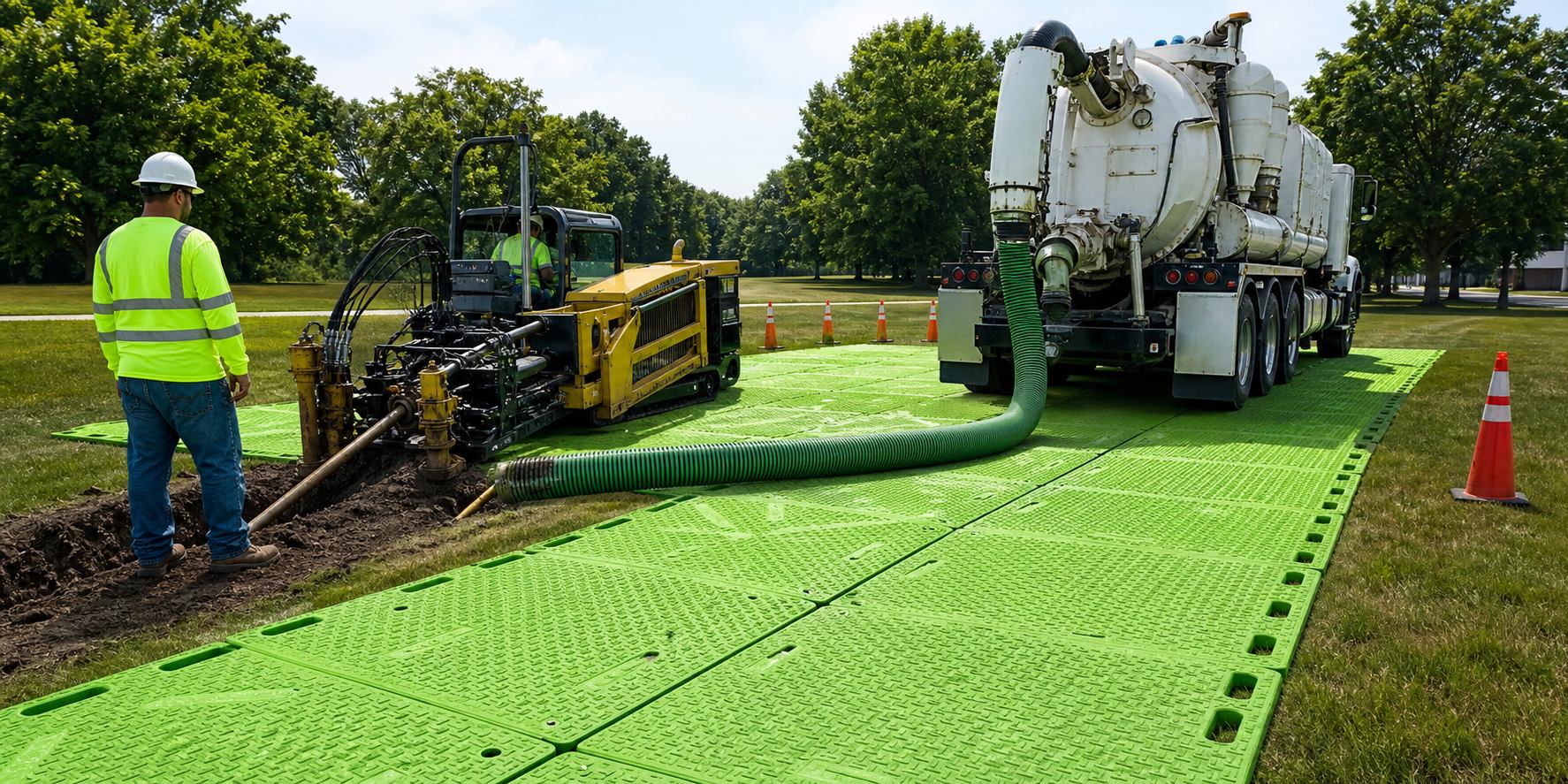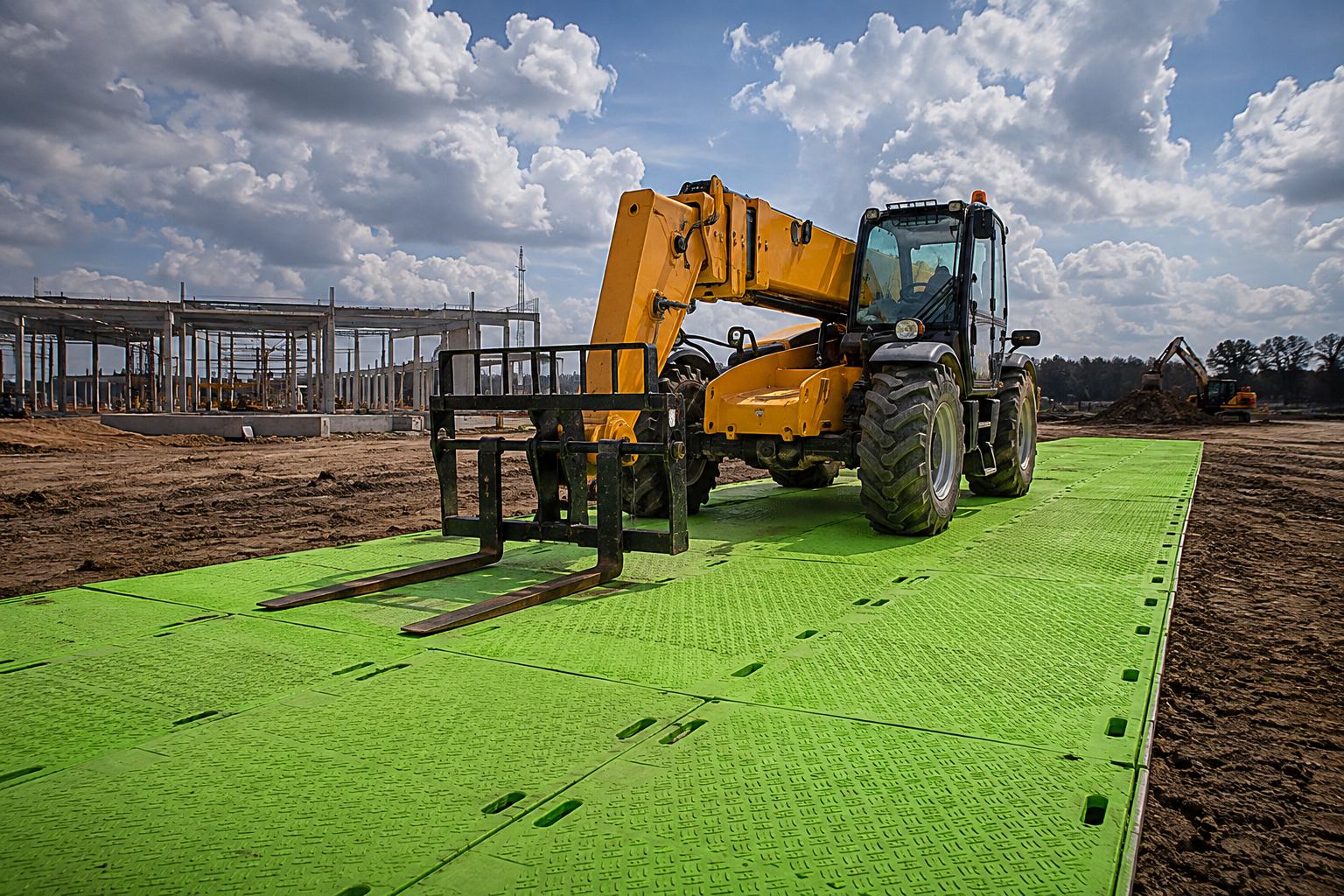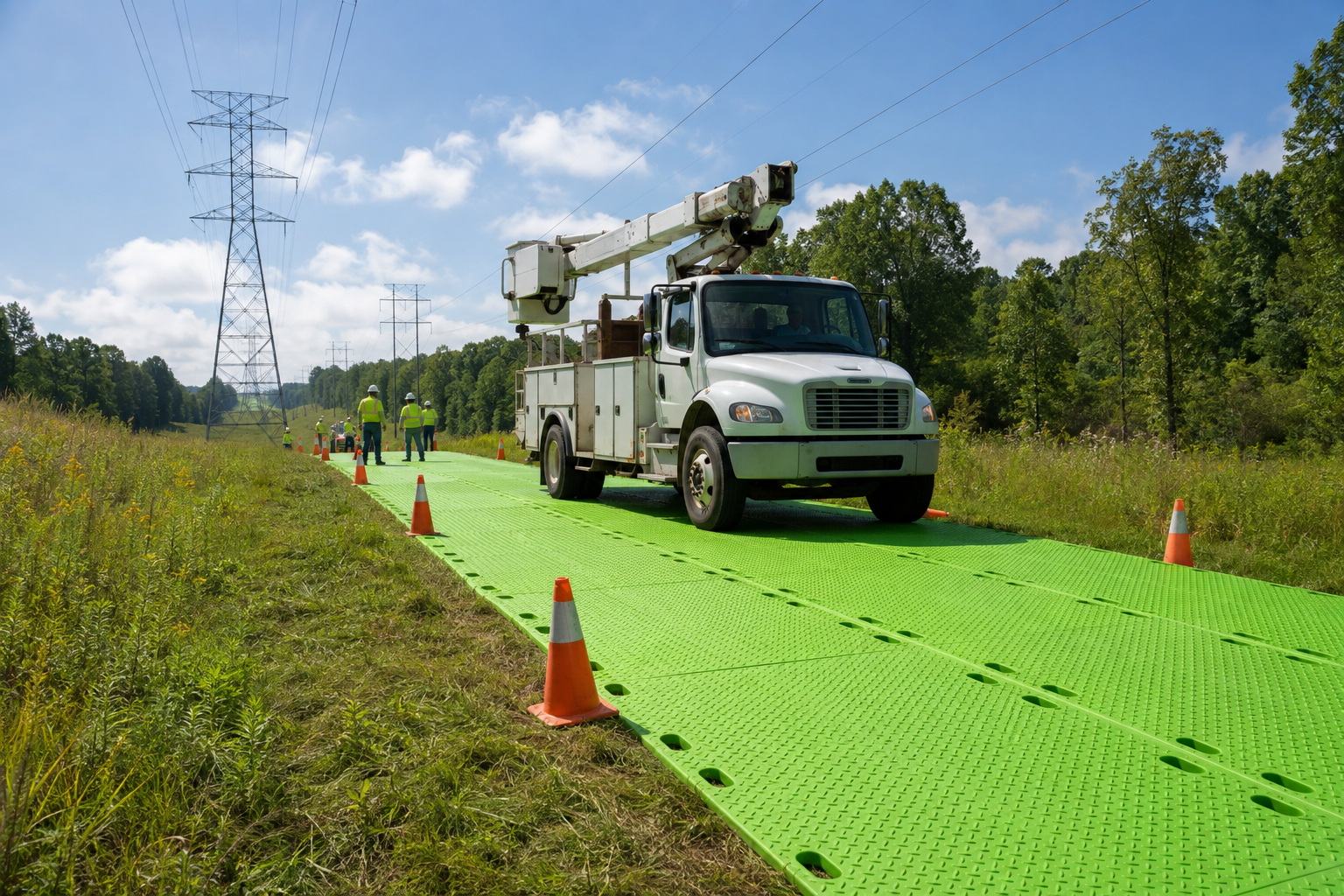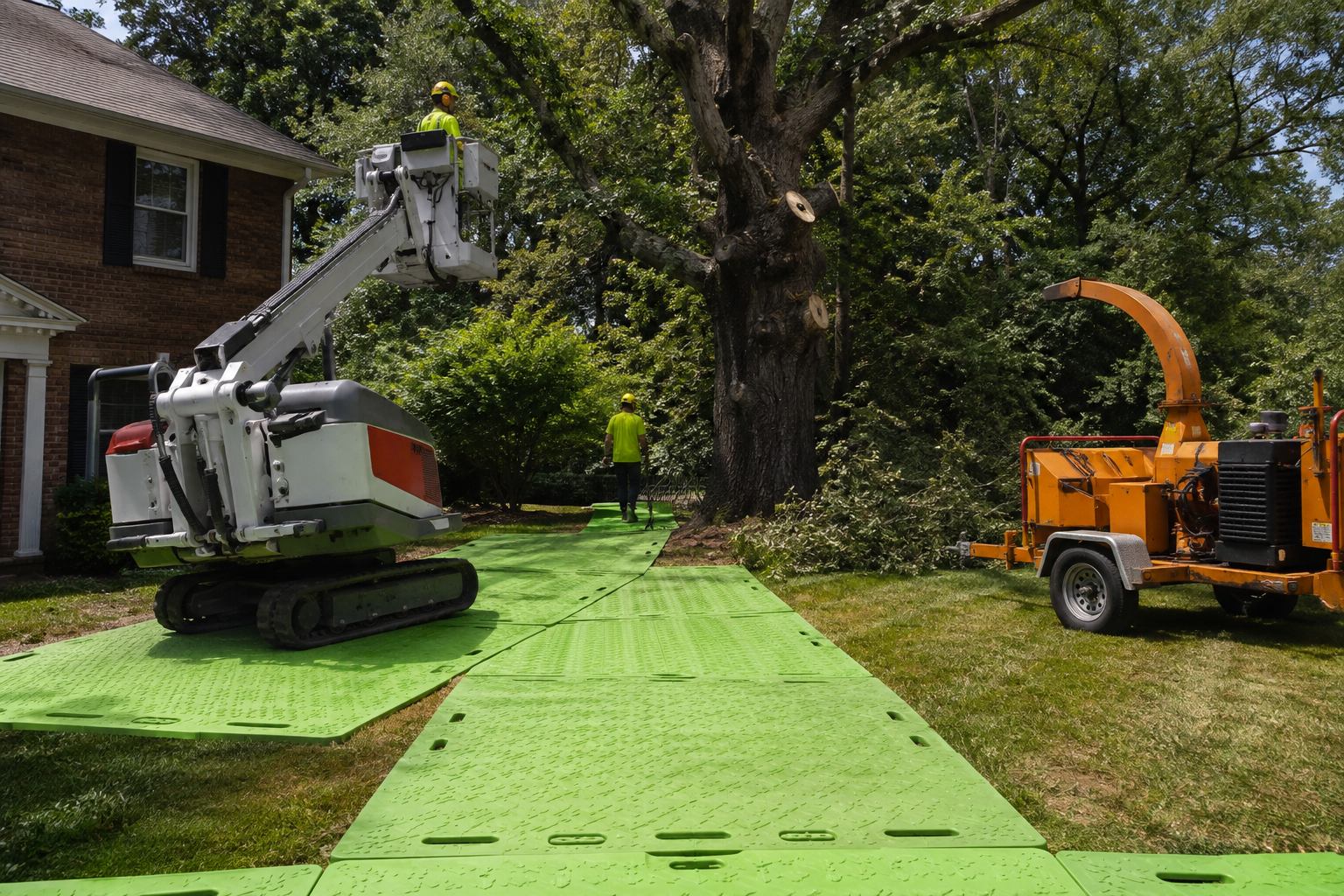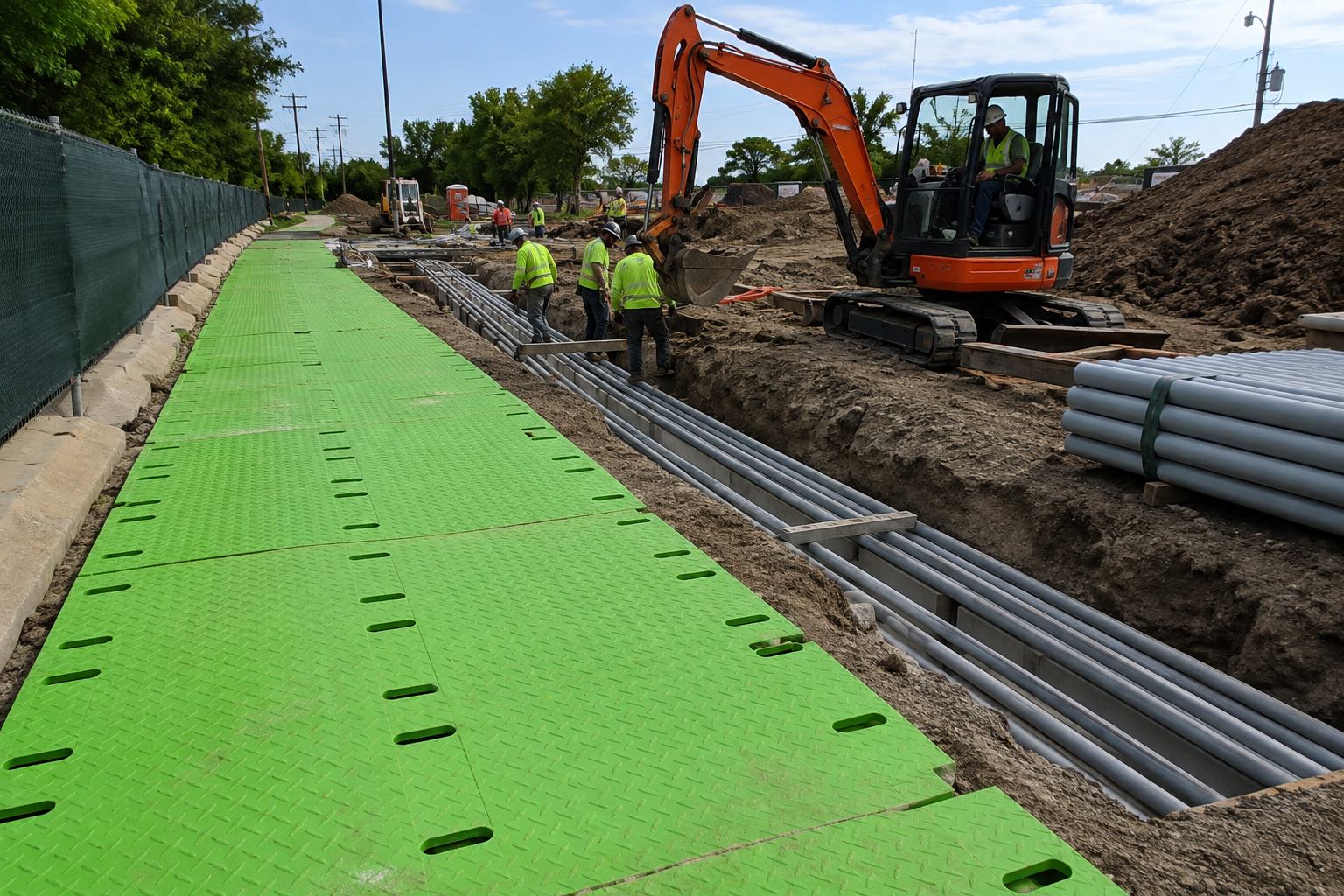
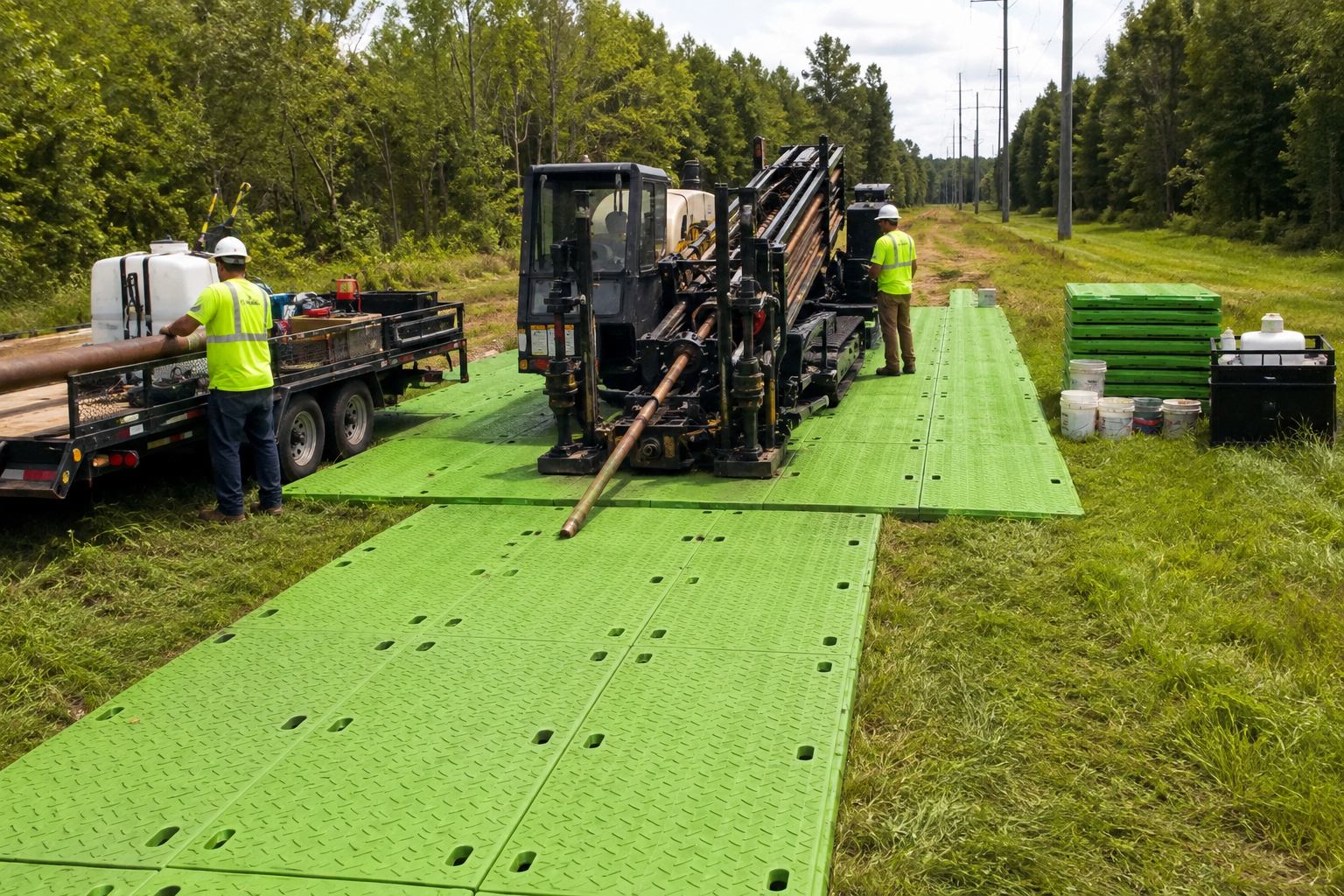
directional boring site mats give horizontal directional drilling contractors working in rights-of-way, commercial landscapes, and residential corridors a practical way to manage supporting repeated equipment and crew traffic while controlling ruts, mud transfer, and restoration costs. A good mat plan protects the surface, supports a more organized work zone, and helps crews avoid costly restoration and downtime.
This guide explains where protection matters most, how to plan coverage, and which BAM! Ground Pro features affect daily use. BAM mats are hi-vis safety green HDPE panels—not blue rubber mats—and are designed for reusable ground protection.
Why HDD Sites Need More Than a Travel Lane
Directional boring concentrates activity at the entry pit, exit area, mixing system, trailer, and support vehicle locations. A protected travel lane is helpful, but the highest wear often occurs where equipment stops, pivots, or is serviced.
The best results begin with a pre-job walk. Note soft ground, drainage, slopes, finished surfaces, turning points, and the exact machine path. Build the protected route before equipment enters the vulnerable area.
Map the Entire Work Sequence
Identify equipment delivery, drill setup, rod handling, spoils management, pedestrian routes, and restoration access. Build a mat plan around the sequence so panels do not need to be moved while critical operations are underway.
Treat the panels as one part of the access plan. Site conditions, equipment instructions, safety requirements, and professional judgment remain essential.
Create Stable Setup and Transition Zones
Place mats from firm ground toward the bore location. Extend coverage at trailer ramps and curb transitions, and use a wider pad where the drill or support equipment will remain. Keep panel edges aligned and inspect them after initial loading.
Operators should travel smoothly, avoid abrupt braking and stationary pivot turns, and stay centered on the route. Crew members should inspect alignment as conditions change.
Control Mud and Public-Space Impact
A defined HDPE route helps keep tires off saturated turf and reduces soil carried onto sidewalks and streets. That can shorten cleanup and support a more orderly work zone, especially in visible rights-of-way.
Treat the panels as one part of the access plan. Site conditions, equipment instructions, safety requirements, and professional judgment remain essential.
BAM Advantages for Utility Crews
BAM! panels are hi-vis green, helping distinguish the temporary route. The 4×8 format weighs 56 pounds, includes eight handholds, and uses dual-sided tread. HDPE resists moisture, while the 80-ton rating supports a broad range of equipment applications.
For complete specifications, review the BAM! product details and match the layout to the equipment, surface, and job duration.
Closeout and Reuse
Retrieve panels from the work zone back toward the firm entry point. Clean drilling mud before stacking, inspect tread and edges, and document any area needing restoration. Reusable panels make protection a repeatable operating system rather than a one-job expense.
Treat the panels as one part of the access plan. Site conditions, equipment instructions, safety requirements, and professional judgment remain essential.
Frequently Asked Questions
Where should directional boring site mats be placed first?
Start at the firm access point, then extend coverage to the drill setup, support equipment, and high-traffic work zones.
Do HDD mats replace jobsite engineering?
No. Soil, slope, underground utilities, equipment loads, and local requirements still need project-specific review.
Can BAM mats handle drilling mud?
HDPE does not absorb water and cleans readily, but crews should remove heavy buildup to maintain tread performance.
Why widen the mat area near the drill?
Machines and crews turn, stage materials, and work beside the unit, creating loads beyond a narrow travel lane.
Are the mats easy to identify in a right-of-way?
BAM mats use hi-vis safety green for strong visual identification.
Build a Better-Protected Access Plan
The right ground-protection system helps crews arrive prepared, keep equipment on a defined route, and leave a cleaner site behind. Plan adequate width, protect turns and staging areas, and keep spare panels available when weather or workflow changes.
Explore BAM! Ground Pro mats, use the Where to Purchase page to locate a distributor, or contact BAM! for application guidance. Work cleaner. Work safer. Pro’s choose BAM!