Over the past five years, a quiet shift has happened across the contracting industry. Plywood is disappearing from trucks. Rubber mats are being consolidated into specialty storage. And in their place, a single material is emerging as the ground protection standard: HDPE.
High-density polyethylene mats are now the default choice for roofing contractors, landscapers, excavators, utility crews, and event professionals who cannot afford property damage claims and will not accept improvised protection. This post explains what HDPE mats are, why they outperform the alternatives, and what contractors should know when buying them in 2026.
What HDPE Actually Is
High-density polyethylene (HDPE) is a thermoplastic polymer produced by polymerizing ethylene under controlled conditions to create a material with tightly packed molecular chains. This dense molecular structure gives HDPE its defining properties: high tensile strength, very low moisture absorption, chemical resistance, and dimensional stability across extreme temperatures.
HDPE is the same material used in water pipes, cutting boards, marine dock fenders, and chemical storage tanks—applications where the material must perform reliably under sustained stress in demanding environments. Ground protection mats made from HDPE bring the same properties to the jobsite.
The HDPE Mat Advantage: Six Properties That Matter on Jobsites
1. Near-zero moisture absorption
HDPE absorbs less than 0.01% of its weight in water. This means an HDPE mat left in rain, submerged in puddles, or deployed in mud for weeks performs identically to a dry mat. No swelling. No warping. No delamination. No degradation of load rating from moisture exposure.
Plywood absorbs 20 to 30 times its weight in water before delaminating. Composite mats with wood fiber content absorb moisture and lose structural integrity over time. HDPE eliminates moisture as a performance variable entirely.
2. Consistent performance across temperature extremes
HDPE maintains its mechanical properties from approximately -40F to 176F. In practical terms: BAM! HDPE mats perform the same in January in Minnesota as they do in July in Texas. The material does not become brittle in cold or soft in heat. Contractors who work year-round need materials that work year-round.
3. Strength-to-weight ratio that enables single-person deployment
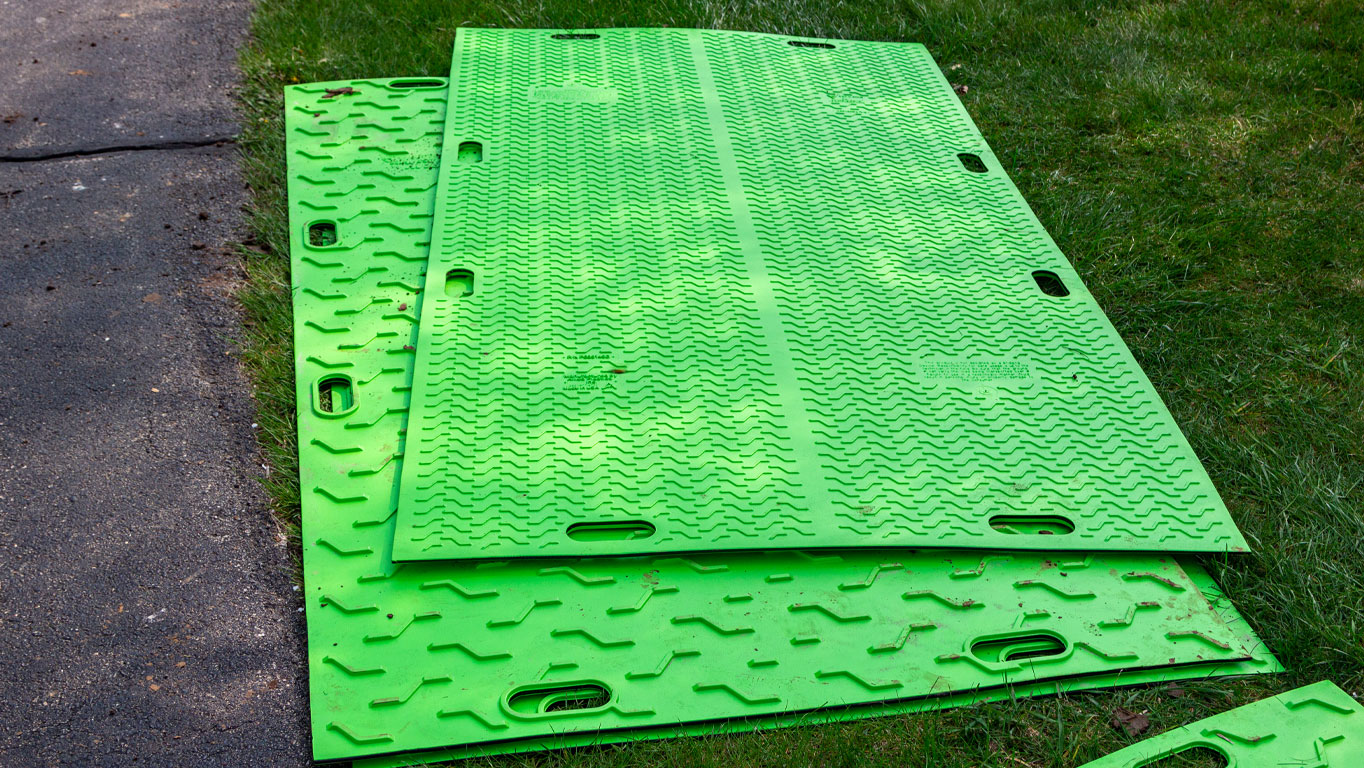
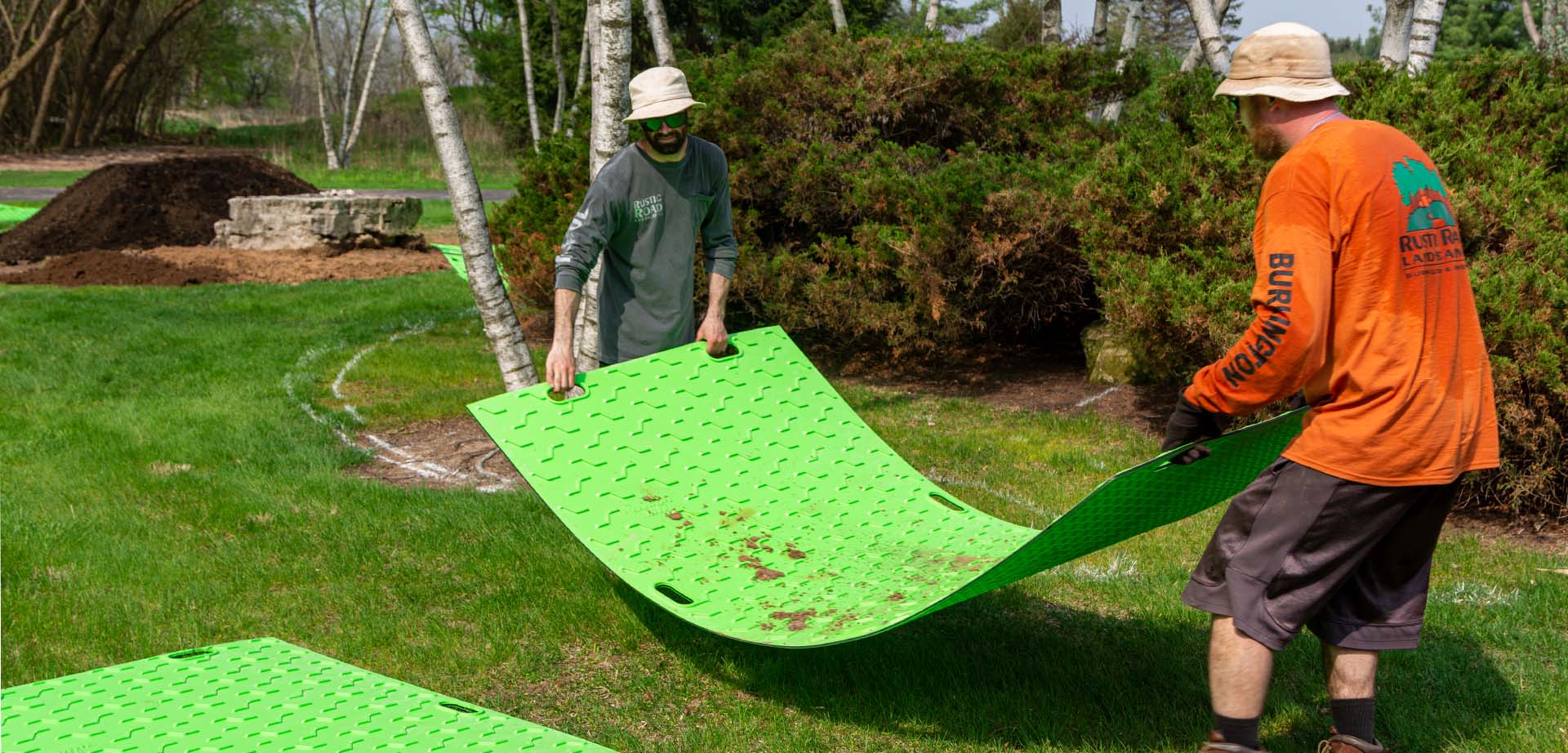
HDPE achieves high structural performance at relatively low weight. BAM! 4×8 panels weigh 56 pounds—lighter than most comparable HDPE products (80 to 110 pounds) and far lighter than equivalent timber mats (300 to 500 pounds). The material’s strength-to-weight efficiency is what allows the 56-pound weight with an 80-ton load rating.
4. UV stability over years of outdoor exposure
HDPE resists UV degradation significantly better than many competing materials. Color fading may occur over years of outdoor storage, but structural performance is maintained. BAM! mats in active service for 5+ years perform at the same load rating as new panels.
5. Chemical inertness and environmental safety
HDPE does not leach chemicals into soil or water. It is inert in contact with most construction chemicals, fuels, and cleaning agents. This makes HDPE mats appropriate for use near storm drains, drainage corridors, and environmentally sensitive areas where chemical contamination is a concern.
6. End-of-life recyclability
HDPE is one of the most widely recycled plastics in circulation. When a BAM! mat reaches end of service—after years of use—it is recyclable through standard HDPE recycling streams. This is a materially better end-of-life path than plywood (landfill after 2 to 4 uses) or rubber mats (limited recycling infrastructure).
How BAM! HDPE Mats Are Made
Not all HDPE mats are created equal. The manufacturing process determines material density, dimensional consistency, and surface quality—factors that translate directly to performance differences in the field.
BAM! mats are thermoformed HDPE, produced at an ISO 9001:2015 certified facility in Twin Lakes, Wisconsin by Allied Plastics. Thermoforming applies heat and pressure to form HDPE panels with consistent density throughout the panel cross-section. This manufacturing precision is what delivers consistent load rating, weight, and dimensional specs across every panel in every production run.
ISO 9001:2015 certification means the manufacturing process itself—from material sourcing through finished product inspection—follows internationally recognized quality management standards. The 80-ton load rating is not a marketing estimate; it reflects engineering testing on panels produced under this certified process.
HDPE Mats in 2026: Where Contractors Are Using Them
Roofing and exterior work
HDPE mats under dumpsters, delivery trucks, and equipment staging areas have become standard practice for professional roofing companies. Property damage claims from driveway damage during roofing projects—historically a major source of customer complaints—are significantly reduced for crews using HDPE mats on every job.
Landscaping and lawn care
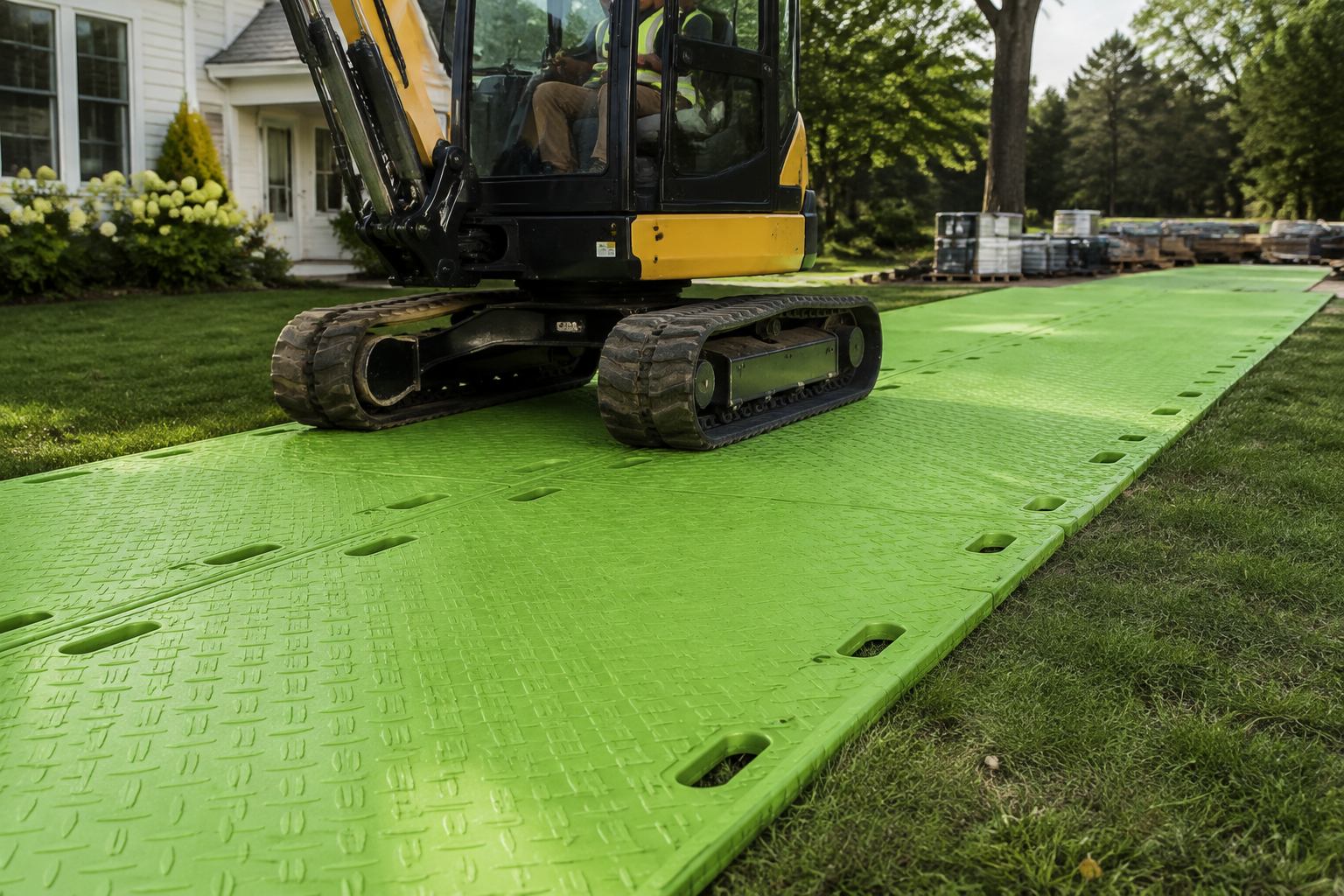
Landscapers with skid steers and compact loaders need equipment access across residential lawns without leaving ruts. HDPE mat paths have replaced the plywood sheets and ‘careful’ equipment operation that used to be the standard approach—with better results and more reliable property protection.
Utility and HDD work
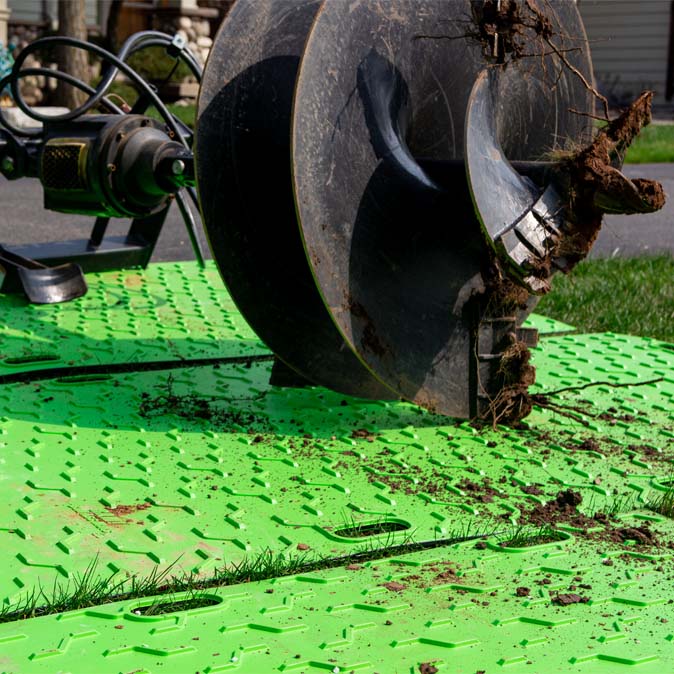
Horizontal directional drilling crews and utility contractors work in residential easements, parks, and right-of-ways with strict property restoration requirements. HDPE access routes are deployed before equipment moves and removed cleanly at project completion, meeting restoration requirements that gravel and fill cannot satisfy.
Event production
Outdoor event professionals—festival producers, corporate event managers, venue operators—use HDPE mats for both equipment routes during setup and guest walkways during events. The same panel serves both functions, and the Hi-Vis Safety Green color creates recognizable, consistent pathways for guests.
Municipal and public works
City crews, county road departments, and public works contractors use HDPE mats in parks, civic spaces, and rights-of-way where equipment access is required without permanent ground alteration. The non-toxic, recyclable material and clean removal characteristics align with municipal environmental standards.
What to Look for When Buying HDPE Mats
Verified load rating: demand the specific load rating and the test methodology. 80-ton minimum for equipment applications. Unrated mats have unknown failure characteristics.
Thermoformed construction: thermoforming produces consistent density and dimensions. Injection-molded or press-formed HDPE can have voids and inconsistencies that affect load performance.
Panel weight: lighter panels deploy faster and reduce crew fatigue. BAM! at 56 lbs per 4×8 panel is among the lightest in the load-rated HDPE category.
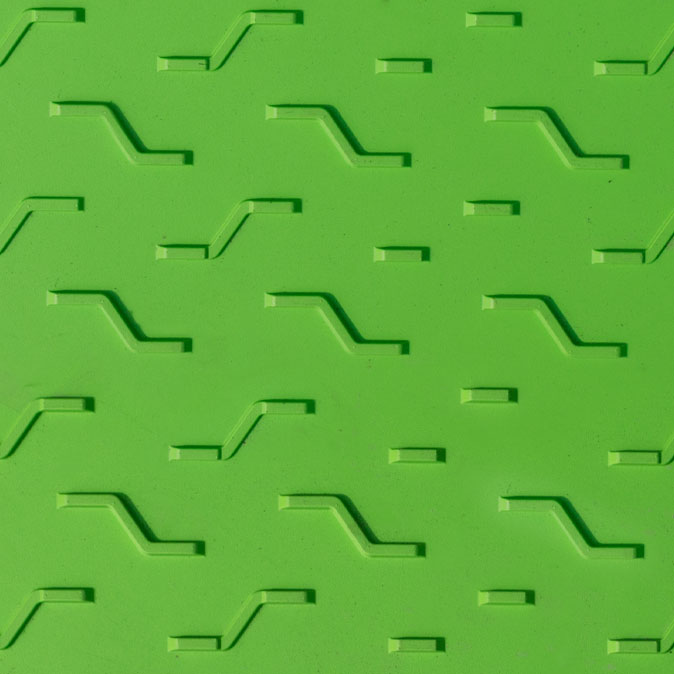
Dual-sided tread: equipment tread on one face, pedestrian tread on the other. Single-sided mats serve only one user type. BAM!’s dual tread design serves both.
Domestic manufacturing: USA manufacturing means shorter lead times, direct manufacturer warranty support, and consistent quality standard.
Warranty: 3-year warranty minimum backed by the manufacturer. Distributor-backed or no-warranty products carry hidden risk.
Frequently Asked Questions
Q: Are all HDPE mats the same?
A: No. HDPE is a material category, not a single product. The manufacturing process, material grade, panel geometry, and tread design all vary between manufacturers. Thermoformed HDPE from an ISO-certified facility produces different performance characteristics than lower-cost HDPE panels made from recycled material grades or less controlled forming processes.
Q: How long do HDPE mats last?
A: BAM! HDPE mats are designed for 5 to 10+ years of active contractor use and carry a 3-year manufacturer’s warranty. The actual lifespan depends on use intensity and storage conditions. Properly maintained HDPE panels have been in active service for 8 to 10 years without structural performance degradation.
Q: Can HDPE mats be cut to fit specific applications?
A: HDPE can be cut with standard woodworking tools (circular saw, jigsaw). This is useful for custom-fit applications around fixed obstacles. For field modifications, contact BAM! at 888-870-8158 for guidance on cut depth and structural considerations.
Q: How do I clean HDPE mats after muddy deployments?
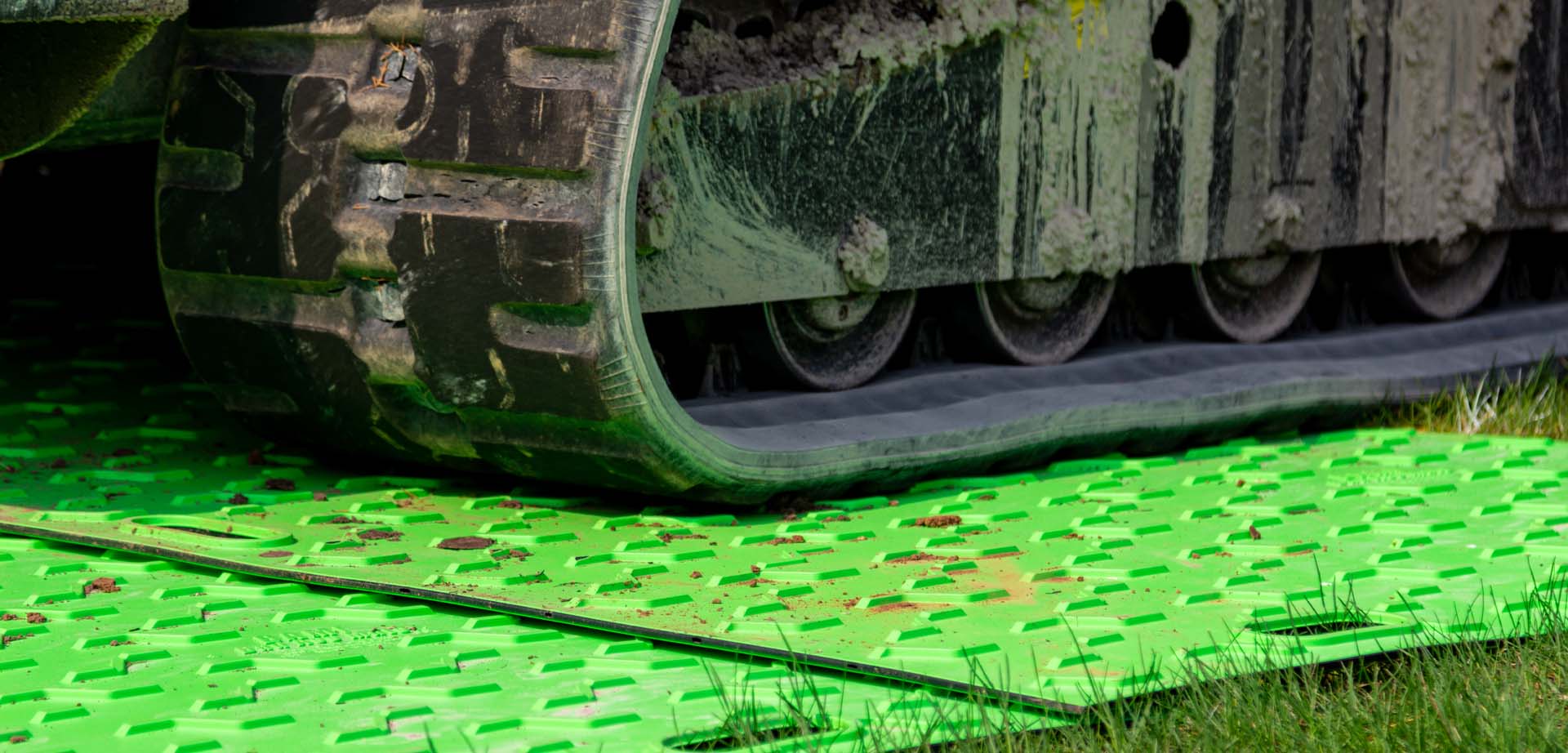
A: HDPE does not bond to mud. After removal from a muddy site, panels clean completely with a pressure washer. No special cleaning agents required. Panels are ready for redeployment immediately after washing and drying.
The Material That Changed the Standard
HDPE mats did not become the ground protection standard by accident. They earned it—by outlasting plywood across hundreds of jobs, outperforming rubber in load capacity, and delivering consistent, predictable results that contractors could build their site protection plans around.
Explore the full BAM! HDPE mat lineup at bamgroundpro.com/products. Find a distributor at bamgroundpro.com/where-to-purchase. Contact us at bamgroundpro.com/contact-us, call 888-870-8158, or email msheridan@alliedplastics.com. Work cleaner. Work safer. Pro’s choose BAM!