The Right Mat Makes the Job Easier—and More Professional
Ground protection mats aren’t just something you throw down to “avoid a mess.” The right mats protect turf, prevent driveway damage, improve access on soft ground, and help crews work faster and safer. They also create something clients notice immediately: a clean, organized jobsite that looks professional from the moment you arrive.
For years, many contractors relied on plywood as a shortcut. But plywood warps when wet, cracks under equipment, and looks sloppy on high-value properties. In 2025, pros are moving toward engineered mats built for repeated use, heavy loads, and better jobsite presentation.
This guide will walk you through exactly how to choose the right ground protection mat based on job type, surface conditions, equipment weight, and layout needs—so you can protect the property and protect your reputation.
Step One: Identify What You’re Protecting
Before picking a mat, start with the surface. The best mat choice depends on what’s underneath and what damage you’re trying to prevent.
Lawns and Turf
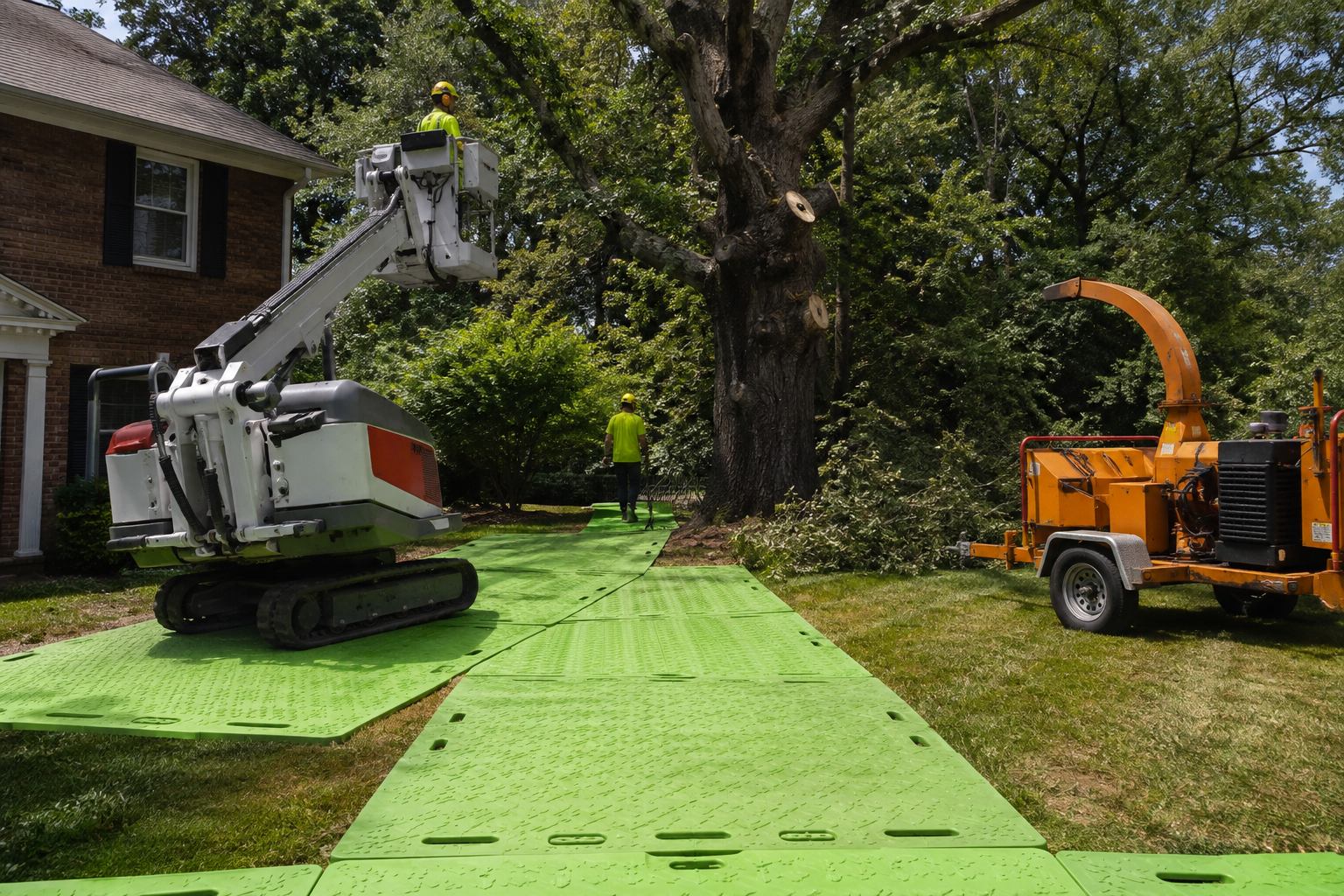
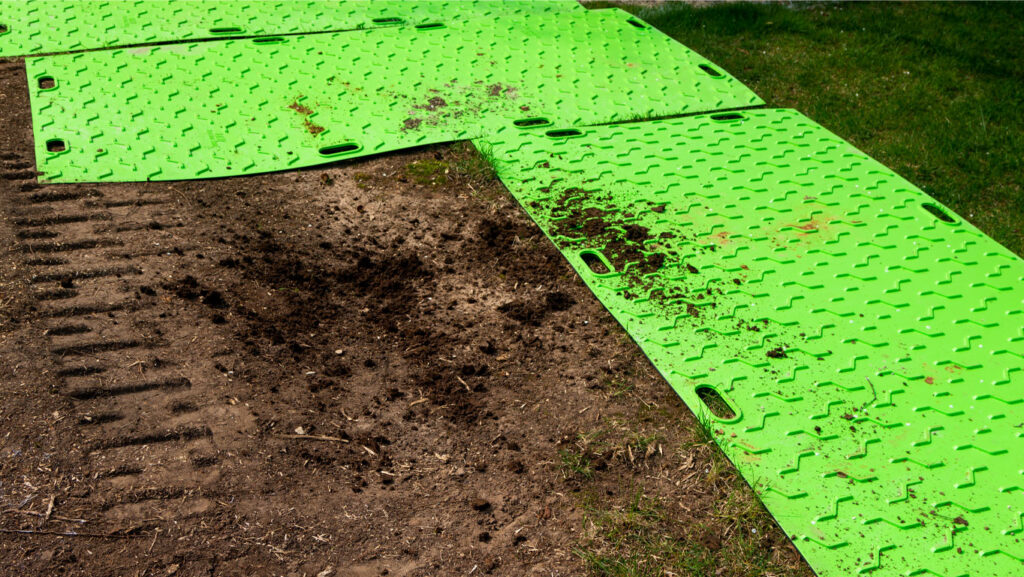
Turf damage usually happens from rutting, turning, and repeated passes. Soft soil conditions make it worse. The best mats for lawns distribute weight evenly and prevent tires from digging in.
Driveways and Decorative Concrete
Concrete, asphalt, and pavers can crack, dent, scuff, or stain during deliveries, remodeling, roofing, or dumpster staging. You need a mat that creates a stable barrier and spreads load so pressure doesn’t concentrate in one point.
Commercial Landscapes and Public Grounds
HOAs, campuses, parks, and venues demand protection and professional presentation. These properties are visually important, so clean, uniform mats matter as much as performance.
Construction and Utility Easements
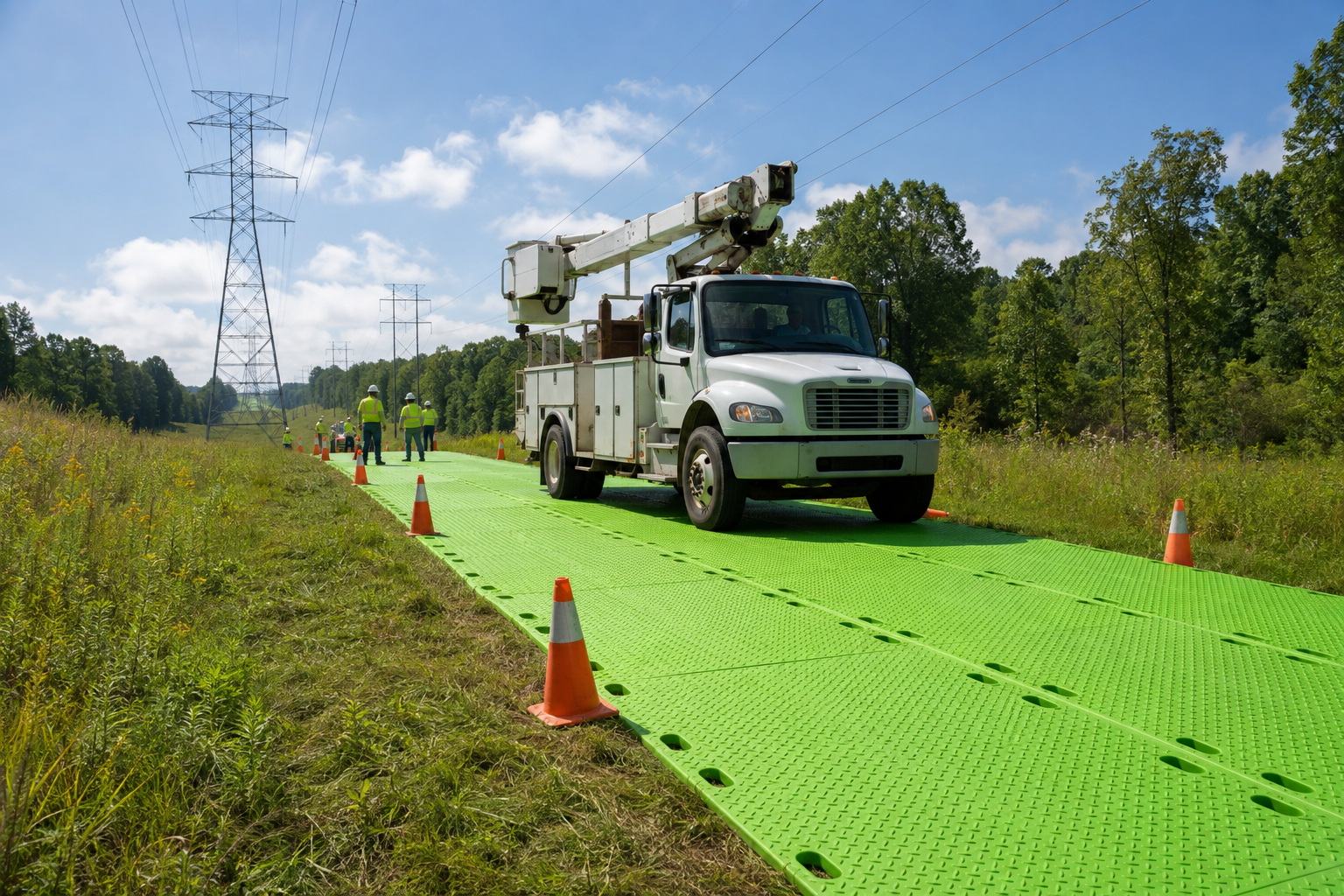
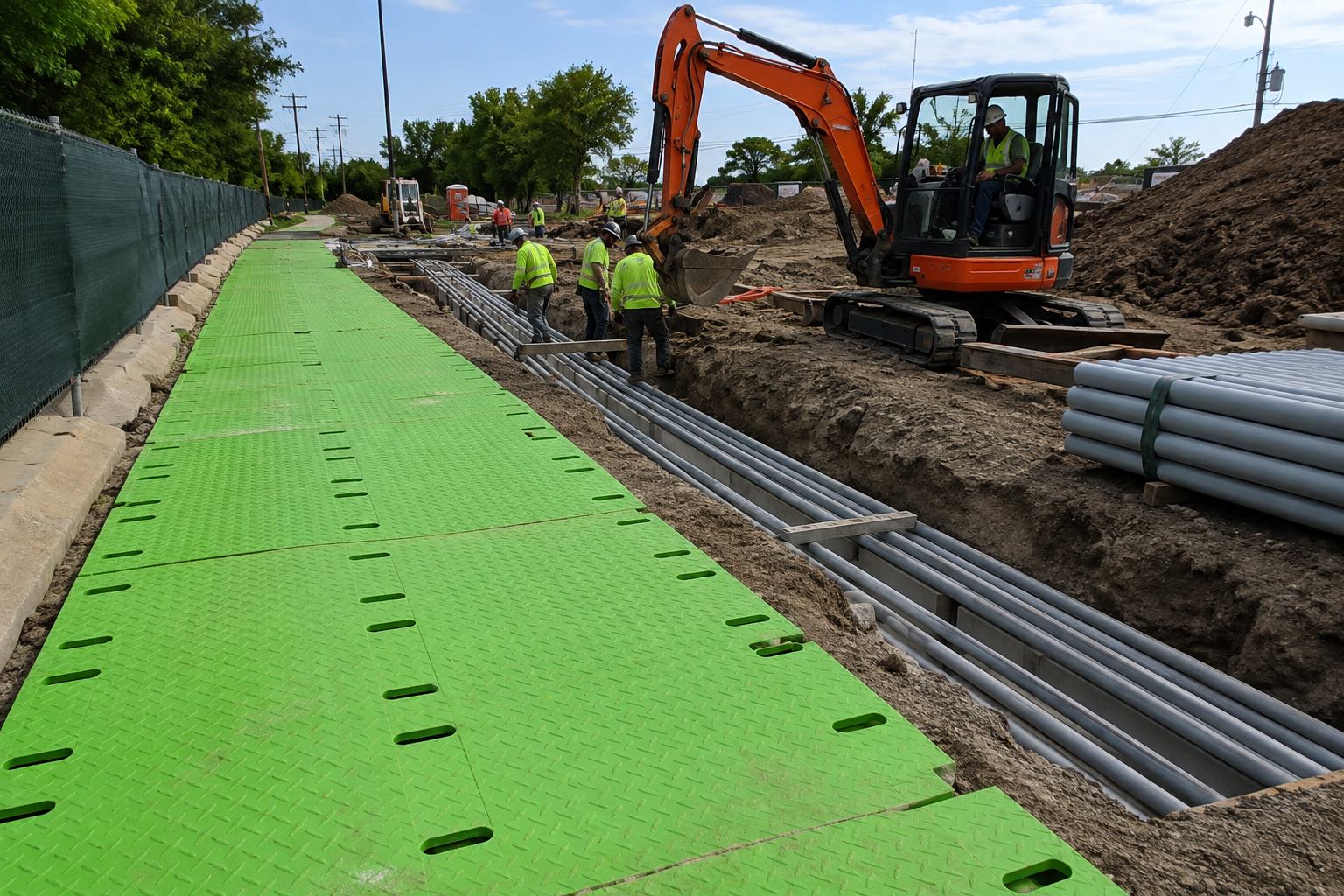
Easements are often narrow, soft, or wet. Mat systems need to be easy to carry and deploy while still handling heavy service vehicles and equipment.
Step Two: Understand Load Ratings and Real Jobsite Weight
Load ratings are one of the most misunderstood features of ground mats. In simple terms, load rating refers to how much weight a mat can support without failing. But the real-world performance depends on how the weight is applied and what the ground looks like underneath.
Total Weight vs. Point Load
A light machine can still cause damage if the load is concentrated in a small area. For example, outriggers from lifts or cranes apply extreme pressure to a small footprint. That pressure is much more demanding than a vehicle rolling over the mat evenly.
Ground Conditions Change Everything
Soft ground reduces the soil’s ability to support weight. Wet clay, saturated turf, and loose fill all require stronger mats because the ground beneath will deform faster.
Why Plywood Isn’t a Load-Rated Solution
Plywood may feel strong when dry, but it breaks down quickly in outdoor conditions. Once wet, plywood becomes weak and unstable and may fail under equipment loads that professional mats handle safely.
Step Three: Choose the Right Mat Size for the Job
Mat size affects coverage, stability, setup time, and how easy it is for crews to move panels into place.
4×8 Mats
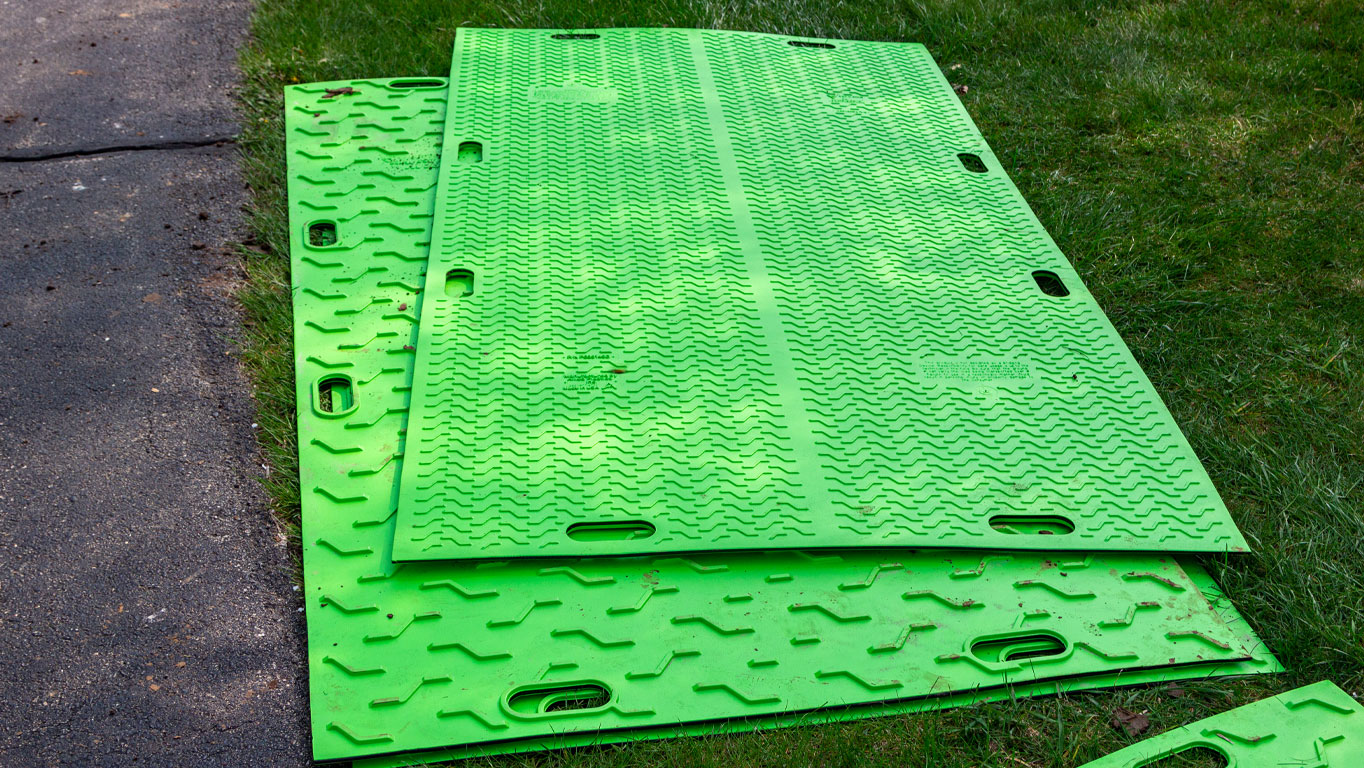
This is the most common size in the industry because it balances coverage and handling. It’s ideal for building access paths, protecting lawns, staging equipment, and creating temporary roadways. Contractors like it because it covers meaningful surface area quickly without being oversized.
2×8 Mats
Smaller mats are best for tight spaces and narrow access points such as side yards, easements, fence gates, and focused entry paths. They’re also useful when you want precise coverage without laying unnecessary material.
Matching Size to Layout
Choosing size is less about “bigger is better” and more about matching your jobsite flow. Larger mats cover faster, while smaller mats allow you to build cleaner paths around landscaping features, narrow corners, or restricted entrances.
Step Four: Traction Patterns Matter More Than People Think
Ground protection isn’t only about protecting the surface underneath—it’s also about controlling movement above the mat. Traction plays a major role in both job efficiency and crew safety.
Traction for Equipment
Equipment needs grip to avoid slipping, spinning tires, or shifting during turning. A proper tread pattern supports tires and tracks so machines move smoothly without tearing up the mat or the ground below.
Traction for Workers
A jobsite doesn’t just include machines—it includes crews walking all day. Wet grass, mud, and rain can make surfaces dangerous fast. A slip-resistant mat surface reduces falls and improves stability in active work zones.
Why Plywood Fails in Wet Conditions
Wet plywood becomes slick. Once it starts to delaminate, it also creates uneven surfaces and trip hazards. That’s not just inconvenient—it can become a liability on busy sites.
Step Five: Think About Jobsite Presentation
The best contractors understand something important: ground protection is part of the customer experience.
A clean, professional jobsite builds trust. It makes the property owner feel confident that their surface will be respected. It also reduces complaints before they ever happen.
Professional mats look organized, uniform, and intentional. Plywood looks temporary, uneven, and messy—especially once it’s wet, cracked, or muddy.
When you show up prepared with real mats, clients notice. And that professional appearance often turns into better reviews, repeat work, and referrals.
Best Mat Choices by Job Type
This is where the decision becomes easy. Once you know the job, you can match it to the right mat setup.
Construction and Renovation
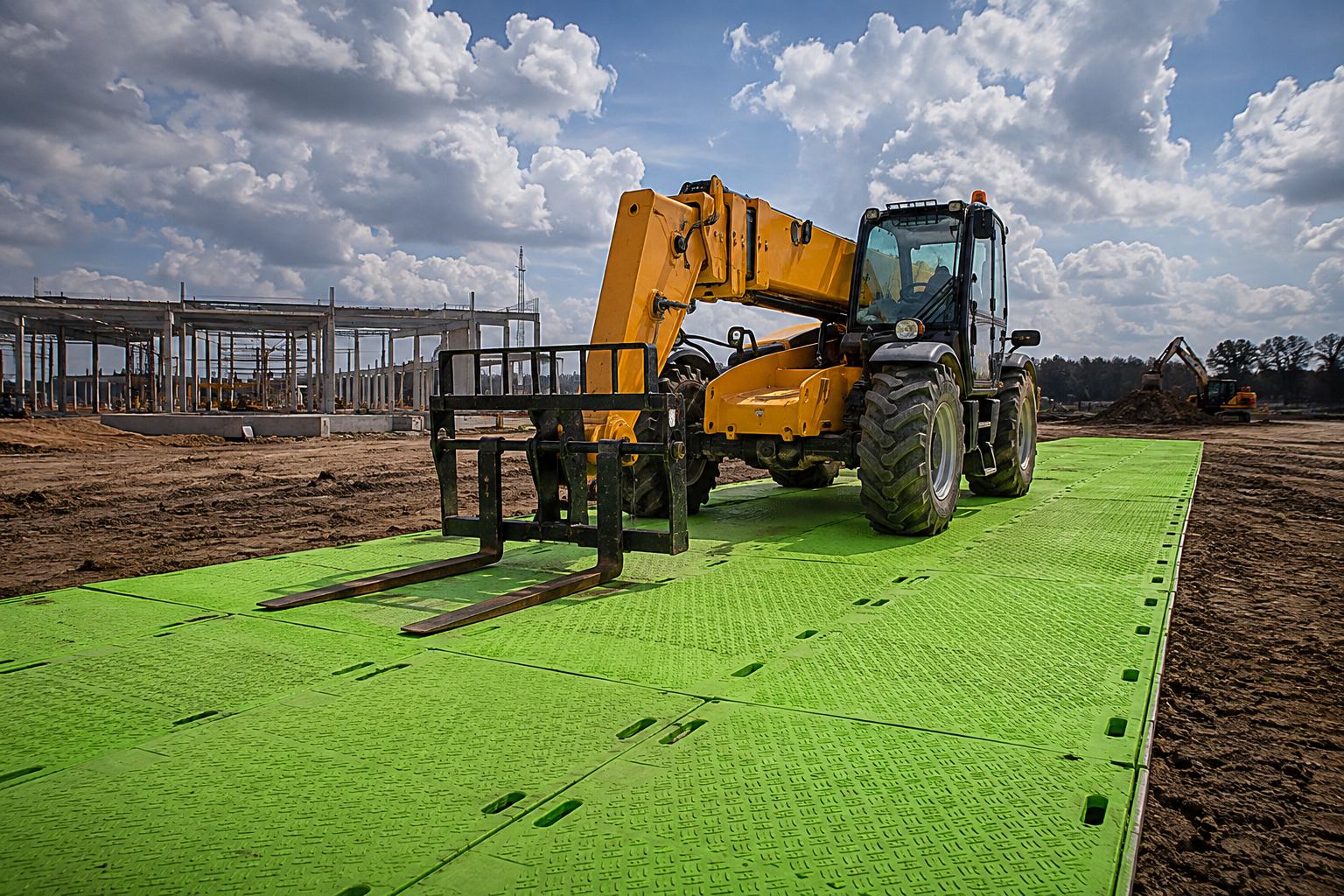
These sites often involve deliveries, heavy traffic, and staging areas. A reliable mat setup protects lawns, access lanes, and driveways while giving crews stable working surfaces across changing phases of the project.
Landscaping and Hardscaping
Landscapers need turf protection and clean movement paths. Mats prevent rutting and soil disruption, especially when transporting materials or moving equipment across delicate lawns.
Roofing and Dumpster Staging
These jobs commonly damage driveways. Mats provide surface protection under dumpsters, material loads, and equipment access without leaving stains or cracks behind.
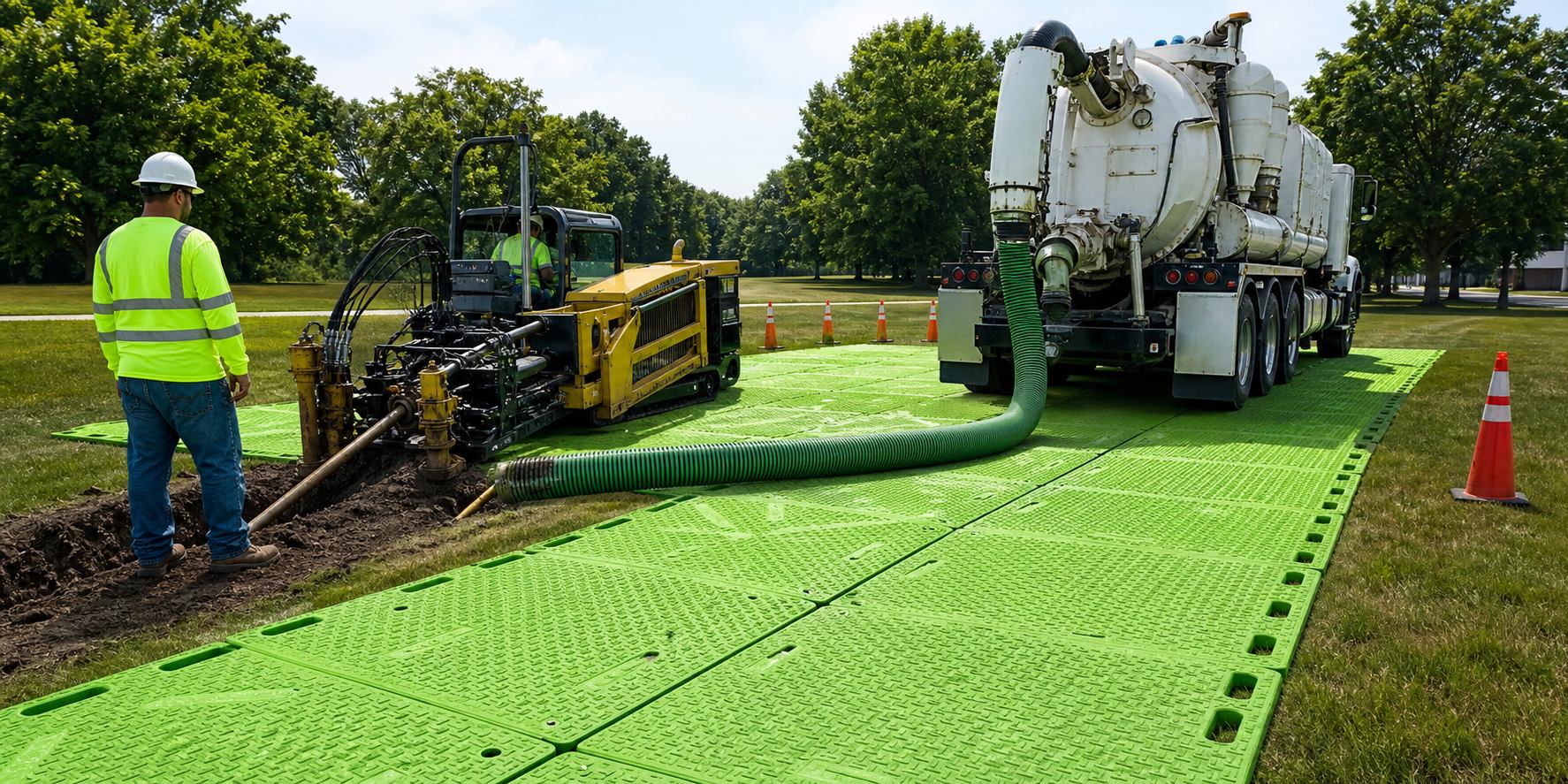
Utility and HDD Work
Easement work requires stable access for rigs, service vehicles, and support equipment. Mats help prevent soil disturbance and keep job sites clean and organized even in wet, narrow conditions.
Events and Stadiums
Events are high-visibility environments where both appearance and safety matter. Mats create stable pathways for guests, staff, and equipment while preserving turf quality before, during, and after the event.
Cleaning, Storage, and Reuse
One of the biggest benefits of professional HDPE mats is their long-term value. Instead of replacing materials repeatedly, crews can clean mats quickly and reuse them for years.
After a job:
- Remove heavy debris
- Rinse or scrape off mud
- Stack mats neatly for transport or storage
This consistent reuse leads to much lower cost-per-use over time compared to plywood, which often ends up in dumpsters after only a few jobs.
Choosing the Right Supplier Makes a Difference
Not all mats are equal, and buying from the right source ensures quality and long-term support. A trusted supplier can help with sizing, quantity planning, and freight considerations—especially for large or repeat projects.
If you need mats quickly or want help planning a layout for a job, the best move is to work directly with a trusted provider who understands contractor needs and jobsite realities.
Choose Mats That Protect the Ground and Your Reputation
The right ground protection mat does more than prevent ruts. It keeps crews safer, protects surfaces, improves efficiency, and makes your jobsite look like the work of true professionals.
Explore the full lineup on our Products page or request a recommendation through our Contact page.
Work cleaner. Work safer. Look more professional—because Pro’s choose BAM!