The Hidden Cost of Ground Damage
Ask any contractor what keeps them up at night, and you’ll hear stories of projects delayed by weather, lawns destroyed by equipment, and costly rework when a client’s driveway cracks under a truck. Many crews still reach for the “cheap fix” — sheets of plywood — only to learn that it’s not cheap at all when the jobsite damage bill comes in. In today’s competitive environment, protecting the ground is no longer optional; it’s part of delivering professional results. That’s why the debate comes down to three options: plywood, composite, or HDPE ground mats.Plywood: The False Economy
On the surface, plywood looks affordable. You can pick it up at a big-box store and throw it down under equipment. But plywood quickly shows its weaknesses:
- Moisture damage: A single rainstorm can warp and rot sheets.
- Splinters and breakage: Once cracked, plywood is unsafe and not reusable.
- Poor traction: Smooth sheets become slippery hazards in wet conditions.
- Limited lifespan: Many contractors find themselves buying new plywood every few jobs.
And beyond performance, plywood looks unprofessional on a jobsite. Broken, waterlogged sheets scattered across a client’s property don’t inspire confidence. That low sticker price doesn’t look so cheap once you factor in replacements, repairs, and reputational costs.
| Feature | Plywood | Composite Mats | HDPE Mats (BAM!) |
| Durability | Warps, cracks, and splinters after 1–2 uses | Longer-lasting but bulky and wear-prone | 4-season performance; reusable for years |
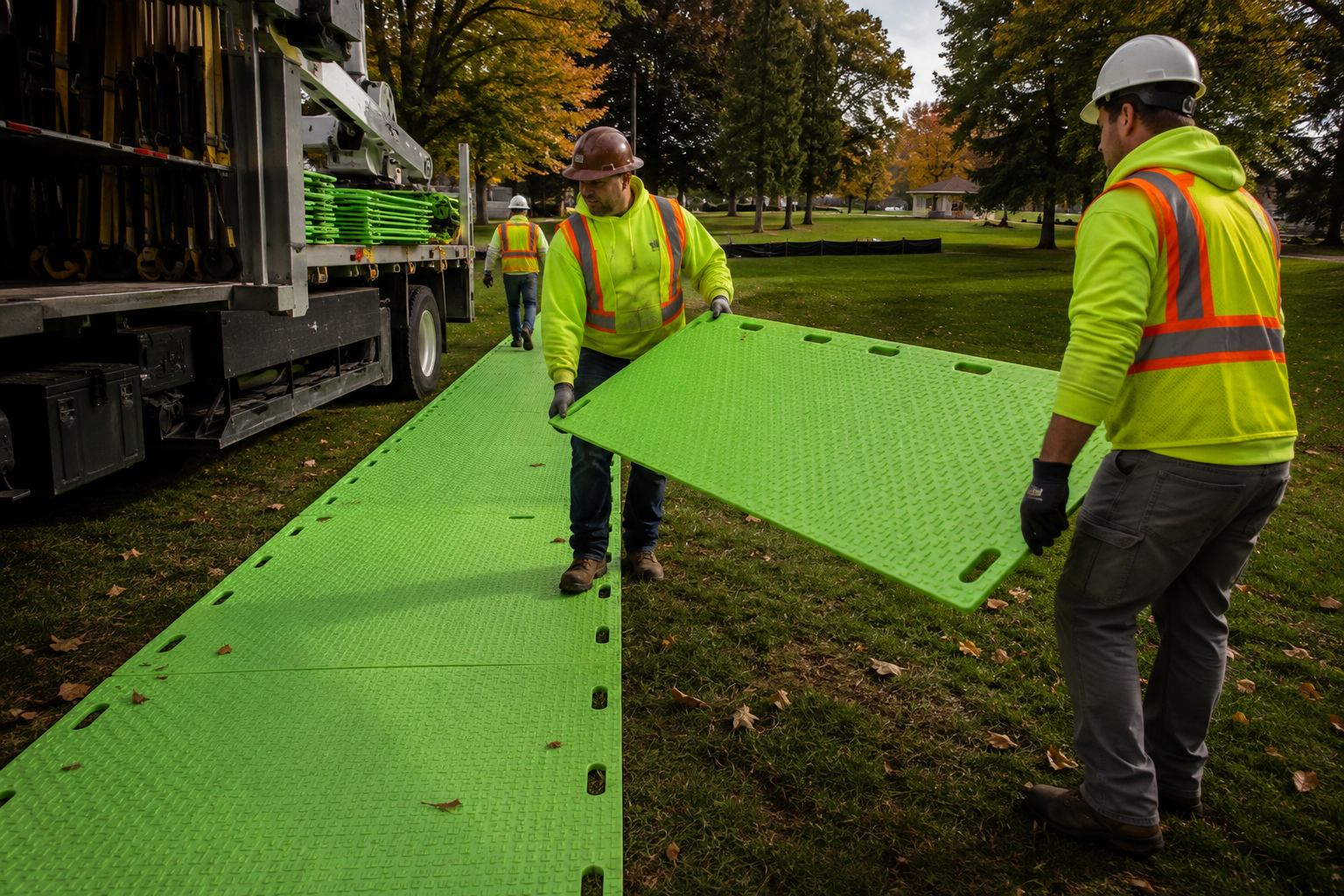
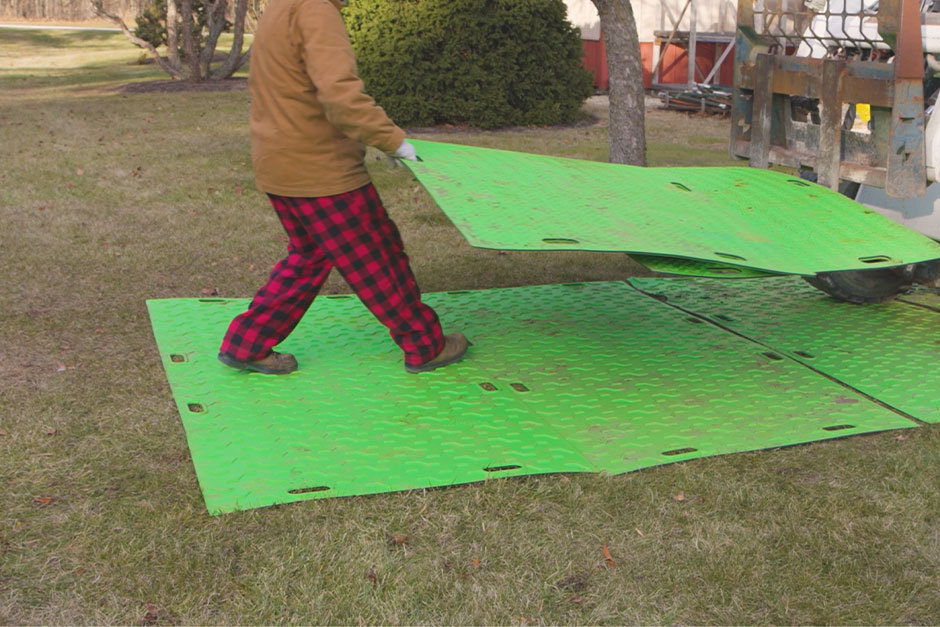
| Weight | Heavy when wet; awkward to carry | Very heavy; often requires equipment | Lightweight (56 lbs per 4×8) for easy crew handling |
| Traction & Safety | Slippery when wet; poor grip | Some traction, but connectors wear | Dual-sided tread for both equipment & foot traffic |
| Appearance on Site | Unprofessional; broken boards, splinters | Bulky and uneven | Clean, uniform, professional image clients notice |
| Cost per Use | Low upfront, very high replacement cost | Higher upfront, efficiency lost in handling | Best long-term ROI; pays for itself across projects |
| Environmental Impact | Often ends up in dumpsters | Non-recyclable blends | Recyclable HDPE; eco-friendly solution |
Composite Mats: Strong but Cumbersome
Composite mats are another option. Made from blends of plastic materials, they can handle higher loads than plywood. But composites are often bulky and heavy, requiring machinery just to place and move them. Their connection systems can wear down over time, leading to slippage or uneven ground. While better than plywood, many contractors find composites hard to justify for everyday jobs—especially when efficiency and appearance matter.HDPE Ground Mats: Built to Last
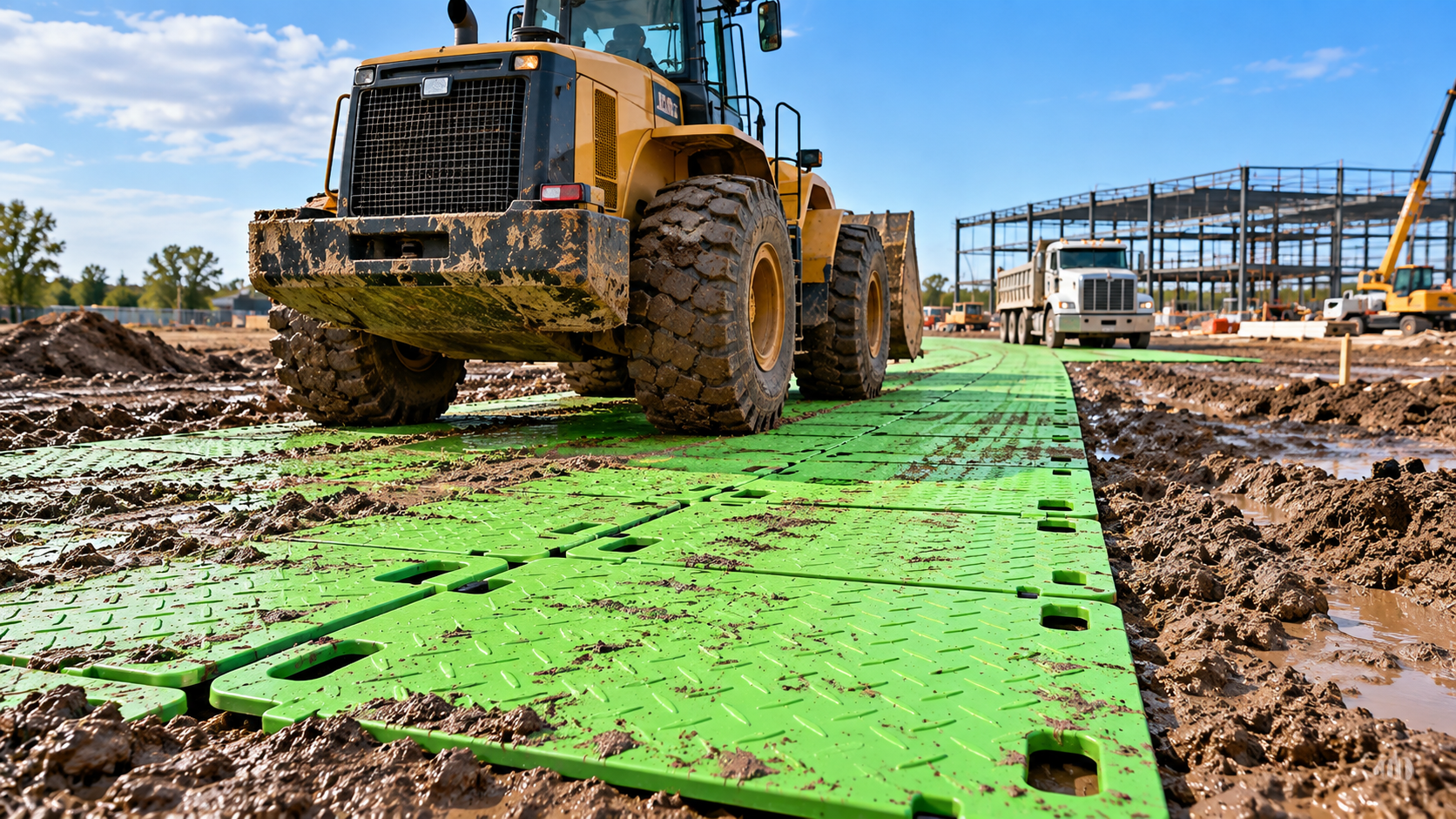
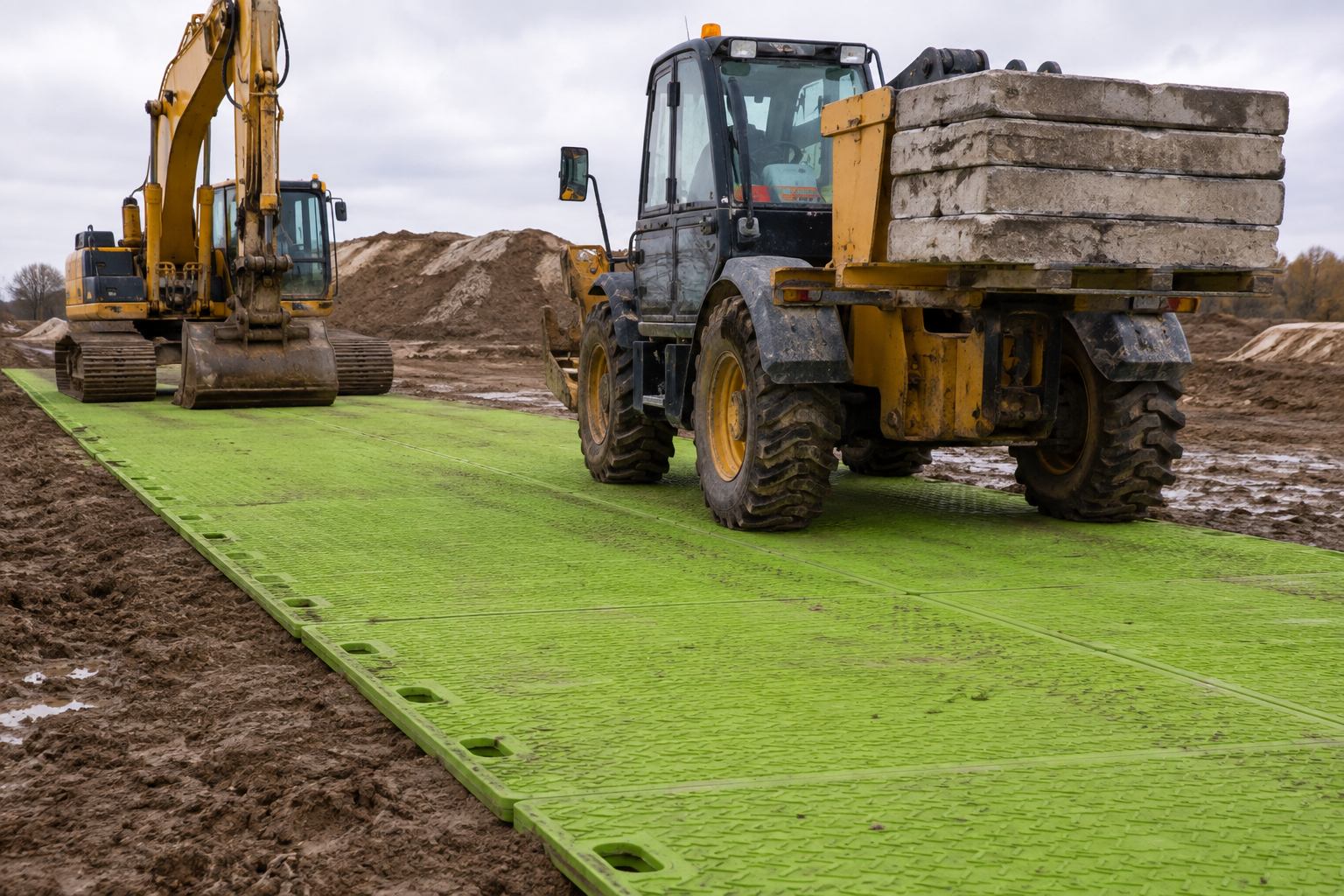
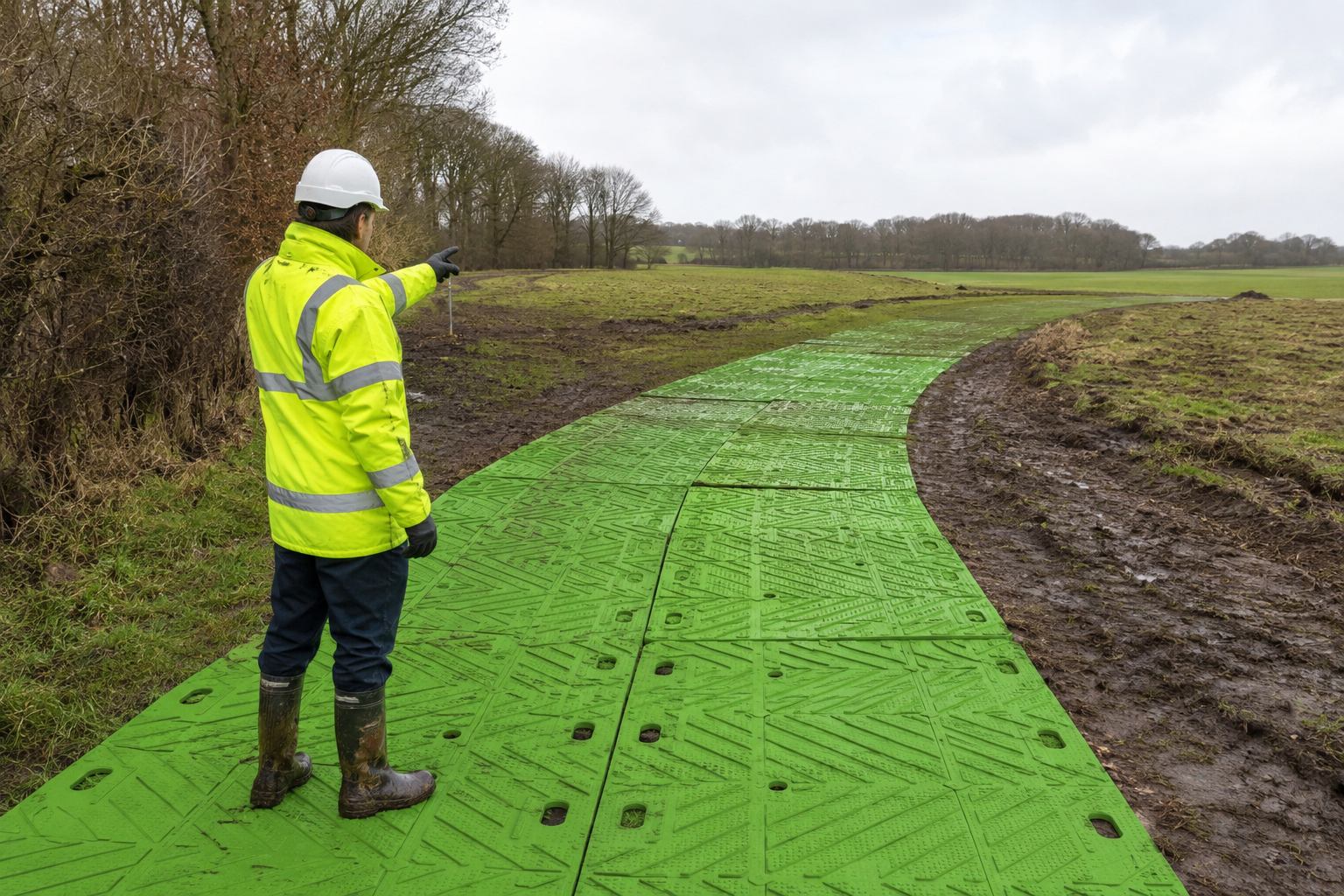
High-density polyethylene (HDPE) mats offer a solution that’s both durable and practical. The material is engineered for four-season performance, resisting fading, cracking, and moisture absorption. A standard 4×8 BAM! Ground Protection Mat weighs only 56 lbs, light enough for crews to carry without equipment, yet it’s tough enough to support loads up to 80 tons.
HDPE mats also feature dual-sided traction patterns, keeping both machinery and foot traffic stable even in mud or rain. Unlike plywood, they won’t splinter or rot. Unlike composites, they’re easy to handle and store. And because they’re reusable for years, the cost per use is far lower than either alternative.
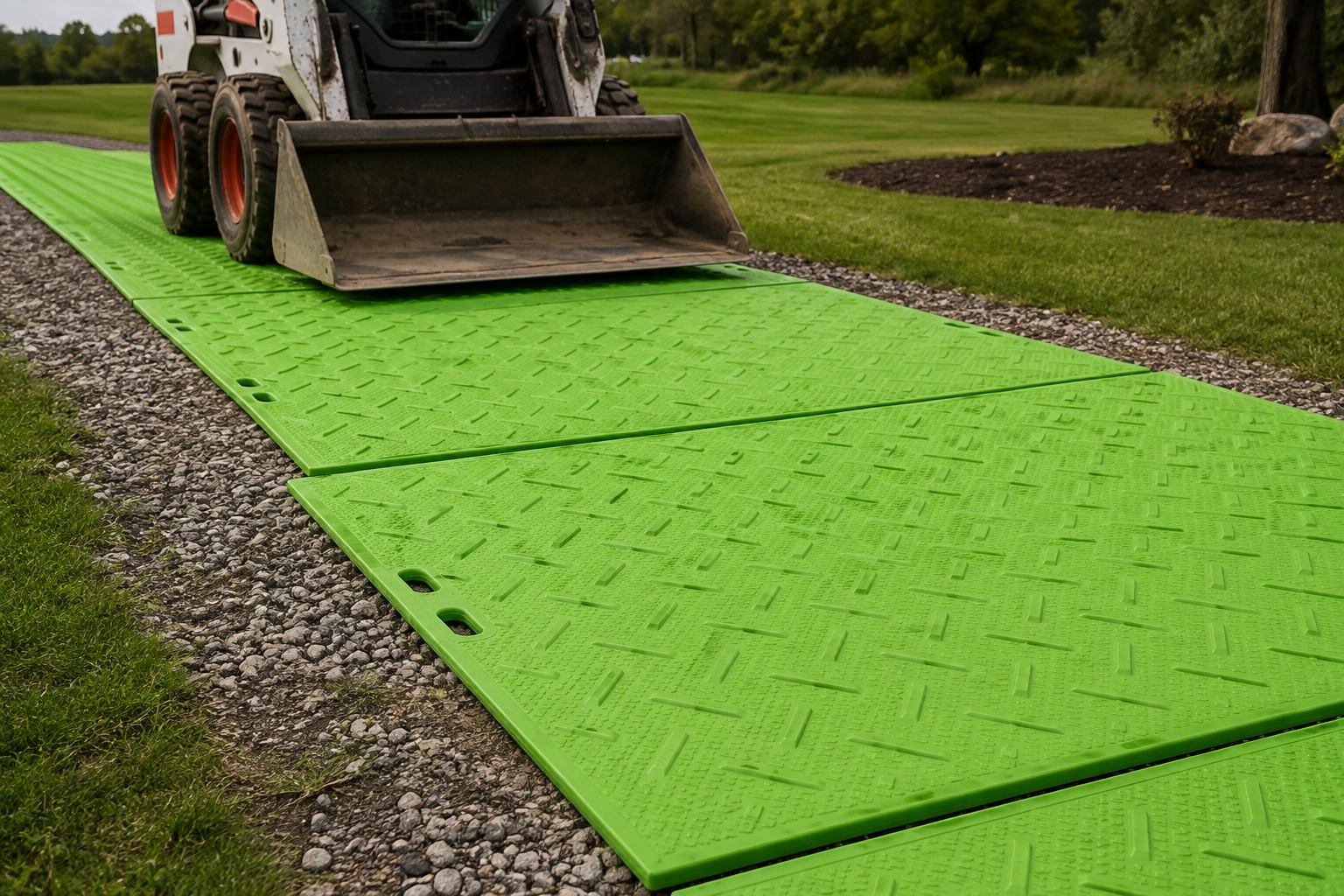
Perhaps most importantly, BAM! mats give your jobsite a professional, polished look. Instead of warped boards or bulky composites, clients see a clean, uniform surface that reinforces your reputation as a pro.Real Jobsite Advantages
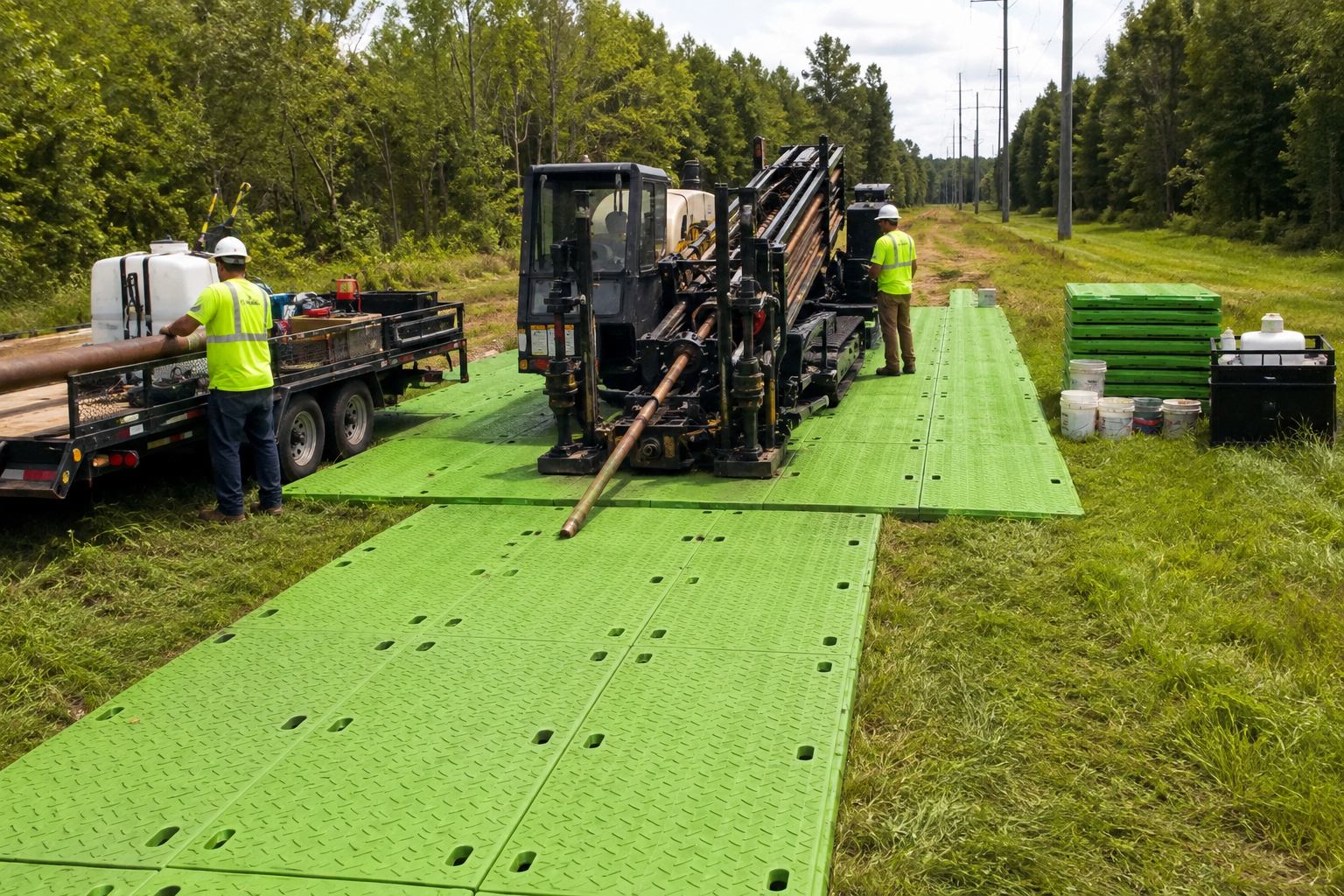
Contractors using HDPE mats report faster setup times, fewer callbacks for ground damage, and happier clients. Landscapers keep lawns pristine. Roofers protect driveways from dumpsters. Utility crews complete trenchless drilling without leaving ruts. In every case, HDPE mats deliver what plywood and composites can’t: lasting protection with lower total cost.The Verdict: What Really Lasts?
If you’re serious about reducing rework, avoiding damage claims, and presenting a professional image, the choice is clear. Plywood is disposable. Composite mats are cumbersome. HDPE ground protection mats are the solution that truly lasts.
Explore the difference on the Products page, or get expert advice tailored to your projects through the Contact page.